
Opinion & Analysis
The Dan Plan: A man on a mission

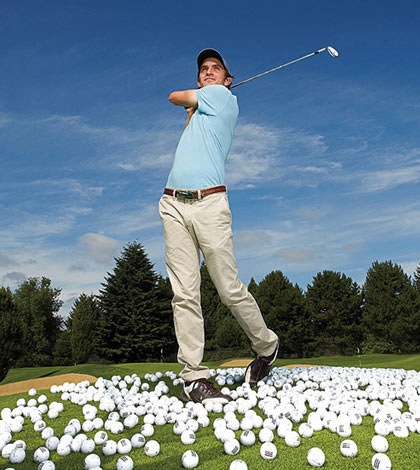
Dan McLaughlin’s introduction to the game of golf began three years ago when he wondered if the public golf courses in his area would allow him to use their practice greens for hours at a time each day.
What makes McLaughlin’s story compelling isn’t the fact that he knew hardly anything about the game, or that he learned the most basic fundamentals of scoring – making one- and two-footers round and round the putting green. It’s that he quit his job in Portland, Ore., as a commercial photographer to focus on playing golf full-time. McLaughlin, a self-described 30-year-old of average build and marginal athletic talent, now carries a single-digit handicap. It only took him about 3,000 hours to reach a level that one out of every six golfers ever gets to.
McLaughlin, however, isn’t remotely satisfied with his progress. He isn’t interested in playing at his club’s next member-guest and carving his name into the winner’s plaque. You don’t quit your day job, the metaphorical equivalent of jumping out of a plane sans parachute, to be a quasi folk hero in your home town. McLaughlin is one-third into a 10,000-hour experiment that ends with him playing his way onto the PGA Tour. Should he succeed, he’ll be a 36-year-old rookie on the circuit. It’s an advanced age to make one’s debut, but certainly not outlandish. Allen Doyle and Jim Rutledge earned their cards as 47-year-olds. But Doyle and Rutledge were life-long golfers with solid amateur and professional records. McLaughlin will be attempting to break golf’s version of the sound barrier after a scant six years.
In terms of his development as a golfer, the 2013 season is going to be a key moment in the odyssey known as The Dan Plan. He has a full-season of tournament play in front of him and his goal is to be competitive.
“I want to play in at least 20 tourneys this year, but am not sure how many I will be able to afford,” McLaughlin said. “I’ll play in everything that is realistic to enter and want to play in all the big ones in Oregon such as the Oregon Am and Mid-Am, (and the Pacific Northwest Golf Association) Am and Mid-Am. My approach will be different in that I know what to expect this year and have a goal of shooting in the 70s. Last year I played in my first five tournaments ever and the only goal was to gain experience.”
McLaughlin won’t be in any position to consider a run at Q-School at the end of this year, but a full season of tournament play will give him and his team plenty of metrics to analyze as they tweak both practice and fitness routines for the next phase of his development. More importantly, his tournament performance will reveal something critical the numbers can’t measure — can he play his best golf when there’s something on the line?
A Game Of Numbers
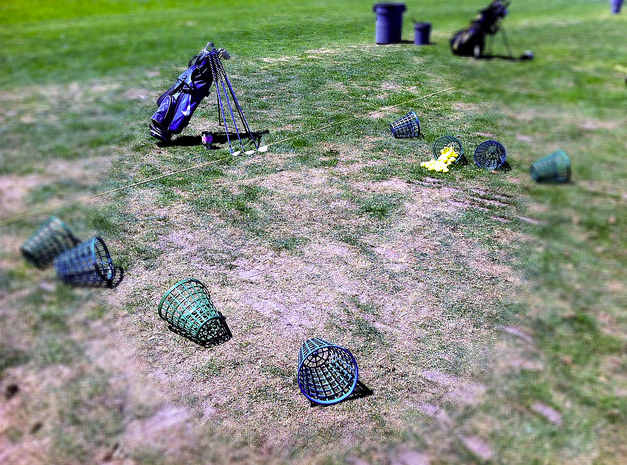
The idea that would end up being The Dan Plan started to sketch itself about a year before McLaughlin quit his job. He began building up his savings over a five-year period to put towards business school. It took one finance class to make him reconsider his options. So instead of thinking about meal plans, books and lectures, McLaughlin began thinking about courses, coaches and clubs. The algebra he came up with, assuming he spent his money wisely, would allow him to dedicate the next four to six years of his life to chasing a little, white ball.
McLaughlin chose to play golf for some less-than-obvious reasons. He wanted to be outdoors and he didn’t want to do something that would eventually become boring. He also liked how golf held individuals accountable for their own successes and failures and, most importantly, it was unlike anything he had ever done before. As far as having any connection to the game, McLaughlin would’ve been hard-pressed to name 10 players on the Tour even after spotting him a Tiger and a Phil. All things considered, McLaughlin could’ve randomly decided to pick up a tennis racket or a bowling ball. For it wasn’t so much a passion for golf that interested McLaughlin as it was discovering what he calls “the human potential.”
The idea that hard work, in particular the concept of deliberate practice, can trump innate talent has been written about at length in the following best-selling books — “Talent Is Overrated” by Geoff Colvin and “The Talent Code” by Daniel Coyle. The basic premise of both books is that talent isn’t born, it’s made. Success is ultimately achieved through persistence, sweat and a proper use of one’s time. A third book of note, and the one that heavily inspired McLaughlin is “Outliers: The Story Of Success” by Malcolm Gladwell. In the book, Gladwell claims that the key to success in any field, to a large extent, is the ability to practice a specific task for a total of about 10,000 hours.
Can someone, if they are willing to train consistently over the course of that many hours, become a bona-fide golfing savant? Anyone who has ever played the game long enough might scoff. There’s a reason why so few golfers, even those who excelled as juniors, ever have a sniff at the Tour, let alone make a successful career playing at the highest professional level. Whether through naiveté or over-exuberance, McLaughlin was unfazed by the daunting odds. But when it came to convincing others, such as his first golf coach, it was definitely a tough sell.
“To be honest, I had about 15 seconds for him, maybe 10,” Christopher Smith, lead golf instructor at Pumpkin Ridge told Golf Magazine in an interview. “I was kind of offended by how easy he thought this was going to be.”
McLaughlin’s foray into golf had a genuine Dickensian quality. His gear, courtesy of Nike, consisted of two pairs of shoes, a hand-me-down rain jacket and an off-the-rack Method putter. Lessons and practice consisted of learning to putt and rolling 100 balls from inside a 3-foot circle. At first, McLaughlin struggled to hole 80 percent of his putts. After about a month, he was averaging over 90 percent and steadily increasing the distance.
A repertoire of different putting games kept McLaughlin’s practice sessions from getting stale. One of the games he played, called the “6-foot call shot,” consisted of rolling the ball from four different spots six feet away from the hole. Before addressing the ball, McLaughlin would “call out” which part of the hole he was aiming for as well as the speed at which the ball would drop. McLaughlin cut his teeth on the putting green week after week, finally adding chipping practice deep into the summer.
“Initially, I don’t think Chris thought I would stick to it, but after a year of just chipping and putting he knew I was serious,” McLaughlin said.
Imagine spending three months just working on holing putts. While other weekend golfers warm up for 10 or 15 minutes on the practice green before heading out to the first tee to battle their chronic slice, McLaughlin is wearing out the face on his putter.
We’re Talking Practice

Ask an aspiring recreational golfer how much better they’d play if they just had the time to practice all day long and you’ll likely hear a grand tale about winning tournaments and breaking course records. Then ask that same golfer if they’re willing to practice up to eight hours a day, six days a week, come rain or come shine and they might need a minute or two think it over.
McLaughlin may have come into the game without truly understanding the rigors of golf, but there was nothing bush-league about his dedication. In addition to the thousands of hours he’s logged standing over a golf ball, McLaughlin has spent a significant amount of time at the gym training like a world-class athlete. His workout routine consists of equal parts strength training, cardio and plyometrics. Olympic lifts, squats, lunges, hip rotations, torso twists and medicine ball throws make up a fraction of the exercises that have allowed McLaughlin, who weighs a modest 150 pounds, to generate 998.2 watts of power (Average Power = square root of 4.9 x body mass(kg) x square root of jump distance(m) x 9.81). To put into terms a golfer can appreciate, McLaughlin swings his driver in excess of 105 mph. He and his physical therapist, Shawn Dailey, are hoping to get his swing velocity up to Tour-level standards by the end of the year.
“I’ve seen many golfers who have come and have years of pain, playing with pain and changing their swing around pain,” Dailey said. “Dan has the advantage that he’s a blank slate. We can develop a very efficient, strong swing for him. A lot of his strength and power exercises revolve around his legs, his glutes, his core.”
While it must seem like fun to be able to workout and beat range balls day after day (minus the paycheck), the risk of burnout is great. The honeymoon period of The Dan Plan came to abrupt end after about eight months. At that time, McLaughlin was still limited to practicing with a pitching wedge and putter, and playing golf from inside 40 yards. He was also facing his first winter in Oregon as a golfer when the average temperature is usually 40 degrees and the playing conditions are almost always wet. On his website blog, McLaughlin asked himself a very basic question. “So, Dan, why are you doing this to yourself? And, if nobody else cares, will you still follow through?”
He considered quitting.
“Like anyone who is starting a business it can be tough to juggle everything in your life,” McLaughlin said.
The day after feeling miserable about his situation, he ventured out to Heron Lakes in the rain. Out there on his own, McLaughlin saw a tree fall to the ground without any obvious provocation. It immediately reminded him of a quintessential philosophical question — can something exist without being perceived? Maybe it was pure accident or maybe it was serendipity that caused the tree to fall. Either way, the tree left an impression, no pun intended. McLaughlin would occasionally write about experiencing fatigue and needing a short break from golf, but he would never get as low as he had that first autumn.
McLaughlin reached his first major milestone a month later, surpassing the 1,000-hour mark. In the spring of 2011, McLaughlin began to hit full shots with his pitching wedge. He also began working with a sand wedge. He didn’t look like much of a golfer slinging a mostly empty stand bag across his shoulders, but McLaughlin was coming close to outgrowing his beginner status.
A key point in his development may have occurred a couple of months earlier when McLaughlin visited the IMG campus in Bradenton, Fla. — a heralded golfing academy that has graduated notable alumni such as Paula Creamer, Michele Wie, Sean O’Hair and Peter Uihlein to name just a few.
McLaughlin went to Bradenton to measure his training against what world-class juniors are able to receive when budget isn’t a limiting factor. He was also able to observe some of the best teenagers in the country strike balls with machine-like precision. McLaughlin admitted that he felt intimidated, but he left IMG encouraged about his future.
“Back then I only had three clubs and had never even made a full swing,” McLaughlin said. “I didn’t even know what it meant to play golf, just chipped and putted and had no clue what this wonderful game is all about. Back then I wanted to join those kids in ripping drives and now that I am confident on the course I would love to go back and play with or against them.”
After one year, five months and four days on the plan, McLaughlin passed the 2,000 hour mark. He wasn’t yet competing in tournaments like he had originally, and wrongly, predicted when he first started. But he was feeling upbeat about his progress. As for his relationship with golf, what started off as awkward as a blind date had turned into a genuine love affair. Days spent putting and chipping were now being augmented with rounds at Heron Lakes and Columbia Edgewater.
“I think once I actually understood the game and was playing the game I started developing a passion for it,” McLaughlin said. “I was completely hooked.”
McLaughlin was now carrying seven clubs (a putter, 56-degree, 52-degree, pitching wedge, 8-iron, 6-iron and a 3-hybrid). He was playing from the white tees and posting scores in the 90s and 80s. As the year drew to a close, his handicap fell to 11.4 with strong showings in his final two rounds in which he posted scores of 82 and 83.
Nearly two years of laborious and focused practice had gone into turning McLaughlin into a golfer. It’s a number most avid golfers who take up the game later in life can’t fathom. And while McLaughlin understands that the average person can’t commit the same time or resources into their game as he has, he thinks everyone can benefit by being more attentive to their practice habits.
“No matter how much time you have, practice interweaving,” McLaughlin said. “Try to not hit the same club twice and if you do, reset your brain by going through your routine each time. We learn optimally by having to adjust to new situations and circumstances and hitting ball after ball is nothing like the actual game, so practice randomly and with consequences.”
The Tipping Point

McLaughlin’s new wedges arrived at his doorstep a few weeks ago. He posted a photo of his new clubs (still in their shrink-wrapped plastic) on Facebook. He made a few giddy remarks on Twitter. With his initials “DM” stamped in a random pattern along the sole of his 46-degree, you couldn’t blame McLaughlin for feeling a little bit like a rockstar, especially if you’re treated like one by the crew at Titleist.
McLaughlin toured the Titlelist headquarters in Carlesbad, Calif., in February. There he saw the racks of Vokey wedges that serve as an equipment archive for the some of modern golf’s greatest players. He met with “Voke” himself, and had his picture taken with the legendary craftsman. Later on he stopped by the Oceanside Test Facility and learned enough about lofts, bounce angles and grinds to fill a small textbook.

The “wedge archive” at the Vokey Tour department in Carlsbad, Calif.
He also underwent a rigorous two-hour fitting in which he executed everything from bunker shots to bump-and-runs. The club-fitters at Titleist built four new clubs for McLaughlin. Two of them are standard SM4 wedges (46 and 50, each with eight degrees of bounce). The other pair (54 and 58 degree) are Vokey TVD grind. All four wedges have True Temper Dynamic Gold S200 shafts and Golf Pride New Decade Multicompound grips in green. McLaughlin, who must’ve felt like a child at a toy store, hopes he can return to Carlesbad for a full club fitting, seeing as how some his older clubs are no longer adequate for his swing.
Life has changed in some subtle and not so subtle ways for McLaughlin. In his blog, McLaughlin occasionally talks about reaching a tipping point. Coincidentally or not, the same author who penned “Outliers,” wrote an earlier work called “The Tipping Point” which describes how certain social conditions combine to bring about change quickly and unexpectedly. In terms of reaching critical mass, The Dan Plan is still in the early stages of gaining notoriety, but the days of rolling putts on soggy greens in relative obscurity are drawing to an end.
Over the past year McLaughlin has been gearing up for tournament play. His first official event was staged at Pumpkin Ridge, the site where the LPGA plays its Safeway Classic and where Tiger Woods won his unprecedented third consecutive U.S. Amateur. A gallery of sorts consisting of an AP writer and two cameramen watched a nervous McLaughlin shoot an 86. A decent score for a golfer getting his first taste of competition.
As McLaughlin has evolved, so has his team. He and his first coach severed ties last July over what McLaughlin describes as a communication rift. His relationship with Nike, which wasn’t an official relationship at all, also came to end around the same time.
“Nike decided to go with Rory instead of The Dan Plan and I have to admit that his chances of winning a major are a little better than mine,” said McLaughlin, jokingly. “[We] parted amicably. I appreciate how generous they were to provide my first set of clubs and wish them continued success with their new gear.”
McLaughlin and his new coach, Adrian Burtner, began working together last October. Last winter they started using TrackMan to enhance their training sessions. McLaughlin, in particular, has been engrossed with posting combine scores. The TrackMan combine consists of hitting 60 shots to nine different targets at various distances. Your score is tabulated based on how precise each shot is executed. In a lot of ways it’s like taking aim at plastic ducks at a carnival — only much, much harder. A good score for a Tour professional is an 83. McLaughlin, by comparison, posted a 66.9 his first time through the simulator. TrackMan has also allowed McLaughlin to accurately measure his swing efficiency for every club in the bag.

While a huge component of The Dan Plan revolves around golf-specific training and improving his performance on the course, McLaughlin is increasingly spending time raising awareness and securing additional funding. Although McLaughlin has enough money squirreled away to theoretically finish his project, his self-funding strategy will greatly limit his opportunities to gain exposure and further enhance his training.
“I would really love to start playing in the smaller mini tours as early as this year if possible,” McLaughlin said. “Depending on budget, I would like to enter a couple gateway tour events to get a taste of what golf is like at that level. From there the goal would be to play in a full series of them next year and follow that with Q-School.”
In the past, McLaughlin has limited himself to accepting donations online through his website. But he and his newly hired publicist have been investigating alternative forms of fund raising including speaking engagements and corporate sponsorship. McLaughlin has also raised a few eyebrows when he recently issued a public challenge to Michael Phelps to play against him in an exhibition match this summer. There are some people who have been following The Dan Plan who feel that the Phelps match (should it ever happen) might detract from the project’s mission and its sincerity.
McLaughlin will certainly feel pressure this year. His tournament performances will be judged and graded. If he finds and accepts corporate sponsors, he’ll be expected to make good on that investment. There are countless examples of golfers who end up being derailed by expectations — both internal and external — rather than by lack of ability or desire.
There are plenty of individuals that would take great pleasure in watching McLaughlin strike out on the mini tours. But there’s an even greater contingent of supporters who have been following his story. People genuinely love an underdog and McLaughlin is probably the biggest underdog since Rocky Balboa. And while’s he not expecting anyone to unveil a bronze statue in his honor, McLaughlin would love to see a day that his wedges earn a place on the Titleist archive rack next to all the others that have been swung by the best in the game.


Club Junkie
Tour Edge Exotics mini driver review + TaylorMade Spider ZT Max first look – Club Junkie

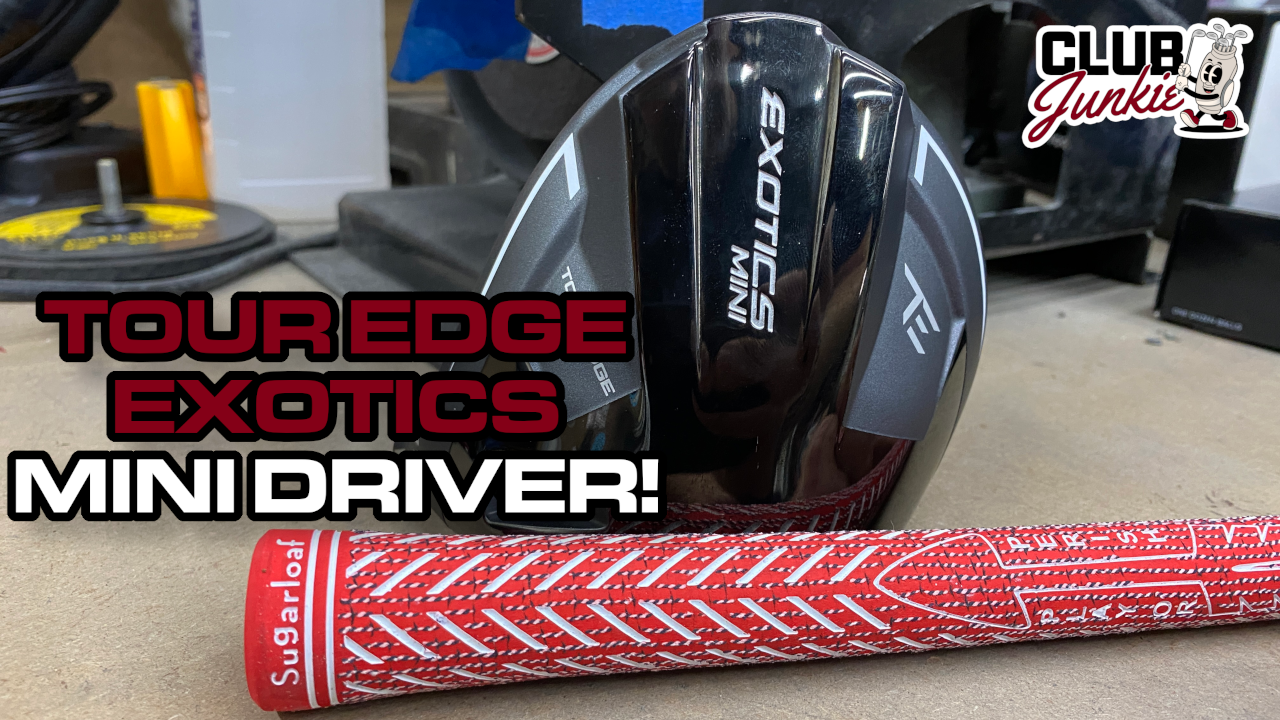
On this episode of Club Junkie, I put the new Tour Edge Exotics Mini Driver to the test and break down the performance, forgiveness, distance, and where it fits compared to a traditional driver or strong fairway wood. If you have been curious about adding a mini driver to the bag, this one is worth a look.
I also dive into the new TaylorMade Spider ZT Max putter that was recently spotted and discuss the growing zero torque putter trend. Plus, there is a closer look at the new Project X Titan Yellow shaft showing up on the PGA Tour and what makes it different from other profiles currently out there.
Opinion & Analysis
AVL: We’re talking about practice! My best tips for taking your game to the course

With the beginning of June on the horizon and courses rounding into peak condition for the season, it’s time to hone the finer skills that often get rusty over the winter. More sunlight also means more time to get out on the course and work on your game.
Whether it’s the practice green or the driving range, there’s always something to improve—whether you’re enjoying the fresh air or preparing for a weekend game or tournament. You can work on drills or freestyle around the green, and friendly competition is a great way to sharpen your skills.
While there are endless ways to get better at golf, I’m going to focus on practicing around the green. Let’s take a look at a few things to keep in mind as we head into the summer months.
Drills
From the driving range to the practice green, it’s important to incorporate drills into your routine. Years ago, I spent a weekend working on my short game with James Sieckmann. He recommended doing drill work for 5–10 minutes, then returning to your main practice.
This way, you create a balance between structured drills and real-world scenarios, so you’re not confined to “perfect” situations. For example, hitting the same three-foot putt over and over is good for repetition, but after a while, it becomes less interactive for your brain.
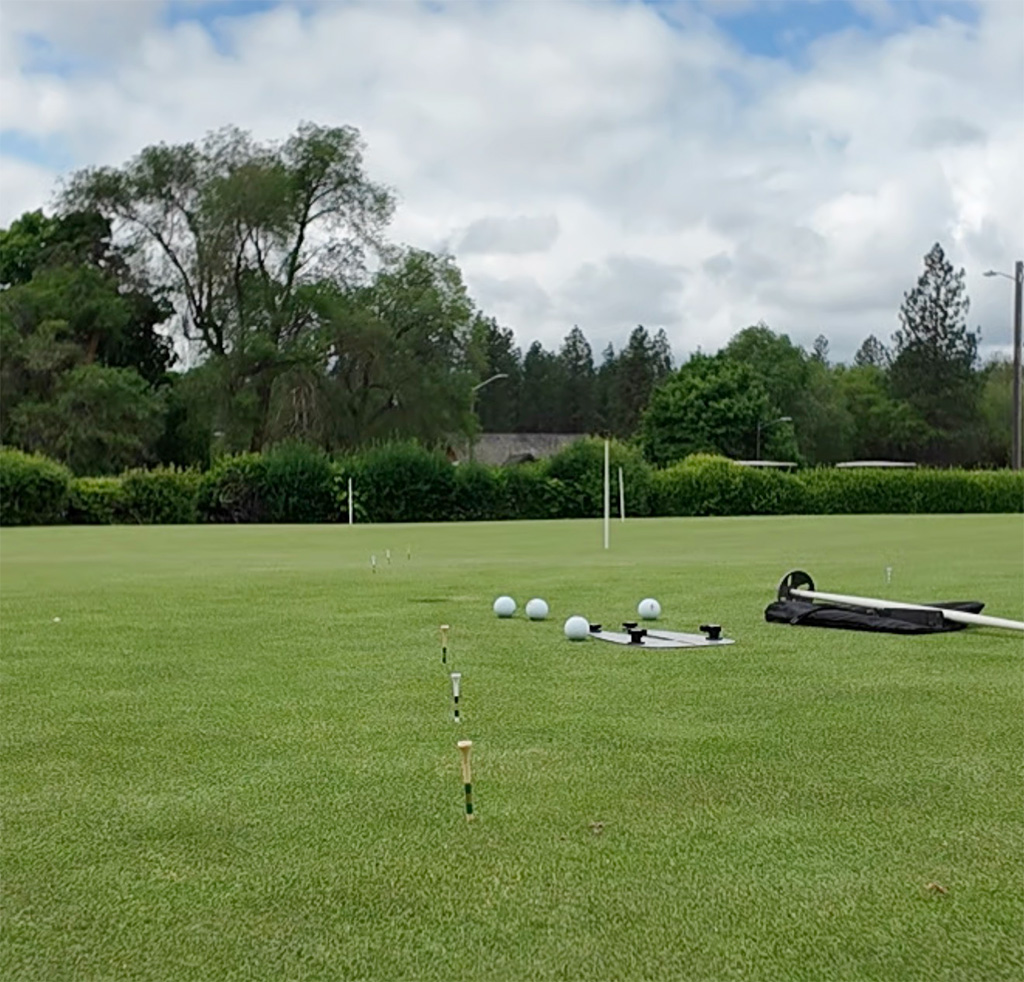
My approach is to use a putting trainer with a narrow gate for the ball to pass through, or simply place tees just outside the width of the ball. I’ll hit a series of four putts through the gate for three sets. Then, from a similar distance, I’ll hit four putts without the training aid and repeat that sequence three times.
Next, I’ll hit a number of 15–25 foot putts in a random fashion, then circle back to repeat the short putt drills with and without the training aid.
This breaks up the rhythm of hitting short putts with the training aid. When you hit the same short putts over and over, it’s easy to get into a groove—which is great for the drill, but not reflective of actual course play. While finding a rhythm is fundamental for drills, I like to introduce variation with longer putts to keep things realistic.
Game Mode
Once you’ve established a foundation with drills, it’s time to simulate on-course scenarios. This is where a few practice games come in handy.
One that I’ve been enjoying lately involves putting 10- to 15-footers with two balls. If I make the putt, great! If I miss, I pull the missed ball back a putter length. Suddenly, that little tap-in becomes a nerve-wracking three-footer—at least at first. As you get better at this game, those three- and five-footers become much more comfortable and routine.
It may sound cliché, but each shot is just what it is—it’s how we react that makes the difference. I like this game because it blends the pressure of on-course putting with the consequence of leaving yourself a much longer putt than usual.
Another game I like is one I recently learned from Brad Faxon. Place three tees in a line at four different locations around the hole: one at 3 feet, one at 6 feet, and one at 8 feet. The 3- and 6-foot putts count as par, and the 8-footer is for birdie.
This game keeps you focused on scoring and helps you get into a competitive mindset. You can even think about this putting game while you’re on the course. I just started playing it, and last week I couldn’t get better than two under par.
Competition
Competition during practice is when drills and games come to life, and you start to see results. For me, nothing beats a putting contest with a friend or two. In the right setting, these contests can become talking points for the whole season.
Match play, a game of 21, or simply seeing who can make the most one-putts (with a small prize on the line) are all great ways to simulate real on-course pressure. Recently, I played in a putting contest where one competitor made back-to-back 30- and 50-foot putts. As they say, expect your opponent to make every putt—and he nearly did. That’s impressive, and it’s something you see on the course, too: you have to stay committed to your game plan, no matter what.
When it comes to practice, it’s important to blend feedback from recent rounds with the fundamentals you want to reinforce. Drills, games, and competition—from the driving range to the putting green—form the backbone of skills you’ll rely on during actual rounds.
Finding the right balance is something we’re all working on, one practice session at a time. With the beginning of June on the horizon and courses rounding into peak condition for the season, it’s time to hone the finer skills that often get rusty over the winter. More sunlight also means more time to get out on the course and work on your game. Whether it’s the practice green or the driving range, there’s always something to improve—whether you’re enjoying the fresh air or preparing for a weekend game or tournament. You can work on drills or freestyle around the green, and friendly competition is a great way to sharpen your skills. While there are endless ways to get better at golf, I’m going to focus on practicing around the green. Let’s take a look at a few things to keep in mind as we head into the summer months.
Drills
From the driving range to the practice green, it’s important to incorporate drills into your routine. Years ago, I spent a weekend working on my short game with James Sieckmann. He recommended doing drill work for 5–10 minutes, then returning to your main practice. This way, you create a balance between structured drills and real-world scenarios, so you’re not confined to “perfect” situations. For example, hitting the same three-foot putt over and over is good for repetition, but after a while, it becomes less interactive for your brain.
My approach is to use a putting trainer with a narrow gate for the ball to pass through, or simply place tees just outside the width of the ball. I’ll hit a series of four putts through the gate for three sets. Then, from a similar distance, I’ll hit four putts without the training aid and repeat that sequence three times. Next, I’ll hit a number of 15–25 foot putts in a random fashion, then circle back to repeat the short putt drills with and without the training aid.
This breaks up the rhythm of hitting short putts with the training aid. When you hit the same short putts over and over, it’s easy to get into a groove—which is great for the drill, but not reflective of actual course play. While finding a rhythm is fundamental for drills, I like to introduce variation with longer putts to keep things realistic.
Game Mode
Once you’ve established a foundation with drills, it’s time to simulate on-course scenarios. This is where a few practice games come in handy. One that I’ve been enjoying lately involves putting 10- to 15-footers with two balls. If I make the putt, great! If I miss, I pull the missed ball back a putter length.
Suddenly, that little tap-in becomes a nerve-wracking three-footer—at least at first. As you get better at this game, those three- and five-footers become much more comfortable and routine. It may sound cliché, but each shot is just what it is—it’s how we react that makes the difference. I like this game because it blends the pressure of on-course putting with the consequence of leaving yourself a much longer putt than usual.
Another game I like is one I recently learned from Brad Faxon. Place three tees in a line at four different locations around the hole: one at 3 feet, one at 6 feet, and one at 8 feet. The 3- and 6-foot putts count as par, and the 8-footer is for birdie.
This game keeps you focused on scoring and helps you get into a competitive mindset. You can even think about this putting game while you’re on the course. I just started playing it, and last week I couldn’t get better than two under par.
Competition
Competition during practice is when drills and games come to life, and you start to see results. For me, nothing beats a putting contest with a friend or two. In the right setting, these contests can become talking points for the whole season. Match play, a game of 21, or simply seeing who can make the most one-putts (with a small prize on the line) are all great ways to simulate real on-course pressure. Recently, I played in a putting contest where one competitor made back-to-back 30- and 50-foot putts. As they say, expect your opponent to make every putt—and he nearly did. That’s impressive, and it’s something you see on the course, too: you have to stay committed to your game plan, no matter what.
When it comes to practice, it’s important to blend feedback from recent rounds with the fundamentals you want to reinforce. Drills, games, and competition—from the driving range to the putting green—form the backbone of skills you’ll rely on during actual rounds. Finding the right balance is something we’re all working on, one practice session at a time.


For Korean golfers, we always look forward to the last of the kkot-saem-chu-I for the true start of a new golf season. The term refers to a cold snap, but literally translates as “winter being jealous of the flowers beginning to bloom, thus lashing out one final time before surrendering to spring”.
A rather poetic mouthful packed into a short expression.
Koreans can be like that. Understated, yet oddly expressive at the same time. And nowhere is this more true on the golf course and in our golf bags. In fact, I suspect many Korean golfers look forward to new apparel and accessory drops more than they do actual equipment launches each year.
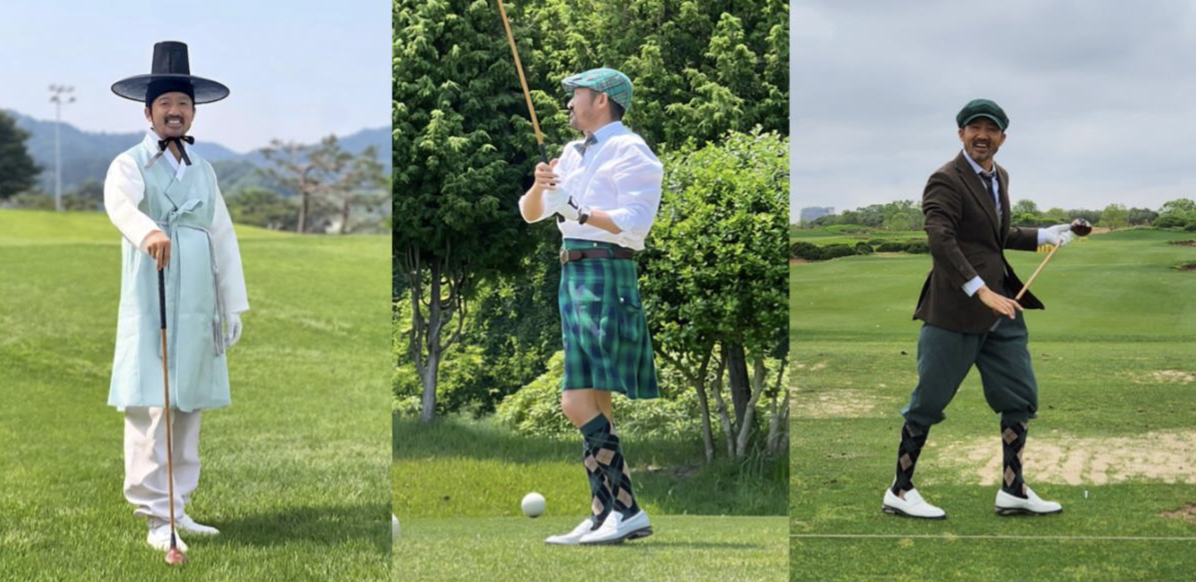
At this point, Korean golf fashion may exist on its own timeline. (courtesy of @seonbi_golfer)
There is ample evidence to support that suspicion. Korea is the world’s third-largest golf market behind the United States and Japan, yet its appetite for golf apparel exceeds that of both countries combined. Recent estimates suggest that Korea accounts for nearly 40 percent of the global golf apparel market, placing it among the world’s most influential golf fashion markets and punching well above its size.
Simply, we care deeply about how new golf clubs look and feel, but enjoy looking good while swinging them even more.
Golfers in the West may laugh and say that golf is played on a course, not a fashion runway. Perhaps. But what’s the harm in trying to look and feel good, if the added self-confidence can help actual performance? It certainly seems to have worked for Jason Day, who may have unlocked a new stats category: dormant strokes gained. Coincidence?

During the COVID-era, estimates placed the market near $9 billion, an astonishing figure for a single country.
As a proud member of Gen X, I’ve witnessed the highs and lows of golf fashion firsthand. The pleated trousers and wing-tipped shoes of Jack Nicklaus, the stylish plus-fours and knickers of Payne Stewart, the baggy black trousers and fitted mock-necks of Tiger Woods, and the thigh-hugging athletic tailoring of Rory McIlroy. Golf fashion, like the golf swing itself, has rarely stood still.
But nowhere have those trends shifted, evolved, and been scrutinized quite as relentlessly as in Korea. Here, golf fashion moves faster than fairway gossip, and consumers dissect brands with a level of discernment that can be both impressive and mildly terrifying. New brands are studied, judged, embraced, or dismissed with startling efficiency.
The result is a consumer base with one of the sharpest eyes for quality and authenticity anywhere in the world. It is difficult to quantify, but easy to recognize. Clean lines without trying too hard. Luxury mixed with utility. Trend awareness balanced by restraint and purpose.
It’s golf fashion shaped by one of the world’s most style-literate cities, something I like to call Seoul Sensibilities, referring to the taste level forged by a uniquely competitive environment.
And increasingly, global brands have noticed.

Many golf brands in Korea have their own flagship shops dedicated to apparel only
Titleist understood this years ago, when its apparel business in Korea took on a life of its own under new ownership and local direction. What had once been a straightforward extension of an iconic equipment giant became something sharper and more premium. By going all in on the serious Tour-player look (I couldn’t even fit into their XL sizes), Titleist struck the right chord with Korean consumers and helped its fledgling apparel business break into the mainstream. Titleist became a household name even for non-golfers who wore its caps, shirts, and windbreakers in daily life. In many ways, it proved that even heritage golf brands could carry real fashion credibility when viewed through a Korean lens.
Several years later, PXG took a page out of Titleist’s playbook and followed suit. Korean consumers helped transform the brand from one known largely for irons and loud commercials into something broader and more stylish. PXG apparel’s growth in Korea was explosive, where it found an early audience and turned the category into something more than mere logo merchandise. It is still hard to walk anywhere in Seoul without seeing its palindrome logo.
Malbon’s meteoric rise in the United States was genuine, but its ascent into a global golf lifestyle brand owes much to Korea, where it was elevated by a market already fluent in modern golf style. Korea did not simply embrace Malbon. It pressure-tested the concept, refined its appeal, and helped push it into the global spotlight.
As such, new brands may arrive from abroad, but more often than not, their sharpest evolution happens here. If a brand can earn credibility in Seoul, it’s deemed to have passed one of the toughest style audits in the game.
That is why the next meaningful chapter may not come from outside, but from a Korean brand moving in the opposite direction, carrying those Seoul Sensibilities outward as K-pop once did.

Play young Stay dope.
From Seoul, With Intent
Khalhon is a label that feels less like a trend-chasing newcomer and more like the product of a market that has already seen everything. Golfers here have long been surrounded by luxury logos, technical fabrics, and tour uniforms disguised as lifestyle wear and vice-versa. In other words, novelty alone rarely lasts here, and the Koreans seems to understand that instinctively.
Its style language leans into clean silhouettes, relaxed but tailored proportions, muted palettes, and premium materials that speak quietly but confidently. There is a modern city aesthetic running through it all, with strong layering pieces, thoughtful textures, and subtle branding that suggests sophistication rather than demanding attention.

“Built for the course. Designed beyond it.”
Most importantly, the garments seem designed to blur the line between golfwear and everyday style. Shirts, trousers, knitwear, and outer layers move comfortably between a game of screen golf, a lunch reservation, an airport gate, or an afternoon coffee in Gangnam with friends.
It raises the question of whether this is golfwear that happens to look good off the course, or everyday clothing that performs beautifully on the fairways.
Personally, I have long appreciated Nike Golf for its clean, athletic modernization of golf attire. It also has the useful side effect of making me look like a more serious golfer than I probably am. But off the course, there are times when being instantly identified as the golf guy in a crowd of non-golfers can feel a touch self-conscious.

“Built for the course. Designed beyond it.”
That is part of what drew me to Khalhon, which seemed to blend golf and everyday wear naturally. While some of the outfits may be slightly beyond my personal confidence level, the brand also offers tasteful options for older guys like me who still want to express a little personality without regretting the decision later.
These are not simply flashy outfits worn on the course and then banished to the closet until the next tee time. They work surprisingly well off the course too, and I suspect many of the pieces will still look right a couple of years from now, which would certainly be kinder to my wallet than most golf fashion trends tend to be.
And perhaps that broader lifestyle positioning also helps explain why someone like Sean Wotherspoon would find Khalhon creatively interesting in the first place.

“Built for the course. Designed beyond it.”
“Korea is not only one of the most fashion-forward golf markets in the world, but one of the most fashion-forward markets globally. Korea is ahead, and I love to watch and try to catch up.” – Sean Wotherspoon, Creative Director at Khalhon
Seoul and Beyond
If Khalhon’s rise says something about where Korean golf fashion is today, its relationship with Sean Wotherspoon says even more about where it is heading.
For readers less familiar with Sean Wotherspoon, his arrival at Khalhon is not some routine celebrity endorsement or influencer collaboration. In design and streetwear circles, Wotherspoon is regarded as one of the more influential creative voices of his generation, particularly when it comes to blending nostalgia, storytelling, and contemporary culture into products that people can connect with.
He first gained widespread attention through his now-famous Nike sneaker collaborations, where his vintage-inspired designs and instinct for color helped turn him into one of the defining artists of the late-2010s sneaker era. His work gradually expanded beyond footwear into apparel, automotive collaborations, collectibles, and broader lifestyle design.
Modern golf style now extends well beyond the fairways, where performance and functionality are largely expected by default. And while plenty of brands already make technically competent golfwear, Khalhon seems more focused on designing clothes people would genuinely want to wear even after the round ends.
And when guys at Wotherspoon’s level show genuine interest in working with a Korean golf brand as its new Creative Director, fashion circles tend to sit up and pay attention. There’s already a huge buzz among the fashion-conscious here about upcoming collabs with iconic sports stars and brands.

“My creative direction for Khalhon is disruptive, colorful, nostalgic, and modern. My goal is to blend these avenues seamlessly within each collection.” – Sean Wotherspoon
In chatting with Sean, what stood out most to me was how genuinely energized he sounded about the project itself. Despite having already worked across and countless other creative spaces, he described golf as a completely fresh category for him, saying that Khalhon “will be an amazing vehicle for my design work.”
At the same time, his enthusiasm seemed tied just as much to Korea itself. He spoke openly about admiring Korea’s fashion culture while repeatedly insisting he is still a terrible golfer.
There was something oddly refreshing about that humility. Rather than sounding like a celebrity parachuting into golf simply because the category suddenly became fashionable, Sean sounded genuinely curious about what Korea might do with the category next.
And perhaps that is what makes Khalhon feel interesting right now. The brand feels less like a trend-chaser and more like the natural result of a market now confident enough to export its own point of view.
For years, global brands came to Korea to sharpen their image against one of the most discerning audiences anywhere. Now, a Korean label appears ready to send those Seoul Sensibilities outward instead.
Which brings us back to kkot-saem-chu-i.
That final cold snap before spring always arrives with a reminder that seasons are changing, whether we notice it immediately or not. Golf fashion feels a little like that right now as well, as the old boundaries between sport, streetwear, luxury, and everyday style continue to soften.
And somewhere in Seoul, a Korean golf label already seems prepared for whatever season comes next. I just hope they have everything in my size.

Aaron Rai’s winning WITB: 2026 PGA Championship

Russell Henley’s winning WITB: 2026 Charles Schwab Challenge

Photos from the 2026 CJ Cup Byron Nelson

CJ Cup Byron Nelson Tour Report: Koepka and Kim’s newest putters finally get hot

Charles Schwab Challenge Tour Report: MacIntyre, Åberg and Spaun all switch putters, TaylorMade launches new Spider

Details on J.J. Spaun’s surprise putter switch

GolfWRX Launch Report: 2026 Titleist GTS drivers

Photos from the 2026 Charles Schwab Challenge

PGA Championship Tour Report: Fitzpatrick, Koepka among big-name putter switches for Aronimink

Photos from the ShopRite LPGA


Maria Torres WITB 2026 (June)
Driver: Ping G440 LST (9 degrees) Shaft: Accra TourZ Green 5-M4 3-wood: Ping G440 Max (15 degrees) Shaft: Accra TourZ Green 6-M4 5-wood: Ping G440...


Eric Cole WITB 2026 (June)
Driver: PXG Lightning Tour Max (9 degrees) Shaft: Project X Titan Yellow 70 TX 3-wood: TaylorMade Qi4D (15 degrees) Shaft:...


Si Woo Kim WITB 2026 (May)
Driver: Callaway Quantum Triple Diamond (8.5 degrees) Shaft: Fujikura Ventus Black 6 X Mini driver: Callaway Paradym Ai Smoke Mini...


Wyndham Clark’s winning WITB: 2026 CJ Cup Byron Nelson
Driver: TaylorMade Qi4D (10.5 degrees) Shaft: Project X Titan Yellow 60 TX 3-wood: TaylorMade Qi4D Tour (15 degrees) Shaft: Project...


Pingback: The More You Improve, The Harder It Gets | Self Help QA
Pingback: The More You Improve, The Harder It Gets : The Art of Non-Conformity
8thehardway
Mar 22, 2013 at 10:22 am
He would be a great candidate for Big Break… unique and compelling story, installed fan base, mutual promotion/exposure, etc.
joe
Mar 21, 2013 at 1:52 pm
Awesome! wish i had the balls to do this!
Marshall
Mar 21, 2013 at 10:21 am
Loved the article! I have been playing golf for about 8 months, and I can fully relate to his mission. I’ve put in about 1,500 hours while also attending school. I’ll definitely continue following the Dan Plan.
Good luck and I look forward to updates!
Rusty Cage
Mar 21, 2013 at 10:44 am
Marshall,
Thanks for sharing your experience. Feel free to contact Dan McLaughlin directly through this website – http://thedanplan.com – he’s open to discussing different ways to practice and train. Best of luck on your journey.
Frank Dolan
Mar 20, 2013 at 5:08 pm
Another great article Rusty. This one was a homerun – keep up the good work I enjoy them all.
Frank Dolan
“The Villages”, FL
j
Mar 20, 2013 at 1:14 pm
It’s good for the game. Best wishes man. Look forward to the updates.
Ed L
Mar 20, 2013 at 1:06 pm
I’ve been following The Dan Plan for over a year now, competed against Dan in a few local events last summer and Fall and was paired with him in the 2nd round of the PNGA Mid-Am. As a golfer with almost 30 years invested in the game, it has been fascinating to observe Dan’s journey and see the response from other golfers.
The biggest thing that Dan has going for him is his determination and dedication to the entire project. What drove him to undertake this project wasn’t really a love for the game, but a curiosity about the nature/nurture argument and the forces that contribute to achieving excellence in any field. Whether he makes it on the PGA Tour at the end of 10,000 hours of practice isn’t the point of the whole venture, but merely a measurable goal to a hypothesis.
For me, it’s hard to imagine any golfer not admiring the idea of truly dedicating one’s time and energy to see just how good you could get. I’ve been very surprised at some of the negative reactions from other golfers regarding Dan’s quest. I would think some of those negative vibes are just from jealousy. I’d guess that others feel offended by a novice having such grand, specific goals to be achieved in such a short time frame (relatively speaking). The notion that you have to pay your dues and suffer like the rest of us golfers in order to achieve anything in this demanding game.
The Dan Plan embodies the dreams that many of us golfers have. How good could I be if I really dedicated myself to practicing? Do I have the dedication to persist and see it through? Dan has made the sacrifices to make it happen and it’s very apparent that he’s focused on seeing through in the right way. Can’t wait to see where he ends up at the 10,000 hour mark.