
Opinion & Analysis
The Statistical Differences Between a Scratch Golfer and PGA Tour Player

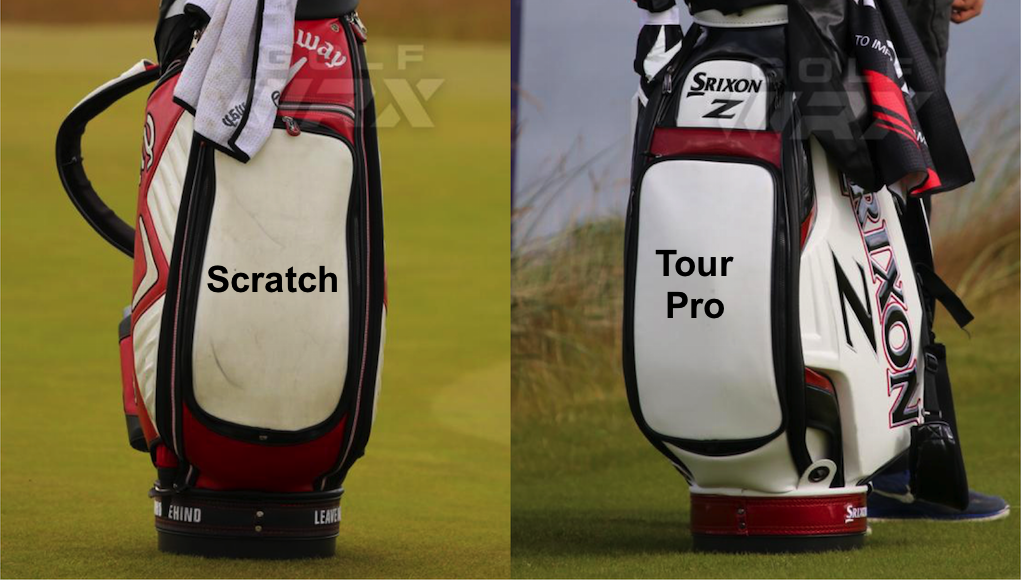
You might ask: How would I know the differences between a scratch golfer and a PGA Tour player? Well, it is my full-time job to know these type of things about golf. I have been studying the game from a statistical standpoint for 27 years. I created the Strokes Gained analysis website, ShotByShot.com, and work with PGA Tour members to extract clear answers from the Tour’s overwhelming 653 ShotLink stats.
My experience tells me that there is no such thing as an average game, no matter the handicap level. We’re all snowflakes and find our own unique way to shoot our number. With that said, ShotByShot.com’s 260,000+ round database enables us to create a composite sketch of the average golfer at each level. One of the beauties of our averages is that they are smooth across all five major facets so that every individual golfer’s strengths and weaknesses — and we all have them — stand out clearly by comparison.
The Data Used for this Study
- Mr. Scratch: I averaged the 8,360 rounds in our database that match the zero handicap criteria. In other words, the rounds when Mr. Scratch actually played to his 0 handicap.
- PGA Tour: The average of the 14,557 ShotLink rounds recorded in the 2015 season.
The Math
The USGA’s Course and Slope rating system does a sophisticated job of evaluating the relative difficulty of our golf courses. I joined my local course rating committee shortly after the new “Slope” system was added. My specific goal was to gain an understanding of how the system works so that I could effectively apply it in my analysis program.

For the purposes of this article, the Course Rating reflects the relative course par for the scratch golfer. The chart below tells us that the PGA Tour scoring average is 2.25 strokes better than Mr. Scratch. Further, Tour players are playing courses that are 3.2 strokes more difficult. The net result is a 5.45-shot difference between Tour players and Mr. Scratch, but let’s just call it 5.5.
Driving
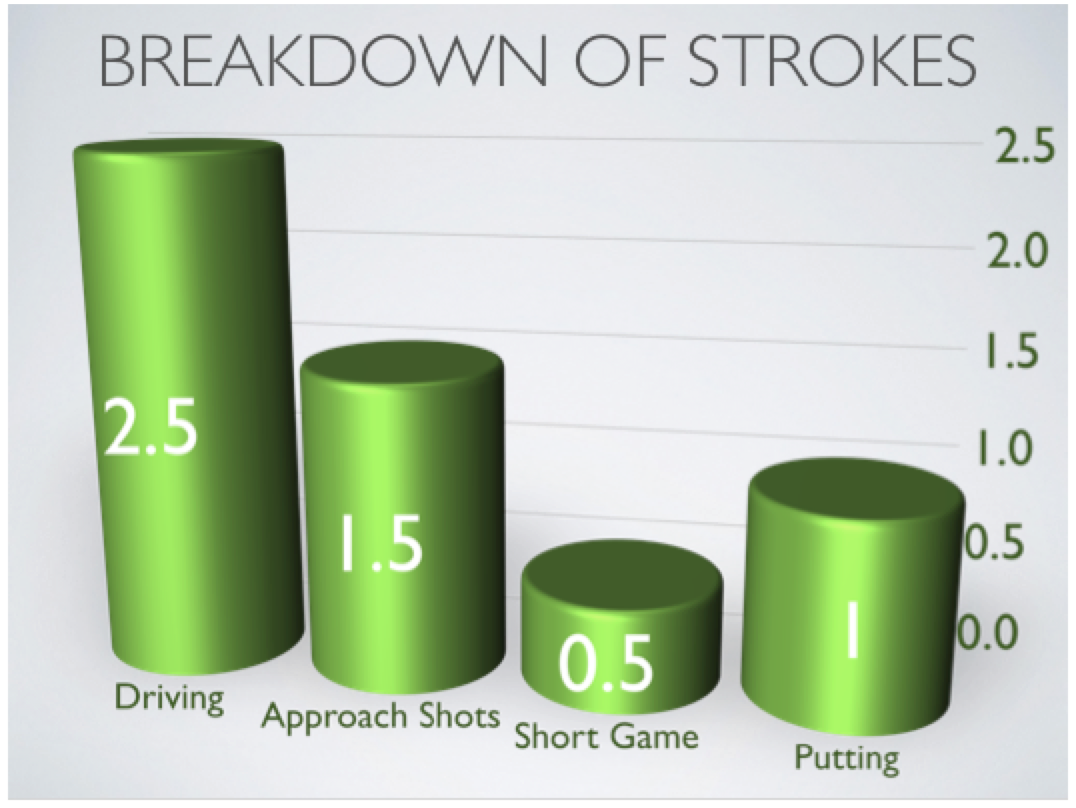
The chart above shows us that the biggest piece of the 5.5-shot pie falls into the Driving category, or Distance, which makes sense to me. To play the game for a living, one must be able to hit it straight and far. Even Zach Johnson, with whom I have had the great pleasure of working with for five years, is often considered a short hitter. I contend that he is simply more intelligent and recognizes the true value of accuracy. Zach is averaging 281 yards this year, only seven off of the Tour average. Short? Not by my standards.
The chart below indicates that the driving distance gap between the Tour and Mr. Scratch is 33 yards. The average approach shot distance on the PGA Tour is 175 yards. Adding the 33 yards to all 14 driving holes puts Mr. Scratch’s average approach distance at just over 205 yards. The Strokes Gained value of this added distance is 2.52 strokes (0.18 per attempt x 14 driving holes = 2.52).
Accuracy and Errors Per Round
Mr. Scratch appears slightly better than the Tour in accuracy and errors per round. With added distance inevitably comes some reduced accuracy and more errors. I believe this slight edge would more than disappear if Mr. Scratch were using the Tour’s big-boy tees.

*Driving errors = Balls hit out of play, penalties, or shots requiring an advancement to return to normal play.
Approach Shots
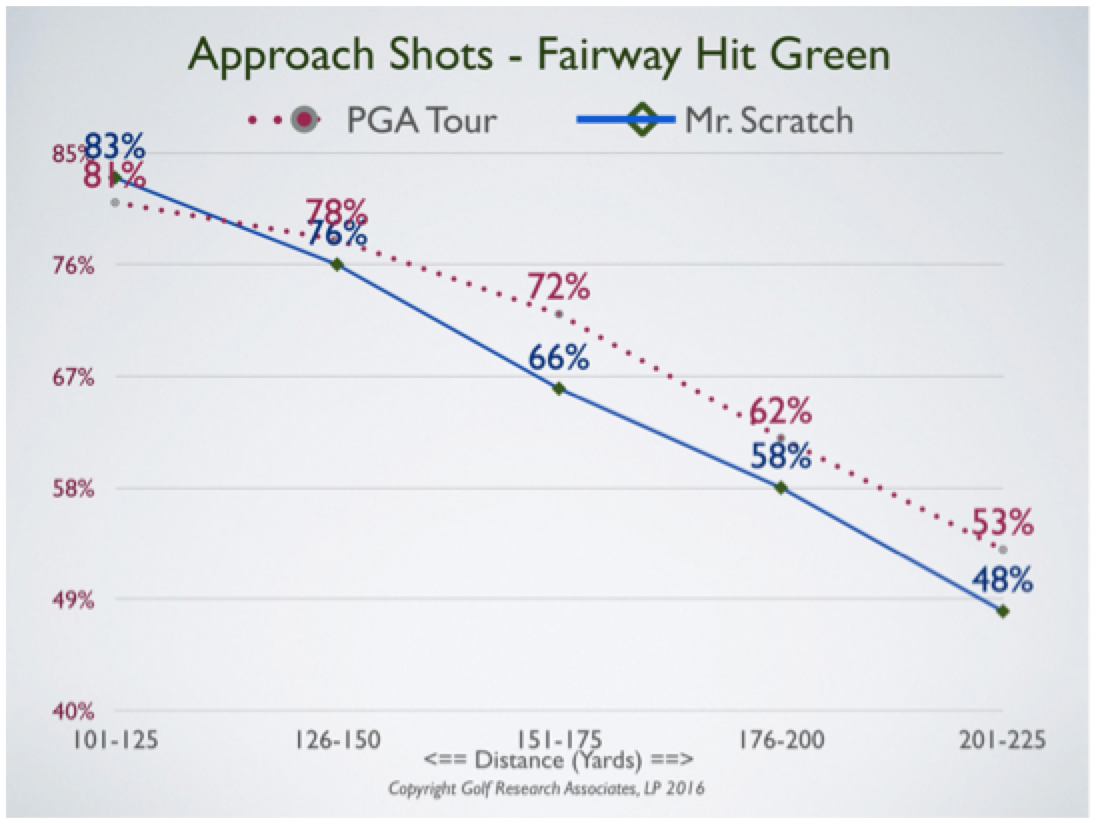
As you can see by the chart below, Mr. Scratch is slightly less accurate from the distances that account for 80 percent of the Tour approach attempts. I estimate that Mr. Scratch’s reduced accuracy would account for at least two fewer GIR’s per round, at a cost of 1.5 strokes. It is interesting to note that Mr. Scratch incurs an approach penalty with the same frequency as the Tour average (1 in every 5 rounds).
Short Game
Mr. Scratch leaves his successful short game shots 1 foot farther from the hole. This difference in the range of 7-10 feet is worth 0.08 Strokes Gained. When multiplied by seven short game shots per round it’s 0.56 strokes, but we’ll call it half a stroke.


I am ignoring the minor difference in errors (shots that miss the green). My theory is that Mr. Scratch attains his excellent scoring level through meticulous short game consistency. The Tour players are so good that they try to get even highest-risk shots close to the hole, confident that if they miss the green they will save the next — which they do 75 percent of the time. In 2015, only 25 percent of the short game shots that missed the green took more than three strokes to finally hole out.
Putting
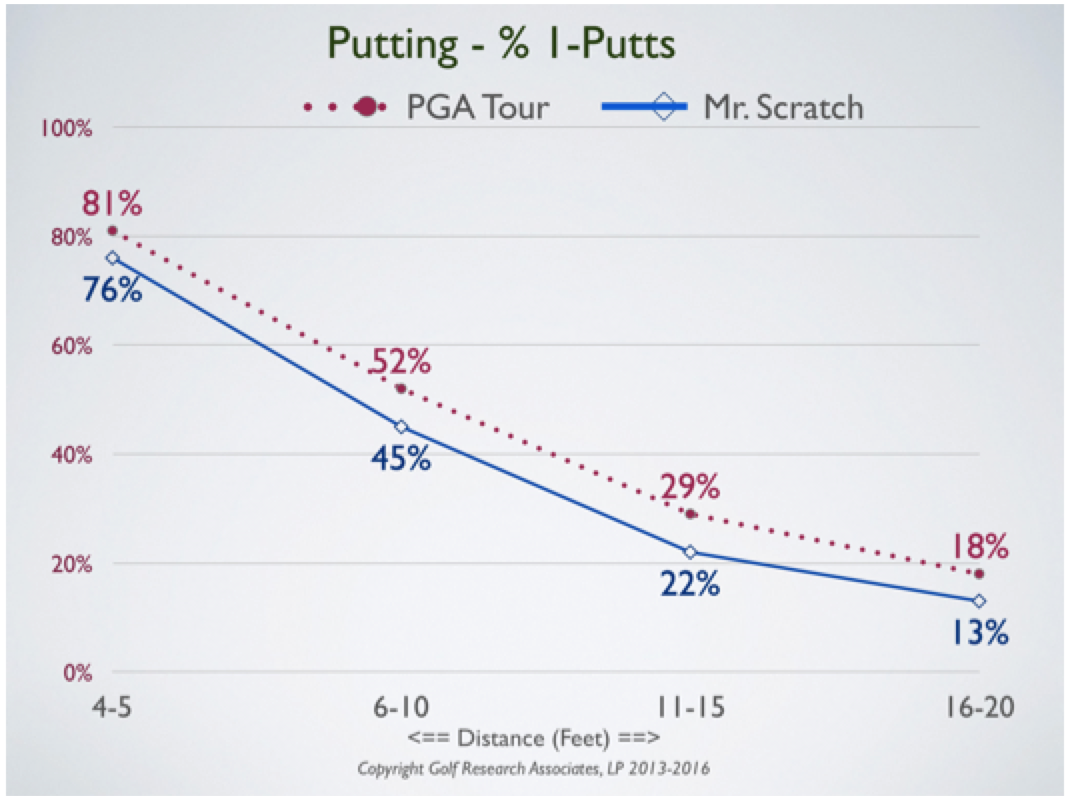
As you can see from the chart below, Mr. Scratch is slightly less proficient in the ranges that account for the vast majority of 1-Putt opportunities on Tour. Mr. Scratch also 3-Putts 38 percent more frequently than the Tour average. The Strokes Gained impact of these differences over 18 holes would be 0.9 strokes — let’s call it 1 stroke.
Conclusion
Bottom line, there is a measurable 5.5 stroke difference between Mr. Scratch and PGA Tour players. I have obviously not factored in the immeasurable effect of the added pressure and stress of teeing it up in a Tour event. Anyone who has participated in a PGA Tour Pro-Am will attest to the electric atmosphere and amplified pressure that comes with the experience.
If you want to try to get on the PGA Tour, your handicap needs to be a solid +3. If you want to support a family playing on tour, your handicap should be +5. Much easier said than done, however.


Club Junkie
Tour Edge Exotics mini driver review + TaylorMade Spider ZT Max first look – Club Junkie

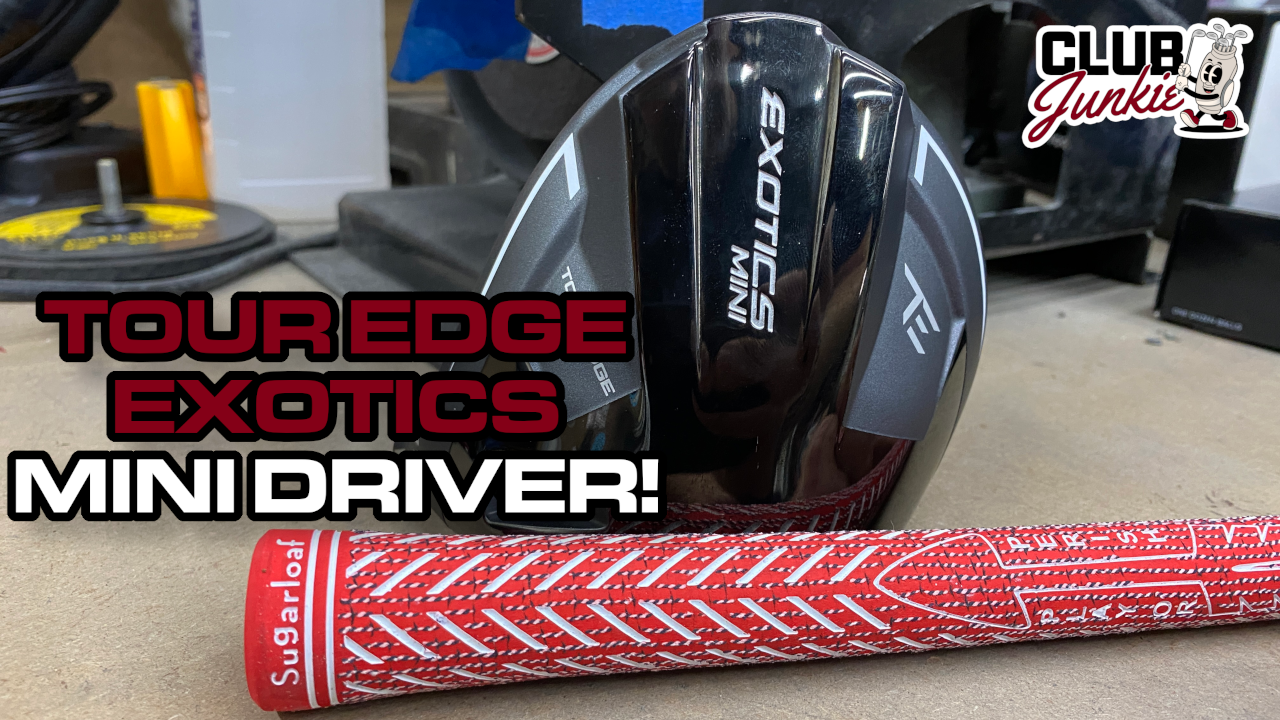
On this episode of Club Junkie, I put the new Tour Edge Exotics Mini Driver to the test and break down the performance, forgiveness, distance, and where it fits compared to a traditional driver or strong fairway wood. If you have been curious about adding a mini driver to the bag, this one is worth a look.
I also dive into the new TaylorMade Spider ZT Max putter that was recently spotted and discuss the growing zero torque putter trend. Plus, there is a closer look at the new Project X Titan Yellow shaft showing up on the PGA Tour and what makes it different from other profiles currently out there.
Opinion & Analysis
AVL: We’re talking about practice! My best tips for taking your game to the course

With the beginning of June on the horizon and courses rounding into peak condition for the season, it’s time to hone the finer skills that often get rusty over the winter. More sunlight also means more time to get out on the course and work on your game.
Whether it’s the practice green or the driving range, there’s always something to improve—whether you’re enjoying the fresh air or preparing for a weekend game or tournament. You can work on drills or freestyle around the green, and friendly competition is a great way to sharpen your skills.
While there are endless ways to get better at golf, I’m going to focus on practicing around the green. Let’s take a look at a few things to keep in mind as we head into the summer months.
Drills
From the driving range to the practice green, it’s important to incorporate drills into your routine. Years ago, I spent a weekend working on my short game with James Sieckmann. He recommended doing drill work for 5–10 minutes, then returning to your main practice.
This way, you create a balance between structured drills and real-world scenarios, so you’re not confined to “perfect” situations. For example, hitting the same three-foot putt over and over is good for repetition, but after a while, it becomes less interactive for your brain.
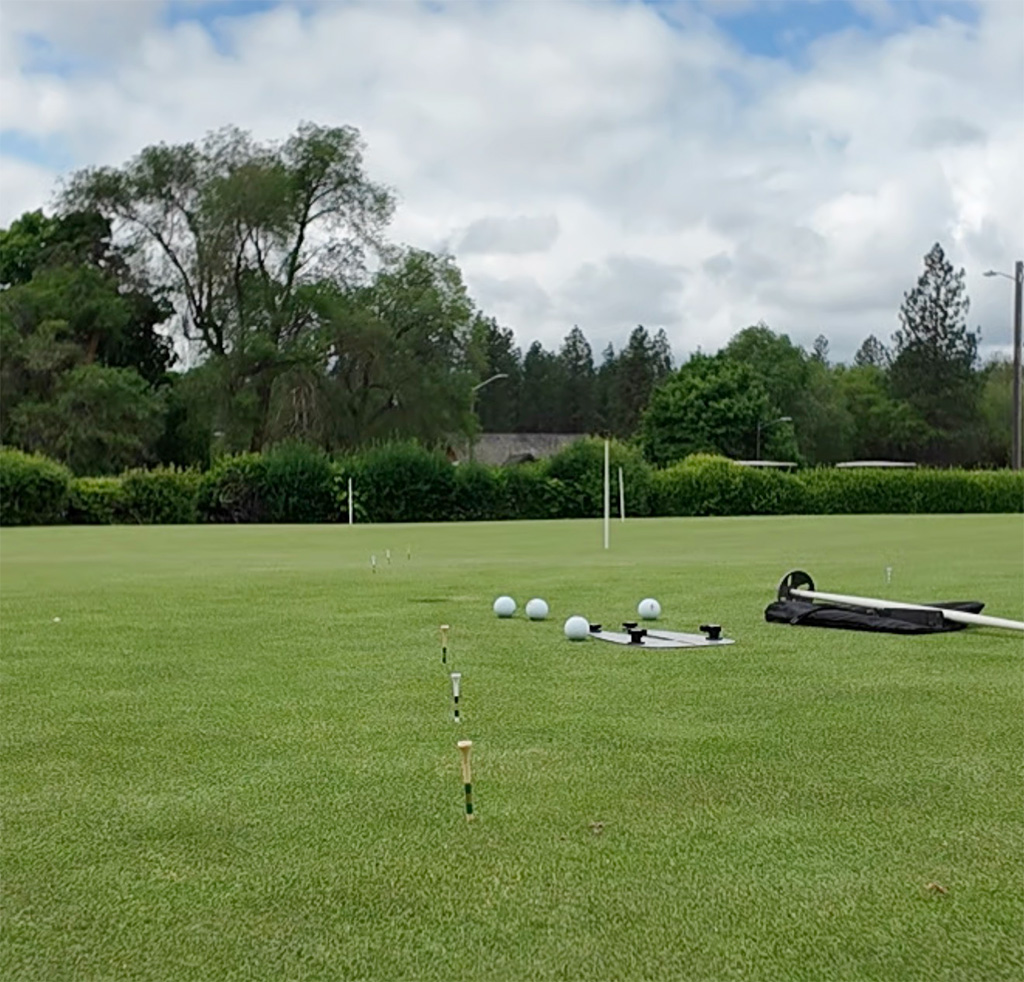
My approach is to use a putting trainer with a narrow gate for the ball to pass through, or simply place tees just outside the width of the ball. I’ll hit a series of four putts through the gate for three sets. Then, from a similar distance, I’ll hit four putts without the training aid and repeat that sequence three times.
Next, I’ll hit a number of 15–25 foot putts in a random fashion, then circle back to repeat the short putt drills with and without the training aid.
This breaks up the rhythm of hitting short putts with the training aid. When you hit the same short putts over and over, it’s easy to get into a groove—which is great for the drill, but not reflective of actual course play. While finding a rhythm is fundamental for drills, I like to introduce variation with longer putts to keep things realistic.
Game Mode
Once you’ve established a foundation with drills, it’s time to simulate on-course scenarios. This is where a few practice games come in handy.
One that I’ve been enjoying lately involves putting 10- to 15-footers with two balls. If I make the putt, great! If I miss, I pull the missed ball back a putter length. Suddenly, that little tap-in becomes a nerve-wracking three-footer—at least at first. As you get better at this game, those three- and five-footers become much more comfortable and routine.
It may sound cliché, but each shot is just what it is—it’s how we react that makes the difference. I like this game because it blends the pressure of on-course putting with the consequence of leaving yourself a much longer putt than usual.
Another game I like is one I recently learned from Brad Faxon. Place three tees in a line at four different locations around the hole: one at 3 feet, one at 6 feet, and one at 8 feet. The 3- and 6-foot putts count as par, and the 8-footer is for birdie.
This game keeps you focused on scoring and helps you get into a competitive mindset. You can even think about this putting game while you’re on the course. I just started playing it, and last week I couldn’t get better than two under par.
Competition
Competition during practice is when drills and games come to life, and you start to see results. For me, nothing beats a putting contest with a friend or two. In the right setting, these contests can become talking points for the whole season.
Match play, a game of 21, or simply seeing who can make the most one-putts (with a small prize on the line) are all great ways to simulate real on-course pressure. Recently, I played in a putting contest where one competitor made back-to-back 30- and 50-foot putts. As they say, expect your opponent to make every putt—and he nearly did. That’s impressive, and it’s something you see on the course, too: you have to stay committed to your game plan, no matter what.
When it comes to practice, it’s important to blend feedback from recent rounds with the fundamentals you want to reinforce. Drills, games, and competition—from the driving range to the putting green—form the backbone of skills you’ll rely on during actual rounds.
Finding the right balance is something we’re all working on, one practice session at a time. With the beginning of June on the horizon and courses rounding into peak condition for the season, it’s time to hone the finer skills that often get rusty over the winter. More sunlight also means more time to get out on the course and work on your game. Whether it’s the practice green or the driving range, there’s always something to improve—whether you’re enjoying the fresh air or preparing for a weekend game or tournament. You can work on drills or freestyle around the green, and friendly competition is a great way to sharpen your skills. While there are endless ways to get better at golf, I’m going to focus on practicing around the green. Let’s take a look at a few things to keep in mind as we head into the summer months.
Drills
From the driving range to the practice green, it’s important to incorporate drills into your routine. Years ago, I spent a weekend working on my short game with James Sieckmann. He recommended doing drill work for 5–10 minutes, then returning to your main practice. This way, you create a balance between structured drills and real-world scenarios, so you’re not confined to “perfect” situations. For example, hitting the same three-foot putt over and over is good for repetition, but after a while, it becomes less interactive for your brain.
My approach is to use a putting trainer with a narrow gate for the ball to pass through, or simply place tees just outside the width of the ball. I’ll hit a series of four putts through the gate for three sets. Then, from a similar distance, I’ll hit four putts without the training aid and repeat that sequence three times. Next, I’ll hit a number of 15–25 foot putts in a random fashion, then circle back to repeat the short putt drills with and without the training aid.
This breaks up the rhythm of hitting short putts with the training aid. When you hit the same short putts over and over, it’s easy to get into a groove—which is great for the drill, but not reflective of actual course play. While finding a rhythm is fundamental for drills, I like to introduce variation with longer putts to keep things realistic.
Game Mode
Once you’ve established a foundation with drills, it’s time to simulate on-course scenarios. This is where a few practice games come in handy. One that I’ve been enjoying lately involves putting 10- to 15-footers with two balls. If I make the putt, great! If I miss, I pull the missed ball back a putter length.
Suddenly, that little tap-in becomes a nerve-wracking three-footer—at least at first. As you get better at this game, those three- and five-footers become much more comfortable and routine. It may sound cliché, but each shot is just what it is—it’s how we react that makes the difference. I like this game because it blends the pressure of on-course putting with the consequence of leaving yourself a much longer putt than usual.
Another game I like is one I recently learned from Brad Faxon. Place three tees in a line at four different locations around the hole: one at 3 feet, one at 6 feet, and one at 8 feet. The 3- and 6-foot putts count as par, and the 8-footer is for birdie.
This game keeps you focused on scoring and helps you get into a competitive mindset. You can even think about this putting game while you’re on the course. I just started playing it, and last week I couldn’t get better than two under par.
Competition
Competition during practice is when drills and games come to life, and you start to see results. For me, nothing beats a putting contest with a friend or two. In the right setting, these contests can become talking points for the whole season. Match play, a game of 21, or simply seeing who can make the most one-putts (with a small prize on the line) are all great ways to simulate real on-course pressure. Recently, I played in a putting contest where one competitor made back-to-back 30- and 50-foot putts. As they say, expect your opponent to make every putt—and he nearly did. That’s impressive, and it’s something you see on the course, too: you have to stay committed to your game plan, no matter what.
When it comes to practice, it’s important to blend feedback from recent rounds with the fundamentals you want to reinforce. Drills, games, and competition—from the driving range to the putting green—form the backbone of skills you’ll rely on during actual rounds. Finding the right balance is something we’re all working on, one practice session at a time.


For Korean golfers, we always look forward to the last of the kkot-saem-chu-I for the true start of a new golf season. The term refers to a cold snap, but literally translates as “winter being jealous of the flowers beginning to bloom, thus lashing out one final time before surrendering to spring”.
A rather poetic mouthful packed into a short expression.
Koreans can be like that. Understated, yet oddly expressive at the same time. And nowhere is this more true on the golf course and in our golf bags. In fact, I suspect many Korean golfers look forward to new apparel and accessory drops more than they do actual equipment launches each year.

At this point, Korean golf fashion may exist on its own timeline. (courtesy of @seonbi_golfer)
There is ample evidence to support that suspicion. Korea is the world’s third-largest golf market behind the United States and Japan, yet its appetite for golf apparel exceeds that of both countries combined. Recent estimates suggest that Korea accounts for nearly 40 percent of the global golf apparel market, placing it among the world’s most influential golf fashion markets and punching well above its size.
Simply, we care deeply about how new golf clubs look and feel, but enjoy looking good while swinging them even more.
Golfers in the West may laugh and say that golf is played on a course, not a fashion runway. Perhaps. But what’s the harm in trying to look and feel good, if the added self-confidence can help actual performance? It certainly seems to have worked for Jason Day, who may have unlocked a new stats category: dormant strokes gained. Coincidence?

During the COVID-era, estimates placed the market near $9 billion, an astonishing figure for a single country.
As a proud member of Gen X, I’ve witnessed the highs and lows of golf fashion firsthand. The pleated trousers and wing-tipped shoes of Jack Nicklaus, the stylish plus-fours and knickers of Payne Stewart, the baggy black trousers and fitted mock-necks of Tiger Woods, and the thigh-hugging athletic tailoring of Rory McIlroy. Golf fashion, like the golf swing itself, has rarely stood still.
But nowhere have those trends shifted, evolved, and been scrutinized quite as relentlessly as in Korea. Here, golf fashion moves faster than fairway gossip, and consumers dissect brands with a level of discernment that can be both impressive and mildly terrifying. New brands are studied, judged, embraced, or dismissed with startling efficiency.
The result is a consumer base with one of the sharpest eyes for quality and authenticity anywhere in the world. It is difficult to quantify, but easy to recognize. Clean lines without trying too hard. Luxury mixed with utility. Trend awareness balanced by restraint and purpose.
It’s golf fashion shaped by one of the world’s most style-literate cities, something I like to call Seoul Sensibilities, referring to the taste level forged by a uniquely competitive environment.
And increasingly, global brands have noticed.

Many golf brands in Korea have their own flagship shops dedicated to apparel only
Titleist understood this years ago, when its apparel business in Korea took on a life of its own under new ownership and local direction. What had once been a straightforward extension of an iconic equipment giant became something sharper and more premium. By going all in on the serious Tour-player look (I couldn’t even fit into their XL sizes), Titleist struck the right chord with Korean consumers and helped its fledgling apparel business break into the mainstream. Titleist became a household name even for non-golfers who wore its caps, shirts, and windbreakers in daily life. In many ways, it proved that even heritage golf brands could carry real fashion credibility when viewed through a Korean lens.
Several years later, PXG took a page out of Titleist’s playbook and followed suit. Korean consumers helped transform the brand from one known largely for irons and loud commercials into something broader and more stylish. PXG apparel’s growth in Korea was explosive, where it found an early audience and turned the category into something more than mere logo merchandise. It is still hard to walk anywhere in Seoul without seeing its palindrome logo.
Malbon’s meteoric rise in the United States was genuine, but its ascent into a global golf lifestyle brand owes much to Korea, where it was elevated by a market already fluent in modern golf style. Korea did not simply embrace Malbon. It pressure-tested the concept, refined its appeal, and helped push it into the global spotlight.
As such, new brands may arrive from abroad, but more often than not, their sharpest evolution happens here. If a brand can earn credibility in Seoul, it’s deemed to have passed one of the toughest style audits in the game.
That is why the next meaningful chapter may not come from outside, but from a Korean brand moving in the opposite direction, carrying those Seoul Sensibilities outward as K-pop once did.

Play young Stay dope.
From Seoul, With Intent
Khalhon is a label that feels less like a trend-chasing newcomer and more like the product of a market that has already seen everything. Golfers here have long been surrounded by luxury logos, technical fabrics, and tour uniforms disguised as lifestyle wear and vice-versa. In other words, novelty alone rarely lasts here, and the Koreans seems to understand that instinctively.
Its style language leans into clean silhouettes, relaxed but tailored proportions, muted palettes, and premium materials that speak quietly but confidently. There is a modern city aesthetic running through it all, with strong layering pieces, thoughtful textures, and subtle branding that suggests sophistication rather than demanding attention.

“Built for the course. Designed beyond it.”
Most importantly, the garments seem designed to blur the line between golfwear and everyday style. Shirts, trousers, knitwear, and outer layers move comfortably between a game of screen golf, a lunch reservation, an airport gate, or an afternoon coffee in Gangnam with friends.
It raises the question of whether this is golfwear that happens to look good off the course, or everyday clothing that performs beautifully on the fairways.
Personally, I have long appreciated Nike Golf for its clean, athletic modernization of golf attire. It also has the useful side effect of making me look like a more serious golfer than I probably am. But off the course, there are times when being instantly identified as the golf guy in a crowd of non-golfers can feel a touch self-conscious.

“Built for the course. Designed beyond it.”
That is part of what drew me to Khalhon, which seemed to blend golf and everyday wear naturally. While some of the outfits may be slightly beyond my personal confidence level, the brand also offers tasteful options for older guys like me who still want to express a little personality without regretting the decision later.
These are not simply flashy outfits worn on the course and then banished to the closet until the next tee time. They work surprisingly well off the course too, and I suspect many of the pieces will still look right a couple of years from now, which would certainly be kinder to my wallet than most golf fashion trends tend to be.
And perhaps that broader lifestyle positioning also helps explain why someone like Sean Wotherspoon would find Khalhon creatively interesting in the first place.

“Built for the course. Designed beyond it.”
“Korea is not only one of the most fashion-forward golf markets in the world, but one of the most fashion-forward markets globally. Korea is ahead, and I love to watch and try to catch up.” – Sean Wotherspoon, Creative Director at Khalhon
Seoul and Beyond
If Khalhon’s rise says something about where Korean golf fashion is today, its relationship with Sean Wotherspoon says even more about where it is heading.
For readers less familiar with Sean Wotherspoon, his arrival at Khalhon is not some routine celebrity endorsement or influencer collaboration. In design and streetwear circles, Wotherspoon is regarded as one of the more influential creative voices of his generation, particularly when it comes to blending nostalgia, storytelling, and contemporary culture into products that people can connect with.
He first gained widespread attention through his now-famous Nike sneaker collaborations, where his vintage-inspired designs and instinct for color helped turn him into one of the defining artists of the late-2010s sneaker era. His work gradually expanded beyond footwear into apparel, automotive collaborations, collectibles, and broader lifestyle design.
Modern golf style now extends well beyond the fairways, where performance and functionality are largely expected by default. And while plenty of brands already make technically competent golfwear, Khalhon seems more focused on designing clothes people would genuinely want to wear even after the round ends.
And when guys at Wotherspoon’s level show genuine interest in working with a Korean golf brand as its new Creative Director, fashion circles tend to sit up and pay attention. There’s already a huge buzz among the fashion-conscious here about upcoming collabs with iconic sports stars and brands.

“My creative direction for Khalhon is disruptive, colorful, nostalgic, and modern. My goal is to blend these avenues seamlessly within each collection.” – Sean Wotherspoon
In chatting with Sean, what stood out most to me was how genuinely energized he sounded about the project itself. Despite having already worked across and countless other creative spaces, he described golf as a completely fresh category for him, saying that Khalhon “will be an amazing vehicle for my design work.”
At the same time, his enthusiasm seemed tied just as much to Korea itself. He spoke openly about admiring Korea’s fashion culture while repeatedly insisting he is still a terrible golfer.
There was something oddly refreshing about that humility. Rather than sounding like a celebrity parachuting into golf simply because the category suddenly became fashionable, Sean sounded genuinely curious about what Korea might do with the category next.
And perhaps that is what makes Khalhon feel interesting right now. The brand feels less like a trend-chaser and more like the natural result of a market now confident enough to export its own point of view.
For years, global brands came to Korea to sharpen their image against one of the most discerning audiences anywhere. Now, a Korean label appears ready to send those Seoul Sensibilities outward instead.
Which brings us back to kkot-saem-chu-i.
That final cold snap before spring always arrives with a reminder that seasons are changing, whether we notice it immediately or not. Golf fashion feels a little like that right now as well, as the old boundaries between sport, streetwear, luxury, and everyday style continue to soften.
And somewhere in Seoul, a Korean golf label already seems prepared for whatever season comes next. I just hope they have everything in my size.

Aaron Rai’s winning WITB: 2026 PGA Championship

Russell Henley’s winning WITB: 2026 Charles Schwab Challenge

Photos from the 2026 CJ Cup Byron Nelson

CJ Cup Byron Nelson Tour Report: Koepka and Kim’s newest putters finally get hot

Charles Schwab Challenge Tour Report: MacIntyre, Åberg and Spaun all switch putters, TaylorMade launches new Spider

Details on J.J. Spaun’s surprise putter switch

GolfWRX Launch Report: 2026 Titleist GTS drivers

Photos from the 2026 Charles Schwab Challenge

PGA Championship Tour Report: Fitzpatrick, Koepka among big-name putter switches for Aronimink

Photos from the ShopRite LPGA


Maria Torres WITB 2026 (June)
Driver: Ping G440 LST (9 degrees) Shaft: Accra TourZ Green 5-M4 3-wood: Ping G440 Max (15 degrees) Shaft: Accra TourZ Green 6-M4 5-wood: Ping G440...


Eric Cole WITB 2026 (June)
Driver: PXG Lightning Tour Max (9 degrees) Shaft: Project X Titan Yellow 70 TX 3-wood: TaylorMade Qi4D (15 degrees) Shaft:...


Si Woo Kim WITB 2026 (May)
Driver: Callaway Quantum Triple Diamond (8.5 degrees) Shaft: Fujikura Ventus Black 6 X Mini driver: Callaway Paradym Ai Smoke Mini...


Wyndham Clark’s winning WITB: 2026 CJ Cup Byron Nelson
Driver: TaylorMade Qi4D (10.5 degrees) Shaft: Project X Titan Yellow 60 TX 3-wood: TaylorMade Qi4D Tour (15 degrees) Shaft: Project...


Pingback: What is a scratch golfer - cleek & JIGGER
Pingback: Golf Handicap Guide (2021)
Pingback: Golf Handicap Guide (2021)
William
Aug 10, 2018 at 12:23 pm
I would think Scratch players mostly play the same course or just a few courses. They have to be able to record the scores for their numbers. That means they are playing the same course all the time. Familiarity with greens and local knowledge are big in their scoring. . I think this certainly Skews the numbers.
William mcdonald
Dec 4, 2018 at 5:19 pm
I played a club event n Greg Norman was a competitor all players were amateurs I’m a 4.6 index Norman played at scratch his explanation was pros play at scratch seems ridiculous Is Norman correct
TONEY P
Jul 30, 2018 at 4:26 pm
Why wouldn’t a tour average be be closer to par?
Randolph Dewolf
Jul 31, 2016 at 6:17 pm
___123___The Statistical Differences Between a Scratch Golfer and PGA Tour Player | GolfWRX___123___
Richard Bance
Jul 18, 2016 at 1:26 am
It is pretty obvious. A scratch player could not make it as a PGA Tour Pro. They would need to be off about +5 or better to have a chance…..I am agreeing with the article…
Uno
Jul 20, 2016 at 3:05 am
Ian Poulter declared himself a Pro with a regular handicap of 4 and that’s not +4, just 4 and off he went
Steven hutchins
Jan 3, 2017 at 1:40 pm
Anyone can claim Pro, even the PGA the test is +11 over 2 rounds
Grizz01
Jul 10, 2016 at 10:06 pm
I really wish people like the author here would quit taking stats and force facts from them. What is the difference between a scratch golfer and tour player? One guys works a job 40-50 hours a week and tries to squeeze in his golf game, the other does not. One guy has the absolute best of equipment, prototypes, coaches both swing and mental, the other does not. One guy watches his ball sail over the green and he has got to play it, which the other guy has a crowd to stop the ball or some kind of temporary structure to get a free drop from. As to distance, one guy gets rolled fairways which give 10-20 more yards, the other guy does not. One guy gets to play on a course that is brought to be in absolute perfect conditions. The other guy might get lucky and a play that day they cut all the fairways and greens. Oh lets not get into the perfect traps.
So, let’s swish that around with all those other numbers.
mc
Jul 15, 2016 at 8:14 pm
Did you see the MASSIVE CROWD of people helping to look for Stricker’s ball in the rough today at The Open? And they only found the 2nd one, not the first! If I had them people, I would shoot 2 or 3 strokes better every round
KK
Jul 20, 2016 at 6:57 pm
How well do ams do at pro-ams? Must be the full-time jobs holding them back. Pros in golf are pros because of the same reasons LeBron James and JJ Watt are pros: talent and dedication. Circumstances have nothing to do with it.
Andrew Cooper
Jul 10, 2016 at 3:50 am
Interested to know where the 255 yard average for the scratch player came from? I’d have put that more like 265-270 yards.
satch_boogie
Jul 11, 2016 at 1:24 pm
That would be interesting. Could be course length – if you’re playing the back tees you have a longer distance to the landing area than the forward tees have. So the guy on the forward tees might hit it shorter sometimes to keep it in the landing area.
Peter
Jul 11, 2016 at 1:28 pm
Good question Andrew. We do not capture driving distance in ShotByShot.com for several good reasons. I turned to an expert in the field of high end amateur golf. He has worked with top young amateurs for 25 years and seen many of them try and some succeed at making it on the big tour. I too thought that the average distance should be higher but let’s remember we are talking about a broad average.
Dave
Jul 9, 2016 at 10:55 pm
God guys it’s a number in a box. Do you realize that only 1/2 of 1 percent of all the golfers in the world are below a 10 hcp. And scratch is good dam good.
Nofiu Akano
Jul 9, 2016 at 8:13 pm
Beautiful article. I love it
Paul
Jul 9, 2016 at 6:29 pm
This is very interesting. This topic has been hashed and rehashed many times before. About 13 years ago there were several Top 100 teachers and touring professionals who were asked this very same question. Jim McLean said the difference is between 15-16 strokes. Larry Nelson, senior pro, said the difference is between 12-15 strokes. Anyone who thinks it’s less than 10 strokes is absolutely delusional and out of touch with reality.
michael johnson
Jul 10, 2016 at 6:21 pm
no. as the stats show: difference is 5 strokes, maybe up to eight to a very good pro.
Alex
Jun 3, 2020 at 6:09 pm
It’s absolutely 15/16. Greens at 13/14, rough that’s nasty, 7500 yard course, and the fact those guys are green light go if they want to win. It’s not even close, not even a little bit. Pro golfers are a different breed.
Ben
Oct 9, 2021 at 6:50 pm
Not all the courses play like this. It’s averaged out. They don’t play Kiawah every week.
Also the greens are absolutely pristine and this puts up averages for putts over 3 feet.
These guys are obviously talented. But it’s good promotional hype to consider them some kind of different breed. They miss a lot of putts and a scratch player would not find their short game wildly different from their own.
The article reflects exactly what I have witnessed with my own eyes while playing with mini Tour players who go on to the Tour: a 280 yard drive is way beyond what a regular player (even)scratch averages. I had to work for 2 months to add 30 yards to my drives. After that there was only the occasional pro who hit it further to the point it was noticeable. When you hit the ball 280+ yards you can play golf anywhere. When you can play the rest of the game we’ll and hit it 300+, you need to roll the dice and see if you can make it.
Bigleftygolfet
Jul 9, 2016 at 11:01 am
This is a great article!!! I wish more high handicappers would read it so they stop asking “good amateurs” why they don’t play on tour! Everytime I shoot a sub par round in the company of a high handicapper I get asked this question and I tell them I would need to be 8-10 strokes better every day! When I finished college I tried the mini’s for the summer after I graduated carried a +4 Traveling handicap made some money but quickly realized there was a massive ability gap between myself and the people that can do this potentially as a living! I shot many rounds in the 60’s that did not make top 20! And that was on relatively easier “mini” tour golf courses (more similar to what the average golfer plays just from the tips). I did have the opportunity to play in two PGA tour qualifiers on big boy courses and I was happy to shoot a couple over par not making the cut but I quickly realized that my day job would not be golf! I don’t think the average golfer realizes how freakishly good the guys in the show actually are! I took a friend who played for years on the Nike tour (now retired) to a local club and he broke the course record first time seeing the place! That is how good these guys are they shoot sub seventy rounds every time they tee it up at a local course oftentimes with a really good chance of owning the course record assuming it is not already held by a well known tour player!
Also I would argue that tour level courses setup by the PGA have a scoring rating and slope way above what GHIN allows for! I would say something more akin to 78 / 165!!! And forget about it when talking about a US Open in my prime twenty years ago I doubt I could shoot 75 on a us open course when I carried a legit +4!!!
Hats off to the author of this article it really helps one appreciate just how amazing and talented these guys are!
…Now back to my old man 3 handicap $25 weekend nassau! 🙂 This article just reminds me how bad I am at golf!
cr
Jul 9, 2016 at 4:46 pm
No need to put yourself down that much
k
Jul 9, 2016 at 7:41 pm
not putting himself down, it is clearly just a boast
j
Jul 10, 2016 at 1:39 am
Sarcasm. Ever heard of it
WP
Jul 9, 2016 at 6:20 am
Every time this topic comes up I’m reminded of the fact that Luke Donald turned pro with a tournament +3 hdcp despite the horror stories of the guys in the +6 range that felt they weren’t good enough. Complicated issue and there is no doubt the difference between scratch and tour pro is staggering but I believe once you get to +3 (consistent and travelling) you have the requisite physical skill. After that, are you mentally tough enough to handle pressure, unfamiliar courses, and the inevitable swing of down time; do you have the money to bankroll your ‘learning curve’ on mini tours, etc.
kenny
Jan 6, 2017 at 9:07 am
PLUS 3 in the UK is the equivalent of plus 5 in the USA
Ben
Oct 9, 2021 at 7:01 pm
Exactly right.
Uncle Buck
Jul 8, 2016 at 10:32 pm
Yeah, James hit that one right on the screws. Play a championship course if you ever get the opportunity, and tee your single digit handicap game up, oh, but before you do that, march back another 46 yards on each tee, THEN tee your pearl up! No range finders, just the card. I’ll be at the 19th hole waiting to hear about your alleged 4 hdcp.! I’ll also have an ice cold beverage and a bucket ‘o fries waitin’ for ya to sob into.
Jack
Jul 9, 2016 at 12:16 pm
Yeah totally. The article didn’t even take into account the tee box differences. You can be scratch even from the white tees. Tournament tees if available on your golf course are so far back most players would add a stroke a hole.
Grizz01
Jul 10, 2016 at 10:10 pm
Well, there is this thing called course rating and slope.
James
Jul 8, 2016 at 8:29 pm
I played torrey pines south off the back tees and it made me appreciate that PGA tour players are freaks.
Double Mocha Man
Jul 9, 2016 at 5:06 pm
I played Pebble Beach off the middle tees and it made me appreciate that PGA tour players are freaks.
Achillesheels
Jan 19, 2017 at 12:43 am
I played Rancho Park Par 3 off the mats and it made me appreciate that PGA tour players are freaks.
Jim
Jul 8, 2016 at 7:44 pm
Just a fact about golf, it is not just hard, it is very hard……even a 9 handicap playing a different course with 3 strangers can play to a 15 handicap and leave the course telling him/her self they will never post a low score again…golf is tough.
Rick
Jul 8, 2016 at 7:53 pm
amen to that….how many times Have you a had a good round at your home/usual course and after friends tossing their clubs in the car saying “ya, your some dam sandbagging 15, shooting a 79”, Then 2 days later playing with the men’s club shooting that same old 87 again…next day you go over and play with your cousin with his friends at their course and it is 87 again not that miracle sandbagging 79……golf on any level is hard.
Bob Pegram
Jul 8, 2016 at 7:17 pm
Playing in tournaments regularly reduces the pressure factor on the touring pros (or anybody else who plays a lot of tournaments on different courses). It also provides a lot of motivation to practice A LOT!
As somebody mentioned regarding Tom Kite, there are at least two different kinds of successful players on tour. One kind is like Kite – very consistent and very good – a golfing machine in every tournament. The other kind is very streaky. When they get hot they are almost unbeatable if they can keep it going for four rounds.
Another factor that may sound odd at first glance is what playing daily does to a golfer physiologically. It tightens up the right muscles and loosens up the right muscles. That makes hitting consistently good shots, consistent contact, distance control, etc. a lot easier. For example, when I play a lot, my loose wrists tighten up, increasing my accuracy and quality of strike. My timing is more consistent. It is easier to maximize distance (and make it consistent) on every shot due to consistently better contact, etc. A lot of short game practice makes chips, pitches, and sand shots around the green easier as well. As several people have mentioned there are few amateurs with unlimited time to play and practice.
Grizz01
Jul 10, 2016 at 10:12 pm
Yep.
Mississauga Jim
Jul 8, 2016 at 3:07 pm
I was a squash playing and teaching pro for twenty years. I’m way past my prime now, but this article is poignant. I played for money and ranking points for the national team. The difference between me and a superb club or college player was confidence and experience. Plus I hardly made errors.
So in golf with so many different courses that’s one factor. Plus I can’t relate to the gallery pressure but I can relate to having to make a cheque to eat. Guys playing on mini tours, I can relate to that. My biggest cheques were only $2,500.00. But average was only about $1,200.00. I did a lot of lessons then.
Those who say being a tour pro has so many advantages, well everyone you play against does too. You actually get super bored playing tournaments regardless of of your support system. The secret was always rest, not more of anything.
Have a kid who plays pro hockey and played a ton in the NHL. Same difference. It’s all about not making mistakes and reliability. There’s a saying in pro sports: steady wins. At a very high level.
And finally very few can handle the pressure. What I’ve seen it does to guys is heart wrenching. That’s why the drugs ( mostly coke) and alcohol. Plus the travel sucks. Hugely.
big
Jul 8, 2016 at 9:47 pm
People get super bored in other sports like squash or Pro Hockey because that’s played in the same square box, unlike golf. We don’t get bored in golf. The variety of courses and locations and climates and vegetation really keeps us entertained and on our toes.
birdy
Jul 8, 2016 at 3:01 pm
haven’t read all coments, but anyone pointed out the fact that it compares all rounds of pga to scratch players rounds that were played to scratch.
a big difference is tour players bad days are sooooo much better than a scratch’s bad day.
a 74 bad day for a tour player is still most likely even to or under the course rating, while a scratch’s 79 bad day is several shots higher than course rating.
take all these shots and now multiply them over 4 consecutive days, and pga guys are 25-40 shots better than mr. scratch if paired up over 4 rounds in pga event.
stephenf
Jul 8, 2016 at 4:32 pm
That’s it. It’s a lot more a matter of the worst rounds than the best rounds.
Check out how few bogeys the top half or two-thirds of tour players make on average, and it really gets eye-opening at that point.
Paul
Jul 8, 2016 at 2:49 pm
I heard a while back that Jim walker set a tournament at his home course prior to the Presidents cup and played as a +9. I play with + 4 and +5 once in a while. They have both said they are 3 solid strokes away from making money. My friend the +5 entered an amateur tournament where Graham Delete was also playing, he was a +7 at the time. By the way my friend the +5 was also ranked 50th in the World Ameteur rankings a few years back.
stephenf
Jul 8, 2016 at 2:13 pm
I’ve seen similar comparisons, but none better than this one.
There is, of course, that little factor called telling the truth. A lot of guys who say they’re scratch and who report scratch-level scores really aren’t.
I was a plus-2 when I was playing a lot, with pro aspirations (I did play for money at a lower level, and also taught), but I have to admit chickening out with regard to the big show because I didn’t think I was solid enough mechanically to keep hitting it well for four straight days every week. It wasn’t that easy to hold it together even for the two- or three-round tournaments I was already playing. Some weeks it was gold, and I’d shoot way under par, but too often swing flaws would start magnifying as the tournament went on. Some weeks I played like a plus-5 and would shoot easy 66s and 67s, other weeks it was more like a scratch or 1-handicap, struggling for 71s and 72s, even the occasional mid-70s, which would’ve given me a lot of weekends off on tour. I did hit it pretty long, over the tour average at the time, and I had a short game I would’ve put up against anybody’s. But I just thought the full swing needed some evolution. Maybe I was wrong. Maybe it was a matter of getting scared off by inconsistency when that’s the nature of the game. I still think maybe I was too perfectionistic — maybe should’ve tried it anyway, since players do work things out and have to continue to work things out when they’re out there. Overthinking, maybe.
Regardless, I can vouch for the fact that even a true scratch player is going to have to get better if he wants to play for a living. It’s not impossible with the right kinds of improvements and training, but I’m saying, you have to be aware of the true standard and at least get into that ballpark. And that’s for the people who are _actually_ scratch players, not the ones who think they’re scratch because they broke 70 once or twice and shoot some 72s and 73s here and there. (You know the guys — the ones who always shoot 79 when they’re playing with you.)
Bigleftygolfer
Jul 9, 2016 at 11:28 am
Well said, I completely agree with your post I had a similar life story and what makes me sleep better is the thought of I completely committed myself and was not good enough. I can live with that and i would not look at your story as being scared I would look at it as true introspection realizing there was a big gap with your ability to guarantee a living! This is nothing to be ashamed of! I would be lying if I did not dream about the tour everytime I shoot a sub 70 round but usually by the time I post the score and see all of the 75+ rounds in my GHIN I quickly get a dose of reality and instead have a beer at the bar and look forward to my office job come Monday morning!
Also to support your decision my buddy who made money and a living before retiring playing on the NIKE tour use to tell me if you can’t have a real chance of owning the course record at every local club that you play then odds are you wont make a penny on tour and that includes the nike (now web.com) tours! As I stated in another post this guy broke the record at my local club first time he saw it years after he stopped playing competitively and he never earned a full time PGA tour card he was just a full time A-3 that is how good these guys are! Anybody not believing that the PGA tour guys are ten strokes better than scratch golfers are truly delusional and just trying to support a dream that they can one day play on tour.I would assume that most of these guys denying the greatness of a PGA tour pro can’t even beat their local club pro with regularity.
TB
Jul 8, 2016 at 1:55 pm
One key distinction to make is the tour player stats are always calculated at tournaments whereas the scratch golfer typically playing home course (in general) isn’t playing tournament golf…he/she is not stepping on the tee thinking “If i hit two out of bounds off the tee, I still gotta finish the hole”…so BIG difference between tournament golf and playing home course with your buddies scratch golf. That’s why so many golfers at my home course with vanity handicaps shoot their WAD in the club championship and struggle to break 80 putting them all out, taking all penalties correctly, etc. REALLY good article but I concur with several other comments, 5 stroke difference is not really close…I have a hand full of friends who were all-american Div 1 golfers who never could get their tour card…and they’re DAMN good.
Pingback: Rooster
snowman
Jul 8, 2016 at 12:32 pm
I’d love to see this analysis for scratch vs 5 hdcp, 10, 15 hdcp.
Justin
Jul 8, 2016 at 1:08 pm
I’d bet the margin between “scratch” and tour is much wider than scratch and 5. In fact, I would even imagine the margin between scratch and +2 is wider than scratch and 5.
stephenf
Jul 8, 2016 at 2:34 pm
That’s in line with the idea of standard deviations, and I’d say you’re right.
snowman
Jul 8, 2016 at 3:37 pm
agree. the Tour Pros are playing a different game.
Greg Guyotte
Jul 8, 2016 at 12:24 pm
Let’s not forget a few other advantages pga tour pros have.
1) Great caddies. Vs. No caddy. Huge advantage getting help reading every putt, with research that already tells you which way is breaking and roughly how much. Information advantage.
2) near ideal conditions. You won’t find yourself in an unraked bunker, or inconsistent conditions hole to hole.
3) worst misses often not penalized. The number of free drops tour pros get due to grandstands, tv towers, cables, etc is not insignificant. Not to mention galleries which keep shots in play.
4) unlimited time to play and practice,
5) best in the world coaching
6) all the time you need to make your body the best it can be
7) equipment companies that put you in the best stuff and have you perfectly fit.
I agree with most of the comments, PGA tour pros are amazing. However, i think living the life of a tour pro clearly makes you even better than you otherwise would be.
Justin
Jul 8, 2016 at 1:05 pm
I’m really glad you brought this up, because it’s all true.
I’m a +2 and a number of scores that are included in my calculation are from courses that I have played only once. I enjoy traveling and playing different courses, but it somewhat penalizes what my actual handicap could be, as I’m playing many of these courses “blind.” If I had multiple practice rounds, a yardage book, and a good caddie, I’d have a decided advantage. Now, I can still shoot under par on courses I play for the first time, but this usually comes from taking the conservative route and playing a course that doesn’t have very many blind shots.
On that same token, my best round at my home course is 8-under, and my course handicap for that course is +4 (rating 73.1, slope 133). I know all the little ins and outs like the back of my hand and know the breaks on every green. As someone mentioned earlier, people who play the majority of their rounds at their home course will have handicaps that are skewed a little lower than they should be. You have to have a game that travels in order to really know your true handicap.
However, what people don’t think about is the discrepancy regarding the 2 situations I just mentioned. Scratch players are often penalized vs tour pros when it comes to playing new courses, but they also gain points if they have a home course they play consistently. Golfers who play a good mix of their home courses and other courses probably play to a handicap very similar to what their calculated number shows, while those that always play new courses are probably a little better than what is stated on the card.
I’m used to thinking in terms of “me” and how I relate to a tour pro and I can tell you for a fact the only difference is time and commitment. I know I could make it, but how “long” it takes to make it would be the question. Most will never have the chance to even try because of the strain it would put on their families and themselves financially. Q-school is meant to be expensive to ward away people who aren’t 100% serious about the commitment and I think that’s a good thing. Time and commitment lead to the overall biggest difference…. consistency.
I have no doubts I’d be right up there with the longest hitters on tour, and I definitely putt better on faster greens and play better overall on courses that are well manicured. My issue is still and will always seem to be consistency off the tee. One day I’m striping it, the next I’m fighting a hook, and the next I’m blocking every other tee shot out to the right. I have played at least 5 rounds this year where I’ve racked up 5 or more penalty strokes as a result of tee shots only and still broke 75. It’s frustrating, but it’s the game I’ll always have unless I commit time to practice. Sometimes we have to commit more time to our families and jobs and I think in the long run that’s most important. And on that note, I commend these tour players (especially those on web.com and mini tours) for living this life. Not all of them enjoy the security that the top guys do.
stephenf
Jul 8, 2016 at 2:38 pm
Pretty much what happened with me. I hear ya. (See reply in the Facebook-format questions above to Jim Kruppa, re things that tend to get better with experience and time, versus the true differentiators.)
Ben
Oct 9, 2021 at 7:18 pm
The Tour and golf in general is:
1. Promotional. They have to hype it up.
2.Gaslighting. People will constantly tell you something that your own eyes knows is not true. A +5 handicap can’t beat any Tour pro. You’re not good enough. These people have magical abilities. Oh, and don’t look at the half of the field’s scores that miss the cut.
3. You have to fake it til you make it. The powers that be will decide whether you are good enough: the media, the golf commentators. Ever noticed how golf commentary is completely condescending to a “regular” tour pro who is leading an event? He’s “hanging in there”. He’s not Phil, so he can never be in the club. Case in point: Koepka. Won majors left, right and center and STILL had his nerve questioned. He can’t get in the club.
Leon
Jul 8, 2016 at 10:47 am
Good work on the statistics and analysis. But the difference between a scratch player and a tour guy is not only 5 strokes, but more like +10.
Just like all the quality comments, if you put the “traveling (unfamiliarity), insane green speed, tough pin locations, stink height of rough, total distance (7200-7400 vs 6600-6800), tens of thousands people watching and live TV broadcast, pressure from both inside and outside (such as sucker media), and some many other factors that a scratch player would not be exposed to during his normal condition. A scratch player will have little chance to break 80 in a PGA or even Web.com tournament, while the pros shot their 60s.
Just as the Fedex ad says “These people are good”. They are not only good, they are unbelievably amazing.
stephenf
Jul 8, 2016 at 2:44 pm
Okay, but how meaningful is that kind of comparison (as in, what a local scratch player would shoot _today_ if thrown into the crucible on an unfamiliar course)?
Seems to me the more meaningful comparison has to do with what the real differences are in the quality of game — what level of ballstriking it takes, how good the short game has to be, how good bogey avoidance is, etc., once the amateur is over the shock of spectators, pressure, unfamiliarity, etc.
Andrew Cooper
Jul 8, 2016 at 6:11 am
The 255 yard driving distance for the scratch player is shorter than I would have thought? With tour average clubhead speed around 112mph, a Zach Johnson about 108-110, I’d say most scratch players would easily fall in the 105-110 range. So at 2-3 yards per mph, how do we get a 33 yard difference? Faster fairway conditions?
Mongo McMichael
Jul 8, 2016 at 12:56 pm
I think you’re on to something with the fairway conditions. They always seem to shave them down for tour events.
Justin
Jul 8, 2016 at 1:16 pm
I would imagine that data concerning statistics for scratch golfers (outside of raw score) is probably not very reliable. How many people keep track of driving distance? How many people find they hit the ball different distances on the course vs the launch monitor? We also tend to forget that these driving distances include holes where certain players hit less than driver and others hit driver.
Think of this as an example…
So far this year, Dustin Johnson is averaging 312.5 yards off the tee. Yet, he routinely hits drivers that carry 320 to 330 yards in the air. If the tour only calculated driving distance on tee shots hit with drivers, the margin between tour pros and scratch would be EVEN WIDER! The tour average would be much closer to 300 yards.
Mongo McMichael
Jul 8, 2016 at 1:42 pm
Well stated. That’s another excellent point.
Andrew Cooper
Jul 8, 2016 at 3:14 pm
Not sure about that. Here is Zach Johnson for example in 2016-average distance 281.5 yards, average ch speed 106.5 (fastest 109, slowest 103) from over 50 measured tee shots. Ok a lot of centred hits with good launch conditions, but still that’s a long average off a modest clubhead speed.
Jack
Jul 9, 2016 at 12:25 pm
He also hits it on the sweetspot most of the time.
And to respond to the higher level post, scratch golfers are not required to play from the tips are they?
OFCCLefty
Jul 8, 2016 at 1:24 pm
You’re spot on with the fairways. I’ve played a few tour venues a week or so before events and the fairways are like concrete. I typically drive it around 285-295 and on the firm and fast fairways I averaged north of 315 (when hitting driver). The ball just runs so much. I agree that the rough is really penal, but if you keep it in the fairway, a 7400 yd tour course plays closer to a 6800 yd public course
stephenf
Jul 8, 2016 at 2:48 pm
Faster fairways matter, but it’s also true that clubhead speed isn’t all there is to long hitting. The better player’s angle of approach is almost always shallower and more efficient, and more from the inside relative to body lines, both of those factors being related, of course (if you get even fractionally outside the right inside path approaching the ball, you’re going to be steeper than you should be). And contact is generally more consistently on the right spot on the clubface. Those factors at any given speed make a significant difference.
KK
Jul 8, 2016 at 3:43 am
Scratch golfers average 255 off the tee? That’s LPGA range and LPGA players are probably better in every other category. Levels below PGA pros.
Justin
Jul 8, 2016 at 1:36 pm
Remember that scratch golfers should be playing the back tees at any course, which probably averages around 7,000 yards for a par 72. On the LPGA Website, it lists the average courses played being between 6,200 and 6,600 yards. So, in reality, the LPGA pros are left with closer approach shots on average, which would definitely boost stats when compared with a longer approach.
It would be interesting to find out how many scratch golfers are playing the correct tees and also playing courses that are long enough. Courses that are shorter are often rated lower, but for someone who drives the ball straight as a string every time would benefit more from a shorter course than they’d be hurt by the rating going down.
Jack
Jul 8, 2016 at 3:32 am
I think visually, when you watch Mark Crossfield play against Euro tour pros, you can see the difference between scratch (I think he is probably a +1 to scratch golfer even though his short game stinks right now). Tour players have an edge in terms of distance, accuracy, short game, and even putting. So tough to be a tour player. You have to excel in all aspects. Driving 280 average is not enough. 300 is better. 320 is not necessary, since most guys who lead the field in distance are not even the leaders. It takes a serious dedication to fitness and training to reach those levels. Gone are the days when players could survive on talent and a beer gut.
stephenf
Jul 8, 2016 at 2:50 pm
A 280 average is in fact enough, if you’re good enough in other ways.
And when exactly were the days “when players could survive on talent and a beer gut”?
Jack
Jul 9, 2016 at 12:30 pm
I think from the 80’s to 2000’s. Tiger Woods pretty much changed golf fitness.
I think 280 is enough, but it makes it harder overall as regularly it seems it’s the guys averaging 300 winning. The approach shots are just that much closer in a game of a few stroke differences. Even Spieth who doesn’t consider himself long averages 296.
Grizz01
Jul 10, 2016 at 10:14 pm
Yes, he caused the PGA Tour to start requiring to pee in a cup.
kenny
Jan 6, 2017 at 9:15 am
Amazing that a golfer can change golf fitness 7 years before his first pro event..
Locode
Jul 18, 2016 at 12:33 pm
Stadler x2, Lietzke, Daly, Casper, Trevino, Knost, Mayfair, Herron, Petterson, Fat Jack, Bob Murphy, Maltbie, Barr, Blackmar, Zoeller… Just a small example of current and past players who survive(d) on talent and a beer belly.
Jim
Jul 8, 2016 at 12:58 am
Pretty much right i played on a european tour setup off same tees as the tour pros ,having walked and scored as marshall for the top pros i saw the reality between them and us.my best score is a 66 and imconsidered long at my club.
They hit it 3 clubs longer in drives so im hitting a 5 iron in when they were hitting 8 irons.
They get it up and down from anywhere.
Their long putting is superb.
This was my personal experience and this does not factor in pressure which is another 5/6 shots more for amateurs.
Felix
Jul 7, 2016 at 7:46 pm
Great article but tough to compare scratch golfers who more than likely have another full time occupation to the guys who have everything at their disposal and only have to worry about getting better.
Dave
Jul 7, 2016 at 6:45 pm
Most of the guys I know that are scratch, aren’t scratch every course they go to. Surround those same scratch players with a few thousand people lining the fairway and dead silence when they’re putting and see what happens to their scores.
K dawg
Jul 7, 2016 at 6:04 pm
Being a scratch player, I think this is pretty spot on if not a little generous to the scratch player. As soon as you add pressure most scratch players I play against go to water and barely break 80. Especially of the back tees.
I would add though, I am sure I would play a few shots better per round if I played full time, played perfect conditions, had a full time caddy and a coach on call and had my equipment made by the tour van.
TCJ
Jul 8, 2016 at 3:52 pm
Just the lost balls alone would account for a few strokes!
Not quite
Jul 7, 2016 at 5:37 pm
As someone who carried a +3 to +4 for a few years, I think you’re still a ways off. Played with guys that couldn’t play nationwide with a +6 or 7 and my college coach who won on Hogan/Nationwide tour and played 9-10 US Opens, but couldn’t make it on tour with an UNREAL short game. These tour guys are serious good. The difference between Pro and Scratch is much larger than Scratch and a 5 handicap. Even if numbers-wise its only 5-6 shots, the quality of golf is in a completely different league. I would think the difference between a +3 and Pro on a Tour course is more than 5 a round.
Justin
Jul 8, 2016 at 1:43 pm
The biggest difference this article does not discuss is the mental side of things. Some guys just aren’t built for the tour and can’t hack it. If you play with them in a relaxed situation, they play like a superhero, but get them under the bright lights and things change. They are not bad golfers or bad people, it just takes a special type of mental talent to compete at the highest level.
stephenf
Jul 8, 2016 at 2:54 pm
If you played with guys who were plus-6 or plus-7 and couldn’t play on the Nationwide, they either weren’t actually at that level (all home-course, no competitive play, whatever) or they had some kind of competitive block going on. Anybody who’s at that level for real, on competitive golf courses, has got a game good enough to play for a living. The question is whether they have a head good enough to play for a living.
mhendon
Jul 7, 2016 at 5:19 pm
I didn’t need this article to confirm the average PGA tour player is much better than a scratch golfer. I already knew that but I do find it hard to believe the avg scratch golfer only averages 255 of the tee. I’m much longer than that and play with guys all the time on this Am tour I’m a member of that hit it past me.
us
Jul 7, 2016 at 5:03 pm
When Scratch player plays there are no spotters on the course to look for errant shots, and he’s not playing for millions of dollars. This study means nothing. But it has to be done.
Eddie
Jul 7, 2016 at 5:19 pm
You really think the pros gain a bunch of strokes on scratch players because they have spotters on the course?
Double Mocha Man
Jul 7, 2016 at 5:59 pm
I sometimes lose 2-3 balls a round in the rough just off the fairway. Never happens to a touring pro with galleries, marshals and spotters present. So right off the bat the touring pro has two strokes on me every round.
Double Mocha Man
Jul 7, 2016 at 9:25 pm
Smizzlers… always enjoy your comments even when they make no sense. Keep an eye on that grammar there, son…
Double Mocha Man
Jul 8, 2016 at 10:57 am
You’re wrong. I’m a 3. Wanna play for smizzle bucks?
stephenf
Jul 8, 2016 at 2:55 pm
Yeah, just ignore the snark and keep playing.
Adam
Jul 7, 2016 at 4:38 pm
One thing I didn’t see in the comments was the fact that the non-tour players are often not quite as strict with the rules – improper drops, gimmes, etc. It’s amazing how many people’s scores shoot up when they have to count everything, have to go back to the tee box when they lose one in the woods, etc.
I once played a practice round with guys that were going to play in a Monday qualifier for what’s now the Web.com tour. I was a 6 at the time, and my regular playing partner was a +.4. I remember thinking afterwards that the gap between me and my buddy was much smaller than the gap between him and these guys – and they weren’t even on the AAA tour yet. It’s easier said than done, but the scratch golfer just needs to drive it about 250 and in play, hit most greens and two putt, and miss in good enough spots to get up and down most of the time. Sneak in a couple of birdies to offset a couple of bogeys. Do this half the time and you’re scratch. That’s pretty much what my buddy did. The quality of the shots by the Web.com qualifiers was on a totally different level.
Rick
Jul 9, 2016 at 7:38 pm
RIGHT ON and the worst thing ever is to get in a blind draw 4 man scrabble (A<B<C<D players) and have an A player that got his 7 handicap not 100% following the rules or playing from short tees or even being selective with his postings….it is called the "REVERSE SANDBAGGER"….and it happens almost as much as the 7 playing as a 12.
Tom
Jul 7, 2016 at 3:34 pm
The Percentage Difference Between A Scratch Golfer And A PGA pro.
EagleM.
Jul 7, 2016 at 2:59 pm
-3 and -5, right?
Alex
Jul 7, 2016 at 6:26 pm
no, +3 and +5 means 3 and 5 under, respectively.
ooffa
Jul 7, 2016 at 2:32 pm
zzzzzzz
Max
Jul 7, 2016 at 2:06 pm
I read an article somewhere that said close to the same thing. It also said that for any given week on Tour the Winner was playing to the equivalent of a +10
stephenf
Jul 8, 2016 at 2:57 pm
Love to see the methodology for that. A plus-10 most weeks would mean scores in the 24-to-30-under-par range, which…no.
Bigleftygolfet
Jul 9, 2016 at 11:09 am
Actually not true when you consider the scoring average and slope for a PGA tour course would be a conservative 76/77 / 155+ slope once you consider this the average winning four round score is right in line with the numbers being posted.
Matt
Jul 7, 2016 at 2:04 pm
Makes it even harder when by the math you are only suppose to shoot your handicap 24% of the time, so Tour Pros are 5.5 shots better than a scratch player 24% of the time and even better the other 76% of the time.
The math; Handicap is 10 best out of last 20 scores so 50% and then its the Average Differential of those 10 scores so 25% of the time and then you multiply by .96 so 24% of the time.
Bill Mac
Jul 8, 2016 at 12:25 am
That’s well explained, thanks Matt.
Birdieman
Jul 7, 2016 at 2:00 pm
Good info. As a +1 that tried mini toiurs years ago, distance and consistency from outside 175 were always what I felt held me back, and this confirms it.
I think it will be even more so over the next 10 years. Kids just kill the ball now. My 14 year old flies it 300. Even at my peak I hit it 285 with roll. The game is for bombers that play aggressive. Kill it. Aim for the pin. Worry about the rest later.
Eddie
Jul 7, 2016 at 5:23 pm
Spieth, Sneds, Furyk, ZJ, McDowell, Stricker all find success without killing the ball.
cgasucks
Jul 7, 2016 at 11:42 pm
If Spieth kills the ball…then DJ would nuke it…
Justin
Jul 8, 2016 at 1:47 pm
yes, that’s correct
TheCityGame
Jul 7, 2016 at 1:54 pm
It is important to note that this isn’t a PGA average against scratch golfer. This is a PGA average against the 10 best of the last 20 rounds of scratch golfers. As you said, ” the rounds when Mr. Scratch actually played to his 0 handicap.” It’s ALL the PGA rounds (good and bad) against the GOOD rounds of Mr. Scratch.
Still, people aren’t going to believe you.
This punctures the myth that OMG THESE GUYS ARE GODS!!! That they’re +8’s and +10’s.
I don’t think teeing it up under “PGA Pressure” has any effect on these guy’s scores, either. Yeah, it might for Joe Schmo teeing it up in a pro-am. These guys got there because they play well under pressure.
Interesting write-up. Thanks.
Chuck
Jul 7, 2016 at 3:22 pm
Yes, you’ve made good points that I agree with, and the one I was going to add was this:
Tour players are looking at a new course every week. They are playing out of hotel rooms and suitcases; flying week to week, and can’t just decide not to play because of a sore back or an nasty argument with a wife or because they just don’t feel like playing that day because it is too hot or too windy or nasty.
It is a phenomenally difficult task, to be on all the time and to play at that level when the schedule tells you that that is when you play. And almost never get to spend the night of a tournament in your own bed.
stephenf
Jul 8, 2016 at 3:01 pm
True, but lots of people have jobs that require physical action under difficult conditions. As for the “new course” aspect, that unfamiliarity goes away with practice rounds and repeated years, and they get yardages marked to the inch, not to mention caddies who tend to know the place.
That’s not to say they’re not skilled. It’s just that they’re not as superhuman as portrayed. They’re highly skilled humans who have developed those skills over time and experience, like anybody who’s really good at a job.
Bigleftygolfet
Jul 9, 2016 at 11:05 am
No they are superhuman at golf! I have played alongside these guys and to the casual observer one may think there are similarities between a good amateur and a tour player but take my word for it the gap is absolutely 8-10 strokes!
Steve
Jul 7, 2016 at 1:49 pm
With the time to practice like a tour player I suspect the scratch golfer’s short game would improve significantly.
Marty
Jul 7, 2016 at 1:28 pm
You need to add to your statement about being a +3 to make it on the PGA Tour. You need to be a +3 and play everywhere, not just at your home course that you know like the back of your hand.
Geo
Jul 7, 2016 at 2:02 pm
Helps to hit it where you want it to go.
stephenf
Jul 8, 2016 at 2:15 pm
yup.