
Opinion & Analysis
We’re in a struggle for the collective soul of golf


Once upon a time, being The Club Champion was a position of some distinction, and being known as a “scratch golfer,” or one of the very best players at any golf club, was an honor that carried a little more reverence than it does today. For a long, long time, most clubs in this world regarded The Club Championship as their premier event, an eagerly anticipated annual occasion where many would line the fairways to watch their club’s best golfers square off in the culmination of a quest to be crowned the champion golfer of the year. It was a great tradition, one each club’s best players planned their golfing year around. It’s the reason why most clubs (even today) hold their championships well into their season: to give golfers ample time to round into form, providing the best opportunity for an exciting event for both competitor and spectator alike.
“Infinite striving to be the best is man’s duty; it is its own reward.”
– Mahatma Gandhi
Yes, once upon a time we respected and revered the best among us, and at least partly because of that, many more of us annually aspired to join their ranks. Unfortunately, we just don’t seem to do that as much anymore. At some point in the last century, there began a slow, but steady erosion of this long-standing tradition, and The Club Championship lost its place as most club’s preeminent tournament to handicapped events like invitationals and qualifiers, where players of varied abilities could team up for a shot at each club’s biggest prize. And as this tradition lost its relevance, a great many of us seemingly lost the desire, determination, and motivation to do the hard work it takes to embark upon that annual quest to be the best. So before this tradition completely fades from memory, I think it’s time to solve the riddle of just how, when and why this has occurred, and what we can all do if we want to go back to that place. To get there, I believe first a little golf history is in order.
The Scots are historically given credit for inventing the game of golf. A lesser-known fact, though, is that they also likely invented the precursor to the modern handicap system. Assigning the odds is what the Scots called the practice of handicapping, and the adjustor of the odds was the person who most closely resembled our modern-day handicap chairman. Their earliest attempts at handicapping golf events, however, didn’t benefit the competitors, but rather the bettors. As a result, the Scots and their nearly insatiable appetite for a wager unknowingly created a monster.
Even more so than today, it was not uncommon back then for there to be two or three golfers of exceeding ability playing in each club’s tournament, but the Scots endeavored to bring more horses into the field, and handicapping the competitors increased the number of individuals that one might bet upon, and subsequently increased the total of bettors and money in the betting pools. The natural progression of this, of course, was the idea of conducting tournaments where players would be given a certain allowance of strokes in order to compete against players of greater or lesser ability. All this aside, and even taking into consideration the rise of a unified handicap system in England during the late 1800s, the Club Tournament (played at scratch), or Club Championship, as it is more commonly called today, remained the preeminent annual event at most golf clubs around the world until the latter half of the 20th century.
So why and at what point did being the best golfer at any given club become an honor that fewer and fewer golfers annually strove to attain? Is there one thing or a host of things that have together conspired to facilitate a detour along the road to self-improvement and our collective desire to not only be the best, but to also appreciate the efforts of those who do? Fingers may be pointed in a handful of directions, but in the end, I think there is a single culprit that rises above the rest when it comes to our having settled into this comfort zone of the commonplace. First, let’s take a look at those things I believe, at best, are merely contributory.
There are some who might point to equipment and instruction as having failed the masses, but nothing is likely further from the truth. Quality golf instruction has never been cheaper or more widely available. Whether it’s on the Golf Channel or the internet, the best instructors in the game are literally lining up each and every day to offer free advice. Prefer a more personal approach? With close to two qualified PGA or LPGA instructors per facility on average in the U.S., it’s truly a stretch to cast the blame in that direction. And vast improvements in equipment over the past few decades, as well as the emergence of a huge and affordable second-hand market via the internet have made hitting the ball cheaper and easier than ever, while leaving little excuse for the average golfer to not have good clubs that fit properly. So in the end, I believe these are the least likely reasons that we have for our acceptance of being average.
A case can be made for the rise in coverage of professional golf events after the advent of television some 50+ years ago. We can now marvel at the talent and ability of elite golfers from around the globe almost 24/7 via TV or the internet. These are golfers who, to an extent, can make our local champions look far more pedestrian by comparison. This argument, however, is thin at best and only takes into account half of our conundrum, the drop in admiration we may feel for local champions, while failing to address the other side of the equation. With the abundance of virtual access we have to the very best players, and the even larger scale celebrity (and compensation) they are now rewarded with for displaying elite skills, you could just as easily argue their influence upon our desire to play the game at a higher level is even greater than those local champions we long admired for their ability to simply best the best among us.
Is it the sandbaggers? Sure, at one point or another, we’ve all become tired of losing to bandits who’ve managed to acquire an allowance of strokes that seemingly exceeds their ability. That so-called level playing field the handicap system was designed to provide can often feel like it’s tilted in favor of the less honorable among us, but so much so that we have en masse adopted the mentality, if you can’t beat ‘em, join ‘em? Well, I hope not, but just in case it’s notoriety you’ve been shooting for, let me be the first to break a little bad news. There is no honor in being infamous, and there are no books being written, movies being made, nor legends being told about Joe Bogey, the best 18-handicapper who ever lived.
So if it isn’t the instructors, the equipment, the prevalence of better golfers being broadcast, or even the sandbaggers, where exactly can we point the finger of blame for our long slow descent into comfortable mediocrity? Well, let me give you my theory, and what I hope we will all consider so that we can at least begin to walk things back a bit. You’re free to disagree, of course, but if you, like me, believe our game has somehow, at some point, taken a wrong turn, it just might offer a bit of direction for how we can find the way back.
The game of golf in and of itself is not always fair. Just like life, there are bad bounces and breaks that we all suffer, while fortune and her golfing mistress, The Member’s Bounce, often smile upon those we deem the least worthy among us. We struggle to improve, while others can seemingly make this incredibly difficult game look easy with what we perceive as little comparative effort. Fair or not, that’s just life. At the same time, the goal of the handicap system is to facilitate fair competition among players of every ability. It mostly does that. Inadvertently, however, this leveling of the playing field — and the opportunity it affords players of all skill levels to win what we now consider our club’s most prestigious events — may have robbed us of what was long our biggest incentive to improve. And while we often bemoan the creeping pervasiveness of policies of “fairness,” in everything from politics to athletics, insisting everyone should earn their fair share (or their trophy), we mostly continue to lean on our handicaps when it comes time to compete. Is all that moaning and complaining just talk?
Most club champions work hard on their games, play to scratch, and are consequently some of the finest amateur players in their respective areas. They typically compete beyond the local level, often testing their mettle in high-profile amateur events against other players of similar abilities and on other courses. Despite all that, how many of you out there reading this would even recognize your club’s own champion if he or she were hitting balls next to you on the driving range? Better yet, how many of you are honing your skills as we speak so that you will be ready to answer the bell when it comes time to challenge him or her for that title this year? Anyone?
So this is my call to arms (or irons, if I may), because whether we realize it or not, we’re in a struggle for the collective soul of our game. Will we fight, or fold up our competitive tents and crawl back under the warm blanket of low expectations? Have we become so addicted to our allowance of strokes that we no longer entertain the idea of ultimately playing without them? I’m not suggesting we do away with handicaps, they serve a purpose, but could they be responsible for at least some of us falling into the habit of settling for smaller victories that could and maybe should be viewed as mere stepping stones? Let’s hope not, but we’ve at least wandered far enough down that path that it’s time to reassert the values of self-improvement and a greater appreciation for the practice. Because, as Gandhi said, if “infinite striving to be the best” is really man’s duty, then it’s time we start walking all that talk. And if it really “is its own reward,” let’s not use the Bandits, the Baggers, or even that infamous Joe Bogey as excuses for not pursuing it.
Vince Lombardi once said, “The only place that success comes before hard work is in the dictionary.” So it’s time to dust off that shag bag, file those wedges, and head to that lonely place called the practice tee. Because whether it’s golf, education, business, or anything else truly important to us in life, success and being considered the best are things that should be earned, and the surest path to them runs through hard work.
Obviously, being your club’s next Club Champion isn’t a goal that’s realistically on everyone’s radar this year. But that doesn’t mean we can’t all at least commit to some small goal of self-betterment, while promising anew to value and appreciate the efforts of those for whom it is. And if we do, we might just find ourselves having turned back the clock to a time when The Club Championship held it’s rightful place among each club’s traditions, and a place where we all used our handicaps as more of a measuring stick of our improvement, rather than a convenient excuse for not seeking to.
See you on the practice tee.


Club Junkie
Tour Edge Exotics mini driver review + TaylorMade Spider ZT Max first look – Club Junkie

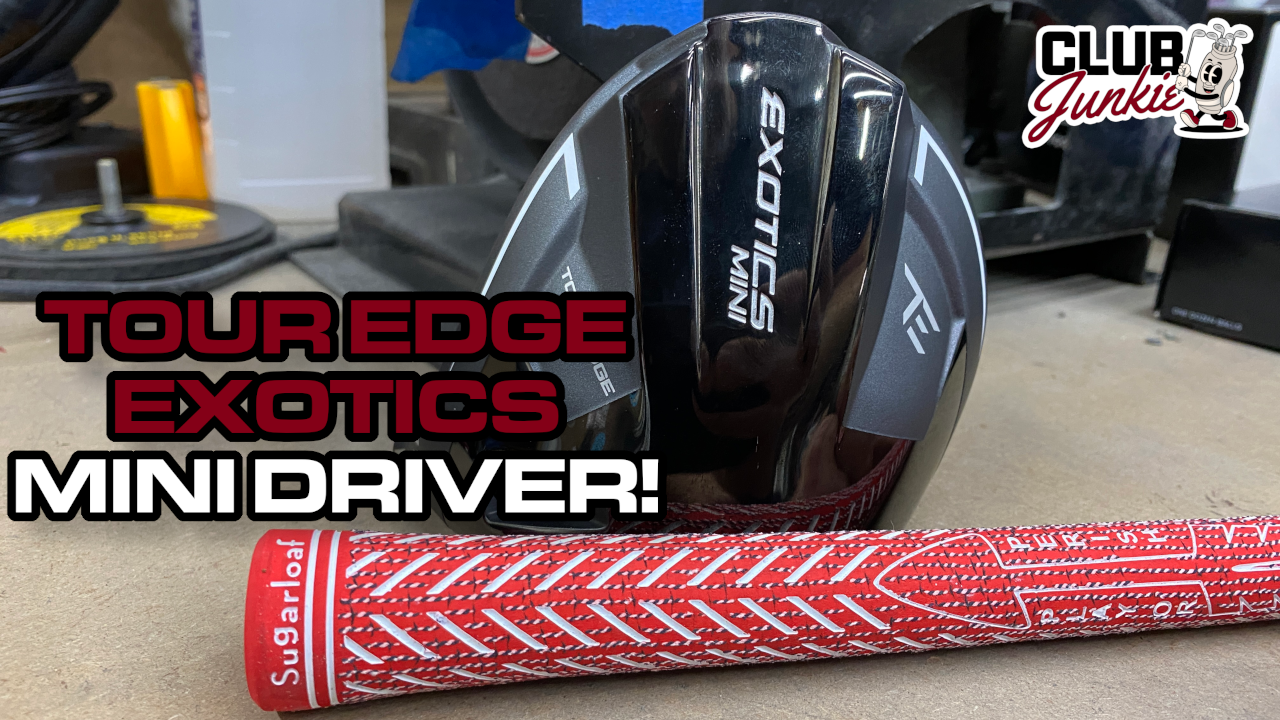
On this episode of Club Junkie, I put the new Tour Edge Exotics Mini Driver to the test and break down the performance, forgiveness, distance, and where it fits compared to a traditional driver or strong fairway wood. If you have been curious about adding a mini driver to the bag, this one is worth a look.
I also dive into the new TaylorMade Spider ZT Max putter that was recently spotted and discuss the growing zero torque putter trend. Plus, there is a closer look at the new Project X Titan Yellow shaft showing up on the PGA Tour and what makes it different from other profiles currently out there.
Opinion & Analysis
AVL: We’re talking about practice! My best tips for taking your game to the course

With the beginning of June on the horizon and courses rounding into peak condition for the season, it’s time to hone the finer skills that often get rusty over the winter. More sunlight also means more time to get out on the course and work on your game.
Whether it’s the practice green or the driving range, there’s always something to improve—whether you’re enjoying the fresh air or preparing for a weekend game or tournament. You can work on drills or freestyle around the green, and friendly competition is a great way to sharpen your skills.
While there are endless ways to get better at golf, I’m going to focus on practicing around the green. Let’s take a look at a few things to keep in mind as we head into the summer months.
Drills
From the driving range to the practice green, it’s important to incorporate drills into your routine. Years ago, I spent a weekend working on my short game with James Sieckmann. He recommended doing drill work for 5–10 minutes, then returning to your main practice.
This way, you create a balance between structured drills and real-world scenarios, so you’re not confined to “perfect” situations. For example, hitting the same three-foot putt over and over is good for repetition, but after a while, it becomes less interactive for your brain.
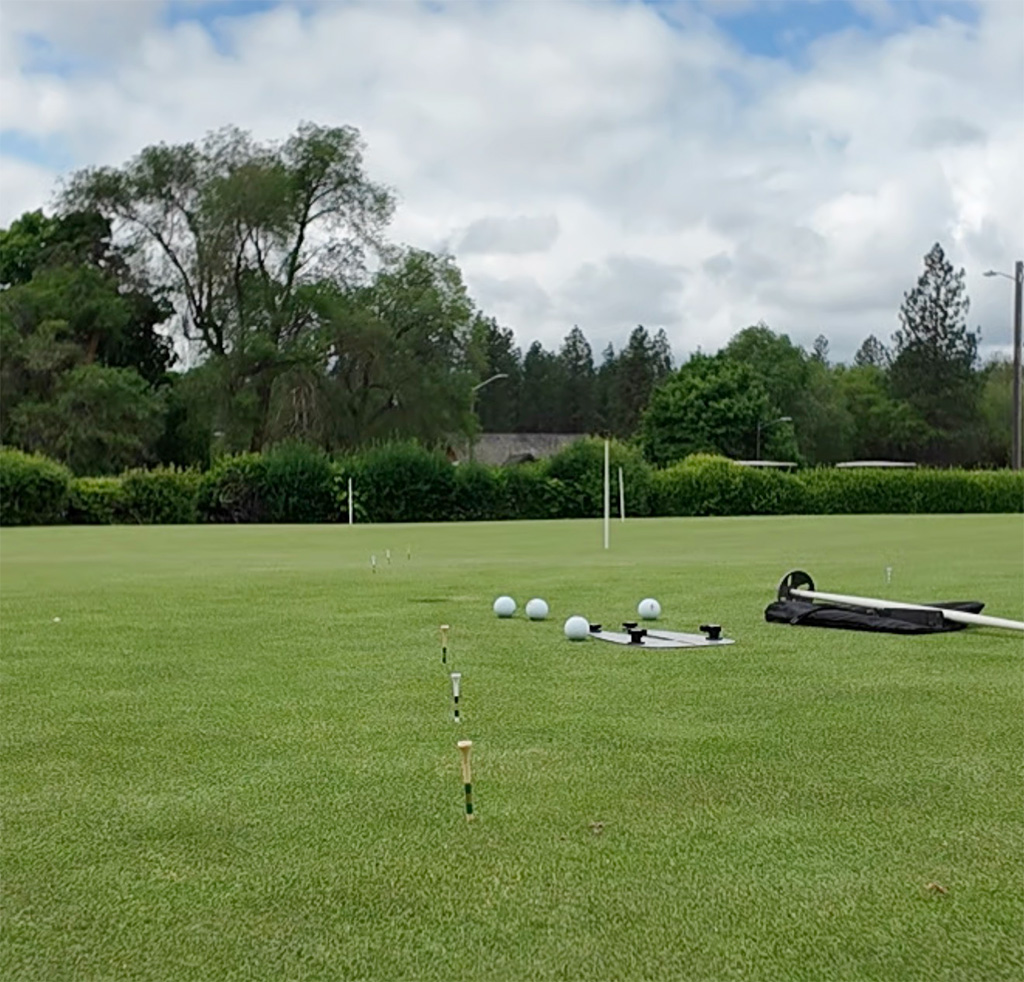
My approach is to use a putting trainer with a narrow gate for the ball to pass through, or simply place tees just outside the width of the ball. I’ll hit a series of four putts through the gate for three sets. Then, from a similar distance, I’ll hit four putts without the training aid and repeat that sequence three times.
Next, I’ll hit a number of 15–25 foot putts in a random fashion, then circle back to repeat the short putt drills with and without the training aid.
This breaks up the rhythm of hitting short putts with the training aid. When you hit the same short putts over and over, it’s easy to get into a groove—which is great for the drill, but not reflective of actual course play. While finding a rhythm is fundamental for drills, I like to introduce variation with longer putts to keep things realistic.
Game Mode
Once you’ve established a foundation with drills, it’s time to simulate on-course scenarios. This is where a few practice games come in handy.
One that I’ve been enjoying lately involves putting 10- to 15-footers with two balls. If I make the putt, great! If I miss, I pull the missed ball back a putter length. Suddenly, that little tap-in becomes a nerve-wracking three-footer—at least at first. As you get better at this game, those three- and five-footers become much more comfortable and routine.
It may sound cliché, but each shot is just what it is—it’s how we react that makes the difference. I like this game because it blends the pressure of on-course putting with the consequence of leaving yourself a much longer putt than usual.
Another game I like is one I recently learned from Brad Faxon. Place three tees in a line at four different locations around the hole: one at 3 feet, one at 6 feet, and one at 8 feet. The 3- and 6-foot putts count as par, and the 8-footer is for birdie.
This game keeps you focused on scoring and helps you get into a competitive mindset. You can even think about this putting game while you’re on the course. I just started playing it, and last week I couldn’t get better than two under par.
Competition
Competition during practice is when drills and games come to life, and you start to see results. For me, nothing beats a putting contest with a friend or two. In the right setting, these contests can become talking points for the whole season.
Match play, a game of 21, or simply seeing who can make the most one-putts (with a small prize on the line) are all great ways to simulate real on-course pressure. Recently, I played in a putting contest where one competitor made back-to-back 30- and 50-foot putts. As they say, expect your opponent to make every putt—and he nearly did. That’s impressive, and it’s something you see on the course, too: you have to stay committed to your game plan, no matter what.
When it comes to practice, it’s important to blend feedback from recent rounds with the fundamentals you want to reinforce. Drills, games, and competition—from the driving range to the putting green—form the backbone of skills you’ll rely on during actual rounds.
Finding the right balance is something we’re all working on, one practice session at a time. With the beginning of June on the horizon and courses rounding into peak condition for the season, it’s time to hone the finer skills that often get rusty over the winter. More sunlight also means more time to get out on the course and work on your game. Whether it’s the practice green or the driving range, there’s always something to improve—whether you’re enjoying the fresh air or preparing for a weekend game or tournament. You can work on drills or freestyle around the green, and friendly competition is a great way to sharpen your skills. While there are endless ways to get better at golf, I’m going to focus on practicing around the green. Let’s take a look at a few things to keep in mind as we head into the summer months.
Drills
From the driving range to the practice green, it’s important to incorporate drills into your routine. Years ago, I spent a weekend working on my short game with James Sieckmann. He recommended doing drill work for 5–10 minutes, then returning to your main practice. This way, you create a balance between structured drills and real-world scenarios, so you’re not confined to “perfect” situations. For example, hitting the same three-foot putt over and over is good for repetition, but after a while, it becomes less interactive for your brain.
My approach is to use a putting trainer with a narrow gate for the ball to pass through, or simply place tees just outside the width of the ball. I’ll hit a series of four putts through the gate for three sets. Then, from a similar distance, I’ll hit four putts without the training aid and repeat that sequence three times. Next, I’ll hit a number of 15–25 foot putts in a random fashion, then circle back to repeat the short putt drills with and without the training aid.
This breaks up the rhythm of hitting short putts with the training aid. When you hit the same short putts over and over, it’s easy to get into a groove—which is great for the drill, but not reflective of actual course play. While finding a rhythm is fundamental for drills, I like to introduce variation with longer putts to keep things realistic.
Game Mode
Once you’ve established a foundation with drills, it’s time to simulate on-course scenarios. This is where a few practice games come in handy. One that I’ve been enjoying lately involves putting 10- to 15-footers with two balls. If I make the putt, great! If I miss, I pull the missed ball back a putter length.
Suddenly, that little tap-in becomes a nerve-wracking three-footer—at least at first. As you get better at this game, those three- and five-footers become much more comfortable and routine. It may sound cliché, but each shot is just what it is—it’s how we react that makes the difference. I like this game because it blends the pressure of on-course putting with the consequence of leaving yourself a much longer putt than usual.
Another game I like is one I recently learned from Brad Faxon. Place three tees in a line at four different locations around the hole: one at 3 feet, one at 6 feet, and one at 8 feet. The 3- and 6-foot putts count as par, and the 8-footer is for birdie.
This game keeps you focused on scoring and helps you get into a competitive mindset. You can even think about this putting game while you’re on the course. I just started playing it, and last week I couldn’t get better than two under par.
Competition
Competition during practice is when drills and games come to life, and you start to see results. For me, nothing beats a putting contest with a friend or two. In the right setting, these contests can become talking points for the whole season. Match play, a game of 21, or simply seeing who can make the most one-putts (with a small prize on the line) are all great ways to simulate real on-course pressure. Recently, I played in a putting contest where one competitor made back-to-back 30- and 50-foot putts. As they say, expect your opponent to make every putt—and he nearly did. That’s impressive, and it’s something you see on the course, too: you have to stay committed to your game plan, no matter what.
When it comes to practice, it’s important to blend feedback from recent rounds with the fundamentals you want to reinforce. Drills, games, and competition—from the driving range to the putting green—form the backbone of skills you’ll rely on during actual rounds. Finding the right balance is something we’re all working on, one practice session at a time.


For Korean golfers, we always look forward to the last of the kkot-saem-chu-I for the true start of a new golf season. The term refers to a cold snap, but literally translates as “winter being jealous of the flowers beginning to bloom, thus lashing out one final time before surrendering to spring”.
A rather poetic mouthful packed into a short expression.
Koreans can be like that. Understated, yet oddly expressive at the same time. And nowhere is this more true on the golf course and in our golf bags. In fact, I suspect many Korean golfers look forward to new apparel and accessory drops more than they do actual equipment launches each year.

At this point, Korean golf fashion may exist on its own timeline. (courtesy of @seonbi_golfer)
There is ample evidence to support that suspicion. Korea is the world’s third-largest golf market behind the United States and Japan, yet its appetite for golf apparel exceeds that of both countries combined. Recent estimates suggest that Korea accounts for nearly 40 percent of the global golf apparel market, placing it among the world’s most influential golf fashion markets and punching well above its size.
Simply, we care deeply about how new golf clubs look and feel, but enjoy looking good while swinging them even more.
Golfers in the West may laugh and say that golf is played on a course, not a fashion runway. Perhaps. But what’s the harm in trying to look and feel good, if the added self-confidence can help actual performance? It certainly seems to have worked for Jason Day, who may have unlocked a new stats category: dormant strokes gained. Coincidence?

During the COVID-era, estimates placed the market near $9 billion, an astonishing figure for a single country.
As a proud member of Gen X, I’ve witnessed the highs and lows of golf fashion firsthand. The pleated trousers and wing-tipped shoes of Jack Nicklaus, the stylish plus-fours and knickers of Payne Stewart, the baggy black trousers and fitted mock-necks of Tiger Woods, and the thigh-hugging athletic tailoring of Rory McIlroy. Golf fashion, like the golf swing itself, has rarely stood still.
But nowhere have those trends shifted, evolved, and been scrutinized quite as relentlessly as in Korea. Here, golf fashion moves faster than fairway gossip, and consumers dissect brands with a level of discernment that can be both impressive and mildly terrifying. New brands are studied, judged, embraced, or dismissed with startling efficiency.
The result is a consumer base with one of the sharpest eyes for quality and authenticity anywhere in the world. It is difficult to quantify, but easy to recognize. Clean lines without trying too hard. Luxury mixed with utility. Trend awareness balanced by restraint and purpose.
It’s golf fashion shaped by one of the world’s most style-literate cities, something I like to call Seoul Sensibilities, referring to the taste level forged by a uniquely competitive environment.
And increasingly, global brands have noticed.

Many golf brands in Korea have their own flagship shops dedicated to apparel only
Titleist understood this years ago, when its apparel business in Korea took on a life of its own under new ownership and local direction. What had once been a straightforward extension of an iconic equipment giant became something sharper and more premium. By going all in on the serious Tour-player look (I couldn’t even fit into their XL sizes), Titleist struck the right chord with Korean consumers and helped its fledgling apparel business break into the mainstream. Titleist became a household name even for non-golfers who wore its caps, shirts, and windbreakers in daily life. In many ways, it proved that even heritage golf brands could carry real fashion credibility when viewed through a Korean lens.
Several years later, PXG took a page out of Titleist’s playbook and followed suit. Korean consumers helped transform the brand from one known largely for irons and loud commercials into something broader and more stylish. PXG apparel’s growth in Korea was explosive, where it found an early audience and turned the category into something more than mere logo merchandise. It is still hard to walk anywhere in Seoul without seeing its palindrome logo.
Malbon’s meteoric rise in the United States was genuine, but its ascent into a global golf lifestyle brand owes much to Korea, where it was elevated by a market already fluent in modern golf style. Korea did not simply embrace Malbon. It pressure-tested the concept, refined its appeal, and helped push it into the global spotlight.
As such, new brands may arrive from abroad, but more often than not, their sharpest evolution happens here. If a brand can earn credibility in Seoul, it’s deemed to have passed one of the toughest style audits in the game.
That is why the next meaningful chapter may not come from outside, but from a Korean brand moving in the opposite direction, carrying those Seoul Sensibilities outward as K-pop once did.

Play young Stay dope.
From Seoul, With Intent
Khalhon is a label that feels less like a trend-chasing newcomer and more like the product of a market that has already seen everything. Golfers here have long been surrounded by luxury logos, technical fabrics, and tour uniforms disguised as lifestyle wear and vice-versa. In other words, novelty alone rarely lasts here, and the Koreans seems to understand that instinctively.
Its style language leans into clean silhouettes, relaxed but tailored proportions, muted palettes, and premium materials that speak quietly but confidently. There is a modern city aesthetic running through it all, with strong layering pieces, thoughtful textures, and subtle branding that suggests sophistication rather than demanding attention.

“Built for the course. Designed beyond it.”
Most importantly, the garments seem designed to blur the line between golfwear and everyday style. Shirts, trousers, knitwear, and outer layers move comfortably between a game of screen golf, a lunch reservation, an airport gate, or an afternoon coffee in Gangnam with friends.
It raises the question of whether this is golfwear that happens to look good off the course, or everyday clothing that performs beautifully on the fairways.
Personally, I have long appreciated Nike Golf for its clean, athletic modernization of golf attire. It also has the useful side effect of making me look like a more serious golfer than I probably am. But off the course, there are times when being instantly identified as the golf guy in a crowd of non-golfers can feel a touch self-conscious.

“Built for the course. Designed beyond it.”
That is part of what drew me to Khalhon, which seemed to blend golf and everyday wear naturally. While some of the outfits may be slightly beyond my personal confidence level, the brand also offers tasteful options for older guys like me who still want to express a little personality without regretting the decision later.
These are not simply flashy outfits worn on the course and then banished to the closet until the next tee time. They work surprisingly well off the course too, and I suspect many of the pieces will still look right a couple of years from now, which would certainly be kinder to my wallet than most golf fashion trends tend to be.
And perhaps that broader lifestyle positioning also helps explain why someone like Sean Wotherspoon would find Khalhon creatively interesting in the first place.

“Built for the course. Designed beyond it.”
“Korea is not only one of the most fashion-forward golf markets in the world, but one of the most fashion-forward markets globally. Korea is ahead, and I love to watch and try to catch up.” – Sean Wotherspoon, Creative Director at Khalhon
Seoul and Beyond
If Khalhon’s rise says something about where Korean golf fashion is today, its relationship with Sean Wotherspoon says even more about where it is heading.
For readers less familiar with Sean Wotherspoon, his arrival at Khalhon is not some routine celebrity endorsement or influencer collaboration. In design and streetwear circles, Wotherspoon is regarded as one of the more influential creative voices of his generation, particularly when it comes to blending nostalgia, storytelling, and contemporary culture into products that people can connect with.
He first gained widespread attention through his now-famous Nike sneaker collaborations, where his vintage-inspired designs and instinct for color helped turn him into one of the defining artists of the late-2010s sneaker era. His work gradually expanded beyond footwear into apparel, automotive collaborations, collectibles, and broader lifestyle design.
Modern golf style now extends well beyond the fairways, where performance and functionality are largely expected by default. And while plenty of brands already make technically competent golfwear, Khalhon seems more focused on designing clothes people would genuinely want to wear even after the round ends.
And when guys at Wotherspoon’s level show genuine interest in working with a Korean golf brand as its new Creative Director, fashion circles tend to sit up and pay attention. There’s already a huge buzz among the fashion-conscious here about upcoming collabs with iconic sports stars and brands.

“My creative direction for Khalhon is disruptive, colorful, nostalgic, and modern. My goal is to blend these avenues seamlessly within each collection.” – Sean Wotherspoon
In chatting with Sean, what stood out most to me was how genuinely energized he sounded about the project itself. Despite having already worked across and countless other creative spaces, he described golf as a completely fresh category for him, saying that Khalhon “will be an amazing vehicle for my design work.”
At the same time, his enthusiasm seemed tied just as much to Korea itself. He spoke openly about admiring Korea’s fashion culture while repeatedly insisting he is still a terrible golfer.
There was something oddly refreshing about that humility. Rather than sounding like a celebrity parachuting into golf simply because the category suddenly became fashionable, Sean sounded genuinely curious about what Korea might do with the category next.
And perhaps that is what makes Khalhon feel interesting right now. The brand feels less like a trend-chaser and more like the natural result of a market now confident enough to export its own point of view.
For years, global brands came to Korea to sharpen their image against one of the most discerning audiences anywhere. Now, a Korean label appears ready to send those Seoul Sensibilities outward instead.
Which brings us back to kkot-saem-chu-i.
That final cold snap before spring always arrives with a reminder that seasons are changing, whether we notice it immediately or not. Golf fashion feels a little like that right now as well, as the old boundaries between sport, streetwear, luxury, and everyday style continue to soften.
And somewhere in Seoul, a Korean golf label already seems prepared for whatever season comes next. I just hope they have everything in my size.

Aaron Rai’s winning WITB: 2026 PGA Championship

Russell Henley’s winning WITB: 2026 Charles Schwab Challenge

Photos from the 2026 CJ Cup Byron Nelson

CJ Cup Byron Nelson Tour Report: Koepka and Kim’s newest putters finally get hot

Charles Schwab Challenge Tour Report: MacIntyre, Åberg and Spaun all switch putters, TaylorMade launches new Spider

Details on J.J. Spaun’s surprise putter switch

GolfWRX Launch Report: 2026 Titleist GTS drivers

Photos from the 2026 Charles Schwab Challenge

PGA Championship Tour Report: Fitzpatrick, Koepka among big-name putter switches for Aronimink

Photos from the ShopRite LPGA


Maria Torres WITB 2026 (June)
Driver: Ping G440 LST (9 degrees) Shaft: Accra TourZ Green 5-M4 3-wood: Ping G440 Max (15 degrees) Shaft: Accra TourZ Green 6-M4 5-wood: Ping G440...


Eric Cole WITB 2026 (June)
Driver: PXG Lightning Tour Max (9 degrees) Shaft: Project X Titan Yellow 70 TX 3-wood: TaylorMade Qi4D (15 degrees) Shaft:...


Si Woo Kim WITB 2026 (May)
Driver: Callaway Quantum Triple Diamond (8.5 degrees) Shaft: Fujikura Ventus Black 6 X Mini driver: Callaway Paradym Ai Smoke Mini...


Wyndham Clark’s winning WITB: 2026 CJ Cup Byron Nelson
Driver: TaylorMade Qi4D (10.5 degrees) Shaft: Project X Titan Yellow 60 TX 3-wood: TaylorMade Qi4D Tour (15 degrees) Shaft: Project...


Pingback: The Mystery Behind the Mulligan
Pingback: The Mystery Behind the Mulligan - Dan Hansen Golf Instruction
Matt
Jun 10, 2016 at 6:42 am
The weekend warrior jock fitness thing starting in the ’80’s combined with the neo-liberal era and downfall of heros like TW is slowing down golf as a popular pastime. I don’t mind this happening because the way the game is portrayed and marketed now is pretty dull (distance, power and having the latest gear). Perhaps if it is once again known as a ‘f#%k yeah’ desirable sport comprising history, commitment, skill, finesse, manners and style…
Dale Doback
Jun 8, 2016 at 8:00 am
I would love to play in a club championship were the best player or player who played the best won. The problem is the flawed handicapping system. My club championship uses the handicapping system and then has the players play match play format. This does not produce the best player. At least when I play on the golf channel amtour events when a player has 3 events played their tournament index overrides their handicap to keep players from sandbagging.
mike dowd
Jun 8, 2016 at 12:14 pm
Dale, I have used tournament handicaps exclusively in our events for the past 15 years and it really works well when it comes to dealing with the sandbagging issue. Allowing players to play and post their own scores in what are mostly casual rounds of golf, whether it be at the club, or form the internet in the comfort of your own home and then to use those handicaps in competition really opens up the door for the less honorable among us. It is essentially like asking each player what handicap they would like to play to that day when they check in for a tournament. We need handicaps, but we really need to re-evaluate system wide the types of scores that we allow to be counted as part of a competitive handicap and how they are monitored. That, however, is an article for another day. 🙂
Alex
Jun 7, 2016 at 11:29 am
When I was a kid the Club Championship was the time of the year everybody was waiting for. The kids who wanted to make it to the finals, the hackers who wanted to see the great amateurs hitting the shots. The final match was and still is 36 holes on Sunday. Back then the course was shut so that people came up to follow the match. Dozens of people gathered.
These days, only the format remains, and simply the best players care about it.
True, the ambitious ones got prepared for the Club Championship, and we improved our golf in trying to do so and also imitating the few great players of our club.
Anyway, I don’t want to sound sentimental, God Bless the Handicap.
Ron
Jun 6, 2016 at 6:14 pm
The point of the article, if I understood it, was less about club championships and more about the value associated with one’s own personal improvement in the game and the dedication needed to accomplish that – even when that does not lead to a championship.
The handicapping system is immensely clever – as a way of tracking one’s own skill level. And it allows golfers of different skill levels to have a friendly competition – and in that way is also brilliant. But if all tournaments in a club are net score or net team play, there is less incentive to work at improving if lowering one’s handicap makes a player less likely to be successful in those net competitions (it’s hard for a single digit to compete against a field of 18s). But courses and clubs want to have high participation in their tournaments in order to increase play or the size of the pot – so there has to be an incentive that will draw a lot of players. Hence the team tournaments, net tournaments, skins tournaments, etc., where more participants have a chance to win something. I used to play my County Senior Amateur – but only in the gross division, knowing that as a four or five handicap, I was not going to win (after all, I was in grad school when some of those guys were born!). But I could be in the mix if I played well, and that was satisfying and gave me an incentive to work on my game as the tournament approached. But it is no longer being held, as the local county courses decided they did not draw enough players to warrant hosting the tournament. So now I just work on my game a lot – and I now have the time to do that – in order to continue to improve, or at least stave off what I suspect will (eventually) become a steady decline in my skills as time goes on. I’ll never be a club champion, or County Am winner – but that’s okay.
Mike Dowd
Jun 6, 2016 at 4:08 pm
In truth, you can never really go back, but I think a trip down memory lane once in a while helps us to remember things we actually value, but may have lost sight of for one reason or another. Investing in self-improvement, regardless of where we are on the handicap scale or whatever other scale we are using to measure ourselves is something that helps keep us engaged, enthusiastic, and enjoying whatever it is we are trying to get better at even more. Being stuck and feeling stagnated by being in the same place, whether it be at the same handicap or the same level of anything, is what ends up leaving people frustrated enough to quit, whether it’s golf or something else. I think that, despite the fact that I used the club championship and scratch golfers as my example, my point of re-connecting to the values of self-improvement is far from elitist and is actually most applicable to those who have the most ability to improve. I chair the PGA’s Growth of the Game Committee and have been working to grow the game for years and one of the biggest reasons people continually cite for leaving golf is the fact that they felt like they weren’t getting any better. As professionals I think we need to not just be involved in that process, but be just as involved with motivating people to want to, and part of that is helping to create a culture that values it. I know, obviously, that not everyone can become the club champion, but if at least at some level we stay continually engaged in the process of doing even small things that help us to get a little better I think we will continue to enjoy this great game even more than if we resign ourselves to that fact that we are as good as we’re ever going be. Call me the eternal optimist, or a peddler of hope, but I think that hope and the fact that we haven’t yet reached the mountain top is at least a part of what keeps us coming back.
ca1879
Jun 6, 2016 at 1:57 pm
Could it be that the vast majority of players, who have no chance of winning or performing well in the club championship no matter how many hours we spend practicing, have grown tired of providing the bulk of the money and time that it takes to support the competitive portion of a club and it’s tournaments? I play at my club for the camaraderie and events that we put on, and figuring out who is the best player this year is of vanishingly little importance to me. Our pros and the handful of players that play near scratch think it’s important, the other 90% of us are more interested in finding out how to have more fun. It’s funny that in the face of the decline of the game, you would suggest that the very competitive elitism that has partially created it is somehow going to become the road back. That seems very unlikely.
Nick
Jun 6, 2016 at 2:15 pm
Your first line is exactly the attitude being discussed. Why do you think so little of your/others ability to improve at the game?
Nick
Jun 6, 2016 at 2:18 pm
Why do you think so little of yours/others ability to get better at the game? I think that mind set is what a lot of people are seeing.
Ryan
Jun 30, 2016 at 1:03 pm
That’s exactly how I felt when I couldn’t break 100, about 5 or 6 years ago. I still felt that way when I broke 100, but couldn’t break 90. I even jumped on 15-inch cup bandwagon for a little while. I am now a 4-hdcp, and I don’t say that to brag, but I’ve worked hard to get where I am. I say that to say that I believe anyone and everyone can do it. I know, and play with, guys with your same attitude. They say they CAN’T get better, and use it as an excuse to not work hard to try and get better. Don’t blame the 10% who work their tails off on the lazy 90%. Don’t worry, we’ll get you a participation trophy in the next tournament, but don’t bring down everyone else, and keep your playing partners from thinking they can ever improve.
mike dowd
Jun 6, 2016 at 11:33 am
Love all the great comments here, most of which are all contributory factors. Family, the time commitment it takes to be a really good golfer, and changes in society that make it not near as acceptable for most guys to work all week and disappear to the club to work on their golf games all weekend have all played a role. At the same time, unfortunately, and I think my ultimate point was that the largest portion of competitive golfers I see these days are more worried about working on their handicaps than they are about working on their golf games and the types of events that we seem to most value these days only makes that problem worse. Playing best balls and scrambles are in truth quite fun, but they also open the door to situations where players are rewarded for having a handful of good holes or shots, without really being penalized much for having bad holes or shots. This not only contributes to the issue of sandbagging, but places little value on playing consistently good golf. You’re a much better teammate if you carry an 18 handicap and can par or birdie 6 or 8 holes, regardless of what you do on the others, than you are if you are a scratch golfer who makes two or three birdies per round off-set by two or three bogies. Think about it, in most club-level events these days, it’s almost a penalty to have a partner or teammate that is a really low handicapper, but that 12 to 18 handicapper who can shoot in the low to mid eighties occasionally is a hot commodity. Golf is the greatest game, and the fact that via the handicap system we can have relatively fair competition between players of all abilities is one of the greatest things about it. You can’t handicap a tennis match or just about any other sport and make it fair or fun for either player. If we don’t, however, find some ways to start re-asserting the value of being a better golfer at the club level, and of bringing those who are back into the fold in some may, we may wake up one day and find that very few people will even care to be one anymore. And that, I think, will be the biggest shame.
Other Paul
Jun 6, 2016 at 9:47 pm
I dont officially track a handicap. My average score is 84-86. I shot 39 on 9 last night. Left my driver in the bag.
Joe Perez
Jun 6, 2016 at 10:36 am
I’m one of the officers of the Seniors Club at our local muni. Every time I’ve tried to advance the idea of having the results of our club championship crown *two* champions, a net-handicap champion and another with no handicap strokes given, I’m rebuffed.
Our club does not award cash prizes for the club championship, and I doubt the trophy costs the club more than $10, and yet for years we’ve had net-handicap champions who are known to all for their sandbagging practices. A lot of the old folks in our club just aren’t able to endure long practice sessions, so in my case I think it just comes down to people who don’t want to admit that they simply no longer have what it takes.
Scott
Jun 6, 2016 at 10:07 am
Everyone’s comments are great. At my club, the championship takes place over 2 weekends, if you make it to the finals. It takes place in mid July, which is prime family vacation time. That is a lot of time to commit, with other family commitments. I think that more people would try to play if it was only one weekend. If you really do not think that you have a chance, why commit two weekends? Our club has multiple flights and tries to put 8 golfers in each (other than the Championship flight), so everyone can at least play one round. It is still a popular event, but I know that a number of people have to miss due to family obligations.
birdy
Jun 6, 2016 at 9:46 am
its already been mentioned, but the winning answer is that new generation of golfers aren’t joing clubs. they pay per play and don’t feel the need to be a member. members now consist of of the 50+ who have the time and money. that generation also likes the idea of joining a ‘club’ of any sort. clubs in general, not just in sport, are seeing declining membership. so your club winner is rarely the best golfer that plays routinely at the course. i know plenty of guys who frequent a course, are scratch, and can’t play in club championship. zero incentive to join a club as the break even on golf is typically more rounds than most could play through the year. private clubs a little different, but even more out of reach for most under 40
Jamy
Jun 6, 2016 at 5:01 am
“It’s no fun playing in tournaments you can’t win.” You’ve probably heard this more than once from a mid/high handicap. Hence the handicap system.
Now scratch players avoid most club competition because of the handicap system, it disregards their hard work and playing level. The mid/high handicapper avoids the strokeplay events because they feel that’s for those scratch players.
Instead of bringing all golfers together in a way the handicap system also seperated the scratch player from the weekend warrior. The club championship became something for “those few fanatics”.
Jack
Jun 5, 2016 at 12:20 pm
I agree. Our club still has a championship, but it’s not as important as it once was. It’s been replaced by member-quests, and member-member tournaments that place a higher priority on drinking, eating, and partying than golf. It seems our members enjoy these “beer busts in golf carts” (as I call them) so nothing is going to change anytime soon.
SV
Jun 5, 2016 at 11:15 am
Nick, I agree whole-heartedly. I think the answer might be the “everybody gets a trophy” thinking that has permeated every kind of activity. Since the number of those that are capable of excelling is exceeded by the “average”, people have taken the easy way out and decided excelling isn’t important. It carries over into golf with “process is more important than result” instructor crowd. If results are important, in golf or anything else, why do it?
David
Jun 7, 2016 at 10:43 am
I just don’t see this at my club. We have a LOT of good golfers. In fact we have over 100 members that are single digit players and 15 or 20 that are below scratch. I see people working on their games all the time. I see people taking lessons, committing to getting better, and putting the time in. It is, admittedly, a subset of the total membership, but has that part (the practicing and grinding to get better) ever been much different?
The thing that has changed the most is the economy, in my opinion. The new normal is 40 – 60 hour weeks for just about everyone, whereas when the economy was humming along for such a long time, you had entire industries where it was quite normal for people to put in 30 hours a week and kick off early a couple times a week to get some practice or play in. Those days have been gone for the last 10 years. Industries like insurance, real estate, sales (in almost any industry), etc. used to quite different than they are today even just 10 years ago. Today, most companies have notched up accountability tremendously. That’s not a good or bad thing, it’s just a reality.
ButchT
Jun 5, 2016 at 8:26 am
Back in the 80’s I belonged to a club where my friends and I took carts (along with many others) out on the course to watch the club championship finals. We went because we knew all the top golfers in the club; frequently sat down at their table for a beer (or they sat down with us). We had about 200 golfing members – the club I belong to now has 600. The golfing core used to hang out some after a round in the men’s grill to watch golf on tv, or discuss the day’s play. Now everyone slams trunks and heads off to a soccer game. We were interested in the club championship mainly because we knew the participants – now I am on first name basis with about 20 other members! Perhaps it is my fault but that is the way it is.
Mat
Jun 5, 2016 at 5:57 am
I have never been interested in joining a club because clubs (at least in the US) were VASTLY more expensive than paying to play. Usually, you’d have to play 60-600 times in a year to make up the cost. So why join? Pride? Sorry… Not joining a club helps me afford, you know, life. And frankly, I’d rather pay to play a few different courses. Join a club, play the same course over and over… no thanks. There are some places that offer 20 courses any time, and they want your first born child. Of course, it’s so expensive, you can will those rights to your second-born child, since your first is no longer available…
David
Jun 7, 2016 at 10:32 am
Yes, playing enough is the key to joining a club. You have to play 8 – 12 times a month to really get your money’s worth.
PuffyC
Jun 4, 2016 at 9:15 pm
The big reason is that people don’t belong to clubs any more. Without the sense of community that comes with club membership, winning the club championship no longer has much meaning. So why do people no longer join clubs? First, it’s too expensive. Wages for those in the bottom 95% have stagnated, and where this country once had a thriving middle class, it’s since been decimated. The market of people who can afford to join clubs just ain’t what it used to be. Second, back in the “old days” adults put their own enjoyment and leisure time before their children’s. Today parents live for their kids and essentially put their own lives on hold while they spend their time arranging play-dates and going to soccer tournaments. I can’t hardly find a buddy to play golf with any more because every spare minute they have is spent catering to the wife and kids. Not making a judgment call on that, just explaining how it is. Golf takes time to practice and most of a day on the weekend to play and adults just don’t have that kind of spare time any more.
Mat
Jun 5, 2016 at 5:54 am
Ding ding. Winner here.
Gordy
Jun 5, 2016 at 5:59 pm
That’s a winner right here. I literally play by myself because i have no one to play with in my age range(28). I’d love to join a “club” but uncle sam dips into my pocket so deep, i either 1.save for retirement with extra cash, or 2. spend that money to join a club.
Mike W
Jun 5, 2016 at 9:36 pm
Well said. If I had a free 20 hours a week, sure I’d spend it working on my game. But there’s this inconvenient thing called work that I have to do in order to pay this little thing called a mortgage. Then after work I actually participate in the raising of my children, unlike 50 years ago. So for now this 39 year old will have to get by with a 10 handicap and fall asleep at night hoping maybe I’ll break 80 this weekend.
Skip
Jun 6, 2016 at 9:37 am
Nailed it. I Used to be the guy that pretty much played alone; now I have a family that comes first. To strengthen to PuffyC’s analysis – take a look at the various men’s clubs (fraternal order of _______) around town. They are a shell of what they used to be. Once a vibrant “Who’s who” of the local community, now relegated to the “Who used to be”. Men used to swing in for a drink and a smoke or two after work, and now they rush home to be with family. That’s how it is now and I don’t think that’s such a bad thing.
Philip
Jun 4, 2016 at 8:45 pm
Instant gratification – great for companies selling the fix, bad for a society that used to take pride in hard work and accomplishment. Why work hard when a few videos and a website makes one an instant celebrity – whether just in their own head or throughout the internet. That and cheaters – when I played as a kid – no one moved the ball unless the rules allowed, now I’m considered rare because I don’t move it before every shot. When you ask them they respond that it isn’t a serious game – yet they are still keeping their score … times a changing for sure.
Ronald Montesano
Jun 4, 2016 at 8:07 pm
It lost its importance when golf became a game of the people. To become club champion means sacrificing things like family time, friend time, relaxation, all in lieu of solitary hours spent on the practice tee, the putting green, the bunker. It takes a singular mind, a driven soul, to desire, much less attain, the club championship and honors of its ilk.
In place of the solitary victory, we now have the team/buddy victory. The invitational, the member-member, are titles that are shared. Born of camaraderie rather than isolation and seclusion, we have replaced Thoreau with Kerouac, minus the drugs I hope.
Rather than the club championship being considered the collective soul of golf, we should ask ourselves why once-legitimate golf news sources report on what Paulina is wearing, what shank Michael Geller hit, and other bogus items that pander to a collective that gives little shrift to golf, but much attention and value to brief trends.
gvogelsang
Jun 5, 2016 at 10:17 pm
If you are good enough to contend, you know who the club champion is. And, you wish it were you.
To all the rest, it might not matter. But it certainly matters to the best players who take their games seriously.
owgr
Jun 4, 2016 at 7:51 pm
Duh. The OWGR ruined it all. You didn’t know that? Look at how it was before that silly ranking system came along.
Nick
Jun 4, 2016 at 7:41 pm
I have seen the same thing happen in other activities. I don’t understand it but a lot of people have no pride in how good they are at something. I don’t know that there is a fix for it just the way people are now.
gvogelsang
Jun 5, 2016 at 10:20 pm
Maybe modern equipment made the game too easy? Anyone can hit the modern ball and the 460 cc driver.
If players don’t care about who is the best in the club, maybe it is time to go back to more difficult equipment, so that the best players can distinguish themselves and their games.