
Opinion & Analysis
Another USGA rules controversy at the U.S. Women’s Open

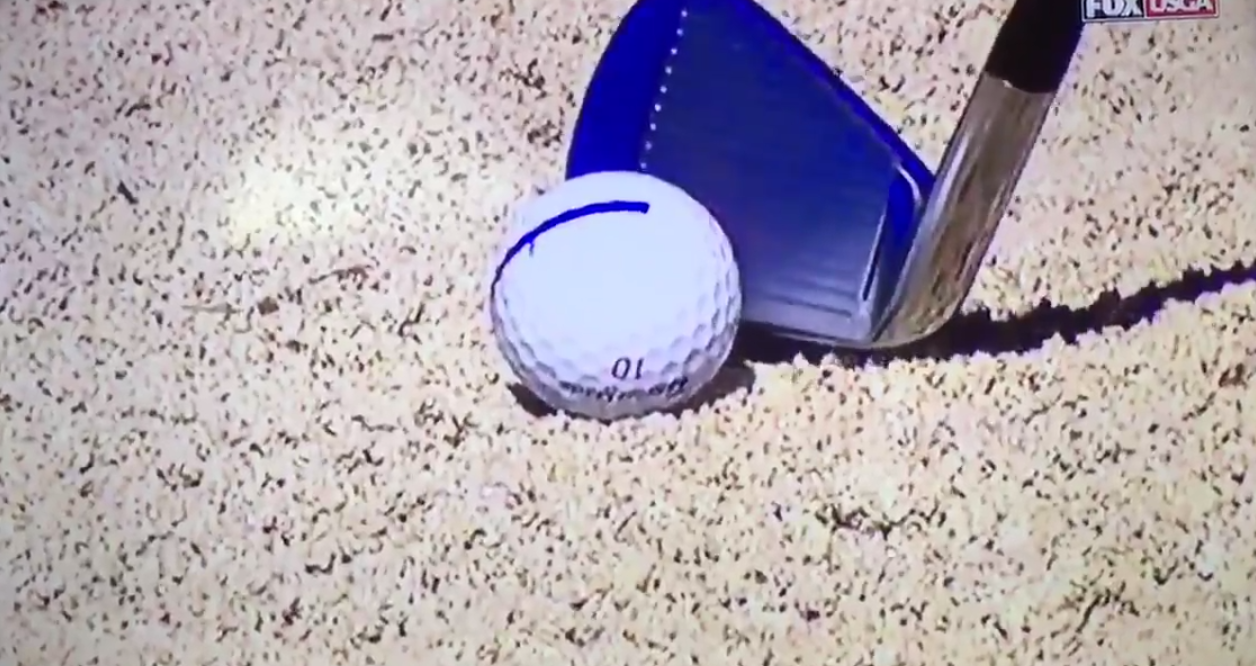
Anna Nordqvist was all class after penalty cost her the U.S. Open, posting the following on social media.
Thanks everyone for the support this week! ????????????tough break but still smiling -plenty more opportunities ahead of me!! pic.twitter.com/p2cnbdc1Su
— Anna Nordqvist (@ANordqvist) July 11, 2016
The fact that a delayed final-round penalty garnered a great deal of attention certainly isn’t what the USGA wanted on the heels of the Dustin Johnson fiasco at Oakmont.
Watch the sand move.
Anna Nordqvist will get a 2 stroke penalty.
Brittany Lang closing in US Women’s Open title. pic.twitter.com/kyreFCY1x0— Joe Trahan (@JoeTrahan) July 10, 2016
As you can see in the video above, on the second hole of a three-hole playoff between Brittany Lang and Anna Nordqvist, Nordqvist appeared to ground her club in a fairway bunker, not realizing that she had done so, and in violation of rule 13-4, the penalty for which is two strokes.
Fox, in a sort of “Well, we have to say something now that millions of people have seen this footage” moment, asked the USGA to review the footage after broadcast video made it pretty clear that Nordqvist had temporarily soled her iron in the bunker.
USGA official John Bodenhamer reviewed the replay showing the violation and made the immediate determination to tell the players of the penalty. However, the news didn’t make it to Nordvist and Lang until after the Swede had played her third shot, which would have obviously altered her approach.
“It certainly changed her game plan,” Nordqvist said. “But, you know, hopefully we can all learn from it and hopefully we can all get better.”
What can we learn? Nordqvist, certainly, will feel she should have been more careful. One can never determine a player’s intent, but it did not seems she was in any way checking the condition of the sand or attempting to gain advantage. Difficult situation, but a clear violation of the rules as they are written.
It’s the USGA that will be pressed to either work out a system of immediate video review for every shot (which is impossible), or make the case that they are determination infractions in the best manner possible in light of technological and manpower limitations.
Fans, players, the media (and likely the USGA itself) agree that the delayed-penalty look isn’t a good one for the USGA. But as long as they review video and allow input about potential infractions, it will continue to be an element of their major championships (as it is PGA Tour events and the Masters). In this case, the officials involved presented the penalty related information to the golfers as soon as soon as they could (according to a statement). In other words, things were carried out properly in relation to the rules as they are written.
This doesn’t change the fact that there’s something unsatisfying about the outcome. However, that was probably the case when Roberto De Vicenzo signed for the wrong score a the 1968 Masters and at any number of other famous tournament-deciding rules incidents.
The reality of the rules and the review process is that infractions will continue to become obvious only after the fact. And in such cases, players ought to be informed as quickly as possible if on course (as they were in this case). And as fans, we have to be prepared for scoring tent situations that alter tournament outcomes after the conclusion of play.
The Nordqvist penalty was unfortunate, but it doesn’t seem U.S. golf’s governing body will end up looking any worse for it. The same may not be able to said regarding the curious misspeach of USGA President Diana Murphy, who referred to tournament winner Brittany Lang as “Bethenny” multiple times during the trophy presentation.
For an organization that has faced steep criticism in recent weeks for an amateurish display at Oakmont, not knowing/forgetting the name of the winner of the tournament you’re conducting doesn’t exactly help.


Club Junkie
Tour Edge Exotics mini driver review + TaylorMade Spider ZT Max first look – Club Junkie


On this episode of Club Junkie, I put the new Tour Edge Exotics Mini Driver to the test and break down the performance, forgiveness, distance, and where it fits compared to a traditional driver or strong fairway wood. If you have been curious about adding a mini driver to the bag, this one is worth a look.
I also dive into the new TaylorMade Spider ZT Max putter that was recently spotted and discuss the growing zero torque putter trend. Plus, there is a closer look at the new Project X Titan Yellow shaft showing up on the PGA Tour and what makes it different from other profiles currently out there.
Opinion & Analysis
AVL: We’re talking about practice! My best tips for taking your game to the course

With the beginning of June on the horizon and courses rounding into peak condition for the season, it’s time to hone the finer skills that often get rusty over the winter. More sunlight also means more time to get out on the course and work on your game.
Whether it’s the practice green or the driving range, there’s always something to improve—whether you’re enjoying the fresh air or preparing for a weekend game or tournament. You can work on drills or freestyle around the green, and friendly competition is a great way to sharpen your skills.
While there are endless ways to get better at golf, I’m going to focus on practicing around the green. Let’s take a look at a few things to keep in mind as we head into the summer months.
Drills
From the driving range to the practice green, it’s important to incorporate drills into your routine. Years ago, I spent a weekend working on my short game with James Sieckmann. He recommended doing drill work for 5–10 minutes, then returning to your main practice.
This way, you create a balance between structured drills and real-world scenarios, so you’re not confined to “perfect” situations. For example, hitting the same three-foot putt over and over is good for repetition, but after a while, it becomes less interactive for your brain.
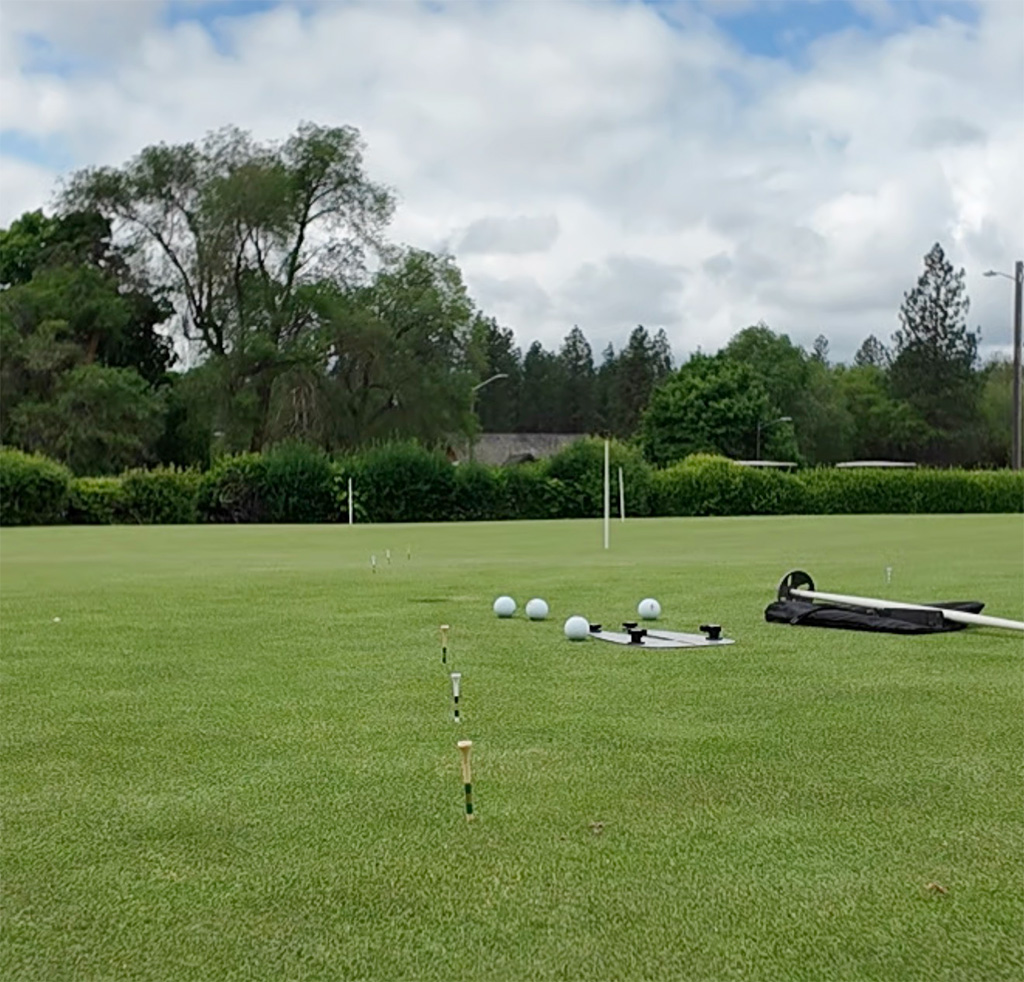
My approach is to use a putting trainer with a narrow gate for the ball to pass through, or simply place tees just outside the width of the ball. I’ll hit a series of four putts through the gate for three sets. Then, from a similar distance, I’ll hit four putts without the training aid and repeat that sequence three times.
Next, I’ll hit a number of 15–25 foot putts in a random fashion, then circle back to repeat the short putt drills with and without the training aid.
This breaks up the rhythm of hitting short putts with the training aid. When you hit the same short putts over and over, it’s easy to get into a groove—which is great for the drill, but not reflective of actual course play. While finding a rhythm is fundamental for drills, I like to introduce variation with longer putts to keep things realistic.
Game Mode
Once you’ve established a foundation with drills, it’s time to simulate on-course scenarios. This is where a few practice games come in handy.
One that I’ve been enjoying lately involves putting 10- to 15-footers with two balls. If I make the putt, great! If I miss, I pull the missed ball back a putter length. Suddenly, that little tap-in becomes a nerve-wracking three-footer—at least at first. As you get better at this game, those three- and five-footers become much more comfortable and routine.
It may sound cliché, but each shot is just what it is—it’s how we react that makes the difference. I like this game because it blends the pressure of on-course putting with the consequence of leaving yourself a much longer putt than usual.
Another game I like is one I recently learned from Brad Faxon. Place three tees in a line at four different locations around the hole: one at 3 feet, one at 6 feet, and one at 8 feet. The 3- and 6-foot putts count as par, and the 8-footer is for birdie.
This game keeps you focused on scoring and helps you get into a competitive mindset. You can even think about this putting game while you’re on the course. I just started playing it, and last week I couldn’t get better than two under par.
Competition
Competition during practice is when drills and games come to life, and you start to see results. For me, nothing beats a putting contest with a friend or two. In the right setting, these contests can become talking points for the whole season.
Match play, a game of 21, or simply seeing who can make the most one-putts (with a small prize on the line) are all great ways to simulate real on-course pressure. Recently, I played in a putting contest where one competitor made back-to-back 30- and 50-foot putts. As they say, expect your opponent to make every putt—and he nearly did. That’s impressive, and it’s something you see on the course, too: you have to stay committed to your game plan, no matter what.
When it comes to practice, it’s important to blend feedback from recent rounds with the fundamentals you want to reinforce. Drills, games, and competition—from the driving range to the putting green—form the backbone of skills you’ll rely on during actual rounds.
Finding the right balance is something we’re all working on, one practice session at a time. With the beginning of June on the horizon and courses rounding into peak condition for the season, it’s time to hone the finer skills that often get rusty over the winter. More sunlight also means more time to get out on the course and work on your game. Whether it’s the practice green or the driving range, there’s always something to improve—whether you’re enjoying the fresh air or preparing for a weekend game or tournament. You can work on drills or freestyle around the green, and friendly competition is a great way to sharpen your skills. While there are endless ways to get better at golf, I’m going to focus on practicing around the green. Let’s take a look at a few things to keep in mind as we head into the summer months.
Drills
From the driving range to the practice green, it’s important to incorporate drills into your routine. Years ago, I spent a weekend working on my short game with James Sieckmann. He recommended doing drill work for 5–10 minutes, then returning to your main practice. This way, you create a balance between structured drills and real-world scenarios, so you’re not confined to “perfect” situations. For example, hitting the same three-foot putt over and over is good for repetition, but after a while, it becomes less interactive for your brain.
My approach is to use a putting trainer with a narrow gate for the ball to pass through, or simply place tees just outside the width of the ball. I’ll hit a series of four putts through the gate for three sets. Then, from a similar distance, I’ll hit four putts without the training aid and repeat that sequence three times. Next, I’ll hit a number of 15–25 foot putts in a random fashion, then circle back to repeat the short putt drills with and without the training aid.
This breaks up the rhythm of hitting short putts with the training aid. When you hit the same short putts over and over, it’s easy to get into a groove—which is great for the drill, but not reflective of actual course play. While finding a rhythm is fundamental for drills, I like to introduce variation with longer putts to keep things realistic.
Game Mode
Once you’ve established a foundation with drills, it’s time to simulate on-course scenarios. This is where a few practice games come in handy. One that I’ve been enjoying lately involves putting 10- to 15-footers with two balls. If I make the putt, great! If I miss, I pull the missed ball back a putter length.
Suddenly, that little tap-in becomes a nerve-wracking three-footer—at least at first. As you get better at this game, those three- and five-footers become much more comfortable and routine. It may sound cliché, but each shot is just what it is—it’s how we react that makes the difference. I like this game because it blends the pressure of on-course putting with the consequence of leaving yourself a much longer putt than usual.
Another game I like is one I recently learned from Brad Faxon. Place three tees in a line at four different locations around the hole: one at 3 feet, one at 6 feet, and one at 8 feet. The 3- and 6-foot putts count as par, and the 8-footer is for birdie.
This game keeps you focused on scoring and helps you get into a competitive mindset. You can even think about this putting game while you’re on the course. I just started playing it, and last week I couldn’t get better than two under par.
Competition
Competition during practice is when drills and games come to life, and you start to see results. For me, nothing beats a putting contest with a friend or two. In the right setting, these contests can become talking points for the whole season. Match play, a game of 21, or simply seeing who can make the most one-putts (with a small prize on the line) are all great ways to simulate real on-course pressure. Recently, I played in a putting contest where one competitor made back-to-back 30- and 50-foot putts. As they say, expect your opponent to make every putt—and he nearly did. That’s impressive, and it’s something you see on the course, too: you have to stay committed to your game plan, no matter what.
When it comes to practice, it’s important to blend feedback from recent rounds with the fundamentals you want to reinforce. Drills, games, and competition—from the driving range to the putting green—form the backbone of skills you’ll rely on during actual rounds. Finding the right balance is something we’re all working on, one practice session at a time.


For Korean golfers, we always look forward to the last of the kkot-saem-chu-I for the true start of a new golf season. The term refers to a cold snap, but literally translates as “winter being jealous of the flowers beginning to bloom, thus lashing out one final time before surrendering to spring”.
A rather poetic mouthful packed into a short expression.
Koreans can be like that. Understated, yet oddly expressive at the same time. And nowhere is this more true on the golf course and in our golf bags. In fact, I suspect many Korean golfers look forward to new apparel and accessory drops more than they do actual equipment launches each year.
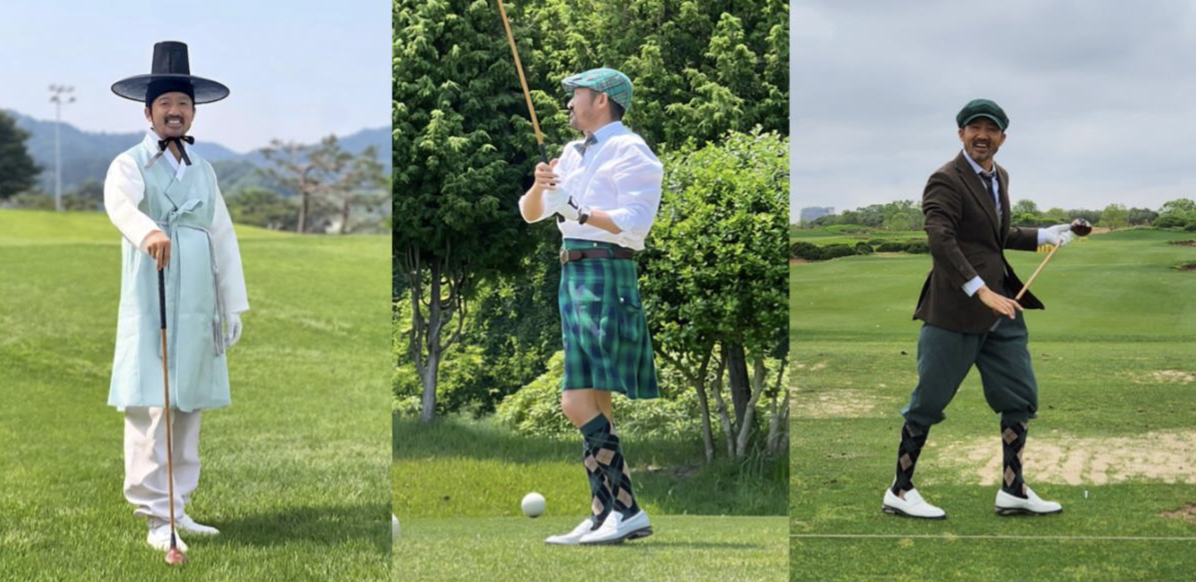
At this point, Korean golf fashion may exist on its own timeline. (courtesy of @seonbi_golfer)
There is ample evidence to support that suspicion. Korea is the world’s third-largest golf market behind the United States and Japan, yet its appetite for golf apparel exceeds that of both countries combined. Recent estimates suggest that Korea accounts for nearly 40 percent of the global golf apparel market, placing it among the world’s most influential golf fashion markets and punching well above its size.
Simply, we care deeply about how new golf clubs look and feel, but enjoy looking good while swinging them even more.
Golfers in the West may laugh and say that golf is played on a course, not a fashion runway. Perhaps. But what’s the harm in trying to look and feel good, if the added self-confidence can help actual performance? It certainly seems to have worked for Jason Day, who may have unlocked a new stats category: dormant strokes gained. Coincidence?

During the COVID-era, estimates placed the market near $9 billion, an astonishing figure for a single country.
As a proud member of Gen X, I’ve witnessed the highs and lows of golf fashion firsthand. The pleated trousers and wing-tipped shoes of Jack Nicklaus, the stylish plus-fours and knickers of Payne Stewart, the baggy black trousers and fitted mock-necks of Tiger Woods, and the thigh-hugging athletic tailoring of Rory McIlroy. Golf fashion, like the golf swing itself, has rarely stood still.
But nowhere have those trends shifted, evolved, and been scrutinized quite as relentlessly as in Korea. Here, golf fashion moves faster than fairway gossip, and consumers dissect brands with a level of discernment that can be both impressive and mildly terrifying. New brands are studied, judged, embraced, or dismissed with startling efficiency.
The result is a consumer base with one of the sharpest eyes for quality and authenticity anywhere in the world. It is difficult to quantify, but easy to recognize. Clean lines without trying too hard. Luxury mixed with utility. Trend awareness balanced by restraint and purpose.
It’s golf fashion shaped by one of the world’s most style-literate cities, something I like to call Seoul Sensibilities, referring to the taste level forged by a uniquely competitive environment.
And increasingly, global brands have noticed.

Many golf brands in Korea have their own flagship shops dedicated to apparel only
Titleist understood this years ago, when its apparel business in Korea took on a life of its own under new ownership and local direction. What had once been a straightforward extension of an iconic equipment giant became something sharper and more premium. By going all in on the serious Tour-player look (I couldn’t even fit into their XL sizes), Titleist struck the right chord with Korean consumers and helped its fledgling apparel business break into the mainstream. Titleist became a household name even for non-golfers who wore its caps, shirts, and windbreakers in daily life. In many ways, it proved that even heritage golf brands could carry real fashion credibility when viewed through a Korean lens.
Several years later, PXG took a page out of Titleist’s playbook and followed suit. Korean consumers helped transform the brand from one known largely for irons and loud commercials into something broader and more stylish. PXG apparel’s growth in Korea was explosive, where it found an early audience and turned the category into something more than mere logo merchandise. It is still hard to walk anywhere in Seoul without seeing its palindrome logo.
Malbon’s meteoric rise in the United States was genuine, but its ascent into a global golf lifestyle brand owes much to Korea, where it was elevated by a market already fluent in modern golf style. Korea did not simply embrace Malbon. It pressure-tested the concept, refined its appeal, and helped push it into the global spotlight.
As such, new brands may arrive from abroad, but more often than not, their sharpest evolution happens here. If a brand can earn credibility in Seoul, it’s deemed to have passed one of the toughest style audits in the game.
That is why the next meaningful chapter may not come from outside, but from a Korean brand moving in the opposite direction, carrying those Seoul Sensibilities outward as K-pop once did.

Play young Stay dope.
From Seoul, With Intent
Khalhon is a label that feels less like a trend-chasing newcomer and more like the product of a market that has already seen everything. Golfers here have long been surrounded by luxury logos, technical fabrics, and tour uniforms disguised as lifestyle wear and vice-versa. In other words, novelty alone rarely lasts here, and the Koreans seems to understand that instinctively.
Its style language leans into clean silhouettes, relaxed but tailored proportions, muted palettes, and premium materials that speak quietly but confidently. There is a modern city aesthetic running through it all, with strong layering pieces, thoughtful textures, and subtle branding that suggests sophistication rather than demanding attention.

“Built for the course. Designed beyond it.”
Most importantly, the garments seem designed to blur the line between golfwear and everyday style. Shirts, trousers, knitwear, and outer layers move comfortably between a game of screen golf, a lunch reservation, an airport gate, or an afternoon coffee in Gangnam with friends.
It raises the question of whether this is golfwear that happens to look good off the course, or everyday clothing that performs beautifully on the fairways.
Personally, I have long appreciated Nike Golf for its clean, athletic modernization of golf attire. It also has the useful side effect of making me look like a more serious golfer than I probably am. But off the course, there are times when being instantly identified as the golf guy in a crowd of non-golfers can feel a touch self-conscious.

“Built for the course. Designed beyond it.”
That is part of what drew me to Khalhon, which seemed to blend golf and everyday wear naturally. While some of the outfits may be slightly beyond my personal confidence level, the brand also offers tasteful options for older guys like me who still want to express a little personality without regretting the decision later.
These are not simply flashy outfits worn on the course and then banished to the closet until the next tee time. They work surprisingly well off the course too, and I suspect many of the pieces will still look right a couple of years from now, which would certainly be kinder to my wallet than most golf fashion trends tend to be.
And perhaps that broader lifestyle positioning also helps explain why someone like Sean Wotherspoon would find Khalhon creatively interesting in the first place.

“Built for the course. Designed beyond it.”
“Korea is not only one of the most fashion-forward golf markets in the world, but one of the most fashion-forward markets globally. Korea is ahead, and I love to watch and try to catch up.” – Sean Wotherspoon, Creative Director at Khalhon
Seoul and Beyond
If Khalhon’s rise says something about where Korean golf fashion is today, its relationship with Sean Wotherspoon says even more about where it is heading.
For readers less familiar with Sean Wotherspoon, his arrival at Khalhon is not some routine celebrity endorsement or influencer collaboration. In design and streetwear circles, Wotherspoon is regarded as one of the more influential creative voices of his generation, particularly when it comes to blending nostalgia, storytelling, and contemporary culture into products that people can connect with.
He first gained widespread attention through his now-famous Nike sneaker collaborations, where his vintage-inspired designs and instinct for color helped turn him into one of the defining artists of the late-2010s sneaker era. His work gradually expanded beyond footwear into apparel, automotive collaborations, collectibles, and broader lifestyle design.
Modern golf style now extends well beyond the fairways, where performance and functionality are largely expected by default. And while plenty of brands already make technically competent golfwear, Khalhon seems more focused on designing clothes people would genuinely want to wear even after the round ends.
And when guys at Wotherspoon’s level show genuine interest in working with a Korean golf brand as its new Creative Director, fashion circles tend to sit up and pay attention. There’s already a huge buzz among the fashion-conscious here about upcoming collabs with iconic sports stars and brands.

“My creative direction for Khalhon is disruptive, colorful, nostalgic, and modern. My goal is to blend these avenues seamlessly within each collection.” – Sean Wotherspoon
In chatting with Sean, what stood out most to me was how genuinely energized he sounded about the project itself. Despite having already worked across and countless other creative spaces, he described golf as a completely fresh category for him, saying that Khalhon “will be an amazing vehicle for my design work.”
At the same time, his enthusiasm seemed tied just as much to Korea itself. He spoke openly about admiring Korea’s fashion culture while repeatedly insisting he is still a terrible golfer.
There was something oddly refreshing about that humility. Rather than sounding like a celebrity parachuting into golf simply because the category suddenly became fashionable, Sean sounded genuinely curious about what Korea might do with the category next.
And perhaps that is what makes Khalhon feel interesting right now. The brand feels less like a trend-chaser and more like the natural result of a market now confident enough to export its own point of view.
For years, global brands came to Korea to sharpen their image against one of the most discerning audiences anywhere. Now, a Korean label appears ready to send those Seoul Sensibilities outward instead.
Which brings us back to kkot-saem-chu-i.
That final cold snap before spring always arrives with a reminder that seasons are changing, whether we notice it immediately or not. Golf fashion feels a little like that right now as well, as the old boundaries between sport, streetwear, luxury, and everyday style continue to soften.
And somewhere in Seoul, a Korean golf label already seems prepared for whatever season comes next. I just hope they have everything in my size.

Aaron Rai’s winning WITB: 2026 PGA Championship

Russell Henley’s winning WITB: 2026 Charles Schwab Challenge

Photos from the 2026 CJ Cup Byron Nelson

CJ Cup Byron Nelson Tour Report: Koepka and Kim’s newest putters finally get hot

Charles Schwab Challenge Tour Report: MacIntyre, Åberg and Spaun all switch putters, TaylorMade launches new Spider

Details on J.J. Spaun’s surprise putter switch

GolfWRX Launch Report: 2026 Titleist GTS drivers

Photos from the 2026 Charles Schwab Challenge

PGA Championship Tour Report: Fitzpatrick, Koepka among big-name putter switches for Aronimink

Photos from the ShopRite LPGA


Maria Torres WITB 2026 (June)
Driver: Ping G440 LST (9 degrees) Shaft: Accra TourZ Green 5-M4 3-wood: Ping G440 Max (15 degrees) Shaft: Accra TourZ Green 6-M4 5-wood: Ping G440...


Eric Cole WITB 2026 (June)
Driver: PXG Lightning Tour Max (9 degrees) Shaft: Project X Titan Yellow 70 TX 3-wood: TaylorMade Qi4D (15 degrees) Shaft:...


Si Woo Kim WITB 2026 (May)
Driver: Callaway Quantum Triple Diamond (8.5 degrees) Shaft: Fujikura Ventus Black 6 X Mini driver: Callaway Paradym Ai Smoke Mini...


Wyndham Clark’s winning WITB: 2026 CJ Cup Byron Nelson
Driver: TaylorMade Qi4D (10.5 degrees) Shaft: Project X Titan Yellow 60 TX 3-wood: TaylorMade Qi4D Tour (15 degrees) Shaft: Project...


Mat
Jul 22, 2016 at 8:35 pm
So maybe the rule is amended that if sand happens to be touched in a backswing, there is no penalty?
I like the idea that tournament golf requires players, caddies, or walking officials to call a penalty. If one is called, video evidence can potentially clear the penalty. But there is absolutely no need for mistakes to be called in. Simply put, a missed call is rub-of-the-green. The last thing anyone wants is for a player to be known as a cheat. As such, if they zoom in on this sand and say “she didn’t call it” – the commentators would be saying that there’s no way she could have known, so no big deal. Instead, we have this nonsense.
RG
Jul 12, 2016 at 10:44 am
If the HD camera was there would she have even known that she touched the sand? Since there is no video of every bunker shot from every player in the field , how can the USGA selectively use it to call a penalty? Where’s the equity? How can you say that to monitor some players with cameras and not all players is equitable?. How do we KNOW FOR A FACT that Brittany Lang did not commit some similar infraction earlier in the tournament? The trail in the sand was caused by the ball entering the bunker and not the club. If there is ANY doubt about that, THE PLAYER GETS THE BENEFIT OF THE DOUBT! IT IS UP TO THE PLAYER TO CALL THE PENALTY, NOT THE TV ANNOUNCERS, THE AUDIENCE OR THE EVEN THE RULES OFFICIALS!!! If she says she didn’t touch the sand, or if in her back swing she inadvertently nicks a grain or two and she is not aware she has done so, SHE HAS NOT INTENTIONALLY TESTED THE SURFACE and THERE IS NO PENALTY!!!! USGA is way out of order AGAIN!
RG
Jul 12, 2016 at 10:49 am
First sentence should say “cameras were not there”
Ramrod Ray Reardon
Jul 12, 2016 at 7:47 am
Golf and its rules are embarassing. Truly cringeworthy, outdated unfair nonsense. This is a game that wants to grow, and yet such incredibly stupid episodes as this are being broadcast to the world.
As for this latest nonsense, if Lang had any class she would have refused the win and the title. She didn’t win it, she was handed it by stupid rules. Who could draw any satisfaction or pride from that?
I noticed that Juli Inkster was commentating for whichever feed we got through SKY in the UK. This is the same person who bullied the European Solheim cup team into bending the rules for the benefit of her team. I didn’t hear her suggesting that lang refused the title for the benefit of one of her peers, as she asked to Europeans to do.
Well done also to the american cameraman for stirring it up for the benefit of the yank player.
USGA Penalty Enforcer
Jul 20, 2016 at 12:35 pm
For this comment you will be assessed a 2 stroke penalty. 1 stroke for pointing out how stupid some of the rules are, and how over bearing and over the top they are. 1 stroke for the loss of distance the USGA is trying to gain in growing a younger eager fan base to fill in for the old guys as they retire.
KJ
Jul 11, 2016 at 9:19 pm
Not cool. Very poor attempt at humor.
Snoopy
Jul 11, 2016 at 8:47 pm
Once again they got this so wrong. I love the game of golf. I respect the rules. I respect the need for strict rules in this game, because there are so many players and no way to catch them if they all tried their hardest to cheat. I would never cheat the game. And that is why yet again, the USGA, in an attempt to show how “tough” they are, make a mockery of the game of golf.
I’m a software engineer. Effectively, I write the rules that computer systems are supposed to follow. So when my program makes an erroneous calculation, I don’t tell my client “sorry, rules are rules”, I THROW OUT THE BAD COMPUTATION, COMPUTE THE CORRECT ANSWER, AND THEN CHANGE THE GODDAM RULE. It’s clear that in this situation in particular, even more so than both DJ situations, the rules failed. In my opinion, the purpose of the rules of golf are to A) define the game and B) ensure fairness between players. The purpose is NOT to hand out as many penalties as possible. The USGA took the result of the tournament out of the players hands by trying their very hardest to enforce the rules to their fullest extent. *BUT THIS IS NOT THE PURPOSE OF THE RULES*. The purpose is to ensure a fair competition between the players.
I could keep ranting but I want to move on. The rule says you can’t ground your club. The rule says you can’t touch the sand. She touched the sand. I get it. But the PURPOSE of this rule, is to prevent players from gaining and advantage or otherwise altering the shot they are about to face, and that is not what happened.
Last point: make it so that rules violations may only be called by players, caddies, and walking officials. Once a violation is called, video evidence may be used, and usga officials can rule. I don’t see how this would change the spirit of the game, players are still expected to call penalties on themselves. But if one of the active parties does not call a violation, then move on. If there is video evidence of a violation, but nobody called it, then too bad, watch more carefully. If a player routinely makes uncalled infractions, then don’t let them play in your tournament. They can go play on a different tour, for less money. The PGA, LPGA, US Open, and US Womens open, are supposed to be competitions among the best golfers, not exhibitions of the rules of golf.
Ana doesn’t deserve special credit for pretending she is not upset by the ruling. I would have taken my wedge and chipped the ball into the water, making sure to leave a crater in the green before walking off the course with a DQ. Life isn’t about money or class, it’s about standing up for what’s right, no matter how hard or painful that might be.
RedX
Jul 12, 2016 at 1:16 am
Give us peace Snoopy – life is about class (or it should be)
And here’s the rub – class is not incompatible to “standing up for what’s right…”
Anna will be upset (with herself) she’s just not bleeting to the world about injustice as she doesn’t think there is any. She’s a golfer and gets it.
Move on Snoopy (without making the crater in the green please – selfishness is never the answer)
ffs
Jul 11, 2016 at 8:45 pm
I love Anna even more. What a classy gal.
ffs
Jul 11, 2016 at 8:44 pm
signed by a fake Smizzle, I reckon
Mississauga Jim
Jul 11, 2016 at 5:39 pm
I wrote an email to the USGA saying that, yes she inadvertently caused a couple of grains of sand to move, only visible to an HD camera not, the human eye. So, why not equitably review the entire tournament from start to finish? This is clearly selective punishment. Plus, the cameraman was American. If the cameraman never said anything , would this had happened?
A very hollow victory unfortunately. Maybe Lang would have won. But not this way.
RedX
Jul 11, 2016 at 6:13 pm
Bank robbery (Bobby Jones’ analogy not mine) caught on CCTV…..
Judge says “evidence ineligible in court because all banks in town don’t have CCTV and we may have missed a robbery elsewhere” What a laughing stock that would be!
I hear the “no advantage gained argument” but allowing that level of subjectivity would just make the position more difficult. Doubt Jones gained advantage from his infringement in the ’25 Open. Going on to lose in a playoff. But he calls it and accepts it all the same. That’s golf!
In this case Anna has showed her class. Not at the time as she was unaware but in the way she accepted it like a champion. She doesn’t present like she’s the main story. She knows golf is the story. Clearly Anna would be mortified to have someone say – just let it pass.
That is not what a true golfer would do or think.
Some people here need to step back and reflect.
If you want to take advantage of the next guy (your fellow competitor) or complain that’s its too tough. Play a different game.
Snoopy
Jul 11, 2016 at 8:56 pm
Yes but Anna didn’t call the penalty. There is no humanly possible way she, or anyone standing around the bunker, could have seen the violation. Some bozo in the Fox truck called the USGA. Remember, golf is a game played by humans. I don’t think it’s right for evidence captured beyond human perception to be used. And in a court of law, certain evidence cannot be introduced without a warrant, like wiretap recordings for example. It doesn’t matter if you have Al Capone admitting a crime on tape if you didn’t properly receive a warrant for the wiretap. Not saying this is right or wrong, but that’s just how it is. And an HD camera zoomed in on Anna’s ball is totally unwarranted. My solution? Assign a trained walking observer to each player. The player is still expected to call their own penalties, but if neither the player or observers sees one, then move on. If there is a dispute, go to the video evidence.
Gordy
Jul 12, 2016 at 8:49 am
That is such a terrible example and has absolutely nothing to do with what is going on here. Imagine you have a football game, where one team has the cameras for replay on them the entire game and the other team does not. A call is overturned on them losing causing them to lose the game, but the other team does not. The entire sports world would be up in arms. I do concur with the level of subjectivity argument you present. The rules are the rules either you abide by them or you don’t. However, how they determine you abide by those rules should be the same for everyone. Not just the select few.
Dave
Jul 11, 2016 at 4:35 pm
It’s a rule it was broken penalty given and taken in great stride. Let it be
stephenf
Jul 11, 2016 at 3:09 pm
Yeah, sorry. The Men’s Open shouldn’t have been considered a “controversy,” and this incident in the Women’s Open even less so. And it was certainly _not_ an “amateurish display at Oakmont,” although people who don’t know any better continue to yap on about it.
The question at Oakmont was whether there was a violation, and secondly, whether the USGA was reasonable to investigate whether there had been one. It is a sign of the further decline of the game into the standards and expectations of other pro sports that so many people, including (very disappointingly) many pros, are still screaming about the fact that poor DJ didn’t “know where he stood” because the USGA “took so long to decide.”
Aside from that continued slide of this game into whiny pro-sports-ism, this is based on a fundamental misunderstanding of the rules and the game. In a situation like that, the ruling takes however long it takes. What matters is whether the USGA was reasonable in determining that there was reason to look into it, and secondly, whether they did it as quickly as they could under the circumstances. The question is _not_ whether any specific competitor “knows where he stands.” There is nothing in the rules that guarantees a player perfect knowledge at all times regarding his place in the field. The player is expected to play on and shoot the best score he can, regardless. You can’t hold up the field, or even the guy he’s paired with, for a ruling that might take some serious time.
(Incidentally, the _real_ “controversy” at Oakmont should’ve been over the line-of-sight drop Johnson got out of an absolutely horrific lie in the rough, into a perfect lie — from which he hit a shot directly _over_ the tower and near the pin. That’s in addition to the fact that the actual nature of his shot from the original lie almost certainly would’ve put his line of play back into the fairway short of the green anyway. Some people can sleep just fine after something like that may have been a big factor in a tournament win. Others can’t. After that, I’m pretty much through with hearing any more about how poor Dustin is always a victim of the rules. Remember all the whining at Whistling Straits, where all players had been informed of similar bunkers around the course? Yeah. Really don’t want to hear any more from people who seem not to understand what the game is about, _especially_ those who think this is a game where penalties should “get called on” players by outside officials, like it’s MLB or the NBA.)
At the Women’s Open, the argument for holding up play until the ruling was made is a little better, since asking the two players to wait a minute or two wouldn’t have held up other players (as it would’ve at Oakmont). But then, if the USGA had done so, people would be out here b!tching about how they interrupted play. Meanwhile, the ruling was made in only a couple of minutes. Getting it wrong either way would’ve been grossly unfair to one player or the other, and it would’ve altered the history of the record books forever, wrongly and irrevocably.
Also, getting it wrong either way would’ve led to yet another series of tirades against the USGA by hindsighters who looked at the video endlessly. They had a couple of minutes; you had forever. See how that goes? If your three-minute decision isn’t as perfect as anybody else’s three-day decision, you’ll be reviled forever. The clock’s ticking, genius. Have you made the call yet? Are you sure? _How_ sure?
And what if the ruling had been in Nordqvist’s favor instead, and if this had been determined after both players had been stopped and told a ruling was in progress? Then play would’ve been stopped for nothing. What then? Yet more unlimited b!tching by hindsighters out here. So there’s still _more_ pressure for getting it right.
What people need to do is to stop being ignorant, stop imposing the expectations of other pro sports onto golf, and just chill. The USGA is good at what it does, and nobody in either of these situations was cheated out of anything. Dustin Johnson and his supporters apparently don’t know this. Anna Nordqvist clearly does.
Abolish the USGA
Jul 11, 2016 at 3:56 pm
That reply is longer than the article……
Tom
Jul 11, 2016 at 10:54 pm
don’t ask him what time it is.
Brian
Jul 11, 2016 at 5:48 pm
“Also, getting it wrong either way would’ve led to yet another series of tirades against the USGA by hindsighters who looked at the video endlessly. They had a couple of minutes; you had forever.”
Honestly, how long should it have taken? It took Azinger, Faxon, Inkster, and most of us watching the replay on t.v about 10 seconds to see the violation and know it was a penalty. It should’ve only taken another 30 seconds (at most) to radio the ruling down to the official walking with the group. There was enough time to notify these women well before their 2nd shots, much less 10 minutes later. It was just another “black eye” to the USGA.
Any brilliant insight on the awards ceremony debacle? How does the USGA not know the woman’s name? It is actually engraved on the trophy that is being presented.
Snoopy
Jul 11, 2016 at 9:10 pm
You lost all credit when you said the controversy was the LOS drop. That was a routine drop that nobody questioned, and another proper use of the rules by DJ. Lexi Thompson did a similar thing in this tournament, by choosing to drop onto a cartpath, then choosing to drop on a slope that would not hold the ball so that she could place her ball in the rough. Golf is supposed to be a competition between two golfers, not an exercise in self flagellation.
Jason
Jul 11, 2016 at 1:56 pm
The problem with using video evidence to enforce rules violations is that it is not equitably used across the entire field. A qualifier playing first thing in the morning on Thursday in front of zero spectators and with no cameras on him/her will not have the same scrutiny as the leader playing in the final round on Sunday. The rules are the same for everyone but their enforcement is not and thats against the spirit of the rules.
stephenf
Jul 11, 2016 at 3:11 pm
Understand the point, but it’s still true that no player who understand the nature of this game would want to win a tournament while having factually committed an unpenalized violation, no matter how that violation comes to light.
Paul
Jul 11, 2016 at 1:56 pm
She touched a grain of Sand, it is a penalty, clearly written. What about a grassed hazard, you can brush the top of the grass, why isn’t that a penalty? Probably because the grass does not get dislodged. I think it has to be black or white in the sand. Not an advantage rule. Too hard to police in Golf. Can you imagine the delays if they had to determine what was an advantage and what was not?
Putting is easy to fix. If you touch the ball with your putter it is one stroke and play it where it lies. If the ball moves while addressing it, replace and no penalty. They want 13 -15 stimped greens they have to expect the ball to move around sometimes.
RedX
Jul 11, 2016 at 1:56 pm
Great attitude Anna. All class.
Congratulations for showing the way.
No controversy here.
Disappointing beat up in the slant of the article which is just fueling the “we know better” crowd. If the USGA took some of the proposed changes in here on board we would be in a bigger mess. No doubt.
It’s not broken (or certainly not enough to make changes to further detriment). Get over it and play on!
stephenf
Jul 11, 2016 at 3:11 pm
Finally, somebody who actually gets it.
RedX
Jul 11, 2016 at 8:07 pm
I’m with you stephenf.
Being in a minority of views certainly doesn’t make you less correct.
Bring on the fun at Royal Troon this week.
Can’t wait.
Christopher
Jul 11, 2016 at 1:49 pm
It was terribly unfortunate timing, if it had happened during the first round no-one would have batted an eye. But the rule is the same for everyone. The rule is defined to avoid any grey areas of definition, you touch the ground and you’re penalized.
gunmetal
Jul 11, 2016 at 7:01 pm
But that there is the problem. The rule isn’t the same for everyone. Technically it is, but in reality it’s not. If you don’t have an HD zoom lens on you and you don’t feel or see a grain of sand move (like Anna didn’t see), then nothing happens. Either we have outside agencies policing every shot of every player or we don’t have any. That is if we want a level playing field of course.
Christopher
Jul 13, 2016 at 3:50 pm
I agree. From a observing stand-point every player isn’t treated equally. But I’m sure a player can make 100% sure that they don’t ground their clubs. It would also benefit the players and fans that when there are only two players on a course that they revert to an “on-course officials’ eyes are final” state of affairs. If they didn’t spot the infraction, then they should leave it at that. The same with Dustin Johnson, if the on-course official said it was fine his word should have been final. I’ve seen a player asking if a ruling can be overturned if the drop he was about to be given was incorrect and the official said “No, my word is final.” So I’m not sure why that rule was changed?
gunmetal
Jul 11, 2016 at 1:44 pm
Penalty? Yes.
Level Playing field? NO.
Unless golf is willing to give every shot by every competitor this type of HD zoom coverage, then this is entirely BS. It gives an unfair advantage to the average player who catches fire during the 3rd round or an early 4th round tee time while there are no cameras around.
This First Tee crap about honesty and integrity is growing tired. They claim golf is a sport about integrity and honesty but then they police the sport to this degree (but only if you’re in contention)?!?!? Nordqvist obviously didn’t feel the grain of sand move. She probably didn’t see it. AND IT ABSOLUTELY DIDN’T GIVE HER AN ADVANTAGE. Time to rethink things USGA
talljohn777
Jul 11, 2016 at 1:28 pm
Sounds like the USGA once again did not have a rules official in the booth sitting next to a TV, which once again delayed the ruling and then they did not immediately notify the walking officials. This could have been done much, much quicker in both cases. Completely insane….
es
Jul 11, 2016 at 1:01 pm
I think Rule 18-2 specifically 18.4 needs to be expanded to include this.
Remember this from 2013?
“The Decision ensures that a player is not penalized under Rule 18-2 in circumstances where the fact that the ball had changed location could not reasonably have been seen without the use of enhanced technology,” said the joint statement from the USGA and R&A.
The new rule, 18.4, clearly states what it does. “Where enhanced technological evidence shows that a ball has left its position and come to rest in another locations, the ball will not be deemed to have moved if that movements was not reasonably discernible to the naked eye at the time.”
Grizz01
Jul 11, 2016 at 1:00 pm
I think there should be a few rule changes… always have, going on 40 years now.
1. You may tap down spike marks. How silly is this rule? The guy in front of you can ‘accidently’ drag his foot in hoping that it will interfere with your play.
2. Declare all sand traps and bunkers, … wast bunkers. Which mean you can ground your club. But you still have to rake it.
3. (pet peeve) You get a stroke penalty for not fixing your ball mark on the green. Yea, I know most everyone on tour does this. But the average player seems inept of bending over and fixing it.
Chuck
Jul 11, 2016 at 1:39 pm
Don’t you think that the USGA and the R&A have thought about all of that? Of course they have. And the answers are glaringly obvious.
1. Once you start allowing spike marks to be tamped down, players of all abilities will start to tamp down everything in the path of 20-foot putts. And everything within a foot of what they think that line is. Tour players will do it all the time, everywhere, on tv and recreational players will learn and play on the greens will grind to a near-standstill.
2. Once you start allowing the grounding of clubs in bunkers, you will see players doing just that, and improving lies ways that are obvious and less obvious. Bunker play will become a bad joke of a hazard.
3. Give me a break. Besides the basic unseriousness of this proposal, it raises another question I have for you. How big a deal is it for you to comply with the Rules as currently written? No problem, I presume. And if you don’t like the Rules, and aren’t playing in any club or state am competitions, how hard is it for you, at your choice and leisure, to ignore the Rules? ZERO problem, suspect.
So all of these football and baseball fans griping about how golf is officiated; just sit your couch and keep watching those games. Golf — and particularly the Rules of Golf — don’t need your input.
FredTheBishop
Jul 11, 2016 at 1:49 pm
You CAN tap down a spike mark made by a playing companion if that spike mark was created AFTER your ball came to rest at its present position. You’re always entitled to the lie and conditions you had when you ball came to rest (except natural conditions like rain, etc.) for your next shot. If someone takes a divot that interferes with your play, you get relief or can repair the damage. If they make a ball mark or a spike mark (or even a heel print) that changed your line to the hole, you can repair them. If they dusted your ball with sand or dirt or mud, you can restore the ball and your lie to its previous condition.
Jim Dandy
Jul 11, 2016 at 2:22 pm
A pet peeve of mine is people getting all upset about someone stepping in their putting line. People are trampling all over the green and around the hole all day, so that last step in your line is probably the least consequential.
Rich
Jul 12, 2016 at 6:50 am
Stepping on someone else’s line has more to do with etiquette than anything else. While in most cases it may not effect the line or result of the putt, it’s just down right rude and it’s not that hard to pay attention to and avoid. It’s like being polite. It doesn’t cost a cent and it’s not hard to do.
BMG
Jul 11, 2016 at 12:49 pm
To me, the ruling itself isn’t the issue at all. She touched the sand, broke the rule (albeit unwittingly) There is no ambiguity, and intent has nothing to do with it. All golfers would accept that it’s a penalty. It might be unfair / outdated, but that’s really a different issue.
There are however two real issues.
The first, which has been mentioned by Bruce and others, is the use of replay. It is a big disadvantage to those players who are on camera (normally the leaders). There could have been plenty of other similar incidents over the 4 days that were not caught on camera (and that even the players were unaware of). Nordqvist was clearly oblivious to it, so she couldn’t have called it on herself.
The second (and main) issue is how the USGA handled it. In a word, terribly.
The fact that Nordqvist hit her approach without being told about the penalty, but Lang was told BEFORE her approach is ridiculously bad IMO. As Azinger said on the broadcast – either tell them both (before they play their approach) or tell neither of them.
Norqvist was safely on the green. Had Lang not known about the penalty, she might have decided to go more aggressively at the pin and brought the water into play. She could easily have dunked it in the water and made double bogey. Had that been the case, they are most probably tied.
Lots of ifs and buts (in all probability, Lang would still have avoided the water and won). But the point is that it’s a playoff in a major, she had a shot over the water with her opponent on the green. The pressure would have been massive, and a lot could have still happened. Once they told her, she has almost no pressure because she knew she could win with a bogey. That is a total game changer.
All they really needed to do was use a bit of common sense. Why did they have to tell her right then? Just because they had to do it “as soon as possible”? Once they realised that they couldn’t get to Anna before she played, they should have waited until Brittany had played too.
Very poor show indeed.
Jim Dandy
Jul 11, 2016 at 12:40 pm
Isn’t the backswing part of the swing?
Dave
Jul 11, 2016 at 1:55 pm
No only the act of striking( or attempting to) the ball is a stroke.
Chris
Jul 11, 2016 at 12:30 pm
Golf, the only sport in the world where spectators can call in penalties. What a joke.
Smokin'Gun
Jul 11, 2016 at 12:27 pm
Television is the new USGA
Smokin'Gun
Jul 11, 2016 at 12:25 pm
When you’re leading or close to the lead, or a top player, television scrutiny follows you like a referee. IMO it’s a bit unfair, because the players that aren’t in the mix get a pass… Perfect examples… DJ and Anna…
Colin M
Jul 11, 2016 at 12:25 pm
I agree with most people on here who feel the rule needs to be reviewed and changed to deal with the TV/Video and intent issues. Of course the USGA will always want to look at a potential infringement and have a simple yes or no answer to whether it is a penalty or not, so I can’t see them agreeing to a rule change that requires a decision on intent or not. But I don’t see any problem with saying that touching a few grains of sand on the back swing is not considered a penalty. However, if we do want the USGA to apply some element of common sense, then I think they should take a good hard look at themselves in terms of this business of informing the player(s) as soon as the penalty has been confirmed. From a fairness perspective I would have liked to see them hold off telling Lang until after she had played her 3rd shot as well. But then that would have gone against the USGA’s No 1 rule…..thou shalt not use common sense.
satch_boogie
Jul 11, 2016 at 1:13 pm
I really like the idea of allowing rules officials to apply some discretion. In basketball the definition of a foul isn’t written in concrete for the officials to apply – they decide on a situational basis what is a foul. I would hope that in golf it doesn’t go that far but allowing rules officials to apply the rules with discretion while protecting the integrity of the game and of the competition seems to make a whole lot of sense.
Rwj
Jul 11, 2016 at 12:22 pm
I don’t understand why they told the playing partner of the incurred penalty strokes. It seems it should have been only told to the player that broke the rule
dr bloor
Jul 11, 2016 at 12:43 pm
No, her competitors clearly should also be apprised of the situation, or they’re playing at an unfair disadvantage as to how to play their shots.
Smokin'Gun
Jul 11, 2016 at 12:21 pm
Ouch!!!
SB
Jul 11, 2016 at 11:54 am
These rulings make golf look like an elitist sport ruled by a bunch of people obsessed with penalizing people for breaking rules that are not visible to the naked eye.
If neither the player, nor her competitor, nor the rules official with the group could physically see the penalty, it should not be called. Could you imagine what would happen if baseball fans could call in missed ball and strike calls that they can see in super slo-mo HD? It would be a disaster. Nordquist didn’t know of the violation (and could not have known with human senses). Same with DJ. There was no advantage gained. The rule should be changed so there is no penalty. Would also speed up the game.
Grizz01
Jul 11, 2016 at 12:55 pm
What is the point of zooming in that close in the first place? For the network to gin up contraversy… that simple.
john
Jul 11, 2016 at 11:47 am
Chip, you indicate “there’s a clear sweep mark where the club goes back”…I believe what you see is the ball trail where it rolled to its rest location in the sand not a sweep mark.
One can only agree with the ruling as it is written however the intent was not there. Killing golf these rules. Something need to be written regarding intent and advantage gained.
B. Parsons
Jul 11, 2016 at 11:45 am
Chip Royce: that “sweep” mark you see is from the ball rolling to where it ended up. Her club did not make that.
Milo
Jul 11, 2016 at 11:44 am
What a bunch of dumb.
Kevin Michaels
Jul 11, 2016 at 11:39 am
Not supposed to drag the club back while in the sand. Penalty
farmer
Jul 11, 2016 at 10:57 am
The salient point here is that if AN had not driven her ball into the bunker, there would have been no chance for a penalty.
desmond
Jul 11, 2016 at 10:32 am
Maybe we need to define “grounding the club” in the rules (maybe it is). One part of the heel touched several grains while starting the backswing. This is not testing the sand. If I were the USGA, I would check out the intent of the rule, instead of using strict liability, as was yesterday’s interpretation.
Gordy
Jul 11, 2016 at 10:28 am
The replay thing just needs to stop. Unless every shot on every hole has replay it seems the rules are skewed a bit against the leaders of the tourney. Essentially, making it harder for them to win giving the advantage to someone who is coming from behind and the camera’s aren’t on them 24/7. So, in my opinion the final scores are not accurate unless everyone has the same scrutiny such as this. So, USGA remember that commercial where you said everyone plays by the rules? The Pro’s and the pions like me? I guess the pro’s don’t even play by the same rules. EPIC fail once again. Although, I do agree with the ruling.
Gordy
Jul 11, 2016 at 10:47 am
For the Record I used to really love the USGA and everything they have stood for. But lately, they have been blowing it with the refusal to do the right thing and just get rid of replay. It just turns me off because they call it a game of integrity but use it to check everything these players do. Golf is a game of imperfection and that’s what makes it beautiful. Yet the use of replay tries to make it perfect. Pretty bummed out because they are killing the game.
Bert
Jul 11, 2016 at 1:01 pm
The USGA does not have a HD replay system set-up to monitor play. However when an infraction of a Rule is reported to them they have no choice to evaluate the facts concerning the infraction by either consultation with the player, or a witness, and even reviewing a video of the infraction. The USGA has no desire to monitor shots by video cameras, but when an infraction is reported they have no choice but to evaluate and apply a penalty of required under the Rules.
DrRob1963
Jul 12, 2016 at 5:29 am
These last two US Open controversies mean that the USGA now need to monitor the videos and TV, if they are going to do their job properly.
Gordy
Jul 12, 2016 at 8:44 am
My point behind the fact they are using replay to monitor these shots is pretty plain and simple. Golf is a game of integrity and the rules are the same for everyone. Unlike other sports literally the rules are the same for everyone, regardless of junior tournament to the Pros. This is a big selling point by the USGA. So, within their own tournament they do not enforce the rules the same, the guys or gals that aren’t being followed shot for shot could theoretically get away with the same situation and nobody would know the difference. Yet, the final group gets scrutinized like this. In my mind, that is essentially creating an unfair playing field. So, if the USGA got smart for once, they would get rid of replay period. I do not disagree with the call, she broke the rule period. DJ, although I disagree with the call by the definition of the USGA he broke the rule. What I have a problem with is how they got their. Golf is a game of factions. It separates good shots from bad shots, penalties from non penalties. If they truly want a fair outcome to a tournament then either HD cameras are on every player for every shot, or they aren’t.
Bert
Jul 12, 2016 at 9:19 pm
I tend to agree! HD cameras for all or not at all. But for now the USGA must use all information available to determine if a reported infraction occurred.
Jack
Jul 11, 2016 at 10:27 am
I hope before there is another awards presentation, the USGA will stage an intervention and get Ms. Murphy the help that she so desperately needs.
Ben A.
Jul 11, 2016 at 10:09 am
You wrote about how she soled her club in the bunker then take the USGA side. Voted shank. Congrats Bethany on the win
Abolish the USGA
Jul 11, 2016 at 9:36 am
Shameful organization. I guess their goal is to shatter hopes and dreams of the worlds greatest golfers. Maybe the new rules should state anyone who shoots over par is dq’d. Anyone who can’t hit the ball perfectly out of the harmonic center of a golf club is deemed unfit to play. That’ll show those pros!
She touched one granule of sand on her takeaway for the swing. That is not testing the sand’s conditions prior to playing. A complete misinterpretation of the rules.
Christen_the_sloop
Jul 11, 2016 at 9:51 am
You are wasting your talent writing here. Brilliant Piece. Bravo.
Rule needs changing
Jul 11, 2016 at 10:53 am
If the USGA are going to be this strict the rule needs changing. By no means was she testing the conditions? If you penalized for this infraction you should give out infractions if you touch a blade of grass. That would be the equivalent.
Bert
Jul 11, 2016 at 1:05 pm
No it’s not, a blade of grass is not the ground or sand within a hazard. Touching a live blade of grass within a hazard isn’t a penalty. Remember we are talking about playing from within a hazard, not through-the-green.
Chris
Jul 11, 2016 at 12:37 pm
And the reasoning behind the rule is a complete joke. Does anyone really believe that you get a better idea of the sand’s condition by grounding the club than you do by walking in the bunker. As soon as I walk into a bunker I am completely aware of its condition.
stephenf
Jul 11, 2016 at 3:08 pm
Then either get the rule changed or play another game. Simple as that.
Chris
Jul 12, 2016 at 8:31 am
Way to jump off the deep end there Stephen. Just because I don’t agree with a rule doesn’t stop me from playing this wonderful game. I will still play happily and will still happily abide by the dumb rule.
JOEL GOODMAN
Jul 11, 2016 at 6:36 pm
CORRECT. THERE WAS NO, ZERO, NONE INTENT.