
Opinion & Analysis
My Take: The slow play epidemic in golf (and a call for transformation)


Golf, cherished for its precision, sportsmanship, and rich tradition, is suffering from an epidemic that threatens its very essence: slow play. This growing issue is neither new nor unnoticed, yet it continues to plague courses around the globe. The culprits? Players who meander unnecessarily, course operators who fail to enforce pace policies effectively, and even the professional sphere, where the PGA Tour too often sees rounds extending beyond five arduous hours. Each party shares responsibility and must be part of the solution.
The Problem: A Collective Responsibility
According to the USGA’s extensive research, the average round of golf has surged to over four and a half hours, with several rounds stretching far beyond this timeframe. This data is not only alarming for purists of the game but detrimental to its growth and sustainability. Many factors contribute to this persistent issue, beginning with golfers themselves.
Players often take excessive time in pre-shot routines, deliberating over club choice and yardage as if every shot were their last. While meticulousness is a part of the game, the heightened emphasis on perfection is unwarranted. This enduring obsession with precision leads not only to frustration among fellow competitors but also alienates new and younger players, who favor more dynamic and engaging sports.
On the administrative end, course operators must bear their share of the blame. Too often, they shy away from implementing or enforcing pace-of-play protocols, fearing backlash from patrons. The reluctance to penalize slow play or educate golfers on pace expectations undermines any attempts to alleviate the issue.
Additionally, the PGA Tour sets a questionable standard, regularly showcasing rounds that exceed five hours. While professional golfers perform under immense pressure, and meticulousness is their hallmark, the impression left on amateur counterparts is one of permissiveness toward leisurely play. The Tour, as the pinnacle of the sport, must model efficiency and respect for time.
Solutions: Harnessing Urgency and Innovation
Addressing this problem demands innovation and a collective shift in mindset from players, course management, and the professional arena.
First, golfers must embrace personal accountability. Encouraging “ready golf,” where players hit when prepared rather than strictly adhering to a sequence, can make a substantial difference. Understanding that recreational golf does not require the intensity and analysis found at competitive levels will help speed up play considerably.

Course operators hold the keys to impactful change, too. Instituting firm yet fair pace-of-play policies and proactively teaching golfers about expected timeframes can reshape expectations. Visual cues such as clocks on scoreboards or course signage can subtly remind and motivate players to maintain pace.
Technological solutions also show promise, as the USGA’s research highlights. Implementing GPS-based tracking systems can help monitor groups, allowing course management to address bottlenecks promptly. Staggered tee times may reduce congestion at critical points on the course, facilitating smoother play.
Lastly, the PGA Tour must assume its role as a pace-setter. Cutting down on practice swings, employing time limits on shot preparation, and penalizing breaches of time regulations can send a strong message. Tour events can inspire recreational golfers to follow suit by aligning culture with efficiency.
A Call to Action: The Path Forward
The slow play epidemic is a complex one but not insurmountable. Each participant in the world of golf — from weekend enthusiasts to the elite — must pledge to transform the game into an experience that respects time, cherishes engagement, and upholds the values that have long defined it. By drawing insights from USGA’s research and employing collective action, the game can transcend this hurdle, ensuring its rich traditions endure for future generations. Let us take to the tees with renewed purpose and lead golf into a more efficient, enjoyable era.
Editor’s note: “My Take” will be an ongoing weekly series where Brendon shares his thoughts and opinions on various aspects of the game and industry. These are Brendon’s opinions and do not necessarily reflect those of GolfWRX, its staff, and its affiliates.
Want to find out my thoughts on the first day of the LPGA’s Toto Japan Classic? How about a look back on the DP World Tour’s “Back 9” series? Go to my new weekly column, “Friday Fore-Cast,” on RG.org.




Club Junkie
Tour Edge Exotics mini driver review + TaylorMade Spider ZT Max first look – Club Junkie

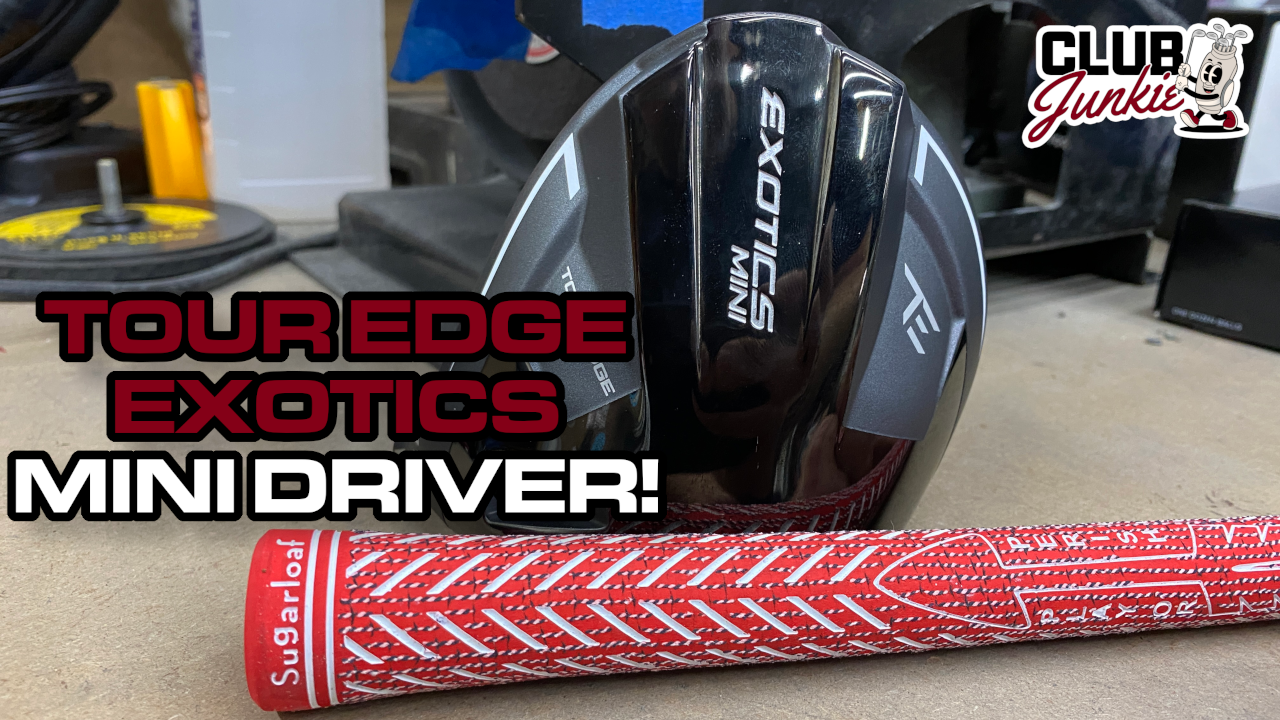
On this episode of Club Junkie, I put the new Tour Edge Exotics Mini Driver to the test and break down the performance, forgiveness, distance, and where it fits compared to a traditional driver or strong fairway wood. If you have been curious about adding a mini driver to the bag, this one is worth a look.
I also dive into the new TaylorMade Spider ZT Max putter that was recently spotted and discuss the growing zero torque putter trend. Plus, there is a closer look at the new Project X Titan Yellow shaft showing up on the PGA Tour and what makes it different from other profiles currently out there.
Opinion & Analysis
AVL: We’re talking about practice! My best tips for taking your game to the course

With the beginning of June on the horizon and courses rounding into peak condition for the season, it’s time to hone the finer skills that often get rusty over the winter. More sunlight also means more time to get out on the course and work on your game.
Whether it’s the practice green or the driving range, there’s always something to improve—whether you’re enjoying the fresh air or preparing for a weekend game or tournament. You can work on drills or freestyle around the green, and friendly competition is a great way to sharpen your skills.
While there are endless ways to get better at golf, I’m going to focus on practicing around the green. Let’s take a look at a few things to keep in mind as we head into the summer months.
Drills
From the driving range to the practice green, it’s important to incorporate drills into your routine. Years ago, I spent a weekend working on my short game with James Sieckmann. He recommended doing drill work for 5–10 minutes, then returning to your main practice.
This way, you create a balance between structured drills and real-world scenarios, so you’re not confined to “perfect” situations. For example, hitting the same three-foot putt over and over is good for repetition, but after a while, it becomes less interactive for your brain.
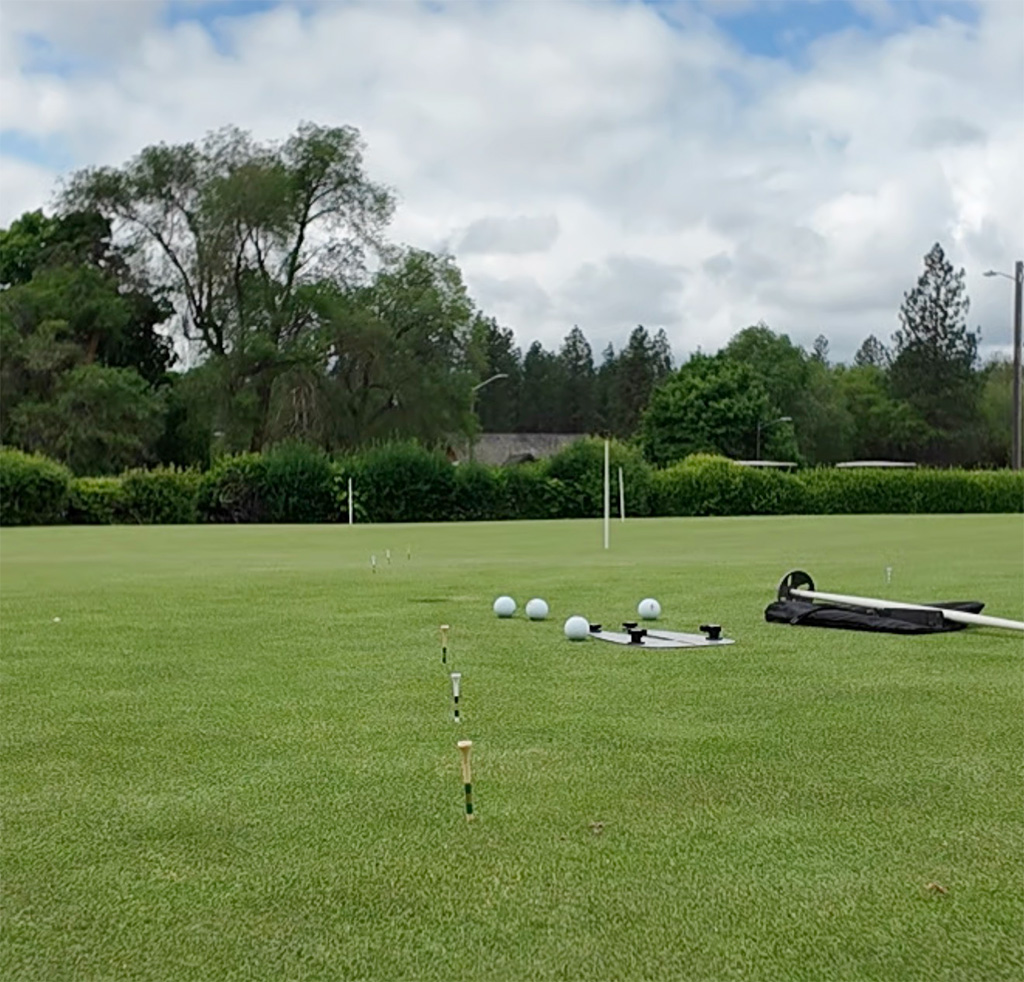
My approach is to use a putting trainer with a narrow gate for the ball to pass through, or simply place tees just outside the width of the ball. I’ll hit a series of four putts through the gate for three sets. Then, from a similar distance, I’ll hit four putts without the training aid and repeat that sequence three times.
Next, I’ll hit a number of 15–25 foot putts in a random fashion, then circle back to repeat the short putt drills with and without the training aid.
This breaks up the rhythm of hitting short putts with the training aid. When you hit the same short putts over and over, it’s easy to get into a groove—which is great for the drill, but not reflective of actual course play. While finding a rhythm is fundamental for drills, I like to introduce variation with longer putts to keep things realistic.
Game Mode
Once you’ve established a foundation with drills, it’s time to simulate on-course scenarios. This is where a few practice games come in handy.
One that I’ve been enjoying lately involves putting 10- to 15-footers with two balls. If I make the putt, great! If I miss, I pull the missed ball back a putter length. Suddenly, that little tap-in becomes a nerve-wracking three-footer—at least at first. As you get better at this game, those three- and five-footers become much more comfortable and routine.
It may sound cliché, but each shot is just what it is—it’s how we react that makes the difference. I like this game because it blends the pressure of on-course putting with the consequence of leaving yourself a much longer putt than usual.
Another game I like is one I recently learned from Brad Faxon. Place three tees in a line at four different locations around the hole: one at 3 feet, one at 6 feet, and one at 8 feet. The 3- and 6-foot putts count as par, and the 8-footer is for birdie.
This game keeps you focused on scoring and helps you get into a competitive mindset. You can even think about this putting game while you’re on the course. I just started playing it, and last week I couldn’t get better than two under par.
Competition
Competition during practice is when drills and games come to life, and you start to see results. For me, nothing beats a putting contest with a friend or two. In the right setting, these contests can become talking points for the whole season.
Match play, a game of 21, or simply seeing who can make the most one-putts (with a small prize on the line) are all great ways to simulate real on-course pressure. Recently, I played in a putting contest where one competitor made back-to-back 30- and 50-foot putts. As they say, expect your opponent to make every putt—and he nearly did. That’s impressive, and it’s something you see on the course, too: you have to stay committed to your game plan, no matter what.
When it comes to practice, it’s important to blend feedback from recent rounds with the fundamentals you want to reinforce. Drills, games, and competition—from the driving range to the putting green—form the backbone of skills you’ll rely on during actual rounds.
Finding the right balance is something we’re all working on, one practice session at a time. With the beginning of June on the horizon and courses rounding into peak condition for the season, it’s time to hone the finer skills that often get rusty over the winter. More sunlight also means more time to get out on the course and work on your game. Whether it’s the practice green or the driving range, there’s always something to improve—whether you’re enjoying the fresh air or preparing for a weekend game or tournament. You can work on drills or freestyle around the green, and friendly competition is a great way to sharpen your skills. While there are endless ways to get better at golf, I’m going to focus on practicing around the green. Let’s take a look at a few things to keep in mind as we head into the summer months.
Drills
From the driving range to the practice green, it’s important to incorporate drills into your routine. Years ago, I spent a weekend working on my short game with James Sieckmann. He recommended doing drill work for 5–10 minutes, then returning to your main practice. This way, you create a balance between structured drills and real-world scenarios, so you’re not confined to “perfect” situations. For example, hitting the same three-foot putt over and over is good for repetition, but after a while, it becomes less interactive for your brain.
My approach is to use a putting trainer with a narrow gate for the ball to pass through, or simply place tees just outside the width of the ball. I’ll hit a series of four putts through the gate for three sets. Then, from a similar distance, I’ll hit four putts without the training aid and repeat that sequence three times. Next, I’ll hit a number of 15–25 foot putts in a random fashion, then circle back to repeat the short putt drills with and without the training aid.
This breaks up the rhythm of hitting short putts with the training aid. When you hit the same short putts over and over, it’s easy to get into a groove—which is great for the drill, but not reflective of actual course play. While finding a rhythm is fundamental for drills, I like to introduce variation with longer putts to keep things realistic.
Game Mode
Once you’ve established a foundation with drills, it’s time to simulate on-course scenarios. This is where a few practice games come in handy. One that I’ve been enjoying lately involves putting 10- to 15-footers with two balls. If I make the putt, great! If I miss, I pull the missed ball back a putter length.
Suddenly, that little tap-in becomes a nerve-wracking three-footer—at least at first. As you get better at this game, those three- and five-footers become much more comfortable and routine. It may sound cliché, but each shot is just what it is—it’s how we react that makes the difference. I like this game because it blends the pressure of on-course putting with the consequence of leaving yourself a much longer putt than usual.
Another game I like is one I recently learned from Brad Faxon. Place three tees in a line at four different locations around the hole: one at 3 feet, one at 6 feet, and one at 8 feet. The 3- and 6-foot putts count as par, and the 8-footer is for birdie.
This game keeps you focused on scoring and helps you get into a competitive mindset. You can even think about this putting game while you’re on the course. I just started playing it, and last week I couldn’t get better than two under par.
Competition
Competition during practice is when drills and games come to life, and you start to see results. For me, nothing beats a putting contest with a friend or two. In the right setting, these contests can become talking points for the whole season. Match play, a game of 21, or simply seeing who can make the most one-putts (with a small prize on the line) are all great ways to simulate real on-course pressure. Recently, I played in a putting contest where one competitor made back-to-back 30- and 50-foot putts. As they say, expect your opponent to make every putt—and he nearly did. That’s impressive, and it’s something you see on the course, too: you have to stay committed to your game plan, no matter what.
When it comes to practice, it’s important to blend feedback from recent rounds with the fundamentals you want to reinforce. Drills, games, and competition—from the driving range to the putting green—form the backbone of skills you’ll rely on during actual rounds. Finding the right balance is something we’re all working on, one practice session at a time.


For Korean golfers, we always look forward to the last of the kkot-saem-chu-I for the true start of a new golf season. The term refers to a cold snap, but literally translates as “winter being jealous of the flowers beginning to bloom, thus lashing out one final time before surrendering to spring”.
A rather poetic mouthful packed into a short expression.
Koreans can be like that. Understated, yet oddly expressive at the same time. And nowhere is this more true on the golf course and in our golf bags. In fact, I suspect many Korean golfers look forward to new apparel and accessory drops more than they do actual equipment launches each year.

At this point, Korean golf fashion may exist on its own timeline. (courtesy of @seonbi_golfer)
There is ample evidence to support that suspicion. Korea is the world’s third-largest golf market behind the United States and Japan, yet its appetite for golf apparel exceeds that of both countries combined. Recent estimates suggest that Korea accounts for nearly 40 percent of the global golf apparel market, placing it among the world’s most influential golf fashion markets and punching well above its size.
Simply, we care deeply about how new golf clubs look and feel, but enjoy looking good while swinging them even more.
Golfers in the West may laugh and say that golf is played on a course, not a fashion runway. Perhaps. But what’s the harm in trying to look and feel good, if the added self-confidence can help actual performance? It certainly seems to have worked for Jason Day, who may have unlocked a new stats category: dormant strokes gained. Coincidence?

During the COVID-era, estimates placed the market near $9 billion, an astonishing figure for a single country.
As a proud member of Gen X, I’ve witnessed the highs and lows of golf fashion firsthand. The pleated trousers and wing-tipped shoes of Jack Nicklaus, the stylish plus-fours and knickers of Payne Stewart, the baggy black trousers and fitted mock-necks of Tiger Woods, and the thigh-hugging athletic tailoring of Rory McIlroy. Golf fashion, like the golf swing itself, has rarely stood still.
But nowhere have those trends shifted, evolved, and been scrutinized quite as relentlessly as in Korea. Here, golf fashion moves faster than fairway gossip, and consumers dissect brands with a level of discernment that can be both impressive and mildly terrifying. New brands are studied, judged, embraced, or dismissed with startling efficiency.
The result is a consumer base with one of the sharpest eyes for quality and authenticity anywhere in the world. It is difficult to quantify, but easy to recognize. Clean lines without trying too hard. Luxury mixed with utility. Trend awareness balanced by restraint and purpose.
It’s golf fashion shaped by one of the world’s most style-literate cities, something I like to call Seoul Sensibilities, referring to the taste level forged by a uniquely competitive environment.
And increasingly, global brands have noticed.

Many golf brands in Korea have their own flagship shops dedicated to apparel only
Titleist understood this years ago, when its apparel business in Korea took on a life of its own under new ownership and local direction. What had once been a straightforward extension of an iconic equipment giant became something sharper and more premium. By going all in on the serious Tour-player look (I couldn’t even fit into their XL sizes), Titleist struck the right chord with Korean consumers and helped its fledgling apparel business break into the mainstream. Titleist became a household name even for non-golfers who wore its caps, shirts, and windbreakers in daily life. In many ways, it proved that even heritage golf brands could carry real fashion credibility when viewed through a Korean lens.
Several years later, PXG took a page out of Titleist’s playbook and followed suit. Korean consumers helped transform the brand from one known largely for irons and loud commercials into something broader and more stylish. PXG apparel’s growth in Korea was explosive, where it found an early audience and turned the category into something more than mere logo merchandise. It is still hard to walk anywhere in Seoul without seeing its palindrome logo.
Malbon’s meteoric rise in the United States was genuine, but its ascent into a global golf lifestyle brand owes much to Korea, where it was elevated by a market already fluent in modern golf style. Korea did not simply embrace Malbon. It pressure-tested the concept, refined its appeal, and helped push it into the global spotlight.
As such, new brands may arrive from abroad, but more often than not, their sharpest evolution happens here. If a brand can earn credibility in Seoul, it’s deemed to have passed one of the toughest style audits in the game.
That is why the next meaningful chapter may not come from outside, but from a Korean brand moving in the opposite direction, carrying those Seoul Sensibilities outward as K-pop once did.

Play young Stay dope.
From Seoul, With Intent
Khalhon is a label that feels less like a trend-chasing newcomer and more like the product of a market that has already seen everything. Golfers here have long been surrounded by luxury logos, technical fabrics, and tour uniforms disguised as lifestyle wear and vice-versa. In other words, novelty alone rarely lasts here, and the Koreans seems to understand that instinctively.
Its style language leans into clean silhouettes, relaxed but tailored proportions, muted palettes, and premium materials that speak quietly but confidently. There is a modern city aesthetic running through it all, with strong layering pieces, thoughtful textures, and subtle branding that suggests sophistication rather than demanding attention.

“Built for the course. Designed beyond it.”
Most importantly, the garments seem designed to blur the line between golfwear and everyday style. Shirts, trousers, knitwear, and outer layers move comfortably between a game of screen golf, a lunch reservation, an airport gate, or an afternoon coffee in Gangnam with friends.
It raises the question of whether this is golfwear that happens to look good off the course, or everyday clothing that performs beautifully on the fairways.
Personally, I have long appreciated Nike Golf for its clean, athletic modernization of golf attire. It also has the useful side effect of making me look like a more serious golfer than I probably am. But off the course, there are times when being instantly identified as the golf guy in a crowd of non-golfers can feel a touch self-conscious.

“Built for the course. Designed beyond it.”
That is part of what drew me to Khalhon, which seemed to blend golf and everyday wear naturally. While some of the outfits may be slightly beyond my personal confidence level, the brand also offers tasteful options for older guys like me who still want to express a little personality without regretting the decision later.
These are not simply flashy outfits worn on the course and then banished to the closet until the next tee time. They work surprisingly well off the course too, and I suspect many of the pieces will still look right a couple of years from now, which would certainly be kinder to my wallet than most golf fashion trends tend to be.
And perhaps that broader lifestyle positioning also helps explain why someone like Sean Wotherspoon would find Khalhon creatively interesting in the first place.

“Built for the course. Designed beyond it.”
“Korea is not only one of the most fashion-forward golf markets in the world, but one of the most fashion-forward markets globally. Korea is ahead, and I love to watch and try to catch up.” – Sean Wotherspoon, Creative Director at Khalhon
Seoul and Beyond
If Khalhon’s rise says something about where Korean golf fashion is today, its relationship with Sean Wotherspoon says even more about where it is heading.
For readers less familiar with Sean Wotherspoon, his arrival at Khalhon is not some routine celebrity endorsement or influencer collaboration. In design and streetwear circles, Wotherspoon is regarded as one of the more influential creative voices of his generation, particularly when it comes to blending nostalgia, storytelling, and contemporary culture into products that people can connect with.
He first gained widespread attention through his now-famous Nike sneaker collaborations, where his vintage-inspired designs and instinct for color helped turn him into one of the defining artists of the late-2010s sneaker era. His work gradually expanded beyond footwear into apparel, automotive collaborations, collectibles, and broader lifestyle design.
Modern golf style now extends well beyond the fairways, where performance and functionality are largely expected by default. And while plenty of brands already make technically competent golfwear, Khalhon seems more focused on designing clothes people would genuinely want to wear even after the round ends.
And when guys at Wotherspoon’s level show genuine interest in working with a Korean golf brand as its new Creative Director, fashion circles tend to sit up and pay attention. There’s already a huge buzz among the fashion-conscious here about upcoming collabs with iconic sports stars and brands.

“My creative direction for Khalhon is disruptive, colorful, nostalgic, and modern. My goal is to blend these avenues seamlessly within each collection.” – Sean Wotherspoon
In chatting with Sean, what stood out most to me was how genuinely energized he sounded about the project itself. Despite having already worked across and countless other creative spaces, he described golf as a completely fresh category for him, saying that Khalhon “will be an amazing vehicle for my design work.”
At the same time, his enthusiasm seemed tied just as much to Korea itself. He spoke openly about admiring Korea’s fashion culture while repeatedly insisting he is still a terrible golfer.
There was something oddly refreshing about that humility. Rather than sounding like a celebrity parachuting into golf simply because the category suddenly became fashionable, Sean sounded genuinely curious about what Korea might do with the category next.
And perhaps that is what makes Khalhon feel interesting right now. The brand feels less like a trend-chaser and more like the natural result of a market now confident enough to export its own point of view.
For years, global brands came to Korea to sharpen their image against one of the most discerning audiences anywhere. Now, a Korean label appears ready to send those Seoul Sensibilities outward instead.
Which brings us back to kkot-saem-chu-i.
That final cold snap before spring always arrives with a reminder that seasons are changing, whether we notice it immediately or not. Golf fashion feels a little like that right now as well, as the old boundaries between sport, streetwear, luxury, and everyday style continue to soften.
And somewhere in Seoul, a Korean golf label already seems prepared for whatever season comes next. I just hope they have everything in my size.

Aaron Rai’s winning WITB: 2026 PGA Championship

Russell Henley’s winning WITB: 2026 Charles Schwab Challenge

Photos from the 2026 CJ Cup Byron Nelson

CJ Cup Byron Nelson Tour Report: Koepka and Kim’s newest putters finally get hot

Charles Schwab Challenge Tour Report: MacIntyre, Åberg and Spaun all switch putters, TaylorMade launches new Spider

Details on J.J. Spaun’s surprise putter switch

GolfWRX Launch Report: 2026 Titleist GTS drivers

Photos from the 2026 Charles Schwab Challenge

PGA Championship Tour Report: Fitzpatrick, Koepka among big-name putter switches for Aronimink

Photos from the ShopRite LPGA


Maria Torres WITB 2026 (June)
Driver: Ping G440 LST (9 degrees) Shaft: Accra TourZ Green 5-M4 3-wood: Ping G440 Max (15 degrees) Shaft: Accra TourZ Green 6-M4 5-wood: Ping G440...


Eric Cole WITB 2026 (June)
Driver: PXG Lightning Tour Max (9 degrees) Shaft: Project X Titan Yellow 70 TX 3-wood: TaylorMade Qi4D (15 degrees) Shaft:...


Si Woo Kim WITB 2026 (May)
Driver: Callaway Quantum Triple Diamond (8.5 degrees) Shaft: Fujikura Ventus Black 6 X Mini driver: Callaway Paradym Ai Smoke Mini...


Wyndham Clark’s winning WITB: 2026 CJ Cup Byron Nelson
Driver: TaylorMade Qi4D (10.5 degrees) Shaft: Project X Titan Yellow 60 TX 3-wood: TaylorMade Qi4D Tour (15 degrees) Shaft: Project...


Richard
Nov 21, 2024 at 9:43 pm
Slow play is caused by one thing and one thing only: poor enforcement.
People are going to be slow and not know it. But courses are so timid about getting people to keep up with the group in front of them. Confront those people regardless of why they’re behind. Looking for lost balls, taking forever on greens, not clearing the green area after putting out. Whatever. The reasons are myriad, but the solution is one: enforcement.
Andrew J
Nov 18, 2024 at 9:09 am
At least 50% of the slow play issue is greenreading. And it’s brutal to watch Pros hopscotching and perform tedious walk-arounds. Ask Jim Nance. All slow play on greens goes away and more putts disappear with this book: https://www.amazon.com/dp/B0DJT2YLL9
Jerry Mahony
Nov 15, 2024 at 12:36 pm
I worked at a very private golf course in SC. To avoid slow play we provided each teetime a sheet that tells them where they should be on the course at their given tee off time. The ranger had a master sheet that tells him where a specific group should be on the course. After a little bit of push back, the members actually liked the system so they would know if they need to speed up. All the teetime cards were laminated and could be use multiple times. Knowlege is power and nobody wants to be the one group that is slowing everyones and it was easy on the members and the rangers.
Dwayne
Nov 11, 2024 at 10:20 pm
STOP TRYING TO PACK FOURSOMES OF VARYING SKILL LEVEL ONTO THE COURSE WITH SHORT INTERVALS.
There, I fixed the slow play problem for you.
The *real* problem, however, is that course managers want all the revenue, customer experience be damned. If they can make more money by packing the tee sheet with 7-minute spacing, they don’t care if it results in six-hour rounds. There will always be some schmuck willing to pay…
Azz
Nov 11, 2024 at 1:39 pm
Ever heard of these guys:
https://www.mgatour.com
Greg
Nov 11, 2024 at 8:06 am
Slow play isn’t normal. Not where I’m from (Iowa) and generally not even when I’m playing courses in AZ. Some groups are slow because they’re terrible. Some courses are simply too hard for some people. Shit happens. IMO it’s really only bad on Tour and if the tv coverage shows enough shots idgaf.
I believe the real issue is places like Top Golf introducing people to golf and suddenly people think they know how to play and IT’S HARD. That’s where the shit happens comes in.
Richard
Nov 8, 2024 at 8:23 pm
Slow play is always what someone else is doing. The reality is often different.
I believe the ONLY answer is enforcement. But…another possibility is encouragement. Reward groups who finish under a certain time. Of course, there will always be the group that doesn’t respond to the incentive and, thus, slows down the entire course behind them.
But that first inclination, that it isn’t you but someone else instead, is the real problem. That’s why enforcement is the only thing that works.
joe connelly
Nov 8, 2024 at 9:36 am
My home course is a 5800 yards from the tips, not a long course. But it’s Vermont, it’s super hilly. Not a long walk between greens and tees. My regular group, 4 tee times, we mostly walk, and usually play in 3:45-4:00. That includes an 83 year old who always walks and an 87 year old who walks 75% of the time. A 4:15 round, a few guys will be commenting on why the heck is it so slow today. Our club does 10 minute start intervals which is a big help.
My complaint is with one of our starters who doesn’t seem to understand that it’s ok for a little variance in pace of play between groups. We tend to be among the first groups out but never first. Usually about the 6th-10th groups out. #5 green is right next to #1 tee. We have come off #5 in under 1:05 as a 4some, the 2some or 3some in front of us is off #6 (a par 3), and we’ll get told we need to pick it up. 1:05 for 5 holes is sub 4 hour pace!
Jeff
Nov 5, 2024 at 4:33 pm
The problem starts with TV coverage. Pros don’t have to golf faster the broadcasters need to stop showing anything other than the shot. The public course marshals need to start marshaling. If these two things are done the rest will fall into place.
Alex Buckley
Nov 5, 2024 at 12:49 pm
A really simple solution, a triple bogey (or even net double bogey) max on every hole. If you’re someone who can’t realistically make a double bogey or better every hole and keep up with pace of play, you belong back on the driving range. Public golf has been ruined by the COVID golf epidemic with a flood of golfers who do not care to respect others.
GregZ
Nov 13, 2024 at 12:33 pm
Totally agree with the COVID golf epidemic, i see it on all the courses i play. 18-24 year old males always in an electric cart even on a par 3 course. They were never taught how to respect the game. Yes…triple …pick it up please and move to the next hole.
Alex Buckley
Nov 14, 2024 at 9:47 am
Exactly. Now we have even more people keeping their score on each hole up to 8, 9, 10+ strokes to say they keep their score accurately, when really its ruining the experience for everyone else. It’s okay to take a triple as your max score and move on.
b
Mar 27, 2026 at 12:15 pm
Finally someone else has said it,,COVID has ruined golf.
Eric
Nov 5, 2024 at 8:46 am
This isn’t a main issue but can make it worse when the course is packed. Walking should be at the pro shop’s discretion, if the tee sheet is packed full on a Saturday they shouldn’t be sending out groups of walkers.
Richard
Nov 21, 2024 at 9:39 pm
Four walkers can be faster than four people in two carts. Walking is NOT the problem.
Dan S
Nov 4, 2024 at 7:02 pm
Eliminate alignment markings on balls. Too much time spent tweaking those lines when putting.
Continuous putting. You get to lift and clean the ball once per green.
Don’t worry about walking on someone’s putting line, if needed. Someone else was there 8 minutes earlier. Tap down any spike marks.
No straddling the putting line to feel the slope.
Teach junior golfers to play faster. Junior tournaments are tough to watch, with players mimicking pros on tv. And juniors will regulars in a few years.
Allow all technology: slope, detailed green books, wind, etc. but limit use to 15 seconds per shot.
T
Nov 4, 2024 at 8:35 pm
You don’t play golf, do you? LOL
stopit
Nov 10, 2024 at 6:31 pm
Goodness, you are way off the mark. Juniors ARE taught to play fast, in fact, most junior tournaments are the fastest things I’ve seen. They don’t even wait for each other to hole out; they are on the way to the next hole as soon as THEY hole out. Why? Because the tournaments PENALIZE slow play all the time.
Aimpoint takes 1-2 readings for slope. Fast compared to reading a putt from all 4 sides while plum bobbing, so NO, that’s not the issue.
Stay off people’s putting line; stepping over the line takes no additional time, it’s not slowing anything down.
Instead, go to your ball and be ready to play as soon as possible! Stop the nonsense of “the correct order” of play. THAT is what slows the whole thing to a grinding halt. PLAY REAL READY GOLF!
DaveJ
Nov 4, 2024 at 6:23 pm
At least 50% of slow play is caused by looking for golf balls. It is easier than ever to hit the ball far and therefore farther off-line into the trees and tall grass on bad shots. Balls are also more expensive so just dropping and moving on isn’t fun. There isn’t a good solution to this unless the course wants to give players 3 free balls with their round and not allow searches over 1 minute.
G LUD
Nov 4, 2024 at 10:20 am
WHY DOESN’T ANYONE MENTION THE “BALL ON THE GREEN” PROBLEMS”
1. 4 GUYS MARK AROUND THE COMPASS POINTS WHERE THEY COULDN’T POSSIBLY INTERFERE…TV INFLUENCE.IF BALL IS THERE ONE CAN’T HELP BUT START LINING UP THE PUTT
2. NOT LINING UP THE PUTTS BEFORE THEY PICK UP THEIR UNNEEDED MARKER.
3. WAITING FOR GUY TO CLEAN SAND TRAP
1,2,AND 3 CAN EASILY ADD 2 MINUTES TO EACH HOLE…..36 X 2= 36 IT’S NOT ROCKET SCIENCE
Andrew J
Nov 4, 2024 at 7:43 am
Nobody knows what plumbobbing is because there is zero Math behind it. Ditto Aimpoint. No Math textbook has a chapter on foot-feeling. Only EGOS has Math and no need to stare at putts from all sides. EGOS with Math is in these 20 dollar books from Amazon: https://www.amazon.com/dp/B0DJT2YLL9
https://www.amazon.com/dp/B0DCSZ7M53
No
Nov 9, 2024 at 11:08 pm
You’re just wrong. Aimpoint is based on feeling the slope percentage, a mathematical measurement you can double check with a digital level. It’s a real measurement. It’s based on computer models that show the slope percentage as applied in the system is the primary driver of break in a putt. So no, there’s lots of math in aimpoint.
pnd4pnd
Nov 12, 2024 at 12:04 pm
You couldn’t be more wrong about aimpoint and only trying to hawk some crap books on amazon. Wanna bet you are the author?
Lefthack
Nov 3, 2024 at 10:49 pm
I am a very ready golfer. I don’t take practice swings, it takes less than 3 seconds from when I step up to the ball to hit it. I visualize the shot, I picture the swing it takes, and I step up and hit it. Sometimes it’s as pictured, sometimes not. But taking 4 practice swings isn’t going to impact that shot.
M. LUMBO
Nov 4, 2024 at 9:33 am
I appreciate your thought.
When I lived and played in Scotland, it was common for 2 possible 3 guys hitting from the fairway at the same time.
Looking for a refurbished top flight golf ball as if it’s the Holy Grail.
Murv
Nov 3, 2024 at 6:07 pm
I will admit our groups could play faster. We have a mix of walkers and riders. And we are all older golfers. Some in the 80’s We try to play ready golf as best we can. But if one guy always hits first because he walks a little faster..that gets old. But that’s the way it goes. We have some long walks between greens and tees. A walker can lose a couple minutes just getting to the next tee. But if we aren’t held up ourselves we can finish in 4 hours. But if a group of 4 riders is behind us who wants to play in 3 1/2 hours we’re in trouble.
Andrew J
Nov 3, 2024 at 9:22 am
Foot-feeling greenreading is slow, annoying and doesn’t work. Replace it with the Quick & always accurate EGOS: https://www.amazon.com/dp/B0DJT2YLL9
Mike
Nov 2, 2024 at 7:56 pm
I’m glad places I play don’t have this problem. The problem, however, it’s too many people crammed on a course.
While I’ve never been warned of slow play, I’m tired of articles and complaining that transforms my game of improvement into a game of rushing. I agree that it’s excessive sometimes, but so is the constant complaining.
You want to sprint? Join track. Golf could stand to lose popularity. There’s not enough room on the course for all these people.
It causes people to hit into others because we’re pressured to play fast. I’ve played 6hr rounds before because of slow play. Seldom.
I still enjoyed it. If I don’t want to do that, I can quit golf.
Thigh, I rarely run into this anyways. And I live in North Carolina.
Idea
Nov 2, 2024 at 6:54 pm
We have slow play constantly at my course. 2 observations:
one, the slow groups are ALWAYS going one player at a time. They are never at their own ball, ready to play. They are always at one of the other 3 players until it’s their ordered turn. So go to your ball and be ready and stop with the nonsense formality of playing in order.
Two, if for example you’ve hit 8 shots on a par 3, pick up. Know when to pick up the ball and move on.
Brad
Nov 2, 2024 at 4:28 pm
Just PLAY FASTER! If 2 are in a cart drop the first person at their ball and drive to the next, don’t wait. Make the shorter hitter walk up to the cart or pick them up on the way back to the path. If you’re at your ball ready to hit and the player away isn’t – hit it, don’t wait! Be mindful of where you are and that you’re keeping up with the group in front. Self awareness seems to be in short supply these days. No, it’s not a race, but it’s not a Sunday stroll through the park either, find the happy medium. If you can’t finish 18 in under 4 hours you need to ask yourself why and figure out what you need to do to fix it.
Brad
Nov 2, 2024 at 4:32 pm
Also, handicap guidelines specify net double bogey max. Instead of putting out for 7 on the #1 handicap par 4 after dumping one in the water off the tee, pick it up, it’s good, move on!
T
Nov 2, 2024 at 7:00 pm
If, that is if they maintain a handicap!!
Most people don’t. Most people are out there for fun and a hobby, they are not too serious about it to that extent.
Brad
Nov 2, 2024 at 10:44 pm
That’s fine, my point was more to the fact that USGA handicap rules stipulate net double bogey then pick it up. If you don’t have a handicap or you’re just out there for fun, once you get to double bogey pick it up and move to the next hole.
T
Nov 4, 2024 at 8:33 pm
To add:
Do you think any of those people even care about the Rules??? And just imagine if you made those absolute weekend hackers play by the Rules. Proper boundariesw, proper drops, etc etc….
And who are YOU to tell them what to do and how many strokes or whatever. They paid to play. You don’t own them
Greg
Nov 3, 2024 at 6:02 am
Tee time intervals are HUGE. My course has 10 minute times. Across town, 8 minutes. In my experience, 8 minute intervals result in multiple groups getting to know each other on multiple tee boxes. Very rarely happens at my muni.
ericsokp
Nov 4, 2024 at 11:35 am
Bingo! I think this is one of the biggest causes of slow play … and you should feel fortunate with 8 or 10 minute tee time intervals; at my local courses it’s down to 7 minutes as they cram as many people as possible onto the course and then wonder why there are so many backups.
T
Nov 2, 2024 at 3:32 pm
Courses are too long. 7000 yards used to be the back tees at most places back in the day of persimmon at most courses.
Ball goes too far – back then when people would miss it 250 into the rough, they could still find it, that same ball (with the requisite modern driver at 45.5 inches more when they used to be less than 44.5), now that same shot, same miss is going 275 and therefore deeper on the same line – and people go searching for their $7 Pro-Vs. I don’t blame them, they are just using equipment sold to them
There needs to be actually be MORE bush and brush, with MORE OBs in the same areas – so that people would just hit provisional, give up looking, and move on, rather than red penalties and therefore they go looking and if one person loses 10 balls into the bush and are ‘allowed to” look for 3 minutes each time – well??? That’s 30 minutes added to their “playing time” is it not????
Repeal the ball, reduce COR of drivers to .800, reduce driver lengths and cap it at 45, quit selling the game of distances, make it a SKILL game, make it harder, make people WALK
David Krumenacker
Nov 2, 2024 at 3:22 pm
Superintendents need to use their heads a little also. Stick the pins in the middle of greens or far away from the penal areas around the green. No need to tuck pins or on slopes where two putting is impossible.
Larry Deschler
Nov 2, 2024 at 10:57 am
I agree that the golf course owners/managers need to get more involved and actually do something to discourage slow play rather than just collecting green fees and ignoring the situation. The actions outlined on the yellow sign in the article would be a good start if they would actually follow through. I think that the 4 hour and 30 minute suggested time is way too long however. A foursome can readily play in 3 hours and 45 minutes without rushing. There should be penalties attached for not meeting that standard.
T
Nov 2, 2024 at 3:23 pm
Bull. Try walking some of these wickedly hill courses that were made only with carts in mind, gaps between holes are as big as the Par4s and at 7000 yards there is no chance you could do that in that time
Nick
Nov 2, 2024 at 10:56 am
Can’t grow the game and have quick play at the same time .. too many people who should be on the driving range practicing are on the course practicing during a round.
Gary Waliszewski
Nov 2, 2024 at 10:30 am
Golfers should play from appropriate tee and course should explain that to the golfers. Playing from back tees and shooting 100+ is a sure way to have a 4.5 to 5 hour round
snapjack
Nov 4, 2024 at 9:15 am
I’ve been playing for 35 years and have seen players on the back tee twice. I agree the number of people playing from the blue tees is to high though.
JM
Nov 2, 2024 at 10:07 am
Using a 4 and 1/2 hour as the standard is the first problem. Anything more than 3.75 hours seems like a crawl to me and i play with 60-75 yr olds who hole out every putt. If you tell someone that they have 4.5 hours before its a problem, they’ll use every minute.
If I go bowling, rent a pickleball court, etc…there is a time limit. If I go over, I pay for more time. If someone else has it reserved, I’m off the court/lane. Slow golfers have a mentality that they are the only ones that matter.
JM
Nov 2, 2024 at 10:09 am
also, with gps technology…reward fast play and punich slow play. Easy enough to tell who is the problem. Carts that are holding up the course get $ tacked on their tab. Carts being held up get $ deducted from theirs.
eeee
Nov 11, 2024 at 3:57 pm
exactly
Saturday
Nov 2, 2024 at 7:57 am
I have an old golf magazine from 1973. You know what the number one problem was back then? Slow play.
Superintendents never get the share of the blame they deserve. The rough is too often “Easter egg hunt” deep. People are reluctant to abandon golf balls that cost 5 bucks each. Rough should be one inch, no more. Pin placements should be in the flattest section of the greens so that the second putt is easier. Pins are never cut into the sides of slopes anywhere in the professional game, and that includes Augusta. Why do it for us? Bunkers should be eliminated from public courses. The cost savings is huge and most of them aren’t constructed properly so they are basically ground under repair anyway. People try to play from them and can’t. Tour pros couldn’t play from them either. There is plenty of blame to go around but since nothing else has really worked let’s look somewhere other than the players for some of the solutions.
Square
Nov 2, 2024 at 4:34 am
I would play more golf if I knew stomping out slow play was a priority. Technology could aid in advising the group they are running behind in their expected times. I just don’t have the patience for a 5 hour round any longer; I’d rather do something else like go to the driving range.
B
Nov 1, 2024 at 10:21 pm
1. As a tall, less-than-professional athlete, that takes longer than average to get balanced/centered/comfortable over a shot, I have to point out that the pre-shot routine trope is (largely) a myth. I’ve played 500+ rounds in my life and spent a decade as a club and pro caddie; most the culprits of slow play are: 1. High-handicap and occassional golfers not picking up and heading to the next hole when double par is no longer achievable. 2. Being ready to play when it’s your turn (there’s many components to this which are too long to list here) 3. Not being able to find your ball. As a former caddie, and non-idiot, I probably save 20 minutes a round by directing both the rest of my regular foursomes, as well as players I get paired up with, to the location of their balls.
BD57
Nov 1, 2024 at 7:41 pm
A couple of ideas
#1, 8 minute gap between tee times is ridiculous. Best would be 10
#2, develop “single player carts.” Significant slowdown is “drive to ball #1, wait til the shot is hit, drive to ball #2. No, people don’t “Have” to do that, but they do it all the time.
Single player cart would be smaller, lighter, less wear & tear on the golf course.
T
Nov 2, 2024 at 3:25 pm
Getting rid of carts should be the priority, you’d get rid of lazy players who don’t want to walk and the pace will get quicker as real walkers know how to place their hand carts in the right places and know how to move between greens and tee boxes better
Ted
Nov 3, 2024 at 8:32 pm
You know I hear this all the time, but there is no courses by me I know of that will let you walk unless you’re a member. So get off your, I’m a better person than you because I walk high horse. Slow play is caused by idiots, and assholes.
8008
Nov 4, 2024 at 12:29 pm
“Slow play is caused by idiots, and assholes.”
You just exemplified yourself, didn’t you? Not really helpful with the whole “So get off your, I’m a better person than you” attitude that YOU have.
You have to give the general public a break. Nobody is out there, not a country club, not the Golf associations, not fellow long-time golfers – nobody is teaching them manners or etiquette, on how to actually play the game and have respect for the game and others.
You’re the only one with the high horse attitude.
Getting rid of carts has lots of implications that stretches to how golf courses are designed, where too many courses were built with only carts in mind and “fun” in mind due to the terrain and “views” etc – and just because they can build it – not based on pace of play based on difficulty and the ability for everybody to be able to traverse such terrain in a reasonable amount of time by themselves on a packed course without a caddy while carrying or pushing/pulling their carts
T
Nov 4, 2024 at 8:38 pm
You would know what it’s like to be on a high horse huh, LOL
Do you even hear yourself? You are EXACTLY the pompous fool! Sounds to me like you’re the idiot and the bunghole.
Try walking. See what happens
Sooner than later you’ll realise half the course are not designed correctly with ALL players in mind. Most of them are built for cart pace.
All courses should be built for walking in mind, FIRST
Dave
Nov 6, 2024 at 1:54 pm
All players that use carts are not lazy. I use a cart because I can not walk do to conditions beyond my control. I love to play golf and this is the only way I could play.
Bill
Nov 4, 2024 at 12:07 pm
Excellent suggestion and there is evidence to support your theory. I played a lot of golf during Covid and at the two courses I primarily played only one player was allowed per cart and the rounds were completed in 20-30 less time. The two head pros hated the practice because of the perceived increase of damage to the course but didn’t complain at all about the time savings.
Another huge waste of time I see is players who have to take their gloves off to putt and don’t put them back on until they get out of the cart at the next tee and have already grabbed their club. I don’t believe for a second that a 15-25 handicapper putts any worse while wearing a glove, they just do it because they see the pros do it on tv.
J K
Nov 1, 2024 at 4:11 pm
Covid golfers!!
will
Nov 3, 2024 at 7:25 am
this.
Covid has helped more people get into golf but those golfers have not been taught pace of play. I have noticed a big difference of pace of play (and just how crowded my course is) since covid happened.
Karsten's Ghost
Nov 1, 2024 at 3:28 pm
Slow play is a US problem. When you consider it from that lens, you find it’s very simple…
First, the US encourages finishing out stroke play for everyone. Put that 14 on your card, Billy. Instead, encourage pickups and forward tees.
Next, the PGA is a terrible influence because everyone thinks that’s how you do it. You get what you watch.
Courses should also be encouraged to keep their grounds where balls are visible. No need for 8″ rough.
Finally, encourage walking whenever possible. Walkers keep the pace even.
There’s more, but this is a start.
HeftyLefty
Nov 1, 2024 at 2:57 pm
Players have a responsibility first and foremost for pace of play, but, courses need to set expectations. Many set a pace of play that is slow to begin with (see the photo in the article). Several years ago I talked to a ranger that had confronted a group that was 2 holes behind. Their response? We are on pace, which according to the expected pace of play (4 1/2 hours) and the onboard GPS they were. Set the pace of play at 4 hours and enforce it. If this is done the pace of play improves and the course becomes known as one that doesn’t take all day to play.
John K
Nov 1, 2024 at 2:15 pm
Courses just need to stop stacking groups out 7 minutes a part from each other. A group on the tee and a group in the fairway of every hole is just asking for a traffic jam.
Brandon
Nov 1, 2024 at 10:08 pm
Bingo. 12 minute tee time intervals combined with a marshal who actually does his job would solve the problem. Playing mostly in the SF Bay Area, I rarely see marshals on public courses these days.
T
Nov 2, 2024 at 3:38 pm
So you’re OK to pay higher green fees? Because you’re losing about 1 group per hour of greens fee if you went even from 10 min to 12 min tee times, so clubs have to make it up somewhere, and that would include selling more confections and stuff at higher prices, look at the price of range balls!!!! It’s a joke!!!!
D Gillis
Nov 1, 2024 at 11:18 am
Doesn’t make any difference anyway. No one is watching this slow excruciating green reading waltz they call AimPoint!
Get rid of it!!
Uhhhhhj
Nov 2, 2024 at 6:49 pm
Aim point has NO impact on pace of play. Plumb bobing, going to all sides of the flat, it all takes time. Aim point is just one way to do it, and is exactly the same amount of time.