
News
Does weight affect aim?

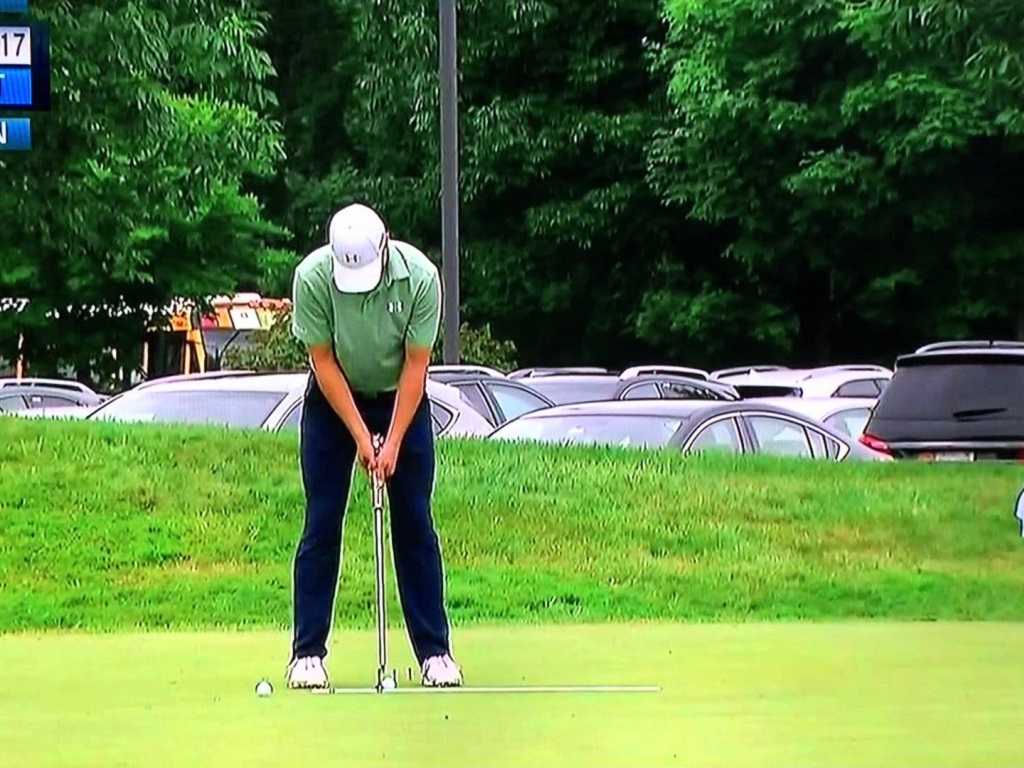
Why Speed Dictates Aim
When it comes to putting, and more importantly holing putts, there are only a few factors that are truly going to make a difference when it comes down to it. Technique aside, Speed is going to be one of the biggest influencers on the probability of making the putt. The reason for this is because Speed is going to determine the line you aim the ball on. A putt with less pace is going to break more than a putt of equal distance with more pace.
In addition to Speed being an important contributor to the line you select, it also affects the size of the golf hole that you are putting towards. The hole doesn’t really change size, however, once the golf ball goes into motion, the holes “effective size” changes. Essentially, at rest the golf ball can cross any threshold of the hole and fall in, thus making the holes “effective size” 100%. However, once the ball is placed into motion and is traveling at 1.68MPH the “effective size” of the hole decreases to 75%.
1.68 MPH, Entry Speed, 1-foot past the hole on an 8 stimp meter green, or 2-feet past the hole on a 14 stimp meter green, they all represent the same thing, your best chance to make the putt while giving you the best chance at a kick-in on your next attempt should you miss. Entry speed is a relatively new term, however, is a concept that has been around for a long time.
Real World Application
Mr. Smith is an average golfer and routinely shoots in the mid 80’s at his local course from the regular tees. Mr. Smith decides he wants to put in some work on his short game, and set’s about making more putts from 10-feet and closer. Mr. Smith knows that the practice green has some slope and undulation and picks a putt that breaks from left-to-right at a 2% grade. Mr. Smith putts 10 tries and makes 4 of them from 10 feet. Out of the 6 that missed, only one was missed on the low side of the hole with all of the other putts missed on the “pro” or high side of the hole. The balls that missed on the high side of the hole all came to rest between 3-5 feet past the hole. Based off of traditional knowledge, he feels confident that if he just aims a little more right on those left to righters, he is sure to make more on the next batch. Will Mr. Smith make more than 4 putts out of the next 10 attempts while aiming slightly more to the right?
Mr. Smith could potentially make more putts by aiming more to the right and maintaining his current speed, however, by aiming more “directly” at the hole he has created a more downhill putt which will also increase the Effective Stimp making the ball roll farther past the hole should it miss. Therefore, while we may increase make percentage some, the putts that are missed will be farther from the hole when they come to rest increasing the risk and likelihood of a three-putt.
What would be most beneficial to Mr. Smith would be working on speed control and using the slope and undulation to his advantage. Mr. Smith is like most golfers and routinely misses putts only to blame the line, when in actuality, it was the speed that caused the putt to miss the hole.
Why is Speed Control to Blame?
Some athletes see more curve, and some swear that they only see straight lines. Either way both are at a disadvantage if they are trying to putt the ball to the apex of the break. The reason for this is because the ball will begin to move off of the aim line very quickly as the break takes effect on the ball, and in most cases with breaking putts, the aim line will be outside or farther away from the hole then the actual apex of the break due to this initial breaking prior to reaching the apex.
With that said, using our previous example of Mr. Smith, when the average golfer sees the ball miss left of the hole on a left-to-right breaking putt, they assume that they “pulled’ the putt, when in actuality, they had to strike the putt much to firmly to get the ball to the apex of the break which is what caused it to not take the break at the end of the putt and go in the hole.
Now that we understand that most golfers are hitting the putt with too much pace and not playing enough break, how do we fix this problem? One way to approach this problem would be working with a coach and identifying the areas of speed control (length of stroke, force application, tempo, centeredness of contact, etc.) that need the most work and then develop a training plan to change the motion pattern. Another way, from a club fitting perspective would be to look at how the Instrument is weighted throughout and how that matches and affects the biomechanics of the athlete.
The Heavier the Putter the Better, right?
When you pick up your putter, do you ever balance it on one finger? If so, you know that the “balance point” of the putter tends to be a few inches up the shaft from the club head, and when you find it, you can balance the putter horizontally on one finger. Most putters in the market have most of their mass or weight much closer to the club head then the hands, and this is very important to understand. The more the total mass moves towards one end point, the more the heavier side is going to want to swing relative to the other end point. In engineering, they call this a moment arm.
When we feel how “soft” a putter face is, we are actually experiencing all of our senses and sound tends to affect what we feel a lot. For example, older Ping putters would tend to be lighter and have less mass than current putters, and luckily, they were named Ping because that is the exactly the sound you would get when you struck one. Often times, people would describe a Ping putter as being hard due to it being cast and not forged when in actuality it was due to weight. At the opposite end of the spectrum was the Heavy Putter that was around about 10 years ago. This putter was big and heavy and always felt to be incredibly soft, but in reality, was just a big chunk of lead with lots of mass.
The issue with having a putter that feels great and has a lot of mass is that it tends to hit the golf ball too firmly relative to the perceived “effort” needed to be applied to get the ball to travel to the hole. This leads to putts traveling at too much speed to take the amount of break that we planned on which influences our aim over time.
Perception vs. Reality
Most athletes believe that they prefer a heavy putter, however, when asked about putting, they frequently state that they tend to hit their putts too firmly and miss on the high side of the hole. Based off an understanding of how the weight affects the moment arm and acceleration of the putter, we can see how this is a conflicting ideology. So, if we know that weight contributes to creating the correct “feeling” of the putter for the athlete, yet leads to poor speed control, how do we satisfy both needs?
The answer lies in moving some of the weight or mass to the other side of the center of mass of the putter. The more we “balance out” the weight distribution between the two endpoints, the less moment arm effect will be created. The other advantage to moving mass or weight to the other side of the center of mass of the putter is that we can now satisfy both needs if we are strategic with where the mass or weight is added.
If the center of mass of the putter is a few inches up the shaft from the club head, then if we added mass or weight within the shaft but below the hands, technically the mass or weight is above the center of mass of the putter, yet still below the hands of the athlete which satisfies the “feel” component while still reducing the amount of moment arm effect. This internal weighting can be accomplished using the Opti-Vibe system.
If this attempt at slowing down the club head fails due to the weight of the putter “feeling” too heavy, then we can counter-weight the putter and actually put more mass in the butt-end of the putter. This tends to be very effective in slowing down the club head and many putter manufactures have begun to sell counter-weighted putters. This process can also be completed using a product called Tour Lock.
Summation
Speed kills, and most of us are much too aggressive with our putting strategy, which exposes us to longer “come-back” putts and leads to a higher likelihood of 3-putts. By better understanding how speed effects the line, we can reduce the number of total putts taken by reducing the amount of 3-putts. This is a much easier task to accomplish than having to make more putts outside of 10-feet.
If you are interested in seeing this concept in action, I highly recommend our Big Tilt Pro Max XL. Not only does it project the aim line, but also the maximum speed, minimum speed, and maximum percentage to make line. In addition to being able to see the lines, it also comes with over 50 different training programs designed not only to help with making more putts, but also developing all the necessary skills that go into becoming a good putter.
In addition to training the necessary skills to become a good putter, it is also important to evaluate your putter from a few different perspectives. In addition to creating the proper alignment and loft scenario at address, it is also important to evaluate the weight distribution of the putter and how that affects the timing or tempo of the stroke. While the timing or tempo will be unique for each individual, most good putters will maintain the same timing or tempo when hitting putts from different lengths, which is impossible to do with a putter that is either too light or too heavy. It is important to understand that you probably don’t need a new putter, just a little fine tuning with the weighting.
Fine tuning this process is very easy with the use of the Trackman 4 Putting Solution. By understanding the “fine details” of how we deliver the putter, and how this matches the biomechanics of the body, we can finally get down to working on the parts of the stroke that will have the biggest effect size and actually lead to lower scores.


GolfWRX is on site this week at the Memorial Tournament, with both Alistair Cameron and Tour Photographer Greg Moore on the ground in Dublin, Ohio, where a strong field is assembled to pay homage to the Golden Bear.
In addition to WITB galleries, we’ve already been treated to an in-hand look at Tommy Fleetwood’s new TaylorMade Spider putters.
Check out links to all our photos below.
General Albums
WITB Albums
- Jason Day – WITB – 2026 The Memorial
- Chris Gotterup – WITB – 2026 The Memorial
- SungJae Im – WITB – 2026 The Memorial
Pullout Albums
- Jason Day’s 1off Payntr golf shoes – 2026 The Memorial
- JT Poston’s TaylorMade Spider – 2026 The Memorial
- Cameron putter – 2026 The Memorial
- Tommy Fleetwood’s TM Spider putters – 2026 The Memorial
- New Mitsubishi Chemical 1K Pro Orange shaft – 2026 The Memorial

Around the world, the golf wheel spun this final week in May of 2026. From New Jersey to Austria, with stops in Korea, Texas, and North Carolina (don’t let me route your next trip) the world’s finest put their golf games on display. There were three playoffs, some known commodities and some new talent. It was the sort of week that we hope to have at this point in the seasons. June and July afford double-digit major events, and perhaps, one of this week’s champions will use this success as a springboard to new heights. Time to run it all down, tech style, in this week’s Tour Tech Rundown.
Thanks to WITBHub, Today’s Golfer, GolfWRX, and Inside Tour Golf for initial research into equipment.
PGA Tour @ Charles Schwab Challenge: Heroic Henley denies Cole
Eric Cole did nearly everything that a fellow can do, to secure a first PGA Tour title. He stayed one shot clear of Ryder Cup player Ben Griffin. He kept US Open champion Gary Woodland and wunderkind Michael Brennan two shots distant. He posted 70 on day four to reach twelve under par. And then, Russell Henley revealed his Dr. Strange cloak. Henley made 47 feet of birdie putts on holes 16, 17, and 18, to jump from minus-nine to twelve-deep, and secured a spot in a playoff with Cole. The duo returned to the final tee, and put on a stripe show.
Both golfers found the fairway off the tee, and Henley improved on his regulation play with an approach to four feet. Cole did himself proud, tucking an iron to a dozen feet, but he was unable to convert the putt for three. Henley is one of the best putters on tour, and he proved it once more by draining a putt for a fourth consecutive birdie, and a sixth PGA Tour title. For Eric Cole, that first victory should come, and soon. He has done everything necessary to earn the chalice lift.
Henley’s Suitcase
- Driver: Titleist TSi3 at 10 degrees. Shaft: Project X HZRDUS Smoke Black 70g 6.5 TX
- Metal: Titleist TS3 at 16.5 degrees. Shaft: Project X HZRDUS Smoke Black 80 TX
- Hybrid: Titleist TSi2 at 21 degrees. Shaft: Mitsubishi MMT hybrid 100 TX
- Iron: Titleist T250 4-iron. Shaft: True Temper Dynamic Golf AMT Tour White X100
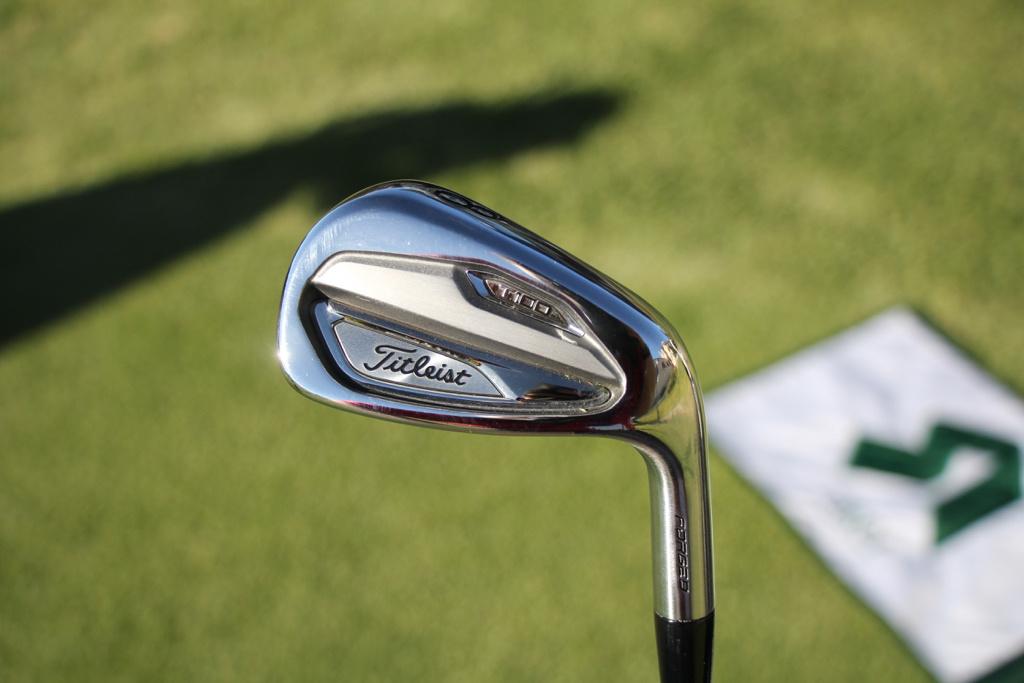
- Irons: Titleist T100 5-6 irons. Shaft: True Temper Dynamic Golf AMT Tour White X100
- Irons: Titleist T100 7-9 irons. Shaft: True Temper Dynamic Gold Tour Issue X100
- Wedges: Titleist Vokey Design SM11 at 48 and 50 degrees. Shaft: True Temper Dynamic Golf Tour Issue X100
- Wedges: Titleist Vokey Design SM11 at 54 and 60 degrees. Shaft: rue Temper Dynamic Golf Tour Issue S400
- Putter: Titleist Scotty Cameron T5 Tour Prototype
LPGA @ Shoprite LPGA: Welcome back, Celine!
Soo Bin Joo had her eyes on a maiden LPGA title. She held the lead after two rounds, then hit a red light at the intersection of can-I and how-To. Joo posted plus-two on day three in New Jersey, and dropped to a T4 finish, which was still a career-best for the young Korean golfer. Instead of a new face, a familiar face returned to the top of the podium.
Celine Boutier was the It Girl in 2023. She collected four victories, including a major title at Evian. Boutier reached world number one status, then simply faded into the background. No wins came her way over the next 30 months. On Sunday, she collected LPGA victory number seven, at the same trace as LPGA victory number two.
Day three saw Boutier manage the windswept Seaview Bay course with six birdies and a bogey. She was challenged in the end by Thailand’s Arpichaya Yubol, who signed for a 66 of her own. Yubol came up one shot shy of the top ladder rung. Finishing in third place at -7, two back of the winner, was Ireland’s Lauren Walsh.
Celine’s Suitcase
- Driver: PXG 0311 Black Ops Tour-1 at 9 degrees. Shaft: Graphite Design AD IZ-5
- Hybrid: PXG 0311 Black Ops at 19 and 22 degrees. Shaft: KBS Hybrid Prototype
- Hybrid: PXG 0311 Gen5.
- Iron: PXG 0311 P Gen 4 5-9 irons
- Wedge: PXG 0311 T Gen 4 PW
- Wedges: PXG 0311 Sugar Daddy II at 50, 54, 58 degrees
- Putter: Bettinardi Studio Stock 3 DASS
DP World Tour @ Austrian Alpine: KK? KK!
Kota Kaneko has a rhythmic name. It has strong vowels and a run of voiceless stops in its crunchy K sounds. On Sunday in Austria, Kaneko put a stop to a challenge from Portugal’s Ricardo Gouveia and everyone else, and claimed a first-ever title on the DP World Tour. Gouveia did well to reach 16-under par over four days, but Kaneko held firm, two shots in the clear.
Davis Bryant of the USA also forged a strong challenge for the win. He ended in a tie with Gouveia for second place. Kaneko began and finished his final round in a bit of a malaise, but he caught fire midway through. Birdies at 10, 12, and 13 provided the necessary cushion to cruise to the finish line without breaking a serious sweat.
Kaneko’s Suitcase
- Driver: Ping Max G440
- Metals: TaylorMade Qi4D at 15, 16.5, 21, and 24 degrees
- Irons: TaylorMade P760 5 and 6 irons
- Irons: TaylorMade P7TW 7-9 irons
- Wedges: Titleist Vokey Design at 46, 52, 56, and 60 degrees
- Putter: Odyssey Ai-One Cruiser Arm Lock #7
Korn Ferry Tour @ UNC Health Championship: Improbably Alvaro
Alvaro Ortiz may have had a bit of scare on the outward nine on Sunday, but he came through in clutch fashion in the end. Ortiz began the day bogey-double, and added another double bogey at the 11th hole. He was mired in a downward trend, spiraling away from the top of the leader’s board. Ortiz found hope at the 14th, where his first birdie of the day tumbled home. Inspired, he closed with birdies and 17 and 18 to catch Ross Steelman at 10-under par, and the duo returned to the 18th deck for overtime.
The extra session concluded in brief time. Ortiz, buoyed by his newly-retrieved confidence, hit the fairway with driver, then approached to six feet and drained the putt. Gobsmacked, Steelman could do little more than smile and applaud, as his run at the top came to a close. The victory was the first for Ortiz on the KFT, and will implant him squarely in the chase for a PGA Tour promotion.
Alvaro’s Suitcase
- Driver: Ping G430 MAX driver at 9 degrees loft
- Metal: Ping G430 MAX 3W
- Iron: Ping iDi Driving Iron
- Irons: Ping Blueprint S irons
- Wedges
- Putter: Scottsdale TR Piper C
A party on the green!
Alvaro’s time comes in Raleigh with his first win @UNCHealthChamp ? pic.twitter.com/2dmtZdbSzk
— Korn Ferry Tour (@KornFerryTour) May 31, 2026
LIV @ Korea: Me llamo Joaquin
Chile’s Joaquin Niemann had been away from the LIV winner’s circle throughout all of 2026. This week in Korea, he reminded us that he is still a force to consider. Niemann chased down Taylor Gooch over the closing holes at Asiad Country Club, then claimed victory with a hole-one birdie in extra time. Bryson DeChambeau claimed solo third, one shot in arrears at minus-eleven. Dustin Johnson finished on fourth, one putt farther back.
Niemann’s Suitcase
- Driver: Ping 440 LST
- Metal: Ping G440 Max at 15 degrees
- Metal: Ping G425 Max at 21 degrees
- Hybrid: Ping G430 at 25 degrees
- Irons: Ping Blueprint S 5 through PW
- Wedges: Ping S159 at 52, 56, and 60 degrees
- Putter: Ping PLD Anser

Driver: Titleist TSi3 (10 degrees)
Shaft: Project X HZRDUS Smoke Black 70 6.5 TX

3-wood: Titleist TS3 (16.5 degrees)
Shaft: Project X HZRDUS Smoke Black 80 TX

7-wood: Titleist GTS3 (21 degrees)
Shaft: Project X Denali Black 80 TX
Irons: Titleist T250 (4), Titleist T100 (5-9)
Shafts: True Temper Dynamic Gold AMT (4-6), True Temper Dynamic Gold Tour Issue S400 (7-9)


Wedges: Titleist Vokey Design SM11 (48-10F @47, 50-08F @51, 54-10S @55, 60-04T)
Shafts: True Temper Dynamic Gold Tour Issue X100 (48), S400 (47)

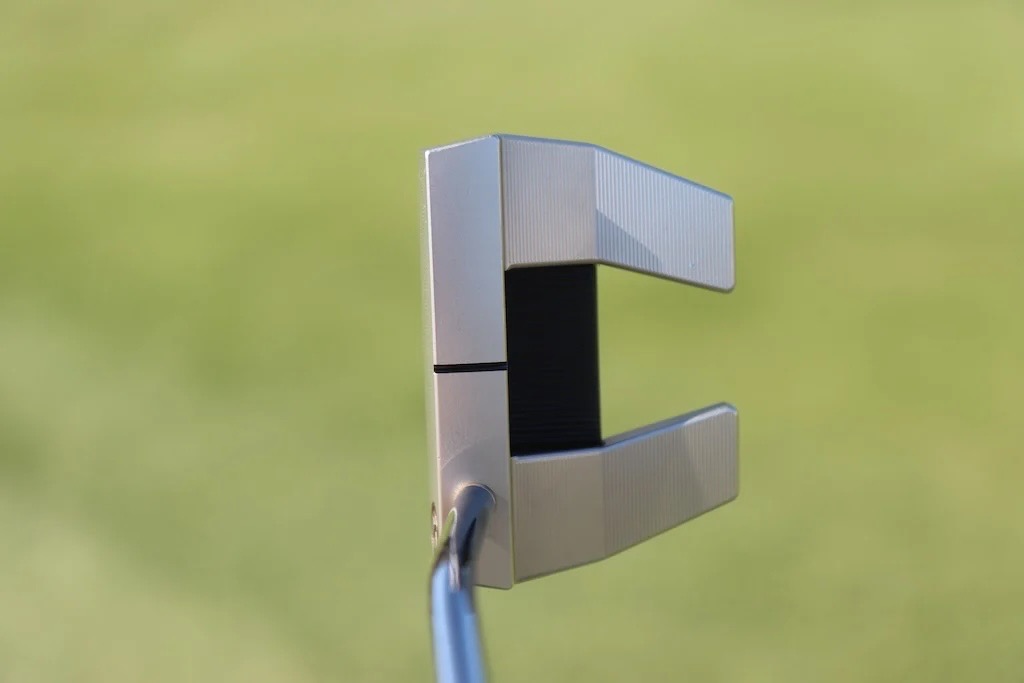
Putter: Scotty Cameron Phantom X5 Tour Prototype

Grips: Golf Pride Tour Velvet
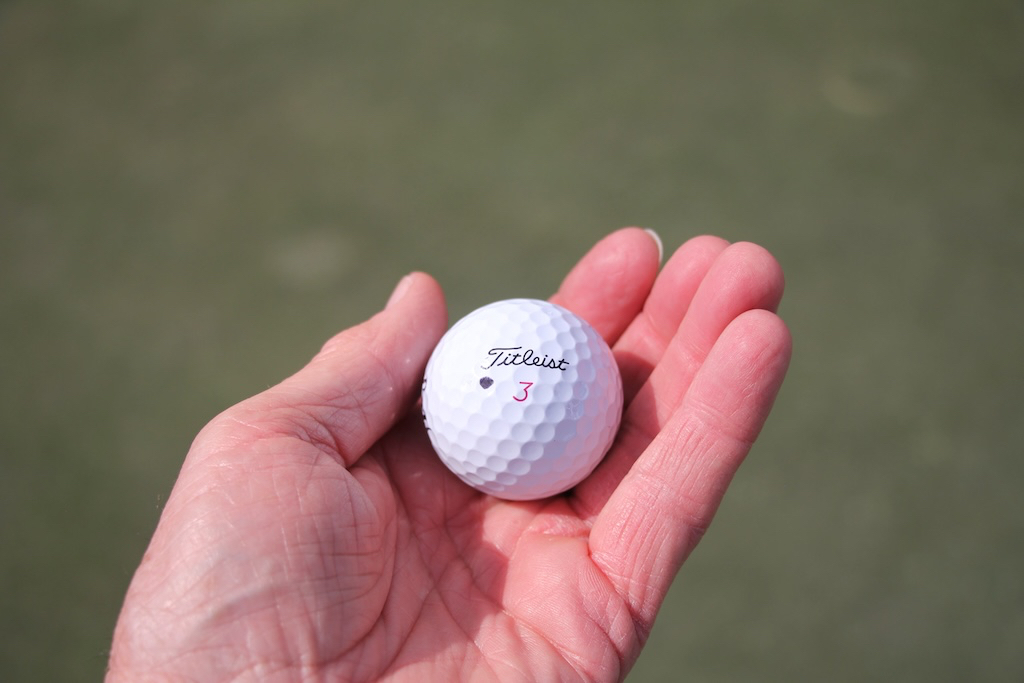
Ball: Titleist Pro V1x

Aaron Rai’s winning WITB: 2026 PGA Championship

Russell Henley’s winning WITB: 2026 Charles Schwab Challenge

Photos from the 2026 CJ Cup Byron Nelson

CJ Cup Byron Nelson Tour Report: Koepka and Kim’s newest putters finally get hot

Charles Schwab Challenge Tour Report: MacIntyre, Åberg and Spaun all switch putters, TaylorMade launches new Spider

Details on J.J. Spaun’s surprise putter switch

GolfWRX Launch Report: 2026 Titleist GTS drivers

Photos from the 2026 Charles Schwab Challenge

PGA Championship Tour Report: Fitzpatrick, Koepka among big-name putter switches for Aronimink

Photos from the ShopRite LPGA


Maria Torres WITB 2026 (June)
Driver: Ping G440 LST (9 degrees) Shaft: Accra TourZ Green 5-M4 3-wood: Ping G440 Max (15 degrees) Shaft: Accra TourZ Green 6-M4 5-wood: Ping G440...


Eric Cole WITB 2026 (June)
Driver: PXG Lightning Tour Max (9 degrees) Shaft: Project X Titan Yellow 70 TX 3-wood: TaylorMade Qi4D (15 degrees) Shaft:...


Si Woo Kim WITB 2026 (May)
Driver: Callaway Quantum Triple Diamond (8.5 degrees) Shaft: Fujikura Ventus Black 6 X Mini driver: Callaway Paradym Ai Smoke Mini...


Wyndham Clark’s winning WITB: 2026 CJ Cup Byron Nelson
Driver: TaylorMade Qi4D (10.5 degrees) Shaft: Project X Titan Yellow 60 TX 3-wood: TaylorMade Qi4D Tour (15 degrees) Shaft: Project...


geohogan
Apr 5, 2022 at 10:08 am
We aim a bow and arrow. We aim a fire arm.
Standing 90 degrees to the target line, it is not possible to “aim” a golf club at a distant target.
We can position ourselves to sweep the inside quadrant of the golf ball.
Wasted my Time
Apr 2, 2022 at 10:37 pm
All these mumbo-jumbo for a sales pitch? Shameful!
lee
Apr 2, 2022 at 9:19 pm
nice ad