
News
GolfWRX takes a behind-the-scenes look at the Callaway ball plant

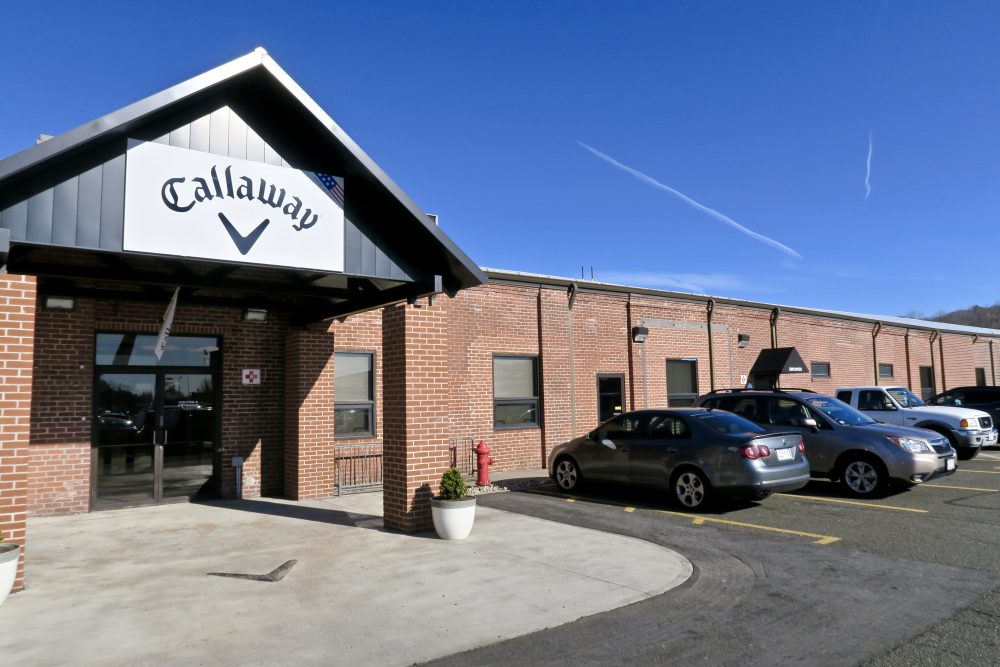
In Chicopee, Massachusetts, there is an unassuming red brick building that predates the existence of every modern golf OEM. From the outside, it could be confused for any other American manufacturing facility if not for the proudly displayed Callaway sign. Inside, there are over 400 hard-working people producing the highest quality golf balls using state-of-the art manufacturing techniques and tools — this red brick building is the Callaway golf ball plant.
To understand what you see when you first enter the ball plant, it’s best to first understand why it is here in the first place. When I initially asked this question to one of my tour guides, Vincent Simonds, the Senior Director of Global Golf Ball Operations, his answer started with a story that predated cars…it was at this point I knew that these guys mean business.
The modern history, however, starts in 2003 when Callaway purchased Top-Flite brand and subsidiaries, and with it purchased the entire Top-Flite manufacturing facility. In its it heyday, Top-Flite/Spaulding was producing its full line of clubs and balls out of this building, and that included equipment made for Bobby Jones. Chicopee, Massachusetts, was essentially the center of the golf club technology universe.

Part of the original Spaulding golf club factory
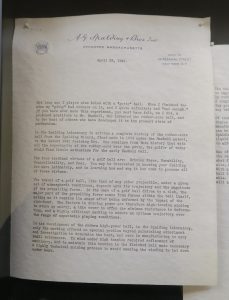
Letter from Bobby Jones discussing the advantage of the newly designed ball

Page 2 of the Letter from Bobby Jones
When its comes to balls, most modern golfers don’t equate Top-Flite with premium equipment or breakthroughs, but during this time period the ball plant in Chicopee was responsible for just as many technology and scientific breakthroughs as its modern Callaway self.
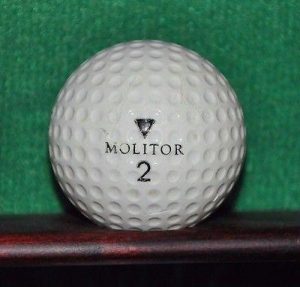
One Example is Bob Molitor. In 1972, Molitor developed the first two-piece golf ball with a Surlyn cover by combining the right amounts of various ionomers. This allowed golf balls to have much greater durability and along with it improved distance. This development is part of the reason the USGA had to establish the “One Ball Rule” because players would switch out depending on the hole since there was a huge distance advantage to this Solid Core Surlyn Cover design. Imagine that – the USGA having to change rules to accommodate a new technology, seems to me our current daily discussions about bifurcation aren’t something so new after all.
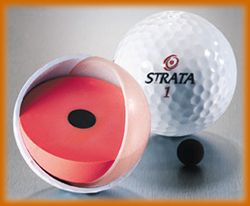
There were a lot of other great innovations over the years that lead to new technology making its way into the bags of players all over the world, one of which caused a revolution that we still benefit from today. In the 90s Top-Flite, under the Strata brand, cracked the code of merging the soft, high-spin “tour ball” performance with the lower-spinning, longer-flying, and more durable “distance ball”, this three-piece ball was like two balls in one. Strata’s design team accomplished this feat by placing a soft polyurethane cover on a Top-Flite distance ball, and then added a thin layer between the cover and the core that encased the ball’s already large and solid rubber core. In short, the modern golf ball was born.
This brings us back to the modern day Callaway ball plant, a facility where the average employee tenure exceeds 20 years, and where every single premium Callaway Ball on the planet is made. The thing I quickly realized upon entering the plant for the first time is the pride every person has for their role in making world class golf balls. This sense of pride, and a friendly, yet hard-working environment is something I witnessed before at Callaway’s Carlsbad facility too — a testament to the company’s corporate leadership and the culture that they promote everyday. The “Victory Flag,” as they call it, was flying high thanks to Xander Schauffele’s win just a few days before my visit.

The start of production begins with materials formulation
I was able to observe a pre-shift meeting, and you would think that based on the discussion of machine tolerances, quality control, & equipment inspections this plant is making parts for a yet-to-be-seen shuttle being sent into space, but they’re talking golf balls. Speaking to the tolerances the plant works within, the in-house machine shop had some amazing equipment, including some things I unfortunately could not share through pictures. This equipment works with the tolerances of less than the 1/30th the thickness of a Post-It Note. For example, each single side to a cover mold for the Chrome Soft line takes more than 30 hours of machine time to complete — an amount of time which might seem excessive, but when you think of the speed and forces impacting a golf ball from first driver strike and along its parabolic trajectory, we really are talking space shuttle physics.
Some of the most impressive equipment has nothing to do with the performance of the balls but rather how they look. I’m talking here about the Truvis patterned balls. What was perceived by many golfers at first as a gimmick (and something than even some Callaway management believed would be a fad) has proven to be an absolute slam dunk. The pentagon pattern provides a tangible benefit by creating an optical illusion that makes the ball look bigger (and easier to hit) especially out of the rough, and also gives visual feedback for short game shots and putting.
Let’s just say that what started as a toe dip with one machine has turned into an area of the plant with more than a dozen machines, and Callaway is also producing Truvis balls with custom colors and logos — they’re not just printing pentagons anymore.

GolfWRX Truvis
For actual production, every ball starts as raw materials, and compounds are precisely mixed in house, allowing Callaway to control the entire production process. The amount of materials engineering and chemistry I witnessed was way beyond what I was expecting, and to be frank, I went in with already high expectations. After initial mixing each batch is tested and sent to the next step.
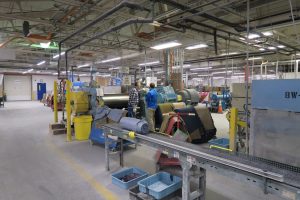
Mixing Station
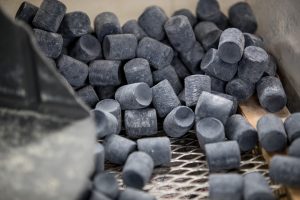
Pre cut core “slugs” ready for baking
Ever wonder why the cores of various golf balls from a single OEM are so bright and differently colored? It’s actually done to make each material identifiable in the process and give production staff another way to make sure materials get to the right manufacturing line. Of all the questions I asked, this one had the most simple answer.
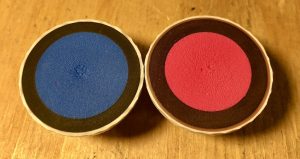
Callaway ERC ( Left ) vs. Chrome Soft ( Right )
The next step is the “cooking” process of the inner core. Each oven press is precisely controlled for pressure and temperature along multiple areas of each unit, this ensures a core that comes from the outer part of the press is formed and “cooked” to the exact same spec as one from the middle. The same process is used for both parts of the dual core.

Hydraulic press “oven” for producing cores
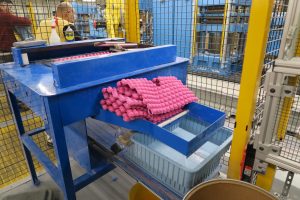
Cores post-pressing and still hot
Callaway utilized a proprietary manufacturing and molding technique to ensure exact specifications are met for centering the core and achieving correct cover thickness. Once the covers are in place, we officially have a golf ball, but we’re not done yet. There are still more quality control checks done by machine as well and humans to once again ensure each ball that leaves the plant is built to the highest quality standards and will perform just like the one before it.

Chrome Softs just after the cover process – Still very warm to the touch as the urethane cools
Even the final paint and clear coat are highly engineered to resist staining, sheering, and stay on during deformation. To quote of one my tour guides, “The force applied to the cover and paint on the ball by a wedge would be like taking a hatchet to the paint on the side of your house.” It might seem like a simple process, but to ensure full coverage of sphere requires some pretty unique tools to get the job done.
This brings us to the new Triple Track Alignment system and how it was developed to help golfers play better. The new system helps improve alignment on putts from all lengths and it also happens to be on Callaway’s longest ball to date: the ERC Soft.
The alignment aid wraps 160 degrees around the ball and offers three parallel lines with high contrast (no more need to try and draw that long Sharpie line around your ball). For those who choose to putt without the Triple Track alignment, Callaway considered you too, since the other 200 degrees around the ball unsure that you won’t see those lines from address.

Triple Track Alignment visible vs hidden
Every shot taken means something to someone, whether it be a golfer trying to break 100 for the first time, or a tour professional lining up a putt on Sunday afternoon of a major championship. The golf ball is the one piece of equipment a golfer will use on every shot, and each person at the Callaway ball plant in Chicopee, Massachusetts, is proud to put their name behind it, even if you don’t see those names on the box.







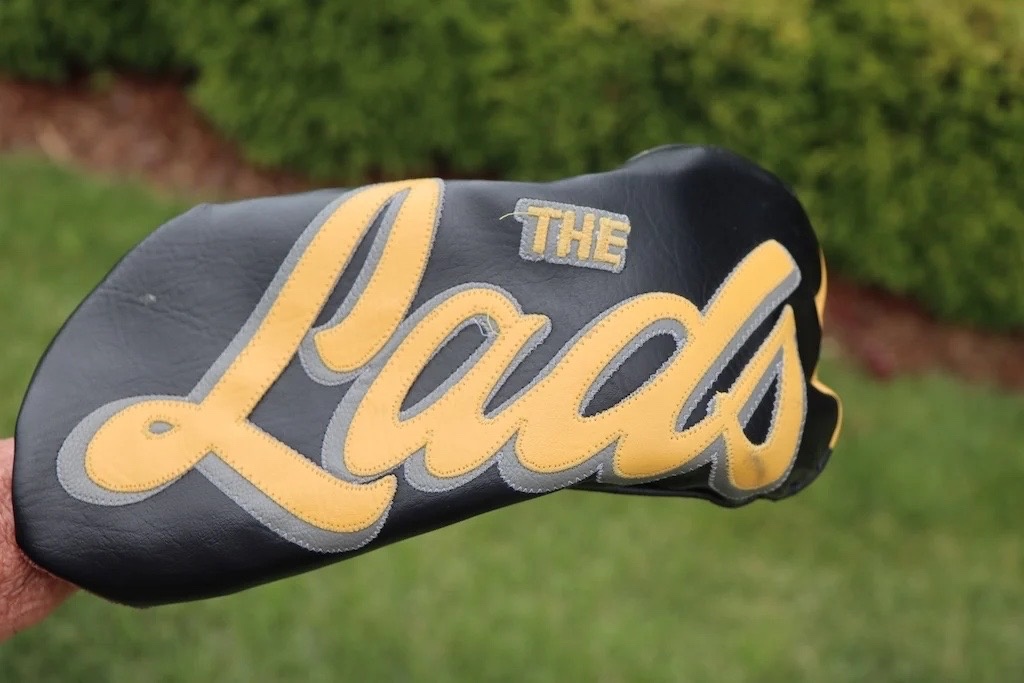
GolfWRX is on site this week at the Memorial Tournament, with both Alistair Cameron and Tour Photographer Greg Moore on the ground in Dublin, Ohio, where a strong field is assembled to pay homage to the Golden Bear.
In addition to WITB galleries, we’ve already been treated to an in-hand look at Tommy Fleetwood’s new TaylorMade Spider putters.
Check out links to all our photos below.
General Albums
WITB Albums
- Jason Day – WITB – 2026 The Memorial
- Chris Gotterup – WITB – 2026 The Memorial
- SungJae Im – WITB – 2026 The Memorial
Pullout Albums
- Jason Day’s 1off Payntr golf shoes – 2026 The Memorial
- JT Poston’s TaylorMade Spider – 2026 The Memorial
- Cameron putter – 2026 The Memorial
- Tommy Fleetwood’s TM Spider putters – 2026 The Memorial
- New Mitsubishi Chemical 1K Pro Orange shaft – 2026 The Memorial

Around the world, the golf wheel spun this final week in May of 2026. From New Jersey to Austria, with stops in Korea, Texas, and North Carolina (don’t let me route your next trip) the world’s finest put their golf games on display. There were three playoffs, some known commodities and some new talent. It was the sort of week that we hope to have at this point in the seasons. June and July afford double-digit major events, and perhaps, one of this week’s champions will use this success as a springboard to new heights. Time to run it all down, tech style, in this week’s Tour Tech Rundown.
Thanks to WITBHub, Today’s Golfer, GolfWRX, and Inside Tour Golf for initial research into equipment.
PGA Tour @ Charles Schwab Challenge: Heroic Henley denies Cole
Eric Cole did nearly everything that a fellow can do, to secure a first PGA Tour title. He stayed one shot clear of Ryder Cup player Ben Griffin. He kept US Open champion Gary Woodland and wunderkind Michael Brennan two shots distant. He posted 70 on day four to reach twelve under par. And then, Russell Henley revealed his Dr. Strange cloak. Henley made 47 feet of birdie putts on holes 16, 17, and 18, to jump from minus-nine to twelve-deep, and secured a spot in a playoff with Cole. The duo returned to the final tee, and put on a stripe show.
Both golfers found the fairway off the tee, and Henley improved on his regulation play with an approach to four feet. Cole did himself proud, tucking an iron to a dozen feet, but he was unable to convert the putt for three. Henley is one of the best putters on tour, and he proved it once more by draining a putt for a fourth consecutive birdie, and a sixth PGA Tour title. For Eric Cole, that first victory should come, and soon. He has done everything necessary to earn the chalice lift.
Henley’s Suitcase
- Driver: Titleist TSi3 at 10 degrees. Shaft: Project X HZRDUS Smoke Black 70g 6.5 TX
- Metal: Titleist TS3 at 16.5 degrees. Shaft: Project X HZRDUS Smoke Black 80 TX
- Hybrid: Titleist TSi2 at 21 degrees. Shaft: Mitsubishi MMT hybrid 100 TX
- Iron: Titleist T250 4-iron. Shaft: True Temper Dynamic Golf AMT Tour White X100
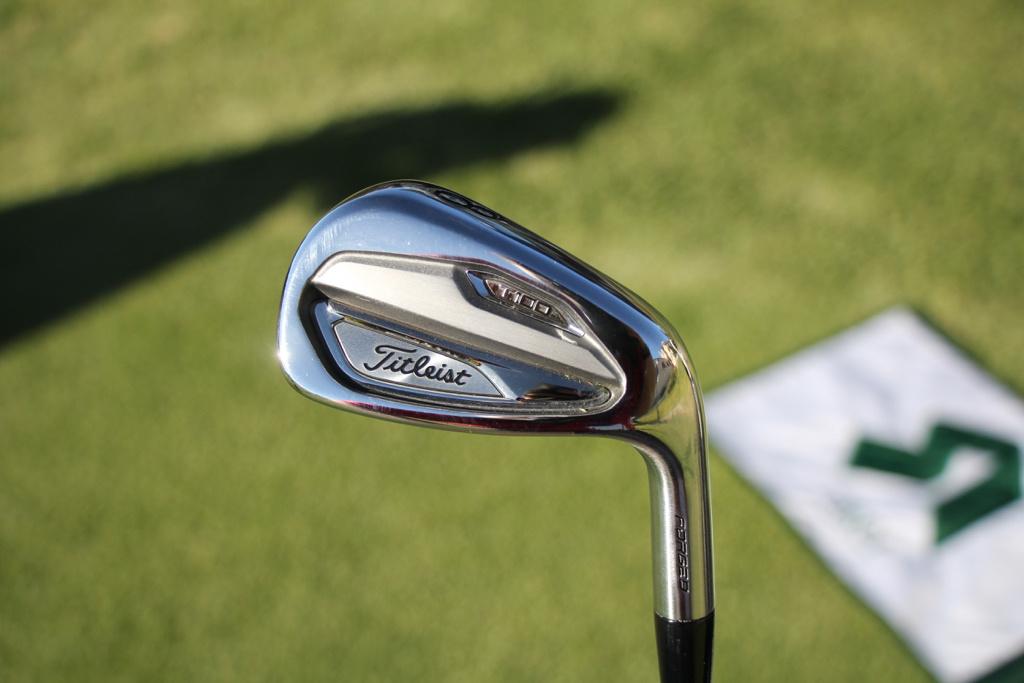
- Irons: Titleist T100 5-6 irons. Shaft: True Temper Dynamic Golf AMT Tour White X100
- Irons: Titleist T100 7-9 irons. Shaft: True Temper Dynamic Gold Tour Issue X100
- Wedges: Titleist Vokey Design SM11 at 48 and 50 degrees. Shaft: True Temper Dynamic Golf Tour Issue X100
- Wedges: Titleist Vokey Design SM11 at 54 and 60 degrees. Shaft: rue Temper Dynamic Golf Tour Issue S400
- Putter: Titleist Scotty Cameron T5 Tour Prototype
LPGA @ Shoprite LPGA: Welcome back, Celine!
Soo Bin Joo had her eyes on a maiden LPGA title. She held the lead after two rounds, then hit a red light at the intersection of can-I and how-To. Joo posted plus-two on day three in New Jersey, and dropped to a T4 finish, which was still a career-best for the young Korean golfer. Instead of a new face, a familiar face returned to the top of the podium.
Celine Boutier was the It Girl in 2023. She collected four victories, including a major title at Evian. Boutier reached world number one status, then simply faded into the background. No wins came her way over the next 30 months. On Sunday, she collected LPGA victory number seven, at the same trace as LPGA victory number two.
Day three saw Boutier manage the windswept Seaview Bay course with six birdies and a bogey. She was challenged in the end by Thailand’s Arpichaya Yubol, who signed for a 66 of her own. Yubol came up one shot shy of the top ladder rung. Finishing in third place at -7, two back of the winner, was Ireland’s Lauren Walsh.
Celine’s Suitcase
- Driver: PXG 0311 Black Ops Tour-1 at 9 degrees. Shaft: Graphite Design AD IZ-5
- Hybrid: PXG 0311 Black Ops at 19 and 22 degrees. Shaft: KBS Hybrid Prototype
- Hybrid: PXG 0311 Gen5.
- Iron: PXG 0311 P Gen 4 5-9 irons
- Wedge: PXG 0311 T Gen 4 PW
- Wedges: PXG 0311 Sugar Daddy II at 50, 54, 58 degrees
- Putter: Bettinardi Studio Stock 3 DASS
DP World Tour @ Austrian Alpine: KK? KK!
Kota Kaneko has a rhythmic name. It has strong vowels and a run of voiceless stops in its crunchy K sounds. On Sunday in Austria, Kaneko put a stop to a challenge from Portugal’s Ricardo Gouveia and everyone else, and claimed a first-ever title on the DP World Tour. Gouveia did well to reach 16-under par over four days, but Kaneko held firm, two shots in the clear.
Davis Bryant of the USA also forged a strong challenge for the win. He ended in a tie with Gouveia for second place. Kaneko began and finished his final round in a bit of a malaise, but he caught fire midway through. Birdies at 10, 12, and 13 provided the necessary cushion to cruise to the finish line without breaking a serious sweat.
Kaneko’s Suitcase
- Driver: Ping Max G440
- Metals: TaylorMade Qi4D at 15, 16.5, 21, and 24 degrees
- Irons: TaylorMade P760 5 and 6 irons
- Irons: TaylorMade P7TW 7-9 irons
- Wedges: Titleist Vokey Design at 46, 52, 56, and 60 degrees
- Putter: Odyssey Ai-One Cruiser Arm Lock #7
Korn Ferry Tour @ UNC Health Championship: Improbably Alvaro
Alvaro Ortiz may have had a bit of scare on the outward nine on Sunday, but he came through in clutch fashion in the end. Ortiz began the day bogey-double, and added another double bogey at the 11th hole. He was mired in a downward trend, spiraling away from the top of the leader’s board. Ortiz found hope at the 14th, where his first birdie of the day tumbled home. Inspired, he closed with birdies and 17 and 18 to catch Ross Steelman at 10-under par, and the duo returned to the 18th deck for overtime.
The extra session concluded in brief time. Ortiz, buoyed by his newly-retrieved confidence, hit the fairway with driver, then approached to six feet and drained the putt. Gobsmacked, Steelman could do little more than smile and applaud, as his run at the top came to a close. The victory was the first for Ortiz on the KFT, and will implant him squarely in the chase for a PGA Tour promotion.
Alvaro’s Suitcase
- Driver: Ping G430 MAX driver at 9 degrees loft
- Metal: Ping G430 MAX 3W
- Iron: Ping iDi Driving Iron
- Irons: Ping Blueprint S irons
- Wedges
- Putter: Scottsdale TR Piper C
A party on the green!
Alvaro’s time comes in Raleigh with his first win @UNCHealthChamp ? pic.twitter.com/2dmtZdbSzk
— Korn Ferry Tour (@KornFerryTour) May 31, 2026
LIV @ Korea: Me llamo Joaquin
Chile’s Joaquin Niemann had been away from the LIV winner’s circle throughout all of 2026. This week in Korea, he reminded us that he is still a force to consider. Niemann chased down Taylor Gooch over the closing holes at Asiad Country Club, then claimed victory with a hole-one birdie in extra time. Bryson DeChambeau claimed solo third, one shot in arrears at minus-eleven. Dustin Johnson finished on fourth, one putt farther back.
Niemann’s Suitcase
- Driver: Ping 440 LST
- Metal: Ping G440 Max at 15 degrees
- Metal: Ping G425 Max at 21 degrees
- Hybrid: Ping G430 at 25 degrees
- Irons: Ping Blueprint S 5 through PW
- Wedges: Ping S159 at 52, 56, and 60 degrees
- Putter: Ping PLD Anser

Driver: Titleist TSi3 (10 degrees)
Shaft: Project X HZRDUS Smoke Black 70 6.5 TX

3-wood: Titleist TS3 (16.5 degrees)
Shaft: Project X HZRDUS Smoke Black 80 TX

7-wood: Titleist GTS3 (21 degrees)
Shaft: Project X Denali Black 80 TX
Irons: Titleist T250 (4), Titleist T100 (5-9)
Shafts: True Temper Dynamic Gold AMT (4-6), True Temper Dynamic Gold Tour Issue S400 (7-9)


Wedges: Titleist Vokey Design SM11 (48-10F @47, 50-08F @51, 54-10S @55, 60-04T)
Shafts: True Temper Dynamic Gold Tour Issue X100 (48), S400 (47)

Putter: Scotty Cameron Phantom X5 Tour Prototype

Grips: Golf Pride Tour Velvet
Ball: Titleist Pro V1x

Aaron Rai’s winning WITB: 2026 PGA Championship

Russell Henley’s winning WITB: 2026 Charles Schwab Challenge

Photos from the 2026 CJ Cup Byron Nelson

CJ Cup Byron Nelson Tour Report: Koepka and Kim’s newest putters finally get hot

Charles Schwab Challenge Tour Report: MacIntyre, Åberg and Spaun all switch putters, TaylorMade launches new Spider

Details on J.J. Spaun’s surprise putter switch

GolfWRX Launch Report: 2026 Titleist GTS drivers

Photos from the 2026 Charles Schwab Challenge

PGA Championship Tour Report: Fitzpatrick, Koepka among big-name putter switches for Aronimink

Photos from the ShopRite LPGA

Maria Torres WITB 2026 (June)
Driver: Ping G440 LST (9 degrees) Shaft: Accra TourZ Green 5-M4 3-wood: Ping G440 Max (15 degrees) Shaft: Accra TourZ Green 6-M4 5-wood: Ping G440...


Eric Cole WITB 2026 (June)
Driver: PXG Lightning Tour Max (9 degrees) Shaft: Project X Titan Yellow 70 TX 3-wood: TaylorMade Qi4D (15 degrees) Shaft:...


Si Woo Kim WITB 2026 (May)
Driver: Callaway Quantum Triple Diamond (8.5 degrees) Shaft: Fujikura Ventus Black 6 X Mini driver: Callaway Paradym Ai Smoke Mini...


Wyndham Clark’s winning WITB: 2026 CJ Cup Byron Nelson
Driver: TaylorMade Qi4D (10.5 degrees) Shaft: Project X Titan Yellow 60 TX 3-wood: TaylorMade Qi4D Tour (15 degrees) Shaft: Project...


DanT
Mar 14, 2019 at 7:52 pm
PROBLEM – NOT ALL CALLAWAY BALLS ARE PRODUCED IN THE US!!
The SuperSoft is made in Taiwan!!
In my opinion – this story makes you think – all Callaway balls are made in the US –WRONG!!
Perplexed
Jan 20, 2019 at 1:08 pm
Did the USGA come up with the one ball rule? I don’t recall having ever seen it in the USGA rules. It seemed like a PGA Tour rule to me.
Mark
Jan 19, 2019 at 11:26 am
I’m curious if you asked if they run special batches for their tour players and what % play one of the standard production balls?
Willie Carmichael
Jan 19, 2019 at 11:01 am
It’s spelled Spalding.
Bill C
Jan 19, 2019 at 8:58 am
Golf balls are very fascinating. They seem so simple, yet the amount of engineering which goes into their design and manufacture always amazes me.