
Opinion & Analysis
Why does nobody teach Jack Nicklaus’ golf swing?

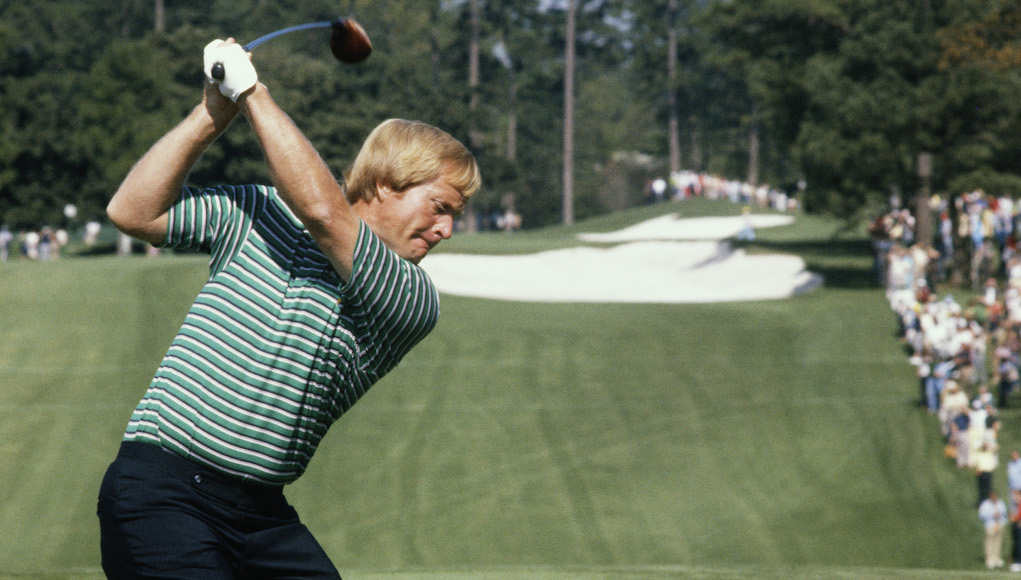
A 40-year-old Jack Nicklaus led the PGA Tour in total driving in 1980, which is a combination statistic measuring where a player finished in driving distance (Jack was 10th) and where a player finished in accuracy (Jack was 13th), giving the Golden Bear a total driving number of 23. That total hasn’t been eclipsed since: not by a young Greg Norman, not by a young Ernie Els, not by a young Tiger Woods and not by a young Rory McIlroy.
In 1980, Jack Nicklaus also led the PGA Tour in Greens In Regulation. So what would the longest and straightest driver in history who also happened to be just as sharp with his irons do to the competition? Far past his prime, Jack Nicklaus won half of the majors that year. He won his 16th and 17th career majors: the U.S. Open and the PGA Championship, which he won by seven shots. Incidentally, nobody in 150 years has ever won a major by a wider margin at that age. Six years later, he would become the oldest man to ever win the Masters at 46. Consider also that Nicklaus won the career grand slam, yet again, after he turned 38.
Jack had obvious physical advantages over his peers, but there had been others with similar physical gifts, such as Mike Souchak, George Bayer, Arnold Palmer and Tom Weiskopf to name just a few. What Jack possessed that nobody else has ever had to such a degree was the combination of power and accuracy, which was partly due to his physical strengths, but mostly due to his technical skill. He simply had the better swing, by far.

Yet, nobody that I know of today teaches the swing that Jack used. The closest to that philosophy is Butch Harmon, who teaches a wide takeaway and pays close attention to the footwork of his players. Jack Grout, who taught Nicklaus from adolescence, encouraged a wide takeaway to get the hands as high in the air as possible and to complement this movement with a full turn of the hips and great footwork. That means the left foot rolled in first and then lifted on the backswing, and then the left heel was planted to begin the downswing and the right heel rolled in and lifted as it was pulled off the ground by the full rotation of the body through the shot.
Why does nobody teach this swing?
Some argue to me that because equipment has changed so much, the swing should, too. Lighter, longer clubs don’t require as much of a build up in the backswing to produce power, and the difference in the center of gravity between a wood and a metal wood doesn’t necessitate that a player “cover” or “get up to” the ball with his right hip and spine angle. A metal wood has a center of gravity lower and deeper into the head than a wood, so one can and is encouraged to have more angle in his spine away from the target and to hit up on the ball to maximize distance.
This is a copout to the economics of the game. Distance sells, so every ad is about how long a driver will go. Teaching is biased toward maximizing distance, which requires one to hit up on the ball with very little spin. The ideal numbers for distance are readily available, yet nobody knows the ideal numbers for accuracy. But if it’s true that high launch and low spin give distance, then low launch and high spin should give accuracy.
Jack Nicklaus had the perfect blend of both, and that’s why his swing, or the philosophy that produced it, should be taught today to professionals and amateurs.
Even for the amateur, adding length to the swing will add length to their shots. And just as it will allow a professional to age gracefully — or spectacularly in the case of Nicklaus — it will allow the amateur to play with less pain in his body as he gets older. The former of these points was proven by Tom Stickney using Trackman data and published on GolfWRX just a few months ago. The latter, you might call a hunch, but it is a very well-educated hunch based upon watching and documenting what swings have lasted over 150-plus years of professional golf. It’s something I wrote about in detail in my book The Anatomy of Greatness.
Professionals are perfectly fit for their equipment. Most likely, amateurs are not, and so it is left up to them to get the most out of their bodies. When all things are considered, it is the more economical approach. To do this, they need only strengthen their grips and turn their hips.
Yes, there are plusses and minuses to every swing. I can just as easy as the next guy tell you all the things that can go wrong if a player overturns and tips to the left at the top, or all the things that can go wrong if the player sways off the ball and can’t get back. I’d risk all of those faults before I’d want to see someone so fearful of making a mistake that they don’t make a proper turn.
To make sure you don’t sway, feel the weight on the INSIDE OF YOUR RIGHT HEEL at the top of the swing. To make sure you don’t over turn and tip too far to the left at the top of the swing, either set up well behind the ball at address like Jack Nicklaus or move off the ball a few inches in the takeaway. I recommend the latter because it keeps the club low and wide. It also keeps it from going inside too quickly on the backswing.
Even the sedentary player can squeeze another inch or two out of their hip turn. In doing so, they will add length to their shoulder turn, which will add length to their shots. But just as importantly, it will add accuracy… a point proven by Trackman in this century and by Jack Nicklaus in the last.


Club Junkie
Tour Edge Exotics mini driver review + TaylorMade Spider ZT Max first look – Club Junkie

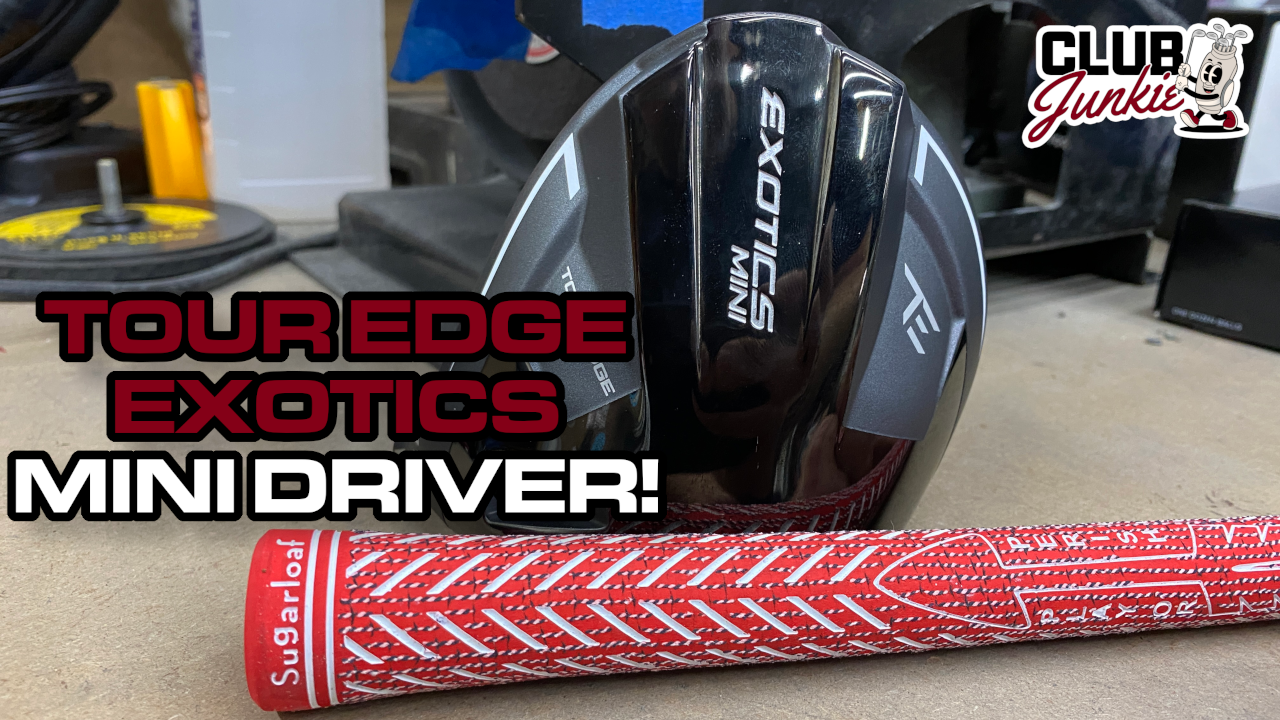
On this episode of Club Junkie, I put the new Tour Edge Exotics Mini Driver to the test and break down the performance, forgiveness, distance, and where it fits compared to a traditional driver or strong fairway wood. If you have been curious about adding a mini driver to the bag, this one is worth a look.
I also dive into the new TaylorMade Spider ZT Max putter that was recently spotted and discuss the growing zero torque putter trend. Plus, there is a closer look at the new Project X Titan Yellow shaft showing up on the PGA Tour and what makes it different from other profiles currently out there.
Opinion & Analysis
AVL: We’re talking about practice! My best tips for taking your game to the course

With the beginning of June on the horizon and courses rounding into peak condition for the season, it’s time to hone the finer skills that often get rusty over the winter. More sunlight also means more time to get out on the course and work on your game.
Whether it’s the practice green or the driving range, there’s always something to improve—whether you’re enjoying the fresh air or preparing for a weekend game or tournament. You can work on drills or freestyle around the green, and friendly competition is a great way to sharpen your skills.
While there are endless ways to get better at golf, I’m going to focus on practicing around the green. Let’s take a look at a few things to keep in mind as we head into the summer months.
Drills
From the driving range to the practice green, it’s important to incorporate drills into your routine. Years ago, I spent a weekend working on my short game with James Sieckmann. He recommended doing drill work for 5–10 minutes, then returning to your main practice.
This way, you create a balance between structured drills and real-world scenarios, so you’re not confined to “perfect” situations. For example, hitting the same three-foot putt over and over is good for repetition, but after a while, it becomes less interactive for your brain.
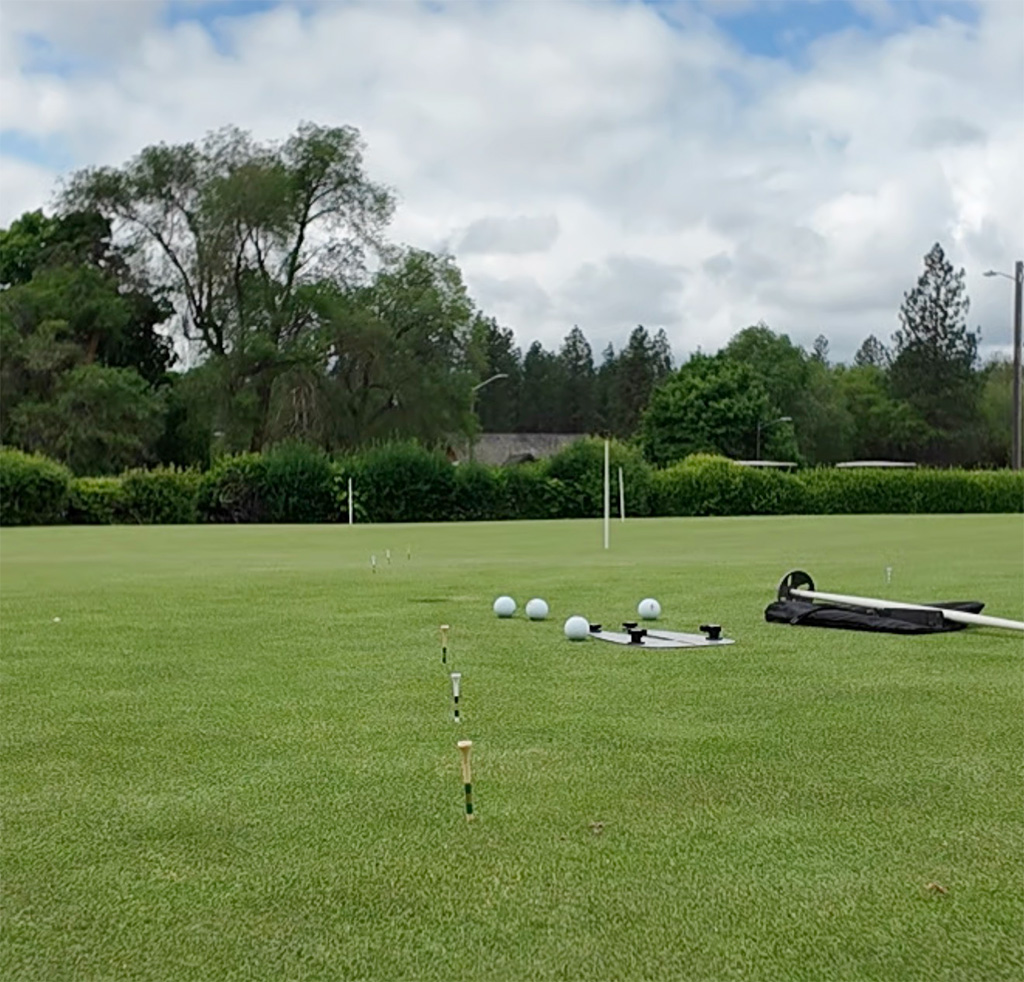
My approach is to use a putting trainer with a narrow gate for the ball to pass through, or simply place tees just outside the width of the ball. I’ll hit a series of four putts through the gate for three sets. Then, from a similar distance, I’ll hit four putts without the training aid and repeat that sequence three times.
Next, I’ll hit a number of 15–25 foot putts in a random fashion, then circle back to repeat the short putt drills with and without the training aid.
This breaks up the rhythm of hitting short putts with the training aid. When you hit the same short putts over and over, it’s easy to get into a groove—which is great for the drill, but not reflective of actual course play. While finding a rhythm is fundamental for drills, I like to introduce variation with longer putts to keep things realistic.
Game Mode
Once you’ve established a foundation with drills, it’s time to simulate on-course scenarios. This is where a few practice games come in handy.
One that I’ve been enjoying lately involves putting 10- to 15-footers with two balls. If I make the putt, great! If I miss, I pull the missed ball back a putter length. Suddenly, that little tap-in becomes a nerve-wracking three-footer—at least at first. As you get better at this game, those three- and five-footers become much more comfortable and routine.
It may sound cliché, but each shot is just what it is—it’s how we react that makes the difference. I like this game because it blends the pressure of on-course putting with the consequence of leaving yourself a much longer putt than usual.
Another game I like is one I recently learned from Brad Faxon. Place three tees in a line at four different locations around the hole: one at 3 feet, one at 6 feet, and one at 8 feet. The 3- and 6-foot putts count as par, and the 8-footer is for birdie.
This game keeps you focused on scoring and helps you get into a competitive mindset. You can even think about this putting game while you’re on the course. I just started playing it, and last week I couldn’t get better than two under par.
Competition
Competition during practice is when drills and games come to life, and you start to see results. For me, nothing beats a putting contest with a friend or two. In the right setting, these contests can become talking points for the whole season.
Match play, a game of 21, or simply seeing who can make the most one-putts (with a small prize on the line) are all great ways to simulate real on-course pressure. Recently, I played in a putting contest where one competitor made back-to-back 30- and 50-foot putts. As they say, expect your opponent to make every putt—and he nearly did. That’s impressive, and it’s something you see on the course, too: you have to stay committed to your game plan, no matter what.
When it comes to practice, it’s important to blend feedback from recent rounds with the fundamentals you want to reinforce. Drills, games, and competition—from the driving range to the putting green—form the backbone of skills you’ll rely on during actual rounds.
Finding the right balance is something we’re all working on, one practice session at a time. With the beginning of June on the horizon and courses rounding into peak condition for the season, it’s time to hone the finer skills that often get rusty over the winter. More sunlight also means more time to get out on the course and work on your game. Whether it’s the practice green or the driving range, there’s always something to improve—whether you’re enjoying the fresh air or preparing for a weekend game or tournament. You can work on drills or freestyle around the green, and friendly competition is a great way to sharpen your skills. While there are endless ways to get better at golf, I’m going to focus on practicing around the green. Let’s take a look at a few things to keep in mind as we head into the summer months.
Drills
From the driving range to the practice green, it’s important to incorporate drills into your routine. Years ago, I spent a weekend working on my short game with James Sieckmann. He recommended doing drill work for 5–10 minutes, then returning to your main practice. This way, you create a balance between structured drills and real-world scenarios, so you’re not confined to “perfect” situations. For example, hitting the same three-foot putt over and over is good for repetition, but after a while, it becomes less interactive for your brain.
My approach is to use a putting trainer with a narrow gate for the ball to pass through, or simply place tees just outside the width of the ball. I’ll hit a series of four putts through the gate for three sets. Then, from a similar distance, I’ll hit four putts without the training aid and repeat that sequence three times. Next, I’ll hit a number of 15–25 foot putts in a random fashion, then circle back to repeat the short putt drills with and without the training aid.
This breaks up the rhythm of hitting short putts with the training aid. When you hit the same short putts over and over, it’s easy to get into a groove—which is great for the drill, but not reflective of actual course play. While finding a rhythm is fundamental for drills, I like to introduce variation with longer putts to keep things realistic.
Game Mode
Once you’ve established a foundation with drills, it’s time to simulate on-course scenarios. This is where a few practice games come in handy. One that I’ve been enjoying lately involves putting 10- to 15-footers with two balls. If I make the putt, great! If I miss, I pull the missed ball back a putter length.
Suddenly, that little tap-in becomes a nerve-wracking three-footer—at least at first. As you get better at this game, those three- and five-footers become much more comfortable and routine. It may sound cliché, but each shot is just what it is—it’s how we react that makes the difference. I like this game because it blends the pressure of on-course putting with the consequence of leaving yourself a much longer putt than usual.
Another game I like is one I recently learned from Brad Faxon. Place three tees in a line at four different locations around the hole: one at 3 feet, one at 6 feet, and one at 8 feet. The 3- and 6-foot putts count as par, and the 8-footer is for birdie.
This game keeps you focused on scoring and helps you get into a competitive mindset. You can even think about this putting game while you’re on the course. I just started playing it, and last week I couldn’t get better than two under par.
Competition
Competition during practice is when drills and games come to life, and you start to see results. For me, nothing beats a putting contest with a friend or two. In the right setting, these contests can become talking points for the whole season. Match play, a game of 21, or simply seeing who can make the most one-putts (with a small prize on the line) are all great ways to simulate real on-course pressure. Recently, I played in a putting contest where one competitor made back-to-back 30- and 50-foot putts. As they say, expect your opponent to make every putt—and he nearly did. That’s impressive, and it’s something you see on the course, too: you have to stay committed to your game plan, no matter what.
When it comes to practice, it’s important to blend feedback from recent rounds with the fundamentals you want to reinforce. Drills, games, and competition—from the driving range to the putting green—form the backbone of skills you’ll rely on during actual rounds. Finding the right balance is something we’re all working on, one practice session at a time.


For Korean golfers, we always look forward to the last of the kkot-saem-chu-I for the true start of a new golf season. The term refers to a cold snap, but literally translates as “winter being jealous of the flowers beginning to bloom, thus lashing out one final time before surrendering to spring”.
A rather poetic mouthful packed into a short expression.
Koreans can be like that. Understated, yet oddly expressive at the same time. And nowhere is this more true on the golf course and in our golf bags. In fact, I suspect many Korean golfers look forward to new apparel and accessory drops more than they do actual equipment launches each year.
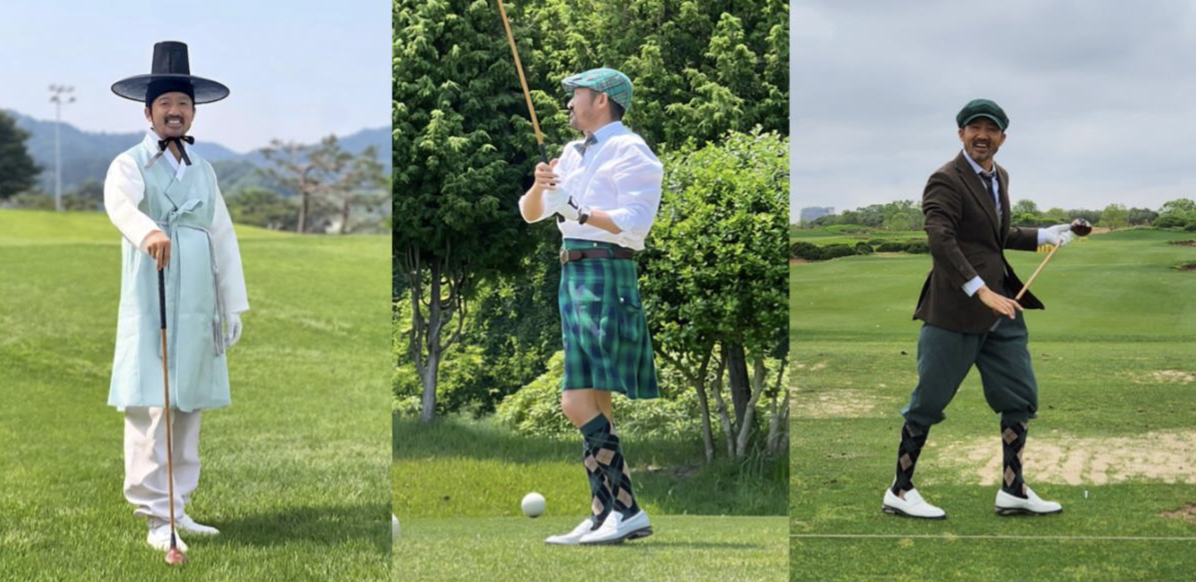
At this point, Korean golf fashion may exist on its own timeline. (courtesy of @seonbi_golfer)
There is ample evidence to support that suspicion. Korea is the world’s third-largest golf market behind the United States and Japan, yet its appetite for golf apparel exceeds that of both countries combined. Recent estimates suggest that Korea accounts for nearly 40 percent of the global golf apparel market, placing it among the world’s most influential golf fashion markets and punching well above its size.
Simply, we care deeply about how new golf clubs look and feel, but enjoy looking good while swinging them even more.
Golfers in the West may laugh and say that golf is played on a course, not a fashion runway. Perhaps. But what’s the harm in trying to look and feel good, if the added self-confidence can help actual performance? It certainly seems to have worked for Jason Day, who may have unlocked a new stats category: dormant strokes gained. Coincidence?

During the COVID-era, estimates placed the market near $9 billion, an astonishing figure for a single country.
As a proud member of Gen X, I’ve witnessed the highs and lows of golf fashion firsthand. The pleated trousers and wing-tipped shoes of Jack Nicklaus, the stylish plus-fours and knickers of Payne Stewart, the baggy black trousers and fitted mock-necks of Tiger Woods, and the thigh-hugging athletic tailoring of Rory McIlroy. Golf fashion, like the golf swing itself, has rarely stood still.
But nowhere have those trends shifted, evolved, and been scrutinized quite as relentlessly as in Korea. Here, golf fashion moves faster than fairway gossip, and consumers dissect brands with a level of discernment that can be both impressive and mildly terrifying. New brands are studied, judged, embraced, or dismissed with startling efficiency.
The result is a consumer base with one of the sharpest eyes for quality and authenticity anywhere in the world. It is difficult to quantify, but easy to recognize. Clean lines without trying too hard. Luxury mixed with utility. Trend awareness balanced by restraint and purpose.
It’s golf fashion shaped by one of the world’s most style-literate cities, something I like to call Seoul Sensibilities, referring to the taste level forged by a uniquely competitive environment.
And increasingly, global brands have noticed.

Many golf brands in Korea have their own flagship shops dedicated to apparel only
Titleist understood this years ago, when its apparel business in Korea took on a life of its own under new ownership and local direction. What had once been a straightforward extension of an iconic equipment giant became something sharper and more premium. By going all in on the serious Tour-player look (I couldn’t even fit into their XL sizes), Titleist struck the right chord with Korean consumers and helped its fledgling apparel business break into the mainstream. Titleist became a household name even for non-golfers who wore its caps, shirts, and windbreakers in daily life. In many ways, it proved that even heritage golf brands could carry real fashion credibility when viewed through a Korean lens.
Several years later, PXG took a page out of Titleist’s playbook and followed suit. Korean consumers helped transform the brand from one known largely for irons and loud commercials into something broader and more stylish. PXG apparel’s growth in Korea was explosive, where it found an early audience and turned the category into something more than mere logo merchandise. It is still hard to walk anywhere in Seoul without seeing its palindrome logo.
Malbon’s meteoric rise in the United States was genuine, but its ascent into a global golf lifestyle brand owes much to Korea, where it was elevated by a market already fluent in modern golf style. Korea did not simply embrace Malbon. It pressure-tested the concept, refined its appeal, and helped push it into the global spotlight.
As such, new brands may arrive from abroad, but more often than not, their sharpest evolution happens here. If a brand can earn credibility in Seoul, it’s deemed to have passed one of the toughest style audits in the game.
That is why the next meaningful chapter may not come from outside, but from a Korean brand moving in the opposite direction, carrying those Seoul Sensibilities outward as K-pop once did.

Play young Stay dope.
From Seoul, With Intent
Khalhon is a label that feels less like a trend-chasing newcomer and more like the product of a market that has already seen everything. Golfers here have long been surrounded by luxury logos, technical fabrics, and tour uniforms disguised as lifestyle wear and vice-versa. In other words, novelty alone rarely lasts here, and the Koreans seems to understand that instinctively.
Its style language leans into clean silhouettes, relaxed but tailored proportions, muted palettes, and premium materials that speak quietly but confidently. There is a modern city aesthetic running through it all, with strong layering pieces, thoughtful textures, and subtle branding that suggests sophistication rather than demanding attention.

“Built for the course. Designed beyond it.”
Most importantly, the garments seem designed to blur the line between golfwear and everyday style. Shirts, trousers, knitwear, and outer layers move comfortably between a game of screen golf, a lunch reservation, an airport gate, or an afternoon coffee in Gangnam with friends.
It raises the question of whether this is golfwear that happens to look good off the course, or everyday clothing that performs beautifully on the fairways.
Personally, I have long appreciated Nike Golf for its clean, athletic modernization of golf attire. It also has the useful side effect of making me look like a more serious golfer than I probably am. But off the course, there are times when being instantly identified as the golf guy in a crowd of non-golfers can feel a touch self-conscious.

“Built for the course. Designed beyond it.”
That is part of what drew me to Khalhon, which seemed to blend golf and everyday wear naturally. While some of the outfits may be slightly beyond my personal confidence level, the brand also offers tasteful options for older guys like me who still want to express a little personality without regretting the decision later.
These are not simply flashy outfits worn on the course and then banished to the closet until the next tee time. They work surprisingly well off the course too, and I suspect many of the pieces will still look right a couple of years from now, which would certainly be kinder to my wallet than most golf fashion trends tend to be.
And perhaps that broader lifestyle positioning also helps explain why someone like Sean Wotherspoon would find Khalhon creatively interesting in the first place.

“Built for the course. Designed beyond it.”
“Korea is not only one of the most fashion-forward golf markets in the world, but one of the most fashion-forward markets globally. Korea is ahead, and I love to watch and try to catch up.” – Sean Wotherspoon, Creative Director at Khalhon
Seoul and Beyond
If Khalhon’s rise says something about where Korean golf fashion is today, its relationship with Sean Wotherspoon says even more about where it is heading.
For readers less familiar with Sean Wotherspoon, his arrival at Khalhon is not some routine celebrity endorsement or influencer collaboration. In design and streetwear circles, Wotherspoon is regarded as one of the more influential creative voices of his generation, particularly when it comes to blending nostalgia, storytelling, and contemporary culture into products that people can connect with.
He first gained widespread attention through his now-famous Nike sneaker collaborations, where his vintage-inspired designs and instinct for color helped turn him into one of the defining artists of the late-2010s sneaker era. His work gradually expanded beyond footwear into apparel, automotive collaborations, collectibles, and broader lifestyle design.
Modern golf style now extends well beyond the fairways, where performance and functionality are largely expected by default. And while plenty of brands already make technically competent golfwear, Khalhon seems more focused on designing clothes people would genuinely want to wear even after the round ends.
And when guys at Wotherspoon’s level show genuine interest in working with a Korean golf brand as its new Creative Director, fashion circles tend to sit up and pay attention. There’s already a huge buzz among the fashion-conscious here about upcoming collabs with iconic sports stars and brands.

“My creative direction for Khalhon is disruptive, colorful, nostalgic, and modern. My goal is to blend these avenues seamlessly within each collection.” – Sean Wotherspoon
In chatting with Sean, what stood out most to me was how genuinely energized he sounded about the project itself. Despite having already worked across and countless other creative spaces, he described golf as a completely fresh category for him, saying that Khalhon “will be an amazing vehicle for my design work.”
At the same time, his enthusiasm seemed tied just as much to Korea itself. He spoke openly about admiring Korea’s fashion culture while repeatedly insisting he is still a terrible golfer.
There was something oddly refreshing about that humility. Rather than sounding like a celebrity parachuting into golf simply because the category suddenly became fashionable, Sean sounded genuinely curious about what Korea might do with the category next.
And perhaps that is what makes Khalhon feel interesting right now. The brand feels less like a trend-chaser and more like the natural result of a market now confident enough to export its own point of view.
For years, global brands came to Korea to sharpen their image against one of the most discerning audiences anywhere. Now, a Korean label appears ready to send those Seoul Sensibilities outward instead.
Which brings us back to kkot-saem-chu-i.
That final cold snap before spring always arrives with a reminder that seasons are changing, whether we notice it immediately or not. Golf fashion feels a little like that right now as well, as the old boundaries between sport, streetwear, luxury, and everyday style continue to soften.
And somewhere in Seoul, a Korean golf label already seems prepared for whatever season comes next. I just hope they have everything in my size.

Aaron Rai’s winning WITB: 2026 PGA Championship

Russell Henley’s winning WITB: 2026 Charles Schwab Challenge

Photos from the 2026 CJ Cup Byron Nelson

CJ Cup Byron Nelson Tour Report: Koepka and Kim’s newest putters finally get hot

Charles Schwab Challenge Tour Report: MacIntyre, Åberg and Spaun all switch putters, TaylorMade launches new Spider

Details on J.J. Spaun’s surprise putter switch

GolfWRX Launch Report: 2026 Titleist GTS drivers

Photos from the 2026 Charles Schwab Challenge

PGA Championship Tour Report: Fitzpatrick, Koepka among big-name putter switches for Aronimink

Photos from the ShopRite LPGA


Maria Torres WITB 2026 (June)
Driver: Ping G440 LST (9 degrees) Shaft: Accra TourZ Green 5-M4 3-wood: Ping G440 Max (15 degrees) Shaft: Accra TourZ Green 6-M4 5-wood: Ping G440...


Eric Cole WITB 2026 (June)
Driver: PXG Lightning Tour Max (9 degrees) Shaft: Project X Titan Yellow 70 TX 3-wood: TaylorMade Qi4D (15 degrees) Shaft:...


Si Woo Kim WITB 2026 (May)
Driver: Callaway Quantum Triple Diamond (8.5 degrees) Shaft: Fujikura Ventus Black 6 X Mini driver: Callaway Paradym Ai Smoke Mini...


Wyndham Clark’s winning WITB: 2026 CJ Cup Byron Nelson
Driver: TaylorMade Qi4D (10.5 degrees) Shaft: Project X Titan Yellow 60 TX 3-wood: TaylorMade Qi4D Tour (15 degrees) Shaft: Project...


Pingback: Best 9 jack nicklaus golf swing - lindaadvisors.com
Jimmy
Sep 25, 2021 at 4:42 pm
Great article! Only confirming Jack’s GOAT status.
Dont forget ….he was the Greatest Sportsman as well.
Ryder Cup…..the 1969 jacklin concession.
Jack was not only the best most successful Professional he was also the most gracious.
Paul
Mar 1, 2019 at 11:21 am
Mr. Chamblee. I own a copy of your Anatomy book. It is amazing and is in my top 5 golf books of all time. However, it is clear to me that Nicklaus was gifted with tremendous power. Thus, he could adopt a golf swing that produced accuracy. In addition, he used 100 compression balls which would not spin as much. But, because of his swing, he could still stop a ball on the green. In one of his golf books he says his shoulders turn back 120 degrees?! My son inherited extreme flexibility from his mother and he can hit the ball ridiculously far while swinging slowly. It’s annoying. The modern swing maximizes leverage. Given today’s technology, that is the swing for most people. But, look at Xander. The Nicklaus swing is alive and well for those who are talented. He will will a Master’s.
geohogan
Jan 4, 2019 at 11:14 pm
For the past couple of decades restricting hip turn for more X Factor has been pushed by almost every golf instructor. So who is going to join GOAT to go against the flock of sheep called PGA instructors?????
In “Golf My Way,” his 1974 book, he has this to say about the concept of a restricted-hip turn to create power:
I understand that there is a theory in golf today that the hips shouldn’t turn on the backswing. The idea seems to be that the less you turn your hips, while still turning your shoulders, the more leverage you’ll generate.
It’s hogwash, and here’s why.
Stand erect with your arms at your sides and keep them there. Now hold your hips still and turn your shoulders.
Impossible, right? Even the slightest shoulder turn forces some hip turn. And the more the shoulders turn, the more the hips are forced to turn, right?
… unless he’s incredibly supple or some kind of contortionist.
Thus you should never try to restrict your hip turn if you want to hit the ball a long way.
geohogan
Jan 5, 2019 at 12:30 am
When was the last time, or any time, a golf instructor on GolfWRX, ever said anything like this:
“Jack does not believe in the concept of consciously restricting the hip turn. He allowed his hips to react to the swinging of his arms going back. And the amount of arm swing and hip turn was dictated by the club he was swinging–the least for a wedge and the most for a driver.”
Jim Flick
geohogan
Dec 20, 2018 at 8:32 pm
If it were that easy to teach Jack’s swing, dont you think he would pass it on to his sons who tried to make it on the pga tour?
Gary is going to try again.
The only person, I am aware of who knows what Jack did, wrote
The Hogan Manual of Human Performance: GOLF, 1992.
and he has a letter from JN, himself.
Simon Taylor
Jun 12, 2019 at 5:29 pm
Hey there Gerry .. I bought your book when it came out in the early 90’s .. it was revolutionary and liberating .. still is .. the enlightenment of simple physics communicated in layman’s terms.. you were prepared to say that alot of the stuff that never really seemed to make sense in golf teaching .. in fact didn’t! Fantastic stuff – hope you’re well!
Tin Hut
Oct 25, 2018 at 8:54 pm
Everyone owns their own swing! A good teaching pro knows the fundamentals of what works and help a student find his way. At certain point the student has to make decisions based on his or her results.
Platt
Oct 2, 2018 at 4:41 pm
Jack’s swing influenced many in the 70s and 80s, including Johnny Miller, Payne Stewart, Tom Watson and Danny Noonan: long, flowing with major lateral hip movement and at times a bit of early extension. That reverse c eventually led to Jack needing a hip replacement and a new swing style. For most of us mere mortals we’d do better to eliminate the extraneous hip drive and wrist timing required in the technique. I grew up learning to golf that way and I find it nearly impossible to unlearn that lateral motion towards the target with my long irons and driver. That’s why they don’t teach it anymore.
Simms
Jul 5, 2018 at 9:16 pm
It is Joke sun…hand eye coordination at the Pro level will make any any any swing work…to learn golf you need to learn from a seasoned instructor who had build him/herself up to about a 10 handicap with the hand eye coordination of an average guy/gal. Almost anyone playing better then 10 from back tees has athletic coordination and could get real good with good instruction..anyone playing the more forward tees and shoots in the mid to high eighties is challenged in the hand eye coordination department good or bad swing.
Nigel
Jun 27, 2018 at 12:17 pm
I don’t think Jack’s swing is a good swing. There are much better, easier ways to swing a golf club effectively. Jack had a lot of excess movements in his swing.
I think most of today’s swing problems are because of people attempting to copy Jack’s swing. Prior to Jack the golf swing was much better across the board.
Reeves
Feb 11, 2018 at 2:47 am
Another upright swing no one will teach Inbee Park…
Paul
May 15, 2017 at 10:00 pm
He did change his swing working with Lucas Wald.
H
May 11, 2017 at 12:39 am
Can somebody teach me Bubba Watson’s swing?
Greg V
May 9, 2017 at 10:49 am
A better question would be: Why does no one teach Sam Snead’s golf swing?
stephenf
Jun 2, 2017 at 3:16 pm
Don’t know about “better,” but it’s a damn good one.
Jim
Jun 15, 2018 at 11:47 pm
…famous incident. Big shot member at high end club – doesn’t practice much, misses every 3rd lesson & isn’t improving. Finally confronts the pro and want’s – instead of (“the same” drills & flexibilty exercises the pro keeps asking (begging) him to do – to just teach him to swing like Sam – because “it’s so simple”.
After finally having had about enough of the guy the pro said ” OK. Bend over & touch your palms flat on the floor” “I can’t do THAT”. “OK then, stand next to this desk, and jump up on top of it”…”Of course I can’t”
“Well then, you can’t swing like Sam Snead”…
James Stephens
May 6, 2017 at 3:25 pm
Branded haters are a bunch of geeks that have never done squat under the gun. Bunch of Foley biomechanistic nimrods!
stephe finley
May 5, 2017 at 10:59 am
“Endomorphic”
Much of your analysis is good. But Jack is not and never has been an “endomorph.” Throughout his career he was a mesomorph who got too fat at times. An overweight mesomorph is still a mesomorph.
stephenf
Jun 2, 2017 at 3:49 pm
Why do I care what the LAWS book says, when it comes to what an endomorph is? When he was fat, he was fat. When he wasn’t, he was solid muscle and a remarkably (and provably) good athlete. His time in the 100 when he was in 8th grade would’ve been upper 20% of the field in _last_ year’s times. He was one of the best players, possibly the best player, on a district-champion basketball team in high school, and he played freshman basketball at Ohio State. (He could also dunk, at barely 5’11.”) These are not the things endomorphs generally do.
There is also the fact that it took gigantic amounts of food to make Jack fat, which is not typical of endomorphs. Also atypical is the fact that when he put his mind to it, he took the weight off relatively easily and kept it off for many years. Endomorphs tend to run fat even while barely overeating, and they find it difficult or impossible to lose weight and keep it off.
“Thick legs,” if they’re heavily muscled as Jack’s were, are not a sign of endomorphism. As for what he was “in his youth,” he was really thin around the time he got the mild case of polio; mostly in shape because of other sports until about age 18 or 19; then ballooned from about 1959 or ’60 for the better part of a decade; then was thinner at 32, 35, and 42 than he was at 22. So it’s not really a matter of “slim endomorph when young, obese later.” From the time he got out of high school until he was in his mid-40s at least, he spent much more time in shape than out of it, and he didn’t have to go to particularly great lengths to do it. Mainly just play tennis and basketball a little, bicycle a little, and stop eating a half-gallon of ice cream at a time, which he self-admittedly did (and which I can entirely understand).
In short, an overweight mesomorph is not an endomorph, no matter what it says in “LAWS” or in your own personal theory. To say so is to evidence a fundamental misunderstanding of the terms, although it’s not entirely implausible that even an inaccurate and superficial understanding might have some application to the golf swing. That is, an overweight mesomorph and an overweight endomorph (the latter being more likely, but certainly both exist) might have at least a large degree of overlap in what they need to address in their swings.
The entire three-body-type concept is a little oversimplified, dubious, and outdated anyway, although it’s probably valid to say that certain observable characteristics associated with the three-type model do affect things you can and can’t do in a golf swing, tendencies, etc. What specific characteristics those are and specifically how they affect the swing is a different question.
Mr Poopoo
May 3, 2017 at 7:20 am
Swing like Jim Furyk… all he does is break scoring records.
Walt
May 2, 2017 at 11:42 am
I’d say my back & right wrist. Originally from Hutchinson, KS, I like J Hardy & 1 plane. Even as a super senior I’m hitting more good shots as a 1 planer, best that I can practice the method. No reverse C & 1 foot divots flying.
Jo Momma
May 2, 2017 at 10:36 am
Jalen says Keep cashin those checks Brandel
Greg V
May 2, 2017 at 9:57 am
Excellent comment.
Another player who used the same type of swing was Tom Watson. If either had tried to mimic Ben Hogan, we never would have heard of either.
One of the overlooked aspects of Jack’s swing was the fact that he swung level. That is, despite the big hip turn, he got back to impact pretty much where he was at address without ducking under the shot, or swinging over the top. His steady head position had something to do with that, as did the tutelage of Jack Grout. It’s not easy to swing level when your hands go high in the backswing, but Jack did.
Nathan
May 3, 2017 at 7:23 pm
Re: jack grout restricting Jack’s head movement.
http://www.stevewozeniak.com/2008/04/setting-the-record-straight-for-jack-grouts-sake/
stephenf
Jun 2, 2017 at 3:18 pm
Yeah, I read it. How do you know it’s remotely true (the part about grabbing the hair, I mean)? I’ve seen Grout on film saying he did that.
stephenf
May 5, 2017 at 11:04 am
“Grout’s anatomical ignorance…”
I mean, I just have to shake my head at internet warriors who are smarter than the guy who taught the greatest major championship player and arguably the greatest player period of all time, throughout his entire career. Nicklaus thought he was “ignorant” enough to keep going back to him for 40 years or whatever it was.
Meanwhile, just hang around and watch how many of the modern players taught by modern geniuses end up with career-ending or career-altering physical problems by the time they’re 37, 40, 44, whatever.
stephenf
Jun 2, 2017 at 3:15 pm
I’ll just let your comment hang in the air for a while. People can make their own judgments. Nicklaus, for instance, with his inferior instruction, or Trevino with essentially no instruction, or Hogan with his inferior theories, were all about as likely or more likely to hit a green with a 5-iron than anybody in the current pack of oh-so-brilliantly-instructed phenoms. They also had scoring averages within about 0.5 to 1.5 shots of the best today, despite distinctly worse course conditions, less consistent (and shorter) balls, clubs with zero correction, _far_ more imperfect greens, and other advantages of the current generation.
You can make the same argument about how top players overcome errors in coaching today, btw. All of these guys, not just the top players, are involved in “modern scientific instruction and training,” which should mean that the _average_ player is surpassing the average player, or even the top players, of previous generations. But they’re not. What we get mostly is a lot more distance with zero or close to zero scoring improvement. Tons of guys in all-max-out-all-the-time mode who are more interested in whether they hit 8-iron from 175 than whether they hit the green or got it anywhere near the hole.
And, of course, a lot of the improvement really is equipment. I was a plus-2 amateur and eventually taught and played as a pro in my 20s and early 30s, reaching about a plus-4 level. So I have some idea what it is to hit a ball well. I was pretty long back then, probably top quartile among good players (forget the long-drive-competition gorillas). That was 30 years ago. I’m in my mid-50s now and hit even the basic forged irons they make now at least as far as I did then. The longest drivers I’ve tested in the past couple of years are at least 30 yards longer than I was then with persimmon. At least. Forty-plus under some conditions. That’s where the “science” mostly is.
Andy
Mar 6, 2018 at 12:36 am
They will have made enough money by then and the next crop of killer hitters will be coming out. Back in Jacks day , there wasnt much money in golf – its a different world today. Do you think Rory cares if he wins 10 more majors – he may just slide around for 10 years and be done. My opinion – you will see the top 10 -20 players move around pretty consistently . The top 30 down will change every few years
geohogan
Jan 5, 2019 at 10:04 am
@gregv, this quote describes how Jack dropped into the slot:
One of my lifelong checkpoints is to keep the shaft be- tween my arms throughout the swing, as shown in the halfway-down and follow-through positions. This happens without my thinking about it, if I maintain my posture, keep my head steady and allow my body to react to the club.
As so many have said, we dont hit the ball with our BS. As long as we drop into the Slot(5L)
not too steep, not too flat… just right: If we keep the shaft equally between both arms in the DS.
Despite their unorthodox BS, Jim Furyk and Miller Barber dropped into the slot in DS.
Jason
May 2, 2017 at 9:07 am
Ive always admired Jacks ability to keep the face square for so long. You can see it in his right wrist on a lot of his short shots in the new Jack documentary.
Harleyweedwhacks
May 9, 2017 at 1:09 pm
He faded the ball. His face wasn’t square, trust me. Everyone curves the ball a little, so he chose a fade over a draw the majority of the time. But to do that his face was either closed or open.
Just a thought.
RG
May 2, 2017 at 6:52 am
Why dont people swing like Nicklaus?!? I dunno, why dont players swing like Hogan or paint like Van Gogh or sing like Pavarotti or write like Hemingway? Why dont you swing like Jack, Bramble? Silly rabbit…
ND Hickman
May 2, 2017 at 3:26 am
This, of course, coming from the man who bashes coaches on twitter because they didn’t play on the PGA tour then blocks them for questioning his opinions? Maybe if you actually spoke to people who coach golf you’d have an answer to why the swing is taught the way it is now.
stephe finley
May 5, 2017 at 10:41 am
FFS. The question was really why people are so ready to dismiss what Jack thought about the swing and how he swung the club, when he’s the greatest major-championship player in the history of the game. It doesn’t have a freaking thing to do with online squabbles between teachers. How about addressing the substance of the thing.
As for “why the swing is taught the way it is now,” it’ll be different in five years, or three. Unless you’re about 14, “the way it is now” is never a guarantee of rightness.
ND Hickman
May 8, 2017 at 2:38 am
No. The question was why don’t people teach jacks swing. My point was that Brandel has a track record of blocking people who teach golf.
H
May 2, 2017 at 2:59 am
It’s the same thing as somebody asking why nobody teaches Dustin Johnson’s swing exactly. Chambles, you did it again, you really are a total shambles, you worthless piece of scum from a motherless goat, you’re putting arguments out there to incite violent reactions in people just for your own sick pleasure that you so seem to get out of this junk you write and spew from your inane brain
Adam Crawford
May 4, 2017 at 11:08 pm
I’m noticing a trend with your input to these conversations. I’m really confused as to why you read this site at all if you find it to be constantly beneath you.
stephe finley
May 5, 2017 at 10:55 am
So you don’t actually have anything to say on the substance of the question, other than making a ridiculous comparison between Dustin Johnson and the greatest major-championship player of all time, one with a swing that has significantly more quirks to it. Try not to be so Chamblee-deranged.
Someone
May 1, 2017 at 11:50 pm
“But if it’s true that high launch and low spin give distance, then low launch and high spin should give accuracy.”
This logic is false…accuracy and distance do not have a causal relationship. Distance could absolutely be related to launch and spin, but accuracy is reliant on aim and square contact.
A combination of the four would equate to accuracy and distance. But the opposite of distance is a lack of distance, not accuracy. Lower trajectory and more spin would simply equate to a shorter shot, not a more accurate one. If you’re aimed incorrectly and/or have and open/closed face at impact, you will still not hit your target.
If your argument is that a low banana ball is more accurate than a high one, you are wrong. The target was 250yds away, one ball misses to the right around 230, while the low high spin shot missed short at around 190, either way, both shots are innacurate. Now does one have a better chance of being in the fairway? Sure. No argument there. It would still be short of the ACTUAL target, which would mean innacurate. But lower traj/higher spin does NOT equal accuracy. It just means a lower shot with more spin could still be a slice or hook.
If a sniper shoots at their target and misses to the right/left of target, they’re not going to aim lower and end up hitting the ground before their target…they’re going to adjust their AIM for accuracy and still fire the same distance shot.
Kind of missing the point
May 2, 2017 at 12:29 am
While I don’t agree with Brandel, hitting up on the driver is clearly the way to optimize it, and plenty of the games best drivers of the ball hit up like 5 degrees on it…you’re kind of missing the point. It’s not that lower launching higher spinning shots are more accurate because they are spinning more (though this is partically true…balls that spin more don’t dive off line quite as hard as low spinning balls do), it’s because of the type of action through the ball that is required to hit a high launched low spin ball vs a low launch high spin ball. The more upward angle of attack (generally speaking) the better the chance your body can stall it’s rotation and cause some gnarly rate of closure issues. So when you’re launching high and spinning low you’re putting a more on the ball that is, if you were to hit 1000 balls, going to miss more often and miss worse, again generally speaking. The more level you are the easier it tends to be to eliminate left pelvis stalling and alas eliminating rate of closure issues with the face. It’s way there really aren’t too many guys on tour that launch it super mega high. Most of the more accurate drivers of the ball have lower launch angles, and that’s not becuase “High spin is better”, it’s because a more level angle of ATTACK generally produces tighter misses, and that angle of attack producers the high spin. So brandels not completely wrong, he’s just kind of missing the point as to WHY higher spinning shots tend to be more accurate.
Someone
May 2, 2017 at 7:00 am
You are missing the point I am making. He’s using false logic to make you believe the comparison. Thanks for the other information though. I get that part, I was just nitpicking at what statements he uses to try and validate his argument. They are called argument faults and people get away with using them all the time. You can look them up if you want to see the list of different types of argument fallacies people use.
Mat
May 2, 2017 at 3:10 am
“The ideal numbers for distance are readily available, yet nobody knows the ideal numbers for accuracy. But if it’s true that high launch and low spin give distance, then low launch and high spin should give accuracy.”
Such ridiculousness costumed in logic. Ugh. You can make a case without disingenuous statements.
Mat
May 2, 2017 at 3:12 am
You can also make a strong case that accuracy is the difference between a shot’s final location and the expected final location. I’m fairly certain that comes down to repeatability. “Adjusting your numbers” is about the worst way to shrink that difference.
Someone
May 2, 2017 at 6:53 pm
I agree. Accuracy is about aim and ability to keep the face square at impact. Those “numbers” would change each and every time because there are ever changing factors to consider like temp, weather, conditions, etc. accuracy is based more on skill, so numbers wouldn’t help anyone since they would NEVER be the same on any shot.
Tyler
May 1, 2017 at 11:09 pm
I think what Mr. Chamblee is trying to say is that the golf swing shouldn’t be robotic and rigid. It needs to be a free-moving, rhythmic motion and it should follow our body’s natural rotation and flexibility. We shouldn’t try to force movements or positions. An example that comes to mind (other than Tiger) is Hideki Matsuyama. I don’t know about you, but every time I watch that guy swing it makes my hips and back hurt for him. I don’t think that Mr. Chamblee is trying to say that we should swing like Jack. In fact I believe that Mr. Watson is an even better example of longevity than Jack is and this is what he had to say about it: https://www.youtube.com/watch?v=51koke_JejM
I think the bottom line is that we should teach the swing as a personal, natural movement; not like a machine. This is how Butch Harmon teaches it. He doesn’t require his students to force their bodies into new positions. He tweaks things here and there without interrupting the natural movements they already have.
H
May 2, 2017 at 3:01 am
Well then why didn’t he just say that we should swing with a free-moving, rhythmic motion, instead of spewing this garbage and precisely saying that we should swing like Jack did. Duh
Mat
May 2, 2017 at 3:17 am
Fake lesson. 🙂
Jerry Dadoun
May 1, 2017 at 10:34 pm
Shawn Clement
DeShamBeau
May 1, 2017 at 10:18 pm
Can we get an editor for this headline, please? Yeesh.
larrybud
May 1, 2017 at 9:42 pm
Someone tell Brandel that “total driving” is a COMPLETELY meaningless stat.
OwlEyes
May 1, 2017 at 9:18 pm
The entire premise of this article is absurd. There is no such thing as a “technically perfect” golf swing, and just because someone was great with their own swing (Jack), doesn’t mean his swing is ideal for everyone. Jack wasn’t the best player ever because of his golf swing. Jack was the best of his era because he had the ability to focus harder than anyone else on the course, and to draw the most out of himself when he needed it. Give Jack the same golf swing as any of the mentioned pros in this article and he has the same record. The irony in this article is Brandel talks about “distance sells, but accuracy doesn’t”. The true irony is this: almost everyone in the world of golf is eager to believe that the problem with their game is entirely technical. The truth is is that is only true for a while; the better you get, there is less room to improve obviously. Eventually, you get to a point where there is nowhere further to go, your swing is a good as its gonna be for you, and you have to learn how to improve by other manners (course managing better, focusing better, etc). Obviously this has happened for everyone on the pga tour, as their swings are very repeatable and produce exceptional shots regularly. Bad shots are more a result of poor mental play than swing flaws at the pga tour level. The difference between pga tour players is like 90% mental; the ability to focus is what produces superior results, not the difference in technical skill between them.
DAS
May 1, 2017 at 8:22 pm
Hi Brandel
Really appreciate your thoughts, I have learned this method and enjoy the game now 55 years old because of it…I must say I am disappointed that you did not mention Shawn Clement…Shawn teaches this method (wisdom in Golf…by the way he does features on GolfWRX.com now) and I do understand that you have met him…Shawn has been teaching the fundamentals that you identified in your book for years….
Regards
DAS
Ray Bennett
May 1, 2017 at 6:22 pm
Why wasn’t Arnold Palmer’s swing taught by popular golf instruction? Same reason Jack’s wasn’t taught! Popular golf instruction after Bobby Jones considered the shut to open release swing was too complicated for the masses. Instruction went the way of the open to shut release which was taught by the early Scottish pros who migrated to America when golf came to the States. The only early instruction m books hat I have read that teach Jack’s and Arnold’s release and swing elements, were published by Age Mitchell. The books are “Essentials of Golf” and “Down to Scratch”.
Tazz2293
May 1, 2017 at 5:24 pm
I did glean a nugget from this article. It is something I was wanting to do better and now will work on it doubly hard.
Christosterone
May 1, 2017 at 5:07 pm
PS:
Great article btw…
Quite insightful…
-Chris
Christosterone
May 1, 2017 at 5:03 pm
The following players emulated jacks reverse c in their own way:
Colin Montgomerie
Jeff Maggert
Johnny Miller
Vijay Singh
Greg Norman
Steve Ballesteros
Thomas Pieters
Robert Streb
Kyle Stanley
Thomas Pieters
Sean O’Hair
Tony Jacklin
Tom Watson
I could go on for hours but Jack essentially invented the reverse c load and finish…its in the DNA of so many greats and tons of guys on tour…you simply have to look at it…
Some, like Robert Streb, copied Monty who copied Nicklaus but the moves are all in the same family.
Heck, it can be argued Phil and Daly use Jack’s long languid move and ridiculously awesome footwork…
Seek and ye shall find….again, I could go on but jacks reverse c is EVERYWHERE if u just know how to look.
Maybe not his flying elbow but the hips and feet and head back thru impact resulting in that patented finish are all over the tour….especially the younger guys who incorporated jacks moves, maybe not even knowing, to gain distance and repetitive consistency…
-Chris
Greg V
May 2, 2017 at 10:16 am
I don’t think that they copied Jack. I think that they got into the reverse C position because of their upright swing plane on the backswing. Byron Nelson discovered that the upright swing could work with steel shafts. Lots of players discovered that leverage could produce distance.
On the other hand, Ben Hogan had so much flexibility in his wrists that he was able to develop great distance through lag. Sergio Garcia can do the same thing today. That’s just players developing their own method to use their own best talent.
Christosterone
May 2, 2017 at 1:41 pm
Colin Montgomerie personally told me that he watched his dads royal Troon archived BBC reels to watch jacks swing.
He copied jacks positions as a kid…
-Chris
Christosterone
May 2, 2017 at 1:44 pm
The reverse c was a way to hammer the ball with your head back and down.
Grout would hold jacks hair on full swings to enforce this move.
This head down and back through impact is what vijay and Johnny Miller in particular aspired to…because they both obsessed over jack.
And it is this position that sets everything into place whose logical conclusion is the reverse c.
-Chris
geohogan
Jan 5, 2019 at 4:33 pm
@christosterone
jack at age 15, two years after bout with polio
hdcp +3
https://www.youtube.com/watch?v=mU8CHBZY19k
A impact, weight has fully transferred to outside of left foot(everted)
so what appears a reverse C is really only side bend.
So fully is his pelvis turned toward the target, that at impact he is ‘side on’
Call it side bend and todays golf experts are all over it.LOL
Charlie
May 1, 2017 at 4:19 pm
I’m 70+ and fairly fit but have only a typical senior’s flexibiity. My best drives are 240ish yards. I have tried to get more length by allowing the hips to turn a bit farther (slightly raising the left heel) but for me it leads to timing problems and non-solid impact that I cannot fix (I’ve really tried). I hope it works for some of you.
Nocklaus
May 8, 2017 at 8:34 pm
Flare out your right foot a bit at adress, that helps.
Bubba Smith
May 1, 2017 at 4:05 pm
Classic swing that should be taught. Ballard, Grout, Harmon, Greenwood. All teach this in some form and their students excel for years. Although not as long, Byron Nelson. Upright with great foot and leg action. I’m 53 and still hitting hit long thanks to learning to turn off the ball.
Mike
May 1, 2017 at 3:00 pm
Another way of going about it, is to think “Right pocket back” that Greg Norman advocates. Gets you a good turn behind the ball without thinking about much else.
Peter G
May 1, 2017 at 2:46 pm
This is a great article by Brandel but I think he should emphasize that that the swing that should be taught is Jack’s swing as outlined in his book Jack Nicklaus: The Full Swing. In this book, which was published in 1984, Jack teaches the swing that he revamped in the late 70’s that led him to have his great year in 1980. As Jack mentions in this book his swing had gotten too upright and he changed it by flattening his swing a little and tucking in the right elbow – not letting it fly so high as it famously did before. This swing is Jack’s best swing and is the one that should be taught
Dj
May 1, 2017 at 2:20 pm
Answer? Because you have guys like hank Haney that would just say he’s across the line
Arik
May 1, 2017 at 2:18 pm
simple. he had a great illustrated book made that shows it all in detail. You can buy it used for a couple bucks or view it free at local library. It wasnt the swing anyway. It was his mental ability. Just take a look at Tiger
Daly had a very similar swing and learned from this book.
Howard
May 1, 2017 at 2:02 pm
Oh God, this guy writes on WRX now? Actually a pretty good article, I’ve wondered the same thing for years.
alfriday
May 1, 2017 at 1:36 pm
Brandel needs to meet Shawn Clement.
Shawn even has a series of videos going through Brandel’s book discussing how he has been teaching a similar philosophy for 30 years.
Paul
May 1, 2017 at 1:34 pm
Ref your statement
‘The ideal numbers for distance are readily available, yet nobody knows the ideal numbers for accuracy. But if it’s true that high launch and low spin give distance, then low launch and high spin should give accuracy.’
Ideally, to optimize both distance and accuracy with a driver, you need a powerful, boring, mid-trajectory ballflight that will hold its line for longer. For that you need to minimize spin not maximize it. Low lauch, high spin is not advisable, especially into wind, the result would be a shorter, ballooning ball flight, and loss of accuracy.
Jack Nicklaus’ stock shot throughout his career was a power fade. For a RH player, with a a normal fade you can expect a high launch, high spin shot. A power fade involves reducing both launch angle and spin rate. This dynamic strike action is achieved by reducing the loft on the clubface during the strike which is helped by an upward hand path, facilitated by an open stance which will position the ball slightly forward. The hands and wrists will adjust naturally as they rotate counter-clockwise to keep the clubface open the path.
A high power draw, utilizes similar principles. For a rh player, a normal draw will be low launch, low spin. A more dynamic action, and a more powerful ball flight, is otained from launching the ball higher, whilst not increasing spin. This is helped with the ball set back slightly in the stance.
Power fades and draws rely on a very efficient release action to maximize the magnitude of the strike to generate enough traction to influence the spin rate. Easy for players like Jack, Dustin, Rory et al. Much less so for golfing mortals.
JD
May 1, 2017 at 1:07 pm
I was taught my golf swing by my father and grandfather, who undoubtedly watched and modeled their game after Nicklaus and Palmer, as many did of that era… needless to say I grew up with a hideous front leg kick that I thought was completely normal, as I was slicing everything except the putter. It was only a few years ago that I started really taking golf seriously again at age 24 and realized stabilizing my front foot is the best way to have any control over where the ball is going.
Justin Thomas and Rickie Fowler are the only swings that should be taught. You tell me how dudes that are probably 50lbs less and 6 inches shorter than most of us are out driving everyone…
Donald Quiote
May 1, 2017 at 4:49 pm
It is amazing how for they both hit the ball being so small compared to players like DJ. The amount of swing speed JT creates is crazy!
PeteT
May 3, 2017 at 8:48 am
Golf swings and efficiency in the swing only gets you so far. After that it is all muscle composition (fast twitch muscle versus slow twitch). This is why some people can jump higher than others; the difference between sprinters and marathon runners. Correct muscle training in this regards can help increase this ration, but there is only so much you can do to augment what you were born with.
Grizz01
May 1, 2017 at 12:53 pm
I’ve always wondered the same thing? I was born in 1963 in Columbus, Ohio. Yep, I followed the Golden Bear in everything. Jack Nicklaus ‘Lesson Tee’ was thee book I went to constantly. I’m a little taller and broader than Jack. Found his swing to be perfect. Although I never understood the philosophy of the 70’s… hit at 80%. I went full bore all the time. My senior year in HS I was averaging 280-285 off the tee. I knew every time I teed the ball up I’d never be shorter than 275, even on bad hits (slice). Today at 54 with a full knee replacement I can’t quite shift my weight to the left side like I once did, but I still feel the footwork. I have to point my left foot our more when coming through… I don’t think I could do that if I had learned the modern swing. Yes! A lot of very good athletes today are missing out on power by not looking into Jack’s swing. But it is not for everyone. It does take an incredible athletic move to it pull off.
Jim H
May 1, 2017 at 12:25 pm
Mr. Chamblee, I totally agree! I learned Jack’s swing from viewing his videos “golf my way.” I learned that the reverse C allows the club to stay on plane with high hands on the back swing, to a reverse C follow through. The swing also has an out to in plane that allows for the power pull fade. The raising of the left heal provides a golfer the ability to relieve pressure off the lower back. Golf is a great game that can be played for a lifetime. Why not invest in a swing that allow for that longevity.
larrybud
May 1, 2017 at 9:44 pm
If you’re concerned about the lower back, you surely don’t want players doing a reverse C
John Wunder
May 1, 2017 at 12:19 pm
Great read BC!! I couldn’t agree more and I believe a lot of the swing mechanics that have riddled the 30-39 year old crop was Tiger 2000. Restricted hips, big shoulder turn to a full release. With Tigers flexible 175 pound frame he was genetically engineered to swing that way at that speed. WITH THAT BODY, NOT BULKED UP. As you see as he bulked up he had to create a more bodied swing where a more horizontal move down allowed him to match up his arms to his body. Look at the 2000 swing and his head is on a swivel not a pogo stick.
I also truly believe that the efforts of those who attempted to mimic that perfect move fell way short. That endeavor ruined or limited the careers of countless players.
http://www.golfwrx.com/40697/spartans-v-robots-tiger-and-rorys-advantage/
Point being Tiger was the only person on the planet who could do it consistently under the gun. He was a unicorn.
Lack of hip rotation was a Leadbetter teaching staple early, as you are well aware working with that program when I actually met you in Palm Desert in 2000. Thankfully we are seeing a more old school approach to the golf swing. I believe that this crop from 20-29 will play better for a longer period of time. I find it humorous that Mickelson with his less athletic frame and full hip turn has had how many surgeries? And is still planning on Ryder Cupping till he’s 50…..hmmmmmmmmm.
I respect yah Brandel.
God Shamgod
May 1, 2017 at 12:09 pm
One other thing. Citing Nicklaus’s combined driving stats, which is relative to his competition on the PGA Tour at that time is worthless to this discussion. The vast majority of players in 1980 had a similar high hands, left heel move. Of course Nicklaus was the best at it, but it doesn’t prove much.
He also played persimmons with steel shafts when he had a combined driving stat of 23. Of course, the rest of the field did as well. Proving nothing.
Brad Sparrow
May 1, 2017 at 12:06 pm
Can someone explain to me what he means by this?
set up well behind the ball at address like Jack Nicklaus or move off the ball a few inches in the takeaway.
I can’t visualize what he’s talking about. Play the ball further up in my stance? Back up a little up?
Grizz01
May 1, 2017 at 12:54 pm
I can’t explain it any better. BUT… I’d suggest you YouTube Jack’s swing and study it. You’ll catch the idea.
Rob Bailey
May 1, 2017 at 1:38 pm
I think Curtis Strange would be an example of pulling off the ball at the beginning of his backswing. You can YouTube his swing. But unless your hitting hundreds of balls per week, you’d be better off hitting every shot like Jack did, where the ball position is about an inch behind his left heel with every club.
larrybud
May 1, 2017 at 9:45 pm
Brandel wants you to sway off the ball, then time it perfect and sway back.
geohogan
Jan 5, 2019 at 10:28 am
@brad sparrow
Im with you.
IMO, what Jack did was set up left(open stance), with intent to start ball flight left of his final target. From caddy view it APPEARS that the ball is positioned off his left heel, but relative to his stance at address(to the left of target line) the ball is closer to the center of his stance. ie back.
From that position, he can freely sweep the inside of the ball with a slightly open clubface for his fade, with ball position back in his stance relative to his orientation to where he wants the ball to start.
Jack did not sway to the right in his BS. Check his top of BS position. His butt hole is always facing behind his left heel. “farting behind his left heel”(Gerry Hogan)
His right hip and right elbow even with the back of the ball at impact and sternum well ahead of the ball. NO way did he set up behind the ball at address. is it any wonder no one teaches Jack’s way of swinging? Like Lag; have to be able to define it before one can attempt to duplicate it.
Golf teacher
May 1, 2017 at 12:03 pm
Great article Mr. Chamblee! I would have to say Jack taught me the game in a virtual and visual perspective sense. After viewing his videos ” golf my way”, I learned the importance of the reverse C which allows the club to stay on plane with high hands on the back swing, to a reverse C follow through or finish. Jack ( the greatest of all time), also has an out – in plane that allows for the power pull fade on all his shots. The most important part of a golf swing longevity is pressure on the back. The raising of the left heal( right heal for left hand player) provides a golfer the ability to relieve pressure off the lower back, thus ensuring the ability to play golf into their late 70’s.
Golf is a great game that can be played for a lifetime. Why not invest in a swing that allow for that longevity.
david
May 1, 2017 at 11:56 am
I would like to know why no one putts in the style of Nicklaus; he was only one of the greatest all time putters, and perhaps the greatest clutch putter of all time.
Grizz01
May 1, 2017 at 12:56 pm
I think there are some basic fundementals to all ‘styles’ of putting. Once you have them your stance and style is what you are comfortable with. Jack was a great clutch putter because of a strong will and mind. I don’t think that can be taught.
Tazz2293
May 1, 2017 at 11:49 am
I believe a better Title would have been “Why don’t more Golf Instructors teach the fundamentals of Jack Nicklaus’s golf swing.”
Jack Nash
May 1, 2017 at 11:48 am
Because the Reverse C isn’t popular anymore?
God Shamgod
May 1, 2017 at 11:48 am
I’m pretty sure Bubba has a similar hip turn and left foot action. He also gets his hands extremely high.
The premise that nobody teaches or swings with the late-70s lead heel lift is off base even if Chamblee is correct that it would help many people.
SHG
May 1, 2017 at 11:32 am
I teach it, not trying to promote, but pretty blanket statement that just isn’t true.
Alex T
May 1, 2017 at 11:30 am
Any coach worth their money would only teach Jack Nicklaus’ swing to Jack Nicklaus. Yes there may be some aspects that translate, but without Jack’s physiology no amateur could hope to replicate it. You wouldn’t teach Dustin Johnson’s swing to an out of shape amateur for fear of injury, so why Jack’s? Coaches should be teaching based on student’s physiology and capability, not an impossible to replicate archetype.
SB2259
May 1, 2017 at 11:15 am
It is being taught today: ever heard of Jimmy Ballard? You know, Golf Digest’s Teacher of the Decade of the 1980’s. He’s taught that swing for over fifty years and he taught it to some of the best in the world including Ballesteros, Hal Sutton, Curtis Strange etc. Ask Rocco Mediate about Jimmy Ballard. For some reason Ballard doesn’t like the limelight and doesn’t advertise. If you can, find his video,”The Fundamental Golf Swing,” or his book, “How to Perfect Your Golf Swing.” He definitely teaches the Nicklaus swing fundamentals and tells you in so in his book and video.
Pingpro1959
May 1, 2017 at 1:02 pm
Agree with you in principal, Jimmy’s not teaching much any more and very few guys teach his ways. Butch probably the closest
Mark
May 1, 2017 at 11:11 am
Everyone should visit Wax Golf. DJ Watts has been teaching this for years.
James
May 1, 2017 at 11:09 am
Just as they do not teach Inbee Parks upright swing…only Don Trahan and Doug Tewell favor the more upright swing. Note, Mrs. Parks swing was not very effective in the wind this past Sunday something I have seen in upright swings before,
Scott
May 1, 2017 at 10:56 am
Are there some drills to create the length without moving too far off the ball?
Nathan
May 1, 2017 at 10:39 am
Great article and the book Anatomy of Greatness was well written too.
Ulric Thiede
May 1, 2017 at 1:05 pm
absolutely right. As a senior of 78 years I’ve been playing golf for 50 + years. I’ve always let my left foot rise a bit to get my shoulder to turn to 90 degrees, and I can still turn so much and get enough length with my driver. But the new teaching pros all advise my senior friends to keep the left foot flat on the soil, even if they cannot manage a full shoulder turn. I hope that Chamblee’s point will be listened to carefully.
indyvic
May 3, 2017 at 3:38 am
Good point Ulric. I’m now 68 and a year ago hurt my lower back and was down to using a cane to walk for months. I have recently found through practice/play that if I raise my left heel I can open up more on the backswing without feeling pressure on my lower back. Keeping my left foot flat stressed my lower back and I could ‘feel it’ after a few holes. In addition this movement permits me to swing in a wider arch and stay on plane. IMO learning what works for one’s physical condition is the swing to use and extend one’s playing years.
DB
May 1, 2017 at 10:16 am
Great article, great stuff, thanks for contributing. I agree that instructors overlook both Nicklaus and Snead, who had swings that performed throughout their lives.
Rev G
May 1, 2017 at 9:45 am
Thanks Brandel. Another swing key of Nicklaus’ that is under stressed today, is his pointing of his chin well behind the ball at address. This allows the swing to come straighter/wider in the back swing, with more turn. And then keeps the swinger behind the ball on the down swing. When done with consistency your swing gains power, but also accuracy because it keeps the swing on plane.
Brian McGranahan
May 1, 2017 at 9:34 am
Shawn Clement?
SV
May 1, 2017 at 8:46 am
Agree. Another example, and similar swing is Sam Snead. The “modern swing”, keeping the feet planted, creating a lot of torque is out of reach for most amateurs. Letting the hips turn more will relieve stress on the back for pros and amateurs.
gvogelsang
May 3, 2017 at 9:23 pm
This is a great insight.
Sam Snead is probably the best swing model – ever. Like Jack, he got his hands high on the backswing, but not quite so high as Jack. He also rolled his left foot, and let his left heel come off the ground. But, unlike Jack, he finished a little more around, and allowed his back to straighten on his follow through. So, he avoided the reverse C that one sees in Jack, and Colin Montgomery and the like.
You would think that by having high hands in the backswing, and finishing a little lower and more around, that his shot pattern would be a slight over the top fade. And, indeed, Sam Snead had that shot as his bread and butter shot. But, he was also so talented that he could stay behind the ball a fraction, and swing out beyond himself to hit a draw when needed.
Jack was a fine all-around athlete growing up, but Sam Snead might have been the most gifted athlete to have played golf, certainly in the 20th century. He was good enough that he might have pursued a baseball career.
Sam doesn’t get the recognition that is needed, because Ben Hogan in the same era was considered the best ball-striker ever. Sam did just fine against Ben, and his career was strong on Tour until he was in his 60’s. Swing theorists should pay way more attention to Sam Snead.
Uhit
May 1, 2017 at 8:42 am
A great article, to a great swing, that works good and feels good…
…I just have to practice more often.