
Opinion & Analysis
In defense of adult autograph seekers and vendors

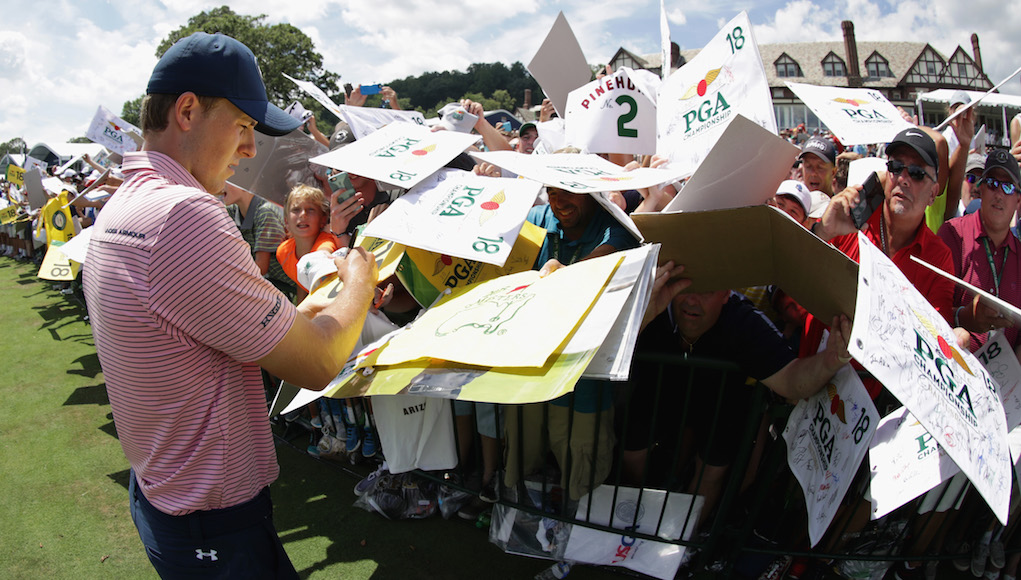
Recently, Jordan Spieth put adult autograph seekers at the 2017 Pebble Beach Pro-Am in their place by telling them to “get a job” and to stop profiting from his success. Fair enough. It’s his autograph to either give or not to give.
It’s easy to see where he’s coming from, but before we praise Spieth for standing up against these losers, creeps, vultures, or whatever else you want to call them, let’s take a look at the autograph industry and who suffers from Spieth’s stance.
Essentially, you can put autograph seekers into five different buckets. I’ll go through each category with the perceptions and reality of each before ultimately getting to the point.
1) Kids
No one in their right mind is going to argue with kids who want an autograph. In the world of autographs, it really is all about the kids. Have you ever seen a kid get an autograph from their favorite athlete? Then you know what I’m talking about.
2) Adults getting the autograph for their kid
This one is also tough to take a stand against. There’s a number of reasons why a parent is at a sporting event without their child, but still wants to provide them with an awesome souvenir. Let’s say an 8-year-old had school and couldn’t miss, but the father went to the practice round at Pebble Beach and had the opportunity to get a Jordan Spieth autograph for him. Any concerns here? Not from me, but maybe you disagree.
3) Adults who want the autograph for themselves
OK. I see your point. Maybe this is a little weird. Especially when the adult is years, if not decades older than the athlete. But let’s say a middle-aged man wants a John Daly autograph for his man cave, or a middle-aged woman wants an Adam Scott autograph. Still as weird? There are certainly stranger things for adults to collect than autographs, so maybe we shouldn’t judge too heavily.
4) Those seeking autographs to sell at charity events
This one could be sticky for some to rationalize, and easier for others. Let’s say you’re running a charity event to raise money for ALS Research. At the event, you’re giving away a number of different items to raffle off and the profit goes to the research fund. Among those gifts is a Jordan Spieth autograph that was obtained at the AT&T Pebble Beach practice round by an adult. So yes, the autograph was obtained and sold, but the money went to charity. Hmm….
5) Adults with the intent to sell the product on Ebay
This is far and away the easiest group of people at which to point the finger and tell them they’re morons. Specifically, Spieth’s case against this group of people is that they have no intent to give the autograph to a kid or a good cause. They’re simply profiting off of his name…literally, and Spieth has a point. But what if we think about this group in a different light?
Imagine yourself as the parent of a 10-year-old kid who idolizes Jordan Spieth. You can’t afford to fly the family out to Pebble Beach to see Spieth play and hopefully get an autograph, but your child’s birthday is coming up and you really want to give him a signed Pebble Beach golf flag. So what do you do? You go straight to eBay and see if anyone is selling a Jordan Spieth-signed Pebble Beach flag.
You buy it.
It was $125, but hey, not that bad for an awesome gift. It comes in the mail five days later, just in time for the birthday party. And when your child opens up that gift, his eyes light up. He hangs the flag on his wall and looks at it everyday. Maybe he even starts to play golf every weekend because the autograph got him so excited.
Now, is it really that big of a deal that the person who provided the kid with the autograph made a few too many dollars off of it? Would you rather the 10-year-old Jordan Spieth fan never get the autograph?
The point is, there’s a demand for Jordan Spieth autographs. Whether it’s kids, adults, grandparents or dentists who want it for their waiting room, there’s a market. And there’s a short supply. Jordan Spieth is the only person in the world who can provide a Jordan Spieth autograph, and someone somewhere down the line is going to make money off of selling that autograph to the parent of the 10-year-old kid who wants it.
If it wasn’t for the autograph-selling adults, some children would never have access to their idol’s autograph.
What would you do?


Club Junkie
Tour Edge Exotics mini driver review + TaylorMade Spider ZT Max first look – Club Junkie

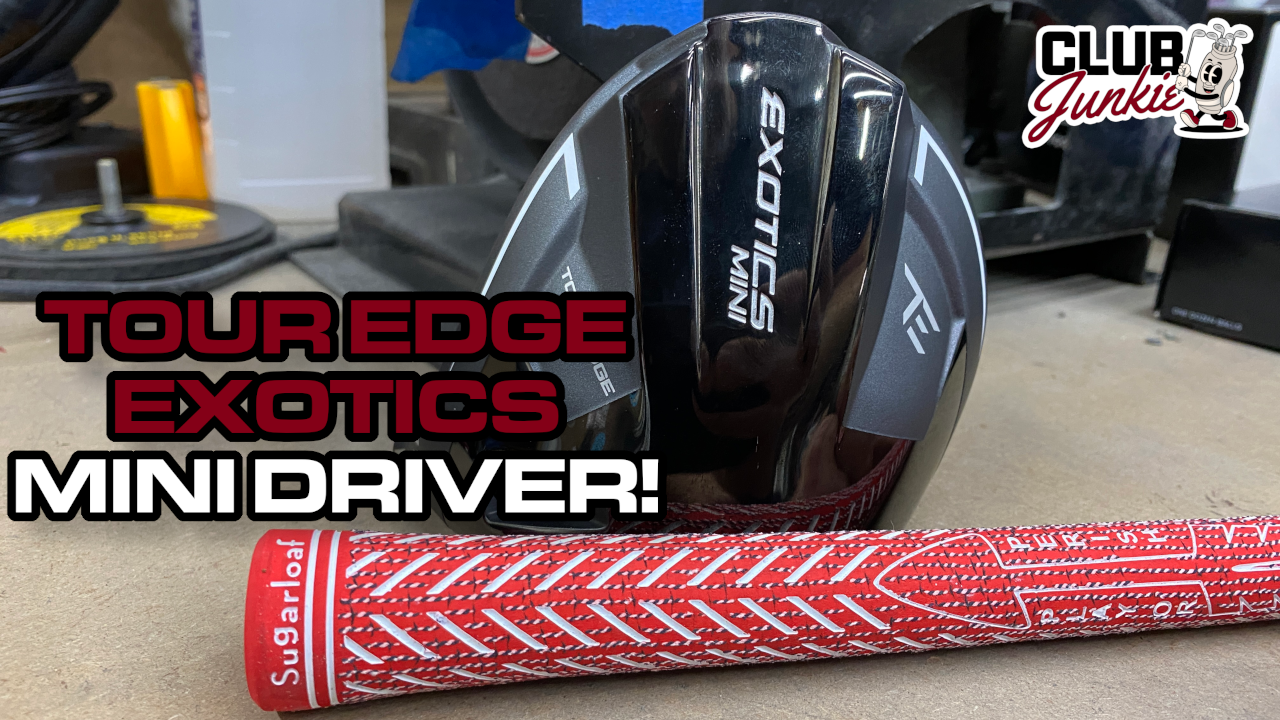
On this episode of Club Junkie, I put the new Tour Edge Exotics Mini Driver to the test and break down the performance, forgiveness, distance, and where it fits compared to a traditional driver or strong fairway wood. If you have been curious about adding a mini driver to the bag, this one is worth a look.
I also dive into the new TaylorMade Spider ZT Max putter that was recently spotted and discuss the growing zero torque putter trend. Plus, there is a closer look at the new Project X Titan Yellow shaft showing up on the PGA Tour and what makes it different from other profiles currently out there.
Opinion & Analysis
AVL: We’re talking about practice! My best tips for taking your game to the course

With the beginning of June on the horizon and courses rounding into peak condition for the season, it’s time to hone the finer skills that often get rusty over the winter. More sunlight also means more time to get out on the course and work on your game.
Whether it’s the practice green or the driving range, there’s always something to improve—whether you’re enjoying the fresh air or preparing for a weekend game or tournament. You can work on drills or freestyle around the green, and friendly competition is a great way to sharpen your skills.
While there are endless ways to get better at golf, I’m going to focus on practicing around the green. Let’s take a look at a few things to keep in mind as we head into the summer months.
Drills
From the driving range to the practice green, it’s important to incorporate drills into your routine. Years ago, I spent a weekend working on my short game with James Sieckmann. He recommended doing drill work for 5–10 minutes, then returning to your main practice.
This way, you create a balance between structured drills and real-world scenarios, so you’re not confined to “perfect” situations. For example, hitting the same three-foot putt over and over is good for repetition, but after a while, it becomes less interactive for your brain.
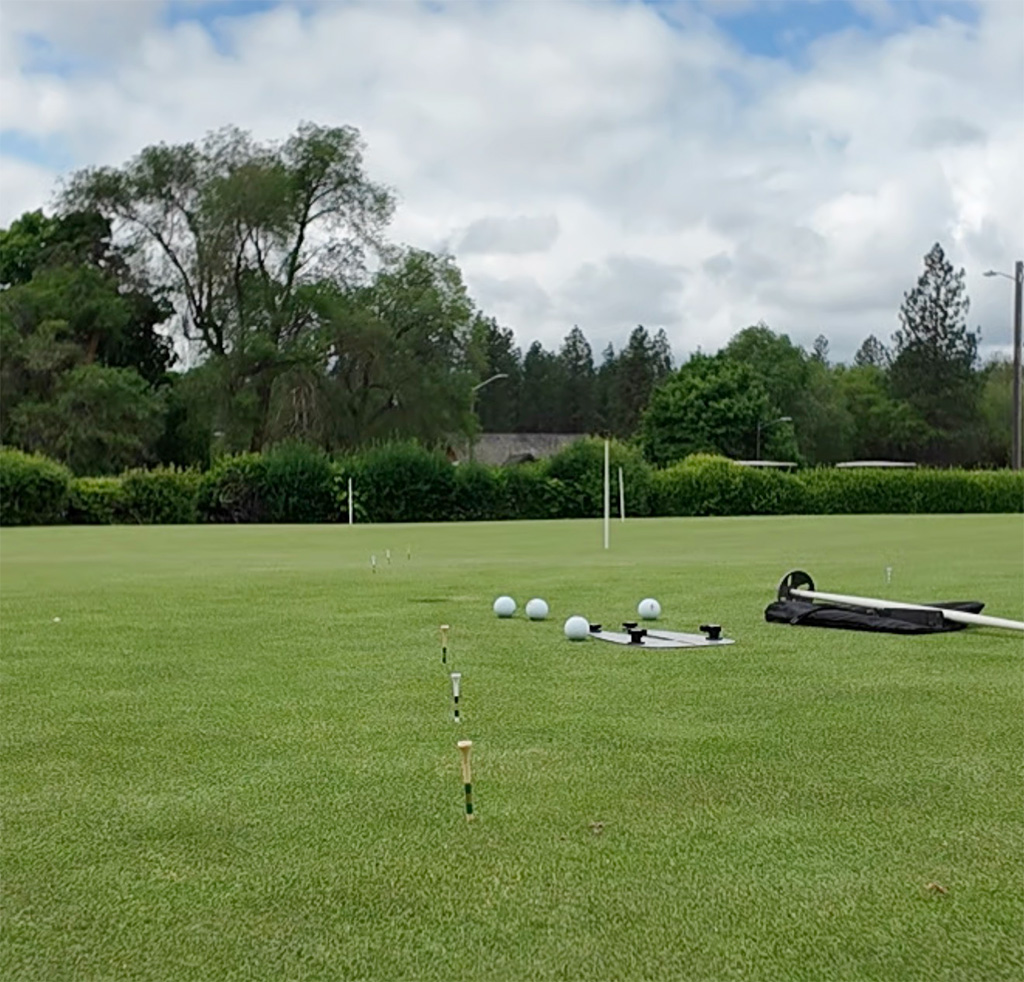
My approach is to use a putting trainer with a narrow gate for the ball to pass through, or simply place tees just outside the width of the ball. I’ll hit a series of four putts through the gate for three sets. Then, from a similar distance, I’ll hit four putts without the training aid and repeat that sequence three times.
Next, I’ll hit a number of 15–25 foot putts in a random fashion, then circle back to repeat the short putt drills with and without the training aid.
This breaks up the rhythm of hitting short putts with the training aid. When you hit the same short putts over and over, it’s easy to get into a groove—which is great for the drill, but not reflective of actual course play. While finding a rhythm is fundamental for drills, I like to introduce variation with longer putts to keep things realistic.
Game Mode
Once you’ve established a foundation with drills, it’s time to simulate on-course scenarios. This is where a few practice games come in handy.
One that I’ve been enjoying lately involves putting 10- to 15-footers with two balls. If I make the putt, great! If I miss, I pull the missed ball back a putter length. Suddenly, that little tap-in becomes a nerve-wracking three-footer—at least at first. As you get better at this game, those three- and five-footers become much more comfortable and routine.
It may sound cliché, but each shot is just what it is—it’s how we react that makes the difference. I like this game because it blends the pressure of on-course putting with the consequence of leaving yourself a much longer putt than usual.
Another game I like is one I recently learned from Brad Faxon. Place three tees in a line at four different locations around the hole: one at 3 feet, one at 6 feet, and one at 8 feet. The 3- and 6-foot putts count as par, and the 8-footer is for birdie.
This game keeps you focused on scoring and helps you get into a competitive mindset. You can even think about this putting game while you’re on the course. I just started playing it, and last week I couldn’t get better than two under par.
Competition
Competition during practice is when drills and games come to life, and you start to see results. For me, nothing beats a putting contest with a friend or two. In the right setting, these contests can become talking points for the whole season.
Match play, a game of 21, or simply seeing who can make the most one-putts (with a small prize on the line) are all great ways to simulate real on-course pressure. Recently, I played in a putting contest where one competitor made back-to-back 30- and 50-foot putts. As they say, expect your opponent to make every putt—and he nearly did. That’s impressive, and it’s something you see on the course, too: you have to stay committed to your game plan, no matter what.
When it comes to practice, it’s important to blend feedback from recent rounds with the fundamentals you want to reinforce. Drills, games, and competition—from the driving range to the putting green—form the backbone of skills you’ll rely on during actual rounds.
Finding the right balance is something we’re all working on, one practice session at a time. With the beginning of June on the horizon and courses rounding into peak condition for the season, it’s time to hone the finer skills that often get rusty over the winter. More sunlight also means more time to get out on the course and work on your game. Whether it’s the practice green or the driving range, there’s always something to improve—whether you’re enjoying the fresh air or preparing for a weekend game or tournament. You can work on drills or freestyle around the green, and friendly competition is a great way to sharpen your skills. While there are endless ways to get better at golf, I’m going to focus on practicing around the green. Let’s take a look at a few things to keep in mind as we head into the summer months.
Drills
From the driving range to the practice green, it’s important to incorporate drills into your routine. Years ago, I spent a weekend working on my short game with James Sieckmann. He recommended doing drill work for 5–10 minutes, then returning to your main practice. This way, you create a balance between structured drills and real-world scenarios, so you’re not confined to “perfect” situations. For example, hitting the same three-foot putt over and over is good for repetition, but after a while, it becomes less interactive for your brain.
My approach is to use a putting trainer with a narrow gate for the ball to pass through, or simply place tees just outside the width of the ball. I’ll hit a series of four putts through the gate for three sets. Then, from a similar distance, I’ll hit four putts without the training aid and repeat that sequence three times. Next, I’ll hit a number of 15–25 foot putts in a random fashion, then circle back to repeat the short putt drills with and without the training aid.
This breaks up the rhythm of hitting short putts with the training aid. When you hit the same short putts over and over, it’s easy to get into a groove—which is great for the drill, but not reflective of actual course play. While finding a rhythm is fundamental for drills, I like to introduce variation with longer putts to keep things realistic.
Game Mode
Once you’ve established a foundation with drills, it’s time to simulate on-course scenarios. This is where a few practice games come in handy. One that I’ve been enjoying lately involves putting 10- to 15-footers with two balls. If I make the putt, great! If I miss, I pull the missed ball back a putter length.
Suddenly, that little tap-in becomes a nerve-wracking three-footer—at least at first. As you get better at this game, those three- and five-footers become much more comfortable and routine. It may sound cliché, but each shot is just what it is—it’s how we react that makes the difference. I like this game because it blends the pressure of on-course putting with the consequence of leaving yourself a much longer putt than usual.
Another game I like is one I recently learned from Brad Faxon. Place three tees in a line at four different locations around the hole: one at 3 feet, one at 6 feet, and one at 8 feet. The 3- and 6-foot putts count as par, and the 8-footer is for birdie.
This game keeps you focused on scoring and helps you get into a competitive mindset. You can even think about this putting game while you’re on the course. I just started playing it, and last week I couldn’t get better than two under par.
Competition
Competition during practice is when drills and games come to life, and you start to see results. For me, nothing beats a putting contest with a friend or two. In the right setting, these contests can become talking points for the whole season. Match play, a game of 21, or simply seeing who can make the most one-putts (with a small prize on the line) are all great ways to simulate real on-course pressure. Recently, I played in a putting contest where one competitor made back-to-back 30- and 50-foot putts. As they say, expect your opponent to make every putt—and he nearly did. That’s impressive, and it’s something you see on the course, too: you have to stay committed to your game plan, no matter what.
When it comes to practice, it’s important to blend feedback from recent rounds with the fundamentals you want to reinforce. Drills, games, and competition—from the driving range to the putting green—form the backbone of skills you’ll rely on during actual rounds. Finding the right balance is something we’re all working on, one practice session at a time.


For Korean golfers, we always look forward to the last of the kkot-saem-chu-I for the true start of a new golf season. The term refers to a cold snap, but literally translates as “winter being jealous of the flowers beginning to bloom, thus lashing out one final time before surrendering to spring”.
A rather poetic mouthful packed into a short expression.
Koreans can be like that. Understated, yet oddly expressive at the same time. And nowhere is this more true on the golf course and in our golf bags. In fact, I suspect many Korean golfers look forward to new apparel and accessory drops more than they do actual equipment launches each year.
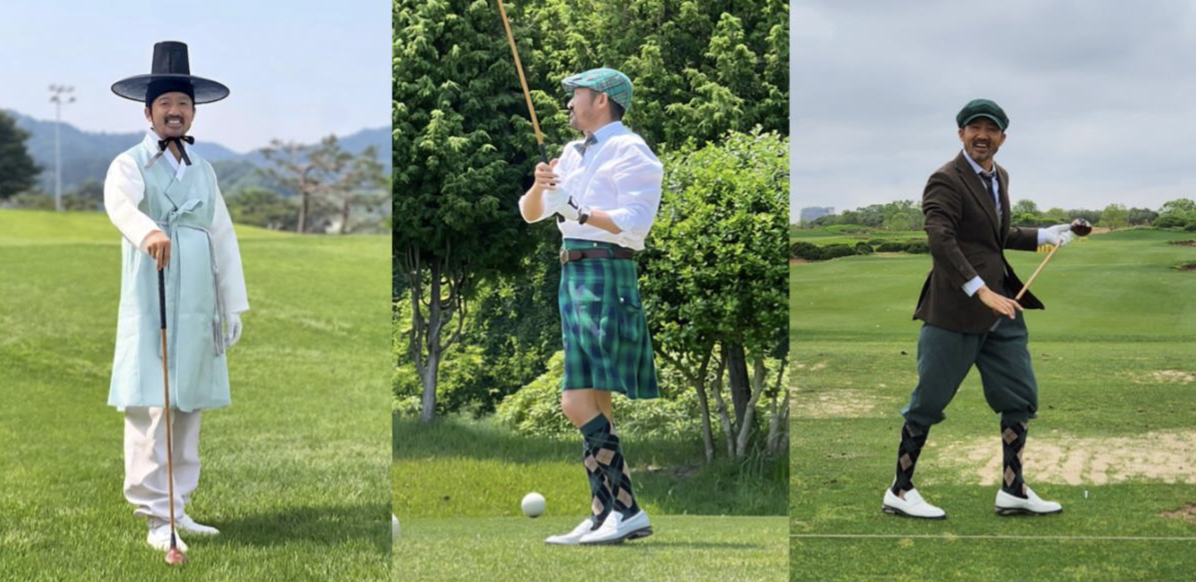
At this point, Korean golf fashion may exist on its own timeline. (courtesy of @seonbi_golfer)
There is ample evidence to support that suspicion. Korea is the world’s third-largest golf market behind the United States and Japan, yet its appetite for golf apparel exceeds that of both countries combined. Recent estimates suggest that Korea accounts for nearly 40 percent of the global golf apparel market, placing it among the world’s most influential golf fashion markets and punching well above its size.
Simply, we care deeply about how new golf clubs look and feel, but enjoy looking good while swinging them even more.
Golfers in the West may laugh and say that golf is played on a course, not a fashion runway. Perhaps. But what’s the harm in trying to look and feel good, if the added self-confidence can help actual performance? It certainly seems to have worked for Jason Day, who may have unlocked a new stats category: dormant strokes gained. Coincidence?

During the COVID-era, estimates placed the market near $9 billion, an astonishing figure for a single country.
As a proud member of Gen X, I’ve witnessed the highs and lows of golf fashion firsthand. The pleated trousers and wing-tipped shoes of Jack Nicklaus, the stylish plus-fours and knickers of Payne Stewart, the baggy black trousers and fitted mock-necks of Tiger Woods, and the thigh-hugging athletic tailoring of Rory McIlroy. Golf fashion, like the golf swing itself, has rarely stood still.
But nowhere have those trends shifted, evolved, and been scrutinized quite as relentlessly as in Korea. Here, golf fashion moves faster than fairway gossip, and consumers dissect brands with a level of discernment that can be both impressive and mildly terrifying. New brands are studied, judged, embraced, or dismissed with startling efficiency.
The result is a consumer base with one of the sharpest eyes for quality and authenticity anywhere in the world. It is difficult to quantify, but easy to recognize. Clean lines without trying too hard. Luxury mixed with utility. Trend awareness balanced by restraint and purpose.
It’s golf fashion shaped by one of the world’s most style-literate cities, something I like to call Seoul Sensibilities, referring to the taste level forged by a uniquely competitive environment.
And increasingly, global brands have noticed.

Many golf brands in Korea have their own flagship shops dedicated to apparel only
Titleist understood this years ago, when its apparel business in Korea took on a life of its own under new ownership and local direction. What had once been a straightforward extension of an iconic equipment giant became something sharper and more premium. By going all in on the serious Tour-player look (I couldn’t even fit into their XL sizes), Titleist struck the right chord with Korean consumers and helped its fledgling apparel business break into the mainstream. Titleist became a household name even for non-golfers who wore its caps, shirts, and windbreakers in daily life. In many ways, it proved that even heritage golf brands could carry real fashion credibility when viewed through a Korean lens.
Several years later, PXG took a page out of Titleist’s playbook and followed suit. Korean consumers helped transform the brand from one known largely for irons and loud commercials into something broader and more stylish. PXG apparel’s growth in Korea was explosive, where it found an early audience and turned the category into something more than mere logo merchandise. It is still hard to walk anywhere in Seoul without seeing its palindrome logo.
Malbon’s meteoric rise in the United States was genuine, but its ascent into a global golf lifestyle brand owes much to Korea, where it was elevated by a market already fluent in modern golf style. Korea did not simply embrace Malbon. It pressure-tested the concept, refined its appeal, and helped push it into the global spotlight.
As such, new brands may arrive from abroad, but more often than not, their sharpest evolution happens here. If a brand can earn credibility in Seoul, it’s deemed to have passed one of the toughest style audits in the game.
That is why the next meaningful chapter may not come from outside, but from a Korean brand moving in the opposite direction, carrying those Seoul Sensibilities outward as K-pop once did.

Play young Stay dope.
From Seoul, With Intent
Khalhon is a label that feels less like a trend-chasing newcomer and more like the product of a market that has already seen everything. Golfers here have long been surrounded by luxury logos, technical fabrics, and tour uniforms disguised as lifestyle wear and vice-versa. In other words, novelty alone rarely lasts here, and the Koreans seems to understand that instinctively.
Its style language leans into clean silhouettes, relaxed but tailored proportions, muted palettes, and premium materials that speak quietly but confidently. There is a modern city aesthetic running through it all, with strong layering pieces, thoughtful textures, and subtle branding that suggests sophistication rather than demanding attention.

“Built for the course. Designed beyond it.”
Most importantly, the garments seem designed to blur the line between golfwear and everyday style. Shirts, trousers, knitwear, and outer layers move comfortably between a game of screen golf, a lunch reservation, an airport gate, or an afternoon coffee in Gangnam with friends.
It raises the question of whether this is golfwear that happens to look good off the course, or everyday clothing that performs beautifully on the fairways.
Personally, I have long appreciated Nike Golf for its clean, athletic modernization of golf attire. It also has the useful side effect of making me look like a more serious golfer than I probably am. But off the course, there are times when being instantly identified as the golf guy in a crowd of non-golfers can feel a touch self-conscious.

“Built for the course. Designed beyond it.”
That is part of what drew me to Khalhon, which seemed to blend golf and everyday wear naturally. While some of the outfits may be slightly beyond my personal confidence level, the brand also offers tasteful options for older guys like me who still want to express a little personality without regretting the decision later.
These are not simply flashy outfits worn on the course and then banished to the closet until the next tee time. They work surprisingly well off the course too, and I suspect many of the pieces will still look right a couple of years from now, which would certainly be kinder to my wallet than most golf fashion trends tend to be.
And perhaps that broader lifestyle positioning also helps explain why someone like Sean Wotherspoon would find Khalhon creatively interesting in the first place.

“Built for the course. Designed beyond it.”
“Korea is not only one of the most fashion-forward golf markets in the world, but one of the most fashion-forward markets globally. Korea is ahead, and I love to watch and try to catch up.” – Sean Wotherspoon, Creative Director at Khalhon
Seoul and Beyond
If Khalhon’s rise says something about where Korean golf fashion is today, its relationship with Sean Wotherspoon says even more about where it is heading.
For readers less familiar with Sean Wotherspoon, his arrival at Khalhon is not some routine celebrity endorsement or influencer collaboration. In design and streetwear circles, Wotherspoon is regarded as one of the more influential creative voices of his generation, particularly when it comes to blending nostalgia, storytelling, and contemporary culture into products that people can connect with.
He first gained widespread attention through his now-famous Nike sneaker collaborations, where his vintage-inspired designs and instinct for color helped turn him into one of the defining artists of the late-2010s sneaker era. His work gradually expanded beyond footwear into apparel, automotive collaborations, collectibles, and broader lifestyle design.
Modern golf style now extends well beyond the fairways, where performance and functionality are largely expected by default. And while plenty of brands already make technically competent golfwear, Khalhon seems more focused on designing clothes people would genuinely want to wear even after the round ends.
And when guys at Wotherspoon’s level show genuine interest in working with a Korean golf brand as its new Creative Director, fashion circles tend to sit up and pay attention. There’s already a huge buzz among the fashion-conscious here about upcoming collabs with iconic sports stars and brands.

“My creative direction for Khalhon is disruptive, colorful, nostalgic, and modern. My goal is to blend these avenues seamlessly within each collection.” – Sean Wotherspoon
In chatting with Sean, what stood out most to me was how genuinely energized he sounded about the project itself. Despite having already worked across and countless other creative spaces, he described golf as a completely fresh category for him, saying that Khalhon “will be an amazing vehicle for my design work.”
At the same time, his enthusiasm seemed tied just as much to Korea itself. He spoke openly about admiring Korea’s fashion culture while repeatedly insisting he is still a terrible golfer.
There was something oddly refreshing about that humility. Rather than sounding like a celebrity parachuting into golf simply because the category suddenly became fashionable, Sean sounded genuinely curious about what Korea might do with the category next.
And perhaps that is what makes Khalhon feel interesting right now. The brand feels less like a trend-chaser and more like the natural result of a market now confident enough to export its own point of view.
For years, global brands came to Korea to sharpen their image against one of the most discerning audiences anywhere. Now, a Korean label appears ready to send those Seoul Sensibilities outward instead.
Which brings us back to kkot-saem-chu-i.
That final cold snap before spring always arrives with a reminder that seasons are changing, whether we notice it immediately or not. Golf fashion feels a little like that right now as well, as the old boundaries between sport, streetwear, luxury, and everyday style continue to soften.
And somewhere in Seoul, a Korean golf label already seems prepared for whatever season comes next. I just hope they have everything in my size.

Aaron Rai’s winning WITB: 2026 PGA Championship

Russell Henley’s winning WITB: 2026 Charles Schwab Challenge

Photos from the 2026 CJ Cup Byron Nelson

CJ Cup Byron Nelson Tour Report: Koepka and Kim’s newest putters finally get hot

Charles Schwab Challenge Tour Report: MacIntyre, Åberg and Spaun all switch putters, TaylorMade launches new Spider

Details on J.J. Spaun’s surprise putter switch

GolfWRX Launch Report: 2026 Titleist GTS drivers

Photos from the 2026 Charles Schwab Challenge

PGA Championship Tour Report: Fitzpatrick, Koepka among big-name putter switches for Aronimink

Photos from the ShopRite LPGA


Maria Torres WITB 2026 (June)
Driver: Ping G440 LST (9 degrees) Shaft: Accra TourZ Green 5-M4 3-wood: Ping G440 Max (15 degrees) Shaft: Accra TourZ Green 6-M4 5-wood: Ping G440...


Eric Cole WITB 2026 (June)
Driver: PXG Lightning Tour Max (9 degrees) Shaft: Project X Titan Yellow 70 TX 3-wood: TaylorMade Qi4D (15 degrees) Shaft:...


Si Woo Kim WITB 2026 (May)
Driver: Callaway Quantum Triple Diamond (8.5 degrees) Shaft: Fujikura Ventus Black 6 X Mini driver: Callaway Paradym Ai Smoke Mini...


Wyndham Clark’s winning WITB: 2026 CJ Cup Byron Nelson
Driver: TaylorMade Qi4D (10.5 degrees) Shaft: Project X Titan Yellow 60 TX 3-wood: TaylorMade Qi4D Tour (15 degrees) Shaft: Project...


JThunder
Feb 17, 2017 at 2:30 am
Having something autographed by an athlete (or celebrity) who didn’t autograph it for you is like having a love letter from a beautiful girl (or guy) that wasn’t written to you. As a kid, I didn’t see the point, and I certainly don’t now. That $125 spent on some piece of junk for a kid could surely have been spent better (for one thing, waiting for a chance to obtain a personalized autograph, if that’s the ultimate goal.) The autograph hounding – and the ludicrous high-fiving – is the relatively harmless but still ugly side of our worship of celebrity. The income and adulation they receive is entirely disproportionate to their comparative value. But then, the same is true for most corporate CEOs, and in essence part of that same culture.
Seriously, though, stop high-fiving players too. I cringe every time – one ill-timed move could end a career, especially with all the drunks at the tournaments.
jc
Feb 13, 2017 at 7:00 pm
I get them to sign their book…that way, they know I spent some money that they got…I have Jack, Phil, Leadbetter….Chick Evans…(old golfer)….
Bob
Feb 13, 2017 at 4:44 pm
There was only one autograph I ever wanted…Arnie’s. And that was just to get close enough to shake his hand…
KoreanSlumLord
Feb 13, 2017 at 11:01 am
Kids only. The athletes should ignore the adults and the problem is fixed. I dont understand a lot of United States culture. The one thing that confuses me is adults who wear NFL/MLB/NHL jerseys with another guys name on it. In Korea and Japan, this is for the guys who have certain feelings for other guys. I think of same thing when I see grown azz men waving a piece of paraphanalia to another man to sign. Maybe they want the sex with that guy. Spieth is right on this one.
Ronald Montesano
Feb 12, 2017 at 5:34 am
The sheer number of comments is astonishing…I want Andrew Tursky’s autograph now!
If a professional athlete sees the same people at multiple events, she/he certainly might suspect that a profit-maker is in attendance. In a case like that, I see no problem with not granting an autograph. If the athlete gets a bad vibe (these are superhumans, after all, with powers of sensitivity beyond my own) from the autograph seeker, again, deny the scribble.
If Jordan Spieth moves the needle, then his moves need to be considered for an article. This is newsworthy, as it involved an interaction with the gallery and a subsequent, public statement (in an interview.) I like how Tursky laid out a hierarchy of seekers, and gave each a level of ethical justification. I wouldn’t give him a shank on this one, lads.
moses
Feb 11, 2017 at 12:51 am
LOL look at the Like to Shank ratio. It’s EPIC.
James Wallace
Feb 10, 2017 at 11:16 pm
I forged Jordan’s signature to give to my dad for Father’s Day, when the US Open was at Chambers. All to get revenge for when I was young, I got an “autographed” JT Snow baseball that was done by the guy at the gas station they bought the baseball from.
Sure, it was 15 years ago, and sure I’m now a grown man, but that taught him.
Someone
Feb 10, 2017 at 4:05 pm
Also, you don’t stop people from buying stuff cheap and fixing it up and selling it for more. Just like an autograph seeker, they gotta do the leg work to get that autograph like travel, tickets, and hotel. It’s just ridiculous. You don’t sell your car to someone and then dictate how they are to use it. Payment was made by the seeker in the form of ticket to the event at a minimum, not to mention other costs. Reward is seeing the event and possibly getting an autograph.
Someone
Feb 10, 2017 at 4:02 pm
The fans paid to watch and paid to get in. They are ultimately responsible for people becoming famous and making all the money that they do. Arnow signed for adults all the time. Even had conferences where people stood in line and waited. He sat there knowing full well that without them he wouldn’t be who he is or where he is. What’s the difference? You know jordan signed a full beer bottle for a “guy” and everyone posted that he was cool for doing it. That beer isn’t for a kid for sure. And also, you don’t sign and then get to tell people what to do with your autograph. It’s just like giving a homeless person money. You don’t control what they do with it because you have the money to them because they don’t have any. If you want them to buy food or clothes, give them food or clothes instead. Your good deed ends with what you handed off. Celebrities do not need to sign anything, but for their reputation and livelihood, it would behoove them to reconsider any stance against signatures. Regardless of intention, someone paid, watches them, follows them, and does the legwork to wait in line to get that signature. America is the world’s symbol of capitalism, in that people can find almost any way to make money or succeed or be whatever you want to be. A person who puts in the legwork to chase after autographs, can do what they please with their collected autographs, just like how a kid keeps a signed player’s card and may end up selling it in the future for money when it’s of more value. Who are we to judge other people ? It’s ridiculous for a celebrity to think that giving an autograph is unreasonable. Asking for autographs has been a long time way for celebrities to show appreciation to their fans. Doesn’t matter if they plan to sell it or not, that autograph belongs to that fan. They did the legwork to follow and such, why shouldn’t they be rewarded? That’s how you build up a fan base. Tin cup anyone? The other player was a douche…not many douchebags make it far and eventually they lose it all one way or another “no friends, loss of respect in community, loss of status, gambling, bills, etc.”
ooffa
Feb 10, 2017 at 3:34 pm
Stop being an entitled doofus and sign the autographs. You should be thrilled to have the opportunity to do so. And BTW speed up the play a bit will ya.
Brian
Feb 10, 2017 at 1:53 pm
Great, you can get autographed gifts for your kids on Ebay. However, those profiteers are doing so using someone else’s name/likeness. Just like any other marketed product using someone’s name/likeness, the athlete should get a cut of those proceeds.
If these leeches want to profit from someone else’s name, they should pay the athlete for the autograph in the first place.
Shanks for the Memories
Feb 10, 2017 at 12:23 pm
Whoops. Used a real name instead of the pen name that goes on all the obviously satirical articles that aren’t funny.
Shanks for the Memories
Feb 10, 2017 at 12:13 pm
Crap. They accidentally put a real name on this obviously satirical article instead of the pen name for all the other satirical articles that aren’t funny.
Grizz01
Feb 10, 2017 at 11:29 am
I wonder what Arnold Palmer would say to Jordan Spieth?
Bwall
Feb 10, 2017 at 10:07 am
Unless it’s on a check, there is no need for a grown man to have another grown man’s autograph.
Brian
Feb 10, 2017 at 1:51 pm
What about a grown man that has another grown man’s autograph….that he still has from when he was a kid?
Otherwise, I agree. As an adult, I find it incredibly lame to seek autographs, wear sports jerseys or any other clothing with another man’s name/likeness on it.
mr b
Feb 10, 2017 at 9:51 am
if you’re truly getting it for a kid that’s okay.
but I firmly stand by the ideas that NO grown man should EVER 1. wear another grown man’s sports jersey. 2. Ask for another grown man’s autograph.
i don’t judge others that do this but these are my personal beliefs
Ryan
Feb 10, 2017 at 6:03 pm
“I don’t judge others that do this, but I’m gonna go ahead and judge others that do this.”
Patricknorm
Feb 10, 2017 at 9:13 am
My son played in the NHL, AHL, KHL and on the Canadian national junior team. It’s scary how people are drawn to a relatively famous athlete. What’s off putting at least for a Canadian from a small town, the lengths people will go to get an autograph from an athlete. Often I’ve seen autograph hounds thrust binders in front of my son to sign pages of cards. Seriously?
He’s good at signing to a point. He always signs for children or fans that want him to sign his jersey. As parents we don’t especially take the time to collect memorabilia about him, just stuff where he’s played in the Worlds or a playoff finals.
Maybe it’s me but I’ve never felt the urge to get something signed by a famous person. It doesn’t reflect anything expensive to me and besides , if an athlete is signing say 25 autographs it can’t be worth much. What I treasure is the conversation I’ve had with a prominent person. Personally I can’t fathom a person’s zeal to obtain a signature. Besides, it eventually fades.
birdie
Feb 10, 2017 at 9:10 am
simple solution….the athlete ONLY signs for kids…and they make it personal. they ask the kids name and they sign it to him. this way, everything he signs is ” to jimmy, from Jordan”. cuts down on resale.
I'mNotTigerWoods
Feb 10, 2017 at 12:51 am
Agree completely with Jordan… I’m sure he’s privey to all that stuff going on, which the average person isn’t. It’s his autograph and if he only wants to sign for juniors so be it.
cgasucks
Feb 10, 2017 at 9:28 am
Yep…if I was in position, I would only sign for kids and people who really appreciate it.
cgasucks
Feb 9, 2017 at 10:36 pm
Many many years ago (early 90s) I was an autograph hound chasing hockey players for their signatures not for profit, but for myself. During that time there where a close community of people like me chasing signatures, some like myself were doing it for fun, but some where doing it for profit by selling it to their local sports memorabilia store. The people I knew that did it for profit where mostly respectable to the athletes and some even developed a good relationship with them. If you’re going to chase John Hancocks for profit, be respectful to them and don’t bite the hand that feeds you.
Usher1
Feb 9, 2017 at 9:50 pm
I had a first hand account of dealing with the group of individuals collecting autographs for profit. I was an usher for a season while in University for the Blue Jays. I was usually given the seat section that had the visiting team dugout. After batting practice, visiting players would come over and sign for a few minutes. The majority of these individuals are simply ridiculous and would do whatever to get that star players autograph. I dealt with 20 to 30 of these individuals every home game. I could tell you many stories and traits of the autograph seekers but I will sum it up with one incident. The San Francisco Giants were in town…the big autograph was Mr. Barry Bonds. He did not come over and sign the first 2 games of the series. Final game there was about 20 autograph for profit seekers. Everyone went into the dugout so the autograph hounds left. 4 or 5 very young kids were still along the first row seats and Bonds came back out to sign for these few kids. Well the autograph hounds came rushing back. They were crushing, knocking over, and stepping on these children. I was right there and started grabbing these grown men by shirt/jacket collars or their backpack and pulled them over the row of seats and off the kids. Then security staff came and cleared them out of the section. Not sure if they got ejected from the stadium or not.
My advice like mentioned previously is personalize all your autographs. Then the autograph hounds will not want them but the kid who wants it will be ecstatic or the parent who wants it for their child or the person who wants it for their office or man cave.
Dill Pickleson
Feb 9, 2017 at 8:56 pm
from the article link this is my favorite:
adult males who a) wear professional sports jerseys unironically
i had a girlfriend where my jersey in high school. but, that’s a little different.
Joey5Picks
Feb 10, 2017 at 12:39 am
No one over the age of 30 should wear a jersey…and if you do, don’t tuck it in.
RHJazz
Feb 9, 2017 at 8:55 pm
The “what if” example about the kid’s cherished memory could just easily be, kids memory is of getting shoved aside by some overgrown man-made child so he can stock his memorabilia “store.”
Mad-Mex
Feb 9, 2017 at 8:14 pm
As a former baseball/football card/autograph collector, the simplest way to drop the value of an autograph is to personalize it and sign it something like this “To (name) , Jordan Spieth”.
A TRUE fan will cherish this, an autograph hound will be quickly disappointed.
RAT
Feb 9, 2017 at 8:01 pm
My son played Pro baseball and he always signed for everyone. I got in line for him when he was young because some adults and hounds would push him away not waiting their turn and then by the time he got to the front the STAR would move on or just pass on by. Pros get paid plenty and to give their time to sign things is part of that star package. I would say sign one thing per person and make sure all get what they came after an autograph ! Arnie always did it that way. Besides without fans there would be no BIG MONEY for the stars.
Lob Wedge
Feb 9, 2017 at 7:12 pm
Wait..
So you’re saying that professional athletes don’t sign memorabelia to be sold by businesses agglutinate with them? That the only way we get an autograph without showing up is through autograph stalkers? That autograph stalkers are really doing it for the kids?
Golly gee..
Jack
Feb 9, 2017 at 10:38 pm
LOL yeah, good job justifying that. Honestly I’m not sure what an autograph does vs a picture to inspire. I have a few autographed basketballs that I bought, but that’s only cuz I like those players. If it was personalized then it would have been awesome but it was just a generic signature.
Matt
Feb 9, 2017 at 7:03 pm
I always applaud Spieth’s honesty but often he comes across as a whiner. I think adults who obtain autographs to sell on eBay or other market is pretty crappy.
Randy
Feb 9, 2017 at 5:50 pm
I think Spieth is a crya**, I wouldn’t sell a autograph on ebay but what about the rising cost of golf equipment, largely due to manufacturer’s signing guys like Spieth . We’re spending $1,200 for a set of irons and $500 for drivers!! I don’t think it’s a big deal if someone sells their autograph for a $100
The dude
Feb 9, 2017 at 7:30 pm
Haha….buy your sticks on eBay
Steve
Feb 9, 2017 at 9:44 pm
Manufacturers aren’t charging $1,200 for a set of irons and $500 for a driver because they have to pay players like Spieth. They’re able to charge that because we’re willing to pay it. If people stopped spending $1,200 on new irons, prices would drop until people started buying again.
ZQ RascalZ
Feb 9, 2017 at 5:35 pm
Completely pointless article. WRX scraping the bin with this one
Tom
Feb 10, 2017 at 9:00 am
did it hit a nerve ?
Philip
Feb 9, 2017 at 5:27 pm
Where do you draw the line – I’ve seen these adult autograph hounds plow through children. You give someone an inch and they will take your arm. Total fail for an article!
JustTrying2BAwesome
Feb 9, 2017 at 5:12 pm
What would I do? I’d kick the professional autograph-selling adults right square in the balls. That’s what I’d do. Should be perfectly acceptable, and in some cases encouraged, for the kids to kick the professional autograph-selling adults right square in the balls.
blake
Feb 9, 2017 at 7:19 pm
I think you’re living up to your name, but punches would also be acceptable.
Jack
Feb 9, 2017 at 10:39 pm
I’d recommend a sharp elbow.
Brian
Feb 10, 2017 at 1:59 pm
Trying2Hard2BAwesome is more appropriate. When will humanity evolve past the point of prescribing violence as the answer to their slights?
Hans
Feb 9, 2017 at 5:12 pm
These autograph hounds are asking players to give up their time (for free!) so that they can make money off the players. What person wouldn’t find that annoying in the same situation? Not to mention some of these hounds the players see can be pretty obnoxious to boot.
Players don’t mind giving back some attention to fans that come see them. But to give up their own time so someone else can make money off their name and even worse to spoil the atmosphere for the kids – good on Jordan for saying something.
Double Mocha Man
Feb 9, 2017 at 4:57 pm
I’d be careful telling someone to “Get a job” if they already have one. Sounds conservative/Republican/Tea Party to me. Did Jordan vet each of those requesting his signature to make sure they were unemployed?
Mad-Mex
Feb 9, 2017 at 6:41 pm
Seriously? You that brainwashed you cant keep your political views off a golf site? Your a cult leader’s wet dream.
Double Mocha Man
Feb 9, 2017 at 8:10 pm
Sorry pal, when the issue becomes “Get a job” it does become political. I will be watching Speith closely from now on…
Mad-Mex
Feb 9, 2017 at 8:18 pm
So, Speith be concerned because your “watching” him? Your not that important “pal”.
Tom
Feb 10, 2017 at 12:22 am
roflmao…. BAZINGA!
Tom
Feb 9, 2017 at 7:42 pm
Nohny Noct is that you? Poor taste in a post
Sheriff
Feb 9, 2017 at 10:28 pm
Lol! You’re an idiot
Tom
Feb 10, 2017 at 12:16 am
Ur a high strung y a p
not having it
Feb 10, 2017 at 11:39 am
So are you inferring that the stereotype of liberals not having jobs is correct? Why else would you immediately label Spieth “conservative/Republican/Tea Party”? Obviously, Spieth’s comment is a common cliche’ used in similar context to phrases like “f*** off”. Also obvious, is the fact that you are just trolling, and if you are going to insist on being a troll then at least try to do so with a more intelligent response than, “Sounds blah, blah, blah, political jab because Trump is POTUS and the world is going to end blah, blah, blah, and more nonsense”…
TR1PTIK
Feb 9, 2017 at 4:56 pm
I like that you’re trying to provide a different perspective and your opinion is certainly objective. However, the caveat here is that the adult autograph seeker/eBay seller is still profiting off of someone else’s success. More importantly, they are profiting off of kids. You give a great example wherein a mom or dad wants to do something awesome for their kid and get an autographed collectible from their favorite sports icon. What happens when the kid asks how they got it? Doesn’t that completely cheapen the gift? Meanwhile, the guy who sold it on eBay is back on the course stepping over or on top of more kids to get another autograph. I have zero problem with an adult wanting an autograph from someone they admire. It’s perhaps a little weird in some scenarios, but in most cases nothing to be concerned about as long as they are respectable about it. If I were in Spieth’s shoes, I’d absolutely do the same thing.
Fred
Feb 9, 2017 at 4:45 pm
You forgot adult autograph dealers who use kids to get the signatures. Yes, they do this, and it is horrible.
Matt K
Feb 9, 2017 at 4:39 pm
Not a big autograph guy. They’re for kids… not dentists or Adam Scott loving soccer moms. If I walk into some dude’s mancave and he’s got a bunch of autographed memorabilia, my opinion of him goes down a few notches. Get a kegerator and some pennants maybe, a Bobby Orr superman photo if you’re a Bruins fan or ‘insert your teams iconic photos’. I had a great time getting a cap signed at the 1997 PGA championship at Winged Foot. I was in Denver earlier in the summer and my Dad brought me over to Cherry Hills, he bought me a hat that I later got all signed up at the PGA. Still have it… few good ones on there Ernie, Duval, Vijay, think JD signed it. Remember I ran into Nick Price – not in the autograph line, he was just walking from point A to B – he gave me the Heisman, said he’d catch me later lol. Didn’t happen, I still like him, it wasn’t the time for him to sign. Anyway… I was 13! It was fun, the hat isn’t in a special place or anything, but I wouldn’t ever discard it, its a great reminder of that trip. I never really did it again, the autograph thing, once was enough. Adults who do… get a job!