
Opinion & Analysis
Why golf industry organizations must do more (and what they can do)


When we look at the current state of golf, there are more questions than answers. There is more confusion than clarity. There are more initiatives than you can shake a golf club at, but there have been fewer results than there are believers that Dustin Johnson’s leave of absence was voluntary.
Against a backdrop of declining popularity and participation, we’re presented with confusing and seemingly irreconcilable behavior from our industry organizations, who are themselves experiencing varying fortunes.
And on the subject of fortunes, there are some curious realities in executive compensation and hard questions to be asked. For example, why does Joe Barrow of the First Tee reportedly earn $1 million annually? What has the CEO of the NGCOA (National Golf Course Owners Association) done to merit earning 10 percent of the organization’s net assets in annual compensation, the NGF’s (National Golf Foundation) nearly 10 percent?
In a recent article titled “Golf Industry Associations: A Tale of Two Cities,” Jim Koppenhaver, of golf consulting group Pellucid Corporation, offered an interesting take on all of the above. I reached out to hear more about his take on the current state of industry associations.
Koppenhaver’s contention is simple. The PGA Tour, USGA, and PGA of America are doing well as they have the mother’s milk of lucrative TV deals. The WGF, GCSAA, NGCOA, NGF— lacking those contracts — not so much. And based on the collective net assets of these non-profit organizations, it doesn’t seem like anyone’s change purse is totally devoid of coin to allocate to industry growth.
A word of explanation regarding some of the potentially lesser known acronyms:
The WGF is the World Golf Foundation. Its mission is to “develop and support initiatives that positively impact lives through the game of golf and its traditional values.”
The GCSAA is the Golf Course Superintendents Association of America. The organization “provides education, information and representation to more than 17,000 members in more than 72 countries. GCSAA’s mission is to serve its members, advance their profession and enhance the enjoyment, growth and vitality of the game of golf.”
The NGCOA (National Golf Course Owners Association). It “is the leading authority on the business of golf course ownership and management. The Association represents the industry’s key decision makers with ultimate responsibility for golf courses throughout the world.”
The NGF (National Golf Foundation) “is an objective and independent information resource dedicated to supporting all the people, companies, facilities and associations that earn their living in the golf business. NGF delivers market intelligence, insights and trends to fulfill its mission: To Help Golf Businesses Succeed.”
Koppenhaver’s data on the organizations’ net assets bears this out.
For the “best of times” group, net assets are both substantial and growing.

For the “worst of times group,” much less so (save for the WGF’s strange 2012 cash infusion).

The non-profit USGA recently struck a $56 million TV deal with Fox to add to its coffers. Likewise, the PGA of America cashed in thanks to its deal with CBS, and the PGA Tour, of course, as Koppenhaver writes, “Very intelligently locked in their partners at favorable…and long terms.”
The bottom line: these non-profit organizations are sitting on piles of cash that would make Scrooge McDuck blush.
Likewise, the “worst of times” crew has a bit more money in the bank than might be expected. For example, they had more than $50 million in their collective treasure chests in 2012.
As Koppenhaver writes:
[quote_box_center]“The final question that any reasonable person would ask here is, “What have the various industry Association heads done over the ’10-’13 period that has significantly advanced either the industry as a whole (NGF & WGF) or their specific constituency (NGCOA and WGF)?” Given that we’re not seeing exponential growth in the NA base of any of the orgs (WGF potentially excluded although without a breakdown of that $30M infusion it’s hard to tell) and the industry has declined in participants and rounds and basically held flat in Total Golf Facility Revenue, it doesn’t seem that the members contributing their hard-earned money to those Associations are getting much (any?) bang for their leadership buck?”[/quote_box_center]
Not having a good answer to this question and hoping there was something I was missing, I decided to ask the author of the report, as well as each of the organizations mentioned in it.
The PGA Tour declined to comment. The USGA, PGA of America, WGF, NGCOA and NGF all failed to respond to repeated inquiries.
The GCSAA provided this statement, per J.D. Dockstader, chief business development officer:
[quote_box_center]“There are some good things happening within the golf industry right now, and our revenues have increased consistently over the last four years. The association is continually exploring new models for membership growth, both within the U.S. And internationally, as well as greater industry collaboration, which is key to creating a critical mass of influence and economies of scale. Our relationship with other governing bodies is stronger than ever.”[/quote_box_center]
Koppenhaver, fortunately, was willing to discuss his findings at length.
What’s the problem here?
J.K. In any business that you’re in that’s declining, you need a.) A strategy and b.) money.
At the end of the Golf 20/20 conference, they passed the hat. Obviously they didn’t get a lot of takers … equipment manufacturers and golf course owners have the least cash of anybody. Their strategy has failed miserably. They can’t really set their feet and point themselves in a direction…this year it’s women, the next year it’s minorities…
You’re not going to get a great strategy out of asking 50 different people to do this as a 10th job.
Since Golf 20/20, we’re about 8 million golfers light of where we were; we’re about 60 million rounds lights of where we were. We have no strategy, and we still have no money. Fifteen years after this initiative, we’re actually going backwards at a faster pace than when we started, and everyone is still passing the hat to everyone else without a strategy.
Should the PGA Tour, USGA, and PGA of America be compelled to put forth cash to grow the game?
The big guys shouldn’t be compelled to contribute that money; they should feel a responsibility to.
If you look at the USGA and their pattern of giving, they give out hundreds of tiny grants. It’s more about PR…that’s not investing, that’s a PR campaign.
I tossed out the idea of a 1.5 percent tax [of each organization to fund initiatives].
It’s tens of millions of dollars that would be put into play for coming up with a strategy and actually deploying it. Feed your winners and starve your losers! Put five or six things in the marketplace. One or two of them work. You give them more money, shut down the others. Put four more in the hopper…
Do they care?
Institutions get to a certain size and it’s very hard to knock them off center. You’re not going to knock the USGA off center if they just stick to message and ignore. There’s no incentive for any of those organizations to help stabilize the game.
Something will have to shift in the funding mechanism or around public sentiment as it relates to the USGA and their willingness and ability to actually put real money and brains toward fixing the game rather than saying “our job is to maintain a handicap system, teach people how to grow grass, and to run tournaments.
What’s going on at the NGCOA?
Look at the track record of the NGCOA for the past few years. Can you identify any initiative or progress that they’ve made that has advanced the good of the members or impacted the industry?
I can’t think of many places like that where you give somebody a $100,000 raise. I would love to know what the rationale was for rewarding somebody a third more in base compensation. I had a guy from the NGCOA board rip me a new one. I said, “Bring me the facts.” I haven’t heard back from him.
What explains the relative absence of successful initiatives?
There hasn’t been concerted strategic information gathering conducting. We’ve lost 8 million golfers over the past decade and we still don’t have solid, quantitative reasons why we lost them, can they be reacquired, and what it is we would need to reacquire them.
You have to have some system for reviewing and prioritizing the ideas and what you’re going to put in the marketplace. Hack Golf: they got the ideas but no triage. They opened this website and let it lay in agony. Somebody has to sort through the crap: Here’s 1,000 ideas…of them, 100 have merit. We can only finance 10. The back end of that is you have to have reporting and tracking mechanisms.
We did this Get Golf Ready thing. It’s been in the market for like six years now. They’re not even having structured exit interviews. They have no mechanism for keeping track of [participants]: where they’re playing, how much they’re playing, how much money they’re spending. They’re simply sending them an email survey a year later and saying, “What was your impression of the program?”
I know you’re not high on the First Tee…
You take something like the First Tee—A colossal waste of resources, time, and money. We started out with noble intentions: We wanted more diversity in golf, not just ethnically but among the incomes. They go out and raise a ton of money. They go start building golf courses. They build courses in a time in which the golf industry already had too many courses.
When [Joe] Barrow and the boys put this up as a criteria of success, they’re saying, “We built this in a place where your golf course doesn’t reach…we built it in the inner cities.” But when charitable funding is taken away, it’s not self-sustaining.
From 2000 to 2005, they touted how many courses they were building. In 2005, voices like myself were finally heard saying, “This is stupid.” Now it’s changed to “lives touched.” Now they’ve “touched a million lives.” But what does golf have to do with that? I can touch a million lives through church…through the Boys & Girls Club.
The industry is just littered with this stuff. There needs to be accountability on the back end. We need to be willing to feed our winners and starve our losers.
What will sustained growth take?
Somebody has to fund this thing [programs] with real money for an extended period. We come up with a program, and we fund it for the first year—it’s a PR campaign. But you can’t build good programs banking on runaway success in year one. Good programs take time. There’s a process of refinement and making mistakes. You can’t do that when somebody simply writes you an adequate check for year one alone.
It’s going to take people who aren’t part of the good-old boy network…aren’t allied to everybody and their cousin. But nobody’s going to insert the Save the Golf Industry Czar, who isn’t aligned with all this crap.
What are the root issues here?
We don’t have very good financial accountability. We don’t have very good governance over CEO compensation as it relates to the organization and its productivity. And there’s this other stuff where things just go sideways for eons and nobody ever calls it out and says we either need to kill this conversation or we need to set firm timelines.


Club Junkie
Tour Edge Exotics mini driver review + TaylorMade Spider ZT Max first look – Club Junkie

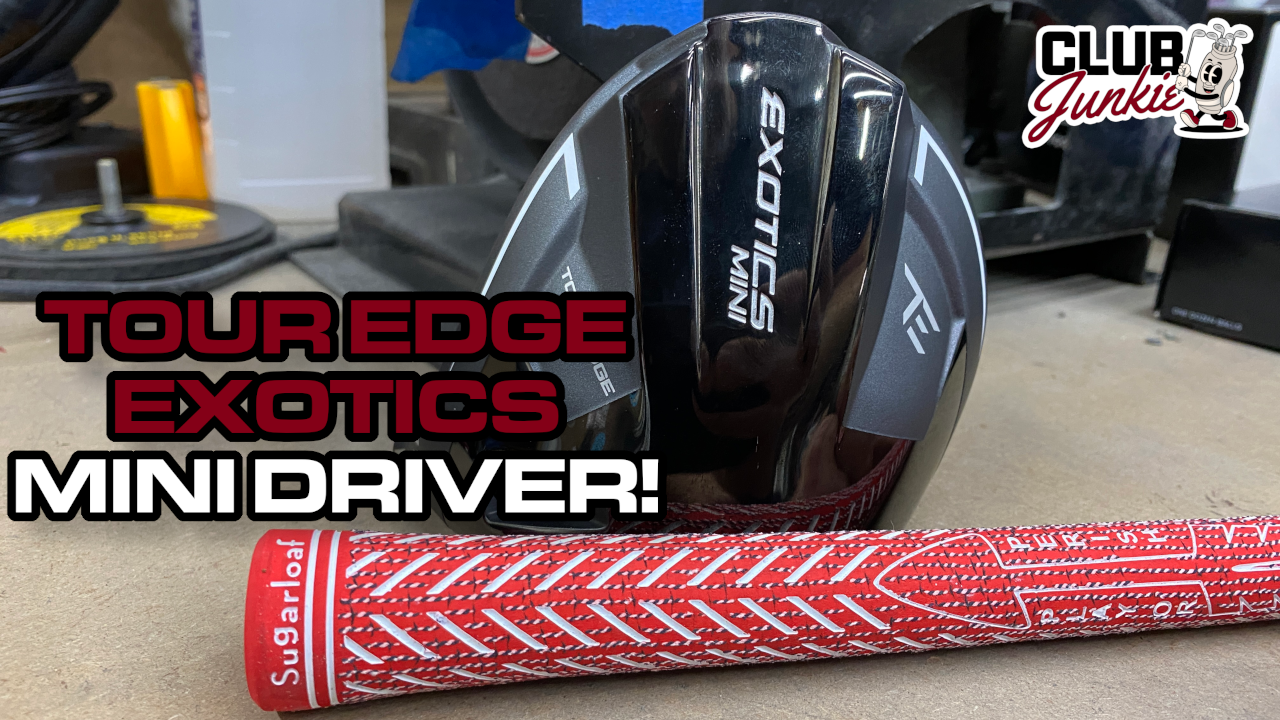
On this episode of Club Junkie, I put the new Tour Edge Exotics Mini Driver to the test and break down the performance, forgiveness, distance, and where it fits compared to a traditional driver or strong fairway wood. If you have been curious about adding a mini driver to the bag, this one is worth a look.
I also dive into the new TaylorMade Spider ZT Max putter that was recently spotted and discuss the growing zero torque putter trend. Plus, there is a closer look at the new Project X Titan Yellow shaft showing up on the PGA Tour and what makes it different from other profiles currently out there.
Opinion & Analysis
AVL: We’re talking about practice! My best tips for taking your game to the course

With the beginning of June on the horizon and courses rounding into peak condition for the season, it’s time to hone the finer skills that often get rusty over the winter. More sunlight also means more time to get out on the course and work on your game.
Whether it’s the practice green or the driving range, there’s always something to improve—whether you’re enjoying the fresh air or preparing for a weekend game or tournament. You can work on drills or freestyle around the green, and friendly competition is a great way to sharpen your skills.
While there are endless ways to get better at golf, I’m going to focus on practicing around the green. Let’s take a look at a few things to keep in mind as we head into the summer months.
Drills
From the driving range to the practice green, it’s important to incorporate drills into your routine. Years ago, I spent a weekend working on my short game with James Sieckmann. He recommended doing drill work for 5–10 minutes, then returning to your main practice.
This way, you create a balance between structured drills and real-world scenarios, so you’re not confined to “perfect” situations. For example, hitting the same three-foot putt over and over is good for repetition, but after a while, it becomes less interactive for your brain.
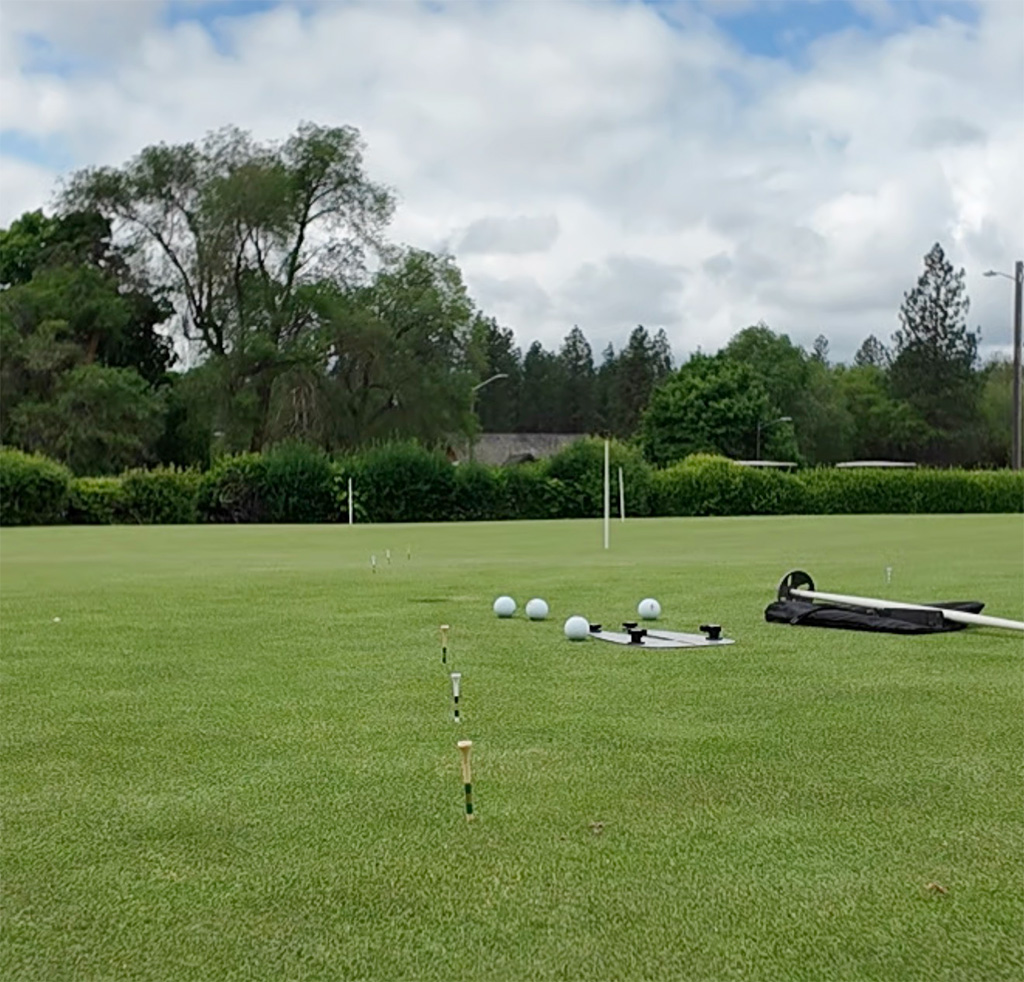
My approach is to use a putting trainer with a narrow gate for the ball to pass through, or simply place tees just outside the width of the ball. I’ll hit a series of four putts through the gate for three sets. Then, from a similar distance, I’ll hit four putts without the training aid and repeat that sequence three times.
Next, I’ll hit a number of 15–25 foot putts in a random fashion, then circle back to repeat the short putt drills with and without the training aid.
This breaks up the rhythm of hitting short putts with the training aid. When you hit the same short putts over and over, it’s easy to get into a groove—which is great for the drill, but not reflective of actual course play. While finding a rhythm is fundamental for drills, I like to introduce variation with longer putts to keep things realistic.
Game Mode
Once you’ve established a foundation with drills, it’s time to simulate on-course scenarios. This is where a few practice games come in handy.
One that I’ve been enjoying lately involves putting 10- to 15-footers with two balls. If I make the putt, great! If I miss, I pull the missed ball back a putter length. Suddenly, that little tap-in becomes a nerve-wracking three-footer—at least at first. As you get better at this game, those three- and five-footers become much more comfortable and routine.
It may sound cliché, but each shot is just what it is—it’s how we react that makes the difference. I like this game because it blends the pressure of on-course putting with the consequence of leaving yourself a much longer putt than usual.
Another game I like is one I recently learned from Brad Faxon. Place three tees in a line at four different locations around the hole: one at 3 feet, one at 6 feet, and one at 8 feet. The 3- and 6-foot putts count as par, and the 8-footer is for birdie.
This game keeps you focused on scoring and helps you get into a competitive mindset. You can even think about this putting game while you’re on the course. I just started playing it, and last week I couldn’t get better than two under par.
Competition
Competition during practice is when drills and games come to life, and you start to see results. For me, nothing beats a putting contest with a friend or two. In the right setting, these contests can become talking points for the whole season.
Match play, a game of 21, or simply seeing who can make the most one-putts (with a small prize on the line) are all great ways to simulate real on-course pressure. Recently, I played in a putting contest where one competitor made back-to-back 30- and 50-foot putts. As they say, expect your opponent to make every putt—and he nearly did. That’s impressive, and it’s something you see on the course, too: you have to stay committed to your game plan, no matter what.
When it comes to practice, it’s important to blend feedback from recent rounds with the fundamentals you want to reinforce. Drills, games, and competition—from the driving range to the putting green—form the backbone of skills you’ll rely on during actual rounds.
Finding the right balance is something we’re all working on, one practice session at a time. With the beginning of June on the horizon and courses rounding into peak condition for the season, it’s time to hone the finer skills that often get rusty over the winter. More sunlight also means more time to get out on the course and work on your game. Whether it’s the practice green or the driving range, there’s always something to improve—whether you’re enjoying the fresh air or preparing for a weekend game or tournament. You can work on drills or freestyle around the green, and friendly competition is a great way to sharpen your skills. While there are endless ways to get better at golf, I’m going to focus on practicing around the green. Let’s take a look at a few things to keep in mind as we head into the summer months.
Drills
From the driving range to the practice green, it’s important to incorporate drills into your routine. Years ago, I spent a weekend working on my short game with James Sieckmann. He recommended doing drill work for 5–10 minutes, then returning to your main practice. This way, you create a balance between structured drills and real-world scenarios, so you’re not confined to “perfect” situations. For example, hitting the same three-foot putt over and over is good for repetition, but after a while, it becomes less interactive for your brain.
My approach is to use a putting trainer with a narrow gate for the ball to pass through, or simply place tees just outside the width of the ball. I’ll hit a series of four putts through the gate for three sets. Then, from a similar distance, I’ll hit four putts without the training aid and repeat that sequence three times. Next, I’ll hit a number of 15–25 foot putts in a random fashion, then circle back to repeat the short putt drills with and without the training aid.
This breaks up the rhythm of hitting short putts with the training aid. When you hit the same short putts over and over, it’s easy to get into a groove—which is great for the drill, but not reflective of actual course play. While finding a rhythm is fundamental for drills, I like to introduce variation with longer putts to keep things realistic.
Game Mode
Once you’ve established a foundation with drills, it’s time to simulate on-course scenarios. This is where a few practice games come in handy. One that I’ve been enjoying lately involves putting 10- to 15-footers with two balls. If I make the putt, great! If I miss, I pull the missed ball back a putter length.
Suddenly, that little tap-in becomes a nerve-wracking three-footer—at least at first. As you get better at this game, those three- and five-footers become much more comfortable and routine. It may sound cliché, but each shot is just what it is—it’s how we react that makes the difference. I like this game because it blends the pressure of on-course putting with the consequence of leaving yourself a much longer putt than usual.
Another game I like is one I recently learned from Brad Faxon. Place three tees in a line at four different locations around the hole: one at 3 feet, one at 6 feet, and one at 8 feet. The 3- and 6-foot putts count as par, and the 8-footer is for birdie.
This game keeps you focused on scoring and helps you get into a competitive mindset. You can even think about this putting game while you’re on the course. I just started playing it, and last week I couldn’t get better than two under par.
Competition
Competition during practice is when drills and games come to life, and you start to see results. For me, nothing beats a putting contest with a friend or two. In the right setting, these contests can become talking points for the whole season. Match play, a game of 21, or simply seeing who can make the most one-putts (with a small prize on the line) are all great ways to simulate real on-course pressure. Recently, I played in a putting contest where one competitor made back-to-back 30- and 50-foot putts. As they say, expect your opponent to make every putt—and he nearly did. That’s impressive, and it’s something you see on the course, too: you have to stay committed to your game plan, no matter what.
When it comes to practice, it’s important to blend feedback from recent rounds with the fundamentals you want to reinforce. Drills, games, and competition—from the driving range to the putting green—form the backbone of skills you’ll rely on during actual rounds. Finding the right balance is something we’re all working on, one practice session at a time.


For Korean golfers, we always look forward to the last of the kkot-saem-chu-I for the true start of a new golf season. The term refers to a cold snap, but literally translates as “winter being jealous of the flowers beginning to bloom, thus lashing out one final time before surrendering to spring”.
A rather poetic mouthful packed into a short expression.
Koreans can be like that. Understated, yet oddly expressive at the same time. And nowhere is this more true on the golf course and in our golf bags. In fact, I suspect many Korean golfers look forward to new apparel and accessory drops more than they do actual equipment launches each year.
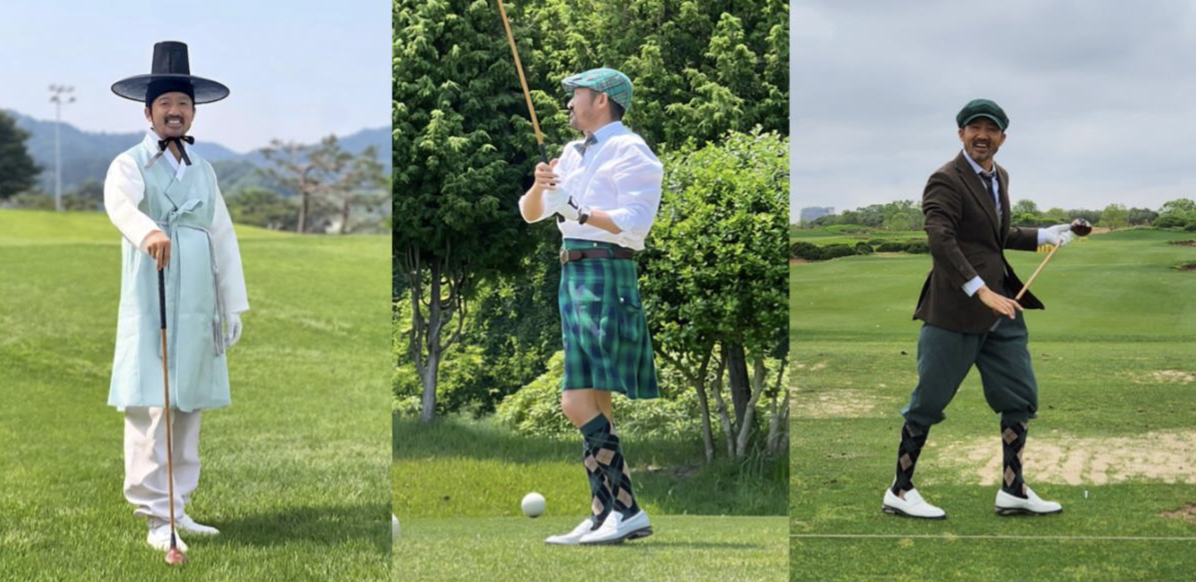
At this point, Korean golf fashion may exist on its own timeline. (courtesy of @seonbi_golfer)
There is ample evidence to support that suspicion. Korea is the world’s third-largest golf market behind the United States and Japan, yet its appetite for golf apparel exceeds that of both countries combined. Recent estimates suggest that Korea accounts for nearly 40 percent of the global golf apparel market, placing it among the world’s most influential golf fashion markets and punching well above its size.
Simply, we care deeply about how new golf clubs look and feel, but enjoy looking good while swinging them even more.
Golfers in the West may laugh and say that golf is played on a course, not a fashion runway. Perhaps. But what’s the harm in trying to look and feel good, if the added self-confidence can help actual performance? It certainly seems to have worked for Jason Day, who may have unlocked a new stats category: dormant strokes gained. Coincidence?

During the COVID-era, estimates placed the market near $9 billion, an astonishing figure for a single country.
As a proud member of Gen X, I’ve witnessed the highs and lows of golf fashion firsthand. The pleated trousers and wing-tipped shoes of Jack Nicklaus, the stylish plus-fours and knickers of Payne Stewart, the baggy black trousers and fitted mock-necks of Tiger Woods, and the thigh-hugging athletic tailoring of Rory McIlroy. Golf fashion, like the golf swing itself, has rarely stood still.
But nowhere have those trends shifted, evolved, and been scrutinized quite as relentlessly as in Korea. Here, golf fashion moves faster than fairway gossip, and consumers dissect brands with a level of discernment that can be both impressive and mildly terrifying. New brands are studied, judged, embraced, or dismissed with startling efficiency.
The result is a consumer base with one of the sharpest eyes for quality and authenticity anywhere in the world. It is difficult to quantify, but easy to recognize. Clean lines without trying too hard. Luxury mixed with utility. Trend awareness balanced by restraint and purpose.
It’s golf fashion shaped by one of the world’s most style-literate cities, something I like to call Seoul Sensibilities, referring to the taste level forged by a uniquely competitive environment.
And increasingly, global brands have noticed.

Many golf brands in Korea have their own flagship shops dedicated to apparel only
Titleist understood this years ago, when its apparel business in Korea took on a life of its own under new ownership and local direction. What had once been a straightforward extension of an iconic equipment giant became something sharper and more premium. By going all in on the serious Tour-player look (I couldn’t even fit into their XL sizes), Titleist struck the right chord with Korean consumers and helped its fledgling apparel business break into the mainstream. Titleist became a household name even for non-golfers who wore its caps, shirts, and windbreakers in daily life. In many ways, it proved that even heritage golf brands could carry real fashion credibility when viewed through a Korean lens.
Several years later, PXG took a page out of Titleist’s playbook and followed suit. Korean consumers helped transform the brand from one known largely for irons and loud commercials into something broader and more stylish. PXG apparel’s growth in Korea was explosive, where it found an early audience and turned the category into something more than mere logo merchandise. It is still hard to walk anywhere in Seoul without seeing its palindrome logo.
Malbon’s meteoric rise in the United States was genuine, but its ascent into a global golf lifestyle brand owes much to Korea, where it was elevated by a market already fluent in modern golf style. Korea did not simply embrace Malbon. It pressure-tested the concept, refined its appeal, and helped push it into the global spotlight.
As such, new brands may arrive from abroad, but more often than not, their sharpest evolution happens here. If a brand can earn credibility in Seoul, it’s deemed to have passed one of the toughest style audits in the game.
That is why the next meaningful chapter may not come from outside, but from a Korean brand moving in the opposite direction, carrying those Seoul Sensibilities outward as K-pop once did.

Play young Stay dope.
From Seoul, With Intent
Khalhon is a label that feels less like a trend-chasing newcomer and more like the product of a market that has already seen everything. Golfers here have long been surrounded by luxury logos, technical fabrics, and tour uniforms disguised as lifestyle wear and vice-versa. In other words, novelty alone rarely lasts here, and the Koreans seems to understand that instinctively.
Its style language leans into clean silhouettes, relaxed but tailored proportions, muted palettes, and premium materials that speak quietly but confidently. There is a modern city aesthetic running through it all, with strong layering pieces, thoughtful textures, and subtle branding that suggests sophistication rather than demanding attention.

“Built for the course. Designed beyond it.”
Most importantly, the garments seem designed to blur the line between golfwear and everyday style. Shirts, trousers, knitwear, and outer layers move comfortably between a game of screen golf, a lunch reservation, an airport gate, or an afternoon coffee in Gangnam with friends.
It raises the question of whether this is golfwear that happens to look good off the course, or everyday clothing that performs beautifully on the fairways.
Personally, I have long appreciated Nike Golf for its clean, athletic modernization of golf attire. It also has the useful side effect of making me look like a more serious golfer than I probably am. But off the course, there are times when being instantly identified as the golf guy in a crowd of non-golfers can feel a touch self-conscious.

“Built for the course. Designed beyond it.”
That is part of what drew me to Khalhon, which seemed to blend golf and everyday wear naturally. While some of the outfits may be slightly beyond my personal confidence level, the brand also offers tasteful options for older guys like me who still want to express a little personality without regretting the decision later.
These are not simply flashy outfits worn on the course and then banished to the closet until the next tee time. They work surprisingly well off the course too, and I suspect many of the pieces will still look right a couple of years from now, which would certainly be kinder to my wallet than most golf fashion trends tend to be.
And perhaps that broader lifestyle positioning also helps explain why someone like Sean Wotherspoon would find Khalhon creatively interesting in the first place.

“Built for the course. Designed beyond it.”
“Korea is not only one of the most fashion-forward golf markets in the world, but one of the most fashion-forward markets globally. Korea is ahead, and I love to watch and try to catch up.” – Sean Wotherspoon, Creative Director at Khalhon
Seoul and Beyond
If Khalhon’s rise says something about where Korean golf fashion is today, its relationship with Sean Wotherspoon says even more about where it is heading.
For readers less familiar with Sean Wotherspoon, his arrival at Khalhon is not some routine celebrity endorsement or influencer collaboration. In design and streetwear circles, Wotherspoon is regarded as one of the more influential creative voices of his generation, particularly when it comes to blending nostalgia, storytelling, and contemporary culture into products that people can connect with.
He first gained widespread attention through his now-famous Nike sneaker collaborations, where his vintage-inspired designs and instinct for color helped turn him into one of the defining artists of the late-2010s sneaker era. His work gradually expanded beyond footwear into apparel, automotive collaborations, collectibles, and broader lifestyle design.
Modern golf style now extends well beyond the fairways, where performance and functionality are largely expected by default. And while plenty of brands already make technically competent golfwear, Khalhon seems more focused on designing clothes people would genuinely want to wear even after the round ends.
And when guys at Wotherspoon’s level show genuine interest in working with a Korean golf brand as its new Creative Director, fashion circles tend to sit up and pay attention. There’s already a huge buzz among the fashion-conscious here about upcoming collabs with iconic sports stars and brands.

“My creative direction for Khalhon is disruptive, colorful, nostalgic, and modern. My goal is to blend these avenues seamlessly within each collection.” – Sean Wotherspoon
In chatting with Sean, what stood out most to me was how genuinely energized he sounded about the project itself. Despite having already worked across and countless other creative spaces, he described golf as a completely fresh category for him, saying that Khalhon “will be an amazing vehicle for my design work.”
At the same time, his enthusiasm seemed tied just as much to Korea itself. He spoke openly about admiring Korea’s fashion culture while repeatedly insisting he is still a terrible golfer.
There was something oddly refreshing about that humility. Rather than sounding like a celebrity parachuting into golf simply because the category suddenly became fashionable, Sean sounded genuinely curious about what Korea might do with the category next.
And perhaps that is what makes Khalhon feel interesting right now. The brand feels less like a trend-chaser and more like the natural result of a market now confident enough to export its own point of view.
For years, global brands came to Korea to sharpen their image against one of the most discerning audiences anywhere. Now, a Korean label appears ready to send those Seoul Sensibilities outward instead.
Which brings us back to kkot-saem-chu-i.
That final cold snap before spring always arrives with a reminder that seasons are changing, whether we notice it immediately or not. Golf fashion feels a little like that right now as well, as the old boundaries between sport, streetwear, luxury, and everyday style continue to soften.
And somewhere in Seoul, a Korean golf label already seems prepared for whatever season comes next. I just hope they have everything in my size.

Aaron Rai’s winning WITB: 2026 PGA Championship

Russell Henley’s winning WITB: 2026 Charles Schwab Challenge

Photos from the 2026 CJ Cup Byron Nelson

CJ Cup Byron Nelson Tour Report: Koepka and Kim’s newest putters finally get hot

Charles Schwab Challenge Tour Report: MacIntyre, Åberg and Spaun all switch putters, TaylorMade launches new Spider

Details on J.J. Spaun’s surprise putter switch

GolfWRX Launch Report: 2026 Titleist GTS drivers

Photos from the 2026 Charles Schwab Challenge

PGA Championship Tour Report: Fitzpatrick, Koepka among big-name putter switches for Aronimink

Photos from the ShopRite LPGA


Maria Torres WITB 2026 (June)
Driver: Ping G440 LST (9 degrees) Shaft: Accra TourZ Green 5-M4 3-wood: Ping G440 Max (15 degrees) Shaft: Accra TourZ Green 6-M4 5-wood: Ping G440...


Eric Cole WITB 2026 (June)
Driver: PXG Lightning Tour Max (9 degrees) Shaft: Project X Titan Yellow 70 TX 3-wood: TaylorMade Qi4D (15 degrees) Shaft:...


Si Woo Kim WITB 2026 (May)
Driver: Callaway Quantum Triple Diamond (8.5 degrees) Shaft: Fujikura Ventus Black 6 X Mini driver: Callaway Paradym Ai Smoke Mini...


Wyndham Clark’s winning WITB: 2026 CJ Cup Byron Nelson
Driver: TaylorMade Qi4D (10.5 degrees) Shaft: Project X Titan Yellow 60 TX 3-wood: TaylorMade Qi4D Tour (15 degrees) Shaft: Project...


Mojo
May 1, 2015 at 7:17 am
Excellent article but nothing will change. All the time the public are paying through the nose for equipment that the professionals are getting free, high green fees and a rule book with hundreds of items in it you will see a big decline in people playing golf. At our club we have a junior team and we can’t put out a full team of 7 – not enough junior players, and one junior girl member tells you there is something seriously wrong with the way golf is being run by people with their hands in the kitty. Instead of supplying professionals with everything they need, yes I have seen them coming out of the tour vans loaded down with equipment and shoes, let juniors play for nothing and give them some equipment.
Dave C.
May 1, 2015 at 6:12 am
The golf non profits are just like the regular non profits. Just looking for more money for its officers and key employees. I once interviewed for an accounting position for a huge national non profit. The local officer was making over 100K at the time, and was married to a successful attorney. When we discussed the salary of the open position, I was appalled to hear, they were looking for someone for $4-5 per hour. (This was thirty years ago.) The lady replied that they were looking for a community minded individual.
I left that place with a bad taste. Non profit corporation only means an exemption from federal income taxes, not really any interest in the public well being. Ask the 1 million dollar CEO about it. Like politicians, their job is to keep their jobs.
My opinion.
Golfgirlrobin
Apr 30, 2015 at 6:54 pm
Nobody has convinced me yet that anything needs to be done at all. Golf has always been a niche sport and only those who need to make a buck off of it need sustained growth. The Tiger boom was never going to last, and lots of professional business people failed to grasp that. Courses went up with little thought to sustainability, prices went up simply because they could, and the market was flooded with product. The closing of one of these courses is not a tragedy, TaylorMade having trouble selling one of their 397 new club offerings every year is not a tragedy. That the number of golfers reverts to its historical norm is not the end of the sport.
ComeOnSense
Apr 30, 2015 at 9:42 am
Greed is what’s killing our game, Greed destroys everything in society ,and sadly, Greed is now moving faster and more powerful than before. A person or Organization that’s is full of Greed is consider to be “successful” in society.
We can’t ignore that most of the people that left Golf came in because of Tiger Woods and a booming economy. And What the Golf club manufactures and Golf course builders did during that Boom?.They turn on their Greed switch, $400 for a driver and ,supposedly, upscale golf courses for $100. per rounds. But wait, I know why is that, it’s the #1 excuse for Greed mentality…. ‘Supply and Demand”.
Demand in High? let’s jack the price up. This is not only in Golf but everything in society. Have you noticed when the demand is low the price it’s not lower,but actually higher? Funny how prices wont go down, Greed wont let it come down.
Talking about “Jack’ the price up. Take 2 of our golf ambassadors , Jack & Arnie, who build golf courses. Do you see them building courses with green fees in the $30’s? Even now when Golf its hurting? Are they promoting the game of golf now that golf needs them the most? Omg, how there I say that of Jack & Arnie right?,but in my opinion, they are not helping by building these ” you cant afford fee” courses with Clubhouses so big ,that you can’t find the bathrooms even if you do a ‘google search”, Greed won’t let them ,or simple, they need more money…to be…successful…in golf and leave behind a.. Legacy… of HighEnd… HighPrice… GolfCourses…so when they passed away, they can leave Golf in the same place they found it when they first started playing …in the hands of those with Greed .
Excuse my honesty.
” the moment you go to far right or left, you will miss the truth” Me
Mad-Mex
Apr 30, 2015 at 12:22 am
Best article so far, by far, unfortunately like many CEO’s they don’t look at the bottom of the ladder, only at the bottom line. As long as the premium courses are full and still getting premium pay, they don’t care about the municipal course on which a break even day is a struggle.
Golf companies have no incentive to bring down the price when you have people buying $500 dollar shafts and even grips are quickly surpassing the $10 per grip barrier.
But there is plenty of blame to go around, for example:
The 36 handicapper playing from the tips while using ill fitting equipment only because he saw Joe Pro using.
The scratch player analyzing and describing EVERY single shot to his group
The beer per hole player driving around like a moron
And of course, the jam as many as I can so I can get a bigger cut Club Pro.
GolferC
Apr 30, 2015 at 12:21 am
It is an interesting article and while I agree with most of it, I disagree about the section on “The First Tee”. I think having a program to bring kids into the game is huge, especially in a world where kids are losing out on baseball because it is too slow. Aren’t they the future customers? The First Tee makes the game fun and engaging for kids. It is about impacting lives, not just touching them. “But what does golf have to do with that” Do you play golf? Seriously. As a golfer, there are many valuable lessons it can teach us, especially in the form of adversity and perseverance, something it seems most successful people manage pretty well. Golf is the vehicle for reaching all kids, to reinforce honesty, integrity, sportsmanship, and others that too many adults on the golf course and in life could benefit from using a few of those lessons. Kids just don’t show up to learn to swing a club. What I have seen with The First Tee is it has introduced the game to kids who may not have ever given it a try and have later ended up in the golf industry or has become an avid golfer. Our home course has benefitted from the revenue created from parents giving golf a try because their kids are in the program and so they have been buying green fees, range balls, and lessons on a regular basis. Yes, the organization had a little greedy start, but at least they have recognized the downside and have positively emphasized partnering with local courses/ practice facilities.
Mark
Apr 29, 2015 at 11:42 pm
I agree with everything that has been said but nobody ever seems to talks about the poor economic conditions of this country and unemployment, under employment or partime employment that so many have had to accept. Personally speaking, I belonged to a private club and played a lot of golf – and so did everyone else at the club. (by the way, golf took just as long to play then as it does now – it not like they extended an official round of golf to 25 holes). Everyone appeared to be doing well financially and enjoying life and playing golf. Then the firings, layoffs, downsizing, rightsizing, reorganizations or what ever bullshit name they’re calling it now. I had to resign from the club and quit golfing because my new job paid half of my previous one and I don’t have the flexibility or the time anymore. I’m not looking to cry the blues here I’m just saying there are more people like me and there’s nothing the “golf industry” people can do to change that.
Shallowface
Apr 29, 2015 at 9:45 pm
One thing that Golf 20/20 suggested that no one has tried is the idea of allowing “twosomes only” during certain times of day or as a means for struggling operators to do something to stand out from the crowd.
Most of the places and times I play twosomes dominate. But throw a foursome into the middle of the mix and everyone’s day is shot.
There is no question that the biggest waste of time in this game is having to watch THREE other people play. But the possibility that the PGA of America may be the most resistant to change of any organization in the history of American business means that it is highly unlikely such a simple but effective idea would ever be tried.
I keep hoping they will prove me wrong.
TR1PTIK
Apr 30, 2015 at 8:24 am
I’d even be okay with the foursomes so long as the course marshals would do something about the groups of 5 or 6! I still contend that one of the best ways to improve pace of play and save course operators some money is to provide some better education on etiquette – and perhaps the rules. My local muni doesn’t even outfit each cart with the necessary tools to fill in fairway divots – only on SOME of the tee boxes and no one uses it. I’m constantly fixing other people’s ball marks or having a good putt stop short because of one… There just needs to be more accountability at every level I guess. I mean, what would happen if golf courses actually started booting golfers that either disrupted pace of play or failed to take proper care of the course? None of it is that hard, but a lot of us here in America are just lazy and a touch ignorant (or arrogant – take your pick). We as a whole, just don’t seem to care enough to change what we’re doing and fix the problem.
Shallowface
Apr 30, 2015 at 6:20 pm
TR1PTIK, I hear ya, but I’ve been at this game for over 40 years. There have been attempts at educating people, but people have to want to be educated. I’ve seen it all, including etiquette posters hanging over the urinals. It’s just like fixing slow play on the Tour. All talk, no action.
All we hear is that the biggest cause of people not playing is how long it takes to play. So much of that time is spent watching other people play, and I have suggested the simplest of fixes. I have heard there are courses in the UK that don’t allow foursomes until after 10 AM. That’s a great place to start.
Now, if your course is booked solid with foursomes and everyone is happy (and there are still places like that, particularly in Florida), don’t change a thing. But if you are a struggling operator looking for an edge, try a Twosomes Only day one day a week and see what happens. What do you have to lose?
Shallowface
May 5, 2015 at 10:26 am
Taking this a step further, I’m sure you’re like me in that you get a lot of email special offers from courses trying to get your business. Virtually every one of these I’ve received recently have been “foursome specials.” Why can’t “the management” understand that between kids activities, work obligations and the modern day wife who really doesn’t understand why she has a problem with golf except she knows she’s supposed to because she saw it years ago on “Everybody Loves Raymond,” it has become nearly impossible to get four people to show up in the same place at the same time. Unless you have a list of ten or fifteen names to call, you’ve got a real problem.
The answers don’t lie in the past. Try a “Twosomes Only” day. If it doesn’t work, you’re out nothing.
Barry S.
Apr 29, 2015 at 9:20 pm
I suggest that all the Golf Industry Organizations be consolidated under the umbrella of the Bill, Hillary and Chelsea Clinton Foundation.
UA Golfer
Apr 29, 2015 at 6:54 pm
Money talks…follow the money
Golfer Steve
Apr 29, 2015 at 6:54 pm
The industry needs some changes.
GMatt
Apr 29, 2015 at 6:03 pm
Excellent article, as some have said “follow the money” that’s a gross understatement given the USGA, PGA Tour and their operations….. I say take away their tax exempt status and let them report true earnings, once they are accountable to someone then maybe transparency will enlighten all
michael
Apr 29, 2015 at 3:00 pm
Golf industry is like washington. Upper managements lips move and nothing comes out!
I quit playing golf. t v commentators and thats all golf commentators are more concerned
about being politically correct than telling the truth! tim fincham is a looser!!!!!!!!!!!!!!!!!!!
Lou
Apr 29, 2015 at 2:47 pm
This idea speaks a lot like the growing problem of the state of executive compensation that is sorely evident in business, sports, entertainment and politics. Extremely evident when we see the beggars with their collective hands in our pockets yet failing to connect with our desires. Ask around your golfing buddies how they really feel about the US Open being played on British open style courses. Fairly evident that a few Asian countries are creating a growth of the game for their future golf millionaires. A scattering of other countries have similar entries and now the PGA and & USGA are pushing Latin and South America into the fray. In my mind there is sincere doubt that this will help grow the game here in the US. We cannot maintain this past time as a spectator sport while losing the daily fee players and the daily fee players obviously do not like where the game is going.
other paul
Apr 29, 2015 at 2:24 pm
One of your better articles Ben. Good job.
Marc
Apr 29, 2015 at 9:49 pm
I agree. Well done Ben. That was very well done.
Scud
Apr 29, 2015 at 1:33 pm
I attended a few “Golf Summit” meetings in the late 80’s and early 90’s and they all had good intentions, but no strategy, no leadership, etc. And nothing has happened.
Greg V
Apr 29, 2015 at 1:21 pm
Golf is a great game if you are walking and playing with 10 or less clubs that you can carry easily. But that game started to go out of style in the 1930’s with 14-club sets. It further eroded in the 1960’s and 1970’s with the advent of the electric cart.
So, if most golf these days is played out of carts on courses that are too long to walk, it is not a beneficial game for exercise; recreation has turned into a social activity.
Why grow the game? The PGA Tour has grown magnificently as a wealth generator for professionals. The USGA has benefited handsomely from its new TV contract. Who is hurting? Course operators and golf equipment companies.
I would contend that golf course operators would benefit from a shorter ball, shorter course set-ups and game that is not so dependent upon high tech. Play would be faster, and easier from tee to green (but scores wouldn’t change much). But those very factors might hurt equipment sales. And, I suppose the PGA Tour benefits from pros who hit the ball over 300 yards. So there are major conflicts between the interests of each of these parties.
Who is supposed to preside over the conflict? The USGA. But I contend that they have been asleep at the switch for decades. That is not hard to fathom – their membership is largely derived of wealth members of private clubs, where golf exists in a tiny bubble that is just fine, thank you very much.
Until the membership composition is changed at the ruling body, the game is going to slip down the current path. And, I would argue that the current path is not healthy. But, largely, we are all victims of our desire to hit the ball longer and longer through technology, instead of improving our accuracy through practice.
IowaHacker
Apr 29, 2015 at 12:26 pm
Great article. I think a lot of the principals not only apply to the golf industry, but to a lot of companies. When your upper management is not held accountable and stays in the same stagnant ways, no progress happens. It doesn’t matter if your in the golf, equipment, clothing, etc industry, constant innovation and progression is what moves industries forward. And don’t get me started on executive salaries…..since when does making 100 times more than your middle management make sense both financially and practicality wise.