
Opinion & Analysis
Hot Metal: The Risks and Rewards of Custom Putter Design

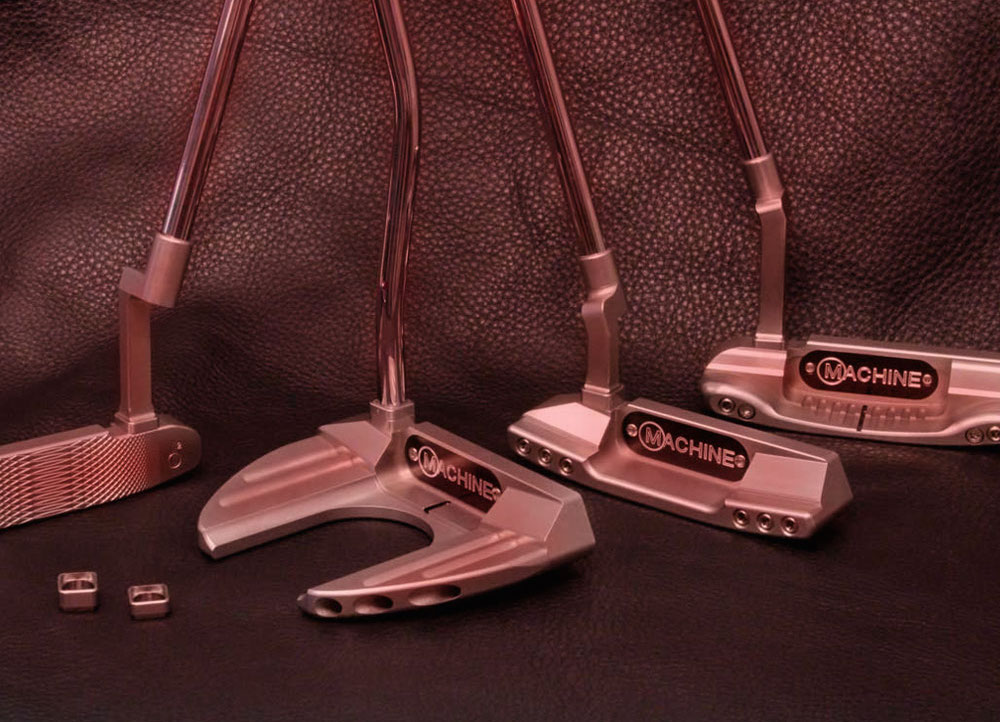
Let’s start off with a basic admission, a dirty little secret most golfers are unwilling to admit to. The putter you’re currently playing with day in and day out is no better or worse than any other.
Grab any putter, new or old, priced dirt cheap or sky-high and see if you can’t get the ball to drop into the bottom of the cup. Between reading the slope of the green, identifying the fault line, analyzing the grain of the grass, judging the pace and making a steady-handed stroke, the putting apparatus in your hands, while certainly not inconsequential to the result, is but a single factor that determines the number of strokes you take to hole out.
So imagine the kind of audacity I had arguing my point of view with Dave Billings, the President of Dogleg Right, better known as the inventor and designer of Machine Golf, one of the most highly respected boutique putter manufacturers in the industry. The conversation could’ve gone sideways in a hurry, but Billings let me off the hook; he’s got a Southern charm that makes you feel at ease. Plus, he’s been around long enough to have heard it all.
Billings has been tinkering with golf equipment since he was a teenager. The self-professed club junkie has been making significant contributions in putter design for the better part of two decades. His innovations have been awarded a dozen patents so far and his Machine putters have been coveted and purchased by die-hard enthusiasts at every conceivable level of the game. So while Billings didn’t agree with my claim that “any old putter will do,” he acknowledged that putters, more so than any other piece of equipment in golf, are judged primarily based on how they look and how they feel in the hands of a golfer standing over his or her ball.
“We’re finally seeing technologies that have come into play that allow us to get into more of the performance than in any time in the past,” says Billings. “It’s a little counterintuitive like a lot of things in golf. People say things like, ‘putting should be simple,’ or ‘I can putt with anything.’ But what we really know now is that a putter has a real impact on how you swing it. We see really remarkable results when we do it right — when we take the time to really get to know the golfer and figure out how to appeal to both the performance aspect and the visual aspect of their wants and needs.”
Machine Golf, while certainly not the only independent company specializing in custom milled putters, has perhaps more than anyone, come to embody the concept of made-to-order, or bespoke design. The company went into business in 1994 with very little seed money, a lot of big dreams and a successful product launch focused around an experimental putter that took the hands out of the equation.
“It started with something that was very innovative, something out of the box, namely the HOG putter,” says Billings. “The first ones were radical in their design. The head was oversized, almost as big as the MacGregor Response [ZT 615] was. The shaft and the grip were equally oversized. That innovative product looked like no other product, performed like no other product and got attention wherever we showed it. We started selling them very quickly in our first year, all around the world in fact.”
Machine putters, if you’re not familiar with them, are anything but run-of-the-mill. Imagine if someone had asked the surrealist painter H.R. Giger to submit a design, the end result might look like something that belongs in the Machine portfolio. A typical Machine putter is modular; the sheer number of customizable options is unmatched. Most Machine putters will incorporate at least some level of innovation, whether it’s adjustable weight and convertible flange technologies, unusual hosel and/or head designs, proprietary milling patterns and grip technologies. In some cases, the innovations lie exposed like a mechanical chassis, in other cases a more refined approach is used.

“We make a broad array of designs from the very classic-looking to those that can be described as being very technology-driven,” says Billings. “With one model we can say it’s more art because it’s Damascus (steel) and it’s a real traditional head. But when you look at the interchangeable flanges and weights, and the internal milling — that’s more about the science. I try to have a balance between those things and it’s a push and pull in different directions for different customers.”
Machine putters aren’t for everyone; perhaps that’s true of customizable putters in general. The sheer number of options that can be adjusted can be overwhelming to comprehend. What Billings, as well as other putter designers were able to impress upon me is that even the slightest change, say for instance the type of hosel used or its offset, can have significant impact on how a putter will swing. So while anything can be used for the purposes of putting, not every putter (certainly not the kind that are randomly chosen off the rack) are a good match for their respective owners, says Billings.
“There’s a lot of pride in being able to buy something that’s handmade as opposed to mass-produced,” he adds. “I think there’s a big draw for that, especially when [a golfer] can become part creator and contribute to what at the very least is a customized product.”
What I’ve come to recognize about the custom milled putter business from speaking to Billings is that it’s a fellowship of gear heads who risk everything in a pursuit to transform metal into art.
“For anyone who goes into the boutique putter business,” says Billings, “it’s a labor of love. You have to put in the hours, the blood, sweat and tears. There’s not necessarily a pot of gold at the end of the rainbow.”
The kind of hand-crafted putter design that Billings and his contemporaries are engaged in is a fringe business within the putter market, which in itself vies for a tiny fraction of the total dollars spent every year on golf equipment.
So how big, or rather, how small is the pie?
- The two largest golf markets in the world, the United States and Japan, netted a combined $8.8 billion in equipment and apparel sales in 2013 according to a World Golf Market Report released jointly by Golf Datatech and Yano Research Institute.
- Out of the total cited above, only 3.3 percent came from putter sales in the U.S. ($173 million) and 2.6 percent in Japan ($98 million) respectfully.
- If that isn’t sobering enough, putter sales declined by 8 percent in the U.S. in 2013 and 18 percent in Japan. That’s no hiccup. Since 1997, unit sales of putters at big box stores and green grass shops have declined by nearly 42 percent.
Market conditions would appear to suggest that the custom-milled putter is an endangered species. But that hasn’t stopped craftsmen like Machine, Bettinardi, Byron Morgan, Edel and Bobby Grace from competing with the larger OEMs, many of which are producing less expensive cast molded putters.
Joining them within the last few years are a vast number of independent designers; companies such as Low Tide, Piretti, Nead, Bellum Winmore, Carnahan, Carbon, Buzelli and BPutters.
So what convinces these golf enthusiasts to sacrifice time, money and occasionally their common sense to pursue an expensive hobby with no guarantees of success? I looked to Italy for the answers.
Born For The Big Shot
It takes a certain leap of faith to order a putter over the Internet, from a designer overseas, someone just getting started in the golf industry. Sure, I had seen some sample photos online and I had a few terse conversations (over email) with the owner of BPutters, Antonio Biagioli. My hopes were high. Luckily, the model that arrived from Cesena, a town near the eastern coast of Italy and a two-hour drive from Florence, was a real beauty; or as they in Italian, molto bella.
My model, coined the Coyote by Biagioli, was almost too delicate to wield. That is to say, I didn’t want to leave a smudge on the reflective black pearl finish or wrap my hands clumsily around the refined leather pistol grip with raised stitching running across the spine. Biagioli designed the putter to closely match the specs of my Scotty Cameron Del Mar. Four degrees of loft, 34 inches in length and 350 grams of weight in the head. For what it’s worth, the Coyote felt much heavier. Something about it was quintessentially Italian; perhaps it was the clean lines, the feminine-like curves or simply the handcrafted feel.
Italy, as you might imagine, doesn’t have a strong golfing tradition. Biagioli estimates that there might be 80,000 golfers in his country, a number that is actually contracting. Like many Italians, Biagioli grew up playing football and knew nothing about the game until he was dragged to a golf course in Ireland on a business trip almost 20 years ago. He fell in love with golf immediately but his subsequent adventure as a putter designer took a long time to plan and execute.
Biagioli has been working in the automotive industry for most of his life, primarily as an executive manager where he coordinates between suppliers and producers — a boring job as he chooses to put it. Boring though it may have been, the job gave Biagioli a chance to study engineering first hand.
“I started to work closely with the engineers and see the production happen on a daily basis,” says Biagioli. “We work on transmissions and power steering, both hydraulic and mechanical, so we have a lot of work with metals. From that I started to take little pieces at a time and began learning about how suppliers finish metals, how they actually mill metal. It became kind of a second job for me.”
While continuing to work in the automotive industry, Biagioli launched BPutters about year and half ago, combining his love of art, engineering and of course golf.
“I’ve always been intrigued by putters because of the intimacy of their use,” says Biagioli. “I’ve always felt that putters are something so personal compared to a driver or an iron that you carry in your bag.”
He came out with four models initially. One of them, the Hammer, looks like a traditional blade-style putter, the others are adaptations of a mallet design. To come up with these designs, Biagioli says he began sketching on paper.
“I go through at least three or four phases before I can prototype a 3D model of the putter,” he says. “I use a very simple 3D printer to get an initial perspective of the putter itself. It’s a plastic model that ends up becoming a steel prototype.
“That is probably the longest process because you have to program a CNC machine,” he adds. “It’s not that easy and I do have a professional CNC programmer working with me on this project. Once we have a prototype, we test it many times. We make adjustments to the weight distribution, adjust the shape and try to decide which finish can be applied to that model. It’s another three weeks just to test finishes. If we’re talking about carbon steel, it takes more than a month.”

Aside from his role in designing putters and managing the production line, Biagioli spends his remaining time promoting his brand. If you think it’s difficult for an American putter craftsman to breakthrough in the U.S., try doing it from a far-flung town in Italy. Undaunted, Biagioli has learned how to leverage social media. Many of his posts are tagged with his signature motto — born for the big shot. They feature plenty of product shots of course, but Biagioli has also posted many candid shots of himself, his home in Italy and has made some genuine friendships with golfers over the Internet.
His social media strategy (if you want to call it that) complements the sincere approach he takes to running his small business.
“I don’t want to sell putters in bulk,” Biagioli says. “I just want to sell the right putter to the right person. To establish that sort of a relationship with a customer — I see it as a privilege.”
It’s unclear whether BPutters will have the staying power to succeed. Biagioli tells me that the response from the golf community has been overwhelmingly positive so far. He’s made some in-roads selling to the Asian and Western European markets. Orders from America have also starting trickling in.
“I still have a lot of things to learn,” says Biagioli. “But at the same time I very much enjoy it. Otherwise it would be absolutely impossible for me to do both my job and what will hopefully become my full time activity in the future. I know the entire golf industry is not doing well over the last few years. But I’m taking this as an opportunity to do something that I feel is really important.”
The Scotty Cameron Effect
Unfortunately I can’t take credit for the phrase. That distinction belongs to Golf Digest Equipment Editor, Mike Stachura, who used it to describe how a single putter designer was both able to hold significant market share, while enabling other designers to raise their prices exponentially to keep up in a sort of arms race.
First and foremost, Scotty Cameron deserves his due — he makes fine putters. But it would be hard to deny, even for a casual observer, that Cameron benefited greatly from the many relationships he’s had with PGA Tour superstars over the years, including Tiger Woods who used a Newport 2 prototype for most of his career. Concerning the price of his putters, even Cameron at one time admitted to Golf Digest, “The price points on my putters are relatively high, but you aren’t just buying performance. You’re buying confidence. It’s human nature to have greater faith in something you’ve paid a premium for.”

Tim Shaughnessy, co-owner of Bellum Winmore, a tiny start-up that launched only a year ago, says “Certain manufacturers have pushed that increase. Scotty Cameron has a kind of rockstar status. And at some level Bettinardi has kind of the same thing. I think the more press individual manufacturers receive and as their status increases, it ends up driving the overall cost in the market for putters.”
Shaughnessy and his partner Zac Nicholls, who live on opposite ends of the coast and are lifelong friends and golfers, went into business together with a simple idea: release a quality milled putter at a price everyone can afford.
“We tried not to be in the same realm as say a Byron Morgan who is doing a lot of stamping, Damascus and exotic stuff,” says Shaughnessy. “We weren’t going to be able to compete if we were out there for $350. We don’t have the brand recognition.”
Shaughnessy’s company focuses on three basic things: design, material and process. All Bellum Winmore putters are precision milled from a single block of 303 stainless steel and then bead blasted to a matte finish. There isn’t much variance from model to model, but Bellum Winmore does provide limited finish options, and a wide range of grip weights (10 grams to 100 grams), offering what Shaughnessy feels are the most custom back weighted options of any company out there.

“Our overhead is negligible — almost nothing,” says Shaughnessy, when asked about keeping his price points so low. “I handle everything from a design standpoint to the assemblies, the painting, customer service and anything else from New York. Zac focuses on machining and prototyping [in California] and we have an overseas facility that does the production.”
The one common denominator for companies like Bellum Winmore and BPutters is the Internet. While I’m not suggesting that the Web, more specifically social media, has allowed individual putter designers to take on Scotty Cameron and companies of that size directly, it has at least allowed them to co-exist in the industry. Billings, who launched Machine Golf back when dial-up was considered high-tech, believes that entering the marketplace is easier now, but it’s far from a cakewalk.
“The Internet has definitely lowered the barrier,” says Billings. “You don’t have to have sales reps to take your putters to the local golf shops. On the other hand, most people still want to look, feel and try before they buy. So making that switch from over the Internet to traditional retail is a bigger barrier now because there are less golf shops that want to pioneer a new brand.
“Twenty years ago you had great guys like Edwin Watts who always liked to bring in something new and put it in their catalog or over the Internet before any of the smaller companies even knew how to make a good website,” he continues. “We had great guys like that who would get your brand distributed across the country or even around the world. You don’t see much of that anymore; the big companies just don’t want to gamble on smaller brands for a lot of the obvious reasons. It’s kind of sad that it’s gone away because it can be a great shot in the arm for a small company to be able to partner with them and receive a lot of exposure.”
The one thing everyone I spoke to tended to agree upon is that differentiation is the key to survival when operating in a niche market. If your product fails to connect with a core audience, you won’t be in business for very long. And when it comes to golf equipment, putting attracts the most diverse, passionate and opinionated connoisseurs in all of golf.
“On one end of the spectrum, you’ve got the guy who’s so proud to have found a putter out of a barrel that he paid five bucks for and makes everything with it,” says Billings. “On the other end you have someone like Arnold Palmer who’s had 5,000 putters. Let’s just say it — it’s a chase for the next magical wand. It’s part of the fun and adventure of getting a new club and discovering what it might mean to your game.”


Club Junkie
Tour Edge Exotics mini driver review + TaylorMade Spider ZT Max first look – Club Junkie

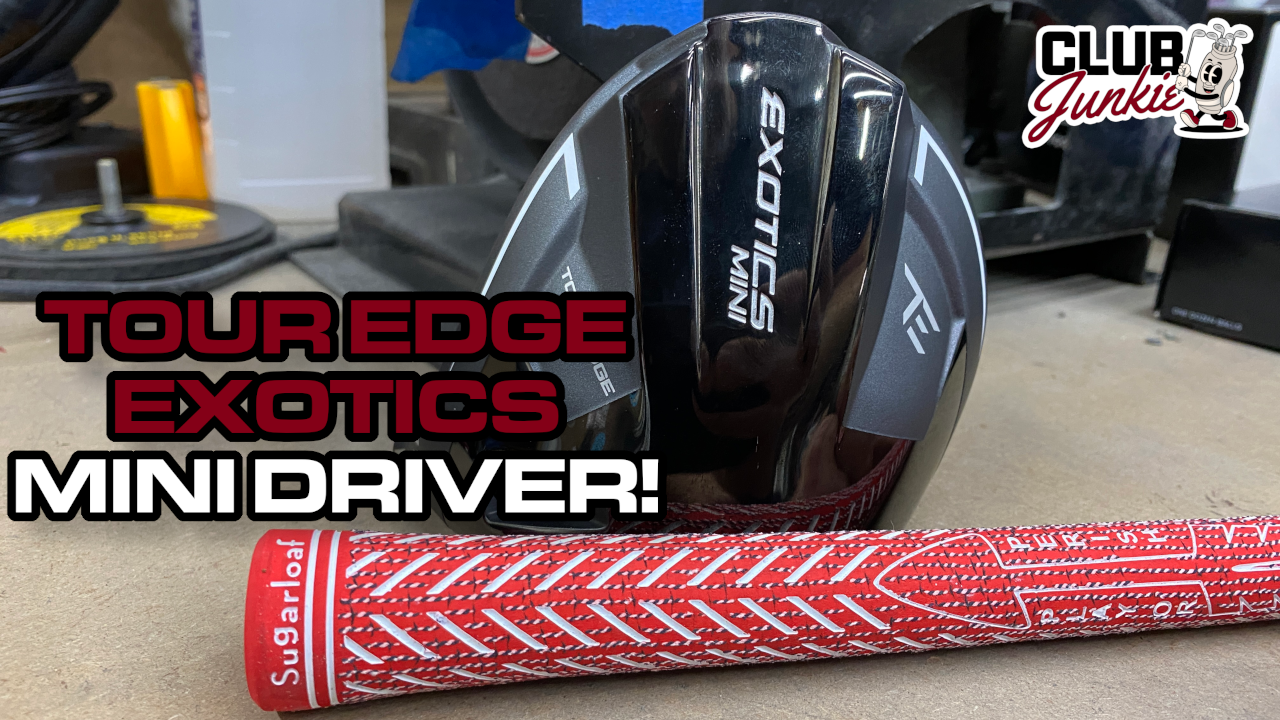
On this episode of Club Junkie, I put the new Tour Edge Exotics Mini Driver to the test and break down the performance, forgiveness, distance, and where it fits compared to a traditional driver or strong fairway wood. If you have been curious about adding a mini driver to the bag, this one is worth a look.
I also dive into the new TaylorMade Spider ZT Max putter that was recently spotted and discuss the growing zero torque putter trend. Plus, there is a closer look at the new Project X Titan Yellow shaft showing up on the PGA Tour and what makes it different from other profiles currently out there.
Opinion & Analysis
AVL: We’re talking about practice! My best tips for taking your game to the course

With the beginning of June on the horizon and courses rounding into peak condition for the season, it’s time to hone the finer skills that often get rusty over the winter. More sunlight also means more time to get out on the course and work on your game.
Whether it’s the practice green or the driving range, there’s always something to improve—whether you’re enjoying the fresh air or preparing for a weekend game or tournament. You can work on drills or freestyle around the green, and friendly competition is a great way to sharpen your skills.
While there are endless ways to get better at golf, I’m going to focus on practicing around the green. Let’s take a look at a few things to keep in mind as we head into the summer months.
Drills
From the driving range to the practice green, it’s important to incorporate drills into your routine. Years ago, I spent a weekend working on my short game with James Sieckmann. He recommended doing drill work for 5–10 minutes, then returning to your main practice.
This way, you create a balance between structured drills and real-world scenarios, so you’re not confined to “perfect” situations. For example, hitting the same three-foot putt over and over is good for repetition, but after a while, it becomes less interactive for your brain.
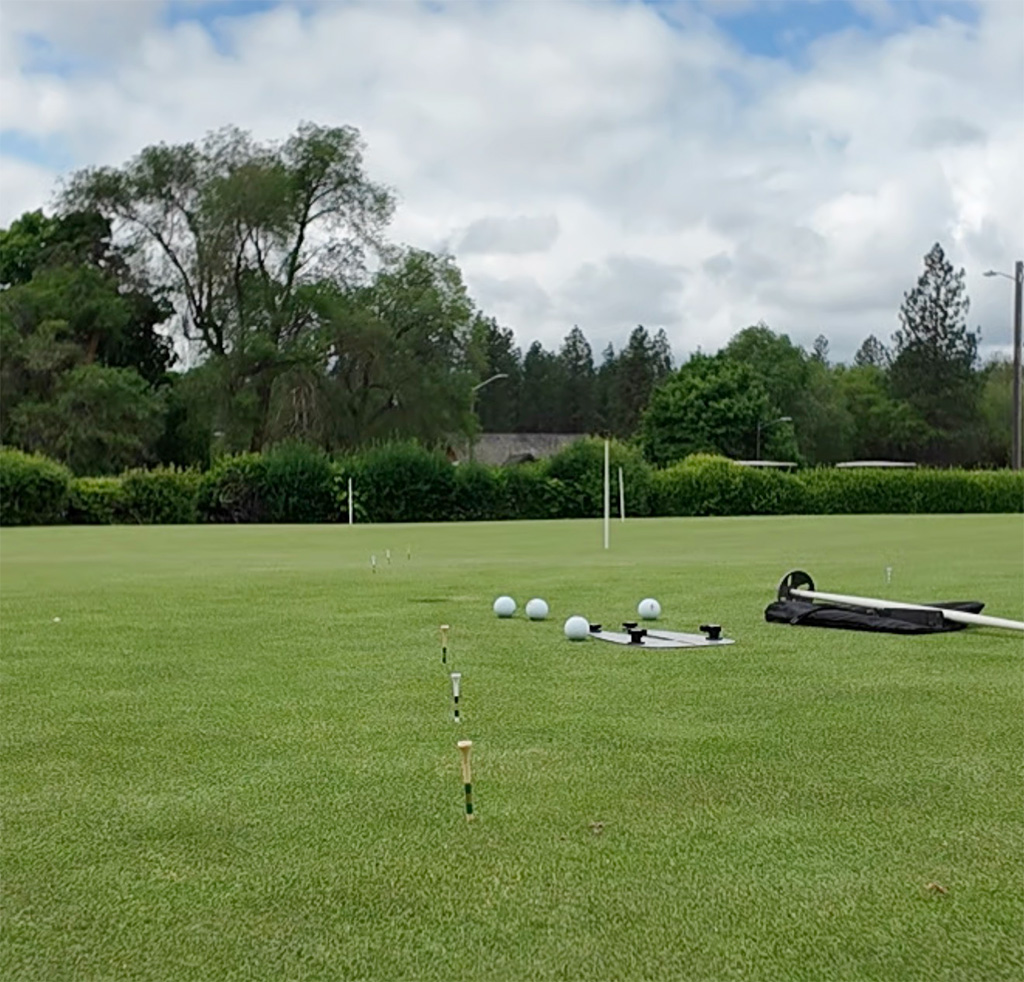
My approach is to use a putting trainer with a narrow gate for the ball to pass through, or simply place tees just outside the width of the ball. I’ll hit a series of four putts through the gate for three sets. Then, from a similar distance, I’ll hit four putts without the training aid and repeat that sequence three times.
Next, I’ll hit a number of 15–25 foot putts in a random fashion, then circle back to repeat the short putt drills with and without the training aid.
This breaks up the rhythm of hitting short putts with the training aid. When you hit the same short putts over and over, it’s easy to get into a groove—which is great for the drill, but not reflective of actual course play. While finding a rhythm is fundamental for drills, I like to introduce variation with longer putts to keep things realistic.
Game Mode
Once you’ve established a foundation with drills, it’s time to simulate on-course scenarios. This is where a few practice games come in handy.
One that I’ve been enjoying lately involves putting 10- to 15-footers with two balls. If I make the putt, great! If I miss, I pull the missed ball back a putter length. Suddenly, that little tap-in becomes a nerve-wracking three-footer—at least at first. As you get better at this game, those three- and five-footers become much more comfortable and routine.
It may sound cliché, but each shot is just what it is—it’s how we react that makes the difference. I like this game because it blends the pressure of on-course putting with the consequence of leaving yourself a much longer putt than usual.
Another game I like is one I recently learned from Brad Faxon. Place three tees in a line at four different locations around the hole: one at 3 feet, one at 6 feet, and one at 8 feet. The 3- and 6-foot putts count as par, and the 8-footer is for birdie.
This game keeps you focused on scoring and helps you get into a competitive mindset. You can even think about this putting game while you’re on the course. I just started playing it, and last week I couldn’t get better than two under par.
Competition
Competition during practice is when drills and games come to life, and you start to see results. For me, nothing beats a putting contest with a friend or two. In the right setting, these contests can become talking points for the whole season.
Match play, a game of 21, or simply seeing who can make the most one-putts (with a small prize on the line) are all great ways to simulate real on-course pressure. Recently, I played in a putting contest where one competitor made back-to-back 30- and 50-foot putts. As they say, expect your opponent to make every putt—and he nearly did. That’s impressive, and it’s something you see on the course, too: you have to stay committed to your game plan, no matter what.
When it comes to practice, it’s important to blend feedback from recent rounds with the fundamentals you want to reinforce. Drills, games, and competition—from the driving range to the putting green—form the backbone of skills you’ll rely on during actual rounds.
Finding the right balance is something we’re all working on, one practice session at a time. With the beginning of June on the horizon and courses rounding into peak condition for the season, it’s time to hone the finer skills that often get rusty over the winter. More sunlight also means more time to get out on the course and work on your game. Whether it’s the practice green or the driving range, there’s always something to improve—whether you’re enjoying the fresh air or preparing for a weekend game or tournament. You can work on drills or freestyle around the green, and friendly competition is a great way to sharpen your skills. While there are endless ways to get better at golf, I’m going to focus on practicing around the green. Let’s take a look at a few things to keep in mind as we head into the summer months.
Drills
From the driving range to the practice green, it’s important to incorporate drills into your routine. Years ago, I spent a weekend working on my short game with James Sieckmann. He recommended doing drill work for 5–10 minutes, then returning to your main practice. This way, you create a balance between structured drills and real-world scenarios, so you’re not confined to “perfect” situations. For example, hitting the same three-foot putt over and over is good for repetition, but after a while, it becomes less interactive for your brain.
My approach is to use a putting trainer with a narrow gate for the ball to pass through, or simply place tees just outside the width of the ball. I’ll hit a series of four putts through the gate for three sets. Then, from a similar distance, I’ll hit four putts without the training aid and repeat that sequence three times. Next, I’ll hit a number of 15–25 foot putts in a random fashion, then circle back to repeat the short putt drills with and without the training aid.
This breaks up the rhythm of hitting short putts with the training aid. When you hit the same short putts over and over, it’s easy to get into a groove—which is great for the drill, but not reflective of actual course play. While finding a rhythm is fundamental for drills, I like to introduce variation with longer putts to keep things realistic.
Game Mode
Once you’ve established a foundation with drills, it’s time to simulate on-course scenarios. This is where a few practice games come in handy. One that I’ve been enjoying lately involves putting 10- to 15-footers with two balls. If I make the putt, great! If I miss, I pull the missed ball back a putter length.
Suddenly, that little tap-in becomes a nerve-wracking three-footer—at least at first. As you get better at this game, those three- and five-footers become much more comfortable and routine. It may sound cliché, but each shot is just what it is—it’s how we react that makes the difference. I like this game because it blends the pressure of on-course putting with the consequence of leaving yourself a much longer putt than usual.
Another game I like is one I recently learned from Brad Faxon. Place three tees in a line at four different locations around the hole: one at 3 feet, one at 6 feet, and one at 8 feet. The 3- and 6-foot putts count as par, and the 8-footer is for birdie.
This game keeps you focused on scoring and helps you get into a competitive mindset. You can even think about this putting game while you’re on the course. I just started playing it, and last week I couldn’t get better than two under par.
Competition
Competition during practice is when drills and games come to life, and you start to see results. For me, nothing beats a putting contest with a friend or two. In the right setting, these contests can become talking points for the whole season. Match play, a game of 21, or simply seeing who can make the most one-putts (with a small prize on the line) are all great ways to simulate real on-course pressure. Recently, I played in a putting contest where one competitor made back-to-back 30- and 50-foot putts. As they say, expect your opponent to make every putt—and he nearly did. That’s impressive, and it’s something you see on the course, too: you have to stay committed to your game plan, no matter what.
When it comes to practice, it’s important to blend feedback from recent rounds with the fundamentals you want to reinforce. Drills, games, and competition—from the driving range to the putting green—form the backbone of skills you’ll rely on during actual rounds. Finding the right balance is something we’re all working on, one practice session at a time.


For Korean golfers, we always look forward to the last of the kkot-saem-chu-I for the true start of a new golf season. The term refers to a cold snap, but literally translates as “winter being jealous of the flowers beginning to bloom, thus lashing out one final time before surrendering to spring”.
A rather poetic mouthful packed into a short expression.
Koreans can be like that. Understated, yet oddly expressive at the same time. And nowhere is this more true on the golf course and in our golf bags. In fact, I suspect many Korean golfers look forward to new apparel and accessory drops more than they do actual equipment launches each year.

At this point, Korean golf fashion may exist on its own timeline. (courtesy of @seonbi_golfer)
There is ample evidence to support that suspicion. Korea is the world’s third-largest golf market behind the United States and Japan, yet its appetite for golf apparel exceeds that of both countries combined. Recent estimates suggest that Korea accounts for nearly 40 percent of the global golf apparel market, placing it among the world’s most influential golf fashion markets and punching well above its size.
Simply, we care deeply about how new golf clubs look and feel, but enjoy looking good while swinging them even more.
Golfers in the West may laugh and say that golf is played on a course, not a fashion runway. Perhaps. But what’s the harm in trying to look and feel good, if the added self-confidence can help actual performance? It certainly seems to have worked for Jason Day, who may have unlocked a new stats category: dormant strokes gained. Coincidence?

During the COVID-era, estimates placed the market near $9 billion, an astonishing figure for a single country.
As a proud member of Gen X, I’ve witnessed the highs and lows of golf fashion firsthand. The pleated trousers and wing-tipped shoes of Jack Nicklaus, the stylish plus-fours and knickers of Payne Stewart, the baggy black trousers and fitted mock-necks of Tiger Woods, and the thigh-hugging athletic tailoring of Rory McIlroy. Golf fashion, like the golf swing itself, has rarely stood still.
But nowhere have those trends shifted, evolved, and been scrutinized quite as relentlessly as in Korea. Here, golf fashion moves faster than fairway gossip, and consumers dissect brands with a level of discernment that can be both impressive and mildly terrifying. New brands are studied, judged, embraced, or dismissed with startling efficiency.
The result is a consumer base with one of the sharpest eyes for quality and authenticity anywhere in the world. It is difficult to quantify, but easy to recognize. Clean lines without trying too hard. Luxury mixed with utility. Trend awareness balanced by restraint and purpose.
It’s golf fashion shaped by one of the world’s most style-literate cities, something I like to call Seoul Sensibilities, referring to the taste level forged by a uniquely competitive environment.
And increasingly, global brands have noticed.

Many golf brands in Korea have their own flagship shops dedicated to apparel only
Titleist understood this years ago, when its apparel business in Korea took on a life of its own under new ownership and local direction. What had once been a straightforward extension of an iconic equipment giant became something sharper and more premium. By going all in on the serious Tour-player look (I couldn’t even fit into their XL sizes), Titleist struck the right chord with Korean consumers and helped its fledgling apparel business break into the mainstream. Titleist became a household name even for non-golfers who wore its caps, shirts, and windbreakers in daily life. In many ways, it proved that even heritage golf brands could carry real fashion credibility when viewed through a Korean lens.
Several years later, PXG took a page out of Titleist’s playbook and followed suit. Korean consumers helped transform the brand from one known largely for irons and loud commercials into something broader and more stylish. PXG apparel’s growth in Korea was explosive, where it found an early audience and turned the category into something more than mere logo merchandise. It is still hard to walk anywhere in Seoul without seeing its palindrome logo.
Malbon’s meteoric rise in the United States was genuine, but its ascent into a global golf lifestyle brand owes much to Korea, where it was elevated by a market already fluent in modern golf style. Korea did not simply embrace Malbon. It pressure-tested the concept, refined its appeal, and helped push it into the global spotlight.
As such, new brands may arrive from abroad, but more often than not, their sharpest evolution happens here. If a brand can earn credibility in Seoul, it’s deemed to have passed one of the toughest style audits in the game.
That is why the next meaningful chapter may not come from outside, but from a Korean brand moving in the opposite direction, carrying those Seoul Sensibilities outward as K-pop once did.

Play young Stay dope.
From Seoul, With Intent
Khalhon is a label that feels less like a trend-chasing newcomer and more like the product of a market that has already seen everything. Golfers here have long been surrounded by luxury logos, technical fabrics, and tour uniforms disguised as lifestyle wear and vice-versa. In other words, novelty alone rarely lasts here, and the Koreans seems to understand that instinctively.
Its style language leans into clean silhouettes, relaxed but tailored proportions, muted palettes, and premium materials that speak quietly but confidently. There is a modern city aesthetic running through it all, with strong layering pieces, thoughtful textures, and subtle branding that suggests sophistication rather than demanding attention.

“Built for the course. Designed beyond it.”
Most importantly, the garments seem designed to blur the line between golfwear and everyday style. Shirts, trousers, knitwear, and outer layers move comfortably between a game of screen golf, a lunch reservation, an airport gate, or an afternoon coffee in Gangnam with friends.
It raises the question of whether this is golfwear that happens to look good off the course, or everyday clothing that performs beautifully on the fairways.
Personally, I have long appreciated Nike Golf for its clean, athletic modernization of golf attire. It also has the useful side effect of making me look like a more serious golfer than I probably am. But off the course, there are times when being instantly identified as the golf guy in a crowd of non-golfers can feel a touch self-conscious.

“Built for the course. Designed beyond it.”
That is part of what drew me to Khalhon, which seemed to blend golf and everyday wear naturally. While some of the outfits may be slightly beyond my personal confidence level, the brand also offers tasteful options for older guys like me who still want to express a little personality without regretting the decision later.
These are not simply flashy outfits worn on the course and then banished to the closet until the next tee time. They work surprisingly well off the course too, and I suspect many of the pieces will still look right a couple of years from now, which would certainly be kinder to my wallet than most golf fashion trends tend to be.
And perhaps that broader lifestyle positioning also helps explain why someone like Sean Wotherspoon would find Khalhon creatively interesting in the first place.

“Built for the course. Designed beyond it.”
“Korea is not only one of the most fashion-forward golf markets in the world, but one of the most fashion-forward markets globally. Korea is ahead, and I love to watch and try to catch up.” – Sean Wotherspoon, Creative Director at Khalhon
Seoul and Beyond
If Khalhon’s rise says something about where Korean golf fashion is today, its relationship with Sean Wotherspoon says even more about where it is heading.
For readers less familiar with Sean Wotherspoon, his arrival at Khalhon is not some routine celebrity endorsement or influencer collaboration. In design and streetwear circles, Wotherspoon is regarded as one of the more influential creative voices of his generation, particularly when it comes to blending nostalgia, storytelling, and contemporary culture into products that people can connect with.
He first gained widespread attention through his now-famous Nike sneaker collaborations, where his vintage-inspired designs and instinct for color helped turn him into one of the defining artists of the late-2010s sneaker era. His work gradually expanded beyond footwear into apparel, automotive collaborations, collectibles, and broader lifestyle design.
Modern golf style now extends well beyond the fairways, where performance and functionality are largely expected by default. And while plenty of brands already make technically competent golfwear, Khalhon seems more focused on designing clothes people would genuinely want to wear even after the round ends.
And when guys at Wotherspoon’s level show genuine interest in working with a Korean golf brand as its new Creative Director, fashion circles tend to sit up and pay attention. There’s already a huge buzz among the fashion-conscious here about upcoming collabs with iconic sports stars and brands.

“My creative direction for Khalhon is disruptive, colorful, nostalgic, and modern. My goal is to blend these avenues seamlessly within each collection.” – Sean Wotherspoon
In chatting with Sean, what stood out most to me was how genuinely energized he sounded about the project itself. Despite having already worked across and countless other creative spaces, he described golf as a completely fresh category for him, saying that Khalhon “will be an amazing vehicle for my design work.”
At the same time, his enthusiasm seemed tied just as much to Korea itself. He spoke openly about admiring Korea’s fashion culture while repeatedly insisting he is still a terrible golfer.
There was something oddly refreshing about that humility. Rather than sounding like a celebrity parachuting into golf simply because the category suddenly became fashionable, Sean sounded genuinely curious about what Korea might do with the category next.
And perhaps that is what makes Khalhon feel interesting right now. The brand feels less like a trend-chaser and more like the natural result of a market now confident enough to export its own point of view.
For years, global brands came to Korea to sharpen their image against one of the most discerning audiences anywhere. Now, a Korean label appears ready to send those Seoul Sensibilities outward instead.
Which brings us back to kkot-saem-chu-i.
That final cold snap before spring always arrives with a reminder that seasons are changing, whether we notice it immediately or not. Golf fashion feels a little like that right now as well, as the old boundaries between sport, streetwear, luxury, and everyday style continue to soften.
And somewhere in Seoul, a Korean golf label already seems prepared for whatever season comes next. I just hope they have everything in my size.

Aaron Rai’s winning WITB: 2026 PGA Championship

Russell Henley’s winning WITB: 2026 Charles Schwab Challenge

Photos from the 2026 CJ Cup Byron Nelson

CJ Cup Byron Nelson Tour Report: Koepka and Kim’s newest putters finally get hot

Charles Schwab Challenge Tour Report: MacIntyre, Åberg and Spaun all switch putters, TaylorMade launches new Spider

Details on J.J. Spaun’s surprise putter switch

GolfWRX Launch Report: 2026 Titleist GTS drivers

Photos from the 2026 Charles Schwab Challenge

PGA Championship Tour Report: Fitzpatrick, Koepka among big-name putter switches for Aronimink

Photos from the ShopRite LPGA


Maria Torres WITB 2026 (June)
Driver: Ping G440 LST (9 degrees) Shaft: Accra TourZ Green 5-M4 3-wood: Ping G440 Max (15 degrees) Shaft: Accra TourZ Green 6-M4 5-wood: Ping G440...


Eric Cole WITB 2026 (June)
Driver: PXG Lightning Tour Max (9 degrees) Shaft: Project X Titan Yellow 70 TX 3-wood: TaylorMade Qi4D (15 degrees) Shaft:...


Si Woo Kim WITB 2026 (May)
Driver: Callaway Quantum Triple Diamond (8.5 degrees) Shaft: Fujikura Ventus Black 6 X Mini driver: Callaway Paradym Ai Smoke Mini...


Wyndham Clark’s winning WITB: 2026 CJ Cup Byron Nelson
Driver: TaylorMade Qi4D (10.5 degrees) Shaft: Project X Titan Yellow 60 TX 3-wood: TaylorMade Qi4D Tour (15 degrees) Shaft: Project...


Pingback: The Risks and Rewards of Putter Design | Rusty Cage | Writer and Golfer
Pingback: The Risks and Rewards of Custom Putter Design | Rusty Cage | Writer and Golfer
Preston
Jan 11, 2015 at 11:30 am
Excuse my ignorance, but couldn’t someone that has access to CAD and a milling machine make their own putter? Just dial up the design and feed it to the computer. It then runs the program.
Kyle
Jan 21, 2015 at 7:23 pm
Preston,
The short answer is: Yes, it is possible for someone with CAD and a CNC machine to be able to mill out their own putter.
*However* It is that it is much more complicated than you are probably imagining. You need to have expertise in CAD design, CNC programming, as well as machining in order to produce a retail-ready product. It is definitely much more difficult than just feeding your CAD model to your CNC machine to cut out for you.
Joey
Jan 9, 2015 at 11:14 pm
Sounds like he’s trying to talk out of it all the little guys, start-ups, dreamers that are popping up more and more now.
Lancebp
Jan 9, 2015 at 7:05 pm
I’d bet serious money that if every golfer were required to pick a putter the first week he starts playing and then prohibited under penalty of death from ever changing that putter again, 99.8% of golfers would now be better putters than they are. For that matter, require every golfer on the planet to use an original Ping Anser, and 99.8% would be better putters than they are.
dr bloor
Jan 9, 2015 at 3:54 pm
The putters are gorgeous and the ability to produce so many variations is impressive, but I’d be interested in reading more about how the fitting process for the respective companies is carried out without actually seeing the client putt. I don’t think you can actually call a putter “custom made” if the specs are dependent on something equivalent to static fitting for a driver or set of irons.
rymail00
Jan 9, 2015 at 2:24 pm
Good article Rusty Cage. It’s unfortunate that a few members always try to tear down just about every article that’s written. Usually the people that do try that usually really have no idea WTF they talking about.
JEFF
Jan 9, 2015 at 1:14 pm
The tool author was charmed by a man?
david
Jan 9, 2015 at 12:01 pm
PT Barnum: sucker born every minute! Most of the best putters were from yesteryear, (Ben Crenshaw, Jack, Bob Locke, Loren Roberts, Stockton; all using old technology and 10 dollar putters. Putting is after green reading, confidence. I laugh when people spend 300 bucks on a putter. Having said that, if that’s waht it takes for you to get confidence that lasts, then spend the 350, it’s worth it. My 5 dollar garage sale special is my friend and I’m an awesome putter.
DMR
Jan 9, 2015 at 4:24 pm
Cool story, bro. Clearly Rusty covered that not everyone needs a custom milled putter. I’m sure that even you would benefit from purchasing a new putter but I do envy you confidence in your putting game.
DaveT
Jan 9, 2015 at 11:46 am
“Identifying the fault line”?!? Do you expect an earthquake to affect your putt?
Rusty Cage
Jan 9, 2015 at 12:09 pm
More about the fault line:
http://golfclubatlas.com/forum/index.php?topic=16149.10;wap2
Hopefully you got something more out of the article than simply picking apart a single obscure reference that you don’t know much about.
DaveT
Jan 9, 2015 at 5:59 pm
Oh, I understand it just fine. I didn’t recognize the mistaken reference. In the link in your reply, DMoriarty gets it right. You meant “fall line”.
sgniwder99
Jan 9, 2015 at 8:21 pm
So…that would be a no, then.
Tom
Jan 9, 2015 at 10:36 am
I own a Bellum Winmore. The company really is awesome. One thing I really liked about them was how important it was to Tim to make sure that my putter was perfect for me and had what I wanted on it rather than it just be an off the rack kind of putter.
Jason
Jan 9, 2015 at 3:44 pm
I also have a Winmore and love it. Great people to deal with and Tim worked with me for 2 hrs finding the perfect fit for me. Great look, feel, and performance of anything out there.