
Tour News
PGA Tour rolls out new Strokes gained: Tee-to-green statistic


Today, the PGA Tour is officially rolling out a new statistical metric: strokes gained: tee-to-green. In addition, the Tour will tally a combined “strokes gained: total”, which is an aggregate of the strokes gained-putting figure and strokes gained: tee-to-green.
As Steve Evans, the Tour’s head of Information Systems and overseer of the ShotLink system told Luke Kerr-Dineen of Golf Digest, “This is the next step of our evolution…we’re trying to create new performance metrics that are more telling than some of the current statistics.”
A report from PGATour.com indicates Mark Broadie of Columbia University (the man behind strokes gained-putting) initially developed the stat. A group from the Massachusetts Institute of Technology, which was led by professor Steven Graves, further refined the metric.
Strokes gained: tee-to-green lumps together all non-putts and sets that number relative to a field average the same way that strokes gained-putting does with putts.
The Tour has unofficially been tabulating strokes gained: tee-to-green for part of the 2013-2014 season.
As John Paul Newport of The Wall Street Journal, wrote back in March:
“If you’re looking for one simple number to explain John Senden’s victory last week at the PGA Tour’s Valspar Championship, try 2.17. That was the Australian journeyman’s “strokes gained-tee to green” statistic for the week. It beat by more than two strokes his season-average strokes gained-tee to green stat of 0.04 of a stroke per round.”
How does strokes gained: tee-to-green give a better indication of quality play than, say, greens in regulation? Luke Kerr-Dineen highlighted a pitfall of that metric:
“If Adam Scott, for example, only plays in the toughest events — events where it’s harder to hit greens in regulation — his greens-hit percentage will likely be lower than someone who only plays in events where it’s easier to hit greens. That essentially masks the fact that Adam Scott is the superior ball-striker of the two.”
In other words, as our Rich Hunt would surely agree, the best data is that which is relative.
When a golfer wins a tournament, we expect him to have fared well in strokes gained: tee-to-green. For example, Rory McIlroy was 2.8 strokes better than the field, tee-to-green, in his WGC-Bridgestone Invitational victory.
However, the figure offers some truly interesting insights that go beyond pointing out the obvious fact that the guy who won the tournament played better than the rest of the field.
As the Tour relates,
“In the opening round of the The Players Championship this year, Roberto Castro shot a 63, which was nine shots better than the field average of 72.01 that day.
Of those nine shots, Castro was eight shots better than the field from tee to green. He hit 13 of 14 fairways, and 15 of 18 greens, and averaged a field-leading 21-feet, 6 inches to the pin on all approach shots. He hit seven approach shots inside 15 feet and averaged nearly 12 feet closer to the pin than the field average of 34 feet.
Castro’s performance from tee to green that day allowed him to become the first player in the ShotLink era (starting in 2004) to shoot 65 or better at TPC Sawgrass’ Stadium Course without making a putt from outside 10 feet.
To illustrate the value of the strokes gained: total figure, the Tour provides the following example:
“Tiger Woods and Phil Mickelson were paired together in the final round of the 2012 AT&T Pebble Beach National Pro-Am. Mickelson went on to shoot a final-round 64 while Woods finished 11 shots higher with a 3-over 75.
The largest difference between their rounds came on the greens. Mickelson outperformed the field by 4.6 strokes on the greens while Tiger lost 4.4 strokes. For the round, Mickelson was 9 strokes better than Woods on the greens. Meanwhile, from tee to green, Mickelson outperformed the field by +3.1 strokes while Tiger was at +1.1, a two-stroke difference between the two players.
Combine Mickelson’s nine-stroke advantage in putting with his two-stroke advantage from tee to green, and his 11-shot difference equals the difference between his score and Tiger’s score.”
Of course, all of the strokes gained metrics are evolving and none are without issues. As Steve Evans told John Paul Newport, there are a few issues related to strokes gained: tee-to-green Broadie and company are working to sort out. On such issue is short-sided shots from around the green. Obviously, a short-sided pitch or chip is more difficult than one where a player has a wealth of green to work with. Thus, that information needs to be factored in when evaluating the average proximity to the hole on a shot from inside 15 feet.
It may seem elementary, but the metric substantiates things about winning golf we already suspected to be true. As Newport wrote earlier this year based on the data from Senden’s win, “To win, a player can’t seriously misfire in any aspect of his game for the week, but there’s almost always one particular area where he shoots lights out.”
While the above doesn’t have quite the same ring to it as “drive for show, putt for dough,” it’s more indicative of what it really takes to win on the PGA Tour and is likely the tip of the data iceberg we’ll be privy to thanks to strokes gained: tee-to-green.


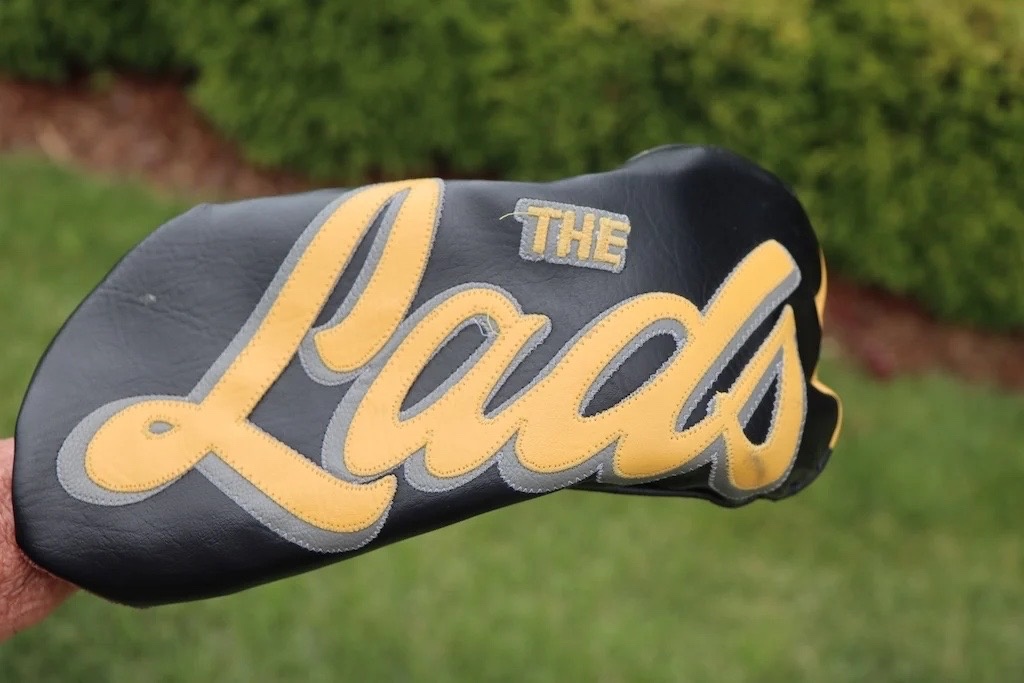
GolfWRX is on site this week at the Memorial Tournament, with both Alistair Cameron and Tour Photographer Greg Moore on the ground in Dublin, Ohio, where a strong field is assembled to pay homage to the Golden Bear.
In addition to WITB galleries, we’ve already been treated to an in-hand look at Tommy Fleetwood’s new TaylorMade Spider putters.
Check out links to all our photos below.
General Albums
WITB Albums
- Jason Day – WITB – 2026 The Memorial
- Chris Gotterup – WITB – 2026 The Memorial
- SungJae Im – WITB – 2026 The Memorial
Pullout Albums
- Jason Day’s 1off Payntr golf shoes – 2026 The Memorial
- JT Poston’s TaylorMade Spider – 2026 The Memorial
- Cameron putter – 2026 The Memorial
- Tommy Fleetwood’s TM Spider putters – 2026 The Memorial
- New Mitsubishi Chemical 1K Pro Orange shaft – 2026 The Memorial


GolfWRX Tour Photographer Greg Moore was on site in Galloway, New Jersey, ahead of the ShopRite LPGA powered by Wakefern to snap some WITB photos and more.
Check out links to all the photos below!
General Albums
WITB Albums
- Mimi Rhodes – WITB – 2026 ShopRite
- Aline Krauter – WITB – 2026 ShopRite(LPGA)
- Olivia Cowan – WITB – 2026 ShopRite
- Leah John – WITB – 2026 ShopRite(LPGA)
- Melanie Green – WITB – 2026 ShopRite
- Nastasia Nadaud – WITB – 2026 ShopRite(LPGA)
- Maria Torres – WITB – 2026 ShopRite(LPGA)
- Ana Belac – WITB – 2026 ShopRite(LPGA)
- Carolina Melgrati – WITB – 2026 ShopRite(LPGA)
- Sofia Garcia – WITB – 2026 ShopRite(LPGA)
Pullout Albums

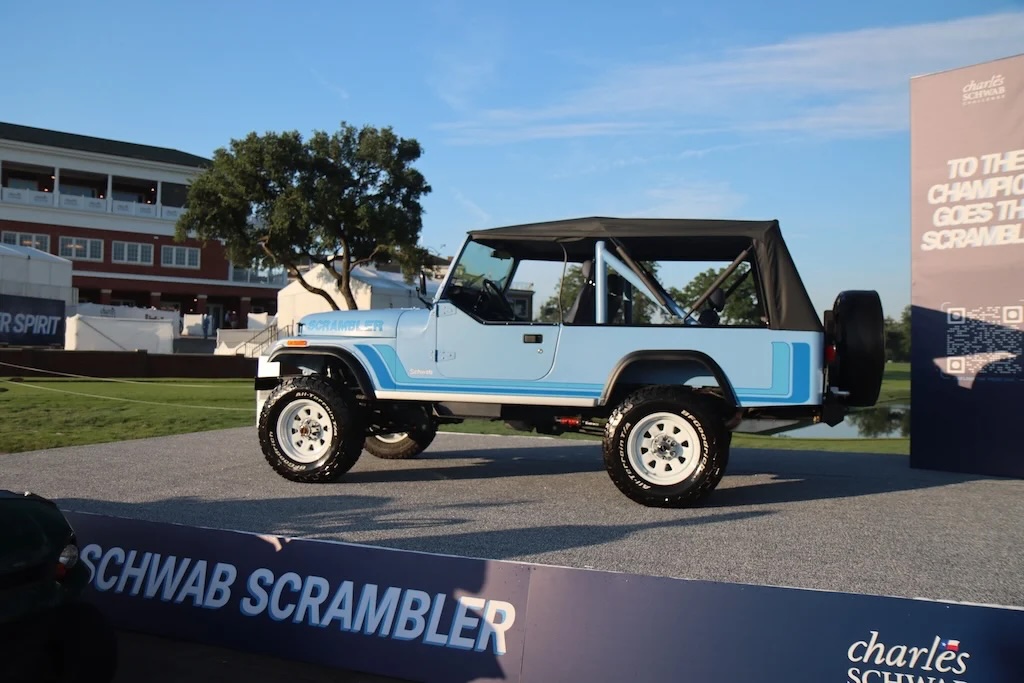
The famed Colonial Country Club in Fort Worth, Texas, is the scene this week for the Charles Schwab Challenge, where Ludvig Aberg enters the week as the tournament favorite.
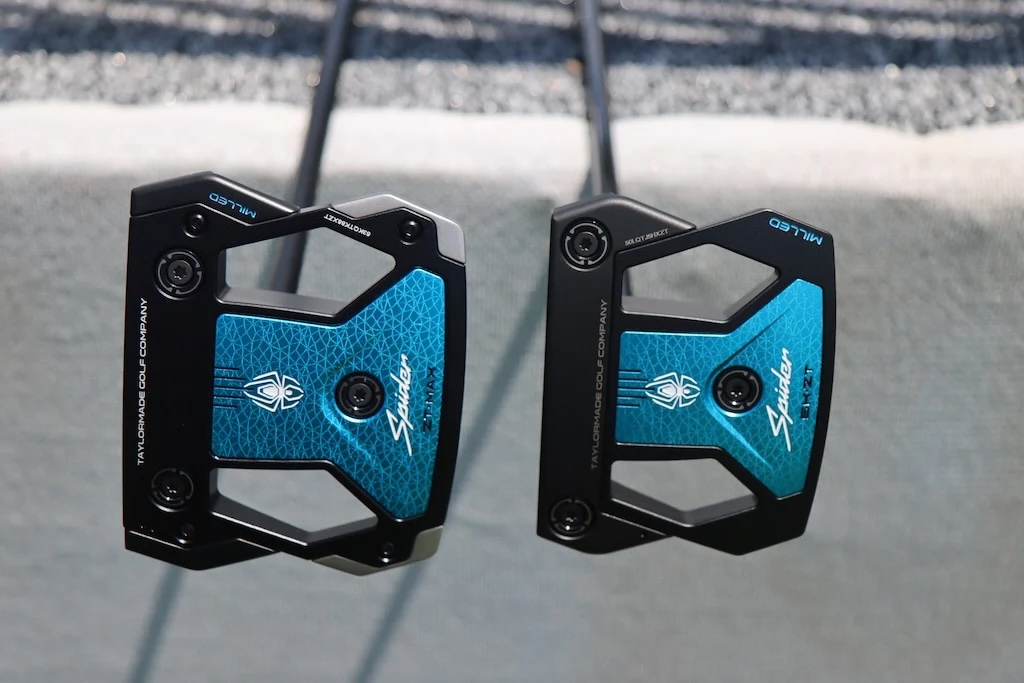
Tour Photographer Greg Moore and our traveling equipment insider, Alistair Cameron, are both on site this week in the Lone Star State. Thus far, we’ve been treated to an in-hand look at TaylorMade’s new ZT Max putter, as well as a bounty of WITBs.
Check out links to all our photos below.
General Albums
- 2026 Charles Schwab Challenge – Monday #1
- 2026 Charles Schwab Challenge – Monday #2
- 2026 Charles Schwab Challenge – Monday #3
- 2026 Charles Schwab Challenge – Tuesday #1
- 2026 Charles Schwab Challenge – Tuesday #2
- 2026 Charles Schwab Challenge – Tuesday #3
- 2026 Charles Schwab Challenge – Tuesday #4
- 2026 Charles Schwab Challenge – Tuesday #5
WITB Albums
- Preston Stout – OSU Men’s golf – WITB – 2026 Charles Schwab Challenge
- Marcelo Rozo – WITB – 2026 Charles Schwab Challenge
- Charley Hoffman – WITB – 2026 Charles Schwab Challenge
- Ben Kohles – WITB – 2026 Charles Schwab Challenge
- Davis Chatfield – WITB – 2026 Charles Schwab Challenge
- Albert Hansson – WITB – 2026 Charles Schwab Challenge
- Jackson Koivun – WITB – 2026 Charles Schwab Challenge
- Cam Davis – WITB – 2026 Charles Schwab Challenge
- Keith Mitchell – WITB – 2026 Charles Schwab Challenge
- Rasmus Neergaard-Petersen – WITB – 2026 Charles Schwab Challenge
- Kensei Hirata – WITB – 2026 Charles Schwab Challenge
- Eric Cole – WITB – 2026 Charles Schwab Challenge
- Zecheng “Marty” Dou – WITB – 2026 Charles Schwab Challenge
- Robert MacIntyre – WITB – 2026 Charles Schwab Challenge
- Matt Kuchar – WITB – 2026 Charles Schwab Challenge
- Joe Highsmith – WITB – 2026 Charles Schwab Challenge
Pullout Albums
- New Bettinardi covers – 2026 Charles Schwab Challenge
- New Project X Titan Yellow shafts – 2026 Charles Schwab Challenge
- Doug Ghim’s custom Cameron putter – 2026 Charles Schwab Challenge
- Matt Kuchar’s HitsGolf training clubs – 2026 Charles Schwab Challenge
- Erik Van Rooyen’s Callaway Apex TD Ti Fusion 3 iron(updated with additional photos) – 2026 CJ Cup Byron Nelson
- Robert MacIntyre’s putters – 2026 Charles Schwab Challenge
- JJ Spaun’s newest L.A.B. Golf putter – 2026 Charles Schwab Challenge
- Odyssey Damascus Milled Jailbird Mini broomstick – 2026 Charles Schwab Challenge
- Chris Kirk’s putters – 2026 Charles Schwab Challenge
- Rico Hoey’s Custom Odyssey S2S Tri-Hot Jailbird broomstick putter – 2026 Charles Schwab Challenge
- TaylorMade Spider ZT Max putters – 2026 Charles Schwab Challenge
See what GolfWRXers are saying in the forums.

Aaron Rai’s winning WITB: 2026 PGA Championship

Russell Henley’s winning WITB: 2026 Charles Schwab Challenge

Photos from the 2026 CJ Cup Byron Nelson

CJ Cup Byron Nelson Tour Report: Koepka and Kim’s newest putters finally get hot

Charles Schwab Challenge Tour Report: MacIntyre, Åberg and Spaun all switch putters, TaylorMade launches new Spider

Details on J.J. Spaun’s surprise putter switch

GolfWRX Launch Report: 2026 Titleist GTS drivers

Photos from the 2026 Charles Schwab Challenge

PGA Championship Tour Report: Fitzpatrick, Koepka among big-name putter switches for Aronimink

Photos from the ShopRite LPGA


Maria Torres WITB 2026 (June)
Driver: Ping G440 LST (9 degrees) Shaft: Accra TourZ Green 5-M4 3-wood: Ping G440 Max (15 degrees) Shaft: Accra TourZ Green 6-M4 5-wood: Ping G440...


Eric Cole WITB 2026 (June)
Driver: PXG Lightning Tour Max (9 degrees) Shaft: Project X Titan Yellow 70 TX 3-wood: TaylorMade Qi4D (15 degrees) Shaft:...


Si Woo Kim WITB 2026 (May)
Driver: Callaway Quantum Triple Diamond (8.5 degrees) Shaft: Fujikura Ventus Black 6 X Mini driver: Callaway Paradym Ai Smoke Mini...


Wyndham Clark’s winning WITB: 2026 CJ Cup Byron Nelson
Driver: TaylorMade Qi4D (10.5 degrees) Shaft: Project X Titan Yellow 60 TX 3-wood: TaylorMade Qi4D Tour (15 degrees) Shaft: Project...


TheCityGame
Aug 26, 2014 at 12:04 pm
It will certainly be interesting to see what factors lead to winning any one particular tournament, but I want to see over the course of the year, what is better correlated with scoring/winning/cash.
Might finally put the “drive for show, putt for dough” guys out to pasture.
Pingback: PGA Tour rolls out new Strokes gained: Tee-to-green statistic | Spacetimeandi.com
Jason
Aug 25, 2014 at 3:30 pm
I read Broadie’s book “Every Shot Counts”. I thought it was a very interesting book. I’ve began to think of my rounds using the strokes gained thought process–even though I don’t really have the tour average numbers to go by. However, I can make an estimated guess on each shot, for my own ability, to determine where I gained and lost shots during a round. It’s really eye opening to think of my rounds like this. For example, I used to count fairways, greens, putts, etc. However, at the end of the day, none of this information really means anything. For example, if I missed every fairway during a round, did it hurt my score? I could have hit really nice, long tee shots that ended up 1ft in the rough and didn’t have much effect on my approach. Does 36 putts mean I putted well or poor? I could have hit every approach shot to 60 feet and made nice 2 putts–which would mean that my putting was pretty damn good and that I need to focus on either my approach shots or perhaps driving.
I can’t wait to see these stats appear on the PGA broadcast. Especially since they are so much more meaningful than the traditional stats.