
Opinion & Analysis
Wishon: 7 club fitting keys to improve shot consistency

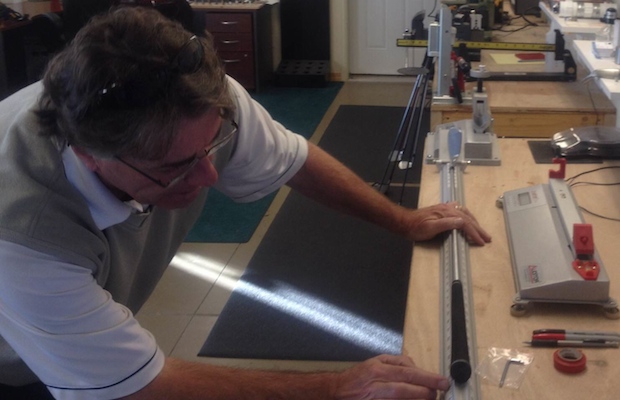
One of the simplest ways golfers can improve their games is through proper club fitting, which is often overlooked because of the emphasis golf equipment companies place on trying to help golfers hit the ball farther. Adding distance is great, but it doesn’t always come with an improvement in shot consistency. Sometimes, it actually has the opposite effect, whereas a proper fitting almost always improves shot consistency and often leads to more distance as well.
When I speak about shot consistency, exactly what am I talking about? A higher percentage of on-center hits? Sure, that’s an improvement in shot consistency. But so too, and perhaps even more important, are elements of consistency such as a reduction in how far a slice or hook curves off line, or a reduction in the number of poor shots.
Perhaps the best way to express what an improvement in shot consistency means is to help the golfer “miss the ball” better. If you’ve played the game a while, you are well aware of the type of shots that are classified as a “good misses.” No one hits all the shots well. In fact, the best golfers can be said to be those who “miss their shots the best.”
Therefore, the purpose of this article is to offer some of the best fitting tips for “better missed shots” and from it, better shot consistency.
1. A shorter driver, but also shorter fairway woods
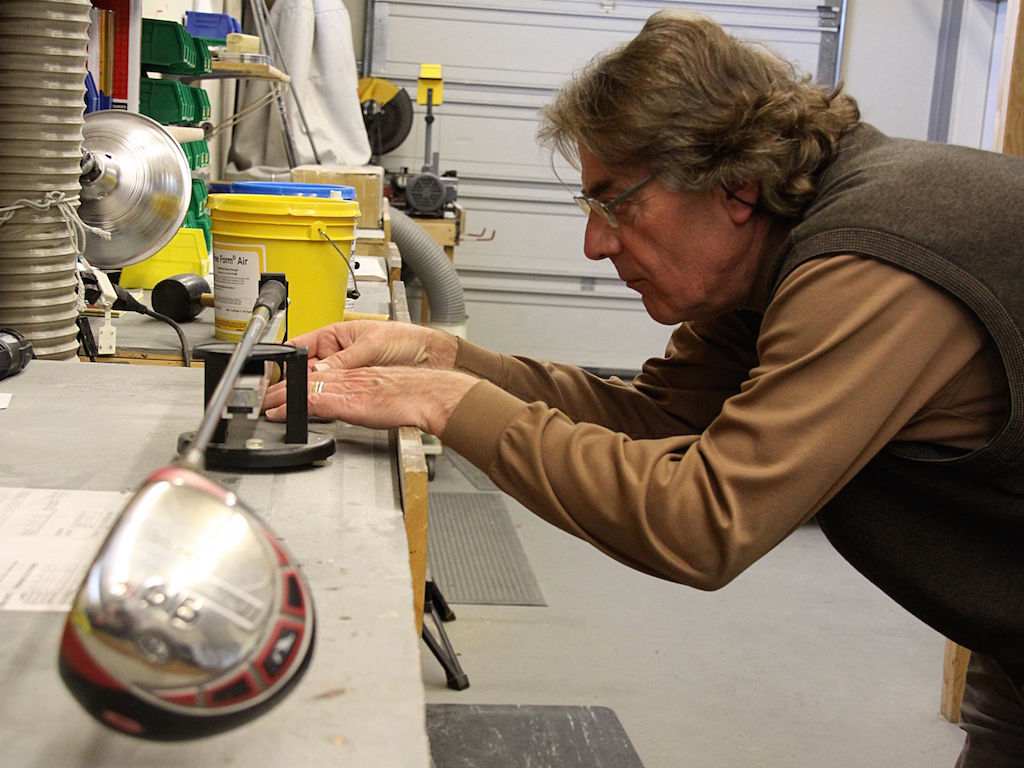
At the risk of sounding like a broken record, the percentage of golfers who have improved their tee shot consistency by going much shorter with the length of their driver is nothing short of spectacular. The only male golfers who have a real chance to play well with a 45-inch driver are those with a smooth tempo, great swing rhythm/timing, inside-out to square swing path, later release and good golf athletic ability on top of those things.
For golfers who fall short in one or more of those elements, don’t even think about a driver longer than 44 inches. If the golfer falls short in three or more of those factors, don’t go longer than 43 to 43.5 inches. Longer length only means higher club head speed for golfers with a later-to-very-late release. And even for those with a later release, for 98 percent of them longer length means more off-center hits.
But don’t just think shorter drivers for better shot consistency. Think shorter fairway woods, too. The old fairway wood length standards were 43 inches for a 3 wood, 42.5 inches for a 4 wood, 42 inches for a 5 wood and 41 inches for a 7 wood. Golfers should consider using fairway woods that are a half inch to a full inch shorter than that if they do not possess most of the above ideal swing tempo/release characteristics. You’d be amazed at the improvement in shot consistency from shorter fairway woods.
2. Proper face angle fitting to address misdirection tendencies
Preaching to the choir, element No. 2 for shot consistency is to fit the face angle of the driver, fairway woods and even the hybrids to offset the golfer’s slice or hook tendency with those clubs.
Always keep these two key points in mind when viewing a face angle change for improving shot consistency through better accuracy:
- At a carry distance of 200 yards, a 1-degree change in the face angle from what it was before represents a slice or hook reduction of 4 to 5 yards.
- For a face angle change to work best, you have to know the face angle of your present clubs so you know how much of a change to make to bring about a visible reduction in the slice or hook.
For a face angle change to do its job, you have to address the ball with the face angle sitting as it is designed. All too often, golfers not used to an open or closed face will rotate the head to assume a more square position at address. If you hook or slice and want that to be immediately reduced, you’ll need to just get used to the fact that if you slice or hook the ball, your new face angle is going to sit with the face pointing in the opposite direction of your misdirection tendency.
One last point for golfers with one of the adjustable hosel drivers: The only way these drivers can change the loft is if the golfer always holds the face square in the address position. If you are a relatively straight hitter, fine, you won’t need any face angle help. But if you are a chronic fader/slicer/drawer/hooker, a change in the face angle from what you currently use can be a huge help.
As such, trying to get that from one of the adjustable hosel drivers is difficult and confusing. For that reason, it is best to work with a club fitter who knows his stuff and can source the right driver head that has both the loft AND face angle you need.
3. Matching total weight and swing weight to the golfer’s transition, tempo and strength
If the total weight and/or the swing weight are too heavy for the golfer, more off-center hits, pushed shots and thin shots can result. If the total weight and/or the swing weight are too light for the golfer, a more outside-in path, slice and off-center hits can result.
While we talk a lot in fitting about the total weight (shaft weight) and the swing weight as separately fit elements, from a shot consistency standpoint you have to think of the two working together. For many golfers, the swing weight (meaning the head weight FEEL) is more important for shot consistency improvement than the total weight.
Typically, the more forceful the transition, the faster the tempo and the stronger the golfer, the heavier the total weight (shaft weight) and swing weight would be to best match the golfer’s timing and rhythm. And vice versa, usually the more smooth the transition and tempo and the weaker the golfer, the lighter the total weight (shaft weight) and swing weight would be. It’s not always this way, however, because golfers develop differences in what they think feels best when they swing the club.
It’s also totally possible for golfers with a stronger transition and tempo to end up being well fit into a lighter weight shaft (lighter total weight), but much less likely that a weaker/smoother-swinging golfer would be well fit into a heavy shaft for a heavy total weight.
If a stronger golfer with a little more aggressive transition move were to use a 55-to-65-gram shaft, the light total weight of such a light shaft weight can be offset by using a little to a lot higher swing weight. But on the other hand, it is rarely if ever a good thing to fit a golfer with a smooth transition/tempo and below average strength with a shaft that weighs more than 75 grams, but then try to mute that heavier shaft effect with a low swing weight.
But do remember, weight fitting also has to take the golfer’s personal, acquired preference for the weight feel of the clubs into account. There can be infrequent times when the weaker/smoother-swinging player prefers a heavy feel while a strong/aggressive player could possibly like a lighter feel.
In the end, there is no such thing as a total weight/swing weight detector in fitting. You start with the tendencies of swing force versus club weighting listed here, then experiment to find the combination that works best. In the end, the right total weight and swing weight is found when the golfer never has to make any type of conscious move or effort to control his swing tempo and timing.
4. MOI match the woods and the irons instead of swingweight matching
Ask any mechanical engineer. If the goal is to build all the clubs in a set so they swing with exactly the same effort and feel, the best way to do that is to build the clubs to have the same MOI rather than the same swing weight. MOI matching has been around now for 10 years so the statistics are starting to show tendencies.
When the MOI is chosen properly for the golfer, again based on his transition, tempo, strength and personal FEEL preference, the subtle improvements show up as more on-center hits more often, fewer pulled and pushed shots and a few more greens hit in regulation. But what MOI is right for each golfer is still a guess-and-check process.
The way the best club fitters do it is to build a test club of at least the 5 or 6 iron that possesses everything BUT the weighting the golfer needs in his fitting. The club has the right length, loft, lie, shaft and grip, but the head weight is left light. Then the golfer goes through a process of hit three shots, after which weight is added to the head. This process is repeated until the point is found when the golfer definitely perceives the head weight to be too heavy and too laboring to swing consistently on tempo. A fitter then backs off some of the weight and that becomes the benchmark club from which the MOI is measured and then duplicated on the other clubs in the set.
Final point: For the vast majority of golfers, the best MOI for the driver and woods will be +60-to-70 g/cm2 (the MOI measurement increment) higher than what was found to be the golfer’s best MOI in the irons.
5. Set makeup changes: so underappreciated, but so important
One of the most overlooked fitting factors that will assuredly improve overall shot consistency and deliver better misses for golfers is the set makeup. The whole concept of proper set makeup fitting is to get rid of hard-to-hit clubs and replace them with clubs that hit the ball the same distance and are easier to hit more consistently.
I am talking about the following elements:
- Having an alternative “control driver” of shorter length and higher loft. It can be used in lieu of the normal driver for courses with a greater number of tight tee shot holes, or for days when the swing is not as much “in sync” as other days.
- No three wood for the majority of golfers. Many should start with a 4 or 5 wood, unless the golfer definitely has the skill to consistently hit a fairway wood with 14-to-15 degrees of loft off the ground well up in the air.
- Having more woods, and definitely a 7 wood for most average players. Even a 9 wood for many golfers will work well, especially if the golfer tends to sweep the ball and/or has an early to midway release. And make it a little shorter as well.
- More hybrids instead of more fairway woods? As the golfer’s release gets from midway to slightly later than midway, and as the golfer can consistently hit down and through the shot, the option leans for more hybrids instead of more fairway woods to avoid the hard to hit low-lofted irons.
- Use one more hybrid than the golfer thinks he/she should use. Get the golfer to be totally honest in answering this question, “What is the lowest number iron I can hit consistently well 4 out of 5 times from normal lies?” If he is an 8-handicap golfer or lower, make that iron the break between the last hybrid and first iron in the set. If he is above an 8 handicap, add on one more hybrid and start the irons one number higher than what the golfer thinks he should use. Today’s much lower-lofted irons are fine as long as the golfer is honest in admitting what iron number sees the first big increase in inconsistency and starting the hybrids there. Don’t let ego get in the way of a smart set makeup that allows you to hit more greens and score better.
- Additional wedges. Or rather, tailor the wedge set makeup to the grass, sand and green design of the golf course(s) the golfer plays the most. It is very smart for a golfer to have different wedges of different lofts and sole designs so he can pick the wedge set makeup for the course he happens to be playing that day (this is a big topic to know what wedges to play for what differences in turf, sand and green design, and one I promise to write a detailed story about it in the future).
6. Grip size and feel for comfort
Forget the hand size/finger size charts that golfers use as a deciding factor for grip size. Fit for grip size ONLY on the basis of golfer comfort. Regardless of hand/finger size, the best grip size for every golfer is the size that he feels is most comfortable and allows him to maintain a secure hold on the grip with the least amount of grip pressure with the hands and forearms.
One more thing about grips versus shot consistency: Scrub/wash your rubber grips every other round, and lightly sand the rubber grips every 1 to 2 months as needed with 220- to 240-grit sandpaper. Keeping grips feeling more new can most definitely can help the golfer maintain a higher level of swing and shot consistency.
7. The correct lie angle for ALL the clubs
You’ve all seen the diagram that shows the ball going left when the toe end of the club head is up at impact and the ball going right when the heel side of the head is up at impact.
It goes without saying that dynamic lie fitting eliminates all possibility of an ill-fit lie from ever causing an offline shot. As such, why NOT do it? And think about getting your woods and hybrids fit dynamically for lie. Can’t find anyone with fairway woods and hybrids that can be bent to accommodate a wide range of lie fitting needs? If you look hard enough, you will. They do exist.
I can’t tell you enough in strong terms how valuable all of these fitting keys can be for your score and your enjoyment of this great game. Don’t pooh-pooh these fitting elements as either being less important or something only for mid-handicap players and above. They work to deliver better misses, which in turn means lower scores. Have fun, and as always the very best to everyone in this great game.


Club Junkie
Tour Edge Exotics mini driver review + TaylorMade Spider ZT Max first look – Club Junkie

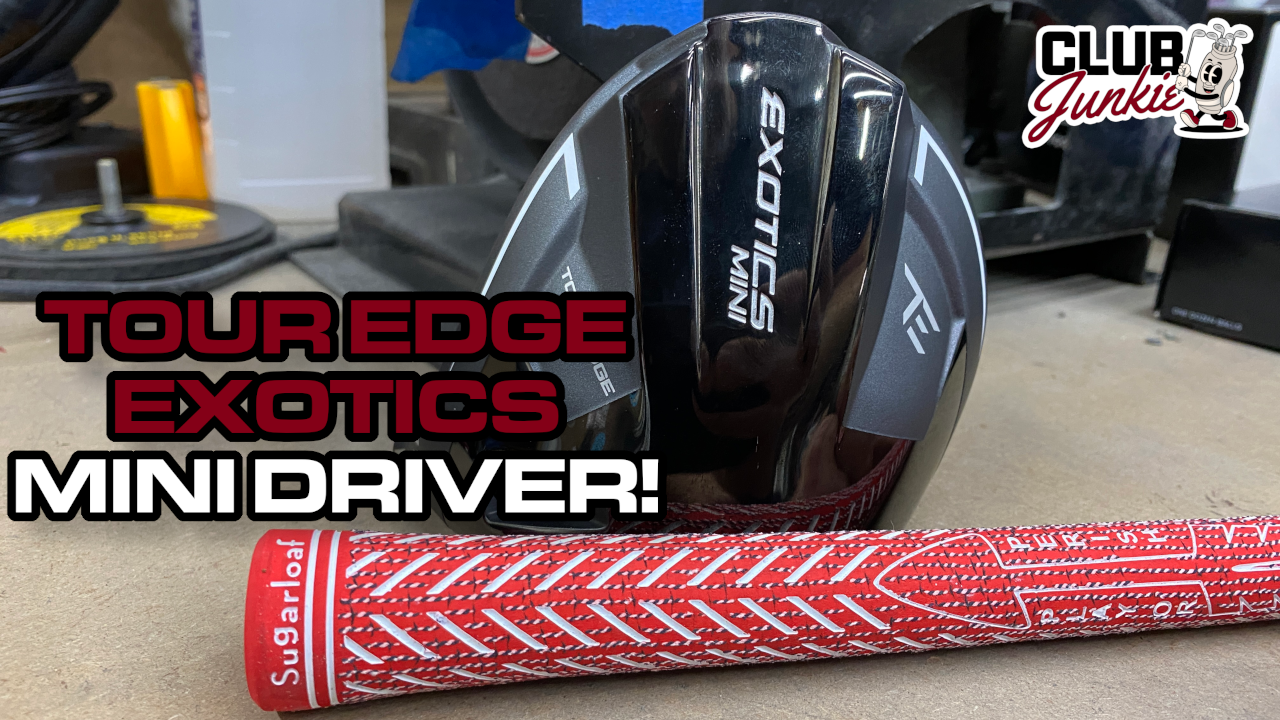
On this episode of Club Junkie, I put the new Tour Edge Exotics Mini Driver to the test and break down the performance, forgiveness, distance, and where it fits compared to a traditional driver or strong fairway wood. If you have been curious about adding a mini driver to the bag, this one is worth a look.
I also dive into the new TaylorMade Spider ZT Max putter that was recently spotted and discuss the growing zero torque putter trend. Plus, there is a closer look at the new Project X Titan Yellow shaft showing up on the PGA Tour and what makes it different from other profiles currently out there.
Opinion & Analysis
AVL: We’re talking about practice! My best tips for taking your game to the course


With the beginning of June on the horizon and courses rounding into peak condition for the season, it’s time to hone the finer skills that often get rusty over the winter. More sunlight also means more time to get out on the course and work on your game.
Whether it’s the practice green or the driving range, there’s always something to improve—whether you’re enjoying the fresh air or preparing for a weekend game or tournament. You can work on drills or freestyle around the green, and friendly competition is a great way to sharpen your skills.
While there are endless ways to get better at golf, I’m going to focus on practicing around the green. Let’s take a look at a few things to keep in mind as we head into the summer months.
Drills
From the driving range to the practice green, it’s important to incorporate drills into your routine. Years ago, I spent a weekend working on my short game with James Sieckmann. He recommended doing drill work for 5–10 minutes, then returning to your main practice.
This way, you create a balance between structured drills and real-world scenarios, so you’re not confined to “perfect” situations. For example, hitting the same three-foot putt over and over is good for repetition, but after a while, it becomes less interactive for your brain.
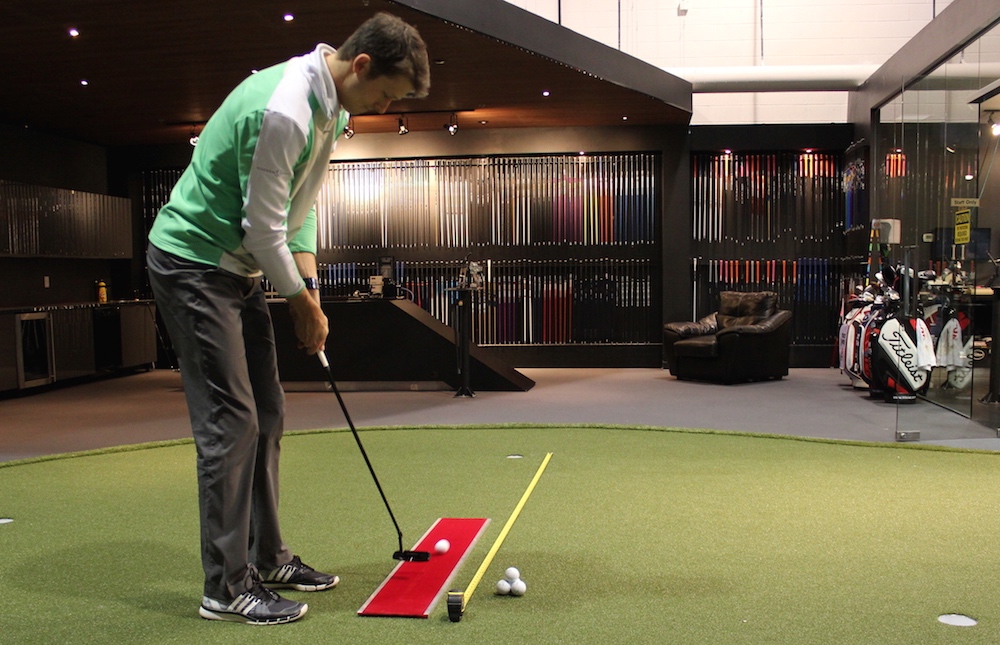
My approach is to use a putting trainer with a narrow gate for the ball to pass through, or simply place tees just outside the width of the ball. I’ll hit a series of four putts through the gate for three sets. Then, from a similar distance, I’ll hit four putts without the training aid and repeat that sequence three times.
Next, I’ll hit a number of 15–25 foot putts in a random fashion, then circle back to repeat the short putt drills with and without the training aid.
This breaks up the rhythm of hitting short putts with the training aid. When you hit the same short putts over and over, it’s easy to get into a groove—which is great for the drill, but not reflective of actual course play. While finding a rhythm is fundamental for drills, I like to introduce variation with longer putts to keep things realistic.
Game Mode
Once you’ve established a foundation with drills, it’s time to simulate on-course scenarios. This is where a few practice games come in handy.
One that I’ve been enjoying lately involves putting 10- to 15-footers with two balls. If I make the putt, great! If I miss, I pull the missed ball back a putter length. Suddenly, that little tap-in becomes a nerve-wracking three-footer—at least at first. As you get better at this game, those three- and five-footers become much more comfortable and routine.
It may sound cliché, but each shot is just what it is—it’s how we react that makes the difference. I like this game because it blends the pressure of on-course putting with the consequence of leaving yourself a much longer putt than usual.
Another game I like is one I recently learned from Brad Faxon. Place three tees in a line at four different locations around the hole: one at 3 feet, one at 6 feet, and one at 8 feet. The 3- and 6-foot putts count as par, and the 8-footer is for birdie.
This game keeps you focused on scoring and helps you get into a competitive mindset. You can even think about this putting game while you’re on the course. I just started playing it, and last week I couldn’t get better than two under par.
Competition
Competition during practice is when drills and games come to life, and you start to see results. For me, nothing beats a putting contest with a friend or two. In the right setting, these contests can become talking points for the whole season.
Match play, a game of 21, or simply seeing who can make the most one-putts (with a small prize on the line) are all great ways to simulate real on-course pressure. Recently, I played in a putting contest where one competitor made back-to-back 30- and 50-foot putts. As they say, expect your opponent to make every putt—and he nearly did. That’s impressive, and it’s something you see on the course, too: you have to stay committed to your game plan, no matter what.
When it comes to practice, it’s important to blend feedback from recent rounds with the fundamentals you want to reinforce. Drills, games, and competition—from the driving range to the putting green—form the backbone of skills you’ll rely on during actual rounds.
Finding the right balance is something we’re all working on, one practice session at a time. With the beginning of June on the horizon and courses rounding into peak condition for the season, it’s time to hone the finer skills that often get rusty over the winter. More sunlight also means more time to get out on the course and work on your game. Whether it’s the practice green or the driving range, there’s always something to improve—whether you’re enjoying the fresh air or preparing for a weekend game or tournament. You can work on drills or freestyle around the green, and friendly competition is a great way to sharpen your skills. While there are endless ways to get better at golf, I’m going to focus on practicing around the green. Let’s take a look at a few things to keep in mind as we head into the summer months.
Drills
From the driving range to the practice green, it’s important to incorporate drills into your routine. Years ago, I spent a weekend working on my short game with James Sieckmann. He recommended doing drill work for 5–10 minutes, then returning to your main practice. This way, you create a balance between structured drills and real-world scenarios, so you’re not confined to “perfect” situations. For example, hitting the same three-foot putt over and over is good for repetition, but after a while, it becomes less interactive for your brain.
My approach is to use a putting trainer with a narrow gate for the ball to pass through, or simply place tees just outside the width of the ball. I’ll hit a series of four putts through the gate for three sets. Then, from a similar distance, I’ll hit four putts without the training aid and repeat that sequence three times. Next, I’ll hit a number of 15–25 foot putts in a random fashion, then circle back to repeat the short putt drills with and without the training aid.
This breaks up the rhythm of hitting short putts with the training aid. When you hit the same short putts over and over, it’s easy to get into a groove—which is great for the drill, but not reflective of actual course play. While finding a rhythm is fundamental for drills, I like to introduce variation with longer putts to keep things realistic.
Game Mode
Once you’ve established a foundation with drills, it’s time to simulate on-course scenarios. This is where a few practice games come in handy. One that I’ve been enjoying lately involves putting 10- to 15-footers with two balls. If I make the putt, great! If I miss, I pull the missed ball back a putter length.
Suddenly, that little tap-in becomes a nerve-wracking three-footer—at least at first. As you get better at this game, those three- and five-footers become much more comfortable and routine. It may sound cliché, but each shot is just what it is—it’s how we react that makes the difference. I like this game because it blends the pressure of on-course putting with the consequence of leaving yourself a much longer putt than usual.
Another game I like is one I recently learned from Brad Faxon. Place three tees in a line at four different locations around the hole: one at 3 feet, one at 6 feet, and one at 8 feet. The 3- and 6-foot putts count as par, and the 8-footer is for birdie.
This game keeps you focused on scoring and helps you get into a competitive mindset. You can even think about this putting game while you’re on the course. I just started playing it, and last week I couldn’t get better than two under par.
Competition
Competition during practice is when drills and games come to life, and you start to see results. For me, nothing beats a putting contest with a friend or two. In the right setting, these contests can become talking points for the whole season. Match play, a game of 21, or simply seeing who can make the most one-putts (with a small prize on the line) are all great ways to simulate real on-course pressure. Recently, I played in a putting contest where one competitor made back-to-back 30- and 50-foot putts. As they say, expect your opponent to make every putt—and he nearly did. That’s impressive, and it’s something you see on the course, too: you have to stay committed to your game plan, no matter what.
When it comes to practice, it’s important to blend feedback from recent rounds with the fundamentals you want to reinforce. Drills, games, and competition—from the driving range to the putting green—form the backbone of skills you’ll rely on during actual rounds. Finding the right balance is something we’re all working on, one practice session at a time.


For Korean golfers, we always look forward to the last of the kkot-saem-chu-I for the true start of a new golf season. The term refers to a cold snap, but literally translates as “winter being jealous of the flowers beginning to bloom, thus lashing out one final time before surrendering to spring”.
A rather poetic mouthful packed into a short expression.
Koreans can be like that. Understated, yet oddly expressive at the same time. And nowhere is this more true on the golf course and in our golf bags. In fact, I suspect many Korean golfers look forward to new apparel and accessory drops more than they do actual equipment launches each year.

At this point, Korean golf fashion may exist on its own timeline. (courtesy of @seonbi_golfer)
There is ample evidence to support that suspicion. Korea is the world’s third-largest golf market behind the United States and Japan, yet its appetite for golf apparel exceeds that of both countries combined. Recent estimates suggest that Korea accounts for nearly 40 percent of the global golf apparel market, placing it among the world’s most influential golf fashion markets and punching well above its size.
Simply, we care deeply about how new golf clubs look and feel, but enjoy looking good while swinging them even more.
Golfers in the West may laugh and say that golf is played on a course, not a fashion runway. Perhaps. But what’s the harm in trying to look and feel good, if the added self-confidence can help actual performance? It certainly seems to have worked for Jason Day, who may have unlocked a new stats category: dormant strokes gained. Coincidence?

During the COVID-era, estimates placed the market near $9 billion, an astonishing figure for a single country.
As a proud member of Gen X, I’ve witnessed the highs and lows of golf fashion firsthand. The pleated trousers and wing-tipped shoes of Jack Nicklaus, the stylish plus-fours and knickers of Payne Stewart, the baggy black trousers and fitted mock-necks of Tiger Woods, and the thigh-hugging athletic tailoring of Rory McIlroy. Golf fashion, like the golf swing itself, has rarely stood still.
But nowhere have those trends shifted, evolved, and been scrutinized quite as relentlessly as in Korea. Here, golf fashion moves faster than fairway gossip, and consumers dissect brands with a level of discernment that can be both impressive and mildly terrifying. New brands are studied, judged, embraced, or dismissed with startling efficiency.
The result is a consumer base with one of the sharpest eyes for quality and authenticity anywhere in the world. It is difficult to quantify, but easy to recognize. Clean lines without trying too hard. Luxury mixed with utility. Trend awareness balanced by restraint and purpose.
It’s golf fashion shaped by one of the world’s most style-literate cities, something I like to call Seoul Sensibilities, referring to the taste level forged by a uniquely competitive environment.
And increasingly, global brands have noticed.

Many golf brands in Korea have their own flagship shops dedicated to apparel only
Titleist understood this years ago, when its apparel business in Korea took on a life of its own under new ownership and local direction. What had once been a straightforward extension of an iconic equipment giant became something sharper and more premium. By going all in on the serious Tour-player look (I couldn’t even fit into their XL sizes), Titleist struck the right chord with Korean consumers and helped its fledgling apparel business break into the mainstream. Titleist became a household name even for non-golfers who wore its caps, shirts, and windbreakers in daily life. In many ways, it proved that even heritage golf brands could carry real fashion credibility when viewed through a Korean lens.
Several years later, PXG took a page out of Titleist’s playbook and followed suit. Korean consumers helped transform the brand from one known largely for irons and loud commercials into something broader and more stylish. PXG apparel’s growth in Korea was explosive, where it found an early audience and turned the category into something more than mere logo merchandise. It is still hard to walk anywhere in Seoul without seeing its palindrome logo.
Malbon’s meteoric rise in the United States was genuine, but its ascent into a global golf lifestyle brand owes much to Korea, where it was elevated by a market already fluent in modern golf style. Korea did not simply embrace Malbon. It pressure-tested the concept, refined its appeal, and helped push it into the global spotlight.
As such, new brands may arrive from abroad, but more often than not, their sharpest evolution happens here. If a brand can earn credibility in Seoul, it’s deemed to have passed one of the toughest style audits in the game.
That is why the next meaningful chapter may not come from outside, but from a Korean brand moving in the opposite direction, carrying those Seoul Sensibilities outward as K-pop once did.

Play young Stay dope.
From Seoul, With Intent
Khalhon is a label that feels less like a trend-chasing newcomer and more like the product of a market that has already seen everything. Golfers here have long been surrounded by luxury logos, technical fabrics, and tour uniforms disguised as lifestyle wear and vice-versa. In other words, novelty alone rarely lasts here, and the Koreans seems to understand that instinctively.
Its style language leans into clean silhouettes, relaxed but tailored proportions, muted palettes, and premium materials that speak quietly but confidently. There is a modern city aesthetic running through it all, with strong layering pieces, thoughtful textures, and subtle branding that suggests sophistication rather than demanding attention.

“Built for the course. Designed beyond it.”
Most importantly, the garments seem designed to blur the line between golfwear and everyday style. Shirts, trousers, knitwear, and outer layers move comfortably between a game of screen golf, a lunch reservation, an airport gate, or an afternoon coffee in Gangnam with friends.
It raises the question of whether this is golfwear that happens to look good off the course, or everyday clothing that performs beautifully on the fairways.
Personally, I have long appreciated Nike Golf for its clean, athletic modernization of golf attire. It also has the useful side effect of making me look like a more serious golfer than I probably am. But off the course, there are times when being instantly identified as the golf guy in a crowd of non-golfers can feel a touch self-conscious.

“Built for the course. Designed beyond it.”
That is part of what drew me to Khalhon, which seemed to blend golf and everyday wear naturally. While some of the outfits may be slightly beyond my personal confidence level, the brand also offers tasteful options for older guys like me who still want to express a little personality without regretting the decision later.
These are not simply flashy outfits worn on the course and then banished to the closet until the next tee time. They work surprisingly well off the course too, and I suspect many of the pieces will still look right a couple of years from now, which would certainly be kinder to my wallet than most golf fashion trends tend to be.
And perhaps that broader lifestyle positioning also helps explain why someone like Sean Wotherspoon would find Khalhon creatively interesting in the first place.

“Built for the course. Designed beyond it.”
“Korea is not only one of the most fashion-forward golf markets in the world, but one of the most fashion-forward markets globally. Korea is ahead, and I love to watch and try to catch up.” – Sean Wotherspoon, Creative Director at Khalhon
Seoul and Beyond
If Khalhon’s rise says something about where Korean golf fashion is today, its relationship with Sean Wotherspoon says even more about where it is heading.
For readers less familiar with Sean Wotherspoon, his arrival at Khalhon is not some routine celebrity endorsement or influencer collaboration. In design and streetwear circles, Wotherspoon is regarded as one of the more influential creative voices of his generation, particularly when it comes to blending nostalgia, storytelling, and contemporary culture into products that people can connect with.
He first gained widespread attention through his now-famous Nike sneaker collaborations, where his vintage-inspired designs and instinct for color helped turn him into one of the defining artists of the late-2010s sneaker era. His work gradually expanded beyond footwear into apparel, automotive collaborations, collectibles, and broader lifestyle design.
Modern golf style now extends well beyond the fairways, where performance and functionality are largely expected by default. And while plenty of brands already make technically competent golfwear, Khalhon seems more focused on designing clothes people would genuinely want to wear even after the round ends.
And when guys at Wotherspoon’s level show genuine interest in working with a Korean golf brand as its new Creative Director, fashion circles tend to sit up and pay attention. There’s already a huge buzz among the fashion-conscious here about upcoming collabs with iconic sports stars and brands.

“My creative direction for Khalhon is disruptive, colorful, nostalgic, and modern. My goal is to blend these avenues seamlessly within each collection.” – Sean Wotherspoon
In chatting with Sean, what stood out most to me was how genuinely energized he sounded about the project itself. Despite having already worked across and countless other creative spaces, he described golf as a completely fresh category for him, saying that Khalhon “will be an amazing vehicle for my design work.”
At the same time, his enthusiasm seemed tied just as much to Korea itself. He spoke openly about admiring Korea’s fashion culture while repeatedly insisting he is still a terrible golfer.
There was something oddly refreshing about that humility. Rather than sounding like a celebrity parachuting into golf simply because the category suddenly became fashionable, Sean sounded genuinely curious about what Korea might do with the category next.
And perhaps that is what makes Khalhon feel interesting right now. The brand feels less like a trend-chaser and more like the natural result of a market now confident enough to export its own point of view.
For years, global brands came to Korea to sharpen their image against one of the most discerning audiences anywhere. Now, a Korean label appears ready to send those Seoul Sensibilities outward instead.
Which brings us back to kkot-saem-chu-i.
That final cold snap before spring always arrives with a reminder that seasons are changing, whether we notice it immediately or not. Golf fashion feels a little like that right now as well, as the old boundaries between sport, streetwear, luxury, and everyday style continue to soften.
And somewhere in Seoul, a Korean golf label already seems prepared for whatever season comes next. I just hope they have everything in my size.

Aaron Rai’s winning WITB: 2026 PGA Championship

Russell Henley’s winning WITB: 2026 Charles Schwab Challenge

Photos from the 2026 CJ Cup Byron Nelson

CJ Cup Byron Nelson Tour Report: Koepka and Kim’s newest putters finally get hot

Charles Schwab Challenge Tour Report: MacIntyre, Åberg and Spaun all switch putters, TaylorMade launches new Spider

Details on J.J. Spaun’s surprise putter switch

GolfWRX Launch Report: 2026 Titleist GTS drivers

Photos from the 2026 Charles Schwab Challenge

PGA Championship Tour Report: Fitzpatrick, Koepka among big-name putter switches for Aronimink

Photos from the ShopRite LPGA


Maria Torres WITB 2026 (June)
Driver: Ping G440 LST (9 degrees) Shaft: Accra TourZ Green 5-M4 3-wood: Ping G440 Max (15 degrees) Shaft: Accra TourZ Green 6-M4 5-wood: Ping G440...


Eric Cole WITB 2026 (June)
Driver: PXG Lightning Tour Max (9 degrees) Shaft: Project X Titan Yellow 70 TX 3-wood: TaylorMade Qi4D (15 degrees) Shaft:...


Si Woo Kim WITB 2026 (May)
Driver: Callaway Quantum Triple Diamond (8.5 degrees) Shaft: Fujikura Ventus Black 6 X Mini driver: Callaway Paradym Ai Smoke Mini...


Wyndham Clark’s winning WITB: 2026 CJ Cup Byron Nelson
Driver: TaylorMade Qi4D (10.5 degrees) Shaft: Project X Titan Yellow 60 TX 3-wood: TaylorMade Qi4D Tour (15 degrees) Shaft: Project...


Don Koes
Jan 7, 2021 at 4:42 am
Hi Tom,
In regards to MOI matching, is there any general rules of MOI increment between iron set vs hybrid vs woods vs driver?
Thanks a lot.
rob huget
Nov 7, 2016 at 10:10 am
Tom I have ordered your 575 mb 5 to the gap also your driver. When I ordered my previous set of mizuno mp 32 they were 2 degree’s flat, when Ross Beebe in Chilliwack measured the shafts they were an inch longer than standard. Is this normal if you are going to flatten the degree’s to have the shaft longer. Also I would assume lie fitting for the driver would be the same as the irons, if impact is more to the heel the lie should be flatter. Thanks Rob Huget
Pingback: Improving Slim Shots For Sale | petsloseweight.com
Jim
Jan 20, 2015 at 10:53 am
Tom, I would like to learn how to be a club maker and fitter, I have
read your materials and have some fairway woods from you and
very happy with clubs and your knowledge. So what I am asking is
your advise on how to go about this venture. Thanks Jim
PS I live Massachusetts
zzkevinw
Feb 20, 2014 at 4:03 pm
Thanks Tom,
I’m 60 years old, fit and athletic, a 21 handicap, and have played for 4 years now. I’m ready to buy my first set of new clubs, and put the yard sale clubs in the basement. Whenever I’m listening in on a fitting session at a golf store, the whole experience seems daunting and a bit dodgy, as if it’s only about how much money they can talk you into spending. I’m very green when it comes to the golf-club lingo and such. Can you steer me toward a competent, trustworthy fitter somewhere near either York, ME or Worcester, MA? Cheers.
Starving Golfer
Feb 11, 2014 at 12:04 pm
Tom,
Any recommendations for club fitter/maker in Nashville, TN?
Regards,
Scall1968
Feb 6, 2014 at 2:13 pm
Tom,
How long until the wedge article?
Tom Wishon
Feb 7, 2014 at 5:37 pm
Well the WRX editors were talking to me today about what’s next. Are you asking about how to choose the right wedge for you and your game?
Iain Clarke
May 24, 2014 at 10:57 am
Hi Tom ,
I am also very interested in you forthcoming wedge article as I am currently producing a my own line of wedges via a manufacturer in Fujian , I read part of an article where you were promoting the virtues of a company called Vtech in Tiawan . would it be possible for you to recommend at contact at the company please.
Iain
Zdenek
Feb 6, 2014 at 10:44 am
Hi Tom! I would like to buy first driver for my girlfriend. Like Mizuno EZ driver – 44″ ladies spec…What is you recommendation – something like 42-43? Thanks Zdenek
Tom Wishon
Feb 7, 2014 at 5:36 pm
Need some more information about her.
1. What is the measurement of the distance from her wrist to the floor while standing comfortably erect, shoulders level, arms relaxed at her sides, standing on a hard surface floor in flat sole shoes.
2. What is her avg score or handicap
3. Is her swing path outside in, square or inside out
4. Is her swing tempo, smooth/easy, forceful and aggressive or somewhere in between these
5. Would you say that she is above average in her athletic ability, about average or below avg
Get that info to me and I will be happy to offer the best recommendation for her so the length does not get in the way of her being as good as she can be, yet it can be comfortable for her too.
TOM
Zdenek
Feb 8, 2014 at 10:24 am
Hi Tom many thanks!
1. 82cm (32inch)
2.112, but know in winter we trained a lot with PRO
3.inside out
4.slow backswing, fast change to agressive downswing
5.above average athletic ability
Mike
Feb 6, 2014 at 10:18 am
Great insight Tom. Always learn something from your articles and posts on the site. Just made the switch to heavier shafts in my driver and fairway wood and definitely see a big difference and less Slices. Not to mention cutting the driver down to 44″ and 3 wood to 42″ for better consistency. Looking forward to reading more of your articles.
Bo svensson
Feb 2, 2014 at 9:32 am
Thanks tom for an excellent article. I am really keen after reading this to make a proper set for myself. Do you have any experience of teeview, a club fitter in stockholm, sweden? Or recommend someone else in the area?
Thanks in advance!
Tom Wishon
Feb 7, 2014 at 5:39 pm
Tee View is OUTSTANDING in clubfitting. Seriously, Conny and Leif are really good, very experienced and without question you WILL walk away with the very best fit you can possibly get. (and I bet you did not know that Leif is a former Olympic athlete for Sweden) Don’t hesitate to call them – your golf game will love them when you are finished!
Jack cheney
Jan 30, 2014 at 1:42 pm
Tom, great article, and I told Glenn Malmquist you said hello. He is 88 years young and still active. He says hello to you and keep up the good work! Thanks, jack
Tom Wishon
Feb 7, 2014 at 5:41 pm
I bet he is still active. Shoot, from what I remember about his energy level when I used to talk to him regularly in clubmaking back in the 80s and 90s, he is going to outlive every one of us here! And you tell him that too!
Christian
Jan 24, 2014 at 3:13 pm
Hi Tom, thanks for the article. I have a question specifically about Hybrid fitting. I have been trying very hard to find a 2H with mixed results. I’m a 1 hdcp and play a straight or small draw, can’t hit a fade to save my life. I’ve owned three 2hybrids in my search and am finding a pattern. The 2h’s I’ve tried from a tee produce an unexpected big fade and often start right of target. I’m not sure why it is the only club in my bag producing these results. All shafts have been stiff at 75-80 grams.
So the question is, what are the most important spec’s to consider when getting fit for a 2hybrid? Thanks Tom.
Christian
Tom Wishon
Jan 29, 2014 at 1:08 pm
It is difficult to know for sure what could be causing you to fade the ball this much with this hybrid when you do not do that at all with any other club. Typically for that to happen, the face angle of the hybrid would have to be much more open than any of your other clubs. But as a 1, I would think that you would see this when you put the club down in the address position. Really from all my experience for a really good player to fade/slice one club only would point to this having a much more open face. Only other thing would be if the headweight feel was much too light for your swing tempo, but here again as a 1, you would have noticed that right away.
I tend to see hybrids as irons, meaning to be the same length as an iron of that same loft. Most all OEM hybrids are made to lengths that are longer by 1″ to 2″ than what an iron of the same loft would be. Now for you as a 1, that length should not be an issue. Only other thing I can add is to experiment with your ball position with this hybrid. Some hybrids by virtue of their length play more consistently when a little more forward ala a fwy wood, while others require from their length to be played a little back, like halfway between left heel and center.
Christian
Mar 12, 2014 at 1:05 pm
Thanks for the reply Tom. I have since tried another 2 different 2h which produced big hooks. I’m starting to think I just don’t know how to hit a 41″ 2h 17* club specifically.I don’t know enough about shafts to compare and all 5-6 2h’s I’ve tried have all had different stiff shafts. At this point I think I’ll go find a fitter just to find a 2h I can become “friends” with. I have 13 clubs that are my close “friends”, can’t wait to figure out what my issue is with 2h’s and find one to fit into my set. *still searchin*
Don Porter
Jan 23, 2014 at 6:52 pm
I have been more accurate with my driver since I started choking up. Does shortening the club help more than just choking up?
Tom Wishon
Feb 7, 2014 at 5:43 pm
As Mr Penick taught me years ago, he preferred the term “gripping down” on the club as there is just this “other” connotation with the term “choke”. . . . cough cough. ((!!))
Gripping down is fine as an alternative to physically cutting the club shorter as long as the smaller grip diameter that brings about is not uncomfortable to you. That’s really the only downside to gripping down because grips are all tapered in their diameter.
Brian
Jan 20, 2014 at 1:47 pm
Hey Tom, I am a 4 handicap living in Minot, North Dakota. I have been looking into a new set of irons as well as a new 3 wood. I am 6’4″ and have used standard length, lie clubs my entire life. My problem with my irons is that my misses with my short irons tend to be a blade, and my problem with my 3 wood is that it feels way too light for my swing/swing speed. Any suggestions on an experienced club fitter in my area? I would really like to know what it feels like to swing properly fitted clubs.
Thanks,
Brian
Tom Wishon
Jan 20, 2014 at 5:16 pm
Brian
Ouch, sorry about the fact that custom clubmakers are scarce up in your neck of the woods. In such cases when there is not a decent clubmaker in someone’s area, we have a program where we can help you. If you would please send us an email at [email protected] we will be glad to explain how we can help you.
Thanks
TOM
Chris
Jan 28, 2014 at 2:26 pm
Brian,
If you ever get the chance to stop in at an Austad’s Golf in Fargo, they have a store there. Talk to Nick, he is the manager at the store and would probably be of great help to you. I work at one of the other stores and Nick is a very nice guy. It would definitely be something I would consider if you wanted to get fit off a launch monitor.
James brown
Jan 17, 2014 at 8:31 pm
Just had elbow surgery on left elbow. I’m looking to do a whole new club set. Dr. Says to go with graphite shafts. I had the UST recoil prototype put in my mp-69 and have just hit today the wedge and 9 iron. How good they feel and different also. Can you tell me of a very good Wishon clubfitter in North Carolina? I am in High Point-Greensboro area. That’s in central part of state.
I have spent my last 2-3 months on the shelf reading your material. Thanks, james
Tom Wishon
Jan 19, 2014 at 12:57 pm
I can offer two recommendations not too far from High POint. Steve Thornton in the Winston Salem area at 336-817-6907 or [email protected] – or in the Thomasville area, Special Tee Custom Golf at 336-887-3333.
Thanks very much for using my reading material to help you get through the re hab period! Best to you!
AJ Jensen
Jan 16, 2014 at 12:57 pm
Funny you mention this about the 7-wood. A friend of mine has an old seven and he uses it for so many different shots, and with such good results, I’ve had my own eye out for a seven just like it.
With the recent trend toward higher lofted drivers, do you see fairway woods making a similar loft increase? I ask because I’m in the market for a new fairway wood, after hitting a Stage 2 HL model with 16.5 loft, and in the simulator it seemed to outperform my current Burner 1.0 13-degree spoon.
Tom Wishon
Jan 19, 2014 at 11:28 am
No, actually fairway woods have undergone a very slight loft decrease over the past 30 yrs – like irons but not even close to as much of a loft decrease as with the irons. Up to the 80s, 3 woods were all 16*, 4 wood was 19*, 5 wood 22*, 7 wood 25*. These days the avg 3 wood is 14-15, 4 wood 16-17, 5 wood 18, 7 wood 21 and 9 wood around 24.
The reason higher loft drivers hit the ball farther as swing speed is slower while with fwy woods and irons that isn’t the case has to do with the relationship of swing speed to how much the ball can keep flying up and up in the air on a lower launch angle. For most golfers, that “point of reverse return” when less loft means more distance comes at around 16, 17, 18 degrees – also depending on swing speed for sure. But once you get to 20*+ almost all golfers will hit a lower loft longer in distance because the height of the shot at higher lofts keeps the ball up in the air with enough spin to allow the ball to fly as far as the ball speed allows. With slower speeds and lower lofts, you just do not have the ball speed or spin to keep the ball up in the air longer enough to really fly to the maximum distance the ball speed would allow. So more loft on the driver means more distance for slower speeds because the loft launches the ball higher and with more spin to keep the ball up in the air longer.
Where the slower swingers have to be careful with woods is to generally not try to use a 3 wood unless you have a 90mph speed and have good swing fundamentals. Today’s 14-15 3wood lofts are just too low for slower swing speeds and especially for slower speeds + less that great swing characteristics to hit well up to fly.
JRUt
Jan 16, 2014 at 11:23 am
Tom,
Great article. It really applies to those of us whom are “vertically challenged.
What are your opinions regarding club fit and the growing junior golfer? Should they be fit twice a year, or more?
It’s been an interesting 18 months with multiple growth spurts.
Tom Wishon
Jan 19, 2014 at 12:51 pm
Having remembered when the growth spurt hit with my son, I certainly understand what you are going through. Usually though the faster it happens, the sooner it will calm down so changes in the length of the clubs can be limited. In general, with more athletic kids, if their initial jr clubs were fit properly for length, you can figure that for each 4″ they grow in height, the clubs would need to get another 1 inch longer. This is a basic average and for sure can be different due to kids’ differences in height vs arm length. But for economics sake, it would be best if you could extend the length of the clubs for the first length increase you need up to an increase of +2″. Then when you need to go longer than that, you would need to re shaft or get new sticks.
Steelydan
Jan 16, 2014 at 4:53 am
Tom,
Thanks for the great article. For a tall guy like me with relatively short arms (wrist to floor is 39″), would you rather start an iron fitting with upright lie or with longer shafts? I hear so many different opinions about this. Most recommend to limit shaft length and increase lie angle, but I understand length is not so much of a problem in irons? Would +2″ still acceptable?
Thanks
SD
Ken Christopherson
Jan 15, 2014 at 10:40 am
Tom, as usual, you make sense. Thank you. I think any one of your books is a great place for someone to start to get an idea of how they are handicapped by not having equipment that fits them and their game. It is interesting that Titleist used to write on their website that less than 5% of customers can use off the shelf clubs effectively, and that most golfers would benefit from being custom fit. Each of us needs: different swing weights, different club lengths, different lie and face angles, different grip sizes, matching clubs to MOI, the correct choice of shaft weight & flex, all to fit our specific athletic and physical characteristics. You are a voice of reason and effective common sense in a market filled with marketing hype.
dman
Jan 14, 2014 at 12:15 pm
Tom, I find it hard get a hold of good clubMAKERS. Can you recommend someone in the LA area? East side if possible? There are so many guys out there at these big box stores that really don’t know what they are doing or are just careless. Thanks.
Tom Wishon
Jan 14, 2014 at 4:04 pm
Based on my limited knowledge of LA geography, a really good clubmaker in what I perceive to be “sort of east” LA would be Ron Burleson of Corona Custom Golf in Corona – 951-279-9663 or [email protected] (www.coronacustomgolf.com). And then further east would be Philip Moore of Exact Golf in Cathedral City – 760-904-5198 or 951-377-6268 / [email protected]. I’ve known both of these men for some time, have had them at clubfitting seminars over the years, and can testify they both know what they are doing for sure in serious clubfitting.
dman
Jan 14, 2014 at 6:21 pm
thank you very much!
Stan Szczsponik
Jan 11, 2014 at 7:22 pm
Tom,
Wondering if you can recommend someone in Rhode Island, Massachusetts or Connecticut to perform the fitting. If not, are you available and where are you located?
Thank you.
Stan Szczsponik
Coventry, Rhode Island
Chad
Jan 12, 2014 at 3:48 pm
Stan,
Tom Spargo – Spargo Golf in Cranston, RI
spargogolf.com
You won’t be disappointed!!
Tom Wishon
Jan 13, 2014 at 7:18 pm
Real quick Stan to echo what Chad told you about Tom Spargo. I know him personally from him being at a number of the clubfitting seminars I have done over the years and he is VERY good.
Tanner
Jan 10, 2014 at 7:43 pm
Good info Tom. As a life long 25-30 handicapper, should I forget the
the proper core turn and swing from the ground up and just get the face
fixed? I will say, I don’t have an issue of a slice. The problem is usually a lack of distance or a proper strike where my ball falls short of the target. Will these changes help there or is it more to fix
a slice?
Cheers
Tanner
dman
Jan 14, 2014 at 12:12 pm
this is a very specific question for a high handicapper. go see a pro who is also a clubfitter!
Phil Marshall
Jan 10, 2014 at 7:46 am
Superb article, I have followed conventional wisdom and industy maketing down some blind allies eg lighter shaft, total club weight, that were inappropriate for me. Amazing results from trial and error outcomes that so closely match Tom’s real wisdom. This shaft weight and head weight matching to a golfer is just so impotant to performance.
Tom, I think another book is warranted.
Thanks so much
Dennis
Jan 10, 2014 at 12:37 am
Hi Tom,
Great article, has got me thinking and reading more shafts. I play Mizuno MP 58 with DG S300 shafts that play well. Woods and hybrid not so much. These are also Mizuno. Driver MP 630 10.5 deg, 4 wood mp 16.5 deg, 20 deg hybrid mp clk. What shaft would be best to get the same feel in these as the irons?
Thanks
Tom Wishon
Jan 13, 2014 at 7:21 pm
Most players who like the feel of the Dynamic Gold do need to get themselves into a tip firm shaft as well for the woods. Problem is there are MANY tip firm shafts in woods in MANY varying levels of tip stiffness. So the bottom line is really to see if there is a really experienced clubfitter in your area with whom you can work so he can better evaluate the shafts you have used in the woods that are not quite right, then from that he can get a better idea of where you need to go next with the wood shaft. What town/city do you live in/near? Let me know that and I can look to see if there is such a good clubfitter in reasonable proximity to where you live.
Chuck
Jan 9, 2014 at 10:09 pm
This is just a stunningly intelligent article. I’ve been playing with a 42.5″ steel (DGLite X100) 3-wood for 12 years. TM 200 Tour “smoothie”. I would not take $400 if someone wanted to buy it from me.
And I plan to build myself a 43.5″ steel (DGSL) driver this year; probably a SLDR 430.
Experimenting is fun, easy and enjoyable when the shafts cost $14.95.
Thank you for all of your wonderful writing, Tom.
Shallowface
Jan 9, 2014 at 6:03 pm
The tricky part about grip size is the different amounts of taper from one shaft to another. Some shafts taper very little, and some taper a great deal. When you’ve got a driver with one shaft, fairways with another, hybrids with another still and then the set of irons, getting that grip size consistent, especially under the trail hand, can be a chore. But it’s necessary if you’re going to have a consistent grip with every club.
Loop
Jan 9, 2014 at 5:39 pm
Tom fantastic info on the budget MOI fit for irons. Thanks. With the 3/8 length changes, do the lie angles have to also be adjusted accordingly?
Tom Wishon
Jan 9, 2014 at 6:51 pm
Lie angle always should be rechecked dynamically whenever a golfer changes lengths on his clubs (or if you’re dead serious when you change shafts, change swingweight/headweight too).
LY
Jan 9, 2014 at 2:45 pm
Tom:
I saw a big improvement in my consistency when two years ago I changed my set make-up so that the 7 iron was the first iron in my bag. I volunteer at an LPGA event every year and I get a chance to look in a lot of the players bags. I noticed a very high percentage carried more than one hybrid. So I’m thinking to myself on the drive home, if the best women players are using more than one hybrid then how come I’m not.
James
Jan 9, 2014 at 2:22 pm
Mr. Wishon, what is the best way to ensure my current driver, if cut down to 44 inches from current 45.5, is weighted properly? Unfortunately in my area, clubmakers are rare and most things I have to do myself.
Tom Wishon
Jan 9, 2014 at 7:01 pm
Get yourself some lead tape and head to the driving range. After warming up through the bag, hit 2-3 shots, add 2 strips of lead tape, each 4″ in length (anywhere you want on the head – though flat across the sole is a real easy place to put it) hit 2-3 shots, add tape and so on.
What you want to do is note the feeling of the head’s weight during the whole swing, backswing, transition and then downswing while hitting shots and progressively adding a little weight. Do this until you start to feel that the head’s weight is feeling a little on the heavy side to you. Then back off 1-2 strips of the lead tape and hit 3-5 shots with that, and see if you feel that you need to drop any more headweight from a FEEL standpoint of it still being a little heavy.
Then several days later come back to the range, warm up, then hit 3-4 drivers with the club as you finished weighting it the last range session and reflect on that headweight feel one more time to see if you sense whether the weight feel of the head on the end of the shaft still feels pretty good, not too heavy and not too light.
It really is best to do it this way so you do not get trapped into a specific set swingweight measurement. Some guys will add weight back to the head after shortening the club to make the shorter club’s swingweight the same as what it was at the longer length. Lots of times if you do cut 1″ or more from the length, that becomes too much headweight when you add weight to get the swingweight back to the same as it was at the longer length. Swingweight is not an actual weight – it is simply an expression of the relationship of weight on one end of the club vs the other. When you change length dramatically, the swingweight that represents the best headweight FEEL for your swing timing and tempo won’t likely be the same at the shorter length as it was at the longer length.
Hence the reason to have to go through a hit a few, add weight, hit a few, add weight – and reflect on the headweight FEEL as you keep doing this a little at a time. You’ll find that point where the weight feel of the head during the swing is not too heavy and not too light. And that’s where you stop and forget it from then on as you head out to play.
TOM
Ron
Jan 18, 2014 at 1:58 pm
Tom, love your posts. I’ve got a Nike Covert that I have to choke up about an inch or so to hit consistently, but I was hesitant to cut it down. It’s the stock length which is 45.75 which is way too long for me, even as a 3 handicap. I’ve got a very aggressive swing with fast tempo so I’m right in the category you say will benefit from shorter driver length. If I lop off 1.75 inches, I’m afraid that’s going to take an awful lot of lead tape. Any ballpark of how many strips I’ll need? If it helps, my favorite driver of the past few years was a Callaway Razr Fit with a whiteboard x73 that measured D6. I went away from it last year when I gained about 20 pounds, lost flexibility from less play, and lost about 8 MPH swing speed. I haven’t been fully properly fit since my fitness declined but I just tweaked based on feel. Any advice for a fitter in central NJ?
J.A.
Jan 9, 2014 at 1:51 pm
Tom, what about proper iron length? If you recommend shortening woods by a half to a full inch, would that also be suggested for irons?
Tom Wishon
Jan 10, 2014 at 11:29 am
No, irons over the years have not increased inordinately in length as have drivers and fwy woods. If you go back to the 80s before this length increase began, drivers were 43″, 3 woods were 42″, and the 5 iron std length was 37 1/2″ Today we see the avg driver at 45.5″ with some at 46″, the avg 3w is 43 to 43.5, but the avg 5 iron length is 38″, representing only a half inch increase.
So irons have not “gotten out of line” nor have they increased in length to the point that the modern length could be a performance problem for golfers.
Duncan Castles
Jan 9, 2014 at 1:24 pm
As always, fascinating and informative. And it all works.
Tom is too modest to mention it, but his excellent hybrids, fairways and drivers can be easily adjusted to the correct lie angle without the use of any weight-adding, deceptive hosel device.
Ralph Patterson
Jan 9, 2014 at 12:39 pm
Tom,
Someone asked if you should shorten the driver, 3-wood etc. by cutting the butt or the tip of the shaft but I never saw your answer. What’s the best way to shorten them?
Thanks,
Ralph
Oldplayer
Jan 9, 2014 at 3:39 pm
Always the butt. Cutting the tip can change the flex characteristics dramatically.
Conrad
Jan 9, 2014 at 12:23 pm
I’ve always played 46 in my driver, tried shorter shafts but gained little to no accuracy from it. Drivers always been solid as its the best club in my bag
Tom Wishon
Jan 9, 2014 at 4:40 pm
If you have the time, find my article on How To arrive upon your best lengths which is floating around the tech forum and has been getting some more commentary so it is not too many pages deep in that forum.
You’ll find the exact description of how to know what golfer swing characteristics indicate that longer is better or shorter is better. In general, the smoother/more rhythmic the transition and tempo, the later the release, the more square to slightly in/out the path, the flatter the plane and the better the golfer’s sense of feel and timing, the more they could play well with longer lengths.
The opposite of these swing characteristics all add up to say shorter is a must. I’m betting if you do well with 46″, you possess many to most of the above swing characteristics.
Jeff Burns
Jan 9, 2014 at 12:14 pm
Which one of these tips will give me 17 extra yards? Ha.. I joke, I kid!
Great article Tom and I’ve very happy to see vindication for my 7 wood in here. I’ve even carried a 9 wood in the past and it’s been a huge help. I’ve taken my driver down to 44.5 but I might go shorter and bring the 3 wood down with it.
Thanks for the excellent information.
J
DB
Jan 9, 2014 at 8:46 am
Shorter driver and fairway wood really is the #1 tip. I can’t understand why more amateurs don’t do it. I see all these guys, even shorter guys, with 45.5-46″ drivers.
I’m 6’1″, and went to 44.75″ driver and 42.5″ 4-wood. Both D3. I love it, will never go back to anything longer. In the fairway more often, and I don’t even think I lost any distance. Still have the same clubhead speed.
Bryce
Jan 9, 2014 at 9:56 am
Hi
Shorter with tip cut to make stiffer or butt end cut?
Thanks 🙂
Tom Wishon
Jan 10, 2014 at 11:30 am
When shortening an existing club, cut from the butt end. And then go to work with lead tape to see what headweight increase is necessary to get the headweight FEEL comfortable during the swing.
Mats "PUMP 2" Bergsten
Jan 9, 2014 at 7:52 am
Tom,
Great article, as always when you decide to share your thoughts and knowledge!
Living in Sweden I use David Leet, PGA Pro at Falsterbo GK, to fit my clubs. He uses all the equipment to get my clubs MOI matched and all other variables as well. Very much into details, as well as I am. Reading your articles and visiting you website, givs me a better understanding, when collaborating with him, in a strive to get the best fitted equipment for myself and my game.
Keep up the good work!
Tom Wishon
Jan 9, 2014 at 12:00 pm
Matz:
Thanks much and just wanted to echo that you couldn’t be in a better place for your golf! Not only is Falsterbo such a great links, but David Leet is truly a “pro’s pro” in every facet from teaching to training to fitting to being one of the nicest people on the planet. And it is great that your club is continuing to work on improving the links with the course revisions you are making. I’ve been very fortunate to have been to your club several times. I wish I could own a house in the neighborhood and be a member and hang out there a lot.
Rich
Jan 9, 2014 at 7:39 am
I have been in the golf retail industry and buying gold equipment on a regular basis in the Australia (Sydney) for the best part of 20 years now. There is no one (green grass or off course retail) that would know how to do this kind of detailed fitting here. It just does not exist. I know more than any (maybe all put together) of the people (including club pro’s) working in golf retail in my area, about golf equipment, shafts, tech data and performance, full stop. I was even fit for a set of Titleist irons in the last 12 months or so and the fitter had to refer to a book (fitting manual of some kind) because he didn’t know how to fit me properly. Needless to say I didn’t buy the irons. Fitting here in Sydney Australia is a buzz word, not something that people know how to do. I’m not sure there is anyone that knows how to do it properly in my experience. The only people I have left to try are the Ping guys here in Sydney. When I’ve spoken to them on the phone, they sound like they actually know what they are doing but I haven’t tried their fitting process out yet so I may have to give them ago the next time I’m in the marker for something.
Tom Wishon
Jan 9, 2014 at 12:18 pm
Do you know Gary Tozer at Aussie Custom Golf up in Gateshead? http://www.aussiecustomgolf.com – 417 297 266 . Maybe about 60 miles from Sydney.
Oldplayer
Jan 9, 2014 at 3:44 pm
What about Melbourne Australia Tom? I have experienced the same as Rich and find it hard to get fitted properly. Sydney is 800 Kilometers away.
Tom Wishon
Jan 9, 2014 at 4:35 pm
Ahhh, Melbourne you are in LUCK!!!! Call Geoff Waldon on 39 439 8151 or email him at [email protected] and book a fitting appt as fast as you can. Geoff is REALLY GOOD, very experienced and has been doing this on a low key basis for quite a number of years now.
TOM
Rich
Jan 9, 2014 at 4:30 pm
Thanks Tom. Gateshead is about a 90-120 mins drive from Sydney but’I might have to get in touch with him. Cheers.
Brandon
Jan 9, 2014 at 12:58 pm
Pure Performance Golf Labs Sydney location opens at the end of January. Over 30,000 combinations and every brand that is not only fit but then hand built to those exact specs.
Pureperformancegolflabs.com.au is the website
Rich
Jan 9, 2014 at 4:59 pm
Thanks Brandon, I will check them out too. Cheers.
JohSte
Feb 26, 2014 at 8:57 pm
Hi Rich
see Dave Reckless at Dural Golf Driving Range.
In the best 100 fitters in the world.
sam Brooks
Jan 9, 2014 at 4:46 am
Yip I’ve just gone back to 45.5″ driver.. That’s all I need to hear. I’m cutting it down an inch first thing in the morning… Tom says I do!!!
Patrick
Jan 9, 2014 at 3:36 am
Tom, fixing slices a
Robert
Jan 9, 2014 at 3:29 am
Nice article, a lot of good information in there. However, I am sceptical towards changing the face angle. I mean, shouldn’t we as practitioners of the sport strive towards perfecting our technique instead of compensating with equipment in a way that almost encourages swing faults?
Tom Wishon
Jan 9, 2014 at 12:07 pm
Without question golfers should work on their swings and do their best to keep improving their swing characteristics. But the hard cold fact is that not that many golfers have the time, money or commitment to take the lessons and work as hard as is required to make permanent swing changes. Not only that but the swing moves required to hit the ball straight are most definitely body movements that not that many people have the athletic ability to do – to master a square to slightly inside out swing path with a later to very late release are two very challenging movements for less athletically inclined people to master.
To natural athletes, these things are not that difficult to do so they can’t imagine why all golfers can’t do it. but it is a fact that with MANY golfers who swing over the top, outside in and slice the ball, no matter what they will never master a swing path and release change to be able to turn that slice into a straight ball.
It is for those golfers that face angle fitting stands as one of THE most important game improvement elements that can be used to enjoy the game more. And according to Golf Digest, over 70% of all golfers do slice the ball to some degree – so that’s a whole lot of golfers who could enjoy the game more if they did draw upon face angle fitting as part of their fitting improvement work.
paul
Jan 8, 2014 at 11:51 pm
He writes, I read.
P
Jan 8, 2014 at 9:58 pm
Problem is, hardly any fitter has MOI machines. And it takes FOR EVER to do MOI fit.
Ian
Jan 8, 2014 at 9:47 pm
Tom, after getting the weight in the six iron correct how do you determine the proper weight for the rest of the irons. I know there are MOI measuring machines but if you don’t have one what would you suggest the swing weight progression should be?
Tom Wishon
Jan 9, 2014 at 12:11 pm
One can come VERY close to an MOI match by making the irons to be in 3/8″ increments for length AND then making the swingweights to progress upward in 0.5 swingweight point increments down through the set. So let’s say the ideal 6 iron you find is 37 1/2″ and D1. Starting with the #7, the lengths get shorter in 3/8″ increments per iron and the swingweights go D1.5 for the #7, D2 for the #8, D2.5 for the #9, D3 for the PW. And on the other side of the #6, the #5 becomes 37 7/8″” longer and D0.5, the #4 becomes 38 1/4″ and D0. WE joke around and call this the “poor man’s MOI match” but it is a VERY close approximation of using the $500 MOI machine to do the match for the clubs in the set.
P
Jan 10, 2014 at 3:26 am
If that is true, then why do we even need the machine?
Tom Wishon
Jan 13, 2014 at 7:23 pm
Only if you get concerned about the clubs being perfectly matched for MOI within 1 to 2 g-cm2 or if you are ok with being close within say 10-15 g-cm2. for most golfers, the progressive swingweight approach will be close enough.
John Muir
Jan 8, 2014 at 8:38 pm
Great article. I like the driver/control driver/5 wood set makeup idea.
John
Deck
Jan 8, 2014 at 6:33 pm
I recognize that photo!
As usual another Fantastic article Tom.
Tom Wishon
Jan 9, 2014 at 12:20 pm
Hey Deck!! Thanks! Staying warm up there? And like us, counting the minutes until spring?!! HA!
Merty Huckle
Jan 8, 2014 at 6:12 pm
good stuff.
tom stickney
Jan 8, 2014 at 6:08 pm
Fantastic article….big fan of your work, sir!
melrosegod
Jan 8, 2014 at 6:01 pm
It’s refreshing to read intellegent thoughts based on precision experience rather than “smash-boom” hype. Thanks Tom!
Jeffrey Trigger
Jan 8, 2014 at 5:48 pm
I play an R1 Black with a Kiyoshi white shaft, I had it cut down. I actually hit it further than my longer shafted driver. I play an RBZ Stage 2 Tour HL 3 wood that is a quarter inch shorter than standard. I will never again play a 15 degree 3 wood. Absolute monster. I have a 4 hybrid and 4 through PW. All of those are two degrees upright. I like slim wedge grips on all my clubs. Although finding 580 core grips can sometimes be very hard.
Andrew
Jan 8, 2014 at 5:43 pm
Very insightful as ever Tom. Gone to a 44″ driver earlier this year after reading some of your other articles and the consistency difference is massive…still thinking of going shorter as well along with shortening the 3 wood/3 hybrid to more ‘old school’ lengths.
Was fitted and Went to four wedges last year and have never looked back. Got 46/06, 50/08, 54/11, 58/6 to make sure distance gaps are covered. Santa brought me some higher bounce options to help with the softer winter conditions in the UK and they’re working well also and should give me options through the summer I guess
People really need to look at this especially given some of ‘std’ (very strong) lofts manufacturers are using.
tiger168
Jan 8, 2014 at 5:42 pm
Back to the basics, awesome article, this will be an instant classic.
Pingback: Tom Wishon: 7 club fitting keys to improve shot consistency | Min kärlek till golfen...
Dwaine Ingarfield
Jan 8, 2014 at 5:37 pm
Great article. I am a big believer in using a shorter than new standard driver.
Tom Wishon
Jan 9, 2014 at 6:50 pm
From 1905 to 1985, “standard” length for a men’s driver was 43″. And believe me EVERY company followed that as their standard driver length. having worked in the golf equipment industry since 1980 and doing head design work since 1986 it has always been interesting to be to wonder just why did that “standard” grow some 3″ in the years from 1985 to present day. Golfers didn’t get taller or grow shorter arms over the past 28 yrs. I’ve always wanted to ask the golf companies for an answer to that question.