
Opinion & Analysis
The harsh realities of golf’s mini tours


A casual golf fan who occasionally enjoys watching final round coverage of a PGA Tour event must have a skewed opinion about the lives of professional golfers, namely, that anyone with an oversized staff bag is living the dream. But for every Ian Poulter who owns a fleet of Ferraris and struts around like a movie star, there are plenty of golfers who practically live out of their Ford Fiestas and dream about getting their big break.
Golf outside the highest professional level is a proverbial cutting room floor. For every golfer who eventually plays his way to the big stage, there are thousands who don’t. It’s a harsh reality predetermined by the sheer fact that it takes a high degree of skill, stubbornness and certainly not least of all – luck – to earn a place on the PGA Tour.
The qualification process has remained largely unchanged since the PGA Tour was formalized in the 1960s. The most direct route, Q-School, allowed any golfer, amateur or professional with a handicap index of two or lower, to test their mettle in golf’s version of the Hunger Games. Anyone who didn’t survive Q-School could attempt to play his way onto the Tour by way of Monday qualifiers or sponsor exemptions, both of which are low percentage gambles that very few ever cash in on.
What has changed in the last couple of decades is the ever-expanding number of developmental tours that have raised their banners across the country. Although Ben Hogan isn’t officially credited with starting the first mini tour, the 30-city Hogan Tour, which began in 1990, is probably the most famous. The tour was set up to allow aspiring pros (many of whom were cash-strapped) to drive around from tour stop to tour stop in successive weeks, much like Hogan’s contemporaries had in golf’s yesteryears. Over the years the Hogan Tour (now the Web.com Tour) expanded geographically, upped its prize money and became to the PGA Tour what off-broadway is to aspiring actors.
The NGA Pro Golf Tour, more commonly referred to as the Hooters Tour, predates the Hogan Tour. It was started in 1988 by Rick (T.C.) Jordan who inherited some money from his family’s business in pharmaceuticals and made a lot more of it through real estate and restaurant opportunities. Jordan invested $6 million from his own pocket and ran the tour independently until ceding title sponsorship rights to Hooters of America, Inc. in 1994.
Over the years the Hooters Tour has graduated some notable alumni including major championship winners Bubba Watson, Keegan Bradley, John Daly and Zach Johnson.
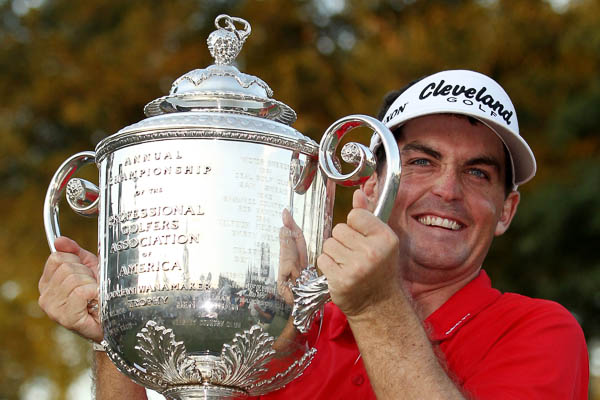
Keegan Bradley, a graduate of the NGA Hooters Tour, won the 2011 PGA Championship and is one of the Tour’s best success stories.
And now that the Q-School has been revised to replenish the roster of the Web.com Tour, expect more players to take up a path of apprenticeship that could meander through the Pepsi Tour, over to the Peach State Professional Golf Tour, and everything in-between. With more than 60 tours in operation world-wide, the prevailing wisdom ought to be play hard and pack light.
So You Want To Run A Mini Tour?
Jeff Flees used to manage a mortgage firm in Worthington, Ohio. But his wife’s protracted health concerns led him to reevaluate his career prospects. Nowadays, he’s the president of a three-person operation that runs the nascent Flagship Golf Tour.
“I had a successful career in the mortgage banking industry for 16 years, however in 2011 my wife had two major surgeries, one of which was brain surgery to clip aneurysms she had been living with,” says Flees. “My wife is one of the most incredible, inspirational people you will ever meet or know. I felt it was important to take time off to be with her while she recovered. When the time was right, my passion for golf and experience with people in the industry led my to analyze the developmental tour business and start the Flagship Golf Tour.”
The first scheduled event will be played this summer at The Journey at Pechanga in Temecula, Calif. The single day, 18-hole stroke play championship will feature a $5,000 purse and will benefit a number of charities including the Brain Aneurysm Foundation. The entry fee for professionals is $300 ($200 for amateurs) and unlike many higher profile tours, there is no annual membership fee.
For those of us who have never played golf for a living, taking up membership on a mini tour is a significant expense when combined with standard tournament fees and general travel expenses. Existing tours with deep fields and decent purses can charge $1,000 or more for membership. That will help you get a bona fide member packet, a tour hat and access to practice facilities at host courses. To actually play in a tournament event, you’ll likely drop close to another $1,000. A single season on the NGA Hooters’ 2013 Carolina Series will run a pro golfer a little over $10,000 in fees (depending on whether or not they have pre-existing status on the tour). Sounds almost reasonable until you start factoring things like groceries and gas money, or taking a date out to a dinner and a movie.
By contrast, there’s next to no risk to play a Flagship Golf Tour event and the tour awards prize money to the top 33 percent of the field, which is consistent with the policy maintained by more established entities. The tour does differ significantly from many competitors in that tournament events are spread out nationally and a champion is crowned after 18 holes.
“We decided on the one-day 18-hole tournaments because they make more logistical and financial sense,” says Flees. “The benefit of a one-day, 18-hole event is that we can keep the expenses down and reduce the time commitment for everyone involved in the tournament. We respect what the more established tours are doing. We are not trying to directly compete with them.”
Whether the Flagship Golf Tour finds its niche and succeeds beyond the first couple of seasons is difficult to predict. The term “boom and bust” is often used to describe mini tours that have disappeared after some initial success. Not surprisingly, the pressure to succeed falls squarely on a busy owner’s shoulders. You’re expected to be equally adept at playing the role of savvy business manager and gregarious promoter. Some days call for negotiating contracts with vendors and sponsors. Other days you’ll be rubbing elbows with potential investors or stumping on behalf of your tour around the clock on Twitter.
For many business executives, running a mini tour is a labor of love (not to mention an expensive hobby).
Alex Spanos had a brief run lending his name to one of the preeminent developmental tours on the West Coast before scuttling the business after three years. Spanos was a scratch golfer in his youth and made his fortune in the construction services industry. He is better known for owning a majority stake in the San Diego Chargers football team.
Full field events on the Spanos California Tour featured sizable purses including a $250,000 cash grab called the A.G. Spanos California Open. Local boys Jason Gore, John Merrick and Peter Tomasulo had stints on the tour before moving on to play much bigger venues.
“I have always wanted to be part of a golf tour,” Spanos was quoted as saying. “My goal with this tour is to have it become the biggest and best in this state, if not the country, where young professionals and amateurs get the opportunity to show their talent and ability.”
Even in its final year of operation, the California Tour was arguably still growing. The tour signed Ameriquest Mortgage Company as a presenting sponsor, hired a San Diego area public relations firm to raise brand awareness, increased the number of events to 16 and set aside $2.5 million in available winnings. But they shut the tour down anyway. Perhaps that was the intention all along.
According to executives associated with Spanos, running the tour had become prohibitively expensive. It also didn’t help that a far more expansive developmental tour made a glitzy splash in 2006, promising tournament winnings to rival the PGA Tour.

Backed by the now defunct Greens Worldwide Inc., the U.S. Pro Golf Tour was expected to offer $300,000 for a standard event and as much as $5 million for one of its majors that would be played on a Donald Trump-owed course and broadcast on television by ESPN. There were rumblings about impending doom from the start and the tour folded after the initial season. In the process, the U.S. Pro Golf Tour defrauded hundreds of golfers who forked over thousands of dollars to participate in events that were never going to be staged.
As any professional golfer who has scrambled on the mini tours can tell you, there are plenty of similar misadventures that players have fallen victim to. Most of them are simply too obscure to grab the public’s attention, even within golfing circles. And in some ways, it’s a perverse right of passage.
The (Not So) Charmed Life Of A Professional Golfer
More than likely, you haven’t heard of Andrew Jensen. He’s just another golfer playing on the PGA Tour of Canada who’s had scrapes with success, failure, injuries and heartbreak. But I’m getting ahead of myself.
We pick up his story in March. Jensen has driven down to Florida, as far south from frigid Ottawa as his Pontiac G6 will take him. He intends to spend a month living in the Sarasota area getting into shape for a season that will play out primarily back in Canada. Except that the weather in Florida, in fact for much of the southern United States, isn’t living up to expectations.
Too many mornings in the Sunshine State start off borderline freezing; as for Jensen’s game, it’s not a whole lot better. In his first competitive event of the season, he shoots 2-over and misses the cut. Over the next several weeks his game starts trending in the right direction. He records his best finish on the Florida swing at TPC Prestancia in Sarasota. It’s a limited-field event of 28 participants playing for a purse that barely covers rent for a single-bedroom apartment on Manhattan’s Upper West Side.
Jensen has an opportunity to finish 2-under on the first day, but rinses two balls on the last hole for an ugly double. He plays marginally worse the next day, making three straight bogies on the front nine, carding a 75 and finishing three strokes outside of earning a paycheck.
Three events come and go and all Jensen has to show for it some middling scores. It’s a good blow to one’s wallet (and psyche), but Jensen has developed some thick skin over the years. He’s been playing professionally off and on since 2008. He’s taken time off to heal from injuries and to recover from periodic episodes of depression. And while it may be difficult to spin positives from his Florida swing based on scoring alone, Jensen is grateful to be playing golf regularly again.
“When I was playing injured in 2010 and playing bad . . . the debt was increasing fast,” says Jensen. “Golf was no longer fun, it was work, it was gambling to break even. My passion for the game left me very quickly but I tried to tough it out and keep playing regardless. That mentality bled into two awful seasons on tour and my eventual hanging up the clubs in 2011 to enter into the real world and start working and getting above water financially. Luckily, over time the passion came back.”
Jensen played competitively for the University of Ottawa and qualified to play for the Canadian Tour the year following his graduation in 2007. Although some golfers would have journeyed south to play in more seasonably warm conditions year-round, Jensen preferred to stay closer to home, not all that surprising for a person who habitually found comfort in maintaining rigorous routine.

Unfortunately, there was very little in the way of predictability to his first three seasons on tour. Jensen made the cut just twice in 14 events in 2008, making $870. He earned another $3,100 on the tour in 2010-11 and watched his confidence fade as debts rose.
“When you can solely focus on the routine and the process, good play takes care of itself,” says Jensen. “When you have to figure out a way to pay the bills, it takes away from your routine. Over the years, my play has struggled and consequently my funds have depleted, forcing me into off-season work in Canada over the winters. The routine has to switch to fitness, indoor practice, mental work, and above all a ‘real job.’”
His outlook rapidly declined in 2011. A family physician prescribed an anti-depressant medication that had an unintended side-effect of actually increasing suicidal urgings. Standing over a bathroom sink with a mouth full of anti-depressant pills, Jensen nearly took his life that September. Fortunately he spat the medication out and was weened off the anti-depressant a few weeks later. Through therapy, Jensen came to regard golf as a trigger for his mental issues.
“Every time I played poorly, it just kept getting worse and worse emotionally,” Jensen told the Ottawa Citizen in 2012.
Jensen isn’t the only golfer who has struggled with depression. The LPGA Tour’s Christina Kim was openly forthcoming about her own personal struggles in an interview with Golf Digest. Still, there aren’t many golfers, let alone athletes in general, that are willing to go public. It is habitually accepted that athletes need to maintain an edge over their competition. And nothing blows an athlete’s cover faster than revealing they have fears and doubts.
“The numbers on depression are staggering, it affects far more people than many believe,” says Jensen. “The pressure, isolation and competition in professional golf are massive triggers to get players down on themselves both on and off the course. From my experiences with mental illness it’s a hard road to play golf and keep things silent. The minute I came out with my struggles, the support and solidarity that came from fellow players was great. No one knows the struggles of a mini tour player better than a fellow mini tour player.”
Historically, the various developmental tours have left players to their own devices. Some tours offer discounts on sponsor-provided apparel and equipment, but rarely is sports psychology factored into any of the few membership perks enjoyed on tour. By offering player coaching from the outset, the Flagship Golf Tour is looking to differentiate itself even further from its more established competitors.
“We are working with excellent professionals who can offer our players guidance in these areas,” says Flees. “The players will get initial information and coaching made available to them free of charge, however if they wish to retain these professionals for additional assistance there would be a charge.”
The Flagship Golf Tour has developed a relationship with David Donatucci, a Titelist Performance Institute certified trainer a member of the PGA of America, as well as PGA member Rick Sessinghaus, a proven sports psychologist. It will be interesting to see how many players actually seek out coaching and if it spurs other developmental tours to consider similar service offerings in the future.
As Jensen can tell you from experience, playing on the mini tours is a grind. Reflecting on the past five years as a golf pro, Jensen says, “[The mini tours haven’t] taught me too much about golf itself, apart from the reality that making putts is everything. It’s taught me that I am very determined and driven, easily discouraged at times, but still very motivated. Hard work for five years really hasn’t gotten me too far in this game so I’ve learned I need to work smarter now.”
A Long And Winding Road
Imagine you’re 16 years old, living by yourself in California. Your preternatural golfing abilities land you a future spot on the University of Oklahoma golf team. Your stellar college play gets noticed and you make the Walker Cup team. After three years you leave school early and declare your intentions to turn pro. You receive a sponsor’s exemption into your first PGA Tour event and you finish runner up. A year later you earn tour card in your first go-around at Q-School and ultimately become a multimillionaire before the age of 22.
It’s almost a lock that most golfing careers will not pan out like Anthony Kim’s supercharged ascent to stardom. With any luck, you might be fortunate enough mimic James Hahn, who clawed his way onto the PGA Tour after spending nine years playing on the mini tours and supplementing his income selling ladies shoes at Nordstrom’s.
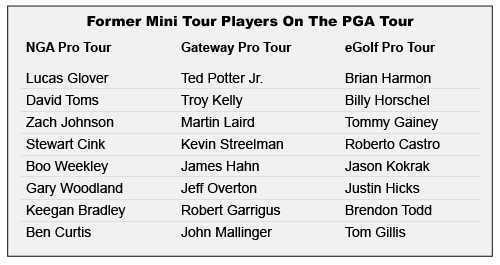
So if you are a talented golfer, what exactly are your chances?
In an unrelated sport, the NCAA has compiled statistics on the number of high school basketball players who continue to play professionally after graduating from college. Of the roughly 156,000 high school seniors who play basketball, 44 will be drafted into the NBA. Even at less than 1 percent, a basketball player has a better chance of filling one of the 350 or so roster spots in the NBA than a golfer has of sharing a fairway with Phil Mickelson.
Andrew Jensen doesn’t believe that a talent gap is keeping most mini tour players from propelling themselves to the next level.
“I think it has more to do with the off course hurdles than the competition,” says Jensen. “I’ve seen many great players pack it in because of their financial situation, the travel, or the time away from family, just to name a few reasons. I don’t believe players stop because they don’t think they have what it takes.”
There are thousands of golfers playing on the mini tours every year. What happens to the ones that don’t make it?
Perhaps some of them get a taste of success at the higher reaches of golf and regress. Others washout after only a few seasons on the road. Some quit playing and take up teaching while others quit the game entirely.
In spite of what is easily construed as abject failure, any player who has made it as far as the mini tours has an experience with the game that few golfers rarely come in contact with. It may not be the sort of ending that a Hollywood producer would dream up. But as golf announcer Gary Koch famously quipped, it’s better than most.





Club Junkie
Tour Edge Exotics mini driver review + TaylorMade Spider ZT Max first look – Club Junkie

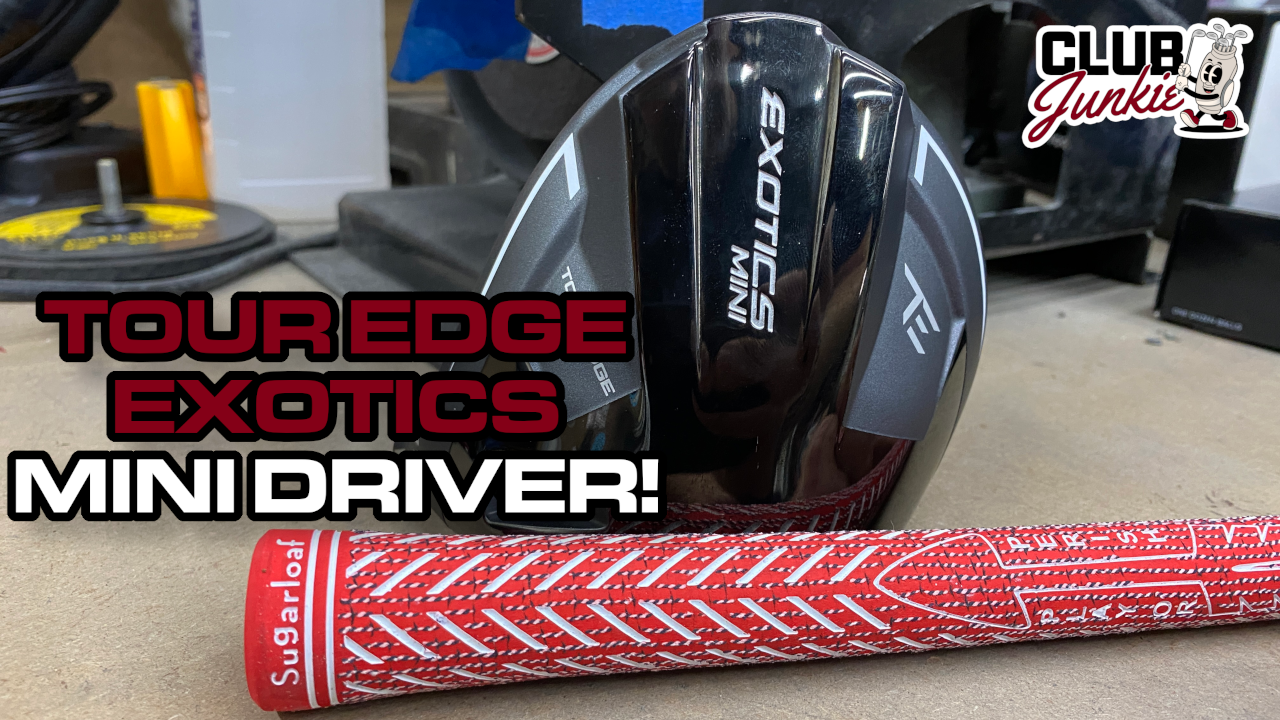
On this episode of Club Junkie, I put the new Tour Edge Exotics Mini Driver to the test and break down the performance, forgiveness, distance, and where it fits compared to a traditional driver or strong fairway wood. If you have been curious about adding a mini driver to the bag, this one is worth a look.
I also dive into the new TaylorMade Spider ZT Max putter that was recently spotted and discuss the growing zero torque putter trend. Plus, there is a closer look at the new Project X Titan Yellow shaft showing up on the PGA Tour and what makes it different from other profiles currently out there.
Opinion & Analysis
AVL: We’re talking about practice! My best tips for taking your game to the course

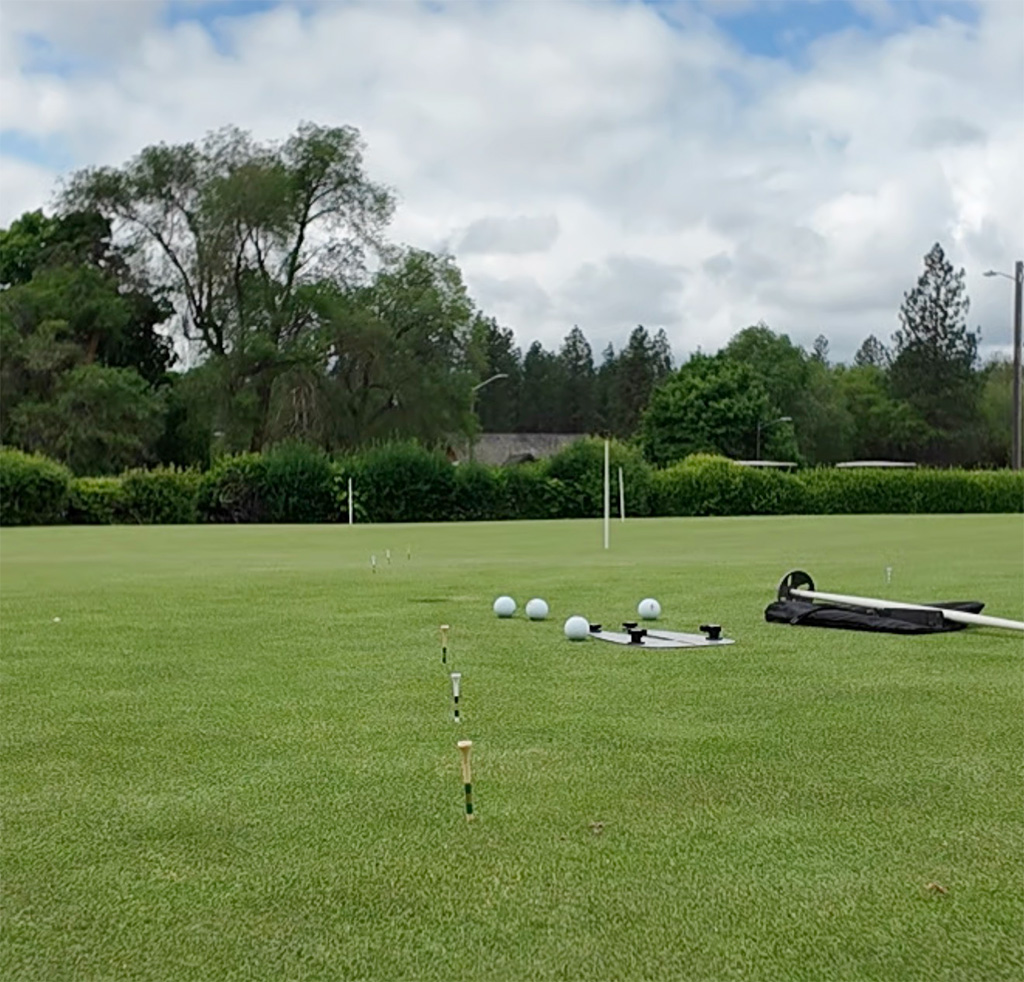
With the beginning of June on the horizon and courses rounding into peak condition for the season, it’s time to hone the finer skills that often get rusty over the winter. More sunlight also means more time to get out on the course and work on your game.
Whether it’s the practice green or the driving range, there’s always something to improve—whether you’re enjoying the fresh air or preparing for a weekend game or tournament. You can work on drills or freestyle around the green, and friendly competition is a great way to sharpen your skills.
While there are endless ways to get better at golf, I’m going to focus on practicing around the green. Let’s take a look at a few things to keep in mind as we head into the summer months.
Drills
From the driving range to the practice green, it’s important to incorporate drills into your routine. Years ago, I spent a weekend working on my short game with James Sieckmann. He recommended doing drill work for 5–10 minutes, then returning to your main practice.
This way, you create a balance between structured drills and real-world scenarios, so you’re not confined to “perfect” situations. For example, hitting the same three-foot putt over and over is good for repetition, but after a while, it becomes less interactive for your brain.
My approach is to use a putting trainer with a narrow gate for the ball to pass through, or simply place tees just outside the width of the ball. I’ll hit a series of four putts through the gate for three sets. Then, from a similar distance, I’ll hit four putts without the training aid and repeat that sequence three times.
Next, I’ll hit a number of 15–25 foot putts in a random fashion, then circle back to repeat the short putt drills with and without the training aid.
This breaks up the rhythm of hitting short putts with the training aid. When you hit the same short putts over and over, it’s easy to get into a groove—which is great for the drill, but not reflective of actual course play. While finding a rhythm is fundamental for drills, I like to introduce variation with longer putts to keep things realistic.
Game Mode
Once you’ve established a foundation with drills, it’s time to simulate on-course scenarios. This is where a few practice games come in handy.
One that I’ve been enjoying lately involves putting 10- to 15-footers with two balls. If I make the putt, great! If I miss, I pull the missed ball back a putter length. Suddenly, that little tap-in becomes a nerve-wracking three-footer—at least at first. As you get better at this game, those three- and five-footers become much more comfortable and routine.
It may sound cliché, but each shot is just what it is—it’s how we react that makes the difference. I like this game because it blends the pressure of on-course putting with the consequence of leaving yourself a much longer putt than usual.
Another game I like is one I recently learned from Brad Faxon. Place three tees in a line at four different locations around the hole: one at 3 feet, one at 6 feet, and one at 8 feet. The 3- and 6-foot putts count as par, and the 8-footer is for birdie.
This game keeps you focused on scoring and helps you get into a competitive mindset. You can even think about this putting game while you’re on the course. I just started playing it, and last week I couldn’t get better than two under par.
Competition
Competition during practice is when drills and games come to life, and you start to see results. For me, nothing beats a putting contest with a friend or two. In the right setting, these contests can become talking points for the whole season.
Match play, a game of 21, or simply seeing who can make the most one-putts (with a small prize on the line) are all great ways to simulate real on-course pressure. Recently, I played in a putting contest where one competitor made back-to-back 30- and 50-foot putts. As they say, expect your opponent to make every putt—and he nearly did. That’s impressive, and it’s something you see on the course, too: you have to stay committed to your game plan, no matter what.
When it comes to practice, it’s important to blend feedback from recent rounds with the fundamentals you want to reinforce. Drills, games, and competition—from the driving range to the putting green—form the backbone of skills you’ll rely on during actual rounds.
Finding the right balance is something we’re all working on, one practice session at a time. With the beginning of June on the horizon and courses rounding into peak condition for the season, it’s time to hone the finer skills that often get rusty over the winter. More sunlight also means more time to get out on the course and work on your game. Whether it’s the practice green or the driving range, there’s always something to improve—whether you’re enjoying the fresh air or preparing for a weekend game or tournament. You can work on drills or freestyle around the green, and friendly competition is a great way to sharpen your skills. While there are endless ways to get better at golf, I’m going to focus on practicing around the green. Let’s take a look at a few things to keep in mind as we head into the summer months.
Drills
From the driving range to the practice green, it’s important to incorporate drills into your routine. Years ago, I spent a weekend working on my short game with James Sieckmann. He recommended doing drill work for 5–10 minutes, then returning to your main practice. This way, you create a balance between structured drills and real-world scenarios, so you’re not confined to “perfect” situations. For example, hitting the same three-foot putt over and over is good for repetition, but after a while, it becomes less interactive for your brain.
My approach is to use a putting trainer with a narrow gate for the ball to pass through, or simply place tees just outside the width of the ball. I’ll hit a series of four putts through the gate for three sets. Then, from a similar distance, I’ll hit four putts without the training aid and repeat that sequence three times. Next, I’ll hit a number of 15–25 foot putts in a random fashion, then circle back to repeat the short putt drills with and without the training aid.
This breaks up the rhythm of hitting short putts with the training aid. When you hit the same short putts over and over, it’s easy to get into a groove—which is great for the drill, but not reflective of actual course play. While finding a rhythm is fundamental for drills, I like to introduce variation with longer putts to keep things realistic.
Game Mode
Once you’ve established a foundation with drills, it’s time to simulate on-course scenarios. This is where a few practice games come in handy. One that I’ve been enjoying lately involves putting 10- to 15-footers with two balls. If I make the putt, great! If I miss, I pull the missed ball back a putter length.
Suddenly, that little tap-in becomes a nerve-wracking three-footer—at least at first. As you get better at this game, those three- and five-footers become much more comfortable and routine. It may sound cliché, but each shot is just what it is—it’s how we react that makes the difference. I like this game because it blends the pressure of on-course putting with the consequence of leaving yourself a much longer putt than usual.
Another game I like is one I recently learned from Brad Faxon. Place three tees in a line at four different locations around the hole: one at 3 feet, one at 6 feet, and one at 8 feet. The 3- and 6-foot putts count as par, and the 8-footer is for birdie.
This game keeps you focused on scoring and helps you get into a competitive mindset. You can even think about this putting game while you’re on the course. I just started playing it, and last week I couldn’t get better than two under par.
Competition
Competition during practice is when drills and games come to life, and you start to see results. For me, nothing beats a putting contest with a friend or two. In the right setting, these contests can become talking points for the whole season. Match play, a game of 21, or simply seeing who can make the most one-putts (with a small prize on the line) are all great ways to simulate real on-course pressure. Recently, I played in a putting contest where one competitor made back-to-back 30- and 50-foot putts. As they say, expect your opponent to make every putt—and he nearly did. That’s impressive, and it’s something you see on the course, too: you have to stay committed to your game plan, no matter what.
When it comes to practice, it’s important to blend feedback from recent rounds with the fundamentals you want to reinforce. Drills, games, and competition—from the driving range to the putting green—form the backbone of skills you’ll rely on during actual rounds. Finding the right balance is something we’re all working on, one practice session at a time.


For Korean golfers, we always look forward to the last of the kkot-saem-chu-I for the true start of a new golf season. The term refers to a cold snap, but literally translates as “winter being jealous of the flowers beginning to bloom, thus lashing out one final time before surrendering to spring”.
A rather poetic mouthful packed into a short expression.
Koreans can be like that. Understated, yet oddly expressive at the same time. And nowhere is this more true on the golf course and in our golf bags. In fact, I suspect many Korean golfers look forward to new apparel and accessory drops more than they do actual equipment launches each year.

At this point, Korean golf fashion may exist on its own timeline. (courtesy of @seonbi_golfer)
There is ample evidence to support that suspicion. Korea is the world’s third-largest golf market behind the United States and Japan, yet its appetite for golf apparel exceeds that of both countries combined. Recent estimates suggest that Korea accounts for nearly 40 percent of the global golf apparel market, placing it among the world’s most influential golf fashion markets and punching well above its size.
Simply, we care deeply about how new golf clubs look and feel, but enjoy looking good while swinging them even more.
Golfers in the West may laugh and say that golf is played on a course, not a fashion runway. Perhaps. But what’s the harm in trying to look and feel good, if the added self-confidence can help actual performance? It certainly seems to have worked for Jason Day, who may have unlocked a new stats category: dormant strokes gained. Coincidence?

During the COVID-era, estimates placed the market near $9 billion, an astonishing figure for a single country.
As a proud member of Gen X, I’ve witnessed the highs and lows of golf fashion firsthand. The pleated trousers and wing-tipped shoes of Jack Nicklaus, the stylish plus-fours and knickers of Payne Stewart, the baggy black trousers and fitted mock-necks of Tiger Woods, and the thigh-hugging athletic tailoring of Rory McIlroy. Golf fashion, like the golf swing itself, has rarely stood still.
But nowhere have those trends shifted, evolved, and been scrutinized quite as relentlessly as in Korea. Here, golf fashion moves faster than fairway gossip, and consumers dissect brands with a level of discernment that can be both impressive and mildly terrifying. New brands are studied, judged, embraced, or dismissed with startling efficiency.
The result is a consumer base with one of the sharpest eyes for quality and authenticity anywhere in the world. It is difficult to quantify, but easy to recognize. Clean lines without trying too hard. Luxury mixed with utility. Trend awareness balanced by restraint and purpose.
It’s golf fashion shaped by one of the world’s most style-literate cities, something I like to call Seoul Sensibilities, referring to the taste level forged by a uniquely competitive environment.
And increasingly, global brands have noticed.

Many golf brands in Korea have their own flagship shops dedicated to apparel only
Titleist understood this years ago, when its apparel business in Korea took on a life of its own under new ownership and local direction. What had once been a straightforward extension of an iconic equipment giant became something sharper and more premium. By going all in on the serious Tour-player look (I couldn’t even fit into their XL sizes), Titleist struck the right chord with Korean consumers and helped its fledgling apparel business break into the mainstream. Titleist became a household name even for non-golfers who wore its caps, shirts, and windbreakers in daily life. In many ways, it proved that even heritage golf brands could carry real fashion credibility when viewed through a Korean lens.
Several years later, PXG took a page out of Titleist’s playbook and followed suit. Korean consumers helped transform the brand from one known largely for irons and loud commercials into something broader and more stylish. PXG apparel’s growth in Korea was explosive, where it found an early audience and turned the category into something more than mere logo merchandise. It is still hard to walk anywhere in Seoul without seeing its palindrome logo.
Malbon’s meteoric rise in the United States was genuine, but its ascent into a global golf lifestyle brand owes much to Korea, where it was elevated by a market already fluent in modern golf style. Korea did not simply embrace Malbon. It pressure-tested the concept, refined its appeal, and helped push it into the global spotlight.
As such, new brands may arrive from abroad, but more often than not, their sharpest evolution happens here. If a brand can earn credibility in Seoul, it’s deemed to have passed one of the toughest style audits in the game.
That is why the next meaningful chapter may not come from outside, but from a Korean brand moving in the opposite direction, carrying those Seoul Sensibilities outward as K-pop once did.

Play young Stay dope.
From Seoul, With Intent
Khalhon is a label that feels less like a trend-chasing newcomer and more like the product of a market that has already seen everything. Golfers here have long been surrounded by luxury logos, technical fabrics, and tour uniforms disguised as lifestyle wear and vice-versa. In other words, novelty alone rarely lasts here, and the Koreans seems to understand that instinctively.
Its style language leans into clean silhouettes, relaxed but tailored proportions, muted palettes, and premium materials that speak quietly but confidently. There is a modern city aesthetic running through it all, with strong layering pieces, thoughtful textures, and subtle branding that suggests sophistication rather than demanding attention.

“Built for the course. Designed beyond it.”
Most importantly, the garments seem designed to blur the line between golfwear and everyday style. Shirts, trousers, knitwear, and outer layers move comfortably between a game of screen golf, a lunch reservation, an airport gate, or an afternoon coffee in Gangnam with friends.
It raises the question of whether this is golfwear that happens to look good off the course, or everyday clothing that performs beautifully on the fairways.
Personally, I have long appreciated Nike Golf for its clean, athletic modernization of golf attire. It also has the useful side effect of making me look like a more serious golfer than I probably am. But off the course, there are times when being instantly identified as the golf guy in a crowd of non-golfers can feel a touch self-conscious.

“Built for the course. Designed beyond it.”
That is part of what drew me to Khalhon, which seemed to blend golf and everyday wear naturally. While some of the outfits may be slightly beyond my personal confidence level, the brand also offers tasteful options for older guys like me who still want to express a little personality without regretting the decision later.
These are not simply flashy outfits worn on the course and then banished to the closet until the next tee time. They work surprisingly well off the course too, and I suspect many of the pieces will still look right a couple of years from now, which would certainly be kinder to my wallet than most golf fashion trends tend to be.
And perhaps that broader lifestyle positioning also helps explain why someone like Sean Wotherspoon would find Khalhon creatively interesting in the first place.

“Built for the course. Designed beyond it.”
“Korea is not only one of the most fashion-forward golf markets in the world, but one of the most fashion-forward markets globally. Korea is ahead, and I love to watch and try to catch up.” – Sean Wotherspoon, Creative Director at Khalhon
Seoul and Beyond
If Khalhon’s rise says something about where Korean golf fashion is today, its relationship with Sean Wotherspoon says even more about where it is heading.
For readers less familiar with Sean Wotherspoon, his arrival at Khalhon is not some routine celebrity endorsement or influencer collaboration. In design and streetwear circles, Wotherspoon is regarded as one of the more influential creative voices of his generation, particularly when it comes to blending nostalgia, storytelling, and contemporary culture into products that people can connect with.
He first gained widespread attention through his now-famous Nike sneaker collaborations, where his vintage-inspired designs and instinct for color helped turn him into one of the defining artists of the late-2010s sneaker era. His work gradually expanded beyond footwear into apparel, automotive collaborations, collectibles, and broader lifestyle design.
Modern golf style now extends well beyond the fairways, where performance and functionality are largely expected by default. And while plenty of brands already make technically competent golfwear, Khalhon seems more focused on designing clothes people would genuinely want to wear even after the round ends.
And when guys at Wotherspoon’s level show genuine interest in working with a Korean golf brand as its new Creative Director, fashion circles tend to sit up and pay attention. There’s already a huge buzz among the fashion-conscious here about upcoming collabs with iconic sports stars and brands.

“My creative direction for Khalhon is disruptive, colorful, nostalgic, and modern. My goal is to blend these avenues seamlessly within each collection.” – Sean Wotherspoon
In chatting with Sean, what stood out most to me was how genuinely energized he sounded about the project itself. Despite having already worked across and countless other creative spaces, he described golf as a completely fresh category for him, saying that Khalhon “will be an amazing vehicle for my design work.”
At the same time, his enthusiasm seemed tied just as much to Korea itself. He spoke openly about admiring Korea’s fashion culture while repeatedly insisting he is still a terrible golfer.
There was something oddly refreshing about that humility. Rather than sounding like a celebrity parachuting into golf simply because the category suddenly became fashionable, Sean sounded genuinely curious about what Korea might do with the category next.
And perhaps that is what makes Khalhon feel interesting right now. The brand feels less like a trend-chaser and more like the natural result of a market now confident enough to export its own point of view.
For years, global brands came to Korea to sharpen their image against one of the most discerning audiences anywhere. Now, a Korean label appears ready to send those Seoul Sensibilities outward instead.
Which brings us back to kkot-saem-chu-i.
That final cold snap before spring always arrives with a reminder that seasons are changing, whether we notice it immediately or not. Golf fashion feels a little like that right now as well, as the old boundaries between sport, streetwear, luxury, and everyday style continue to soften.
And somewhere in Seoul, a Korean golf label already seems prepared for whatever season comes next. I just hope they have everything in my size.

Aaron Rai’s winning WITB: 2026 PGA Championship

Russell Henley’s winning WITB: 2026 Charles Schwab Challenge

Photos from the 2026 CJ Cup Byron Nelson

CJ Cup Byron Nelson Tour Report: Koepka and Kim’s newest putters finally get hot

Charles Schwab Challenge Tour Report: MacIntyre, Åberg and Spaun all switch putters, TaylorMade launches new Spider

Details on J.J. Spaun’s surprise putter switch

GolfWRX Launch Report: 2026 Titleist GTS drivers

Photos from the 2026 Charles Schwab Challenge

PGA Championship Tour Report: Fitzpatrick, Koepka among big-name putter switches for Aronimink

Photos from the ShopRite LPGA


Maria Torres WITB 2026 (June)
Driver: Ping G440 LST (9 degrees) Shaft: Accra TourZ Green 5-M4 3-wood: Ping G440 Max (15 degrees) Shaft: Accra TourZ Green 6-M4 5-wood: Ping G440...


Eric Cole WITB 2026 (June)
Driver: PXG Lightning Tour Max (9 degrees) Shaft: Project X Titan Yellow 70 TX 3-wood: TaylorMade Qi4D (15 degrees) Shaft:...


Si Woo Kim WITB 2026 (May)
Driver: Callaway Quantum Triple Diamond (8.5 degrees) Shaft: Fujikura Ventus Black 6 X Mini driver: Callaway Paradym Ai Smoke Mini...


Wyndham Clark’s winning WITB: 2026 CJ Cup Byron Nelson
Driver: TaylorMade Qi4D (10.5 degrees) Shaft: Project X Titan Yellow 60 TX 3-wood: TaylorMade Qi4D Tour (15 degrees) Shaft: Project...


Mike Boatright
Jan 23, 2017 at 4:31 pm
Iv’e researched heavily these mini tours and have found the leaders to have a scoring average of say 65.66 etc.. The pga tour needs to get off it’s elitists ass and give these good players a legitimate chance! Any time you set up a format that requires you to either have a sponsor exemption or play great for 6 days straight just to make it on the minor leagues is kinda making it far fetched for the majority of good players who aren’t rich. They do have some monday qualifying events which is just a blood fest first you need to pre qualify to make it into the qualifier which is you vs 4 guys usually a 65 loses and a 64 wins,then you qualify for the monday and it’s the same story you shoot 67 on a windy day the other guy shoots 66. By then the winner is so tired and nervous from his start that he shoots 75 70 and misses the cut by one stroke how is this fair?
adam
Jul 25, 2014 at 9:01 pm
Listen, if you’re good enough you will sail through Web.com Q School and be on that AAA tour. If you’re good enough there, you’ll be on the PGA tour. Much easier today. Web.com Q school doesn’t care if you went to Stanford or Truckee Meadows Community College.
jess robinson
Jun 7, 2013 at 12:31 pm
“Golf is happiness for
Happiness is achievement.
The father of achievement is motivation
The mother is encouragement.
The fine golf swing is truly achievement
Man may lie, cheat, and steal for gain.
But, these will never gain the golf swing
To gain the golf swing man must work.
Yet it is work without toil
It is exercise without the boredom.
It is intoxication without the hangover
It is stimulation without the pills.
It is failure yet its successes shine even more brightly
It is frustration yet it nourishes patience.
It irritates yet its soothing is far greater
It is futility yet it nurtures hope.
It is defeating yet it generates courage
It is humbling yet it ennobles the human spirit.
It is dignity yet it rejects arrogance
Its price is high yet its rewards are richer
Some say it’s a boy’s pastime yet it builds men
It is a buffer for the stresses of today’s living.
It cleanses the mind and rejuvenates the body
It is these things and many more.
For those of us who know it and love it
Golf is truly happiness.”
— Paul Bertholy
Frank Dolan
May 19, 2013 at 6:48 pm
Most authors make mistakes, specifically for those readers who look for mistakes. If you look past the mistakes, you will really enjoy the article. Another home run for you Mr. Cage. Keep those articles coming – I enjoy them tremendously.
P. S. – Did I make any grammatical errors?
youstink
May 11, 2013 at 7:43 pm
I never want to chase a dream. I just want to go to my 9-5 job and sit in my cubical all day and grind my teeth over the fact my wife is probably banging the pool guy that I pay with the money I saved from my boring conservative life…
When the day ends I want to put myself to sleep by correcting Blog articles on a golf website full of folks that can’t appreciate truthful information because they think they know everything…
Sean
May 10, 2013 at 4:36 pm
I enjoyed the article. There are a few segments I can relate to as well.
Steve Pratt
May 10, 2013 at 1:53 am
I thought this was a terrific article. It brought back good and bad memories of my experiences on various mini tours.
In my opinion, the author nicely captures the essence of life and struggles on the mini tours.
Danny
May 9, 2013 at 7:54 pm
Ian poulter will be broke and infamous in 10 years. They guy never wins except for the Ryder Cup which doesn’t pay. Normally the guys that got it dont flaunt it, and the ones that flaunt it don’t have it. Look at Warren Buffet compared to Donlad Trump. Trump has been bankrupt several times and sues publications that post his real worth which is about 1/10th what he says it is.
Curt
May 10, 2013 at 12:22 am
Donald Trump just inquired about your physical address, so he coulde serve you!!! Dont answer the door!!!
Shawn
May 10, 2013 at 11:20 am
I think you’ll find that a lot of successful people have had bankruptcies in their past. That line of reasoning doesn’t make a lot of sense. Trump’s liquid worth is far less than his worth on paper, but that’s a pretty common thing for people who own a lot of stuff, rather than have a lot of money.
I’m no Poulter fan, but he seems to have an awful lot of cash for a guy that never wins.
sdgfhjkhgjkdfsfg
May 9, 2013 at 7:15 pm
the best line in the article:
“But for every Ian Poulter who owns a fleet of Ferraris and struts around like a movie star, ”
Ian is a new money brat. It’s amazing how much that guy brags.
Dave
May 10, 2013 at 10:12 am
If there was one player I could punch in the face it would no doubt be IJP. By the way, the logo for his clothing line is ABSOLUTELY TERRIBLE… what designers is this guy hiring!?
Tool Status
May 9, 2013 at 4:09 pm
id probably tear up one of these mini tours, but id rather just spend my time with the ladies
gorgor
May 11, 2013 at 10:17 pm
+! internet
danny
May 9, 2013 at 3:51 pm
I blame these guy’s parents. There comes a time in everyone’s life when you can’t chase your dreams any longer. Sometimes we can’t see it ourselves and the worst thing you can have is parents and loved ones feeding in to that dream. I had a sister who wanted to be a doctor in the worst way but couldn’t get in to med school. I also had a roommate who longed to be a fighter pilot, yet didn’t have great eye sight. Both of these people were told by loved ones that it’s time to grow up and move on, and both are living happy lives because of it now. It takes a real man to admit when enough is enough and it’s time to move on.
Nick
May 9, 2013 at 9:12 pm
Why Should anyone give up on their dreams ever? You only get one shot at life, do what makes you happy and forget the “realists”. They will be the ones wondering what if and saying I should have when they are too old to live thier dreams. At least you spent your life working 9-5, for whatever that is worth…
Danny
May 9, 2013 at 10:55 pm
It’s selfish. These dreamers will end up with debt and families to pass it on to.
tsunamijohn
May 9, 2013 at 3:35 pm
Question nothing, just drink the Kool-Aid.
Minitourplayer
May 9, 2013 at 2:56 pm
So did the Flagship Tour pay for this article?
Zak Kozuchowski
May 9, 2013 at 3:27 pm
Minitourplayer,
Rusty is a wonderful writer with strong journalism instincts and morals. For you to suggest otherwise shows that you haven’t paid much attention to his previous work, or the GolfWRX Featured Writers program as a whole.
– Zak
t120
May 9, 2013 at 8:34 pm
That…is your opinion, Zak.
I think it goes beyond sounding like an ad, but well-written? I wouldn’t go that far. It’s a few different “HARO” respondents he aggregated into an ambling, unclear rough draft of article. A good journalist doesn’t just take notes and format, he tells a captivating story.
What did he do instead?
1.) He spent a large portion of the article covering a mini-tour that hasn’t yet played a game.
2.) Profiled a Canadian golfer that briefly played in Canada, not U.S. Mini tours.
3.) Dropped a few names of past mini-tour players, yet didn’t expand on them.
4.) Threw in some generalizations about past tour players that may or may not have existed, been scratch golfers, and/or quit for up to 5 various reasons unrelated to their game. Not a single name, or proof backing up that theory.
All of that and I still have no idea what the Hooters, Pepsi or any other mini tour is really like. Maybe interview someone that’s actually been on one or more of the major tours and get a first hand account.
As it stands, if you read this article the only thing you’ll get out of it is “Guys. Even if you’re very, very good, if you can’t afford a nice round number like $10,000/yr – you will be forced to sell shoes at Nordstrom.”
tim roncone
May 10, 2013 at 1:13 am
when you choose to find a negative in something you will always fail to see the good or in this case understand whats he’s trying to portray. i really hope you have better things to do with your life than bash other peoples work. have a nice day tool.
t120
May 10, 2013 at 11:46 pm
So…your response is somehow vindicated because I didn’t write an article? Who’s really the tool here? You didn’t bring anything to the table but a comment about a comment and in total frustration with your inability to make a point – a condescending remark.
Minitourplayer
May 10, 2013 at 9:55 am
Its basically a commercial for a brand new tour that no one has heard of
Dave
May 10, 2013 at 10:09 am
I disagree… I clicked on the article thinking it would in fact be a story about life as a mini-tour player and instead it was disjointed and unrelatable. It’s a shame.
On another note, I find it hard to believe that there are only 156,000 HS seniors playing basketball each year, but who knows.
Shawn
May 10, 2013 at 11:18 am
I completely agree with you. Between the headline that feels kind of misleading, a lot of Typos (“There’s” as was mentioned above and a few other awkward choices) I don’t think this is a very good article at all.
x-15a2
May 9, 2013 at 2:13 pm
The word “there’s” is a contraction for “there is”. That being the case, you’d never write “there is plenty of golfers…”, “there is thousands who don’t.” or “There is thousands of golfers playing on the mini tours every year.” In these cases, you would say “there are” instead of “there is”. For the record, “…there’s next to no risk to play a Flagship Golf Tour event” is the correct use of “there’s”.
The contraction that you are looking for “there are” is “there’re” but besides being difficult to pronounce, “there’re” looks peculiar (and is incorrectly rejected by many spell-checkers). You are probably better off ditching a contraction for “there are”.
Joey5Picks
May 15, 2013 at 3:47 pm
That was a fun post to read. Thanks for the puncuation lesson.