
News
The 24 players who can win the Masters


My annual Masters column, which highlights contenders capable of winning the tournament, has proven successful since its launch in 2013. With a smaller field than other majors and the distinction of being the only one played on the same course each year, Augusta National lends itself to clearly defined performance metrics that strongly predict success. As a result, my filtering approach—refining the field down to roughly 20–24 players—continues to hold up.
For the past 25 years, Augusta National has favored long hitters more and more than it has ever favored long hitters. The best way for short hitters like Zach Johnson to win the Masters was to get weather conditions to benefit them, meaning fewer par-5s reached in two shots and fewer greens in regulation being hit by the field. The weather forecast doesn’t appear to help the short hitters this year, as it calls for very little chance of rain, winds under 10 mph, and temperatures ranging from mid-70s to low 80s.
But the data shows a larger factor at work. PGA Tour golfers are producing much faster club and ball speeds, resulting in longer drives and higher ball flight. 10 years ago, the average club speed on the PGA Tour was 112.9 mph. Now it’s at 117.0 mph. In fact, at the Houston Open, the average club speed among 124 players was 118.1 mph. And ball speeds have jacked up as well, with the tour average at 167.7 mph 10 years ago and 174.9 mph currently. As I commented to one of our tour clients recently, 190 (mph ball speed) is the new 180 (mph ball speed.
It’s not just the young players coming into the tour; it’s the veterans who are seeing substantial increases in club and ball speed. Players like Collin Morikawa, who were regularly at 111-112 mph club speed, are now in the 115 to 117 mph range. Mackenzie Hughes recently took a jump from 114-115 mph to 120 to 121 mph. And even Gary Woodland, always a big speed player, has gone from around 122-123 mph to 128-130 mph. There’s a clear mandate from players on tour: get faster and longer off the tee because distance is too big a factor in terms of success.
With that being said, I hypothesize that this will even the playing field a little for the Masters. While distance is greatly important at Augusta, the returns likely plateau at a certain point. But the players that have typically not been long enough to compete at Augusta are now long enough to reach those critical par-5’s in two shots and hit those long iron shots high enough with enough spin to hold those greens, whereas in the past they may see their ball roll off the green and have a difficult chip to save par. And this will put a greater emphasis on approach shot play from a distance, I call ‘The Red Zone’, shots from 175-225 yards.
Speaking of critical shots, the increase in distance off the tee appears to be showing up on what are the ‘Critical Holes’ of the tournament. The Critical Holes are the trends of where the top finishers are gaining the most strokes versus the field. Typically holes #13 and #15 (along with hole #7 and #12) have been critical holes for the event but the most recent trends have holes #5 and #18 as the only critical holes projected for the tournament.
I will start with the LIV players. Since LIV does not track data on Trackman or ShotLink, there’s a bit of a guessing game for me:
Sergio Garcia
Dustin Johnson
Tom McKibbin
Carlos Ortiz
Charl Schwartzel
Cameron Smith
Bubba Watson
Despite being past champions, I ruled out Sergio and Bubba due to age. While Mickelson and Kenny Perry got into contention at 53 years old, and years before Kenny Perry almost won at 48 years old, the oldest Masters winner is still Jack Nicklaus at 46 years old, and players in their 40s don’t fare well at winning The Masters. Remember, this filtering is about probability, not certainty.
DJ hasn’t played well in the past few years, and Schwartzel’s iron play struggles have played a large role in his inability to win another green jacket. Cameron Smith hasn’t played well recently either, and unless he’s gained major distance off the tee, I wouldn’t feel comfortable letting him get past the filter.
Next up, I filter out amateurs and first-time invitees. The Masters has only been won three times by a first-time attendee: Fuzzy Zoeller was the last to win in 1979. Prior to Zoeller, though, it was Horton Smith in the inaugural event in 1934, followed by Gene Sarazen in 1935:
Michael Brennan
Jacob Bridgeman
Ethan Fang (A)
Ryan Gerard
Chris Gotterup
Ben Griffin
Harry Hall
Jackson Herrington (A)
Brandon Holtz (A)
Mason Howell (A)
Casey Jarvis
Naoyuki Kataoka
Fifa Laopakdee (A)
John Keefer
Rasmus Neergaard-Petersen
Andrew Novak
Marco Penge
Mateo Pulcini (A)
Kristoffer Reitan
Samuel Stevens
Sami Valimaki
Out of these players, the data likes Brennan, Griffin, and Valimaki as good fits for this year’s Masters. I also filter out players who have yet to make the cut at the Masters:
Aldrich Potgieter
I also rule out any player who has not won a singles tournament on the PGA Tour, DP World Tour, or LIV Tour.
Max Greyserman
Next up, I will take out the past champions who are at an age that I don’t expect them to seriously contend.
Angel Cabrera
Fred Couples
Zach Johnson
Jose Maria Olazábal
Vijay Singh
Mike Weir
In terms of predicting future performance, recent performance is a big factor, so I filter out these players who missed the cut at the Valero Open:
Russell Henley
Max Homa
Haotong Li
Sepp Straka
Cameron Young
Out of this group of players, Young hits all of the marks to get past the filter if he had not missed the cut in San Antonio.
Every year, I filter out the most critical area of the game for the Masters, shots from 175-225 yards. As I mentioned earlier, I believe that with the increase in distance off the tee that the tour has seen in recent years, the approach shot play will become even more critical. Here are those players who have not played well enough from 175-225 yards this season.
Patrick Cantlay
Nico Echavarria
Tommy Fleetwood
Sungjae Im
Michael Kim
Robert MacIntyre
Maverick McNealy
Aaron Rai
Davis Riley
Scottie Scheffler
Jordan Spieth
Justin Thomas
Obviously, the biggest surprise player to be filtered out is Scheffler. But he currently ranks 153rd out of 169 players on tour on shots from 175-225 yards and ranks 82nd in Strokes Gained for all approach shots. This is very unlike Scheffler, whose career path is leading him to be one of the finest approach shot golfers of all time. And given his past success at Augusta, it leaves this year’s field quite vulnerable.
Fleetwood came to the tour as one of the best iron players but around 2020 is when his iron player started to have issues and outside of last season his play from 175-225 yards has not been good. He currently ranks 133rd out of 169 players from 175 to 225 yards. SungJae Im and Justin Thomas are coming off injuries and have historically been very good players from 175 to 225 yards, but have not performed well from that distance in the few events they have played thus far.
Next up, I will filter out the players who are not long enough off the tee to likely compete.
Brian Campbell
Brian Harman
Campbell has also struggled from 175 to 225 yards as well (142nd), but his lack of distance greatly lowers his odds of winning a Green Jacket. Harman ranks 70th from 175 to 225 yards and meets almost all of the other filtering criteria except for distance and the last piece to the puzzle, shot height.
I have found that shot height to be a very important criterion to success at the Masters, but I needed to tweak how that was determined because using the apex height data on the PGA Tour website has not always given an accurate description. So I also utilize data such as carry distance, hang time, and Trackman data on the tour’s tracker website to determine how high the player actually hits their shots. Not only is there some importance placed on how high a player can hit their driver off the tee, but there’s more importance placed on how high they can hit their irons.
For example, Gary Woodland ranks only 116th in apex height with the driver. But when I factor in the rest of his data and particularly his iron shots on par-3’s, he has the ability to greatly increase his apex height with his driver and get long approach shots to stop on greens.
Here are the players I filtered out for shot height concerns:
Daniel Berger
Corey Conners
Matt Fitzpatrick
Ryan Fox
Si Woo Kim
Hideki Matsuyama
Matt McCarty
Collin Morikawa
Alex Noren
JJ Spaun
Nick Taylor
Danny Willett
There are many players in this group that were difficult to leave, such as Conners, Fitzpatrick, Kim, Matsuyama, Morikawa, and Spaun. Morikawa ranks first in Strokes Gained – Approach and has the distance, but still flights his irons a bit low according to the data. My data modeling had him as almost a toss-up, but the back injury at Sawgrass convinced me to filter him out for this year’s event.
The data loves Fitzpatrick’s game overall and sees him as a contender in majors for the near future as well as a player that can win multiple tournaments each year. But his low ball flight doesn’t bode well at Augusta, and he’s only made two top-10 finishes in eleven appearances at the Masters (best finish t-7th). Si Woo Kim currently ranks first in shots from 175 to 225 yards, but he also prefers to flight his long approach shots lower.
It’s not that these players cannot possibly contend this week, but the odds work against them if they get into contention with a power player like Rory or Bryson who can hit moon shots with ease.
And that leaves us with the 24 players who can win the 2026 Masters:
Ludvig Åberg (14/1)
Akshay Bhatia (50/1)
Keegan Bradley (225/1)
Sam Burns (100/1)
Wyndham Clark (200/1)
Jason Day (75/1)
Bryson DeChambeau (10/1)
Harris English (100/1)
Tyrrell Hatton (90/1)
Nicolai Hojgaard (80/1)
Rasmus Hojgaard (200/1)
Viktor Hovland (60/1)
Kurt Kitayama (175/1)
Jake Knapp (75/1)
Brooks Koepka (45/1)
Min Woo Lee (40/1)
Shane Lowry (70/1)
Rory McIlroy (12/1)
Jon Rahm (12/1)
Patrick Reed (35/1)
Justin Rose (30/1)
Xander Schauffele (16/1)
Adam Scott (70/1)
Gary Woodland (100/1)
And here are my personal top-10 picks:
Bryson DeChambeau (10/1)
Jon Rahm (12/1)
Rory McIlroy (12/1)
Ludvig Aberg (14/1)
Xander Schauffele (16/1)
Justin Rose (30/1)
Brooks Koepka (35/1)
Min-Woo Lee (40/1)
Adam Scott (70/1)
Shane Lowry (70/1)


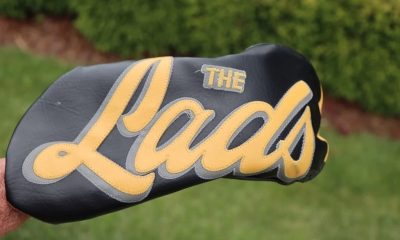



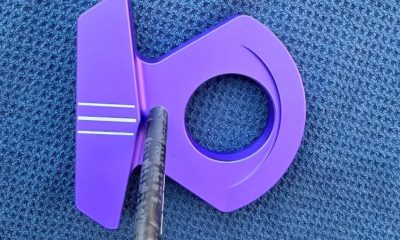


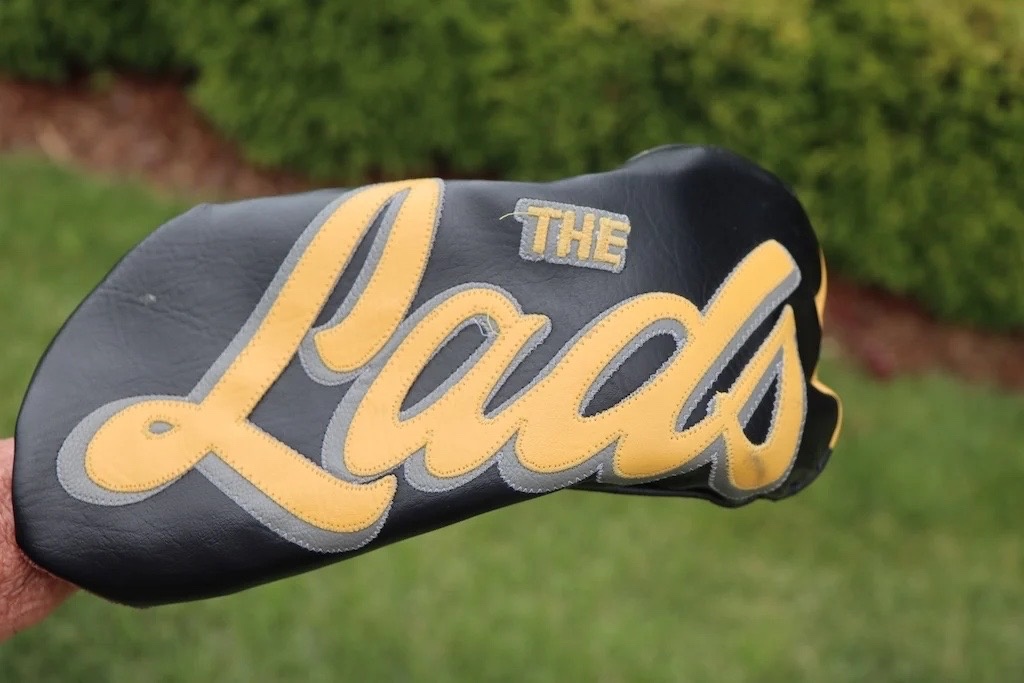
GolfWRX is on site this week at the Memorial Tournament, with both Alistair Cameron and Tour Photographer Greg Moore on the ground in Dublin, Ohio, where a strong field is assembled to pay homage to the Golden Bear.
In addition to WITB galleries, we’ve already been treated to an in-hand look at Tommy Fleetwood’s new TaylorMade Spider putters.
Check out links to all our photos below.
General Albums
WITB Albums
- Jason Day – WITB – 2026 The Memorial
- Chris Gotterup – WITB – 2026 The Memorial
- SungJae Im – WITB – 2026 The Memorial
Pullout Albums
- Jason Day’s 1off Payntr golf shoes – 2026 The Memorial
- JT Poston’s TaylorMade Spider – 2026 The Memorial
- Cameron putter – 2026 The Memorial
- Tommy Fleetwood’s TM Spider putters – 2026 The Memorial
- New Mitsubishi Chemical 1K Pro Orange shaft – 2026 The Memorial

Around the world, the golf wheel spun this final week in May of 2026. From New Jersey to Austria, with stops in Korea, Texas, and North Carolina (don’t let me route your next trip) the world’s finest put their golf games on display. There were three playoffs, some known commodities and some new talent. It was the sort of week that we hope to have at this point in the seasons. June and July afford double-digit major events, and perhaps, one of this week’s champions will use this success as a springboard to new heights. Time to run it all down, tech style, in this week’s Tour Tech Rundown.
Thanks to WITBHub, Today’s Golfer, GolfWRX, and Inside Tour Golf for initial research into equipment.
PGA Tour @ Charles Schwab Challenge: Heroic Henley denies Cole
Eric Cole did nearly everything that a fellow can do, to secure a first PGA Tour title. He stayed one shot clear of Ryder Cup player Ben Griffin. He kept US Open champion Gary Woodland and wunderkind Michael Brennan two shots distant. He posted 70 on day four to reach twelve under par. And then, Russell Henley revealed his Dr. Strange cloak. Henley made 47 feet of birdie putts on holes 16, 17, and 18, to jump from minus-nine to twelve-deep, and secured a spot in a playoff with Cole. The duo returned to the final tee, and put on a stripe show.
Both golfers found the fairway off the tee, and Henley improved on his regulation play with an approach to four feet. Cole did himself proud, tucking an iron to a dozen feet, but he was unable to convert the putt for three. Henley is one of the best putters on tour, and he proved it once more by draining a putt for a fourth consecutive birdie, and a sixth PGA Tour title. For Eric Cole, that first victory should come, and soon. He has done everything necessary to earn the chalice lift.
Henley’s Suitcase
- Driver: Titleist TSi3 at 10 degrees. Shaft: Project X HZRDUS Smoke Black 70g 6.5 TX
- Metal: Titleist TS3 at 16.5 degrees. Shaft: Project X HZRDUS Smoke Black 80 TX
- Hybrid: Titleist TSi2 at 21 degrees. Shaft: Mitsubishi MMT hybrid 100 TX
- Iron: Titleist T250 4-iron. Shaft: True Temper Dynamic Golf AMT Tour White X100
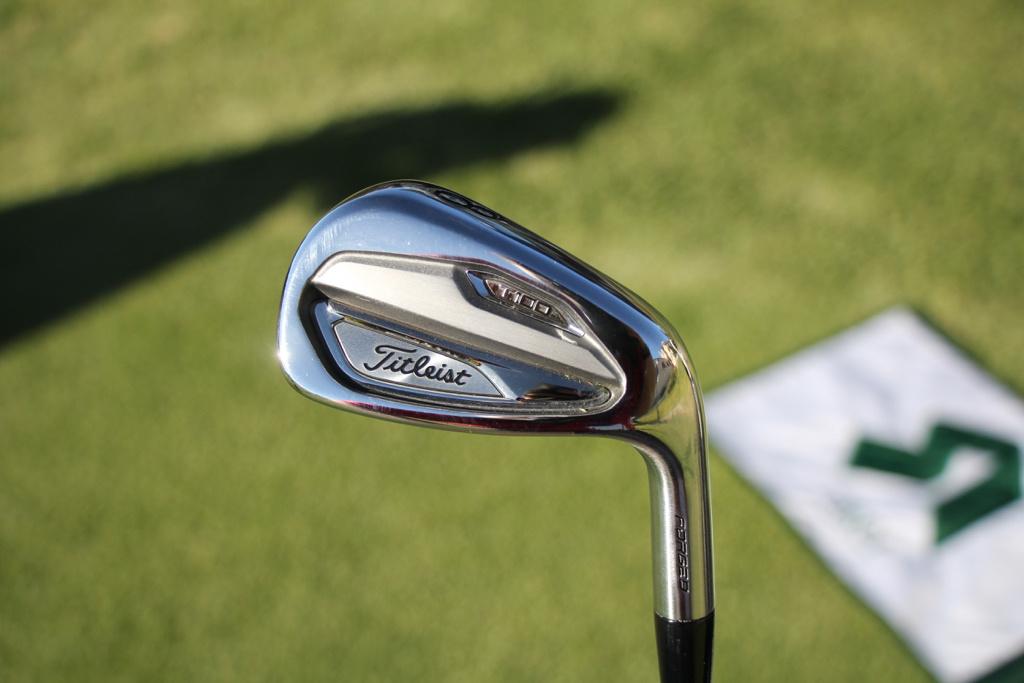
- Irons: Titleist T100 5-6 irons. Shaft: True Temper Dynamic Golf AMT Tour White X100
- Irons: Titleist T100 7-9 irons. Shaft: True Temper Dynamic Gold Tour Issue X100
- Wedges: Titleist Vokey Design SM11 at 48 and 50 degrees. Shaft: True Temper Dynamic Golf Tour Issue X100
- Wedges: Titleist Vokey Design SM11 at 54 and 60 degrees. Shaft: rue Temper Dynamic Golf Tour Issue S400
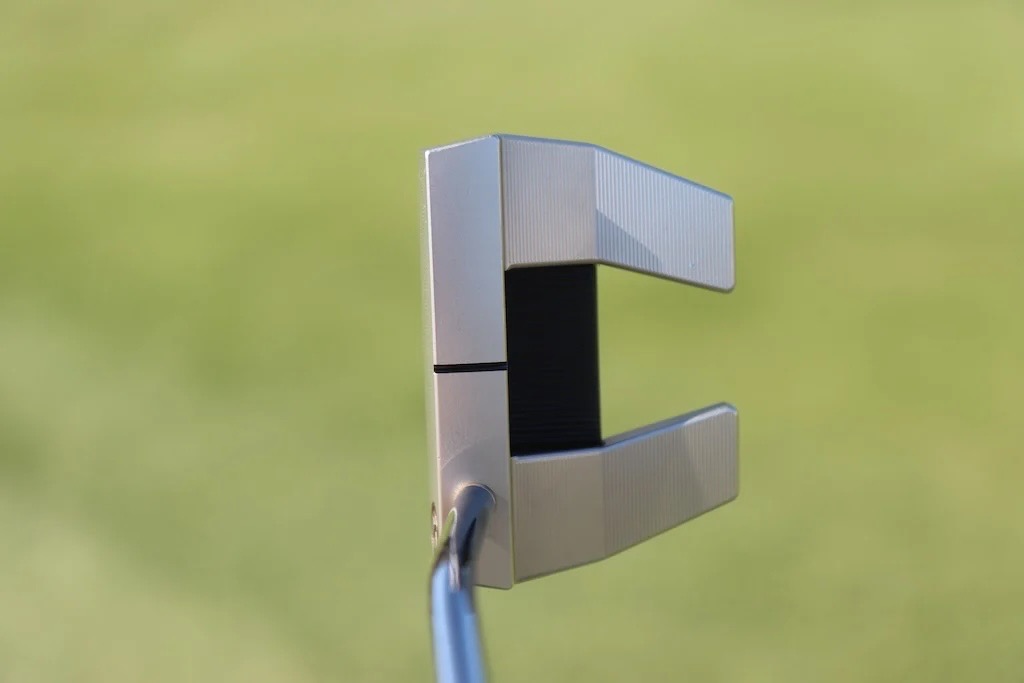
- Putter: Titleist Scotty Cameron T5 Tour Prototype
LPGA @ Shoprite LPGA: Welcome back, Celine!
Soo Bin Joo had her eyes on a maiden LPGA title. She held the lead after two rounds, then hit a red light at the intersection of can-I and how-To. Joo posted plus-two on day three in New Jersey, and dropped to a T4 finish, which was still a career-best for the young Korean golfer. Instead of a new face, a familiar face returned to the top of the podium.
Celine Boutier was the It Girl in 2023. She collected four victories, including a major title at Evian. Boutier reached world number one status, then simply faded into the background. No wins came her way over the next 30 months. On Sunday, she collected LPGA victory number seven, at the same trace as LPGA victory number two.
Day three saw Boutier manage the windswept Seaview Bay course with six birdies and a bogey. She was challenged in the end by Thailand’s Arpichaya Yubol, who signed for a 66 of her own. Yubol came up one shot shy of the top ladder rung. Finishing in third place at -7, two back of the winner, was Ireland’s Lauren Walsh.
Celine’s Suitcase
- Driver: PXG 0311 Black Ops Tour-1 at 9 degrees. Shaft: Graphite Design AD IZ-5
- Hybrid: PXG 0311 Black Ops at 19 and 22 degrees. Shaft: KBS Hybrid Prototype
- Hybrid: PXG 0311 Gen5.
- Iron: PXG 0311 P Gen 4 5-9 irons
- Wedge: PXG 0311 T Gen 4 PW
- Wedges: PXG 0311 Sugar Daddy II at 50, 54, 58 degrees
- Putter: Bettinardi Studio Stock 3 DASS
DP World Tour @ Austrian Alpine: KK? KK!
Kota Kaneko has a rhythmic name. It has strong vowels and a run of voiceless stops in its crunchy K sounds. On Sunday in Austria, Kaneko put a stop to a challenge from Portugal’s Ricardo Gouveia and everyone else, and claimed a first-ever title on the DP World Tour. Gouveia did well to reach 16-under par over four days, but Kaneko held firm, two shots in the clear.
Davis Bryant of the USA also forged a strong challenge for the win. He ended in a tie with Gouveia for second place. Kaneko began and finished his final round in a bit of a malaise, but he caught fire midway through. Birdies at 10, 12, and 13 provided the necessary cushion to cruise to the finish line without breaking a serious sweat.
Kaneko’s Suitcase
- Driver: Ping Max G440
- Metals: TaylorMade Qi4D at 15, 16.5, 21, and 24 degrees
- Irons: TaylorMade P760 5 and 6 irons
- Irons: TaylorMade P7TW 7-9 irons
- Wedges: Titleist Vokey Design at 46, 52, 56, and 60 degrees
- Putter: Odyssey Ai-One Cruiser Arm Lock #7
Korn Ferry Tour @ UNC Health Championship: Improbably Alvaro
Alvaro Ortiz may have had a bit of scare on the outward nine on Sunday, but he came through in clutch fashion in the end. Ortiz began the day bogey-double, and added another double bogey at the 11th hole. He was mired in a downward trend, spiraling away from the top of the leader’s board. Ortiz found hope at the 14th, where his first birdie of the day tumbled home. Inspired, he closed with birdies and 17 and 18 to catch Ross Steelman at 10-under par, and the duo returned to the 18th deck for overtime.
The extra session concluded in brief time. Ortiz, buoyed by his newly-retrieved confidence, hit the fairway with driver, then approached to six feet and drained the putt. Gobsmacked, Steelman could do little more than smile and applaud, as his run at the top came to a close. The victory was the first for Ortiz on the KFT, and will implant him squarely in the chase for a PGA Tour promotion.
Alvaro’s Suitcase
- Driver: Ping G430 MAX driver at 9 degrees loft
- Metal: Ping G430 MAX 3W
- Iron: Ping iDi Driving Iron
- Irons: Ping Blueprint S irons
- Wedges
- Putter: Scottsdale TR Piper C
A party on the green!
Alvaro’s time comes in Raleigh with his first win @UNCHealthChamp ? pic.twitter.com/2dmtZdbSzk
— Korn Ferry Tour (@KornFerryTour) May 31, 2026
LIV @ Korea: Me llamo Joaquin
Chile’s Joaquin Niemann had been away from the LIV winner’s circle throughout all of 2026. This week in Korea, he reminded us that he is still a force to consider. Niemann chased down Taylor Gooch over the closing holes at Asiad Country Club, then claimed victory with a hole-one birdie in extra time. Bryson DeChambeau claimed solo third, one shot in arrears at minus-eleven. Dustin Johnson finished on fourth, one putt farther back.
Niemann’s Suitcase
- Driver: Ping 440 LST
- Metal: Ping G440 Max at 15 degrees
- Metal: Ping G425 Max at 21 degrees
- Hybrid: Ping G430 at 25 degrees
- Irons: Ping Blueprint S 5 through PW
- Wedges: Ping S159 at 52, 56, and 60 degrees
- Putter: Ping PLD Anser

Driver: Titleist TSi3 (10 degrees)
Shaft: Project X HZRDUS Smoke Black 70 6.5 TX

3-wood: Titleist TS3 (16.5 degrees)
Shaft: Project X HZRDUS Smoke Black 80 TX

7-wood: Titleist GTS3 (21 degrees)
Shaft: Project X Denali Black 80 TX
Irons: Titleist T250 (4), Titleist T100 (5-9)
Shafts: True Temper Dynamic Gold AMT (4-6), True Temper Dynamic Gold Tour Issue S400 (7-9)


Wedges: Titleist Vokey Design SM11 (48-10F @47, 50-08F @51, 54-10S @55, 60-04T)
Shafts: True Temper Dynamic Gold Tour Issue X100 (48), S400 (47)

Putter: Scotty Cameron Phantom X5 Tour Prototype

Grips: Golf Pride Tour Velvet
Ball: Titleist Pro V1x

Aaron Rai’s winning WITB: 2026 PGA Championship

Russell Henley’s winning WITB: 2026 Charles Schwab Challenge

Photos from the 2026 CJ Cup Byron Nelson

CJ Cup Byron Nelson Tour Report: Koepka and Kim’s newest putters finally get hot

Charles Schwab Challenge Tour Report: MacIntyre, Åberg and Spaun all switch putters, TaylorMade launches new Spider

Details on J.J. Spaun’s surprise putter switch

GolfWRX Launch Report: 2026 Titleist GTS drivers

Photos from the 2026 Charles Schwab Challenge

PGA Championship Tour Report: Fitzpatrick, Koepka among big-name putter switches for Aronimink

Photos from the ShopRite LPGA

Maria Torres WITB 2026 (June)
Driver: Ping G440 LST (9 degrees) Shaft: Accra TourZ Green 5-M4 3-wood: Ping G440 Max (15 degrees) Shaft: Accra TourZ Green 6-M4 5-wood: Ping G440...


Eric Cole WITB 2026 (June)
Driver: PXG Lightning Tour Max (9 degrees) Shaft: Project X Titan Yellow 70 TX 3-wood: TaylorMade Qi4D (15 degrees) Shaft:...


Si Woo Kim WITB 2026 (May)
Driver: Callaway Quantum Triple Diamond (8.5 degrees) Shaft: Fujikura Ventus Black 6 X Mini driver: Callaway Paradym Ai Smoke Mini...


Wyndham Clark’s winning WITB: 2026 CJ Cup Byron Nelson
Driver: TaylorMade Qi4D (10.5 degrees) Shaft: Project X Titan Yellow 60 TX 3-wood: TaylorMade Qi4D Tour (15 degrees) Shaft: Project...


Prime21
Apr 10, 2026 at 9:54 pm
Still didn’t fix the Cameron Young thing??? Like air balling a layup!
RT
Apr 9, 2026 at 8:01 am
I thought Koepka missed the cut at Valero? I personally think he will be in contention, but you don’t have him listed with the group that missed the cut the prior week.
Ronald Montesano
Apr 8, 2026 at 7:09 pm
It was CARSON Young who missed the cut at Valero.
Michael Ford
Apr 8, 2026 at 11:10 am
Seriously? Why not 50 players that could win The Masters? The weakest field in the majors. How about 10 players?
Obee
Apr 7, 2026 at 6:40 pm
Good stuff here. Love the way you go about this, Richie. Thank you!
gary
Apr 7, 2026 at 2:37 pm
I dont see a patrick reed portion on this list…
there is a reason he plays well here. i was hoping your data would help with that
MT10
Apr 7, 2026 at 12:27 pm
How many years has this article come out? Can we get data on how often the top 5 finishers come from your list each year?
MT10
Apr 7, 2026 at 1:19 pm
I did it for you – in the last 10 years:
Of the data picks, you’ve had 62% of the top 5 plus ties come from your player pool, only having 2 of 10 years below 50%, however those are 2 of the past 3 Masters.
Only 42% of “personal picks” from the data picks player pool yielded top 5 plus ties results. Almost a little too on the nose for a statistician to have their data picks better than their personal picks, but you were only selecting 10 players from the pool.
Somewhat annoyingly, 65% of our correct top 5 + tie players to come from the data picks had odds to win of 25 to 1 or better. Unsurprisingly, the lower odds players from the pool finished top 5 more often.
This is all to say that I SHALL be using your picks to buy players at my club’s Master’s player draft as a new way for me to light money on fire.
Thanks!
Some Hacker
Apr 7, 2026 at 10:37 am
Cam Young didn’t miss the cut at the Valero – didn’t even play last week.
Also hits high draws and has statistically improved in most areas that matter at Augusta.
Matt
Apr 7, 2026 at 10:35 am
I love your annual Masters lists. However, Cameron Young did not play at the Valero Texas Open.
dlamb
Apr 7, 2026 at 10:33 am
Ruling out Hideki and Scottie is crazy. Seriously? I get that you need to stick to your metrics but swing and a miss on these two.
Brenden
Apr 7, 2026 at 10:19 am
you’ve got your finger on the pulse here mate. Cameron Young didn’t miss the cut at Valero, that was Carson Young, who, if you are a data boy like yourself, would see C. Young on a leaderboard and think, yes that’s definitely Cameron Young, I know nothing about golf. #Shrink