
Opinion & Analysis
Carry Distance vs. Swing Speed Chart

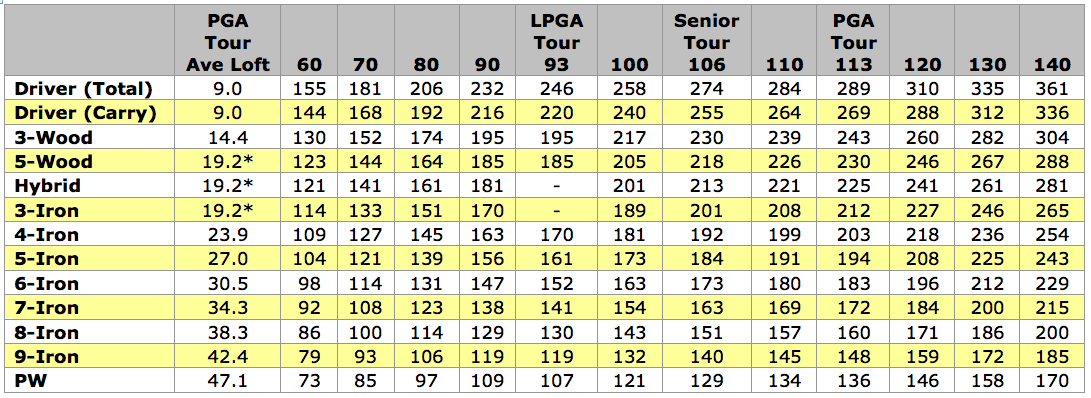
Per a suggestion in the comment section of my last article called “How Far Should You Hit Your Golf Clubs?“, the purpose of this post is to summarize all of the carry distance versus swing speed data that was being discussed in to a summarized reference chart.
Several things to note about the data in the chart below are:
- The PGA Tour and LPGA Tour numbers were pulled from the Trackman website in 2010.
- The Senior Tour numbers were calculated by taking the 2012 mean driving distance of 273.4 yards per drive on the Senior Tour and back-calculating the other numbers based on the PGA Tour’s average driving efficiency of 2.58 yards per mph of club head speed.
- The average estimated PGA Tour club lofts were taken from 30 players by gathering 2010 club data listed on player websites, what’s in the bag articles and videos, and specifications numbers listed on manufacturer websites. It’s not listed on the chart, but for your interest, the average GW/SW was 53.9 degrees and average LW or highest lofted club was 59.7 degrees.
- The 19.2 degrees that is listed for the 5-wood, hybrid, and 3-iron is an average of the club(s) each player used that was between the 3-wood and 4-iron. This was done because there is such a large variance of wood/hybrid/iron club choice to fill this distance slot from player to player.
- All remaining carry distance data (60, 70, 80, 90, 100, 110, 120, 130 and 140) was calculated based on the average PGA Tour carry distances.
- The LPGA Tour Trackman data didn’t have numbers listed for a hybrid or 3-iron. Rather they listed a 7-wood carry distance of 174 yards.
- There are limitations to the data gathering, calculations, etc., listed here, so please just use it as a rough guide for yourself.
Here is the chart. For charts updated at the end of every season, visit SwingManGolf.com.
Carry Distance vs Swing Speed Chart
I hope you find it useful!


Club Junkie
Tour Edge Exotics mini driver review + TaylorMade Spider ZT Max first look – Club Junkie

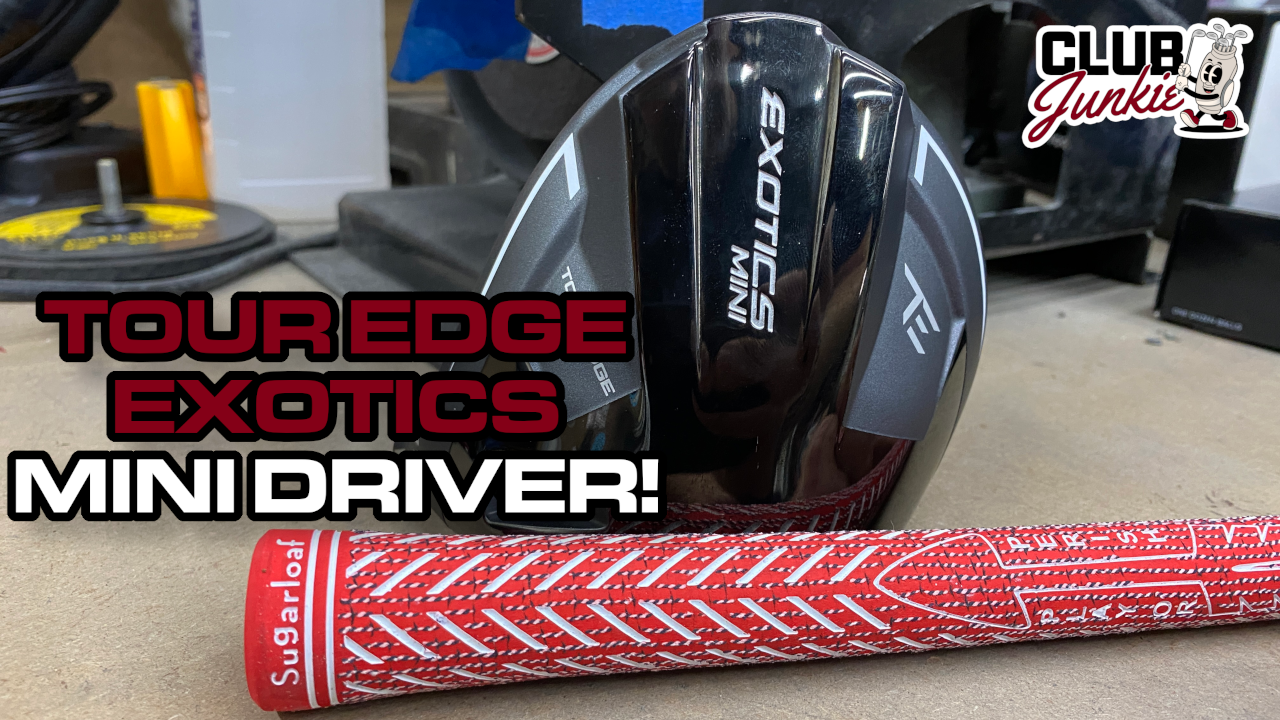
On this episode of Club Junkie, I put the new Tour Edge Exotics Mini Driver to the test and break down the performance, forgiveness, distance, and where it fits compared to a traditional driver or strong fairway wood. If you have been curious about adding a mini driver to the bag, this one is worth a look.
I also dive into the new TaylorMade Spider ZT Max putter that was recently spotted and discuss the growing zero torque putter trend. Plus, there is a closer look at the new Project X Titan Yellow shaft showing up on the PGA Tour and what makes it different from other profiles currently out there.
Opinion & Analysis
AVL: We’re talking about practice! My best tips for taking your game to the course

With the beginning of June on the horizon and courses rounding into peak condition for the season, it’s time to hone the finer skills that often get rusty over the winter. More sunlight also means more time to get out on the course and work on your game.
Whether it’s the practice green or the driving range, there’s always something to improve—whether you’re enjoying the fresh air or preparing for a weekend game or tournament. You can work on drills or freestyle around the green, and friendly competition is a great way to sharpen your skills.
While there are endless ways to get better at golf, I’m going to focus on practicing around the green. Let’s take a look at a few things to keep in mind as we head into the summer months.
Drills
From the driving range to the practice green, it’s important to incorporate drills into your routine. Years ago, I spent a weekend working on my short game with James Sieckmann. He recommended doing drill work for 5–10 minutes, then returning to your main practice.
This way, you create a balance between structured drills and real-world scenarios, so you’re not confined to “perfect” situations. For example, hitting the same three-foot putt over and over is good for repetition, but after a while, it becomes less interactive for your brain.
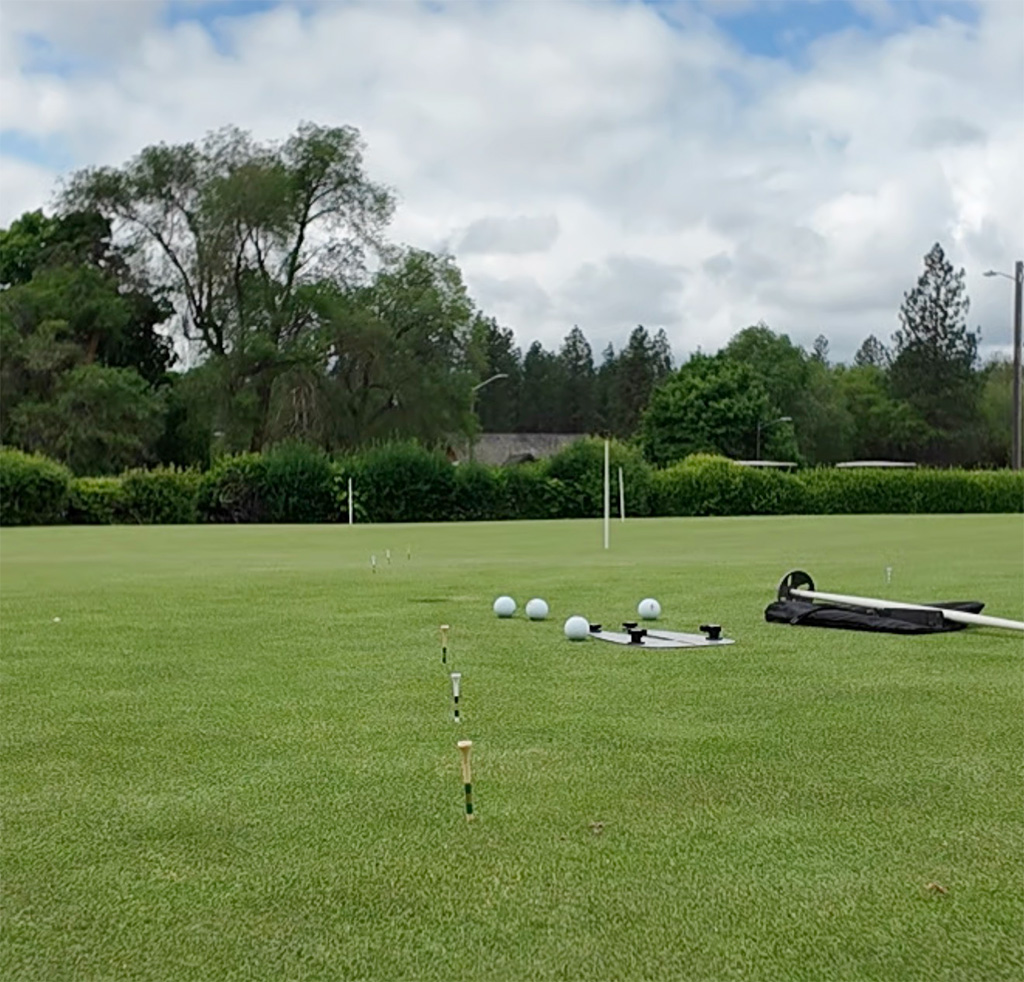
My approach is to use a putting trainer with a narrow gate for the ball to pass through, or simply place tees just outside the width of the ball. I’ll hit a series of four putts through the gate for three sets. Then, from a similar distance, I’ll hit four putts without the training aid and repeat that sequence three times.
Next, I’ll hit a number of 15–25 foot putts in a random fashion, then circle back to repeat the short putt drills with and without the training aid.
This breaks up the rhythm of hitting short putts with the training aid. When you hit the same short putts over and over, it’s easy to get into a groove—which is great for the drill, but not reflective of actual course play. While finding a rhythm is fundamental for drills, I like to introduce variation with longer putts to keep things realistic.
Game Mode
Once you’ve established a foundation with drills, it’s time to simulate on-course scenarios. This is where a few practice games come in handy.
One that I’ve been enjoying lately involves putting 10- to 15-footers with two balls. If I make the putt, great! If I miss, I pull the missed ball back a putter length. Suddenly, that little tap-in becomes a nerve-wracking three-footer—at least at first. As you get better at this game, those three- and five-footers become much more comfortable and routine.
It may sound cliché, but each shot is just what it is—it’s how we react that makes the difference. I like this game because it blends the pressure of on-course putting with the consequence of leaving yourself a much longer putt than usual.
Another game I like is one I recently learned from Brad Faxon. Place three tees in a line at four different locations around the hole: one at 3 feet, one at 6 feet, and one at 8 feet. The 3- and 6-foot putts count as par, and the 8-footer is for birdie.
This game keeps you focused on scoring and helps you get into a competitive mindset. You can even think about this putting game while you’re on the course. I just started playing it, and last week I couldn’t get better than two under par.
Competition
Competition during practice is when drills and games come to life, and you start to see results. For me, nothing beats a putting contest with a friend or two. In the right setting, these contests can become talking points for the whole season.
Match play, a game of 21, or simply seeing who can make the most one-putts (with a small prize on the line) are all great ways to simulate real on-course pressure. Recently, I played in a putting contest where one competitor made back-to-back 30- and 50-foot putts. As they say, expect your opponent to make every putt—and he nearly did. That’s impressive, and it’s something you see on the course, too: you have to stay committed to your game plan, no matter what.
When it comes to practice, it’s important to blend feedback from recent rounds with the fundamentals you want to reinforce. Drills, games, and competition—from the driving range to the putting green—form the backbone of skills you’ll rely on during actual rounds.
Finding the right balance is something we’re all working on, one practice session at a time. With the beginning of June on the horizon and courses rounding into peak condition for the season, it’s time to hone the finer skills that often get rusty over the winter. More sunlight also means more time to get out on the course and work on your game. Whether it’s the practice green or the driving range, there’s always something to improve—whether you’re enjoying the fresh air or preparing for a weekend game or tournament. You can work on drills or freestyle around the green, and friendly competition is a great way to sharpen your skills. While there are endless ways to get better at golf, I’m going to focus on practicing around the green. Let’s take a look at a few things to keep in mind as we head into the summer months.
Drills
From the driving range to the practice green, it’s important to incorporate drills into your routine. Years ago, I spent a weekend working on my short game with James Sieckmann. He recommended doing drill work for 5–10 minutes, then returning to your main practice. This way, you create a balance between structured drills and real-world scenarios, so you’re not confined to “perfect” situations. For example, hitting the same three-foot putt over and over is good for repetition, but after a while, it becomes less interactive for your brain.
My approach is to use a putting trainer with a narrow gate for the ball to pass through, or simply place tees just outside the width of the ball. I’ll hit a series of four putts through the gate for three sets. Then, from a similar distance, I’ll hit four putts without the training aid and repeat that sequence three times. Next, I’ll hit a number of 15–25 foot putts in a random fashion, then circle back to repeat the short putt drills with and without the training aid.
This breaks up the rhythm of hitting short putts with the training aid. When you hit the same short putts over and over, it’s easy to get into a groove—which is great for the drill, but not reflective of actual course play. While finding a rhythm is fundamental for drills, I like to introduce variation with longer putts to keep things realistic.
Game Mode
Once you’ve established a foundation with drills, it’s time to simulate on-course scenarios. This is where a few practice games come in handy. One that I’ve been enjoying lately involves putting 10- to 15-footers with two balls. If I make the putt, great! If I miss, I pull the missed ball back a putter length.
Suddenly, that little tap-in becomes a nerve-wracking three-footer—at least at first. As you get better at this game, those three- and five-footers become much more comfortable and routine. It may sound cliché, but each shot is just what it is—it’s how we react that makes the difference. I like this game because it blends the pressure of on-course putting with the consequence of leaving yourself a much longer putt than usual.
Another game I like is one I recently learned from Brad Faxon. Place three tees in a line at four different locations around the hole: one at 3 feet, one at 6 feet, and one at 8 feet. The 3- and 6-foot putts count as par, and the 8-footer is for birdie.
This game keeps you focused on scoring and helps you get into a competitive mindset. You can even think about this putting game while you’re on the course. I just started playing it, and last week I couldn’t get better than two under par.
Competition
Competition during practice is when drills and games come to life, and you start to see results. For me, nothing beats a putting contest with a friend or two. In the right setting, these contests can become talking points for the whole season. Match play, a game of 21, or simply seeing who can make the most one-putts (with a small prize on the line) are all great ways to simulate real on-course pressure. Recently, I played in a putting contest where one competitor made back-to-back 30- and 50-foot putts. As they say, expect your opponent to make every putt—and he nearly did. That’s impressive, and it’s something you see on the course, too: you have to stay committed to your game plan, no matter what.
When it comes to practice, it’s important to blend feedback from recent rounds with the fundamentals you want to reinforce. Drills, games, and competition—from the driving range to the putting green—form the backbone of skills you’ll rely on during actual rounds. Finding the right balance is something we’re all working on, one practice session at a time.


For Korean golfers, we always look forward to the last of the kkot-saem-chu-I for the true start of a new golf season. The term refers to a cold snap, but literally translates as “winter being jealous of the flowers beginning to bloom, thus lashing out one final time before surrendering to spring”.
A rather poetic mouthful packed into a short expression.
Koreans can be like that. Understated, yet oddly expressive at the same time. And nowhere is this more true on the golf course and in our golf bags. In fact, I suspect many Korean golfers look forward to new apparel and accessory drops more than they do actual equipment launches each year.

At this point, Korean golf fashion may exist on its own timeline. (courtesy of @seonbi_golfer)
There is ample evidence to support that suspicion. Korea is the world’s third-largest golf market behind the United States and Japan, yet its appetite for golf apparel exceeds that of both countries combined. Recent estimates suggest that Korea accounts for nearly 40 percent of the global golf apparel market, placing it among the world’s most influential golf fashion markets and punching well above its size.
Simply, we care deeply about how new golf clubs look and feel, but enjoy looking good while swinging them even more.
Golfers in the West may laugh and say that golf is played on a course, not a fashion runway. Perhaps. But what’s the harm in trying to look and feel good, if the added self-confidence can help actual performance? It certainly seems to have worked for Jason Day, who may have unlocked a new stats category: dormant strokes gained. Coincidence?

During the COVID-era, estimates placed the market near $9 billion, an astonishing figure for a single country.
As a proud member of Gen X, I’ve witnessed the highs and lows of golf fashion firsthand. The pleated trousers and wing-tipped shoes of Jack Nicklaus, the stylish plus-fours and knickers of Payne Stewart, the baggy black trousers and fitted mock-necks of Tiger Woods, and the thigh-hugging athletic tailoring of Rory McIlroy. Golf fashion, like the golf swing itself, has rarely stood still.
But nowhere have those trends shifted, evolved, and been scrutinized quite as relentlessly as in Korea. Here, golf fashion moves faster than fairway gossip, and consumers dissect brands with a level of discernment that can be both impressive and mildly terrifying. New brands are studied, judged, embraced, or dismissed with startling efficiency.
The result is a consumer base with one of the sharpest eyes for quality and authenticity anywhere in the world. It is difficult to quantify, but easy to recognize. Clean lines without trying too hard. Luxury mixed with utility. Trend awareness balanced by restraint and purpose.
It’s golf fashion shaped by one of the world’s most style-literate cities, something I like to call Seoul Sensibilities, referring to the taste level forged by a uniquely competitive environment.
And increasingly, global brands have noticed.

Many golf brands in Korea have their own flagship shops dedicated to apparel only
Titleist understood this years ago, when its apparel business in Korea took on a life of its own under new ownership and local direction. What had once been a straightforward extension of an iconic equipment giant became something sharper and more premium. By going all in on the serious Tour-player look (I couldn’t even fit into their XL sizes), Titleist struck the right chord with Korean consumers and helped its fledgling apparel business break into the mainstream. Titleist became a household name even for non-golfers who wore its caps, shirts, and windbreakers in daily life. In many ways, it proved that even heritage golf brands could carry real fashion credibility when viewed through a Korean lens.
Several years later, PXG took a page out of Titleist’s playbook and followed suit. Korean consumers helped transform the brand from one known largely for irons and loud commercials into something broader and more stylish. PXG apparel’s growth in Korea was explosive, where it found an early audience and turned the category into something more than mere logo merchandise. It is still hard to walk anywhere in Seoul without seeing its palindrome logo.
Malbon’s meteoric rise in the United States was genuine, but its ascent into a global golf lifestyle brand owes much to Korea, where it was elevated by a market already fluent in modern golf style. Korea did not simply embrace Malbon. It pressure-tested the concept, refined its appeal, and helped push it into the global spotlight.
As such, new brands may arrive from abroad, but more often than not, their sharpest evolution happens here. If a brand can earn credibility in Seoul, it’s deemed to have passed one of the toughest style audits in the game.
That is why the next meaningful chapter may not come from outside, but from a Korean brand moving in the opposite direction, carrying those Seoul Sensibilities outward as K-pop once did.

Play young Stay dope.
From Seoul, With Intent
Khalhon is a label that feels less like a trend-chasing newcomer and more like the product of a market that has already seen everything. Golfers here have long been surrounded by luxury logos, technical fabrics, and tour uniforms disguised as lifestyle wear and vice-versa. In other words, novelty alone rarely lasts here, and the Koreans seems to understand that instinctively.
Its style language leans into clean silhouettes, relaxed but tailored proportions, muted palettes, and premium materials that speak quietly but confidently. There is a modern city aesthetic running through it all, with strong layering pieces, thoughtful textures, and subtle branding that suggests sophistication rather than demanding attention.

“Built for the course. Designed beyond it.”
Most importantly, the garments seem designed to blur the line between golfwear and everyday style. Shirts, trousers, knitwear, and outer layers move comfortably between a game of screen golf, a lunch reservation, an airport gate, or an afternoon coffee in Gangnam with friends.
It raises the question of whether this is golfwear that happens to look good off the course, or everyday clothing that performs beautifully on the fairways.
Personally, I have long appreciated Nike Golf for its clean, athletic modernization of golf attire. It also has the useful side effect of making me look like a more serious golfer than I probably am. But off the course, there are times when being instantly identified as the golf guy in a crowd of non-golfers can feel a touch self-conscious.

“Built for the course. Designed beyond it.”
That is part of what drew me to Khalhon, which seemed to blend golf and everyday wear naturally. While some of the outfits may be slightly beyond my personal confidence level, the brand also offers tasteful options for older guys like me who still want to express a little personality without regretting the decision later.
These are not simply flashy outfits worn on the course and then banished to the closet until the next tee time. They work surprisingly well off the course too, and I suspect many of the pieces will still look right a couple of years from now, which would certainly be kinder to my wallet than most golf fashion trends tend to be.
And perhaps that broader lifestyle positioning also helps explain why someone like Sean Wotherspoon would find Khalhon creatively interesting in the first place.

“Built for the course. Designed beyond it.”
“Korea is not only one of the most fashion-forward golf markets in the world, but one of the most fashion-forward markets globally. Korea is ahead, and I love to watch and try to catch up.” – Sean Wotherspoon, Creative Director at Khalhon
Seoul and Beyond
If Khalhon’s rise says something about where Korean golf fashion is today, its relationship with Sean Wotherspoon says even more about where it is heading.
For readers less familiar with Sean Wotherspoon, his arrival at Khalhon is not some routine celebrity endorsement or influencer collaboration. In design and streetwear circles, Wotherspoon is regarded as one of the more influential creative voices of his generation, particularly when it comes to blending nostalgia, storytelling, and contemporary culture into products that people can connect with.
He first gained widespread attention through his now-famous Nike sneaker collaborations, where his vintage-inspired designs and instinct for color helped turn him into one of the defining artists of the late-2010s sneaker era. His work gradually expanded beyond footwear into apparel, automotive collaborations, collectibles, and broader lifestyle design.
Modern golf style now extends well beyond the fairways, where performance and functionality are largely expected by default. And while plenty of brands already make technically competent golfwear, Khalhon seems more focused on designing clothes people would genuinely want to wear even after the round ends.
And when guys at Wotherspoon’s level show genuine interest in working with a Korean golf brand as its new Creative Director, fashion circles tend to sit up and pay attention. There’s already a huge buzz among the fashion-conscious here about upcoming collabs with iconic sports stars and brands.

“My creative direction for Khalhon is disruptive, colorful, nostalgic, and modern. My goal is to blend these avenues seamlessly within each collection.” – Sean Wotherspoon
In chatting with Sean, what stood out most to me was how genuinely energized he sounded about the project itself. Despite having already worked across and countless other creative spaces, he described golf as a completely fresh category for him, saying that Khalhon “will be an amazing vehicle for my design work.”
At the same time, his enthusiasm seemed tied just as much to Korea itself. He spoke openly about admiring Korea’s fashion culture while repeatedly insisting he is still a terrible golfer.
There was something oddly refreshing about that humility. Rather than sounding like a celebrity parachuting into golf simply because the category suddenly became fashionable, Sean sounded genuinely curious about what Korea might do with the category next.
And perhaps that is what makes Khalhon feel interesting right now. The brand feels less like a trend-chaser and more like the natural result of a market now confident enough to export its own point of view.
For years, global brands came to Korea to sharpen their image against one of the most discerning audiences anywhere. Now, a Korean label appears ready to send those Seoul Sensibilities outward instead.
Which brings us back to kkot-saem-chu-i.
That final cold snap before spring always arrives with a reminder that seasons are changing, whether we notice it immediately or not. Golf fashion feels a little like that right now as well, as the old boundaries between sport, streetwear, luxury, and everyday style continue to soften.
And somewhere in Seoul, a Korean golf label already seems prepared for whatever season comes next. I just hope they have everything in my size.

Aaron Rai’s winning WITB: 2026 PGA Championship

Russell Henley’s winning WITB: 2026 Charles Schwab Challenge

Photos from the 2026 CJ Cup Byron Nelson

CJ Cup Byron Nelson Tour Report: Koepka and Kim’s newest putters finally get hot

Charles Schwab Challenge Tour Report: MacIntyre, Åberg and Spaun all switch putters, TaylorMade launches new Spider

Details on J.J. Spaun’s surprise putter switch

GolfWRX Launch Report: 2026 Titleist GTS drivers

Photos from the 2026 Charles Schwab Challenge

PGA Championship Tour Report: Fitzpatrick, Koepka among big-name putter switches for Aronimink

Photos from the ShopRite LPGA


Maria Torres WITB 2026 (June)
Driver: Ping G440 LST (9 degrees) Shaft: Accra TourZ Green 5-M4 3-wood: Ping G440 Max (15 degrees) Shaft: Accra TourZ Green 6-M4 5-wood: Ping G440...


Eric Cole WITB 2026 (June)
Driver: PXG Lightning Tour Max (9 degrees) Shaft: Project X Titan Yellow 70 TX 3-wood: TaylorMade Qi4D (15 degrees) Shaft:...


Si Woo Kim WITB 2026 (May)
Driver: Callaway Quantum Triple Diamond (8.5 degrees) Shaft: Fujikura Ventus Black 6 X Mini driver: Callaway Paradym Ai Smoke Mini...


Wyndham Clark’s winning WITB: 2026 CJ Cup Byron Nelson
Driver: TaylorMade Qi4D (10.5 degrees) Shaft: Project X Titan Yellow 60 TX 3-wood: TaylorMade Qi4D Tour (15 degrees) Shaft: Project...


Pingback: GolfWRX: Best Golf Instruction of 2013 | Swing Man Golf
Pingback: Best 12 swing speed distance calculator - lindaadvisors.com
Pingback: Regular vs Stiff Flex Shafts For Fairway Woods - Which One Should You Be Using? - (MUST READ Before You Buy)
Pingback: GCQuad Launch Monitor Review 2021
Charles Christian
Sep 15, 2015 at 7:47 pm
I find this all very interesting and it seems pretty accurate first of all most people are not going to swing 120 mph and hit the ball 310ish yards. The pro’s can do it because they have been practicing most of their lives and have equipment that is exactly fitted to them. Plus, the fairways are in better condition and give them lots of roll.
I can relate to one of the golfers who stated he can relate more to the LPGA golfers. I personally think they have more skill because the just do not smash the ball all over the course and over all the obstacles they actually play the course – but of course a lot better than any average player.
Personally, according to this I swing 75-85 mph. I have never actually had my swing speed taken which I should but it seems to be about right with this. Sometimes I hit a driver 180 or 210 yards with a good roll etc. I often find myself in the fairway while the other golfers drive it further but into the woods and they have to hack their way out.
I also had a playing lesson with my female professional and she could hit her 7 iron about 140 which is about the same as the LPGA players, so I am guessing her swing speed is 90-93 ish. I would believe that teaching pro’s have about the speed as a lot of touring pro’s do. Even though I could not hit it as far as her I found the distance not to be intimidating.
A 9 foot put is equal in score to a 300 yard drive. I would say improve your putting !!
Straightdriver235
Jan 20, 2015 at 10:25 am
I’m wondering what the lofts were for the senior and lpga? Why only give the PGA tour lofts? From this data it seems like s.s. efficiency is around x2.40 for carry, and x2.58 for total rollout, but many of us play on conditions that are far different from tour courses… this starts to show up clearly that many on the lpga really require some roll out. In my case there is no roll out, the course is carved through a swamp, so what I am after is maximum carry. I’m wondering what set ups on courses like that are for the pros? Do the pros switch out drivers based on the conditions, and if so, what do they do for that? According to this data, if they don’t switch out drivers for situations maxing out carry, or situations maxing out the value of roll they are losing strokes. Of course, drainage at many of the tour courses minimizes this issue, but not always. If they do switch, what switches do they make, and are these switches fairly universal? To me all of this data must take into consideration turf conditions, and hardness of fairways contrasted to how punitive is the rough; i.e., an old fashioned U.S. Open course where roll out is not really desired much. It would seem the need to switch would be particularly acute on the LPGA tour… if the fairways are wet for these gals they are going to play a very different course than when it is dry… considering for them follout constitutes 1/7th of total distance they must have numbers that will allow more carry, or more roll on the conditions. Same for you on long drive competitions. Correct?
derek
Jan 1, 2015 at 1:17 am
Hey Jaacob, r u still using the 1 iron golf system? all clubs? I have a set and have had great shots but haven’t fully commitred yet. Your thoughts? Do u have the new pro line clubs?
TIA
Derek
derek
Jan 5, 2015 at 6:28 pm
guess not
1badbadger
Nov 11, 2014 at 7:21 am
Jed, I think one of two things is happening…either your swing speed is higher than you think it is, or you’re not hitting it that far. Mathematically, the ball can only go so far with a given swing speed. If things like elevation changes, wind and other atmospheric conditions are eliminated, an 86 mph swing speed with a driver will be right about 215 yds. Real-world distance is going to be approx. 10-15 yds longer, so 225-230 yds is realistic for an 86 mph swing speed. It’s possible to hit a 260 or 270 yd drive, but if you’re averaging that distance your clubhead speed would be over 100 mph.
don butler
Dec 30, 2015 at 11:05 am
there are a lot of comments stating my driver swing speed is this or that. My swing speed based on one of those ssr radar things ranges from mid 80’s to mid 90’s depending on how warmed up i am and i play at sea level. One thing is that a lot of courses one only uses his driver say 10 times so the 18th hole you’ve finally warmed up enough to max out your speed but by then if you’ve been walking and its warm out you might also be a little fatigued.
When I have brought my radar thing with me to the course and max out my speed say about 93-95 I still do not get 235 or whatever, more like 225 and that’s with about 10 yards of roll. I’ve tried teeing higher and smacking it on the upswing but this causes some swing problems and not as consistent of a square hit. Of course around here there is always about a 10-15 mph wind and seems always either cross or in your face. When there is finally a downwind hole tend to get all juiced up and wind up popping it 200 yards
Ben
Nov 8, 2014 at 2:44 am
According to this, my speed is above 120 with my normal 295 carry. According to science and launch monitors and swing analyzers, I’m 117. I don’t think this chart takes into effect being perfect fit for a club. If you optimize, you can beat the chart. I’m living proof of that. Also I don’t fly my 7 iron 184. More like 177 to 180 range to be exact.
TJ Horton
Mar 22, 2015 at 10:19 pm
That’s funny, i carry my 8 175 but i cant carry a driver over 285… i need a fitting.
JEFF
Nov 5, 2014 at 12:06 pm
Why look at this? How will this help? STUPID!
Pingback: Golf Swing Speed Distance | Golf Swing Tips
Pingback: Golf Swing Average 7 Iron Distance Pro | Golf Swing Tips
Pingback: Golf Swing Speed How Many Rpm At 70 Mph | Golf Swing Tips
Pingback: Golf Swing Speed 5 Iron Golf Club | Golf Swing Tips
Pingback: Golf Swing Speed Super 8 Iron Mountain | Golf Swing Tips
gregory suto
Jun 21, 2014 at 1:27 pm
110 swing speed
285 carry
8 inches
Beneoo
May 21, 2014 at 12:36 pm
Hi Jaacob,
Can you re-post the chart? I am not able to find any chart in this page.
Thank you.
Jaacob Bowden
Jun 29, 2014 at 7:22 am
Hi Beneoo, yes, I’m not sure where the chart went.
I’ve sent the editor an email and asked him if he’ll get it re-posted.
James
Apr 2, 2014 at 3:42 pm
I went in for a club fitting last week and I was hitting a 7 iron 177, 186 with roll, and had a club head speed of between 88-90 MPH.
gfds
May 28, 2014 at 9:43 am
haha no way, unless your topping your balls or have the most super strong frip in the world making that 7 iron a 1 iron lol.
CD
Jun 2, 2014 at 4:34 pm
That’s easily possible – 7i, 86mph, 175.9 carry, 183 total, smash 1.41 was me Saturday. 6″ tall and 80kgs
Uphill both ways
Nov 1, 2014 at 9:22 pm
How big are your hands if you are 6 inches tall? Are your clubs standard length, if so how flat are they?
louis
Oct 29, 2014 at 5:50 pm
how do you figure it is impossible?
Uphill both ways
Nov 1, 2014 at 9:20 pm
Bullshism. if you swing hard enough to hit it 177 in the air, its not gonna roll anywhere let alone 9 yards. Get off the stupid computers and go play on grass. then you can actually see how far it goes, see “repair hallmarks”.
MHendon
Nov 10, 2014 at 2:03 pm
Yeah that’s launch monitor numbers for you. But it’s calculating based on a hit into a firm fairway not to a receptive green.
Louis DeSantis
Mar 7, 2014 at 10:58 pm
Although it’s fun to watch the guys on the pro tour hit the ball as far as they do, I find myself watching more and more of the LPGA tournaments as I can relate to the clubs they are hitting. And your chart confirms this as well as I’m just about exactly in line with their numbers and recently was averaged at 93 mph driver swing speed. I guess that in my mid 50’s that’s not too bad after playing only 3 years and if the ladies can shoot the low scores they do hitting the clubs they do, I should just concern myself with getting better and more accurate than worry about gaining distance as it seems many are preoccupied with. I also find it interesting that when I’m paired with other fellows at the course, there are often claims of being able to drive the ball 270 yards, and I often find I’m out driving these fellows with what I know are my 235-245 yard drives. Any way, great article and thanks so much for compiling and sharing this information. Louis
jt
Mar 1, 2014 at 4:11 pm
The yardages on the chart are dead on for my SS of 112. I am within a yard of every stated yardage on every single club.
Joey cosper
Feb 25, 2014 at 3:44 pm
Jaacob,
According to your chart my swing speed is 110. I was fitted a year ago with the 913d2 driver with a regular shaft. At the time i was a 26 handicap and much lower swing speed I am now down to a 10 handicap. My swing has changed a lot and my drives now ballon. I have a average swing tempo, what shaft would you recomend? A stiff flex or a x flex? I am currently looking at the fujikura fuel shaft beacuse it is a low launch and low spin shaft.
Cullan
Mar 5, 2014 at 2:02 am
110 is right on the line between stiff and extra stiff shafts. Some companies are set up stiffer than others, and it also depends on what type of feel you like in the shaft. I’m not as familiar with Fujukura shafts but I know that a swing speed of 110 would fall within the extra stiff category for Mitsubishi Rayon and would fall in the stiff category for Aldila shafts.
If you enjoy your current shaft you could always have it tip trimmed for some extra stiffness.
Jaacob Bowden
Jun 29, 2014 at 7:25 am
Hi Joey,
My friend and fellow GolfWRX writer Tom Wishon maintains a list of reputable and qualified custom club fitters.
http://wishongolf.com/find-a-clubfitter/
See if you can find one close to you. They’ll be able to get you a much better recommendation with an in-person evaluation.
nick rumpza
Feb 14, 2014 at 4:17 am
Jaacob.. 2 questions..1. I live in south dakota where its arctic tundra 6 months a year.. What can i do to keep my swing on point during winter months? 2. I was recently at a pro shop simulator that told me my club head speed was anywhere from 118 to 128.. I didnt feel like i was swinging hard but those numbers seem high.Im 6’4 if height matters, just wondering your thoughts on it..
Jaacob Bowden
Jun 29, 2014 at 7:33 am
Hi Nick,
There are a number of things you can do…for example, working in front of a mirror indoors, stepping outside briefly with a video camera to check-in on your swing, visualizing for a few minutes each day, hitting balls in to a net in your garage, etc. Perhaps there is an indoor range near you. Hitting balls on the pro shop simulator you mentioned is also an option.
If you want to work on your swing speed, the winter time (or any time really) is a great time to do that. It seems like you already swing fast (typical amateurs are around 93 mph, Tour players average about 113, and top long drivers can average in the mid-140s), but it’s always nice to have more. Check out Swing Man Golf for more info on swing speed training.
By chance do you know what kind of radar it was?
Trackman and Flightscope X2s are generally considered quite accurate. The Sports Sensors Swing Speed Radar is also a good at-home option (although they read slightly higher because they measure the fastest moving part of the club head verses having an additional algorithm to figure out speed at the center of the club). Those are available at Swing Man Golf as well.
Hope that helps a bit!
ron bleau
Dec 28, 2014 at 9:42 am
Any relation to Gene?
Pingback: 400 yard driving 18 seconds later
??????
Oct 22, 2013 at 9:59 pm
????? ???
David Burge
Oct 22, 2013 at 6:33 am
G’day Jaacob, from Sydney, Australia.
We don’t seem to have the same freely available technology that you guys have in the States. We also use metres, but I’ll convert to yards.
I reckon my carry distances are:
Driver: 215m = 234 yards
…
6 iron: 148m = 161 yards
7 iron: 140m = 153 yards
8 iron: 130m = 142 yards
9 iron: 119m = 129 yards
Wedge: 110m = 120 yards
So I reckon my swing speed is probably high 90s according to your chart.
I’m a fairly good golfer and play off very low single figures but don’t hit it far enough to be any better.
Any idea what I should be looking for in terms of spin rates and launch angle and perhaps even the best equipment for my swing speed? I’m using a PingG15 driver with a stiff TFC149D shaft and irons are oldish – Taylor Made Tour Preferred with Dynamic Gold SL s300 shafts. Any shaft tips particularly would be much appreciated.
Great blog by the way. Came across it by accident but I’ll check out your other articles too. The best thing here down under is that we get to play 12 months of the year!
Bob
Oct 29, 2013 at 3:37 pm
David,
I think our games are similar and the numbers you listed were very close to mine so I thought I’d share what I’ve recently learned from a professional who is fitting me.
We tested several drivers and shafts. At our swing speed a stiff shaft produces less distance. My pro says a player should use a shaft with as much flex as they can control. For me the best results come from a regular flex shaft and 10.5 degree loft. I went from 235 yards of carry with a stiff 9.5 degree to 250 yards of carry with a regular flex 10.5 degree (a used Nike SQ DYMO STR8-FIT 10.5° Driver ProForce AxivCore Regular Flex).
Of course the only way to be sure is demo some clubs. I was able to do it with an assistant pro and a Trackman.
I have the same distances on my irons but they are big soled Calloways, which were nice when I was a 17 handicap but 5 years later I’m a 7. The bigger the sole the higher the launch angles and as I’m improving I am hitting my irons really high, so I’m upgrading irons but again will go with regular flex.
BTW I tested last year’s Taylor Made RBZ 3 wood and it was 15 yards longer than anything new. That club is going in my bag!
Cheers!
Jaacob Bowden
Jun 29, 2014 at 7:42 am
Hi David,
I’ve never been to Sydney but I have been to Canberra and Melbourne. Australia is a great place.
For club head speeds in the high 90s…
– For maximum carry distance, I would target you at a 15-16 degree launch angle and 2500-2600 rpm for spin rate.
– For maximum total distance, I would target you at a 12-13 degree launch angle and 1900-2000 rpm for spin rate.
So what I’d tell you depends on how you want to optimize. Higher spin rates are generally more accurate, so that would be good for tight courses. If you need to carry trouble or not run through dogleg fairways, I’d favor the carry numbers. If you have hard fairways and an open course, perhaps going for total distance is better.
For equipment recommendations, my friend and fellow GolfWRX writer Tom Wishon maintains a list of reputable club fitters here -> http://wishongolf.com/find-a-clubfitter/. See if you can find someone in your area. They’ll be able to work with you in-person to get you dialed in.
Hope that helps!
Aaron
Sep 21, 2013 at 10:07 pm
Jacob, thank you for sharing this.
I just came from Scheels where the simulator said I had a swing speed of 80mph. I don’t really know if I was doing a partial swing, but all my clubs play at a 110-113 mph swing speed distance (I hit my 9i 150yds all day, my 3W 250, and my driver over 270 if I don’t slice). I use 1995 knock-offs clubs, with oversize irons.
Is this possible or did I happen to use a partial swing in the simulator?
I am in the market for new irons and am debating shaft flex options.
Jaacob Bowden
Sep 25, 2013 at 6:07 am
Yup, no problem.
Do you know what kind of simulator it is?
Have you ever tested yourself before and got speed numbers closer to what you’d expect given your distances?
Scott
Jul 30, 2013 at 1:07 am
Jaacob, do you have the distances for the gap and sand wedge for these different speeds?
Jaacob Bowden
Aug 11, 2013 at 5:43 am
Hi Scott, no I don’t have numbers for a gap or sand wedge…partly because there’s so much variance in the lofts for those clubs. Plus, a lot of guys don’t take full swings with gap or sand wedges.
But if you want to play around with a little algebra and plot your numbers in Microsoft Excel, you could probably get a pretty good estimate though.
Matt
Oct 19, 2014 at 10:54 pm
Hey Scott, just to give you an idea I have a SS average of 101 and I’ll hit a 50 degree GW 105-110y; a 54 degree SW 90-95y and a 58 degree LW around 75 but I very rarely hit a full LW in a round.
Gary
Jul 25, 2013 at 4:07 pm
My irons fall into the 113 category, but my driver and fairway woods fit in the 100 category. Any idea what could be causing that? Whenever I play I find myself being outdriven by my playing partners, but hitting less club off the tee on par 3’s and such.
Jaacob Bowden
Aug 11, 2013 at 6:53 am
Hi Gary, without knowing any other information, my first guess would be that you de-loft your clubs more than most. Possibly your ball position is too far back, your hands too far forward, or something related.
Excessive de-loft is not necessarily a bad thing, but it could cause your irons to go farther by bringing down your trajectory.
Similarly, your driver and wood trajectories might also be below your optimal launch angle for maximum carry and roll given your particular swing speed.
Brian Copp
May 28, 2013 at 12:00 pm
Thanks a lot for the Chart!
My irons are almost dead on the 100mph for distance, but my Driver is around the 90-93mph speed, which could be for a lot of reasons I’m sure.
But, I’ve always been interested in knowing what my swing speed is and your chart at least gives me a rough idea. I’ve always wondered if I should be using a Stiff or Regular Flex shaft and I don’t really have any way to check my swing speed living in the middle of nowhere.
I once asked the closest Fitting Center if they would let me hit 2 or 3 balls on their machine so I could find out my swing speed incase I should be using a Stiff shaft and they said they could, but it would cost me $150. I said forget it! My clubs are Regular Flex and if I’m between 90-100 I think they are probably fine.
Brian Copp
May 28, 2013 at 12:00 pm
Thanks a lot for the Chart!
My irons are almost dead on the 100mph for distance, but my Driver is around the 90-93mph speed, which could be for a lot of reasons I’m sure.
But, I’ve always been interested in knowing what my swing speed is and your chart at least gives me a rough idea. I’ve always wondered if I should be using a Stiff or Regular Flex shaft and I don’t really have any way to check my swing speed living in the middle of nowhere.
I once asked the closest Fitting Center if they would let me hit 2 or 3 balls on their machine so I could find out my swing speed incase I should be using a Regular or Stiff shaft and they said they could, but it would cost me $150. I said forget it! My clubs are Regular Flex and if I’m between 90-100 I think they are probably fine.
Michael
May 15, 2013 at 10:11 pm
Hey. I have about a 115 mph driver swing speed and my clubs fit in between the 113 and 120 mph distances. My problem is I can carry my driver 280, but I get zero roll. There is always a ball mark and when soft my ball has spun backwards. I also hit the rest of my clubs much higher than normal. I swing up on the ball, rather than down which I guess doesn’t help. Any Ideas?
Jaacob Bowden
May 16, 2013 at 10:36 am
Hi Michael,
If I have a driver with too much loft, I actually have that problem too.
So my initial thought is that if you want to optimize your driver for distance, you’ll likely need a lower lofted driver.
At 115 mph club head speed, to maximize carry and roll I would try to get you averaging around 12.1 launch angle and 2234 spin.
Do you know your spin rate and the exact loft (not what’s stamped on it) of your driver?
If you know those, you can do some algebra to estimate the theoretical loft you would need to get your spin to the 2234 mark. Then it would just be a matter of making some setup/swing tweaks to get your launch angle dialed in at that spin.
Michael
May 18, 2013 at 9:23 am
I have a Ping i15 8*, but it is actually 9* x-stiff proforce shaft. The driver is 45.5″ and my spin was 2574 and launch between 13-16*. I recently had cut ii down to 44″ and improved accuracy, but still hit it high.
Jaacob Bowden
May 18, 2013 at 10:35 am
Okay, yeah, that makes sense now. You’re launching it a little bit too high (which makes it land a little too steep) and you’ve also got a bit too much spin.
I would recommend that you get exactly a 7.8* driver (some companies like Wishon Golf will hand select the lofts if you ask them). That should bring your spin down to 2234 which will help you get more roll.
Also, with 1.2 degrees less in loft, your launch angle should come down to the 12-15* range, which is better for your swing speed than 13-16* but still a tiny bit high.
From there, with the 7.8* head, you could move the ball back in your stance and tee it lower in very slight increments until you get to a point where you’re still swinging freely and hitting the ball solidly but launching it 11-14* or 10-13*…basically, whatever gets you averaging around 12.1*.
Do that and you should get more roll and pick up some additional total distance. 🙂
Gary Q
May 13, 2013 at 5:52 am
Hello. Has anyone ever heard of someone who can only carry their driver 215, can only carry their 3 iron 180-185, but carrys their 9 iron 155. I’m looking to buy al new gear soon, but don’t have a clue where to begin. I feel like I should be carrying a driver around 240-245, and a 3 iron around 195-200.
Is their something fundamentally wrong with my swing, or do I have the wrong technology?
Jaacob Bowden
May 14, 2013 at 4:03 pm
Hi Gary, it sounds like you de-loft your clubs at impact more than most people.
This could be from having your hands too far forward at impact, having the ball too far back in your stance, hitting the balls a little too much on the downswing, etc.
It’s not necessarily wrong and it’s not a problem if you can hold greens with mid/long irons or you play courses where long carries with woods/driver aren’t necessary. But if that’s not your situation, it might be worth changing…be aware that you would probably give up distance with your short irons and hit them higher though (also not necessarily bad).
How fast is your swing speed with your driver?
Also, do you have a rough estimate on your launch angle and spin rate?
Steve Smith
May 1, 2013 at 2:41 pm
The only other distance charts on the web (where you can put in your driver carry, or 5i distance, and they output the rest of the clubs) were just way too volatile, and seemed to have exponential differences in there, i.e. if I put in a 250 carry drive / 185 5i, which puts me right around the Sr. Tour distances, they would always have my PW around 100 yards instead of the ~130 I actually hit, which is just silly. It’s good to know that my distances are actually consistent with what they should be.
Great chart and thank you.
dennis
Feb 23, 2013 at 6:56 pm
Do you have a reference table also for “ideal” launch angle & spin rates?
Jaacob Bowden
Mar 3, 2013 at 9:00 am
I do! Perhaps I’ll do a future article about this.
Shoot me an email through one of my websites and I can send them to you.
dennis
Mar 9, 2013 at 5:40 am
I will today. Thanks. I don’t think John Q Public knows as much about it as we shoule. One example is you explaining why we should move the driver ball forward & raise the tee height so we have a slight ascending swing. it sure pays off.
Jim
Feb 13, 2013 at 11:22 pm
Help. I have my first club fitting today with my Taylormade RBZ driver. I had always wondered why it hit differently than my last regular shaft TM driver. We put it on the flex machine . . .and I find out that my regular shaft is really an
Xflex. Wow. I guess Joe Public hasn’t figured out that club manufacturers mismark clubs with regularity. And it doesn’t seem to be just a comparison from mfr vs mfr either. The same clubs don’t seem to be the uh, same clubs.
I also figured out that I need two inches to be cut off the club but if I do that, the swing weight will change.
What do I do? Give TM a bunch sh. . t about it?
Jaacob Bowden
Feb 14, 2013 at 5:11 am
Hi Jim, you might look in to the clubs made by a friend of mine named Tom Wishon, who is also one of the other Featured Writers here on the GolfWRX site.
His entire club lineup at Wishon Golf is geared towards custom fitting. If you work with one of his fitters, they can usually hand-select a particular loft to make sure you’re getting exactly what you need. He also designs the heads with multiple weight ports in the head and hosel to accommodate building drivers of various lengths at whatever swing weight you like.
Pingback: Golf Swing Speed and Distance
Kris
Jan 28, 2013 at 2:39 pm
Thanks for the reply Jaacob. Good to know the spin/launch numbers I should be aiming for. Some day when I can afford lessons I’ll be sure to talk to them about my issue and the D Plane (interesting concepts). For the record, I tee it low (<1/3 of ball above driver face), about level with my front big toe, and hit it sweet or a bit high. I've tried teeing it further forward, to get the upswing, but inevitably slice when I do. My normal shot is low or a low draw. Miss is a weak slice when I don't release the club (usually hits on the toe too).
P.S. Any sign of new Srixon balls being released? Have heard nothing about the new Zstars despite then being on tour for over 6 months :(. Love my Zs, though thinking of going XV once I run out of stock.
Jaacob Bowden
Jan 29, 2013 at 7:35 am
Sure thing, glad to help.
Don’t know anything about the Srixon balls.
When you say you slice…where is the ball starting off? Left of target, at target, or right of target?
Most of where the ball starts off is where the club face was aimed at impact…then assuming a center face hit, the ball curves right due to the club face being open to the path.
So for a pull slice, the face would be left of target and swing path even further left (path and club face issue). A slice that starts out at the target would have a face near the target but path too far left (path issue). A push slice would have the club face pointed right of the target and path at or near the target (club face issue).
In any case, the face-to-path relationship would be what’s causing the curve. There are any number of ways to fix get the face-to-path more closed…one that you might try would be turning your left hand grip a little clockwise on the grip.
Kris
Jan 29, 2013 at 10:59 am
When it’s my normal weak slice miss, It’s a push slice (I should add for my ego that this miss occurs only about once a round with driver, and maybe twice with irons. Too much, but not constant, and usually when trouble is left). When I move the tee up with my driver trying for the higher launch angle, it’s a pull slice. My left hand is neutral, but my right hand is very strong (to the point I can see all my fingernails easily). My grip is the first thing I’ll be working on once the snow clears up, I’ll keep the left hand in mind too (tend to ignore it). I’m thinking of switching from interlocking to overlapping because I’ve tried fixing my grip repeatedly and it never sticks with me long. Thanks 🙂
Jaacob Bowden
Jan 29, 2013 at 3:18 pm
If that push slice is mostly when trouble is left, that sounds more like a mental thing. There’s multiple ways you can address that but just for starters I would make sure to consciously recognize when you think that situation might arise and just simply remind yourself right beforehand to make your normal swing. It may take a number of tries to have the courage to make the normal swing under the danger-left circumstances, but the fact that you are recognizing what is happening is a good start to changing how you respond.
While you’re waiting for the snow to clear, look up the d-plane. Since golfers swing on a tilted arc it’s normal for some people to have a path that ends up too far left when trying to catch the ball on the upswing. You either have to adjust for that by setting up a little more aimed right, forcing your swing path more to the right, or something along those lines. Basically, something that works for you that gets your driver path more rightward (which can be somewhat counter intuitive). Again, look up the d-plane and that might make a little more sense.
As for the face-to-path, making that left hand grip a little stronger might be enough to do the trick. Whether you interlock or overlap should be fine.
Kris
Feb 9, 2013 at 5:03 pm
Bought a covert today. Have been working on my grip, setup and swinging [very] lightly inside. Only change I’ve tried so far is lowering my back shoulder (so that I can almost touch my knee with my hand). However, when in store today (almost 2hrs!) I started hitting my old gamer, and while my ss was still ~103, and my spin ~2900, my angle was about 13°! Was amazing. And carrying almost 270. Hit literally every new driver, and the Cell, XHot and covert were all giving me ~108 ss, but all nearly 4000 spin 🙁 . About to give up and forget a new driver when the fitter brought me a Covert Performance head with 60g X silver shaft from the Tour head. Immediately noticed huge improvement. Launching 13-14, about 3000 spin, but every shot dead straight and carrying 280-285 (set 10.5° open). I’ll still be researching D-plane, but thought you’d be curious to hear my experience. Looking forward to spring! Cheers.
Steve Davis
Mar 2, 2013 at 1:27 pm
Jacob, I am asking cause I am always trying to learn this game. Do you think Kris should work on fixing his swing path? I am a scratch golfer and I get the best ideas by asking questions
Steve Davis
Mar 2, 2013 at 1:25 pm
Kris, May be none of my business, but it sound like your swing path is off bad, Should be In to In, Sounds like yours is getting outside, which is a common problem, Not to argue with what Jacob says, cause grip is an issue too, Somewhere along the way you have compensated for this swing path with a strong right hand grip, I bet your stance is closed also. This set=up leads to a low draw, or high weak slice on a miss. My suggestion would be to work to correct the swing path some at least, If you do you will find you can hit the ball further and with less misses, Do you hit short irons lower than normal? Jacob is right about what causes the curve and proper grip help that, but until you correct that swing path, you will be compensating for it in your swing,
Pingback: Carry Distance vs. Swing Speed Chart | MattiTours
Justin Greene
Jan 24, 2013 at 12:32 pm
Great article…..thank you
Augustine
Jan 22, 2013 at 6:05 pm
AWESOME! My numbers have always been 1 more club than PGA average and now that there is a Champions Tour average as well they are exactly my numbers!
Dusty
Jan 22, 2013 at 11:07 am
Its nice to see there is someone that knows about golf, keep up the good work.
rich
Jan 21, 2013 at 10:15 pm
I swing at about 108-110. All my iron swing speeds are about 5-10 yards longer then the average but my driver comes in at about 5-10 yards shorter. anyone else got that problem?
Jaacob Bowden
Jan 22, 2013 at 8:56 am
Rich, it sounds like you hit the ball lower than a typical Tour player would in proportion to your swing speed. This could cause the irons to carry farther from the lower trajectory…but also cause the driver to carry shorter from having too low of a trajectory.
Perhaps you are catching the ball fairly steeply on the downswing and/or having your hands excessively forward at impact. Neither is necessarily a bad thing. However, it could cause the situation that you are describing.
By chance do you know your launch angle and spin rate with your driver?
Tom
Jan 22, 2013 at 10:57 am
I actually have a somewhat similar problem, according the the golf galaxy simulators my driver swing speed is about 107-108 but on the course I launch it low get only about 240 carry. On the other hand, the rest of my yardage numbers are right in line with the PGA tour average of 113mph club head speed but I hit my irons between 30-35 yards high at the apex. I’m a high spin player, but no ballooning.
Tom
Jan 22, 2013 at 11:01 am
scratch that, last time I hit on a simulator the apex was hovering around 40 yards
Jaacob Bowden
Jan 22, 2013 at 12:14 pm
Tom, do you know your launch angle and spin rate with your driver?
At 107-108 mph, I would target you somewhere around 13 degrees on the launch angle and about 2400 rpm spin for optimizing overall distance.
Kris
Jan 27, 2013 at 7:20 pm
Wow Jaacob, I read your reply and said ‘that’s me’. I normally get about 270 drives on the course with my Superfast 1.0 Stiff 9.5, but it goes low, as do my irons. Using your chart I get above average short/mid iron distance, but lower driver. I hit a bunch of shots at my local GolfTown sim, and with my driver I was averaging 8-9 launch, and 2900-3000 spin, and 260-280 total. I came home and looked it up and I’m thinking I should be trying some higher lofts or high launching shaft (poor-ish supply teacher so using stock lol). Cheers.
P.S. Hit every new driver but TM and Nike (super pumped to try Covert), and every driver from last year, all in stiff 9.5 and 10.5, and none came close to my 4+ yr old driver. All gave near or over 4000 spin, not as straight, and sub 10 launch.
Kris
Jan 27, 2013 at 7:21 pm
Oh, and 102-104 ss
Jaacob Bowden
Jan 28, 2013 at 4:39 am
Kris, for you at 103’ish, to optimize your distance efficiency I would try to get you around 13.5-14.0 degrees launch and about 2500 spin.
It would require changes to accomplish…which you’d have to decide whether or not it’s worth it.
But assuming you already hit the center of the face (hitting low on the face can raise the spin), it would probably mean going to a lower lofted driver (to bring down the spin)…and moving the ball more forward in your stance and teeing the ball up a little higher (to catch it on the upswing and get the higher launch).
If you don’t understand the D-plane (there’s quite a bit of info about it on YouTube, Google, etc), it may help to find an instructor that understands the concept to help you with the changes because when you catch the ball on the upswing with a driver it typically requires swinging a little bit more out.
Hope that helps. Let me know if you need any further assistance or guidance.
Steve Davis
Mar 2, 2013 at 1:12 pm
All distances have to do with set-up, grip, attack angle, and many other factors, I am a scratch golfer, and swing at 115 mph. Several years ago I could hit a 7-iron 215 yards with good height, I was playing my irons way back in my stance and really pinching the ball, thus de-lofting the club to a 3-iron, The discrepancy in your distance are probably due to ball position. a little far back on irons, a little far forward on driver; Find the club that you hit the right distance for you, set up to as usual, place a club along your toe line then 1 next to the ball 90 degrees with the other. After finding that position, position all other clubs in relation to it, ball moves a little far forward as clubs get longer, This should help you get consistency all the way to your driver
Barrie Taylor
Jan 21, 2013 at 7:58 pm
The great mystery of driving figures is what shafts were used when looking at swing spoeeds. I dont mean R S or other I would like to see golf Shaft manufacturers and people like yourself produce figures by brands giving us distances for swing speeds on the shafts produced for comparison.
I have swing speed of 105 ,the only way to test shafts is to buy them. If manufactures list swing speed with Distance then this would help the Club golfer choose more acuratly the right shaft for his/her swing speed.
What can you offer us !!!!!
Jaacob Bowden
Jan 22, 2013 at 9:05 am
Barrie, you might check out some of my friend Tom Wishon’s GolfWRX articles. His profile link is http://www.golfwrx.com/author/tomwishon/.
He’s written several pieces about shafts and shaft fitting and is as knowledgeable about equipment as anyone I’ve ever met in the golf world.
On his Wishon Golf website, there’s also a shaft selection tool that you might find useful…his S2S (Shaft to Swing) Shaft Fitting System.
bo
Jan 21, 2013 at 3:37 pm
was there a tempture gague used to compile these stats?
Jaacob Bowden
Jan 21, 2013 at 4:20 pm
No, not that I know of Bo.
G
Jan 20, 2013 at 1:31 am
Thank you for this! You’re awesome.
Tom Allinder
Jan 19, 2013 at 2:26 pm
Jaacob, thank you for including Senior stats too. As I mention in a previous comment, this is an area of interest for me.
One of the items you covered before and in this article is the PGA Tour Average Driving Efficiency (2.58 yards per mph of club head speed). It is clear, and you point it out that LPGA driving efficiency as well as long drivers is higher.
It would strongly suggest that the men on the PGA Tour have yards to burn in the distance department for the sake of accuracy or what “fits their eye” with regard to trajectory. Items that increase driver distance (less spin, higher launch, hitting the ball on the upswing) are of less importance when your swing speed is 110+. Getting the ball into tight fairways and the ability to work the ball is more important.
Jaacob Bowden
Jan 19, 2013 at 4:07 pm
Hi Tom, I saw your other comment, thanks. Glad you are finding the numbers useful.
I agree that this is certainly the case in some instances on the PGA Tour. A lot of these guys have been playing a certain way for a very long time.
Even with all this new technology that is coming out these days to help assess how efficient guys are with their driving distances, it doesn’t mean it’s worth making swing changes and risking losing their tour card just for a few extra yards. Like you say, if a certain flight “fits their eye” or is comfortable and the idea is to score as low as possible, you don’t need to be the most efficient driver…provided you have “enough” speed and distance. Although it’s not an absolute, guys are showing that 104 or 105 is an adequate amount of swing speed to play on the big Tours.
I would expect the driving efficiency for the men at the pro level will improve with the upcoming generation, though. With teachers and kids having access to this kind of information, they can get all those swing changes engrained early on.
Tom Allinder
Jan 19, 2013 at 5:25 pm
Jaacob, Absolutely agree that the younger generation is getting more out of the equipment. They learn all about equipment at an early age and they learn what numbers mean, what center of gravity means and all sorts of other terms that did not even “exist” (they did, I just wasn’t aware of them) 20 years ago.
Match that up with fitness and you have really long and accurate players… hard to argue with that combo!
I am really enjoying your articles. Thanks so much for your contribution to the golf community!
d.chu27
Jan 19, 2013 at 2:12 pm
I swing around 120 mph with my driver. The numbers seem accurate. But my irons are similar to the 113mph distances. Is that normal and does anyone else have this problem.
Jaacob Bowden
Jan 19, 2013 at 3:54 pm
Hi d.chu27, I actually experience a similar thing. For me, it’s from having a little bit of a flip-type of release (even with the lead wrist being flat at impact) combined with a somewhat vertical shaft at impact.
To use the kinesiologic terms, a flip-release would mean a dorsiflexion of the lead hand through impact and a palmar flexion of the rear hand.
It’s not necessarily a bad thing or something that is critical to change.
Flip-releases are generally pretty good for hitting the ball with some pop and yet with less deviance in ball flight curvature. For me, this release combined with the more vertical shaft causes some extra spin and a higher shot height (can be good or bad depending on the person) from the increased spin loft. The downside is the ball speed and smash factor can go down a bit. Depending on your trajectory, that could possibly mean some carry distance loss.
Does this sound like what happens for you?
Alternatively, what device are you using to get the 120 mph number?
For example, in my testing Sports Sensors Swing Speed Radars (SSR) tend to run 5-12% higher (depending on how you move the club through the hitting area) because the Doppler radar measures the fastest moving part of the club versus a Trackman or X2 which has an additional algorithm to calculate the center face speed. If you were using something like an SSR, your actual Trackman speed would be a little bit slower…which could also explain part of the discrepancy.
Alex Hom
Apr 6, 2013 at 12:49 am
Jaacob,
I also have a flip type of release/swing. That’s also probably why I use 2 gloves. It does give me a high ball flight, but also a great degree of accuracy. It’s hard, because the golf instructors always try to change my grip to get rid of the flip.
Mike
Jun 29, 2013 at 10:48 am
It’s not a problem – it’s normal – check out this link: http://www.andrewricegolf.com/tag/clubhead-speed-on-pga-tour/ – on average on the tour clubhead speed drops 2 mph with each club.