
Why Was it Great? Ping Eye2 wedge
-


BK’s Breakdowns: Russell Henley’s winning WITB from the 2026 Charles Schwab Challenge
-


Titleist GTS driver fitting: 10 handicap vs. +4 handicap
-


Spaun’s surprise putter switch + the best wedge stamping on tour? | Inside the Ropes: Charles Schwab Challenge
-

Tour Edge Exotics mini driver review + TaylorMade Spider ZT Max first look – Club Junkie

If there is one wedge design that has stood the test of time it’s the Ping Eye2. From the early 2000s madness of used BeCu wedges going for up to $400 to the modern-day Glides, it’s the definition of a classic. So classic in fact that we have seen other OEMs take Eye 2 design characteristics and incorporate them into their own designs. In this video, I explain what made the Eye2 so good and why it is still one of the best wedge designs of all time!








Russell made a massive charge on the last 3 holes of the 2026 Charles Schwab Challenge this weekend to force a playoff with Eric Cole. Henley drained another putt on the first playoff hole to win his 6th PGA Tour event! While he is a Titleist staff member, his WITB is far from a simple blend of the latest gear. He mixes brand new with some very old clubs in order to play his best.
Driver: Titleist TSi3 (10 degrees)
Shaft: Project X HZRDUS Smoke Black 70 6.5 TX
3-wood: Titleist TS3 (16.5 degrees)
Shaft: Project X HZRDUS Smoke Black 80 TX
7-wood: Titleist GTS3 (21 degrees)
Shaft: Project X Denali Black 80 TX
Irons: Titleist T250 (4), Titleist T100 (5-9)
Shafts: True Temper Dynamic Gold AMT (4-6)
True Temper Dynamic Gold Tour Issue S400 (7-9)
Wedges: Titleist Vokey Design SM11
48-10F @47
True Temper Dynamic Gold Tour Issue X100
50-08F @51
54-10S @55
60-04T
Shafts: True Temper Dynamic Gold Tour Issue S400
Putter: Scotty Cameron Phantom X5 Tour Prototype
Grips: Golf Pride Tour Velvet
Ball: Titleist Pro V1x
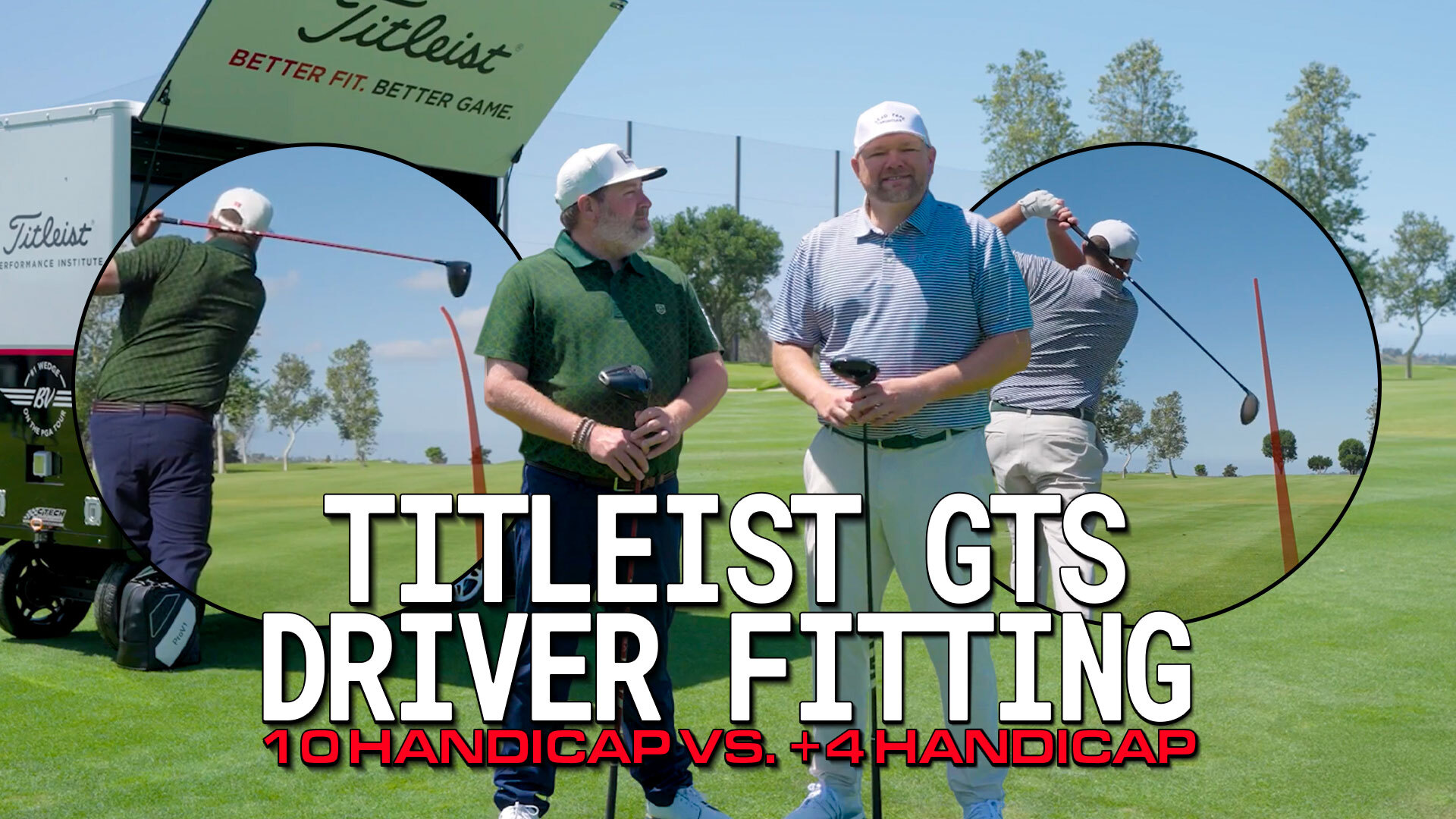
What happens when a 10 handicap and a +4 handicap go through a full driver fitting at one of the most advanced golf performance centers in the world? Brian Knudson and Andrew Von Lossow headed to the Titleist Performance Institute in Oceanside, California, to find out.
Both players go through a complete Titleist GTS driver fitting with the Titleist fitting team to see how swing speed, launch conditions, strike location, shaft profile, and head setup can completely change performance off the tee. Even though the golfers have very different games, the fitting process reveals just how important proper equipment can be for maximizing distance, tightening dispersion, and improving consistency.
You will see how Titleist fitters analyze every part of the driver setup including loft, weighting, shaft selection, and head model to build a driver specifically for each player’s swing. While the skill levels, club head speeds, and desired outcomes are different both players show how deep and versatile the new Titleist GTS driver lineup is.
Videos
Spaun’s surprise putter switch + the best wedge stamping on tour? | Inside the Ropes: Charles Schwab Challenge


Alistair Cameron takes you inside the action at the Charles Schwab Challenge in this week’s episode. Recent winner Brandt Snedeker breaks down his WITB, Neal Shipley discusses his iconic wedge stampings, the reigning U.S. Open champion, J.J. Spaun, discusses a surprise putter switch. Also featured is a look at Project X’s new Titan shafts, which debuted on tour with a bang. All this, and more!


Teddy
Jan 28, 2020 at 8:43 pm
The part of the EYE 2 story you didn’t tell was the lawsuit with the USGA over the groove spacing.
Eye 2 are cast not forged and the groove edges on the early releases where so sharp a Balata cover ball would be shredded after a few holes. To remedy that PING milled the edges a bit after casting. USGA then banned them as non-compliant because grooves where spaced too close together. Solheim, a former Boeing engineer sued USGA claiming the proper way to measure groove spacing was center-to-center not edge to edge. The case was settled with PING Eye 2 given an exemption from all future rule changes regarding grooves. Fast forward to 2010 when USGA mandated V grooves…. Mickelson, Harrington and others started gaming Eye2 wedges again and PING reissued the 60° as the Eye 2 XG.
I still use a 3i – 60° set of Eye 2s with an extra PW bent to 53° as a gag between 50° PW and 56° SW. I had the lofts and lies on all four wedges checked and adjusted.
Bob Vokey
Jun 27, 2019 at 12:20 pm
These wedges are low grade dog food.
Bobbyg
Jun 26, 2019 at 11:28 pm
Had one. Didn’t like it. The groves were great but the rest not so great.
John
Jun 26, 2019 at 9:02 pm
I bought a Ping 56° wedge with the ES sole about two years ago. It worked fine from the sand, but I could not chip with it because the skinny front part of the sole dug into the ground. My handicap was close to zero, so I think I know how to chip at a basic level but even substantial practice didn’t help. As soon as I got rid of that club and switched to a standard sole on the same club, the problem disappeared. Very strange.
Matt Strube
Jun 26, 2019 at 7:44 pm
Ryan, How do these type of wedge designs work for opening up the fact on tighter lies? Great explanation btw.
Matt Strube
Jun 26, 2019 at 7:45 pm
Face, not Fact. 🙂
Garth
Jun 26, 2019 at 5:29 pm
Don’t have a club to show you?
I guarantee?
B grade content at best
Cyril Zupan
Jun 26, 2019 at 4:02 pm
Great Video and explanation …
Before Ping Eye 2 wedges…
I would consider the Hogan Sure-Out and the Bite wedge forerunners to the wide sole..
Thanks and Keep them coming…
Clay Long
Jun 26, 2019 at 3:57 pm
Nice piece on the Eye 2 sand wedge. One thing you missed is the CG location of the Eye 2 compared to conventional classic wedges. The Eye 2 has its CG right in the center of the scoring. Very unusual for popular sand wedges, even the Callaway PM Grind and the Taylormade High Toe wedges don’t accomplish this. (mainly due to no cavity)The high toe shape of the Eye 2 helped accomplish this balance along with the cavity back design. Ugly by classic wedge standards but quite functional as were most of Karsten’s designs. The concaved sole is still difficult to justify and explain its functionality, however it evolved from the wear pattern of older classic wedges that had brand stamps in the center of the sole. Blasting shots from the sand over time dished out the stamping into a concave shape. When going through tour player’s old favorites this worn feature looked like a good shape to copy into a new design. The only thing you can logically draw from the concave sole design is that it allows a sole to bite or dig more easily into the turf the straight on position while offering added bounce resistance or lift when opened compared to a more conventional sole design. (as the designer of the Taylormade High Toe wedge I thought I would offer up these comments)
hoganben
May 16, 2023 at 7:18 pm
recognized your name right away..wow, talk about an expert opinion/comment..thanks for the info