
Opinion & Analysis
Match of the Ages: 30 Years of Tech Goes Head to Head

I vividly remember being a teenager watching the 1987 U.S. Open at the Olympic Club on television with my dad. The ever-stoic Scott Simpson made a slew of late birdies to dash the title hopes of my boyhood heroes Tom Watson and Seve Ballesteros. Simpson hit a feathery 9-iron from 125 yards into the 16th and I said to my dad, “I can do that.” My dad just laughed and shook his head.
“Son, this is not the Rich Acres Par-3,” he said. “This is the U.S. Open.” I went right back at him. “I know,” I said, “but I can do that. My 9 iron goes 125 yards.”
Fast forward to the 2017 U.S. Open at Erin Hills. Rickie Fowler is hitting 5-iron into a 250 yard hole. Brooks Koepka melts a 325-yard 3-wood. My 6-year-old daughter is watching with me as Koepka overpowers Erin Hills and she asks, “Daddy, can you do that?” I answered with no delay, “No chance.” But what struck me as odd was that I was starting to grow numb to the video game-like control and power we see week in, week out on the PGA Tour. Four-hundred-yard drives just happen now and that’s how it is. Sounds like fun, but I’m not sure it’s good thing.
Somewhere between my father’s 1987 dismissal of the crucible that was the Rich Acres Par-3 and Koepka’s brutish dismantling of Erin Hills, golf has become a wildly different game. But is it a better game? Is it more entertaining to watch? Does the technology that facilitates the game for the masses belittle the game’s rich history? Most importantly, is today’s game more fun to play? I set off on a crusade to find out.
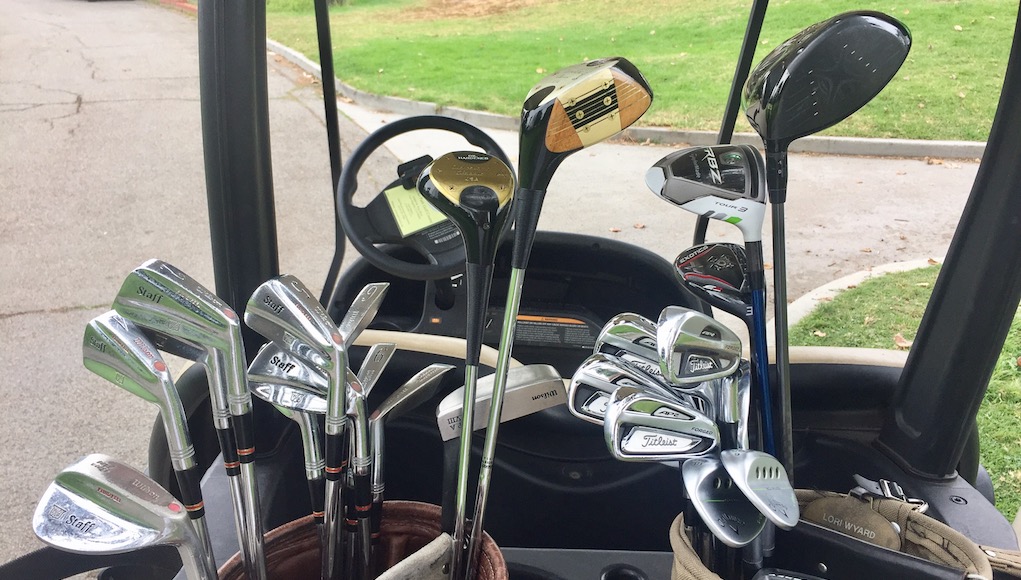
Short of buying a silver DeLorean and traveling back in time to 1987, my best bet was to try and piece together the clubs I played as a teenager and pit them against my current set to see how they would match up. A Match of The Ages if you will; Teenage Me vs. Middle-Aged Me. The artistry of the late 20th century versus the power of the early 21st century. This was going to be fun.
Building My Teenage Arsenal

East Bloomington, Minnesota in 1988 was The Land of 10,000 Blades. My buddy Aaron played his dad’s old X-31s. The Hogan brothers (sons of PGA legend Terry Hogan) worshiped all things Apex. I played a set of Wilson Staff Fluid Feel irons handed down from my father. Persimmons were still King and my all-time favorites were Cleveland Classics that I bought off a guy at my barber shop for an incredibly low price. How he got them wasn’t important. What was important was that I knew at a young and tender age that there are certain questions you just don’t ask folks who are selling goods out of their trunks at barber shops.
I went online and was able to find a similar set of Fluid Feel 2-SW with Dynamic Gold shafts, a Cleveland persimmon driver and 4 wood, and a putter that was close to an old TPA that I occasionally had in play. I didn’t think playing a 30-year-old balata made much sense, so I splurged and bought some Titleist Professionals for $10 (I know the Professionals weren’t released until the mid-nineties, but I figured they’d have a puncher’s chance of still being round). All in all it cost me about $150 to recreate my teenage arsenal. Not quite barber shop prices, but a bargain nonetheless.
Middle-Aged Me: An Embarrassment of Riches

I buy way too many clubs. Like, it’s-a-problem-in-my-marriage amount of clubs. I’ve had to pay off the doorman at my building to stash any deliveries so my wife doesn’t find them and throw them away. Currently my storage unit has more clubs than some pro shops, but here’s what’s in my bag as of right now. The Epic driver is incredible and the RBZ 14.5 and Tour Exotic 19 hybrid have kept their place in the lineup for months — not an easy task considering a few snap hooks with a utility club normally means an early retirement. This is my second set of AP2s (DGS300) and I’ve been a fan of the Callaway wedges since I got them. The 2-Ball putter might strike you as odd, but I side-saddle putted not that long ago, so the term odd is lost on me. I play the Vice Pro Plus and it’s a terrific ball. Middle-Aged Me is well-armed and ready for battle.
The Tale of the Tape
I took 16 shots with each driver and 8-iron using Bridgestone E6 balls. I took out the best and worst 4. Averages in gray.

The 8-iron data had me puzzled. Sure enough, the modern 8-iron was bent fairly strong. Thanks to Brendan Kelly and Tim Ellis at Roger Dunn’s Golf Shop in Seal Beach, California. Here are the specs for all the irons in play.

The Match Begins
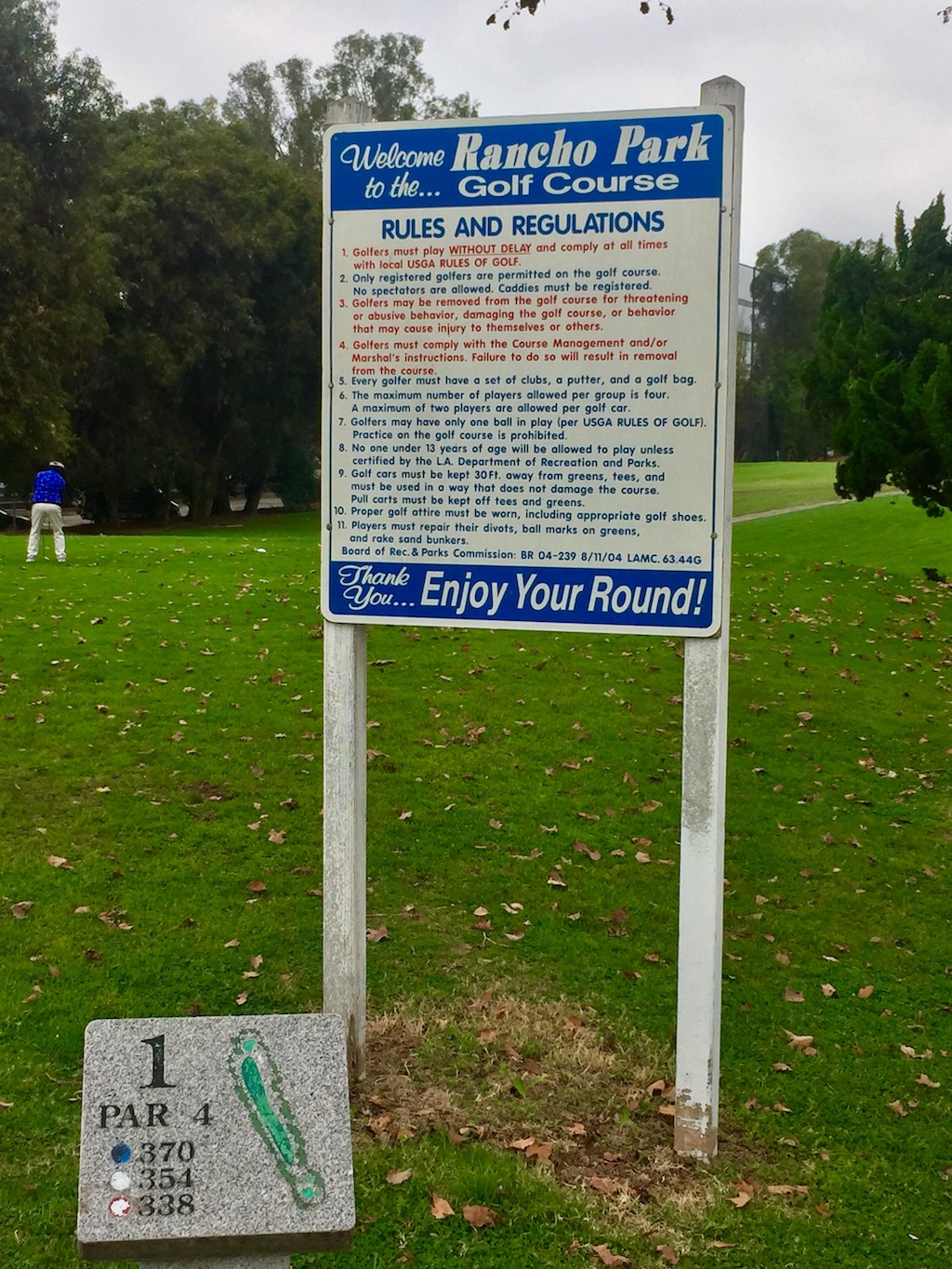
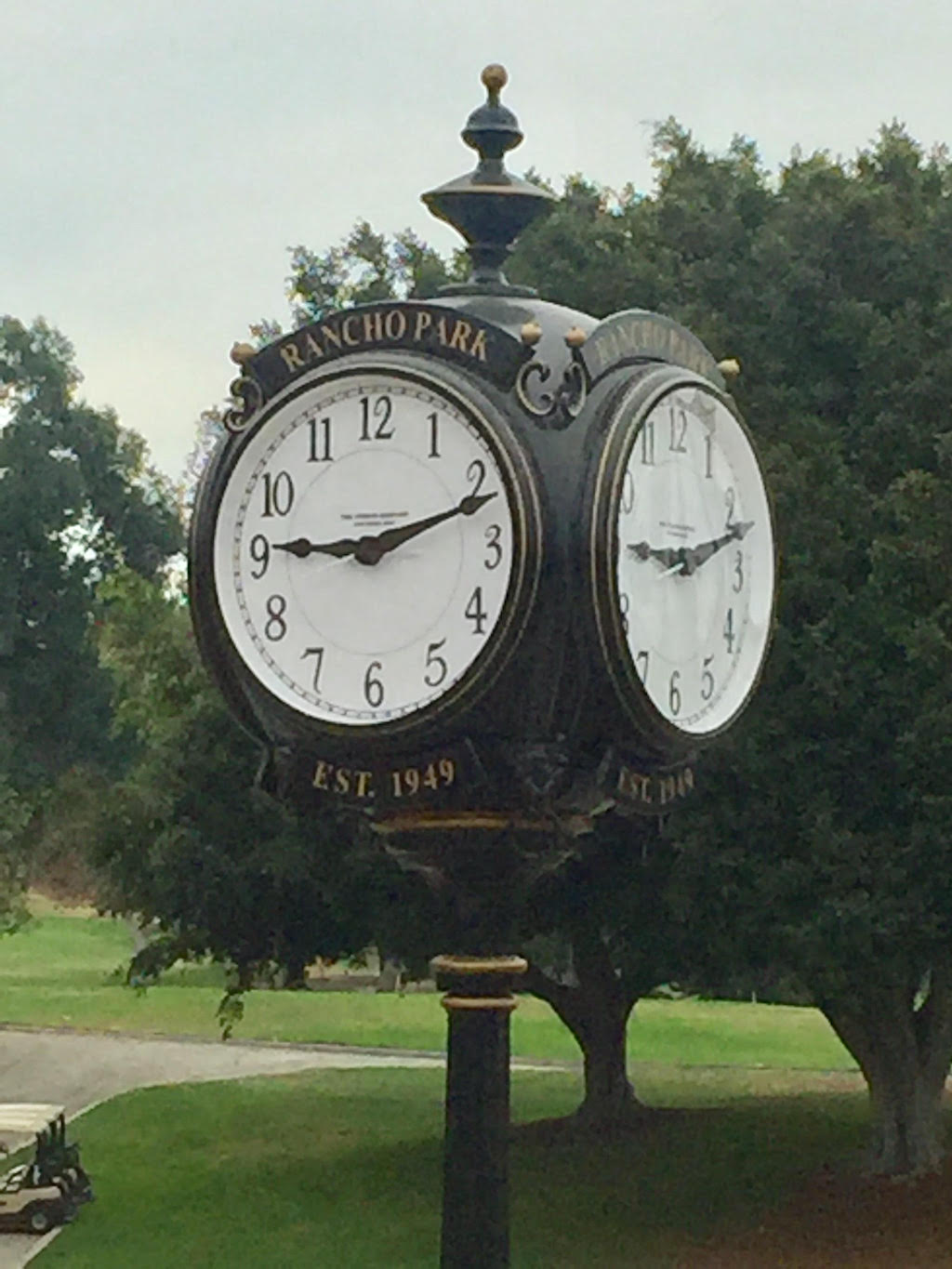
Rancho Park Golf Course is the epicenter of golf on the Westside of Los Angeles. Its 6,630-yard, par-71 layout from the tips makes it the perfect host for the Match of The Ages. The format is 18 holes of Match Play. Middle-Aged Me has honors and so my match begins.
The opening hole is a 381-yard par-4 and my first drive with the Big Bertha Epic might as well be a commercial for whatever Jail Break Technology is. I don’t come close to hitting it squarely, but the ball somehow stays in the air for a lifetime and carries the fairway bunker some 240 yards away with ease. I don’t exactly hit the Cleveland persimmon on the screws, either. Instead, I smack an embarrassing line drive that rolls out some 220 yards into the middle of the fairway. I make a pair of sloppy bogeys and move on.
The second hole is a 467-yard tree-lined beast of par-4. I hook the Epic left, which is my stock miss. Teenage Me, sensing an opening, bombs a high fade. I seldom hit fades, so this is shot is completely slightly miraculous. I pose on the finish longer than usual to savor the moment. Teenage Me has 215 yards left and a useful 3-iron finds the green. An easy two-putt gives Teenage Me a 1-Up lead.
For the rest of the front nine, the Epic catches fire. Middle-Aged Me has wedge into all of the remaining par 4s and is greenside on the sole par-5 in two with ease. The Epic is an undeniable, inanimate Death Star of a driver. It is completely robotic in every sense and lethal when programmed properly. Middle-Aged Me rides the Epic to a 3-Up lead through nine holes.
In a cinematic sense, if the Epic is the Death Star then the persimmon is Morgan Freeman’s Sergeant Major John Rawlins from Glory: old, dark, proud, regal, and loyal no matter the odds. Unfortunately, Teenage Me is facing long odds because the persimmon is consistently 50 yards behind the Epic. My swing with the persimmon seems to be a little longer, a little more deliberate, and even when I hit it one the screws it’s just not even close.
As for the irons, the Wilson Staffs feel great, but they seem to drift left (hook) a little more than I’m used to. With exception to the 2 and 3 irons (which require Buddhist Monk-like focus), the Staffs seem just as playable as my AP2s. I would guess that any purists out there who still game a clean MB blade like the Callaway Apex, Titleist 718 or Cobra Kings would find little difference. As for workability, just about every single shot I’ve hit since age 12 has gone right-to-left, so you want to read about workability you’ve got the wrong guy.
Checking in on the golf ball battle through nine holes, the Titleist Professional is holding its own. Lots of check and surprisingly firm and durable considering the vintage (a skulled 3-iron on the 8th imparted more damage to my fragile psyche than the actual golf ball). Should the USGA ever move towards bifurcation, the Titleist Professional would be a great standard for ball construction. On the other side of the cart, if you know how the Pro V1x plays then you know how the Vice Pro Plus plays, which is to say incredibly well. When played side-by-side, the difference between the modern ball and the older ball is staggering.
Example: No. 4, par-3, 200 yards. Teenage Me rips 4-iron (24 degree loft) and I’m on the front edge. Middle-Aged Me hits a solid but not spectacular 5-iron (26 degrees) that flies to the middle of the green. I would confidently say there’s a one club difference in distance on irons (matching lofts, of course.)
Back to the Match of The Ages: the back nine starts off with some real fireworks with blood exchanged on Nos. 10, 11, 12 and two gritty up-and-down par saves on No. 13. Middle-Aged Me is 4 Up and has the honor on the intimidating 14th that plays out of a shoot. A compact swing of the Epic produces a low draw/hook off the tee that ends up in the fairway about 160 yards out. Teenage Me (focusing too much on the canopy of trees surround the tee box) hits the persimmon off the toe and the result is a Clayton Kershaw sinker that goes about 60 feet 6 inches and dives into the junk. Needing a miracle, I hack the ball back into play but Teenage Me has met his Waterloo. Middle-Aged Me makes par and wins 5 & 4.
Middle-Aged Me may have won the match 5 & 4, but Teenage Me definitely won the fun 10 & 8. A big part of that fun was getting reacquainted with a game I hadn’t played in a while. A game that was less about distance and more about shapes and trajectories. A game light on predictability and loaded with variety where a good drive didn’t mean wedges into every green. I saw the golf course as the architect had intended it to be seen, which let me appreciate more of its features. I’m not denying the element of novelty, but playing with my old teenage clubs — despite shooting 86 — was nothing short of inspiring. And to emphatically answer my original question; yes, it was a lot more fun.

Trust me on this: go out and get a nice persimmon. If for no other reason than if you practice with it you’ll improve as a ball striker, just buy one. Don’t worry about how old it might be. Jack Nicklaus won every single one of his majors — including the ’86 Masters — with a 3-wood from 1958, so I think it’s safe to say the material holds up well. Yes, you’ll find the older clubs are heavier and they’re a little harder to hit, but they are far more rewarding… and they’ll make hitting your modern clubs seem like child’s play.
As you can tell, the old clubs are growing on me. Maybe it’s a nostalgic whim, or maybe there’s something more profound at play. It could just be that people out there want something with a little more heart and soul. I think that’s why we buy hand-stitched wallets and drive old roadsters; we want to feel the humanity and the craftsmanship that goes into someone actually making things. So if you’re ever around a driving range in L.A. and you see a guy with an old Wood Brothers driver working on his gentleman’s fade, stop by and say hello. I’ll give you a few cracks at the driver and you can tell me what you feel.


Club Junkie
Tour Edge Exotics mini driver review + TaylorMade Spider ZT Max first look – Club Junkie

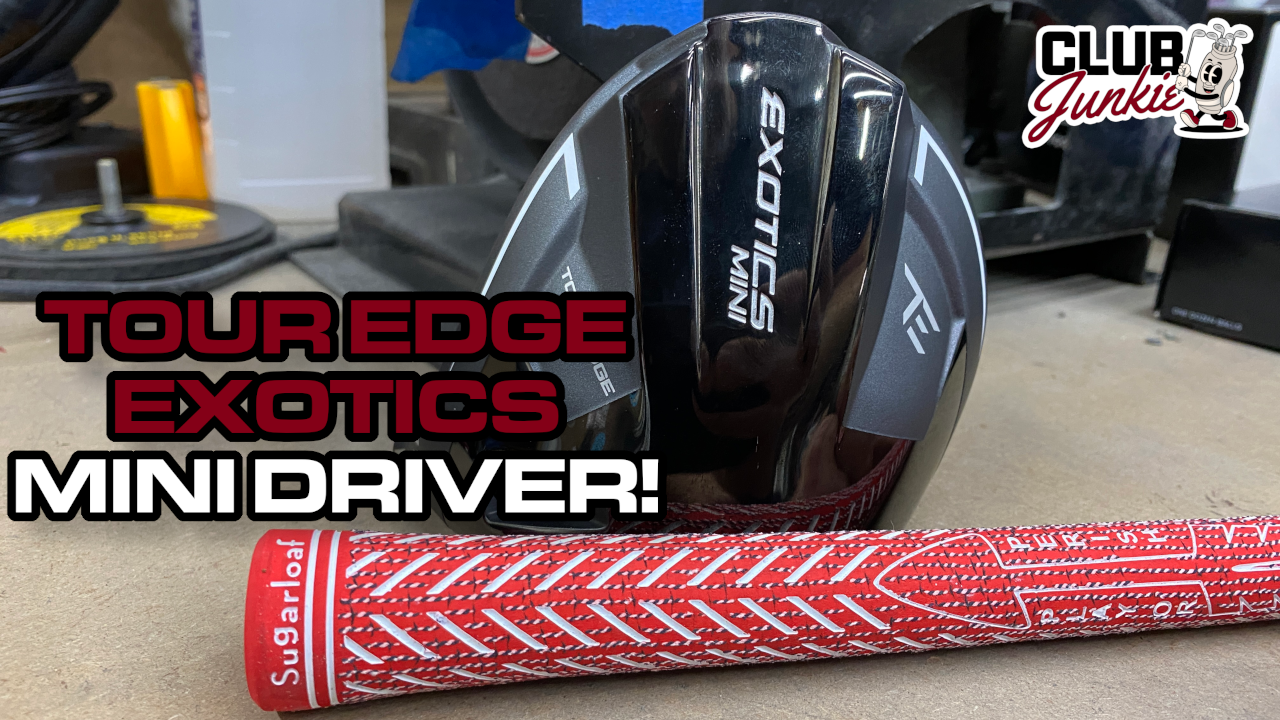
On this episode of Club Junkie, I put the new Tour Edge Exotics Mini Driver to the test and break down the performance, forgiveness, distance, and where it fits compared to a traditional driver or strong fairway wood. If you have been curious about adding a mini driver to the bag, this one is worth a look.
I also dive into the new TaylorMade Spider ZT Max putter that was recently spotted and discuss the growing zero torque putter trend. Plus, there is a closer look at the new Project X Titan Yellow shaft showing up on the PGA Tour and what makes it different from other profiles currently out there.
Opinion & Analysis
AVL: We’re talking about practice! My best tips for taking your game to the course

With the beginning of June on the horizon and courses rounding into peak condition for the season, it’s time to hone the finer skills that often get rusty over the winter. More sunlight also means more time to get out on the course and work on your game.
Whether it’s the practice green or the driving range, there’s always something to improve—whether you’re enjoying the fresh air or preparing for a weekend game or tournament. You can work on drills or freestyle around the green, and friendly competition is a great way to sharpen your skills.
While there are endless ways to get better at golf, I’m going to focus on practicing around the green. Let’s take a look at a few things to keep in mind as we head into the summer months.
Drills
From the driving range to the practice green, it’s important to incorporate drills into your routine. Years ago, I spent a weekend working on my short game with James Sieckmann. He recommended doing drill work for 5–10 minutes, then returning to your main practice.
This way, you create a balance between structured drills and real-world scenarios, so you’re not confined to “perfect” situations. For example, hitting the same three-foot putt over and over is good for repetition, but after a while, it becomes less interactive for your brain.
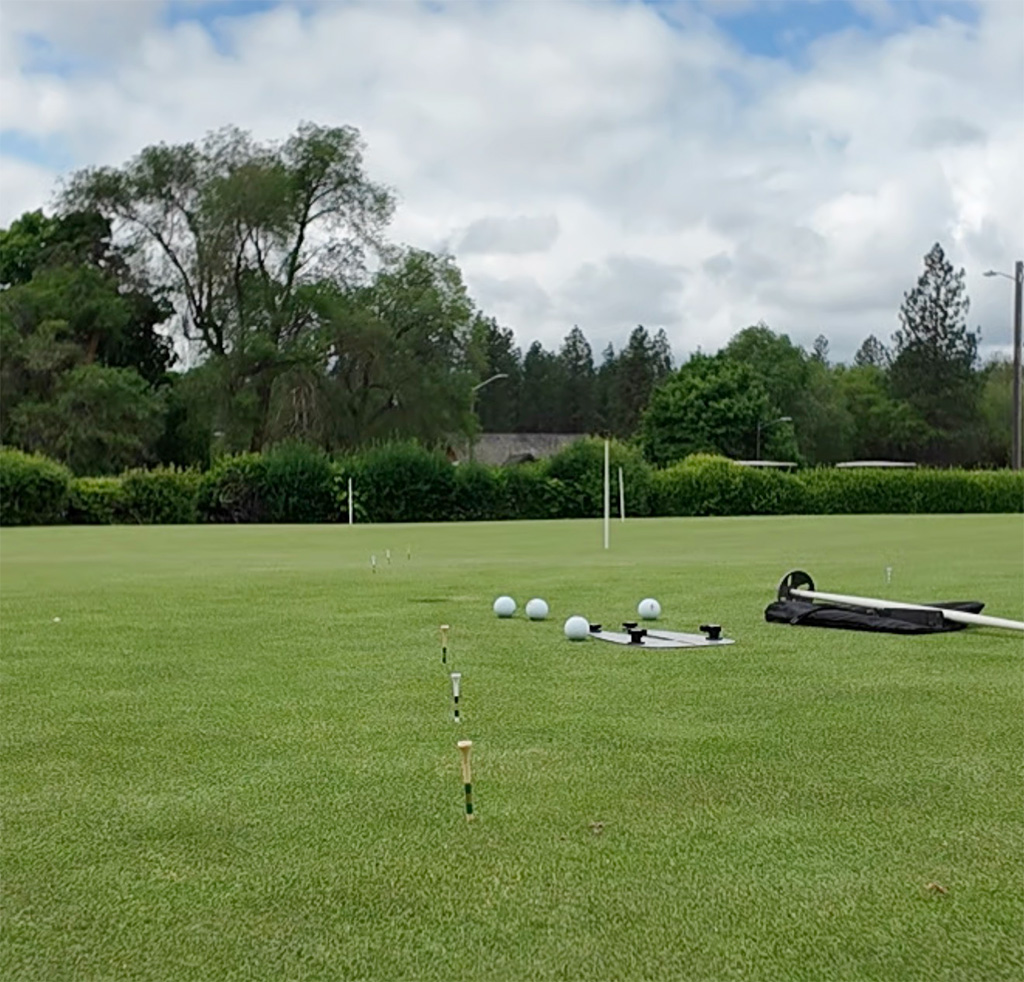
My approach is to use a putting trainer with a narrow gate for the ball to pass through, or simply place tees just outside the width of the ball. I’ll hit a series of four putts through the gate for three sets. Then, from a similar distance, I’ll hit four putts without the training aid and repeat that sequence three times.
Next, I’ll hit a number of 15–25 foot putts in a random fashion, then circle back to repeat the short putt drills with and without the training aid.
This breaks up the rhythm of hitting short putts with the training aid. When you hit the same short putts over and over, it’s easy to get into a groove—which is great for the drill, but not reflective of actual course play. While finding a rhythm is fundamental for drills, I like to introduce variation with longer putts to keep things realistic.
Game Mode
Once you’ve established a foundation with drills, it’s time to simulate on-course scenarios. This is where a few practice games come in handy.
One that I’ve been enjoying lately involves putting 10- to 15-footers with two balls. If I make the putt, great! If I miss, I pull the missed ball back a putter length. Suddenly, that little tap-in becomes a nerve-wracking three-footer—at least at first. As you get better at this game, those three- and five-footers become much more comfortable and routine.
It may sound cliché, but each shot is just what it is—it’s how we react that makes the difference. I like this game because it blends the pressure of on-course putting with the consequence of leaving yourself a much longer putt than usual.
Another game I like is one I recently learned from Brad Faxon. Place three tees in a line at four different locations around the hole: one at 3 feet, one at 6 feet, and one at 8 feet. The 3- and 6-foot putts count as par, and the 8-footer is for birdie.
This game keeps you focused on scoring and helps you get into a competitive mindset. You can even think about this putting game while you’re on the course. I just started playing it, and last week I couldn’t get better than two under par.
Competition
Competition during practice is when drills and games come to life, and you start to see results. For me, nothing beats a putting contest with a friend or two. In the right setting, these contests can become talking points for the whole season.
Match play, a game of 21, or simply seeing who can make the most one-putts (with a small prize on the line) are all great ways to simulate real on-course pressure. Recently, I played in a putting contest where one competitor made back-to-back 30- and 50-foot putts. As they say, expect your opponent to make every putt—and he nearly did. That’s impressive, and it’s something you see on the course, too: you have to stay committed to your game plan, no matter what.
When it comes to practice, it’s important to blend feedback from recent rounds with the fundamentals you want to reinforce. Drills, games, and competition—from the driving range to the putting green—form the backbone of skills you’ll rely on during actual rounds.
Finding the right balance is something we’re all working on, one practice session at a time. With the beginning of June on the horizon and courses rounding into peak condition for the season, it’s time to hone the finer skills that often get rusty over the winter. More sunlight also means more time to get out on the course and work on your game. Whether it’s the practice green or the driving range, there’s always something to improve—whether you’re enjoying the fresh air or preparing for a weekend game or tournament. You can work on drills or freestyle around the green, and friendly competition is a great way to sharpen your skills. While there are endless ways to get better at golf, I’m going to focus on practicing around the green. Let’s take a look at a few things to keep in mind as we head into the summer months.
Drills
From the driving range to the practice green, it’s important to incorporate drills into your routine. Years ago, I spent a weekend working on my short game with James Sieckmann. He recommended doing drill work for 5–10 minutes, then returning to your main practice. This way, you create a balance between structured drills and real-world scenarios, so you’re not confined to “perfect” situations. For example, hitting the same three-foot putt over and over is good for repetition, but after a while, it becomes less interactive for your brain.
My approach is to use a putting trainer with a narrow gate for the ball to pass through, or simply place tees just outside the width of the ball. I’ll hit a series of four putts through the gate for three sets. Then, from a similar distance, I’ll hit four putts without the training aid and repeat that sequence three times. Next, I’ll hit a number of 15–25 foot putts in a random fashion, then circle back to repeat the short putt drills with and without the training aid.
This breaks up the rhythm of hitting short putts with the training aid. When you hit the same short putts over and over, it’s easy to get into a groove—which is great for the drill, but not reflective of actual course play. While finding a rhythm is fundamental for drills, I like to introduce variation with longer putts to keep things realistic.
Game Mode
Once you’ve established a foundation with drills, it’s time to simulate on-course scenarios. This is where a few practice games come in handy. One that I’ve been enjoying lately involves putting 10- to 15-footers with two balls. If I make the putt, great! If I miss, I pull the missed ball back a putter length.
Suddenly, that little tap-in becomes a nerve-wracking three-footer—at least at first. As you get better at this game, those three- and five-footers become much more comfortable and routine. It may sound cliché, but each shot is just what it is—it’s how we react that makes the difference. I like this game because it blends the pressure of on-course putting with the consequence of leaving yourself a much longer putt than usual.
Another game I like is one I recently learned from Brad Faxon. Place three tees in a line at four different locations around the hole: one at 3 feet, one at 6 feet, and one at 8 feet. The 3- and 6-foot putts count as par, and the 8-footer is for birdie.
This game keeps you focused on scoring and helps you get into a competitive mindset. You can even think about this putting game while you’re on the course. I just started playing it, and last week I couldn’t get better than two under par.
Competition
Competition during practice is when drills and games come to life, and you start to see results. For me, nothing beats a putting contest with a friend or two. In the right setting, these contests can become talking points for the whole season. Match play, a game of 21, or simply seeing who can make the most one-putts (with a small prize on the line) are all great ways to simulate real on-course pressure. Recently, I played in a putting contest where one competitor made back-to-back 30- and 50-foot putts. As they say, expect your opponent to make every putt—and he nearly did. That’s impressive, and it’s something you see on the course, too: you have to stay committed to your game plan, no matter what.
When it comes to practice, it’s important to blend feedback from recent rounds with the fundamentals you want to reinforce. Drills, games, and competition—from the driving range to the putting green—form the backbone of skills you’ll rely on during actual rounds. Finding the right balance is something we’re all working on, one practice session at a time.


For Korean golfers, we always look forward to the last of the kkot-saem-chu-I for the true start of a new golf season. The term refers to a cold snap, but literally translates as “winter being jealous of the flowers beginning to bloom, thus lashing out one final time before surrendering to spring”.
A rather poetic mouthful packed into a short expression.
Koreans can be like that. Understated, yet oddly expressive at the same time. And nowhere is this more true on the golf course and in our golf bags. In fact, I suspect many Korean golfers look forward to new apparel and accessory drops more than they do actual equipment launches each year.

At this point, Korean golf fashion may exist on its own timeline. (courtesy of @seonbi_golfer)
There is ample evidence to support that suspicion. Korea is the world’s third-largest golf market behind the United States and Japan, yet its appetite for golf apparel exceeds that of both countries combined. Recent estimates suggest that Korea accounts for nearly 40 percent of the global golf apparel market, placing it among the world’s most influential golf fashion markets and punching well above its size.
Simply, we care deeply about how new golf clubs look and feel, but enjoy looking good while swinging them even more.
Golfers in the West may laugh and say that golf is played on a course, not a fashion runway. Perhaps. But what’s the harm in trying to look and feel good, if the added self-confidence can help actual performance? It certainly seems to have worked for Jason Day, who may have unlocked a new stats category: dormant strokes gained. Coincidence?

During the COVID-era, estimates placed the market near $9 billion, an astonishing figure for a single country.
As a proud member of Gen X, I’ve witnessed the highs and lows of golf fashion firsthand. The pleated trousers and wing-tipped shoes of Jack Nicklaus, the stylish plus-fours and knickers of Payne Stewart, the baggy black trousers and fitted mock-necks of Tiger Woods, and the thigh-hugging athletic tailoring of Rory McIlroy. Golf fashion, like the golf swing itself, has rarely stood still.
But nowhere have those trends shifted, evolved, and been scrutinized quite as relentlessly as in Korea. Here, golf fashion moves faster than fairway gossip, and consumers dissect brands with a level of discernment that can be both impressive and mildly terrifying. New brands are studied, judged, embraced, or dismissed with startling efficiency.
The result is a consumer base with one of the sharpest eyes for quality and authenticity anywhere in the world. It is difficult to quantify, but easy to recognize. Clean lines without trying too hard. Luxury mixed with utility. Trend awareness balanced by restraint and purpose.
It’s golf fashion shaped by one of the world’s most style-literate cities, something I like to call Seoul Sensibilities, referring to the taste level forged by a uniquely competitive environment.
And increasingly, global brands have noticed.

Many golf brands in Korea have their own flagship shops dedicated to apparel only
Titleist understood this years ago, when its apparel business in Korea took on a life of its own under new ownership and local direction. What had once been a straightforward extension of an iconic equipment giant became something sharper and more premium. By going all in on the serious Tour-player look (I couldn’t even fit into their XL sizes), Titleist struck the right chord with Korean consumers and helped its fledgling apparel business break into the mainstream. Titleist became a household name even for non-golfers who wore its caps, shirts, and windbreakers in daily life. In many ways, it proved that even heritage golf brands could carry real fashion credibility when viewed through a Korean lens.
Several years later, PXG took a page out of Titleist’s playbook and followed suit. Korean consumers helped transform the brand from one known largely for irons and loud commercials into something broader and more stylish. PXG apparel’s growth in Korea was explosive, where it found an early audience and turned the category into something more than mere logo merchandise. It is still hard to walk anywhere in Seoul without seeing its palindrome logo.
Malbon’s meteoric rise in the United States was genuine, but its ascent into a global golf lifestyle brand owes much to Korea, where it was elevated by a market already fluent in modern golf style. Korea did not simply embrace Malbon. It pressure-tested the concept, refined its appeal, and helped push it into the global spotlight.
As such, new brands may arrive from abroad, but more often than not, their sharpest evolution happens here. If a brand can earn credibility in Seoul, it’s deemed to have passed one of the toughest style audits in the game.
That is why the next meaningful chapter may not come from outside, but from a Korean brand moving in the opposite direction, carrying those Seoul Sensibilities outward as K-pop once did.

Play young Stay dope.
From Seoul, With Intent
Khalhon is a label that feels less like a trend-chasing newcomer and more like the product of a market that has already seen everything. Golfers here have long been surrounded by luxury logos, technical fabrics, and tour uniforms disguised as lifestyle wear and vice-versa. In other words, novelty alone rarely lasts here, and the Koreans seems to understand that instinctively.
Its style language leans into clean silhouettes, relaxed but tailored proportions, muted palettes, and premium materials that speak quietly but confidently. There is a modern city aesthetic running through it all, with strong layering pieces, thoughtful textures, and subtle branding that suggests sophistication rather than demanding attention.

“Built for the course. Designed beyond it.”
Most importantly, the garments seem designed to blur the line between golfwear and everyday style. Shirts, trousers, knitwear, and outer layers move comfortably between a game of screen golf, a lunch reservation, an airport gate, or an afternoon coffee in Gangnam with friends.
It raises the question of whether this is golfwear that happens to look good off the course, or everyday clothing that performs beautifully on the fairways.
Personally, I have long appreciated Nike Golf for its clean, athletic modernization of golf attire. It also has the useful side effect of making me look like a more serious golfer than I probably am. But off the course, there are times when being instantly identified as the golf guy in a crowd of non-golfers can feel a touch self-conscious.

“Built for the course. Designed beyond it.”
That is part of what drew me to Khalhon, which seemed to blend golf and everyday wear naturally. While some of the outfits may be slightly beyond my personal confidence level, the brand also offers tasteful options for older guys like me who still want to express a little personality without regretting the decision later.
These are not simply flashy outfits worn on the course and then banished to the closet until the next tee time. They work surprisingly well off the course too, and I suspect many of the pieces will still look right a couple of years from now, which would certainly be kinder to my wallet than most golf fashion trends tend to be.
And perhaps that broader lifestyle positioning also helps explain why someone like Sean Wotherspoon would find Khalhon creatively interesting in the first place.

“Built for the course. Designed beyond it.”
“Korea is not only one of the most fashion-forward golf markets in the world, but one of the most fashion-forward markets globally. Korea is ahead, and I love to watch and try to catch up.” – Sean Wotherspoon, Creative Director at Khalhon
Seoul and Beyond
If Khalhon’s rise says something about where Korean golf fashion is today, its relationship with Sean Wotherspoon says even more about where it is heading.
For readers less familiar with Sean Wotherspoon, his arrival at Khalhon is not some routine celebrity endorsement or influencer collaboration. In design and streetwear circles, Wotherspoon is regarded as one of the more influential creative voices of his generation, particularly when it comes to blending nostalgia, storytelling, and contemporary culture into products that people can connect with.
He first gained widespread attention through his now-famous Nike sneaker collaborations, where his vintage-inspired designs and instinct for color helped turn him into one of the defining artists of the late-2010s sneaker era. His work gradually expanded beyond footwear into apparel, automotive collaborations, collectibles, and broader lifestyle design.
Modern golf style now extends well beyond the fairways, where performance and functionality are largely expected by default. And while plenty of brands already make technically competent golfwear, Khalhon seems more focused on designing clothes people would genuinely want to wear even after the round ends.
And when guys at Wotherspoon’s level show genuine interest in working with a Korean golf brand as its new Creative Director, fashion circles tend to sit up and pay attention. There’s already a huge buzz among the fashion-conscious here about upcoming collabs with iconic sports stars and brands.

“My creative direction for Khalhon is disruptive, colorful, nostalgic, and modern. My goal is to blend these avenues seamlessly within each collection.” – Sean Wotherspoon
In chatting with Sean, what stood out most to me was how genuinely energized he sounded about the project itself. Despite having already worked across and countless other creative spaces, he described golf as a completely fresh category for him, saying that Khalhon “will be an amazing vehicle for my design work.”
At the same time, his enthusiasm seemed tied just as much to Korea itself. He spoke openly about admiring Korea’s fashion culture while repeatedly insisting he is still a terrible golfer.
There was something oddly refreshing about that humility. Rather than sounding like a celebrity parachuting into golf simply because the category suddenly became fashionable, Sean sounded genuinely curious about what Korea might do with the category next.
And perhaps that is what makes Khalhon feel interesting right now. The brand feels less like a trend-chaser and more like the natural result of a market now confident enough to export its own point of view.
For years, global brands came to Korea to sharpen their image against one of the most discerning audiences anywhere. Now, a Korean label appears ready to send those Seoul Sensibilities outward instead.
Which brings us back to kkot-saem-chu-i.
That final cold snap before spring always arrives with a reminder that seasons are changing, whether we notice it immediately or not. Golf fashion feels a little like that right now as well, as the old boundaries between sport, streetwear, luxury, and everyday style continue to soften.
And somewhere in Seoul, a Korean golf label already seems prepared for whatever season comes next. I just hope they have everything in my size.

Aaron Rai’s winning WITB: 2026 PGA Championship

Russell Henley’s winning WITB: 2026 Charles Schwab Challenge

Photos from the 2026 CJ Cup Byron Nelson

CJ Cup Byron Nelson Tour Report: Koepka and Kim’s newest putters finally get hot

Charles Schwab Challenge Tour Report: MacIntyre, Åberg and Spaun all switch putters, TaylorMade launches new Spider

Details on J.J. Spaun’s surprise putter switch

GolfWRX Launch Report: 2026 Titleist GTS drivers

Photos from the 2026 Charles Schwab Challenge

PGA Championship Tour Report: Fitzpatrick, Koepka among big-name putter switches for Aronimink

Photos from the ShopRite LPGA


Maria Torres WITB 2026 (June)
Driver: Ping G440 LST (9 degrees) Shaft: Accra TourZ Green 5-M4 3-wood: Ping G440 Max (15 degrees) Shaft: Accra TourZ Green 6-M4 5-wood: Ping G440...


Eric Cole WITB 2026 (June)
Driver: PXG Lightning Tour Max (9 degrees) Shaft: Project X Titan Yellow 70 TX 3-wood: TaylorMade Qi4D (15 degrees) Shaft:...


Si Woo Kim WITB 2026 (May)
Driver: Callaway Quantum Triple Diamond (8.5 degrees) Shaft: Fujikura Ventus Black 6 X Mini driver: Callaway Paradym Ai Smoke Mini...


Wyndham Clark’s winning WITB: 2026 CJ Cup Byron Nelson
Driver: TaylorMade Qi4D (10.5 degrees) Shaft: Project X Titan Yellow 60 TX 3-wood: TaylorMade Qi4D Tour (15 degrees) Shaft: Project...


Crazy About Golf
Dec 15, 2017 at 12:06 am
Great article. Thanks for sharing! I play to a 1-handicap with today’s golf club technology. A few years back, I wondered just how I might fare with clubs from yesteryear. So i took my dad’s set of Golden Rams (of course he still had them because he’s a hoarder) out to the course for a test drive. The driver itself didn’t give me too many problems, but the irons were the tiniest little things I can ever recall seeing (and I play blades now)…..needless to say, I put up 8 strokes more than I normally would (luckily i made a few good putts or it would have been worse). I felt like my manhood had been completely stripped away from me…hitting approaches that ended up 10 yds short of the green or having even the slightest mis-hit feel as though I had just rearranged my dental work gave me the utmost respect for those who played the game in the generations before us. Tiger is certainly the greatest of this era, but his skill is no match for what Nicklaus, Hogan and Jones showcased before him.
JW
Dec 5, 2017 at 9:32 pm
Thought the article was really well written… and a cool take as well.
Now that I don’t play for anything bud fun the older clubs are definitely more fun.
Also believe Randy Moss is the best WR ever… LOL.
Benny
Nov 29, 2017 at 6:21 pm
Thanks for the great reading. It does make me think about strategy and precision. It’s why I still play blades. I remember the girl on Morning Drive was laughing while being blown away after she saw some old drivers. The phrase “hitting it on the screws” made so much more sense. She had no clue there was actually screws in the faces. Thats when you know we are old and walked to school up hill both ways. Nuts to think about the original 59 and that time and length. Maybe the best round ever??
Jeff
Nov 10, 2017 at 11:10 am
Thank you for an enjoyable read. Love your writing style. Many years ago I started with a set of Hogan blades and a couple of Ping persimmon woods. Would be very interesting to have that same set and take a whirl with them again.
EGR MN
Nov 11, 2017 at 12:01 pm
It’s called EBay.
I play with a set of Wilson Staff Goosenecks I bought in 1992. 2-PW with a HOgan Apex SW for added comfort.
Last year I found a 1 iron WS Gooseneck on eBay and bought it, though I’m not yet convinced it gives me more than the 240-250 I consistently get off the tee with my 2 iron.
Last year I finally broke down and got rid of my old Burner Plus 9.5 driver, which I used to launch 310-320 consistently. My wife bought me a driver fitting and I got put in a Titleist 915D3 (I’d still rather put my $ into rounds of golf instead of equipment). 290 off the tee right down the middle…and I’m now 56 years old (10 handicap; used to be 3).
Next up is my putter…since it too is from 1992. But…as much as I’ve test drove other putters, this Taylor Made is the perfect swing weight and it’s small imperfections are embedded in my brain and muscle memory.
Dad used to tell me “It’s the Indian, not the Arrow.” With apologies to all the great equipment companies, he’s right.
Carl-Gustaf
Nov 8, 2017 at 8:03 am
First of all, why you play DG S300 shaft is beyond me. Totally not the correct shafts for you seeing your swing speed and spin with your 8-iron.
Second of all, why did you not correct the lofts in the old set first? Clearly it’s 4 degrees between clubs so the 8-iron in the old set should be 40 degrees but thru the years got bent a bit (which is common).
Laz Versalles
Nov 9, 2017 at 11:39 pm
Hi Carl,
A few things: I’ve had Rifle 6.5, and DG X100, but ever since I suffered a grade 2 separation of my AC joint I’ve gone down to the DG300. As for the old staff lofts, I was happy with how they looked and kept them as is.
Mike
Nov 7, 2017 at 11:36 am
Very interesting! No. 3 is the par-3, not No. 4, just fyi.
Laz Versalles
Nov 9, 2017 at 11:40 pm
Yeah- saw that. Funny how I seem to make 4 more on #3 than I do on #4!
Mark Peck
Nov 6, 2017 at 8:34 pm
Fantastic article, thank you Laz.
I’m 49 now and this really resonated with me. Brings me back to playing in my teens in the 80s. I’ve always played blades and currently have 3 sets of the Staff Fluid Feels in my basement, all full 1 iron through wedges. (though not with the W/S badge stamping). I believe my sets are circa ’86 – ’89.
Also have a set of the Ram Tour Grinds but I couldn’t hit them as well for some reason. Currently playing Mizuno MP37s. I love when folks tell me that blades are only for good players. Then I let them hit mine and they get instant feedback on where they are missing on the face, even high handicappers. I’ve seen folks improve dramatically after a bucket of balls on the range with my butterknives.
I’ve also gone full retro on my bag, used to tote a Vagabond (Jones knockoff) from high school through college and have since tracked down 3 on Ebay and am restoring them now.
I’m sure I could lower my index w/ full kit of modern, fully juiced sticks, but I love the simple passion of walking, shotmaking (and shot failing!!) and enjoying the experience.
PS – also loved your review of Goat Hills on GCA, bravo.
Thanks again
Laz Versalles
Nov 9, 2017 at 11:45 pm
Thank you, Mark. I appreciate your feedback. We just had the club championship at the goat and there was a lot of persimmon in play. Tons of good players there. I just bought a Wood Bros driver on eBay this morning. A friend had one in college and he tells me a lot of the old SWC players like Justin Leonard played that driver. Can’t wait. Funny you call the vagabond a knock off! I loved those bags but I was a Jones kid myself. Connect w/ me on twitter or FB.
Mark Peck
Nov 12, 2017 at 10:44 pm
Love it Laz. I’m headed down to my basement to dust off my old MacGregor m85w eye-o-matic. You’ve inspired me to get a new grip on it and put it back in play.
I’ll hit you up on FB.
Thanks!
jgpl001
Nov 4, 2017 at 3:00 pm
Just puts Al Geiberger’s 59 into perspective and how brilliant it was with a similar bag of old school blades, persimmon woods and a balata ball on a course well over 7000 yards in the Texas heat
Unbelievable
etc.
Nov 4, 2017 at 5:22 pm
Does anybody really believe that today’s GI and SGI clubs helps recreational golfers with their game? I think it’s all a gigantic hoax perpetrated on the gullible golfing masses to sow discontent with their current clubs and to trick them into buying the latest ‘improved’ clubs that will rescue their pathetic game.
IOW, it’s not YOU, it’s your clubs trickery propaganda. Have you fallen for the scam?
Pp
Nov 5, 2017 at 5:14 pm
Ask the people who bought the P790 how they’re playing
M. Vegas
Nov 4, 2017 at 8:57 am
Your teenage arsenal had a sweet lookin putter yo
Laz Versalles
Nov 9, 2017 at 11:47 pm
It’s no longer in the teenage arsenal. It’s in the tournament bag now yo.
Mat
Nov 4, 2017 at 2:38 am
To me, this is all the more reason to reign in the ball.
If clubs can have a CoR, why can’t the ball?
Tim
Nov 3, 2017 at 6:48 pm
I run a summer golf league at one of the local muni’s. Every year, I try to convince the league to play with “real” woods and blades on British Open week, just for the tradition and to put some of the fun you speak of into the round. I have enough in the garage to outfit anyone who wants to give it a try. I have one player out of 50 that will hit a ceremonial tee shot off the first tee, but other than that, it’s just me against the world. I’ve been trying for almost 20 years to get people to give it a try, but no success so far. I’ll keep trying, as everyone should have some perspective on how things have come along.
Someone
Nov 3, 2017 at 5:57 pm
is it just me or were the loft gaps between the 7/8:9 in the wilson set off? wouldn’t it be more accurate to play modern day blade vs old blade?
i used to think blades were all the same but i went to a fitter to just hit some of the new stuff and found that Mizunos new MP18 actually went 5yds linger while the new TM p790’s with microgrooves actually went shorter, obviously due to the additional spin, but that gave them a much steeper landing angle and possibly could hold more greens. game improvement irons have always been jacked lofts which is one of the reasons that i prefer to play blades, but to each their own. i always check the std lofts of sets on their websites and any game improvement is always jacked up to be stronger. i guess long and wrong equates to game improvement since you may be closer to the hole, however if you hit them center every time, they absolutely have a chance of going further. with blades I have had more consistent distance control. not a knock on the cavity back tho, i did start with cavity backs from the get go. I just enjoy playing blades now.
Laz Versalles
Nov 3, 2017 at 8:52 pm
The Apex CF16 lofts are nuts. These were used, old clubs so I wasn’t surpised to see them all voer the map.
asugrad1988
Nov 3, 2017 at 5:32 pm
Laz:
The best thing I got from your article was memories. As I read through your great story, it brought back memories of playing with my friends when I was just a kid. I can’t remember how far I hit my clubs back then but I can remember getting a hot dog and a Coke at the turn for less than $1.00.
Thank you Laz!
Laz Versalles
Nov 3, 2017 at 9:26 pm
Love it. We always played the par-3 and the loser bought lemonades and snickers. Normally 1.00.
Matt
Nov 3, 2017 at 4:27 pm
Golf seems a bit less fun with the newer equipment, regardless of the scoring improvements. I’m playing the latest and greatest, fitted properly and all my old gear is gone except for a handful of Mac and Hogan persimmons. With retro gear (bikes, surfboards, golf, etc) the handmade aspect simply makes sport feel more human, so if I had enough spare time it would include an occasional round with old clubs.
Tom54
Nov 3, 2017 at 4:04 pm
Wonderful article Laz. Lots of golfers who are not old enough to have ever played persimmon woods and balata balls cannot relate to the difference between older equipment. One of my longest drives ever was with a Macgregor 945. Whenever I stand on that hole even with today’s modern drivers there’s no way I could carry it on the green. I guess being younger had a lot to do with it though. I wonder if 25-30 years down the road will those clubs and balls be such a leap forward or have we reached the limits. It is funny how when you look at old persimmon drivers you say “ man look how small it is, I could never hit that”. I’ll bet in 1980 if you handed someone todays big headed monsters you would have said “man look how big this thing is, how am I supposed to hit this little ball with that”
Laz Versalles
Nov 3, 2017 at 9:28 pm
Thank you, Tom. Question: Do you still have the McGregor? If not….
https://www.ebay.com/itm/MacGregor-T945-Eye-O-Matic-Driver-Vintage-Persimmon-Original-RH-mens-golf-club/172954809052?hash=item2844e8f2dc:g:YTEAAOSwxixZ9nV8
James Sweeney
Nov 3, 2017 at 1:02 pm
Enjoyed this article. While highly unscientific, you’ve taken a fair shot at the question of whether this game has actually gotten better over time.
One can fairly say, I think, that if the clubs used were tested using laboratory standards the differences betwen the two sets would be less than you experienced.
I often play persimmon woods in casual rounds with friends whose abilities are similar to mine, and for the most part I can keep up, distance- wise. I practice with the persimmons, however. My persimmon driver and three wood are copies of clubs custom made for Tiger Woods by Louisville Golf in the late 90s. They were copies of his Byron Nelson driver and McGregor Armour three wood and made so he could use them in practice. I use modern equipment in competition. I play blades.
Speaking for myself, I prefer the persimmons. I like the feel, the sound. I miss the Titlleist Professional, the best ball ive ever played. Some of the new “soft” balls are pretty good with the persimmons.
Is the equipment better today? Maybe. Certainly more consistant. Is the game better? Well, the game hasn’t reallly changed, the way it is played has. Not necessarily for the better.
In 1960 Arnold Palmer drove the 346 yard first hole at Cherry Hills CC in the fourth round of the USOpen. Even allowing for altitude at 5%, he drove that tee shot 325 yards. With persimmon.
The game is played differently today. If I can could only play one set for the rest of my life, I’ll take the persimmons.
Laz Versalles
Nov 3, 2017 at 5:11 pm
I recall Davis Love III killing drivers in the mid-nineties with persimmon. If you get a good block, they’re hard to beat.
James Sweeney
Nov 3, 2017 at 9:25 pm
Love was the last player to win a major with persimmon.
Dave Bourne
Nov 3, 2017 at 12:10 pm
Those Wilson Staff irons are from 1989 or 1990. The 1989 model has the diamonds along the scoring lines while the 1990 models don’t. Your loft values in the table aren’t correct either, although the ’89 Fluid Feel 8 iron is 41 degrees. This model of the Staff iron is one of their best ever IMHO and I restore and sell 10-20 sets per year.
Laz Versalles
Nov 3, 2017 at 1:26 pm
Hi Dave, the lofts may be off from the standard spec, but this is what they measured at. Can you DM me and tell me more about your restoration process? I am definitely keeping these clubs and would like to know what I can do to make them a bit nicer.
rex235
Nov 3, 2017 at 12:08 pm
Nice article. It is more of an apples vs oranges comparison, since your OEMs are different.
All of the newer clubs are available in a LH model, with few restrictions. They weren’t 30 years ago.
Of the traditional club set of Cleveland Classic persimmon woods and Wilson Staff irons, both were very high end, as the Driver and fairway wood have 5 screw butterfly soleplates. Neither was offered in a LH model. Quote Cleveland Golf- “You get 4 screw sweepback soleplates-nothing else.” Even the drill thru hosel for LH models was by request only. This Wilson Staff Fluid Feel iron model has the “W/S” crest, and they were only offered RH as well. The Wilson Staff TPXVIII putter came in RH/LH. Perhaps the test would have been closer with early cavity back irons vs modern blades.
Laz Versalles
Nov 3, 2017 at 2:34 pm
Or maybe me playing LH?
Grover
Nov 3, 2017 at 11:53 am
Laz
Love the article
Seems to me you have to get the ball right with the old irons and woods
Can’t hit these hard new balls with persimmon clubs
Laz Versalles
Nov 3, 2017 at 1:42 pm
Hi Grover, I seldom played the soft balatas back in the day, mostly the DT Titleist that were harder. I played mostly muni tracks that didn’t require the high spin softer balls.
I hit some shots with the persimmon and the Vice ball and it was fine- as long as you hit it in the middle of the club face. There’s a few models of “deep face” persimmon drivers that have caught me eye recently. I may try one.
Joseph dreitler
Nov 3, 2017 at 11:39 am
Great article. Thanks much. Hope i am around to read in 12 years what the writer’s number are when he is in his 60’s. For most amatuers, once you hit 60 or so, the numbers drop off a cliff. But, the biggest point was the original teaser — when i was 35 i could hit my irons close to the same distance and many Tour pros and the driver went about 250-260 including roll.
Fast forward today and way too many courses have become irrelevant for the Tour pros unless they are gimmicked up around the greens or fairways narrowed and rough grown up like weeds. Absent that or making the course 8200 yards long, the only solution is to bifurcate rules on the ball.
I have the proof (by the bucket every year) in my yard as i live across the street from the 15th green of The Ohio State Scarlet course of 450 yards and watch people hit 230 yard drives into the rough and then yank their 220 yard 3 woods into my yard.
BB
Nov 3, 2017 at 11:34 am
Well done! Very interesting article.
What shaft do you play in that Epic?
Laz Versalles
Nov 3, 2017 at 1:27 pm
Thanks, BB. I play the Alida Silver Rogue Max X-75.
david
Nov 3, 2017 at 8:44 am
I have a wooden tennis racket, Donnay Allwood a la vintage Borg, that I will warm up with before switching to my regular racket. Really makes me focus on form and watching the ball. I look forward to trying it with a persimmon.
ActualFacts
Nov 3, 2017 at 8:18 am
Great article and fun experiment Laz!
JB
Nov 3, 2017 at 7:59 am
What would you say the biggest difference was in tech?
Was the blade harder to play than a CB tech hyped iron of today?
Obviously there was distance issues off the drive. Do you think having to make up for that longer distance gap with an older longer iron (2 or 3 iron which are notoriously the hardest irons to play) played a part in why the scores differed?
I’m relating it to strokes gained, which just off the drives alone, you should already be up almost a whole stroke over the older clubs. Simply because your approach shots are now longer and inherently harder.
Laz Versalles
Nov 3, 2017 at 1:38 pm
Hi JB, Honestly 8-PW is the same feel. I think once you have that much loft, having a forgiving cavity is irrelevant. Hitting the AP2 4-iron vs. the Staff 4-iron is a different experience.
But the driver was just an unfair fight. I’m currently looking around for a driver with a shaft that suits me a little better and maybe has a deeper face. The Old Wood Brothers drivers have my interest right now. We’ll see.
The dude
Nov 3, 2017 at 5:41 am
Great article,…..now, do the same with hickory sticks ….now that’ll surprise you
alanp
Nov 3, 2017 at 7:19 am
agreed i just sent a group message to all the guys last week that we should do a hickory day at the club. that would be a lot of fun
Laz Versalles
Nov 3, 2017 at 10:30 pm
Call me. I’m in.
UnclePhil
Nov 2, 2017 at 11:22 pm
This was a great read!! I too miss my blonde TC15 Cleveland Classic persimmon driver with the diamond shaped black insert, and the walnut colored CC 3 wood. My first set of irons in ’89 were the Titleist Tour Model butter knives. Whew, those would still be tough to hit today, but when you “catch one out of the middle,” there is absolutely nothing like the impact’less feel. Like butt’a!!
Great article and fun to flashback on!! Bravo
Stuart
Nov 2, 2017 at 8:58 pm
Ah, Rich Acres. Before it was a runway, it was one of two exotic golf destinations from my home in Apple Valley, the other being Hiawatha, which is not long for this world. Time has passed by more than just our old driver.
Laz Versalles
Nov 3, 2017 at 1:30 pm
God bless you, Stuart. Hiawatha appears to be on the chopping block from what I’ve read but the city is blessed with many, many great courses. Every time I land at MSP I wonder if my plane is rolling over the old course (not St. Andrews). I hear that little exec course in Eagan is also gone.
Paul
Nov 2, 2017 at 7:59 pm
Very interesting article, I would love to see the pros play a “vintage” tournament, a 36 hole off-season event for charity on a classic course.
Bernard
Nov 2, 2017 at 5:53 pm
“…….it was a lot more fun”.
It’s why I still carry traditional irons, and will forever though the Driver will not be persimmon. The shot options on trajectory and maneuverability is 2nd to none. The good is greater the bad is worse, so it really becomes a more vivid time. It’s golf in 4K HD.
Laz Versalles
Nov 2, 2017 at 7:26 pm
What kind of irons do you hit, Bernard?
Bernard
Nov 2, 2017 at 8:42 pm
Hi Laz,
I have several in rotation, ’99 Hogan Apex, Greg Norman Signature MB, Titleist 681 and Wilson FG 59’s, another 6 sets that if had the right shafts I would play too. The Wilson’s are hot in the bag this moment.
Bernard
Nov 2, 2017 at 8:44 pm
Right now Wilson FG 59 but have 3 other in rotation plus more waiting on proper shaft fit.
SK
Nov 2, 2017 at 9:15 pm
I have a set (2-PW) of RAM Tour Grind model TW276 clubs (used by Tom Watson to win one of his Open claret jugs) in a beautiful brushed satin finish. I use them as training clubs because they are very small muscleback blades with a very low eccentricity between the shaft axis and sweet spot.
This forces me to guide the shaft and hosel closer to impact point. This also creates an effortless supination of my left lead arm going into impact. It’s an interesting sensation and takes a few days to adapt. Then I return to my larger and higher eccentricity PINGs with some compensation and I can find the sweet spot more easily too. It’s like a refresh and reboot!
The same thing would happen if you owned and played the Wilson Staff and Titleist AP2 clubs and alternated between each set of clubs.
You see, there is no such thing as “grooving” a golf swing because the human body is not that accurate using the big slow twitch muscles at high speeds. It’s just an anatomical fact.
Bernard
Nov 3, 2017 at 3:40 pm
I really do not mind the miss hits on irons near as much as I mind the misses with metals. Truth is ball stays in play better with blades, coming up short on a misfire is 9/10 better than being offline to yardage.
bill
Nov 2, 2017 at 5:40 pm
To GolfWRX Staff:
That banner flashing ad you have at the top of the website is not only annoying, it gave me an epileptic seizure due to the rapid flashing. I did find the ‘Close Ad X-box’, but it a bit too much of an in-your-face promotion ad. Tone it down please.
mM
Nov 2, 2017 at 9:24 pm
Use an AdBlocker. Simples!
Jim Lahey
Nov 2, 2017 at 5:38 pm
Now repeat the test using a modern golf ball with both sets. I’ve done a similar experiment and found that the Persimmon woods don’t lag that far behind the modern metal woods when hit out the middle. I got curious and bought some balata balls at a 2nd hand store, and could instantly see the distance drop off (much higher spin).
Laz Versalles
Nov 2, 2017 at 7:17 pm
Jim, That’s a great idea. I hit a lot of shots with the persimmon and the modern ball. All the data from the drivers is using a modern Bridgesotne ball. I think if I had a modern shaft inserted into a persimmon it would get even more interesting. Maybe an Aerotech or KBS Tour C-Taper.
mM
Nov 2, 2017 at 9:25 pm
“when hit out the middle”
Of course! But the modern clubs give you the size to miss the middle and still get a lot out of it. THAT’s the difference.
Jim Lahey
Nov 3, 2017 at 3:24 pm
Yes, that is true. But the main point I was trying to make is that the ball is making a majority of the difference. Laz was reporting 50 yards difference on the course between new and old equipment (including ball), but I think he will see a much smaller difference when using modern balls.
NRJyzr
Nov 3, 2017 at 9:03 am
The biggest issue with these sorts of comparisons is the golfball. Wound balls suffer a great deal of performance loss due to age, far more than solid balls, and the loss tends to be more apparent with the longer clubs.
Unless someone really is still making a few wound balls for pros who never switched, we’ll never be able to know for sure. Other than ball test data from 2001…
SK
Nov 2, 2017 at 4:41 pm
The modern equipment should be played from the tips and the old equipment a tee box step down or two.
As the golf courses got longer the club lofts changed to compensate for the extra distances.
Scott Francis
Nov 2, 2017 at 5:21 pm
True that would be more of an even match play old equipment from one up tees.
Laz Versalles
Nov 2, 2017 at 7:19 pm
Scott, Teenage Me would have never gone up a tee box against anyone. Never. Honestly, I think if I get a persimmon driver with a better shaft it’s a much closer game.
mM
Nov 2, 2017 at 9:28 pm
SK,
At Rancho Park, the new Black tees are what the Pros plays during the 50’s and 60’s at the LA Open at this site. So what you say is not true, as the old tee boxes were recently restored.
Which says that some of the bombers in the old days really bombed it, as we know, Jack hit it past 300 easily with the soft balata and with persimmons.
iutodd
Nov 2, 2017 at 4:18 pm
Seems like you could have more fun on the course if you got a modern mini-driver!!!
Or if you didn’t hit driver on 375 yard par 4s. The game CAN be more fun – you just have to think differently. For instance – the 381 yard par four first…I guess if it’s wide open hit driver…but with a bunker at 240 out…why not play short of the bunker and have ~140 in? That’s still a 8 or 9 iron right? I guess I just don’t think driver should be an automatic pull off the tee on every par four and if it is then maybe you’re playing the wrong tees.
I don’t like playing with other people (that I don’t know) mainly for that reason – I’m hitting my 4 or 5 wood or even an iron and they’re hitting driver. And it’s always like…like they think that I’m too cool for school or something. “Look at Mr. Golf over here – hitting less than driver….(wanking motion)” is kind of the attitude. (There is also a masculinity element to it somehow – like I’m not man enough to hit driver or soemthing) It ups the pressure on me to execute and gets into my head a bit and makes the round less fun. Anyway…
Enjoyed the article BTW.
Laz Versalles
Nov 2, 2017 at 7:25 pm
Todd, I’ve hit 3 wood on #1 at Rancho exactly twice. Both shots are still rolling down Pico Blvd (O.B. left.) Maybe it’s because I go from trunk to tee quite often, but I like taking driver off the first tee whenever possible.
iutodd
Nov 3, 2017 at 9:24 am
Thanks for the reply – obviously I don’t know the course.
And I get it with going right from the car to the course.
Just the thoughts that were rolling through my head. Again – enjoyed the article.
Chris Olseth, PGA
Dec 7, 2017 at 6:43 pm
“Never show fear on the 1st Tee, hit the driver!”
T.J.H.
mM
Nov 2, 2017 at 9:30 pm
iutodd,
You would normally hit driver on that hole because it’s uphill quite a bit and requires at least a 250 carry type shot to get over the bunker uphill and with your first swing of the day, you’re hard-pressed to hit that unless you hit it square, which, for most amateurs with mid-handicaps, we know it’s not easy. Not on the first tee.
George
Nov 2, 2017 at 3:11 pm
The difference in score could be from the learning curve of using a set that does not get as much practice. When I got my new clubs it took at least a couple months before I was able to notice any difference. If I switch back i would have zero control over my old clubs.