
Opinion & Analysis
Women: The Real Answer to Golf’s “Grail Quest”


I know, I know, you’ve heard just about enough about what we need to do to grow, or even save the game of golf. You’re tired of hearing about slow play, the short attention span of millennials, the aging baby-boomers, the consequences of overdevelopment, or the aftermath of the Great Recession. And you just can’t stomach one more pundit claiming all we need is for Tiger to start winning (or even playing) again, and/or how we really just need the next Tiger to come along and save us.
If it isn’t obvious by now that pinning our hopes on either of those scenarios is a fool’s errand I don’t know what is, but then what’s left? Well, maybe there is one thing you haven’t heard discussed, and when it comes to the health of the game, that one thing might just turn out to be the “Holy Grail” of player development and retention.
Sigmund Freud once said, “The great question that has never been answered, and which I have not yet been able to answer, despite my 30 years of research into the feminine soul, is ‘What does a woman want?'” Now I’m no Freud, so for me to suggest that I have the answer to that eternal question would be, at the very least, a bold supposition. I have, however, been at this close to 30 years, and as the chairman of one of the PGA’s Player Development Committee’s, I am particularly invested in the answers to that age-old conundrum, at least from a golfing standpoint. And that is why myself and others working to grow this great game find ourselves on a proverbial “Grail Quest” to find these answers, and maybe even some new questions.
The game of golf in the U.S. has been attracting new participants of both genders at roughly the same rate for close to 40 years. Unfortunately, the glaring differences in numbers when it comes to retention would make it truly appear that once introduced, women very often find the existing golf landscape much closer to Mars than that of Venus. So as the game’s participation numbers began to dip in the past decade, its stewards began investing more than ever to find out what could be done differently. And as a group, women specifically were targeted, and questions that go more than skin-deep began being asked to find out what is truly behind golf’s historical inability to retain women players at the same rates as men.
Studies done by the PGA of America have isolated where we can start pointing fingers, and as it turns out, there are a myriad of issues that collectively conspire to keep women from progressing from the enthusiastic beginner to the core golfer that supports the game long-term. Shorter courses, more relaxed dress codes, available day-care, a focus on fitness, less time commitment, and less expensive equipment are all among the reasons most often cited by women who either don’t play or who don’t play more. And when you combine those issues with the fact that the U.S. doesn’t have a nationally funded overriding organization charged with the growth of the sport as you do in many other countries, it’s no small wonder that many other countries see women participating at much higher rates. And while these are all critical pieces to the puzzle, they are absent one rather central piece to solving it. But before I disclose that missing link, I need to relate the quick story of how I almost accidentally discovered the ultimate answer to this all-important question.
A few years ago I had a vacancy amongst my staff of professionals and began to search for a candidate. During that time, numerous ladies at my facility suggested I hire a woman. I said that I would love to, and in truth had already contacted the LPGA and our local women’s division of the PGA, but as the resumes began pouring in they all had one thing in common. They were all from men, a fact that didn’t surprise me considering how few women club professionals there are. A month went by, and I was already in the interview process when I was finally and unexpectedly contacted by an LPGA Member who was moving back to the area and looking for a club to call home. And while reasons both legal and political obligate me to mention she was not just a woman, but also the most qualified candidate, I would be remiss if I didn’t add that many of our members were thrilled about the fact that she was. Now, we already had a robust women’s program, and an active ladies’ membership, both of which I felt she would augment, but as much as I had expected when I hired her, I wasn’t quite expecting what happened next.
Women who had never taken a lesson started signing up for them, including many whom I had never even seen at the club. Participation in our ladies’ programs, the same programs we had been running for years, jumped overnight, and the perception of my skill as a buyer seemed magically transformed. I was even approached at off-premise social functions by members from other clubs asking about instruction once it became known that I had hired a woman professional. Now most of us in the industry have at least a tacit understanding of what is known as the “intimidation factor,” but even as a three-term member of the PGA’s Board of Directors, I had obviously underestimated how powerful it really is.
The comedienne Phyllis Diller used to say, “You know why the pro tells you to keep your head down don’t you? It’s so you can’t see him laughing.” A funny line from a funny lady, but when this process brought to light the fact that some ladies had been traveling almost 30 miles for lessons at another facility who already employed a woman professional, it really started to hit home how much the him in that joke is the biggest part of our problem. So I stopped laughing, because it really got me to thinking.
As an industry, we are asking why women account for only 20 percent of golf’s players in the U.S., but if we really want to change that shouldn’t we rather be questioning why they comprise less than 5 percent of our nation’s golf professionals? Membership in the LPGA’s Teaching and Club Professional Division stands at roughly 1,500. The PGA of America counts roughly 27,000 members nationally, and while some of those are women, it is still a very small percentage. Thanks to Title IX in the U.S., there are now almost as many women as men playing golf at the high school and collegiate levels, the most common early training ground for men club professionals, yet for some reason those women largely aren’t looking to the industry as a potential career path. And while I know that my having a woman on staff is somewhat unique in the industry, I know the benefits of it wouldn’t be unique to my facility.
In the end, finding that “Holy Grail” entails more than just answering the questions of what women say they want. It means listening with the goal of answering questions they didn’t even think to ask. If we want to make a serious impact on women’s participation, the PGA of America and LPGA need to start aggressively recruiting more women into the business with the long-term goal of having at least the same percentage of women who play the game in our professional ranks. More women in the business is not just good business, it is the answer to our “Grail Quest.” It will bring (and keep) more women in the game, and with those women will come the girls (and boys) of our next generation.
It’s time to stop looking to Tiger, or even for the next Tiger, if we’re looking to make the golf healthy again. Because the real next Tiger more than likely calls herself something like Cheyenne… at least that’s my bold supposition.


Club Junkie
Tour Edge Exotics mini driver review + TaylorMade Spider ZT Max first look – Club Junkie

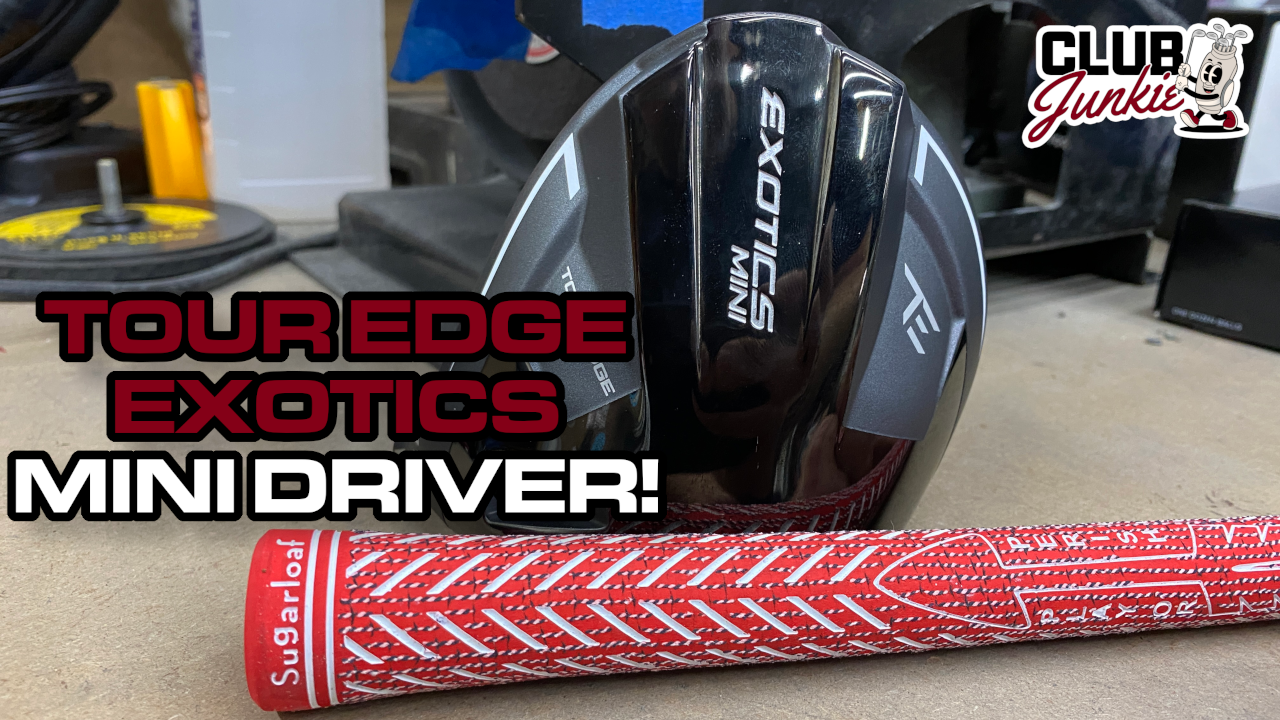
On this episode of Club Junkie, I put the new Tour Edge Exotics Mini Driver to the test and break down the performance, forgiveness, distance, and where it fits compared to a traditional driver or strong fairway wood. If you have been curious about adding a mini driver to the bag, this one is worth a look.
I also dive into the new TaylorMade Spider ZT Max putter that was recently spotted and discuss the growing zero torque putter trend. Plus, there is a closer look at the new Project X Titan Yellow shaft showing up on the PGA Tour and what makes it different from other profiles currently out there.
Opinion & Analysis
AVL: We’re talking about practice! My best tips for taking your game to the course

With the beginning of June on the horizon and courses rounding into peak condition for the season, it’s time to hone the finer skills that often get rusty over the winter. More sunlight also means more time to get out on the course and work on your game.
Whether it’s the practice green or the driving range, there’s always something to improve—whether you’re enjoying the fresh air or preparing for a weekend game or tournament. You can work on drills or freestyle around the green, and friendly competition is a great way to sharpen your skills.
While there are endless ways to get better at golf, I’m going to focus on practicing around the green. Let’s take a look at a few things to keep in mind as we head into the summer months.
Drills
From the driving range to the practice green, it’s important to incorporate drills into your routine. Years ago, I spent a weekend working on my short game with James Sieckmann. He recommended doing drill work for 5–10 minutes, then returning to your main practice.
This way, you create a balance between structured drills and real-world scenarios, so you’re not confined to “perfect” situations. For example, hitting the same three-foot putt over and over is good for repetition, but after a while, it becomes less interactive for your brain.
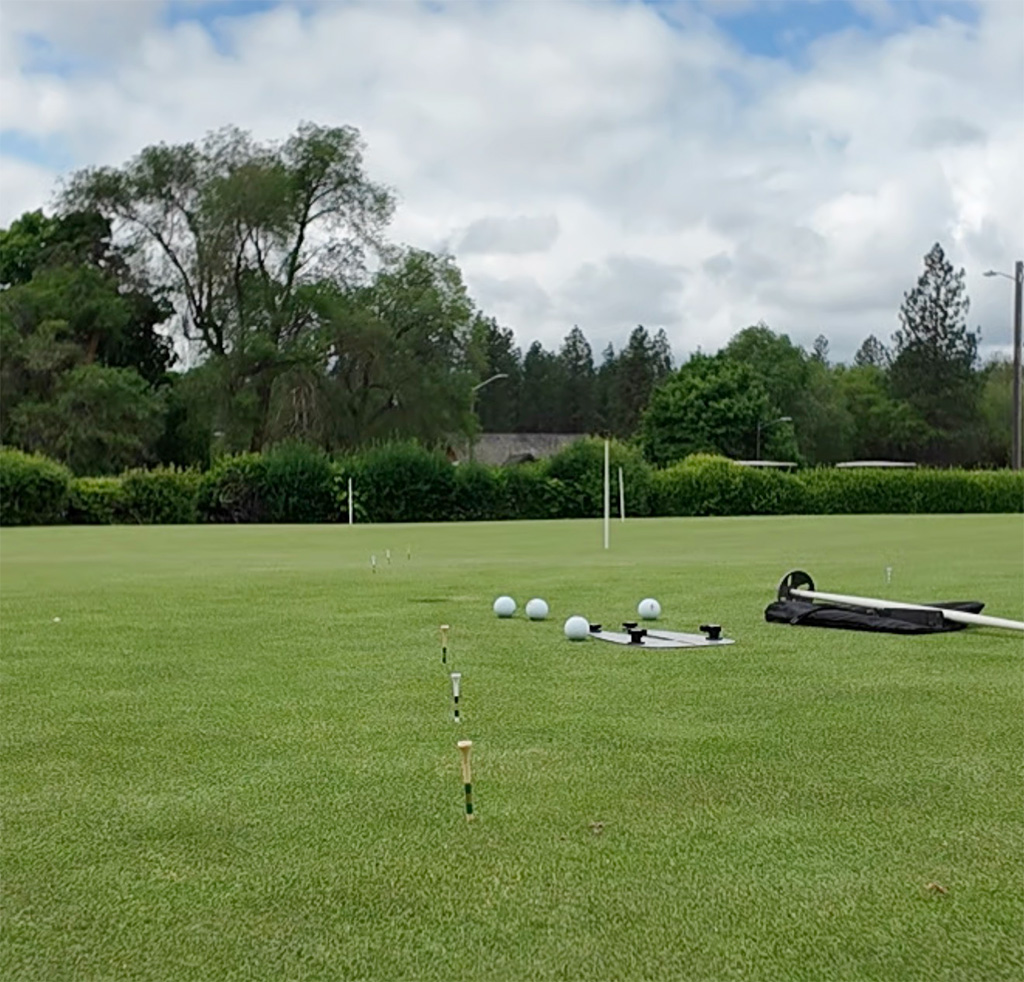
My approach is to use a putting trainer with a narrow gate for the ball to pass through, or simply place tees just outside the width of the ball. I’ll hit a series of four putts through the gate for three sets. Then, from a similar distance, I’ll hit four putts without the training aid and repeat that sequence three times.
Next, I’ll hit a number of 15–25 foot putts in a random fashion, then circle back to repeat the short putt drills with and without the training aid.
This breaks up the rhythm of hitting short putts with the training aid. When you hit the same short putts over and over, it’s easy to get into a groove—which is great for the drill, but not reflective of actual course play. While finding a rhythm is fundamental for drills, I like to introduce variation with longer putts to keep things realistic.
Game Mode
Once you’ve established a foundation with drills, it’s time to simulate on-course scenarios. This is where a few practice games come in handy.
One that I’ve been enjoying lately involves putting 10- to 15-footers with two balls. If I make the putt, great! If I miss, I pull the missed ball back a putter length. Suddenly, that little tap-in becomes a nerve-wracking three-footer—at least at first. As you get better at this game, those three- and five-footers become much more comfortable and routine.
It may sound cliché, but each shot is just what it is—it’s how we react that makes the difference. I like this game because it blends the pressure of on-course putting with the consequence of leaving yourself a much longer putt than usual.
Another game I like is one I recently learned from Brad Faxon. Place three tees in a line at four different locations around the hole: one at 3 feet, one at 6 feet, and one at 8 feet. The 3- and 6-foot putts count as par, and the 8-footer is for birdie.
This game keeps you focused on scoring and helps you get into a competitive mindset. You can even think about this putting game while you’re on the course. I just started playing it, and last week I couldn’t get better than two under par.
Competition
Competition during practice is when drills and games come to life, and you start to see results. For me, nothing beats a putting contest with a friend or two. In the right setting, these contests can become talking points for the whole season.
Match play, a game of 21, or simply seeing who can make the most one-putts (with a small prize on the line) are all great ways to simulate real on-course pressure. Recently, I played in a putting contest where one competitor made back-to-back 30- and 50-foot putts. As they say, expect your opponent to make every putt—and he nearly did. That’s impressive, and it’s something you see on the course, too: you have to stay committed to your game plan, no matter what.
When it comes to practice, it’s important to blend feedback from recent rounds with the fundamentals you want to reinforce. Drills, games, and competition—from the driving range to the putting green—form the backbone of skills you’ll rely on during actual rounds.
Finding the right balance is something we’re all working on, one practice session at a time. With the beginning of June on the horizon and courses rounding into peak condition for the season, it’s time to hone the finer skills that often get rusty over the winter. More sunlight also means more time to get out on the course and work on your game. Whether it’s the practice green or the driving range, there’s always something to improve—whether you’re enjoying the fresh air or preparing for a weekend game or tournament. You can work on drills or freestyle around the green, and friendly competition is a great way to sharpen your skills. While there are endless ways to get better at golf, I’m going to focus on practicing around the green. Let’s take a look at a few things to keep in mind as we head into the summer months.
Drills
From the driving range to the practice green, it’s important to incorporate drills into your routine. Years ago, I spent a weekend working on my short game with James Sieckmann. He recommended doing drill work for 5–10 minutes, then returning to your main practice. This way, you create a balance between structured drills and real-world scenarios, so you’re not confined to “perfect” situations. For example, hitting the same three-foot putt over and over is good for repetition, but after a while, it becomes less interactive for your brain.
My approach is to use a putting trainer with a narrow gate for the ball to pass through, or simply place tees just outside the width of the ball. I’ll hit a series of four putts through the gate for three sets. Then, from a similar distance, I’ll hit four putts without the training aid and repeat that sequence three times. Next, I’ll hit a number of 15–25 foot putts in a random fashion, then circle back to repeat the short putt drills with and without the training aid.
This breaks up the rhythm of hitting short putts with the training aid. When you hit the same short putts over and over, it’s easy to get into a groove—which is great for the drill, but not reflective of actual course play. While finding a rhythm is fundamental for drills, I like to introduce variation with longer putts to keep things realistic.
Game Mode
Once you’ve established a foundation with drills, it’s time to simulate on-course scenarios. This is where a few practice games come in handy. One that I’ve been enjoying lately involves putting 10- to 15-footers with two balls. If I make the putt, great! If I miss, I pull the missed ball back a putter length.
Suddenly, that little tap-in becomes a nerve-wracking three-footer—at least at first. As you get better at this game, those three- and five-footers become much more comfortable and routine. It may sound cliché, but each shot is just what it is—it’s how we react that makes the difference. I like this game because it blends the pressure of on-course putting with the consequence of leaving yourself a much longer putt than usual.
Another game I like is one I recently learned from Brad Faxon. Place three tees in a line at four different locations around the hole: one at 3 feet, one at 6 feet, and one at 8 feet. The 3- and 6-foot putts count as par, and the 8-footer is for birdie.
This game keeps you focused on scoring and helps you get into a competitive mindset. You can even think about this putting game while you’re on the course. I just started playing it, and last week I couldn’t get better than two under par.
Competition
Competition during practice is when drills and games come to life, and you start to see results. For me, nothing beats a putting contest with a friend or two. In the right setting, these contests can become talking points for the whole season. Match play, a game of 21, or simply seeing who can make the most one-putts (with a small prize on the line) are all great ways to simulate real on-course pressure. Recently, I played in a putting contest where one competitor made back-to-back 30- and 50-foot putts. As they say, expect your opponent to make every putt—and he nearly did. That’s impressive, and it’s something you see on the course, too: you have to stay committed to your game plan, no matter what.
When it comes to practice, it’s important to blend feedback from recent rounds with the fundamentals you want to reinforce. Drills, games, and competition—from the driving range to the putting green—form the backbone of skills you’ll rely on during actual rounds. Finding the right balance is something we’re all working on, one practice session at a time.


For Korean golfers, we always look forward to the last of the kkot-saem-chu-I for the true start of a new golf season. The term refers to a cold snap, but literally translates as “winter being jealous of the flowers beginning to bloom, thus lashing out one final time before surrendering to spring”.
A rather poetic mouthful packed into a short expression.
Koreans can be like that. Understated, yet oddly expressive at the same time. And nowhere is this more true on the golf course and in our golf bags. In fact, I suspect many Korean golfers look forward to new apparel and accessory drops more than they do actual equipment launches each year.

At this point, Korean golf fashion may exist on its own timeline. (courtesy of @seonbi_golfer)
There is ample evidence to support that suspicion. Korea is the world’s third-largest golf market behind the United States and Japan, yet its appetite for golf apparel exceeds that of both countries combined. Recent estimates suggest that Korea accounts for nearly 40 percent of the global golf apparel market, placing it among the world’s most influential golf fashion markets and punching well above its size.
Simply, we care deeply about how new golf clubs look and feel, but enjoy looking good while swinging them even more.
Golfers in the West may laugh and say that golf is played on a course, not a fashion runway. Perhaps. But what’s the harm in trying to look and feel good, if the added self-confidence can help actual performance? It certainly seems to have worked for Jason Day, who may have unlocked a new stats category: dormant strokes gained. Coincidence?

During the COVID-era, estimates placed the market near $9 billion, an astonishing figure for a single country.
As a proud member of Gen X, I’ve witnessed the highs and lows of golf fashion firsthand. The pleated trousers and wing-tipped shoes of Jack Nicklaus, the stylish plus-fours and knickers of Payne Stewart, the baggy black trousers and fitted mock-necks of Tiger Woods, and the thigh-hugging athletic tailoring of Rory McIlroy. Golf fashion, like the golf swing itself, has rarely stood still.
But nowhere have those trends shifted, evolved, and been scrutinized quite as relentlessly as in Korea. Here, golf fashion moves faster than fairway gossip, and consumers dissect brands with a level of discernment that can be both impressive and mildly terrifying. New brands are studied, judged, embraced, or dismissed with startling efficiency.
The result is a consumer base with one of the sharpest eyes for quality and authenticity anywhere in the world. It is difficult to quantify, but easy to recognize. Clean lines without trying too hard. Luxury mixed with utility. Trend awareness balanced by restraint and purpose.
It’s golf fashion shaped by one of the world’s most style-literate cities, something I like to call Seoul Sensibilities, referring to the taste level forged by a uniquely competitive environment.
And increasingly, global brands have noticed.

Many golf brands in Korea have their own flagship shops dedicated to apparel only
Titleist understood this years ago, when its apparel business in Korea took on a life of its own under new ownership and local direction. What had once been a straightforward extension of an iconic equipment giant became something sharper and more premium. By going all in on the serious Tour-player look (I couldn’t even fit into their XL sizes), Titleist struck the right chord with Korean consumers and helped its fledgling apparel business break into the mainstream. Titleist became a household name even for non-golfers who wore its caps, shirts, and windbreakers in daily life. In many ways, it proved that even heritage golf brands could carry real fashion credibility when viewed through a Korean lens.
Several years later, PXG took a page out of Titleist’s playbook and followed suit. Korean consumers helped transform the brand from one known largely for irons and loud commercials into something broader and more stylish. PXG apparel’s growth in Korea was explosive, where it found an early audience and turned the category into something more than mere logo merchandise. It is still hard to walk anywhere in Seoul without seeing its palindrome logo.
Malbon’s meteoric rise in the United States was genuine, but its ascent into a global golf lifestyle brand owes much to Korea, where it was elevated by a market already fluent in modern golf style. Korea did not simply embrace Malbon. It pressure-tested the concept, refined its appeal, and helped push it into the global spotlight.
As such, new brands may arrive from abroad, but more often than not, their sharpest evolution happens here. If a brand can earn credibility in Seoul, it’s deemed to have passed one of the toughest style audits in the game.
That is why the next meaningful chapter may not come from outside, but from a Korean brand moving in the opposite direction, carrying those Seoul Sensibilities outward as K-pop once did.

Play young Stay dope.
From Seoul, With Intent
Khalhon is a label that feels less like a trend-chasing newcomer and more like the product of a market that has already seen everything. Golfers here have long been surrounded by luxury logos, technical fabrics, and tour uniforms disguised as lifestyle wear and vice-versa. In other words, novelty alone rarely lasts here, and the Koreans seems to understand that instinctively.
Its style language leans into clean silhouettes, relaxed but tailored proportions, muted palettes, and premium materials that speak quietly but confidently. There is a modern city aesthetic running through it all, with strong layering pieces, thoughtful textures, and subtle branding that suggests sophistication rather than demanding attention.

“Built for the course. Designed beyond it.”
Most importantly, the garments seem designed to blur the line between golfwear and everyday style. Shirts, trousers, knitwear, and outer layers move comfortably between a game of screen golf, a lunch reservation, an airport gate, or an afternoon coffee in Gangnam with friends.
It raises the question of whether this is golfwear that happens to look good off the course, or everyday clothing that performs beautifully on the fairways.
Personally, I have long appreciated Nike Golf for its clean, athletic modernization of golf attire. It also has the useful side effect of making me look like a more serious golfer than I probably am. But off the course, there are times when being instantly identified as the golf guy in a crowd of non-golfers can feel a touch self-conscious.

“Built for the course. Designed beyond it.”
That is part of what drew me to Khalhon, which seemed to blend golf and everyday wear naturally. While some of the outfits may be slightly beyond my personal confidence level, the brand also offers tasteful options for older guys like me who still want to express a little personality without regretting the decision later.
These are not simply flashy outfits worn on the course and then banished to the closet until the next tee time. They work surprisingly well off the course too, and I suspect many of the pieces will still look right a couple of years from now, which would certainly be kinder to my wallet than most golf fashion trends tend to be.
And perhaps that broader lifestyle positioning also helps explain why someone like Sean Wotherspoon would find Khalhon creatively interesting in the first place.

“Built for the course. Designed beyond it.”
“Korea is not only one of the most fashion-forward golf markets in the world, but one of the most fashion-forward markets globally. Korea is ahead, and I love to watch and try to catch up.” – Sean Wotherspoon, Creative Director at Khalhon
Seoul and Beyond
If Khalhon’s rise says something about where Korean golf fashion is today, its relationship with Sean Wotherspoon says even more about where it is heading.
For readers less familiar with Sean Wotherspoon, his arrival at Khalhon is not some routine celebrity endorsement or influencer collaboration. In design and streetwear circles, Wotherspoon is regarded as one of the more influential creative voices of his generation, particularly when it comes to blending nostalgia, storytelling, and contemporary culture into products that people can connect with.
He first gained widespread attention through his now-famous Nike sneaker collaborations, where his vintage-inspired designs and instinct for color helped turn him into one of the defining artists of the late-2010s sneaker era. His work gradually expanded beyond footwear into apparel, automotive collaborations, collectibles, and broader lifestyle design.
Modern golf style now extends well beyond the fairways, where performance and functionality are largely expected by default. And while plenty of brands already make technically competent golfwear, Khalhon seems more focused on designing clothes people would genuinely want to wear even after the round ends.
And when guys at Wotherspoon’s level show genuine interest in working with a Korean golf brand as its new Creative Director, fashion circles tend to sit up and pay attention. There’s already a huge buzz among the fashion-conscious here about upcoming collabs with iconic sports stars and brands.

“My creative direction for Khalhon is disruptive, colorful, nostalgic, and modern. My goal is to blend these avenues seamlessly within each collection.” – Sean Wotherspoon
In chatting with Sean, what stood out most to me was how genuinely energized he sounded about the project itself. Despite having already worked across and countless other creative spaces, he described golf as a completely fresh category for him, saying that Khalhon “will be an amazing vehicle for my design work.”
At the same time, his enthusiasm seemed tied just as much to Korea itself. He spoke openly about admiring Korea’s fashion culture while repeatedly insisting he is still a terrible golfer.
There was something oddly refreshing about that humility. Rather than sounding like a celebrity parachuting into golf simply because the category suddenly became fashionable, Sean sounded genuinely curious about what Korea might do with the category next.
And perhaps that is what makes Khalhon feel interesting right now. The brand feels less like a trend-chaser and more like the natural result of a market now confident enough to export its own point of view.
For years, global brands came to Korea to sharpen their image against one of the most discerning audiences anywhere. Now, a Korean label appears ready to send those Seoul Sensibilities outward instead.
Which brings us back to kkot-saem-chu-i.
That final cold snap before spring always arrives with a reminder that seasons are changing, whether we notice it immediately or not. Golf fashion feels a little like that right now as well, as the old boundaries between sport, streetwear, luxury, and everyday style continue to soften.
And somewhere in Seoul, a Korean golf label already seems prepared for whatever season comes next. I just hope they have everything in my size.

Aaron Rai’s winning WITB: 2026 PGA Championship

Russell Henley’s winning WITB: 2026 Charles Schwab Challenge

Photos from the 2026 CJ Cup Byron Nelson

CJ Cup Byron Nelson Tour Report: Koepka and Kim’s newest putters finally get hot

Charles Schwab Challenge Tour Report: MacIntyre, Åberg and Spaun all switch putters, TaylorMade launches new Spider

Details on J.J. Spaun’s surprise putter switch

GolfWRX Launch Report: 2026 Titleist GTS drivers

Photos from the 2026 Charles Schwab Challenge

PGA Championship Tour Report: Fitzpatrick, Koepka among big-name putter switches for Aronimink

Photos from the ShopRite LPGA


Maria Torres WITB 2026 (June)
Driver: Ping G440 LST (9 degrees) Shaft: Accra TourZ Green 5-M4 3-wood: Ping G440 Max (15 degrees) Shaft: Accra TourZ Green 6-M4 5-wood: Ping G440...


Eric Cole WITB 2026 (June)
Driver: PXG Lightning Tour Max (9 degrees) Shaft: Project X Titan Yellow 70 TX 3-wood: TaylorMade Qi4D (15 degrees) Shaft:...


Si Woo Kim WITB 2026 (May)
Driver: Callaway Quantum Triple Diamond (8.5 degrees) Shaft: Fujikura Ventus Black 6 X Mini driver: Callaway Paradym Ai Smoke Mini...


Wyndham Clark’s winning WITB: 2026 CJ Cup Byron Nelson
Driver: TaylorMade Qi4D (10.5 degrees) Shaft: Project X Titan Yellow 60 TX 3-wood: TaylorMade Qi4D Tour (15 degrees) Shaft: Project...


Brains a golfer
Jul 22, 2017 at 1:03 pm
I would agree that having more Women PGA club professionals and assistants would grow the game. Most young players, juniors and older men ( me ) should strive to hit the ball like an LPGA player. I watched the US women’s open, and almost every drive was in the fairway – Isn’t Fairways and greens the goal? I suppose every man dreams of the 300 yard drive and a sand wedge to the green- but how likely is that? Maybe playing the right set of tees, and hitting a smooth driver and 8 iron (like the Ladies) is the way to both get better AND have more fun.
After playing golf for 30 years, i realize that for 20 of those years i was trying to swing like the PGA pros or scratch golfers. Now that i am older i take MY swing.
Tom54
Jul 5, 2017 at 8:56 pm
I agree a mixed team event with a decent purse would definitely get the gals attention since their paydays are pale compared to the men. Those of you that dismiss their quality of play have not seen a LPGA event. They can flat out play!! Yes they can’t bomb 350 us tee balls routinely like the big boys but I’d be willing to bet they would impress even the skeptics. I know this sounds sexist but there is nothing wrong with watching pretty ladies play this game we all love. Next time one of their events is nearby do yourself a favor and check these gals out. You’ll be impressed for sure.
ctmanic
Jul 5, 2017 at 4:43 pm
Yup, good article. All great points. Female golf pros and just let them wear more normal clothes that aren’t designed for a freaking cheerleader are great starting points. But a clubful of entitled men acting like lewd teenagers, just sucks. Women are safer in a biker bar… …and that is not a freaking joke.
asugrad1988
Jul 5, 2017 at 2:16 pm
This past weekend there was the European tour golf tournament, the Senior Open, the PGA tournament and the LPGA’s KPMG major. How many people are going to watch the LPGA over the other three tournaments. That’s four tournaments on the weekend and I would bet the farm that the LPGA was the least viewed.
My solution would be to have LPGA tournaments during the week, say Tuesday, Wednesday, Thursday and Friday if it’s a four day tournament. I think a lot of people would watch the LPGA if it was the only golf on television.I don’t think it would matter much if the golf came on at 2:00 pm or 5:00 pm if it’s on the west coast. I don’t know anyone at my club that watches any tournament live anyway regardless of what tour it is. Way to many commercials. If the Golf Channel is doing the broadcast like they do almost all of them, then they have the weekend to travel to the next tournament.
I think the LPGA should try 2 or 3 tournaments in the middle of the week and see how it goes.
Za
Jul 6, 2017 at 2:19 am
You know the majority of the world still work Mon thru Fri, bud. LPGA already don’t get enough money through selling tickets to their events. So how are they going to bring in that money during the week? It’s not all about television, although it is already hard enough to get sponsors commercials to get the events to even get on TV.
I think you should shut up for a year and see how it goes.
setter02
Jul 7, 2017 at 8:19 am
LPGA isn’t a gate driven Tour, if it was, it would have folded up long ago. Its actually not a bad idea given it would have coverage time that wouldn’t compete with other Tours, and not much other sports are on in the mornings and early afternoon (save some mid day baseball). I think you should shut up for a year and see how that goes…
Za
Jul 7, 2017 at 8:05 pm
I work in TV. You don’t know how it works. Every sporting event at this level is majorly viewer-oriented, and that includes tickets. If it didn’t have problems with viewership even on TV, then you wouldn’t be addressing this issue with the above suggestions.
It’s bad enough that day-time TV during the week is driven by commercial moneys of home-products for the housewives who stay at home. Golf can’t support itself with just those kinds of sponsors of home products.
I think you should sit on a bicycle without a seat and swivel
Laff
Jul 7, 2017 at 8:47 pm
lol swivel
setter02
Jul 8, 2017 at 2:14 pm
Awww poor baby got his feelings hurt. You have a potential captive target market that is trying to get more females into this game. Good thing crazy ideas never pan out or are tried, I mean where would this world be with all the beige people like you running it pro? Maybe try and use your supposed ‘expertise’ to solve a problem rather than continue to be a part of it, I mean you are that good aren’t you pro?
ders
Jul 5, 2017 at 2:06 pm
Vancouver BC has 3 municpal short par 3 courses, neighbouring Burnaby has 2, West Vancouver has 1, Ricmond has 1. They are less than $15 for 18 holes, most are hazard free and are always packed anytime it isn’t raining. Midweek during the day is all seniors, evenings and weekends are drunken teens and twenty-somethings – most are male but you do see a lot of female players.. Make golf cheap, fun and relaxed and people will come and the game will live on. This won’t “save golf” if by “saving golf” you mean supporting a bloated golf industry, exclusive clubs and 7000+ yd courses but people will play golf if its available to them.
Mat
Jul 14, 2017 at 7:25 pm
Excellent point.
Big Wally
Jul 5, 2017 at 1:31 pm
This is a never ending argument. Every time it is a “problem” that is the fault of men and patronizingly the responsibility of men to fix it. Women aren’t stupid. They can decide for themselves what they want to do and with whom and they do.
If there was such a great opportunity for women teachers- where are they? Couldn’t the LPGA and PGA of America let them know they are in such huge demand? Or is the truth closer to supply meets demand?
Bruce Ferguson
Jul 4, 2017 at 10:04 pm
I think more network (non-Golf Channel) weekend coverage of LPGA events would give more exposure of the game to women. Alternate LPGA/PGA Tour coverage on the networks. GC will re-run PGA Tour coverage later, anyway. Practically all tour coverage on network television is men’s golf. No wonder most women have a preconceived notion that golf is a man’s sport. Golf is a perfect sport for women.
Mb
Jul 5, 2017 at 3:44 am
But the attendance figures and the sheer TV viewer ratings doesn’t support financially what women’s golf bring in to justify more coverage. No major channel is going to spend money on things nobody watches. That’s why shows get cancelled. In the case of golf, the tournaments go on, just not with TV coverage. Advertisers won’t cough up the dollars if nobody is going to watch their commercials.
Jesus Woods
Jul 4, 2017 at 3:55 pm
Put a bunch of old women on the course hitting 40 yd drives (when they don’t completely miss the ball) and putting out for a 16 and see how much it “grows”
BlubberButt
Jul 5, 2017 at 10:39 am
How is that different than a bunch of old men hitting 40 yard drives and putting for 16?
Kevin
Jul 24, 2017 at 2:44 pm
Because the women’s drives would find the fairway
Matt
Jul 4, 2017 at 1:30 pm
How about a world tour of US, Europe and Asia’s premier men’s tournaments? We need a global tour for golf to grow. The regional PGA tours could be more grassroots, combining q-school, web.com, and some of the smaller events currently in each regional PGA Tour.
Jacked_Loft
Jul 4, 2017 at 7:55 am
Mike, I think you make a viable point.
At my home course there are 4 (from 10 pros or 40%) fully quailifed female professionals, and they’re always booked out. The number of female players here accounts for about 30% of the total membership, and women from the surrounding clubs use us as their practice grounds.
Nath
Jul 4, 2017 at 3:44 am
I clicked on this article to look at the pictures, hmm dissapointed. Just like my local course nothing to see there either, yea golf sucks when its soo dry.
Mat
Jul 4, 2017 at 1:55 am
This is absolutely true. I’ve gone out of my way to find women instructors for my wife because the simple fact is that women play a more efficient and less power driven game. They also have boobs, and that can be an uncomfortable subject. So can hips. And if you think this is overblown, how’s Curves (and other female only gyms) doing? Why do you see women playing those exec courses more? And usually from the mens tees?
I would love nothing more than to get my wife playing more. She caddies for me far more than she plays, and I really love and hate it at the same time. And guys, at least the ones that aren’t sexist jerks, understand that they have a lot to learn from the women’s game wrt efficient body motion and swing control.
Great article, and absolutely true.
Alex
Jul 3, 2017 at 8:50 pm
Sexism of any kind is not the answer.
Dec
Jul 4, 2017 at 1:14 pm
“yer blind or neutered or religiously suppressed…. or a politically correct leftist post-modernist liberal troll.”
You really don’t know anything have no decency, huh? You’re so clueless you probably wonder how Obama won the election, don’t you? SO sad.
Rex
Jul 3, 2017 at 8:36 pm
Sigmund Freud. Isn’t that the guy who got attacked by the lion in vegas?
ooffa
Jul 3, 2017 at 8:19 pm
OMG, you’re scary. Not in a good way.
Ude
Jul 3, 2017 at 9:40 pm
NO its you who is {{{{scary}}}} and ^^^^sick^^^^
S
Jul 3, 2017 at 5:47 pm
Ohhhhhh you’re one of them Seinfeld losers! Figures
Traj
Jul 3, 2017 at 7:22 pm
You’re the biggest juvenile here who can’t resist bashing the geargeads here who actually have fun with the equipment designs. How pathetic do you want to be? A loser who quotes stupid things from a stupid show like Seinfeld, that’s who.
ooffa
Jul 6, 2017 at 9:59 am
You know what he meant. Please do not admit you are not smart enough to recognize a typo.
Shallowface
Jul 3, 2017 at 5:37 pm
It has never ceased to amaze me how poorly the business of golf has treated women players. When a course ‘s original design has become too long for the average lady due to a poor original design or the fact that it is maintained much wetter than it used to be, do they build a new forward tee box? No. They just drop a couple of tee markers someplace down the fairway, often presenting a sidehill lie. Overly deep rough is another issue. If it’s too deep for me, it’s WAY too deep for a lady. Last, but certainly not least, is the lack of decent restroom facilities. Often times there is NOTHING on either nine, not even a port-a-let. A lady can’t sidle up to a tree like a guy can, and in this day where everything is subject to being videoed a guy has to be careful where he marks his territory. Nothing says “don’t play here” to women like not having decent facilities, and a course developer who was so short sighted that he didn’t include that in his planning deserves to fail. It’s just one more example of how the game is dying by its own hand. If the management of the game wants to know why it is failing, the answer is in the mirror.
freowho
Jul 4, 2017 at 5:34 am
Good post. Golf courses are still built for the top 1% of golfers and everyone else has to adapt. Having a handicap doesn’t help you get out of a 6 foot deep bunker, stop the ball rolling off the other side of the green or replace the 6 golf balls you have lost. Players are willing to accept that I played bad and deserve to have a bad score but they don’t accept that because I’m a bad golfer I should have to spend all day raking bunkers, looking for my ball, holding everyone up and embarrassing myself. You also don’t 10 bunkers per hole to seperate good and bad golf. 1 well placed bunker or a well designed green will seperate good and bad golf.
The clubs that survive will be those that understand how to keep the majority coming back for another game.
setter02
Jul 4, 2017 at 7:22 am
Yeah I hate people who know their basic target market and serve them, but didn’t figure out how to appease the finicky unicorn golfers… Personally I’d hate to have to design a course where the vast majority of female players still hit driver into 120y par 3’s, and come up short… You design a course from the back up, not the other way around, a 4k set of tees is always going to be a complete after thought, as it should.
Shallowface
Jul 4, 2017 at 5:03 pm
If your “target market” is 1% of any group (and I am in that 1%, by the way), you are doomed to fail. You don’t design a course from the back up if you are designing for recreational players. From what I see, it’s the 7000 plus tees that are the complete after thought, as they are being added to existing designs today due to the USGA’s total failure to regulate equipment. But when they are added, they are level and actually look like tee boxes, unlike what is often done for ladies.
With your mindset, you must be in the golf business. I love women and love seeing them on the golf course. It’s interesting to say the least how many men I’ve run into over the years who don’t feel that way.
ooffa
Jul 5, 2017 at 7:14 am
WHAT is wrong with you? You should consider not posting if you are going to continually say inappropriate or foolish things. Let someone else read your posts before hitting enter. Hopefully that person will help prevent you further embarrassing yourself.
Tom Duckworth
Jul 3, 2017 at 4:59 pm
Great read I would really like to see some events on TV with men and women golfers playing as teams it would be great TV, make it almost a Ryder Cup type of event with teams playing for their countries. There also needs to be a women’s Masters. I have a granddaughter that loves playing and is on the cusp of being a very good golfer but only sees men on TV and her friends tell her golf is an old mans game. She plays in a summer league and she is about the only girl playing.
I have found a a LPGA teacher in my town and plan to take her to meet her for lessons.