
Opinion & Analysis
The problem with golf instruction books

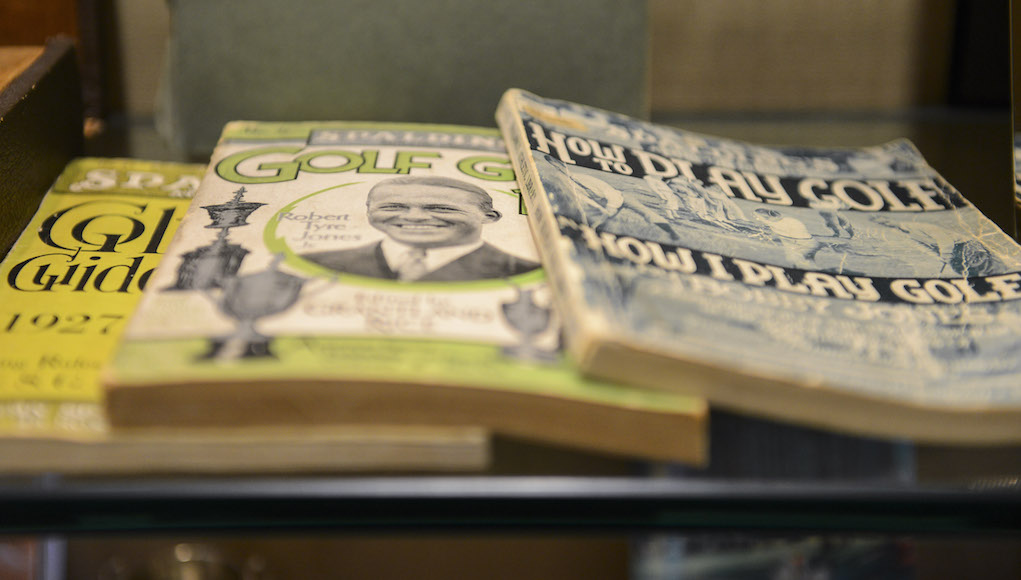
“When I came to this seminar, I was confused. I’m still confused but on a higher level.” Enrico Fermi
I have worked with many great teachers in my life; men and women who really understood the nuts and bolts of teaching golf. Together we learned to correct golf swing errors. We learned that every golfer was unique, with their own personal learning style, swing problems, physique and habits. We understood there is no one way to play golf, and the more we allowed for individual differences, the more effective we were in helping them.
But the field of golf instruction is not unlike the academic profession, where the motto is and always has been “publish or perish.” Teachers feel the need to write a book, publish a video, or somehow get their message out to their devotees to be successful or to reap some gain, financial or otherwise. The result of this is often a deviation from their original approach to teaching. Authors choose a title, let’s say How to Swing or How to Set Up, and they set about expressing their belief in the best way to go about that task. When the same teachers are on the lesson tee, however, they’re dealing with a variety of ways to swing or set up, all based on the needs of the individual in front of them. And I think this problem is exasperated when the authors are former players, who are suggesting things almost entirely based how they achieved success at golf.
This is when instruction books and tapes are at their most vulnerable and, in my opinion, are least helpful.
Let me cite one very well-known example to make my point. There is perhaps no more famous illustration in golf books than Anthony Ravelli’s wonderful drawing of Ben Hogan’s grip. There is one very big problem with that picture, however. While Hogan’s hands are positioned perfectly for his swing, they demonstrate a position that may be too much to the left (weak) for many golfers. That grip can be very effective for those who fight a hook, perhaps 15 percent of the people who play golf. And of course, it is the way Mr. Hogan learned to hold the club to offset his own tendency to hook the golf ball early in his career. But the vast majority of golfers may very well slice from that “weaker” grip.
Ben Hogan was perhaps the finest striker of a golf ball who ever lived, very few people in our game would take issue with that at all, but by advocating his personal preference he is not taking into account many of the people who, of course, do not have his talent, his swing plane, his lag, his ball position and so on. And, what’s even more harmful is this: because the great man said it, it became the bible for many readers.
Alex Morrison said golf is a left-sided game, but Ben Hogan said he wished he had three right hands. Ernest Jones said swing the clubhead, but Eddie Merins said swing the handle. Jimmy Ballard teaches moving off the ball, but Andy Bennet wants you to stay on the ball. John Redman suggested a strong grip, but Tommy Armour a weaker one. On and on, ad infinitum… but here’s the catch. I’m willing to bet that every one of those great teachers would make exceptions based on the student that was in front of them on the range. That’s because in golf instruction, there is nothing that’s for everybody.
Some instruction manuals are decidedly more “choice” in their approach. Jim Hardy has always taken the more alternative approach in his work. “The Plane Truth,” criticized by some for taking an only-two-ways-to-swing approach, still offers a choice. In it, Hardy explains that IF you swing one way, THEN you should do this to to complement it.
John Jacobs wrote the seminal work on this subject in his book “Practical Golf” many years ago. Although science has gone on to disprove some of the findings in the book (the initial direction of the golf ball is NOT the result of the path of the golf club, for example), the information is still invaluable from an alternative approach to swinging the club.
If you are attempting to learn to swing from a method-oriented book, you must be very careful to get the whole picture before attempting to incorporate the method into your golf swing. This is one of the most common reasons I see players get stuck in the mud in their improvement. If you are reading a certain book and NOT getting anywhere, there is one of two reasons: the book is spewing misinformation OR you are not doing ALL the book suggests.
When the teacher becomes an author, he or she is entering another realm; an area often removed from the craft of teaching people to play golf and into an area of teaching golf. There is a quantitative difference between the two. Myself and many teachers like me teach people to play golf; we do not teach golf. If you read through my writings on GolfWRX or anywhere, really, they are always written in an if-then format. If you tend to do this, THEN try this… there is no other effective way, at least none that I’m aware of. And if anyone knows of one, I’d be happy to hear it.
Those of us who dare to teach must remain students of our individual disciplines, and our continuing education needs to be shared on a case-by-case basis. Offering universal prescriptions for individual problems is a dead end in my work, and unfortunately many golf instruction manuals are written in this way.
I have an online swing analysis program that many GolfWRXers have tried and enjoyed. If you’d like a diagnosis an explanation of exactly what you’re doing, click here for more info, or contact me on Facebook.


Club Junkie
Tour Edge Exotics mini driver review + TaylorMade Spider ZT Max first look – Club Junkie

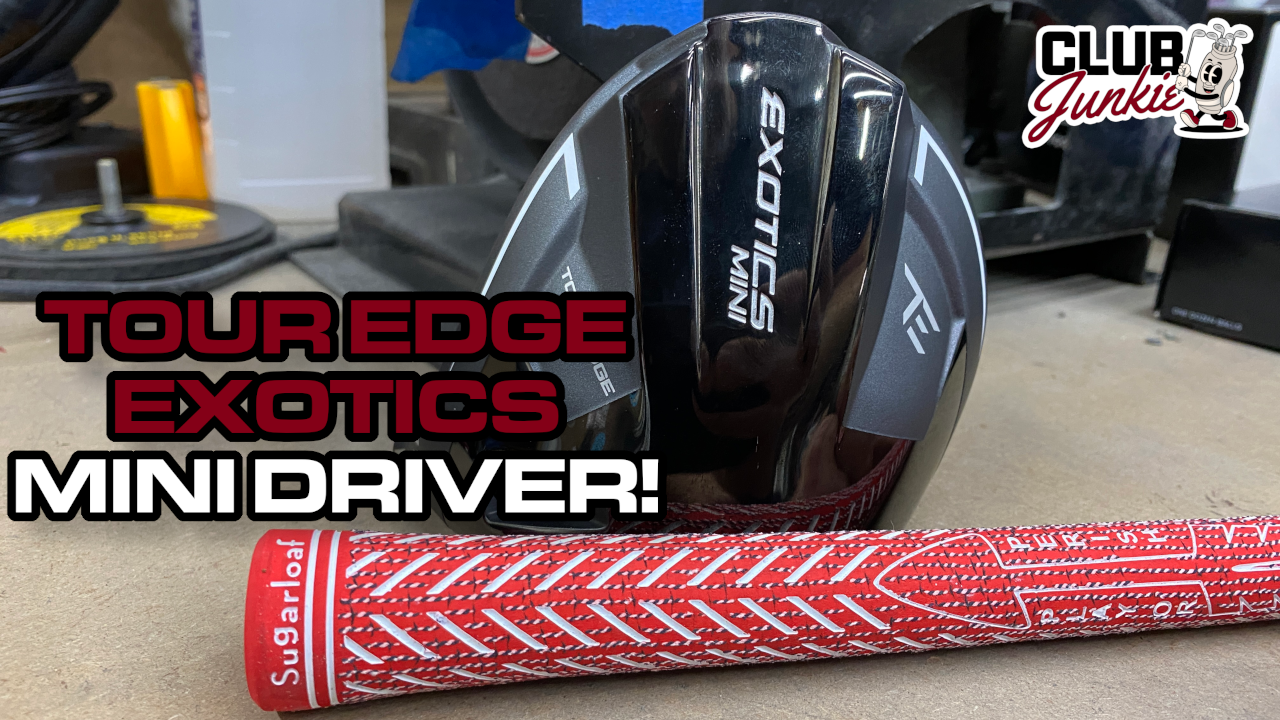
On this episode of Club Junkie, I put the new Tour Edge Exotics Mini Driver to the test and break down the performance, forgiveness, distance, and where it fits compared to a traditional driver or strong fairway wood. If you have been curious about adding a mini driver to the bag, this one is worth a look.
I also dive into the new TaylorMade Spider ZT Max putter that was recently spotted and discuss the growing zero torque putter trend. Plus, there is a closer look at the new Project X Titan Yellow shaft showing up on the PGA Tour and what makes it different from other profiles currently out there.
Opinion & Analysis
AVL: We’re talking about practice! My best tips for taking your game to the course

With the beginning of June on the horizon and courses rounding into peak condition for the season, it’s time to hone the finer skills that often get rusty over the winter. More sunlight also means more time to get out on the course and work on your game.
Whether it’s the practice green or the driving range, there’s always something to improve—whether you’re enjoying the fresh air or preparing for a weekend game or tournament. You can work on drills or freestyle around the green, and friendly competition is a great way to sharpen your skills.
While there are endless ways to get better at golf, I’m going to focus on practicing around the green. Let’s take a look at a few things to keep in mind as we head into the summer months.
Drills
From the driving range to the practice green, it’s important to incorporate drills into your routine. Years ago, I spent a weekend working on my short game with James Sieckmann. He recommended doing drill work for 5–10 minutes, then returning to your main practice.
This way, you create a balance between structured drills and real-world scenarios, so you’re not confined to “perfect” situations. For example, hitting the same three-foot putt over and over is good for repetition, but after a while, it becomes less interactive for your brain.
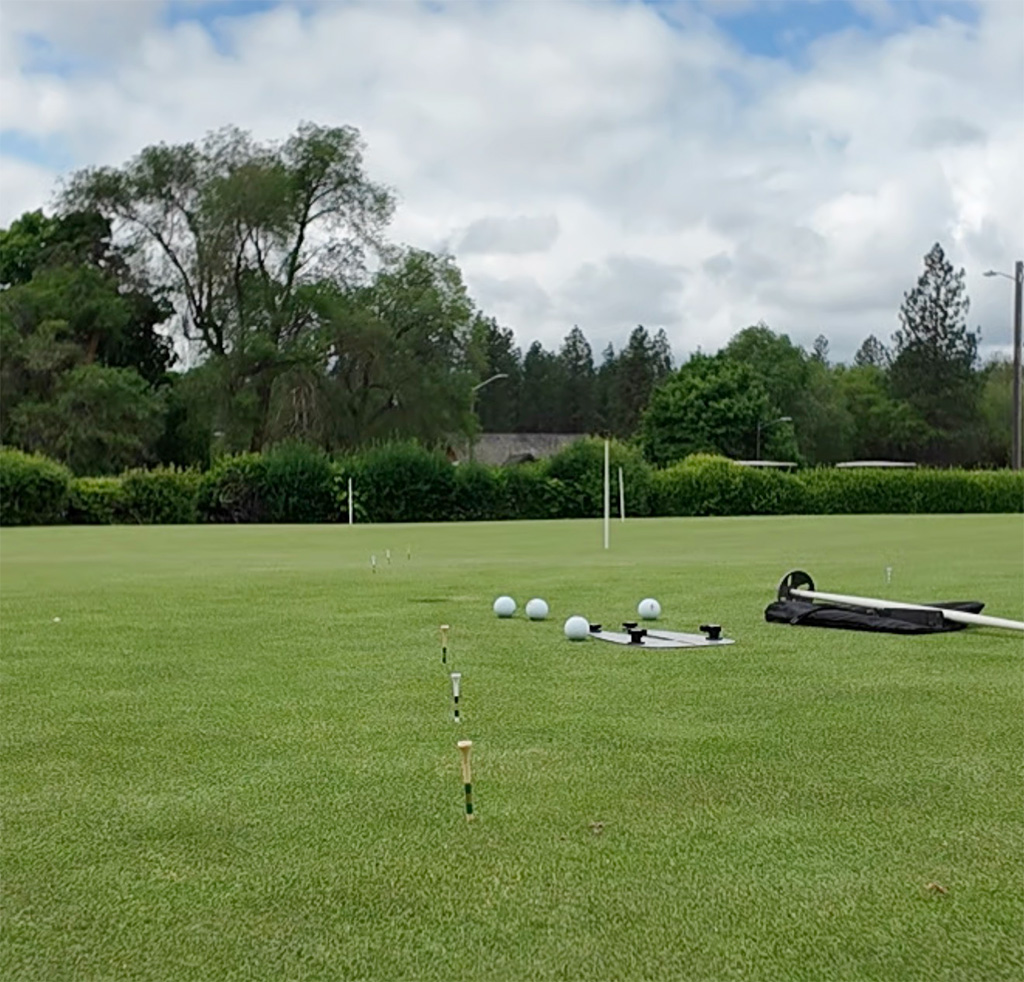
My approach is to use a putting trainer with a narrow gate for the ball to pass through, or simply place tees just outside the width of the ball. I’ll hit a series of four putts through the gate for three sets. Then, from a similar distance, I’ll hit four putts without the training aid and repeat that sequence three times.
Next, I’ll hit a number of 15–25 foot putts in a random fashion, then circle back to repeat the short putt drills with and without the training aid.
This breaks up the rhythm of hitting short putts with the training aid. When you hit the same short putts over and over, it’s easy to get into a groove—which is great for the drill, but not reflective of actual course play. While finding a rhythm is fundamental for drills, I like to introduce variation with longer putts to keep things realistic.
Game Mode
Once you’ve established a foundation with drills, it’s time to simulate on-course scenarios. This is where a few practice games come in handy.
One that I’ve been enjoying lately involves putting 10- to 15-footers with two balls. If I make the putt, great! If I miss, I pull the missed ball back a putter length. Suddenly, that little tap-in becomes a nerve-wracking three-footer—at least at first. As you get better at this game, those three- and five-footers become much more comfortable and routine.
It may sound cliché, but each shot is just what it is—it’s how we react that makes the difference. I like this game because it blends the pressure of on-course putting with the consequence of leaving yourself a much longer putt than usual.
Another game I like is one I recently learned from Brad Faxon. Place three tees in a line at four different locations around the hole: one at 3 feet, one at 6 feet, and one at 8 feet. The 3- and 6-foot putts count as par, and the 8-footer is for birdie.
This game keeps you focused on scoring and helps you get into a competitive mindset. You can even think about this putting game while you’re on the course. I just started playing it, and last week I couldn’t get better than two under par.
Competition
Competition during practice is when drills and games come to life, and you start to see results. For me, nothing beats a putting contest with a friend or two. In the right setting, these contests can become talking points for the whole season.
Match play, a game of 21, or simply seeing who can make the most one-putts (with a small prize on the line) are all great ways to simulate real on-course pressure. Recently, I played in a putting contest where one competitor made back-to-back 30- and 50-foot putts. As they say, expect your opponent to make every putt—and he nearly did. That’s impressive, and it’s something you see on the course, too: you have to stay committed to your game plan, no matter what.
When it comes to practice, it’s important to blend feedback from recent rounds with the fundamentals you want to reinforce. Drills, games, and competition—from the driving range to the putting green—form the backbone of skills you’ll rely on during actual rounds.
Finding the right balance is something we’re all working on, one practice session at a time. With the beginning of June on the horizon and courses rounding into peak condition for the season, it’s time to hone the finer skills that often get rusty over the winter. More sunlight also means more time to get out on the course and work on your game. Whether it’s the practice green or the driving range, there’s always something to improve—whether you’re enjoying the fresh air or preparing for a weekend game or tournament. You can work on drills or freestyle around the green, and friendly competition is a great way to sharpen your skills. While there are endless ways to get better at golf, I’m going to focus on practicing around the green. Let’s take a look at a few things to keep in mind as we head into the summer months.
Drills
From the driving range to the practice green, it’s important to incorporate drills into your routine. Years ago, I spent a weekend working on my short game with James Sieckmann. He recommended doing drill work for 5–10 minutes, then returning to your main practice. This way, you create a balance between structured drills and real-world scenarios, so you’re not confined to “perfect” situations. For example, hitting the same three-foot putt over and over is good for repetition, but after a while, it becomes less interactive for your brain.
My approach is to use a putting trainer with a narrow gate for the ball to pass through, or simply place tees just outside the width of the ball. I’ll hit a series of four putts through the gate for three sets. Then, from a similar distance, I’ll hit four putts without the training aid and repeat that sequence three times. Next, I’ll hit a number of 15–25 foot putts in a random fashion, then circle back to repeat the short putt drills with and without the training aid.
This breaks up the rhythm of hitting short putts with the training aid. When you hit the same short putts over and over, it’s easy to get into a groove—which is great for the drill, but not reflective of actual course play. While finding a rhythm is fundamental for drills, I like to introduce variation with longer putts to keep things realistic.
Game Mode
Once you’ve established a foundation with drills, it’s time to simulate on-course scenarios. This is where a few practice games come in handy. One that I’ve been enjoying lately involves putting 10- to 15-footers with two balls. If I make the putt, great! If I miss, I pull the missed ball back a putter length.
Suddenly, that little tap-in becomes a nerve-wracking three-footer—at least at first. As you get better at this game, those three- and five-footers become much more comfortable and routine. It may sound cliché, but each shot is just what it is—it’s how we react that makes the difference. I like this game because it blends the pressure of on-course putting with the consequence of leaving yourself a much longer putt than usual.
Another game I like is one I recently learned from Brad Faxon. Place three tees in a line at four different locations around the hole: one at 3 feet, one at 6 feet, and one at 8 feet. The 3- and 6-foot putts count as par, and the 8-footer is for birdie.
This game keeps you focused on scoring and helps you get into a competitive mindset. You can even think about this putting game while you’re on the course. I just started playing it, and last week I couldn’t get better than two under par.
Competition
Competition during practice is when drills and games come to life, and you start to see results. For me, nothing beats a putting contest with a friend or two. In the right setting, these contests can become talking points for the whole season. Match play, a game of 21, or simply seeing who can make the most one-putts (with a small prize on the line) are all great ways to simulate real on-course pressure. Recently, I played in a putting contest where one competitor made back-to-back 30- and 50-foot putts. As they say, expect your opponent to make every putt—and he nearly did. That’s impressive, and it’s something you see on the course, too: you have to stay committed to your game plan, no matter what.
When it comes to practice, it’s important to blend feedback from recent rounds with the fundamentals you want to reinforce. Drills, games, and competition—from the driving range to the putting green—form the backbone of skills you’ll rely on during actual rounds. Finding the right balance is something we’re all working on, one practice session at a time.


For Korean golfers, we always look forward to the last of the kkot-saem-chu-I for the true start of a new golf season. The term refers to a cold snap, but literally translates as “winter being jealous of the flowers beginning to bloom, thus lashing out one final time before surrendering to spring”.
A rather poetic mouthful packed into a short expression.
Koreans can be like that. Understated, yet oddly expressive at the same time. And nowhere is this more true on the golf course and in our golf bags. In fact, I suspect many Korean golfers look forward to new apparel and accessory drops more than they do actual equipment launches each year.
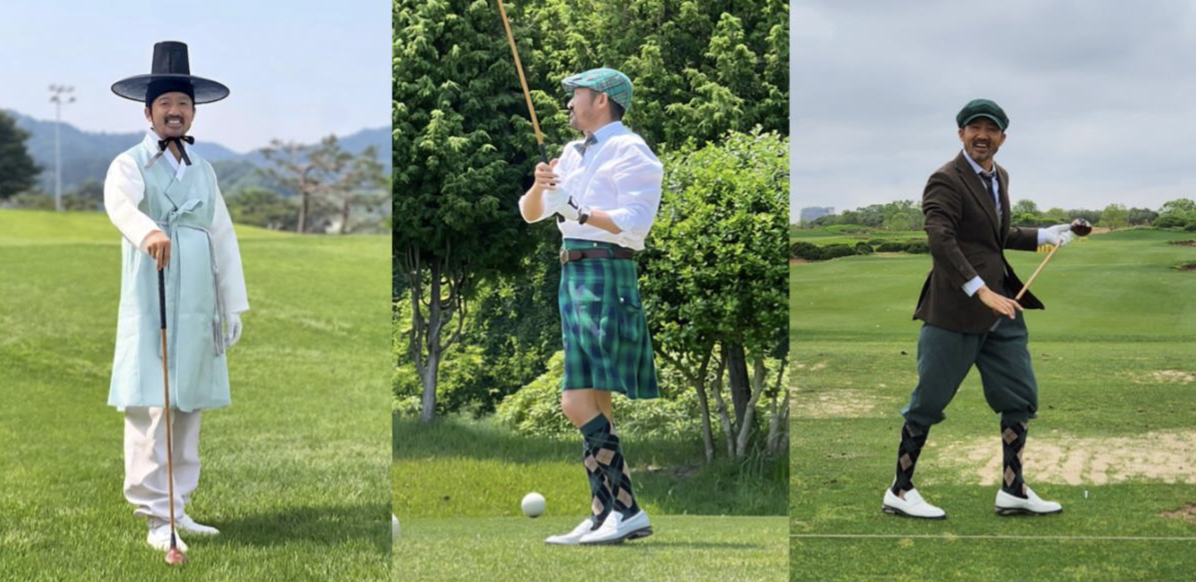
At this point, Korean golf fashion may exist on its own timeline. (courtesy of @seonbi_golfer)
There is ample evidence to support that suspicion. Korea is the world’s third-largest golf market behind the United States and Japan, yet its appetite for golf apparel exceeds that of both countries combined. Recent estimates suggest that Korea accounts for nearly 40 percent of the global golf apparel market, placing it among the world’s most influential golf fashion markets and punching well above its size.
Simply, we care deeply about how new golf clubs look and feel, but enjoy looking good while swinging them even more.
Golfers in the West may laugh and say that golf is played on a course, not a fashion runway. Perhaps. But what’s the harm in trying to look and feel good, if the added self-confidence can help actual performance? It certainly seems to have worked for Jason Day, who may have unlocked a new stats category: dormant strokes gained. Coincidence?

During the COVID-era, estimates placed the market near $9 billion, an astonishing figure for a single country.
As a proud member of Gen X, I’ve witnessed the highs and lows of golf fashion firsthand. The pleated trousers and wing-tipped shoes of Jack Nicklaus, the stylish plus-fours and knickers of Payne Stewart, the baggy black trousers and fitted mock-necks of Tiger Woods, and the thigh-hugging athletic tailoring of Rory McIlroy. Golf fashion, like the golf swing itself, has rarely stood still.
But nowhere have those trends shifted, evolved, and been scrutinized quite as relentlessly as in Korea. Here, golf fashion moves faster than fairway gossip, and consumers dissect brands with a level of discernment that can be both impressive and mildly terrifying. New brands are studied, judged, embraced, or dismissed with startling efficiency.
The result is a consumer base with one of the sharpest eyes for quality and authenticity anywhere in the world. It is difficult to quantify, but easy to recognize. Clean lines without trying too hard. Luxury mixed with utility. Trend awareness balanced by restraint and purpose.
It’s golf fashion shaped by one of the world’s most style-literate cities, something I like to call Seoul Sensibilities, referring to the taste level forged by a uniquely competitive environment.
And increasingly, global brands have noticed.

Many golf brands in Korea have their own flagship shops dedicated to apparel only
Titleist understood this years ago, when its apparel business in Korea took on a life of its own under new ownership and local direction. What had once been a straightforward extension of an iconic equipment giant became something sharper and more premium. By going all in on the serious Tour-player look (I couldn’t even fit into their XL sizes), Titleist struck the right chord with Korean consumers and helped its fledgling apparel business break into the mainstream. Titleist became a household name even for non-golfers who wore its caps, shirts, and windbreakers in daily life. In many ways, it proved that even heritage golf brands could carry real fashion credibility when viewed through a Korean lens.
Several years later, PXG took a page out of Titleist’s playbook and followed suit. Korean consumers helped transform the brand from one known largely for irons and loud commercials into something broader and more stylish. PXG apparel’s growth in Korea was explosive, where it found an early audience and turned the category into something more than mere logo merchandise. It is still hard to walk anywhere in Seoul without seeing its palindrome logo.
Malbon’s meteoric rise in the United States was genuine, but its ascent into a global golf lifestyle brand owes much to Korea, where it was elevated by a market already fluent in modern golf style. Korea did not simply embrace Malbon. It pressure-tested the concept, refined its appeal, and helped push it into the global spotlight.
As such, new brands may arrive from abroad, but more often than not, their sharpest evolution happens here. If a brand can earn credibility in Seoul, it’s deemed to have passed one of the toughest style audits in the game.
That is why the next meaningful chapter may not come from outside, but from a Korean brand moving in the opposite direction, carrying those Seoul Sensibilities outward as K-pop once did.

Play young Stay dope.
From Seoul, With Intent
Khalhon is a label that feels less like a trend-chasing newcomer and more like the product of a market that has already seen everything. Golfers here have long been surrounded by luxury logos, technical fabrics, and tour uniforms disguised as lifestyle wear and vice-versa. In other words, novelty alone rarely lasts here, and the Koreans seems to understand that instinctively.
Its style language leans into clean silhouettes, relaxed but tailored proportions, muted palettes, and premium materials that speak quietly but confidently. There is a modern city aesthetic running through it all, with strong layering pieces, thoughtful textures, and subtle branding that suggests sophistication rather than demanding attention.

“Built for the course. Designed beyond it.”
Most importantly, the garments seem designed to blur the line between golfwear and everyday style. Shirts, trousers, knitwear, and outer layers move comfortably between a game of screen golf, a lunch reservation, an airport gate, or an afternoon coffee in Gangnam with friends.
It raises the question of whether this is golfwear that happens to look good off the course, or everyday clothing that performs beautifully on the fairways.
Personally, I have long appreciated Nike Golf for its clean, athletic modernization of golf attire. It also has the useful side effect of making me look like a more serious golfer than I probably am. But off the course, there are times when being instantly identified as the golf guy in a crowd of non-golfers can feel a touch self-conscious.

“Built for the course. Designed beyond it.”
That is part of what drew me to Khalhon, which seemed to blend golf and everyday wear naturally. While some of the outfits may be slightly beyond my personal confidence level, the brand also offers tasteful options for older guys like me who still want to express a little personality without regretting the decision later.
These are not simply flashy outfits worn on the course and then banished to the closet until the next tee time. They work surprisingly well off the course too, and I suspect many of the pieces will still look right a couple of years from now, which would certainly be kinder to my wallet than most golf fashion trends tend to be.
And perhaps that broader lifestyle positioning also helps explain why someone like Sean Wotherspoon would find Khalhon creatively interesting in the first place.

“Built for the course. Designed beyond it.”
“Korea is not only one of the most fashion-forward golf markets in the world, but one of the most fashion-forward markets globally. Korea is ahead, and I love to watch and try to catch up.” – Sean Wotherspoon, Creative Director at Khalhon
Seoul and Beyond
If Khalhon’s rise says something about where Korean golf fashion is today, its relationship with Sean Wotherspoon says even more about where it is heading.
For readers less familiar with Sean Wotherspoon, his arrival at Khalhon is not some routine celebrity endorsement or influencer collaboration. In design and streetwear circles, Wotherspoon is regarded as one of the more influential creative voices of his generation, particularly when it comes to blending nostalgia, storytelling, and contemporary culture into products that people can connect with.
He first gained widespread attention through his now-famous Nike sneaker collaborations, where his vintage-inspired designs and instinct for color helped turn him into one of the defining artists of the late-2010s sneaker era. His work gradually expanded beyond footwear into apparel, automotive collaborations, collectibles, and broader lifestyle design.
Modern golf style now extends well beyond the fairways, where performance and functionality are largely expected by default. And while plenty of brands already make technically competent golfwear, Khalhon seems more focused on designing clothes people would genuinely want to wear even after the round ends.
And when guys at Wotherspoon’s level show genuine interest in working with a Korean golf brand as its new Creative Director, fashion circles tend to sit up and pay attention. There’s already a huge buzz among the fashion-conscious here about upcoming collabs with iconic sports stars and brands.

“My creative direction for Khalhon is disruptive, colorful, nostalgic, and modern. My goal is to blend these avenues seamlessly within each collection.” – Sean Wotherspoon
In chatting with Sean, what stood out most to me was how genuinely energized he sounded about the project itself. Despite having already worked across and countless other creative spaces, he described golf as a completely fresh category for him, saying that Khalhon “will be an amazing vehicle for my design work.”
At the same time, his enthusiasm seemed tied just as much to Korea itself. He spoke openly about admiring Korea’s fashion culture while repeatedly insisting he is still a terrible golfer.
There was something oddly refreshing about that humility. Rather than sounding like a celebrity parachuting into golf simply because the category suddenly became fashionable, Sean sounded genuinely curious about what Korea might do with the category next.
And perhaps that is what makes Khalhon feel interesting right now. The brand feels less like a trend-chaser and more like the natural result of a market now confident enough to export its own point of view.
For years, global brands came to Korea to sharpen their image against one of the most discerning audiences anywhere. Now, a Korean label appears ready to send those Seoul Sensibilities outward instead.
Which brings us back to kkot-saem-chu-i.
That final cold snap before spring always arrives with a reminder that seasons are changing, whether we notice it immediately or not. Golf fashion feels a little like that right now as well, as the old boundaries between sport, streetwear, luxury, and everyday style continue to soften.
And somewhere in Seoul, a Korean golf label already seems prepared for whatever season comes next. I just hope they have everything in my size.

Aaron Rai’s winning WITB: 2026 PGA Championship

Russell Henley’s winning WITB: 2026 Charles Schwab Challenge

Photos from the 2026 CJ Cup Byron Nelson

CJ Cup Byron Nelson Tour Report: Koepka and Kim’s newest putters finally get hot

Charles Schwab Challenge Tour Report: MacIntyre, Åberg and Spaun all switch putters, TaylorMade launches new Spider

Details on J.J. Spaun’s surprise putter switch

GolfWRX Launch Report: 2026 Titleist GTS drivers

Photos from the 2026 Charles Schwab Challenge

PGA Championship Tour Report: Fitzpatrick, Koepka among big-name putter switches for Aronimink

Photos from the ShopRite LPGA


Maria Torres WITB 2026 (June)
Driver: Ping G440 LST (9 degrees) Shaft: Accra TourZ Green 5-M4 3-wood: Ping G440 Max (15 degrees) Shaft: Accra TourZ Green 6-M4 5-wood: Ping G440...


Eric Cole WITB 2026 (June)
Driver: PXG Lightning Tour Max (9 degrees) Shaft: Project X Titan Yellow 70 TX 3-wood: TaylorMade Qi4D (15 degrees) Shaft:...


Si Woo Kim WITB 2026 (May)
Driver: Callaway Quantum Triple Diamond (8.5 degrees) Shaft: Fujikura Ventus Black 6 X Mini driver: Callaway Paradym Ai Smoke Mini...


Wyndham Clark’s winning WITB: 2026 CJ Cup Byron Nelson
Driver: TaylorMade Qi4D (10.5 degrees) Shaft: Project X Titan Yellow 60 TX 3-wood: TaylorMade Qi4D Tour (15 degrees) Shaft: Project...


stephenf
Feb 16, 2017 at 11:25 am
“Exacerbated,” not “exasperated.”
Anyway…of course your idea is basically right. It’s hard to write an instructional book that allows for different inclinations and different habits a student might bring, but some have done better than others. Even with the best, though, it gets really difficult not to end up trying to cover all possibilities, so that the book becomes encyclopedic and (sometimes) overwhelming. Leadbetter’s stuff has been criticized for this, but the truth is that any individual player who goes to take a lesson with Leadbetter is going to get a couple of critical things to work on that will probably improve his game, not the whole range of possibilities, as ends up happening so often in a book.
I think this is why some of the best instruction books are often those that limit themselves to a specific approach or a specific problem. One that comes immediately to mind is Peter Kostis’ _The Inside Path to Better Golf_, which to me is the best almost-completely-unknown golf instructional book of all time. When I was teaching I almost never found a player who wasn’t, or wouldn’t have been, helped tremendously by both the concepts and the drills. Kostis (this is back when he was working with the Golf Digest schools, before he was a TV commentator and ended up glurging a variety of contradictory instructional approaches into one big ball) advances the specific and relatively limited idea that most amateurs do things in their swing that get them outside and steep on the downswing, and it kills their games, so the aim of instruction ought to be an inside and shallow approach to the ball, with a free and full release. Anything that helps that is good, and anything that hurts it is bad. That’s the simple mode of the book. He addresses the elements that contribute and those that impede, and he has the student go through organized stages of development, starting with the release of the clubhead from the hands, then adding the rotation of the arms that supports and adds to that release, then the movement of the trunk and legs that supports and enables the swinging elements (hands-arms-club), then the timing that makes it work.
In fact, the principles from that book (I had a live teacher who recommended it, actually) were what got me from being a sort of scrambling scratch-to-two-or-three handicapper — and I wouldn’t have been anywhere near scratch if I hadn’t had a ridiculously good short game (out of desperation and need, actually) — to a plus-2 and beyond (better than that when I was playing as a pro) who could actually, and finally, strike the ball as well as the other good players I was playing against, which had never been the case before.
It’s true that any approach like this is overdoable, and eventually you might have to do things to moderate the degree of the inside path and so forth (Kostis covers that possibility briefly at points, but doesn’t let it sidetrack him), and that in fact is what happens with a lot of pros and explains why what works for them at an advanced stage in their development might be literally the opposite of what works for a 12-handicapper. A pro who has already trained himself to swing the club from the inside with an emphatic and free release of the clubhead might need some adjustments that keep him from turning a draw into a hook or from getting so shallow the ground gets in the way (Haney had to cover that with O’Meara at one point, in fact), but almost any amateur who does the same things that pro does to address the opposite problem from what the amateur has is going to be driving the wrong way down a one-way street. (In my specific case, I _never_ had to stop working on shallow-and-inside, and still am to this day, probably because of basic physical characteristics — 6’3″, long arms and legs, etc. — and various natural inclinations. Some people will, some won’t.)
Anyway…that’s just one example of a book that avoids the “encyclopedia of everything” approach, instead preferring to focus on a specific solvable problem, in my opinion to great — and very underrated — effect.
Of course, you can be a true genius and write the kinds of books John Jacobs did, too, which manage to boil down a range of possibilities into simple explanations and conditional statements without being confusing or overwhelming at all.
stephenf
Feb 16, 2017 at 11:30 am
Sorry, have no idea why hitting the enter key twice doesn’t space paragraphs apart.
Also a good example of a “limited and specific focus” book: Ernest Jones and his ideas about swinging versus levering. Or Eddie Merrins and “swing the handle, not the clubhead.” Ironically, both were talking about essentially the same thing, even though they put it in superficially contradictory terms — Jones advising to swing the clubhead, Merrins to avoid swinging the clubhead. If you read the substance of both, though, you’ll find that by “swinging the handle, not the clubhead,” Merrins is talking about avoiding a throw of the clubhead with a levering action, while Jones is talking about a true swinging motion that ends at the clubhead.
stephenf
Feb 16, 2017 at 11:32 am
Also, of course it’s a good point about Hogan, corroborated by others. I forget who it was who said Hogan’s book should’ve been retitled “How not to Duck-Hook, by Ben Hogan.”
stephenf
Feb 16, 2017 at 11:40 am
As for Jim Hardy, he’s a smart guy who has had a good influence on some teachers (notably Hank Haney) and says a lot of true things, but the basis of his “two categories, 1P and 2P” idea is really flawed. Almost every tour pro and every great player in history, including the ones 1P devotees cite as being 1Pers, actually swings the club on two planes to some extent. Really it’s a matter of a continuum. If you’re exactly perpendicular to your spine angle and exactly across your shoulder line (assuming it’s also perpendicular) at the top, it’s true that you can do certain things and emphasize certain actions more than somebody who is dramatically off perpendicular. But the truth is that very close to 100% of good players are off perpendicular to some extent. It’s a matter of _how_ much they vary from perpendicular, and what they do to accommodate that. It’s also true that forcing a swing into that exact-perpendicular configuration isn’t possible for most players without creating a list of other necessary compensations or problems.
It’s a good example of a theory that is oversimplified (in posing a bright line between the “two types of swing”), and yet a theory that has helped some players and is useful in certain ways.
John Mule'
Aug 1, 2023 at 8:08 am
I’ve been playing the game for decades – have read hundreds of instructionals – and taken lessons/advice from known teaching professionals but this is the single best, most helpful series of comments on the golf swing I’ve ever encountered. Only wish I’d have met someone with your insight and expertise much earlier in my development as a player. By the way, the Kostis book is brilliant. I now recommend it to many who want to improve (though I do get funny looks when recommending a 40+ year old golf book to them…).
baudi
Oct 25, 2016 at 4:36 am
Nice article! What I like is the reasoning behind your thinking. Following ideas may/will lead to situations where the player gets stuck with his game. To solve this problem there are many possibilities but not any solution fits in as a solution. It takes hard work and a holistic view to get back on track. To get a holistic view on a swing expanding knowledge of certain types of swings is useful. Hence a lot of golf books to be studied.
However, the chosen examples of Hogan and Jacobs do not make your point. My study of golf books lead to the following futile remarks.
The grip as demonstrated by Hogan/Ravielli/Wind is not just a picture. It is explained, demonstrated in a full chapter of 19 pages! There is a complete and very consistent motivation behind it. Pages 67 and 102 will contain vital information related back to this chapter. These are the very best pages I’ve ever read on gripping the club.
Concerning John Jacobs: you write the initial direction of the golf ball is NOT the result of the path of the golf club.
There is no such claim in Practical Golf. Jacobs’ description and drawings of balllfight/impact geometry are very precise and clear. In the introduction he states : the direction in which the clubface looks is the most important of the four impact elements that determine the behavior of every shot you hit. In the early 70’s Jacobs was not aware of Jorgensens D-PLane but I am sure Jacobs’ would have acknowledged his ideas.
Steven
Oct 20, 2016 at 1:16 pm
Great Article Dennis. I 100% agree. A major problem is that most amateurs don’t have the time to ingrain the entirety of a “method”. Many golfers will also give up when getting the full method doesn’t happen quickly. I believe it is much better to work with the good parts of a swing that is natural for the person and then make adjustments for consistency, etc.
The classic example for a non-traditional swing is Jim Furyk, but you can also look to Dustin Johnson. His bowed wrist and closed clubface at the top are not advised, but he clears his hips fast and gets the face square when it matters. Jordan Spieth has a modified chicken wing finish. No one is the Iron Byron, so we all need something that works with our natural tendencies. The smaller the adjustments to our natural swing, the easier it is to take to the course.
Keep up the good work Dennis.
Bilo
Oct 20, 2016 at 6:44 am
Hogan 5 lessons and Stan Utley was all I needed to become scratch. Reading is fundamental!
Riggie
Oct 19, 2016 at 7:35 pm
Many, like me, start with one or two golf instruction books, do not like what they read and end up buying more and more till the golf books are not really teaching nothing but becoming a hobby collecting golf books…my reason trying to find the same ideas in two different books…while after about 60 instruction books I gave up….no two teachers seem to highlight the same principal ( I even have 3 different versions of the Moe Norman single plane SIMPLE single plane swing). Just go to the driving range and find a way to take the club back and bring it back so club face points where you want to hit the ball..once you can hit it where you can find it you can figure out how to hit it higher, lower, farther.. or better yet one you can hit it “more or less” toward the green go and practice putting for hours and hours..that will lower your score..
Grizz01
Oct 19, 2016 at 3:58 pm
Periodicals are pretty much useless as well. Once you have 6 months worth they just start to repeat themselves. Seriously, this is not rocket science. Very few things are new to golf/golf swing for the last 40 years. In fact I think most average golfers are dying from information overload. Just hit the ball.
Stevo
Oct 19, 2016 at 12:17 pm
I have bought many instruction books (Nicklaus, Leadbetter, Watson, etc.). I agree that each one taught something different and were generally not much help.
I have gone thru 5 instructors (multiple lessons from some) who said I had a decent swing, but never really offered anything different to try. Of course, as often happens, I hit the ball pretty well when I was with them. But on the course, I never knew where the ball was going, usually not where I wanted it to. Scared of the hook, so I might over-compensate with a slice, and then vice versa. I tried every kind of swing change (including some useful info from Martin Hall on GC), but never found the magic elixer.
Ready to give up the game at 69, I recently decided to go back to the beginning, the grip. I felt I was all over the place at the top. I dug out my Ben Hogan Five Lessons, and used his grip concept. Wow, for the last 4 rounds I have been hitting them where I am aiming. I rarely lose a ball, whereas I could lose 10 a round before. Looking forward to practicing and using Ben’s concepts, recommend you at least give it a try.
Dennis Clark
Oct 19, 2016 at 2:18 pm
Precisely! Whatever works! That’s my core message if you read through my work. Thx
ooffa
Oct 19, 2016 at 9:14 am
I would much rather read and study a book then work with a golf instructor.
dapadre
Oct 19, 2016 at 6:18 am
Great article as always Dennis and so very true! I was having this sort of conversation in the clubhouse the other day. Since every individual is so unique (long arms , short arms, flexibility levels, eye dominance etc etc) there is not perfect swing for everyone. I love BH 5 fundamentals an he was without doubt one of the greatest ball strikers BUT………….He fought a hook so his whole mind set was avoiding that left side. He set up pretty closed on his mid to long irons/woods, Trevino on the other hand setup crazy open with a strong grip in a time mind you they said with strong grip you couldnt win. Scott Percy uses a baseball grip, Steve Jones used a reverse overlap to win the 1996 US Open. I could go on and on. I believe you need to find that which works for you as it revolves around you based on sound golf basics. At the end of the day, im a firm believer that IMPACT (ZONE) is everything. Take all swings and see the impact position……..the same.
Mat
Oct 19, 2016 at 6:16 am
I guess that’s why Bobby Clampett’s stuff resonates with me. In a lot of ways, he isn’t teaching the “swing”, rather he’s focusing on making sure the student understands what the club head is supposed to do *at impact*. It’s something that 95% of players don’t fully grasp to a material level. You don’t have to know trackman stuff, but you do have to understand “compression” / the feel of proper impact, how your path affects it, and how to achieve it within your body’s abilities.
I’ve read many how-to-swing books, and most demonstrate what works for them, or a “majority”, or whatever. Perfect detail. But when a player reads it with a terrible idea of how to hit a ball, it engrains the wrong thing. It makes you better at hitting a bad shot!
Tim
Oct 19, 2016 at 12:54 am
Dennis, I get what you are saying, but don’t you agree that, ideally, biomechanics and physics would create swings that look very similar among golfers without viable physical handicaps or serious mobility issues? Other than small variances, we are all made the same with muscles that contract the same way and we all work within the limitations of the laws of physics. My point being that there should be and is a “best” way to swing that works within these scientific laws. This would give everyone the highest odds of making a repeatable swing that creates the greatest accuracy and distance possible given your physical make-up. I get that there are thousands of ways to play golf well. Hopefully I have made it somewhat clear that scientifically there should be a best way to swing that could be applied to the masses because of our shared, slightly varied, biological factors and the laws of physics that we are forced to operate in.
Dennis Clark
Oct 19, 2016 at 3:43 pm
Tim, I agree to this extent: Biomechanics and the resulting physics of ball flight are universal but the programming of those motions is individual. In my experience as a teacher, i have observed that the neurons activated to direct the physical motions are highly individualistic. Everybody I teach internalizes the result of an unwanted outcome differently. To some it is an abject failure and to others a learning opportunity. Therefore they will DIRECT their body to activate a quite different set of motions. Yes these too have existential limits as you noted, but if we, as teachers, disregard the mind’s effect on HOW to program muscle, tendon, skeletal movement, we are removing the “human element”, as Homer Kelly said. I have learned not to take that risk. That is what I meant by teaching people to play golf, not teaching golf. If I isolate the instruction to simply the motions and not the person, I’m on shaky ground…brain dead people unfortunately do not move. The uniqueness to which the article makes reference, is more neuroscientific than scientific, I suppose. I wonder if Jim Furyk learned to program his muscles to first lift the club straight up, OR did he first learn to drop it way behind him? It really doesn’t matter, does it? Thoughts? Thx
Bob Pegram
Oct 20, 2016 at 2:39 am
Tim –
You are not considering that people learn physical performance habits from other sports or even other physical tasks before they ever get serious about golf. Those physical performance habits become second nature and are often difficult or impossible to get rid of when learning the golf swing. They affect what methods work. Sometimes only unorthodox methods work.
There are also physical variations that greatly affect a golf swing. For example, there is no way a golfer on the loose-jointed end of the spectrum can swing the same as a golfer with very little flexibility. Their ranges of motion are extremely different, therefore their methods of swinging a golf club have to be different to be successful.
Arnold Palmer learned to slash at the ball when he was very young. Even though, when he was middle aged, he could swing smoothly and gracefully when relaxed, as soon as it counted, the slashing swing overwhelmed any other type of swing he knew how to perform.
We all have tendencies like that and so there will never be a standard swing for successful golfers. We all have to adapt our swings to our physical quirks.
Dennis Clark
Oct 20, 2016 at 4:02 pm
True Bob. Many boys for example start with baseball; the biggest habit learned at a young age is “step into the pitch’. This “habit” often equates to what Brian Manzella calls “handle dragging” and…of course slicing!
Rmauritz
Oct 18, 2016 at 9:23 pm
Faldo’s A Swing For Life is the best golf instruction book I have read.
Pingback: The problem with golf instruction books | Swing Update
Tom Stickney
Oct 18, 2016 at 6:10 pm
Great article Dennis
Dennis Clark
Oct 18, 2016 at 6:35 pm
Thx pro
Tom
Oct 18, 2016 at 4:40 pm
Swing the club head through the sweet spot with a square (ish) face and a straight (ish) path at a high rate of speed.
Dennis Clark
Oct 18, 2016 at 6:42 pm
Yep simple as that!
Mike
Oct 18, 2016 at 4:11 pm
So do you think the BioSwing guys are closer to getting it right describing various difference characteristics and coming up with screening tests to see where players fit?
This is not a pitch or a b*%#& about BioSwing either. I know little about it.
Dennis Clark
Oct 18, 2016 at 6:41 pm
Mike I think 3-D is the truest eval we have out there now. GEARS is the best!
farmer
Oct 18, 2016 at 2:53 pm
The biggest problem is that feel is not real. What you think you are doing is not necessarily what you are doing. If you could video your swing and play it back on a life sized screen, you would see what an instructor sees, at least to scale. It is unlikely that a hdcp player could accurately identify where they go off the track, and even less likely that they could identify the cause.
Philip
Oct 18, 2016 at 4:48 pm
Except even video is not necessary “real” – I can change how a swing looks by changing the angles used to take the video, or lens/camera combination, or f-stop. I think one just needs to use consistent perspective when evaluating their swing and understand how to compare it to anyone else if they want to. I used to think my swing was really flat and that I had very little back swing because I was viewing it by turning my head versus from a mirror in front of me.
Dennis Clark
Oct 18, 2016 at 6:40 pm
True Phil. moving the camera even a few inched can make a difference. Radar better but 3-D Best! Look into GEARS eval, it’s well worth it!
Dennis Clark
Oct 18, 2016 at 6:44 pm
Feel and real are not only NOT the same thing, in golf, they are not even close!
James Lahey
Oct 18, 2016 at 2:12 pm
Nice article.
To me this underlies the importance of taking from a variety of sources. That way, any one teacher’s bias will be balanced out–not all that different in how we build our life values and philosophy. Just another way our the path through our golf lives mimics our real lives.
~JL
Dennis Clark
Oct 18, 2016 at 6:38 pm
True JL, golf is a microcosm of life. Have you read “Golf in the Kingdom”?
Dennis Clark
Oct 18, 2016 at 8:36 pm
Old Percy, turn-in-a-barrel, Boomer…Great contributor in early days of golf.
Greg V
Oct 19, 2016 at 8:07 am
Dennis,
I think that “turn in a barrel” is an over simplification of Boomer’s concept. What is lost in that, is that Boomer wanted the hips to turn “high”; if they sink, they can get stuck in the barrel – which can happen when the legs flex too much, or when the spine angle is lost.
Bobalu
Oct 18, 2016 at 11:49 am
Spot on article!
Greg V
Oct 18, 2016 at 10:58 am
Excellent article.
This is precisely why I love to read, and re-read Percy Boomer’s book “On Learning Golf.” It is precisely because Boomer taught by feels, and not by “do it this way.”
Fortunately for me, Boomer’s “feels” are still relevant today: the braces, the feeling of keeping the hips and shoulders “up” but the arms “down” and others.