
Opinion & Analysis
True or False: PEDs Cannot Improve a Golfer’s Game


Rory McIlroy said recently that pro golfers should be blood-tested for illegal substances, but that he didn’t see how Performance Enhancing Drugs (PEDs) could improve one’s game, specifically eye-hand coordination, that factor so important to high level golf.
“I don’t really know of any drug that can give you an advantage all the way across the board,” McIlroy said at The Open Championship. “There are obviously drugs that can make you stronger. There are drugs that can help your concentration. But whether there’s something out there where it can make you an overall better player, I’m not sure. Physically, obviously, you can get stronger, recover faster. So, I mean, for example, HGH is only … you can’t really pick it up in a urine test. I could use HGH and get away with it. So I think blood testing is something that needs to happen in golf just to make sure that it is a clean sport going forward.
Well, I agree with him around blood testing as opposed to the present urine testing where some key substances cannot be detected. But whether such substances can make you a better overall player, I beg to differ with Rors.
It’s generally agreed that PEDs can improve performance in baseball, football, swimming, soccer, tennis, cycling, and track and field, improving strength and endurance, and recovery time from injury. Those sports, like golf, also require so much more than those advantages I just listed. For example, eye-hand coordination is an important factor in most of those sports, as are mental aspects like motivation, attitude, determination, body flexibility, inspiration, feel, touch, day-to-day physical health (like flu or cutting your finger preparing breakfast), distressing news from family or friends (Henrik Stenson, at The Open Championship, was mourning the death of a close friend), and current events, like the horrendous terrorist attack in Nice, France, during The Open. PEDs have absolutely no effect on those vital factors in golf, or any other sport. But what they do effect in all sports, including golf, are strength, endurance and time recovering from injury; factors that help pave the way to improvement in performance.
So how can a professional golfer, or any golfer for that matter, benefit from banned substances such as Human Growth Hormone (HGH) and others from the PGA’s official list such as anabolic agents, peptide hormones, diuretics and other masking agents, drugs of abuse, stimulants, and beta blockers? Faced with the likes of longer hitters like Jack Nicklaus and Arnold Palmer, Gary Player was one of the first pros to emphasize exercise to increase strength, endurance, conditioning and flexibility in order to keep pace with those bigger fellows and improve his performance. He did this without the use of PEDs. And with nine majors and dozens of worldwide wins, he did quite well with this exercise regime. He achieved added strength, endurance, flexibility and recovery time via hard work, will power, and the integrity to not supplement his regime with any drug that could have today been construed as illegal.
“If you don’t test,” wrote Don H. Catlin, MD, Founder and CEO of Anti-Doping Research, in a 2004 article titled “The Steroid Detective, published in US News and World Report, “sport is gone. People will start getting really sick. All these things are toxic.”
If Player had instead used PEDs back in his day, as is suspected some are using today, he could have increased his strength, which definitely does help with club head speed, and therefore distance, for all tee-to-green clubs; his endurance, which improves the ability to maintain skills over a four-day tournament; and speed up recovery time from injury, which quite importantly allows one to return to the course sooner. For tour players, this of course translates to possible success and money in the bank to support the family.
Dr. David Geier, an orthopedic surgeon and sports medicine specialist in Charleston, South Carolina, in commenting on human growth hormone, wrote that “many athletes claim to use it to recover from injury more quickly, allowing them to train harder.”
To resurrect or maintain skills, top players may hit 300-500 balls a day at the range, honing and grooving techniques their instructors have gone over. Golf takes that kind of practice and preparation, especially at professional levels. That’s been the case since Ben Hogan dug his game “out of the dirt” to overcome a near fatal car accident, and go on to win six more majors. We don’t know how many balls The Hawk hit per day, but you can bet it was hundreds. I get achy hitting a small bucket a few times a week, so I can imagine how driven and how well conditioned Hogan was.
Tiger Woods took practice to an even higher level, by not only hitting many, many balls each day, but working out intensely in the gym under the eye of a personal trainer. In his prime, Tiger won some tournaments, including majors, via his ability to endure hot summer temperatures because of his conditioning. Later, after surgeries, Woods would often try to come back too soon, and has become unable to sustain the rigors of intensive practice. Some have theorized that Woods may have turned to PEDs to hasten his return to practice and preparation in order to regain the form necessary to perform at before unreachable levels, but those allegations have never been proven. We can only assume, based on negative urine tests, that an impatient Tiger simply did not giving himself enough recuperation time.
And that’s true of many of us amateurs, as well. I was out for almost a year with golfer’s elbow, champing at the bit to return to the game I love. I’d try to hit some balls at times, crossing the boundary of pain, and preceded to re-injure that elbow, adding to the time I eventually was able to return to the fray. Sometimes the ego that says, “I’m ready” or “Just do it” is like a runaway stagecoach, out of control… and intelligence.
But pros are playing this game for a living, and might be tempted to give PEDs a try if they suspect they could help — not improve their skills directly, but speed up the recuperation process to allow them to hone their skills and help get back to work faster. The same could be true around minimizing fatigue over a four-day tournament grind. What a challenge that must be! To play at that level over four days in weather that can include heat, cold, rain, wind, you name it. PEDs represent a potential shortcut in dealing with the kinds of obstacles that make earning a living as a touring pro the challenge it is. Golf, though, is a game of integrity, as it has been since its inception. Still, with the kind of money involved in this modern era, the temptations are there.
Russell Meldrum, MD, Associate Professor of Orthopedic Surgery at Indiana University School of Medicine, wrote in a 2002 article published in Sport Journal: “Drug use is a serious concern, not only for the concepts of integrity and fair play in competitive sports, but because of the health threats to the athletes. Certainly drug testing programs should continue with increasing numbers of athletes being tested and increasing penalties for detection, since these are most likely means of deterrence.”
So can PEDs, such as HGH, improve a golfer’s game? No, as far as swing mechanics, course management, feel, touch, green reading, etc. are concerned. But they can boost the capacity for the golfer to endure more, get stronger, and recuperate faster from injury to allow him or her to gain an edge to hit more practice balls and improve one’s ability to feel more in control of their physical and mental condition.
I vote for random blood testing to definitively keep these substances out of professional golf.


Club Junkie
Tour Edge Exotics mini driver review + TaylorMade Spider ZT Max first look – Club Junkie

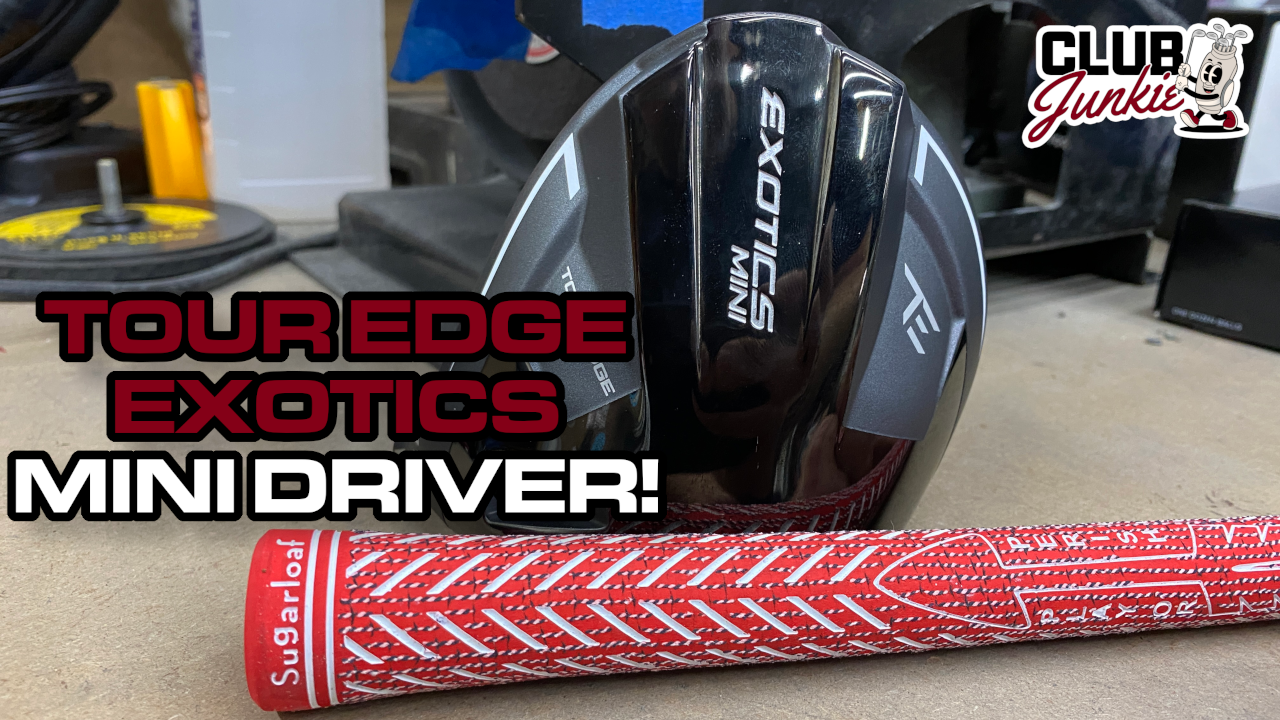
On this episode of Club Junkie, I put the new Tour Edge Exotics Mini Driver to the test and break down the performance, forgiveness, distance, and where it fits compared to a traditional driver or strong fairway wood. If you have been curious about adding a mini driver to the bag, this one is worth a look.
I also dive into the new TaylorMade Spider ZT Max putter that was recently spotted and discuss the growing zero torque putter trend. Plus, there is a closer look at the new Project X Titan Yellow shaft showing up on the PGA Tour and what makes it different from other profiles currently out there.
Opinion & Analysis
AVL: We’re talking about practice! My best tips for taking your game to the course

With the beginning of June on the horizon and courses rounding into peak condition for the season, it’s time to hone the finer skills that often get rusty over the winter. More sunlight also means more time to get out on the course and work on your game.
Whether it’s the practice green or the driving range, there’s always something to improve—whether you’re enjoying the fresh air or preparing for a weekend game or tournament. You can work on drills or freestyle around the green, and friendly competition is a great way to sharpen your skills.
While there are endless ways to get better at golf, I’m going to focus on practicing around the green. Let’s take a look at a few things to keep in mind as we head into the summer months.
Drills
From the driving range to the practice green, it’s important to incorporate drills into your routine. Years ago, I spent a weekend working on my short game with James Sieckmann. He recommended doing drill work for 5–10 minutes, then returning to your main practice.
This way, you create a balance between structured drills and real-world scenarios, so you’re not confined to “perfect” situations. For example, hitting the same three-foot putt over and over is good for repetition, but after a while, it becomes less interactive for your brain.
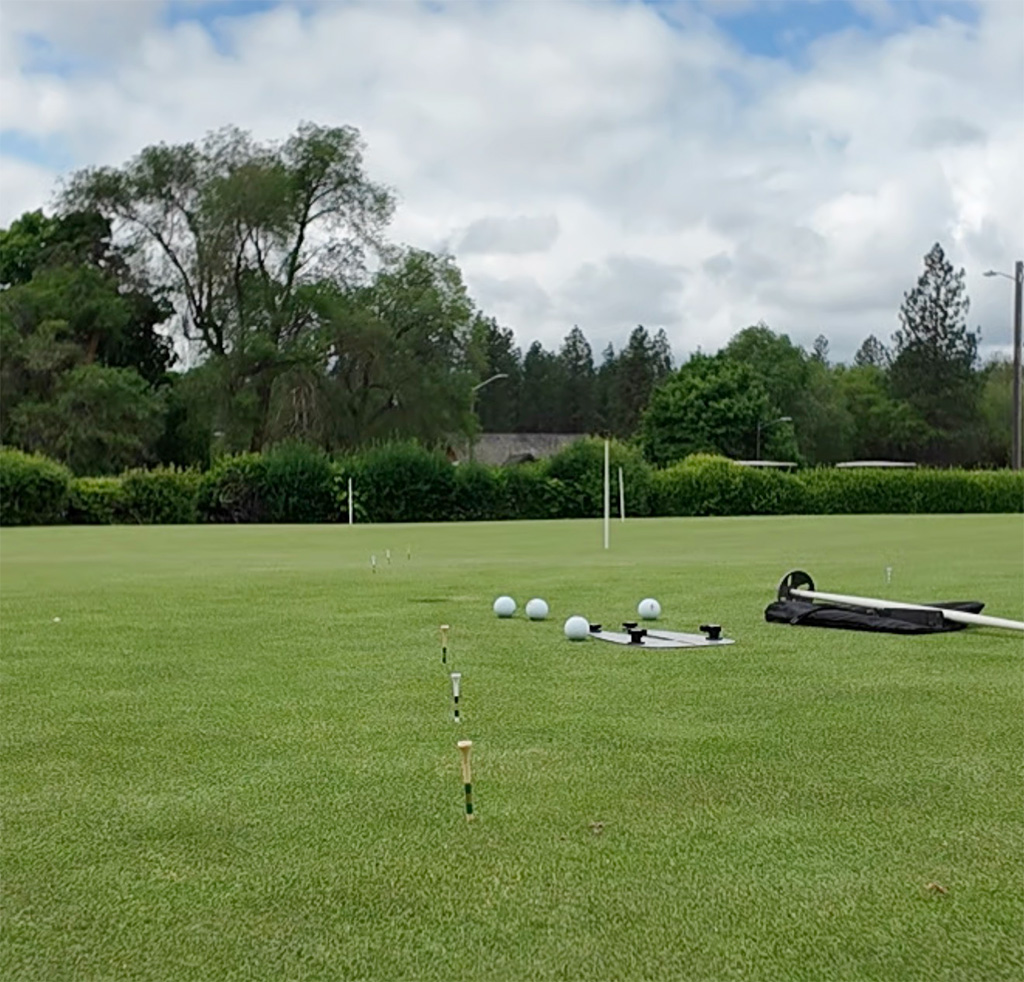
My approach is to use a putting trainer with a narrow gate for the ball to pass through, or simply place tees just outside the width of the ball. I’ll hit a series of four putts through the gate for three sets. Then, from a similar distance, I’ll hit four putts without the training aid and repeat that sequence three times.
Next, I’ll hit a number of 15–25 foot putts in a random fashion, then circle back to repeat the short putt drills with and without the training aid.
This breaks up the rhythm of hitting short putts with the training aid. When you hit the same short putts over and over, it’s easy to get into a groove—which is great for the drill, but not reflective of actual course play. While finding a rhythm is fundamental for drills, I like to introduce variation with longer putts to keep things realistic.
Game Mode
Once you’ve established a foundation with drills, it’s time to simulate on-course scenarios. This is where a few practice games come in handy.
One that I’ve been enjoying lately involves putting 10- to 15-footers with two balls. If I make the putt, great! If I miss, I pull the missed ball back a putter length. Suddenly, that little tap-in becomes a nerve-wracking three-footer—at least at first. As you get better at this game, those three- and five-footers become much more comfortable and routine.
It may sound cliché, but each shot is just what it is—it’s how we react that makes the difference. I like this game because it blends the pressure of on-course putting with the consequence of leaving yourself a much longer putt than usual.
Another game I like is one I recently learned from Brad Faxon. Place three tees in a line at four different locations around the hole: one at 3 feet, one at 6 feet, and one at 8 feet. The 3- and 6-foot putts count as par, and the 8-footer is for birdie.
This game keeps you focused on scoring and helps you get into a competitive mindset. You can even think about this putting game while you’re on the course. I just started playing it, and last week I couldn’t get better than two under par.
Competition
Competition during practice is when drills and games come to life, and you start to see results. For me, nothing beats a putting contest with a friend or two. In the right setting, these contests can become talking points for the whole season.
Match play, a game of 21, or simply seeing who can make the most one-putts (with a small prize on the line) are all great ways to simulate real on-course pressure. Recently, I played in a putting contest where one competitor made back-to-back 30- and 50-foot putts. As they say, expect your opponent to make every putt—and he nearly did. That’s impressive, and it’s something you see on the course, too: you have to stay committed to your game plan, no matter what.
When it comes to practice, it’s important to blend feedback from recent rounds with the fundamentals you want to reinforce. Drills, games, and competition—from the driving range to the putting green—form the backbone of skills you’ll rely on during actual rounds.
Finding the right balance is something we’re all working on, one practice session at a time. With the beginning of June on the horizon and courses rounding into peak condition for the season, it’s time to hone the finer skills that often get rusty over the winter. More sunlight also means more time to get out on the course and work on your game. Whether it’s the practice green or the driving range, there’s always something to improve—whether you’re enjoying the fresh air or preparing for a weekend game or tournament. You can work on drills or freestyle around the green, and friendly competition is a great way to sharpen your skills. While there are endless ways to get better at golf, I’m going to focus on practicing around the green. Let’s take a look at a few things to keep in mind as we head into the summer months.
Drills
From the driving range to the practice green, it’s important to incorporate drills into your routine. Years ago, I spent a weekend working on my short game with James Sieckmann. He recommended doing drill work for 5–10 minutes, then returning to your main practice. This way, you create a balance between structured drills and real-world scenarios, so you’re not confined to “perfect” situations. For example, hitting the same three-foot putt over and over is good for repetition, but after a while, it becomes less interactive for your brain.
My approach is to use a putting trainer with a narrow gate for the ball to pass through, or simply place tees just outside the width of the ball. I’ll hit a series of four putts through the gate for three sets. Then, from a similar distance, I’ll hit four putts without the training aid and repeat that sequence three times. Next, I’ll hit a number of 15–25 foot putts in a random fashion, then circle back to repeat the short putt drills with and without the training aid.
This breaks up the rhythm of hitting short putts with the training aid. When you hit the same short putts over and over, it’s easy to get into a groove—which is great for the drill, but not reflective of actual course play. While finding a rhythm is fundamental for drills, I like to introduce variation with longer putts to keep things realistic.
Game Mode
Once you’ve established a foundation with drills, it’s time to simulate on-course scenarios. This is where a few practice games come in handy. One that I’ve been enjoying lately involves putting 10- to 15-footers with two balls. If I make the putt, great! If I miss, I pull the missed ball back a putter length.
Suddenly, that little tap-in becomes a nerve-wracking three-footer—at least at first. As you get better at this game, those three- and five-footers become much more comfortable and routine. It may sound cliché, but each shot is just what it is—it’s how we react that makes the difference. I like this game because it blends the pressure of on-course putting with the consequence of leaving yourself a much longer putt than usual.
Another game I like is one I recently learned from Brad Faxon. Place three tees in a line at four different locations around the hole: one at 3 feet, one at 6 feet, and one at 8 feet. The 3- and 6-foot putts count as par, and the 8-footer is for birdie.
This game keeps you focused on scoring and helps you get into a competitive mindset. You can even think about this putting game while you’re on the course. I just started playing it, and last week I couldn’t get better than two under par.
Competition
Competition during practice is when drills and games come to life, and you start to see results. For me, nothing beats a putting contest with a friend or two. In the right setting, these contests can become talking points for the whole season. Match play, a game of 21, or simply seeing who can make the most one-putts (with a small prize on the line) are all great ways to simulate real on-course pressure. Recently, I played in a putting contest where one competitor made back-to-back 30- and 50-foot putts. As they say, expect your opponent to make every putt—and he nearly did. That’s impressive, and it’s something you see on the course, too: you have to stay committed to your game plan, no matter what.
When it comes to practice, it’s important to blend feedback from recent rounds with the fundamentals you want to reinforce. Drills, games, and competition—from the driving range to the putting green—form the backbone of skills you’ll rely on during actual rounds. Finding the right balance is something we’re all working on, one practice session at a time.


For Korean golfers, we always look forward to the last of the kkot-saem-chu-I for the true start of a new golf season. The term refers to a cold snap, but literally translates as “winter being jealous of the flowers beginning to bloom, thus lashing out one final time before surrendering to spring”.
A rather poetic mouthful packed into a short expression.
Koreans can be like that. Understated, yet oddly expressive at the same time. And nowhere is this more true on the golf course and in our golf bags. In fact, I suspect many Korean golfers look forward to new apparel and accessory drops more than they do actual equipment launches each year.
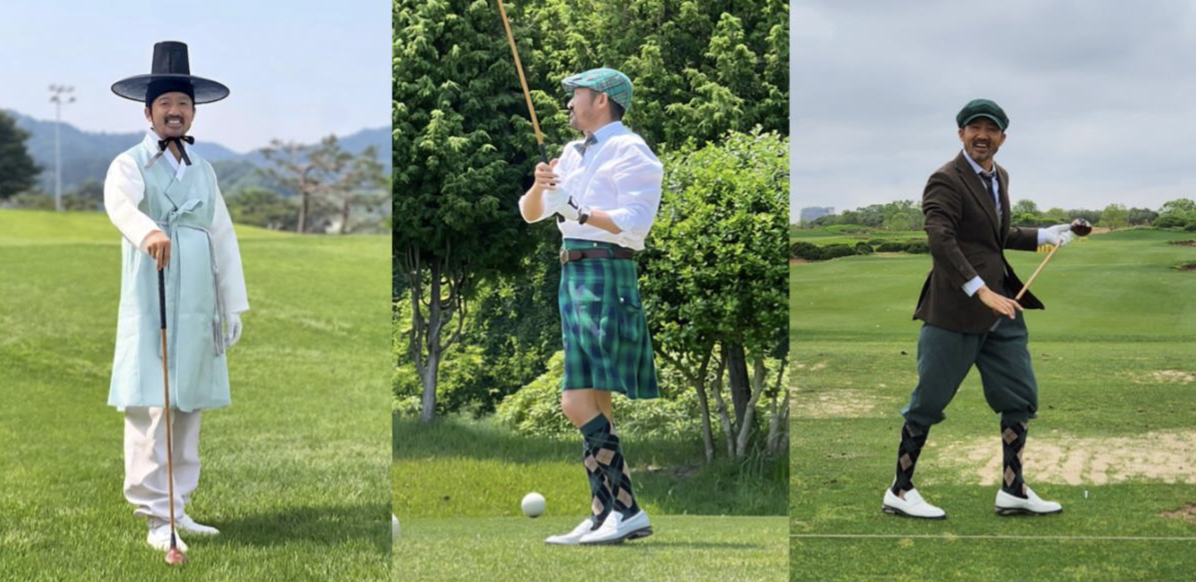
At this point, Korean golf fashion may exist on its own timeline. (courtesy of @seonbi_golfer)
There is ample evidence to support that suspicion. Korea is the world’s third-largest golf market behind the United States and Japan, yet its appetite for golf apparel exceeds that of both countries combined. Recent estimates suggest that Korea accounts for nearly 40 percent of the global golf apparel market, placing it among the world’s most influential golf fashion markets and punching well above its size.
Simply, we care deeply about how new golf clubs look and feel, but enjoy looking good while swinging them even more.
Golfers in the West may laugh and say that golf is played on a course, not a fashion runway. Perhaps. But what’s the harm in trying to look and feel good, if the added self-confidence can help actual performance? It certainly seems to have worked for Jason Day, who may have unlocked a new stats category: dormant strokes gained. Coincidence?

During the COVID-era, estimates placed the market near $9 billion, an astonishing figure for a single country.
As a proud member of Gen X, I’ve witnessed the highs and lows of golf fashion firsthand. The pleated trousers and wing-tipped shoes of Jack Nicklaus, the stylish plus-fours and knickers of Payne Stewart, the baggy black trousers and fitted mock-necks of Tiger Woods, and the thigh-hugging athletic tailoring of Rory McIlroy. Golf fashion, like the golf swing itself, has rarely stood still.
But nowhere have those trends shifted, evolved, and been scrutinized quite as relentlessly as in Korea. Here, golf fashion moves faster than fairway gossip, and consumers dissect brands with a level of discernment that can be both impressive and mildly terrifying. New brands are studied, judged, embraced, or dismissed with startling efficiency.
The result is a consumer base with one of the sharpest eyes for quality and authenticity anywhere in the world. It is difficult to quantify, but easy to recognize. Clean lines without trying too hard. Luxury mixed with utility. Trend awareness balanced by restraint and purpose.
It’s golf fashion shaped by one of the world’s most style-literate cities, something I like to call Seoul Sensibilities, referring to the taste level forged by a uniquely competitive environment.
And increasingly, global brands have noticed.

Many golf brands in Korea have their own flagship shops dedicated to apparel only
Titleist understood this years ago, when its apparel business in Korea took on a life of its own under new ownership and local direction. What had once been a straightforward extension of an iconic equipment giant became something sharper and more premium. By going all in on the serious Tour-player look (I couldn’t even fit into their XL sizes), Titleist struck the right chord with Korean consumers and helped its fledgling apparel business break into the mainstream. Titleist became a household name even for non-golfers who wore its caps, shirts, and windbreakers in daily life. In many ways, it proved that even heritage golf brands could carry real fashion credibility when viewed through a Korean lens.
Several years later, PXG took a page out of Titleist’s playbook and followed suit. Korean consumers helped transform the brand from one known largely for irons and loud commercials into something broader and more stylish. PXG apparel’s growth in Korea was explosive, where it found an early audience and turned the category into something more than mere logo merchandise. It is still hard to walk anywhere in Seoul without seeing its palindrome logo.
Malbon’s meteoric rise in the United States was genuine, but its ascent into a global golf lifestyle brand owes much to Korea, where it was elevated by a market already fluent in modern golf style. Korea did not simply embrace Malbon. It pressure-tested the concept, refined its appeal, and helped push it into the global spotlight.
As such, new brands may arrive from abroad, but more often than not, their sharpest evolution happens here. If a brand can earn credibility in Seoul, it’s deemed to have passed one of the toughest style audits in the game.
That is why the next meaningful chapter may not come from outside, but from a Korean brand moving in the opposite direction, carrying those Seoul Sensibilities outward as K-pop once did.

Play young Stay dope.
From Seoul, With Intent
Khalhon is a label that feels less like a trend-chasing newcomer and more like the product of a market that has already seen everything. Golfers here have long been surrounded by luxury logos, technical fabrics, and tour uniforms disguised as lifestyle wear and vice-versa. In other words, novelty alone rarely lasts here, and the Koreans seems to understand that instinctively.
Its style language leans into clean silhouettes, relaxed but tailored proportions, muted palettes, and premium materials that speak quietly but confidently. There is a modern city aesthetic running through it all, with strong layering pieces, thoughtful textures, and subtle branding that suggests sophistication rather than demanding attention.

“Built for the course. Designed beyond it.”
Most importantly, the garments seem designed to blur the line between golfwear and everyday style. Shirts, trousers, knitwear, and outer layers move comfortably between a game of screen golf, a lunch reservation, an airport gate, or an afternoon coffee in Gangnam with friends.
It raises the question of whether this is golfwear that happens to look good off the course, or everyday clothing that performs beautifully on the fairways.
Personally, I have long appreciated Nike Golf for its clean, athletic modernization of golf attire. It also has the useful side effect of making me look like a more serious golfer than I probably am. But off the course, there are times when being instantly identified as the golf guy in a crowd of non-golfers can feel a touch self-conscious.

“Built for the course. Designed beyond it.”
That is part of what drew me to Khalhon, which seemed to blend golf and everyday wear naturally. While some of the outfits may be slightly beyond my personal confidence level, the brand also offers tasteful options for older guys like me who still want to express a little personality without regretting the decision later.
These are not simply flashy outfits worn on the course and then banished to the closet until the next tee time. They work surprisingly well off the course too, and I suspect many of the pieces will still look right a couple of years from now, which would certainly be kinder to my wallet than most golf fashion trends tend to be.
And perhaps that broader lifestyle positioning also helps explain why someone like Sean Wotherspoon would find Khalhon creatively interesting in the first place.

“Built for the course. Designed beyond it.”
“Korea is not only one of the most fashion-forward golf markets in the world, but one of the most fashion-forward markets globally. Korea is ahead, and I love to watch and try to catch up.” – Sean Wotherspoon, Creative Director at Khalhon
Seoul and Beyond
If Khalhon’s rise says something about where Korean golf fashion is today, its relationship with Sean Wotherspoon says even more about where it is heading.
For readers less familiar with Sean Wotherspoon, his arrival at Khalhon is not some routine celebrity endorsement or influencer collaboration. In design and streetwear circles, Wotherspoon is regarded as one of the more influential creative voices of his generation, particularly when it comes to blending nostalgia, storytelling, and contemporary culture into products that people can connect with.
He first gained widespread attention through his now-famous Nike sneaker collaborations, where his vintage-inspired designs and instinct for color helped turn him into one of the defining artists of the late-2010s sneaker era. His work gradually expanded beyond footwear into apparel, automotive collaborations, collectibles, and broader lifestyle design.
Modern golf style now extends well beyond the fairways, where performance and functionality are largely expected by default. And while plenty of brands already make technically competent golfwear, Khalhon seems more focused on designing clothes people would genuinely want to wear even after the round ends.
And when guys at Wotherspoon’s level show genuine interest in working with a Korean golf brand as its new Creative Director, fashion circles tend to sit up and pay attention. There’s already a huge buzz among the fashion-conscious here about upcoming collabs with iconic sports stars and brands.

“My creative direction for Khalhon is disruptive, colorful, nostalgic, and modern. My goal is to blend these avenues seamlessly within each collection.” – Sean Wotherspoon
In chatting with Sean, what stood out most to me was how genuinely energized he sounded about the project itself. Despite having already worked across and countless other creative spaces, he described golf as a completely fresh category for him, saying that Khalhon “will be an amazing vehicle for my design work.”
At the same time, his enthusiasm seemed tied just as much to Korea itself. He spoke openly about admiring Korea’s fashion culture while repeatedly insisting he is still a terrible golfer.
There was something oddly refreshing about that humility. Rather than sounding like a celebrity parachuting into golf simply because the category suddenly became fashionable, Sean sounded genuinely curious about what Korea might do with the category next.
And perhaps that is what makes Khalhon feel interesting right now. The brand feels less like a trend-chaser and more like the natural result of a market now confident enough to export its own point of view.
For years, global brands came to Korea to sharpen their image against one of the most discerning audiences anywhere. Now, a Korean label appears ready to send those Seoul Sensibilities outward instead.
Which brings us back to kkot-saem-chu-i.
That final cold snap before spring always arrives with a reminder that seasons are changing, whether we notice it immediately or not. Golf fashion feels a little like that right now as well, as the old boundaries between sport, streetwear, luxury, and everyday style continue to soften.
And somewhere in Seoul, a Korean golf label already seems prepared for whatever season comes next. I just hope they have everything in my size.

Aaron Rai’s winning WITB: 2026 PGA Championship

Russell Henley’s winning WITB: 2026 Charles Schwab Challenge

Photos from the 2026 CJ Cup Byron Nelson

CJ Cup Byron Nelson Tour Report: Koepka and Kim’s newest putters finally get hot

Charles Schwab Challenge Tour Report: MacIntyre, Åberg and Spaun all switch putters, TaylorMade launches new Spider

Details on J.J. Spaun’s surprise putter switch

GolfWRX Launch Report: 2026 Titleist GTS drivers

Photos from the 2026 Charles Schwab Challenge

PGA Championship Tour Report: Fitzpatrick, Koepka among big-name putter switches for Aronimink

Photos from the ShopRite LPGA

Maria Torres WITB 2026 (June)
Driver: Ping G440 LST (9 degrees) Shaft: Accra TourZ Green 5-M4 3-wood: Ping G440 Max (15 degrees) Shaft: Accra TourZ Green 6-M4 5-wood: Ping G440...


Eric Cole WITB 2026 (June)
Driver: PXG Lightning Tour Max (9 degrees) Shaft: Project X Titan Yellow 70 TX 3-wood: TaylorMade Qi4D (15 degrees) Shaft:...


Si Woo Kim WITB 2026 (May)
Driver: Callaway Quantum Triple Diamond (8.5 degrees) Shaft: Fujikura Ventus Black 6 X Mini driver: Callaway Paradym Ai Smoke Mini...


Wyndham Clark’s winning WITB: 2026 CJ Cup Byron Nelson
Driver: TaylorMade Qi4D (10.5 degrees) Shaft: Project X Titan Yellow 60 TX 3-wood: TaylorMade Qi4D Tour (15 degrees) Shaft: Project...


Pingback: PEDs in the MLB – Sports
mannyv
Aug 14, 2016 at 8:39 pm
To the first poster. TW has always been an athletic freak. When he was at Stanford he was the strongest athlete pound for pound football team included.
Remember when he won the Masters in 1997 as a skinny kid he was hitting pitching wedge into to 500+ yard par four while other players were using 4 irons.
Justin
Aug 16, 2016 at 11:34 am
“He was the strongest athlete pound for pound football team included”
There’s not a chance in hell that’s true!! Have you seen pictures of him when he was at Stanford? Everyone on the Stanford Football team is laughing at you right now. What a ridiculous comment!
CW
Aug 19, 2016 at 10:10 pm
Really,i heard he used his putter.
Also,i heard he used to flap his arms really really fast and was able to fly over the course before playing it..
Dave
Jun 2, 2018 at 1:15 pm
LOL- That’s a good one…
AllBOdoesisgolf
Aug 11, 2016 at 1:34 pm
look what happened when Tiger was on them and then look what happened when he stopped because they started testing…..
Tom
Aug 11, 2016 at 2:56 pm
You could walk onto a highschool football field and find five kids who are in just as good of shape as Tiger ever was. He was in great shape, but he wasn’t anything spectacular in terms of the fitness world. Compared to other golfers, yes, he looked like a powerhouse, but you wouldn’t have to look far in the closest Golds Gym to find someone warming up with Tigers max weights, all while doing it drug free. On top of that, PED’s would have nothing to do with Tiger’s injuries. If he were doing them, I would assume he would have proper council, and would have gotten certain ones that would’ve helped him feel much better through the latter few years of his career.
CCshop
Aug 12, 2016 at 5:16 pm
So your saying I could go into any high school and find 5 kids that could go through the rigorous Navy Seal training that Tiger was doing. Doubt it. He ruined his body during that training and with how much he lifted outside of golf. Not sure 5 kids I went to high school with could have done the same.
Tom
Aug 11, 2016 at 9:20 am
Depends what PED’s people are talking about…
General PED’s in the sense of steriods and muscle growth… Very debate-able. You could argue that they enhance athletic performance and that’s better for just about anyone and anything you do that’s sports related, but let’s remember: Furyk shot the lowest round in golf history this weekend, and if that man takes PED’s, someone will have to scoop my jaw off the floor for me.
I propose looking at it from a completely different angle: Are steroids necessary to perform at a high level in golf? No.
If you took them, would they help you perform to that high level? NO.
Golf is a game of accuracy, not just distance. If you look at the guys with the most strokes gained putting, you’ll generally find them around the top of the leader board.
Now, if you bring in things like amphetamines, beta blockers, etc.. that could be, and IMO is an entirely different story. It’s been said at minimum a million times: “Golf is a mental game.”
If hitting the ball further was all that the game required, then yes, the PED’s which enhance athletic ability may give you an edge, but even then, it’s doubtful. Jamie Sadlowski is a prime example: Trains hard, athletic, sound mechanics, but does not possess a skillset that can be obtained by PED’s, nor would he be helped by them. If anything, MOST PED’s would hinder what gives him the ability to hit the ball like he does.
However, on the course, the drugs that give an advantage to the mind.. Something to help you focus on the 18th tee when you’re T1. Something that kills the nerves for the 10′ down hill putt for a +$1M purse and a major title. Those are what will help golfers.
I’ve played my best golf when I’m focused and relaxed, not when I’ve been in the best shape of my life.
Side note: People look at Tiger and Rory like they’re freaks. Compared to the golfing world, they are freaks. But put them in a gym with a group of guys who truly know how to train, and they’re mediocre in size, at best.
KK
Aug 14, 2016 at 12:41 pm
It’s farther, not further. And Furyk with the power of DJ would’ve shot 54.
Amp
Aug 11, 2016 at 3:23 am
Adderall helps me a lot. I get a lot of focus and concentration from that stuff. If I didn’t get it, I’d go lazy and my mind will wander. I don’t play serious competitions, just play recreationally, so don’t put the evil label on me, I am responsible, I wouldn’t ever try to cheat this way.
It’s crazy to think how old this drug really is. Makes you wonder who was using it back in the day without the kind of detection methods we now have in the modern world. But then again, you can ask that about so many drugs, including drugs of abuse, some of which weren’t even considered as such until somewhat recently.
The world is changing rapidly now, and nobody will be able to cheat this way. And it’s good that everybody will have to submit to testing.
KK
Aug 10, 2016 at 11:07 pm
No question it’s true. Golf is easier with more athletic ability and PEDs increase athletic ability. Faster recovery is also an underrated benefit. This is an exaggeration but imagine Tiger with the healing power of Wolverine. He’d have 30 majors by now. HGH is much less than being Wolverine but it’s measurably better than no HGH.
BSGolf
Aug 10, 2016 at 12:18 pm
I vote do whatever you want to do to your own body…God made it for humans to use…Drugs are good and professional golf is entertainment…let the syringes fly and lets see someone on Beta Blockers shoot 54
Justin
Aug 10, 2016 at 2:24 pm
One man’s demise is often at the detriment of many
Justin
Aug 10, 2016 at 12:12 pm
If you don’t think PEDs (specifically anabolic steroids, peptides, and hgh) can help improve a golfers game, then you probably don’t know much about PEDs. Unlike most other sports, there is such a thing as being too “big” for golf. You can be fat and golf just fine, but it becomes increasingly difficult to repeat a swing when muscles that are huge get in the way. Tiger, at his physical peak, never had muscle size that approached the size of many other athletes in many other sports. Yet, some still argued his size was holding him back and decreased his flexibility (which may have lead to some injury issues he has and is now dealing with).
What most people don’t realize is steroids alone will not grow huge muscles. Steroids are simply a “booster” for the incoming nutrients. If you continue to eat a normal diet, you likely won’t get much bigger. The guys and gals that gain tons of weight through the use of steroids are eating far more calories than normal. The steroids allow your body to use more of these incoming nutrients and convert them into muscle whereas they would normally be wasted or converted into fat. Think of steroid use as a time travel device…they’re simply speeding up the process (and in some cases pushing you past your physical limitations). What you could accomplish in 2 years of hard work can likely be accomplished in 6 months or less.
As for practical use in golf, you can still eat a “light and healthy” diet while on steroids and increase strength. Your muscles will certainly grow a bit, especially if you jump right in without a ton of prior history of intense weight training. But the main benefit here for golfers is recovery time, and because they are not worried about gaining muscle all that fast, they can use some of the lighter drugs that the body builders don’t even bother with. Instead of “bigger, stronger, faster” you get “stronger, leaner, fresher.”
ALL YOU REALLY NEED TO KNOW ABOUT HGH….
Most people know it can help accelerate injury recovery. Some scientists will debate that it has any effect on injury recovery, but I’ve seen it first hand and can tell you the results are unbelievable. In just the first week on HGH, your body will “force” you to catch up on the sleep you’ve been missing out on. You’ll be very tired during the day for most of the first week and may be forced to nap occasionally. After that, you’ll notice you are sleeping much better at night and wake up feeling looser and more refreshed. I would think that right there would help to heighten focus indirectly if nothing else. Like most of these drugs, at a certain point you get diminishing returns because the body builds up a tolerance. Users are forced to cycle them to give their receptors a chance to refresh (again, this is debated, but it works time and time again in real life). But now, with the introduction of peptides, you don’t even have to cycle off. HGH is an exogenous hormone that both suppresses and replaces your natural GH production. Most people believe that steroids and HGH “add” to your natural levels, when in fact they completely flat line your natural production. This is the main reason why they are viewed as dangerous or risky, and rightfully so. Now athletes are using HGH in conjunction with peptides such as GHRH and GHRP to benefit from both natural and exogenous production. This is achievable because of the short half life of these items. GHRH and GHRP work together to increase both the number of receptors producing natural GH in the hypotahlamus and increase the output of those receptors. So, you can cycle peptides and HGH at intervals throughout the day to achieve maximum results without ever having to come off (theoretically).
Now you know that it sounds like a pain in the ass (literally and metaphorically) to use steroids and HGH… would you do it if you know you wouldn’t be caught and it would increase the chance of financial success in your life? This is what these guys are faced with and I really hope that golf is enough of a gentleman’s game to simply weed out the users who shouldn’t be there. Physical fitness is more important in the game now than ever. Even Andrew “Beef” Johnston works out hard so he can have a consistent swing (even though his body may not show it!). I think long term we’ll be seeing more and more instructors teaching a swing that stresses preservation of the body. I can’t help but think guys like Rory McIlroy and Jason Day will have injury issues in the future because of the torque they create in their swings. I really hope they play forever and never get injured, but it seems like a high probability that they will. Remember, chicks dig the long ball… but you can only hit the long ball if you are able to walk out onto the course!
LT
Aug 10, 2016 at 1:00 pm
You know nothing. Got all that from Google, didja?
Justin
Aug 10, 2016 at 2:22 pm
Because I’d love to spend my time regurgitating info from Google…
There is so much misinformation out there and most people refuse to listen to the things I have to say, but that’s not my problem. Take from this what you will but it should be very informative for the 7 people that will actually read the entire comment
LT
Aug 10, 2016 at 10:12 pm
Everybody already knows everything you said. It makes you sound like an idiot for repeating it over and over
Justin
Aug 11, 2016 at 11:31 am
Since when do you refer to yourself as Everybody
snowexcuse
Aug 15, 2016 at 2:02 pm
I thought your post was great, thank for the write-up. I did not know the specifics of PED use.
Justin
Aug 16, 2016 at 11:36 am
Thank you! Finally someone that shows LT is the real idiot!
Jim
Aug 11, 2016 at 3:06 am
I have a ‘broken back’ and have been teaching a biomechanically more correct swing for 20 years. It works, it’s powerful, the derotational shear forces are dispersed over a greater ROM. Increased emphasis on hand speed, maintaining spine angle during winding up & shifting well before unwinding front hip and speeding up the hands. I turned pro in 95 after breaking my back in 1990…from 97-2001 I was averaging 298 off the tee and 150 was a 9 iron.
The only time I ever hurt my back moving this way was when I slipped on a tee shot with those shitty 1st gen soft spikes! I’ve taught over 100 students with back injuries who saught me out and have had success with everyone. (No one’s back ‘fixed itself’ and some with degenerative or arthritic conditions continued to deteriorate, but no one ‘hurt their back’ swinging this way. Most played more often, hit bigger buckets at the range with less or no pain than ever before.
ps…tell Tiger to see me 😉
Jim
Aug 11, 2016 at 9:03 am
I had a few broken bones and from the usual foorball, rugby stuff, my service, but it was a fall at the WTC pile during the ‘rescue phase’ after
9/11 when everything held together with spit n duct tape finally broke. I had 3 lower back surgeries in 01-02 and 2 C Spine surgeries in 03. 2004 was mostly all rehab, strengthening and relearning another ‘bad back’ swing…2005 was
my first year back fully employed on green
grass teaching and playing with members daily.
I have pain everyday – some days worse than
others, and in 2014 I finally had my shoulder rebuilt
This was by far the most painful surgery I ever had and the 16 week recovery was brutal.
If taking some kind of steroid or HGH or whatever MEDICINE my doctor could have given
would’ve helped speed the recovery time – I
would’ve taken it. I’m still working to strengthen it and may end up with a 20-30% loss. Balls definitely aren’t goin as far anymore.
So, if say I’m playing in a section event or a Monday 4 spot and by some miracle get in, am I cheating taking my pain pills (without which I can’t play 18 holes or work a full active day) or some Medicine helping my torn up miscles heal?
There was a thread about what Jimmy Walker was thinking on that last putt…If he was taking Ritalin – I’M NOT EVEN suggesting he was, the hole would’ve looked 3 times bigger and all he woulda been thinkin is ‘back of cup’…
THAT’S a PED drug for golf
Tom
Aug 11, 2016 at 2:52 pm
HGH is a little different than you’re making it out to be in your post.. It heals and actually creates more cells, but isn’t one of the drugs that has direct strength or endurance properties. It enhances size, burns fat, and helps your tendons and ligaments heal significantly faster by creating more cells. That being said, your head, hands, heart, and other internal organs will grow. If you look at a body builder who seems to have a big gut, even though he’s sitting there with 3% body fat, that’s because HGH caused his intestines to grow. Pretty nasty.
Before you reply, I do happen to know quite a bit about PED’s.
Golfers don’t need PED’s. It’s not a game of strength. Endurance is necessary, but as long as you can swing as fast on the 18th tee as you did on the 1st tee, you’re pretty much set.
As said in a post before, Furyk just shot the lowest round in professional golf history, and although I can’t be certain, I’d be pretty dang surprised to hear he did any kind of drugs to get there.
Justin
Aug 16, 2016 at 11:56 am
You say HGH doesn’t have direct strength properties and then immediately after you say it enhances size. Don’t you think it’s highly probable (if not absolute) that when your muscle size increases that your strength would also increase? It goes along with the common misconception that Steroids alone increase muscle size, without caloric intake increase or resistance training… which is simply not true.
It’s actually debatable whether HGH actually enhances muscle size at all. The only direct way it could enhance muscle size would be through Hyperplasia, which hasn’t been proven to take place within the human body yet. To effectively “gain” muscle size on HGH, you have to use so much of it that you start to run into problems like acromegaly (unnatural growth), which is normally caused by a pituitary tumor but in this case is caused by an “overload” of sorts.
The distended guts of bodybuilders are likely not the result of overuse of HGH. The reason they look that way is a visceral layer of fat has formed underneath their abs and to me and many others, the only logical explanation for this is the rampant use of insulin. It’s likely that not many people know about the use of insulin to increase muscle mass, but the effects can be more dramatic than steroids. I won’t go into it in detail because the topic here is golf, but just look at a pic of Ronnie Coleman at any Olympia he won vs a pic of Arnold at any Olympia he won. One will look much bigger and the other will look much better.
I don’t doubt that there could already be PGA Tour players using HGH. The routine to use it effectively is very “needle intensive” because of the very short half life of the drug and I would think this would be inconvenient for the schedule of a golfer when compared to other sports. Golfers do not need PED’s, but I’m certain that they help give an unfair advantage when used properly. Recovery time is something that is rarely discussed because you can’t see it compared to the bulging muscles, but it’s more important than the actual strength gains.
If Jim Furyk is on Steroids then we should suspend the entire sport, haha.
Ken
Aug 11, 2016 at 7:10 pm
Can agree with you as in early 70″s had two fiends both win some middle level body building contests (both were good enough to get some face time with Joe Weider, and in his magazines several times) We talked about steroid use a lot and it was very clear it gave them the ability to work out longer and add weight faster, and the eating was key…. 2 year gains in 6 months sounds very fair for top body builders like them.
SV
Aug 10, 2016 at 12:10 pm
I have found beer helps tremendously, or at least it takes the sting out of playing badly.
LT
Aug 10, 2016 at 10:12 pm
Yeah, the original swing juice
Robert
Aug 10, 2016 at 12:04 pm
Some PED’s can improve eye sight as well, which can improve hand eye coordination. If you don’t believe PED’s can help you in golf, you are just sticking your head in the sand. It helps in everything. And I don’t blame any player that is just trying to survive out there for doing them if they end up being a steady member on the tour. It’s their livelyhood. I do whatever I can to be better at my job. Why wouldn’t they?
joe
Aug 10, 2016 at 7:29 pm
Because it is CHEATING!!!!!
Christosterone
Aug 10, 2016 at 11:51 am
The same discussions took place back in the 80s regarding baseball…we all know how that turned out…
NEWSFLASH: steroids are super helpful in every single sport….with absolutely no exceptions.
-Christosterone
Messico Smizzle
Aug 10, 2016 at 12:09 pm
agreed
alexdub
Aug 10, 2016 at 11:42 am
Obviously, no one believes that taking PEDs are going to fix your swing flaws. However, PEDs can have a substantial effect on endurance and recovery. Every one of us—including pro golfers— has been at that 4 hour mark of a round when your body starts to give in a little. Mental lapses in concentration often follow physical lapses in strength. I don’t think PEDs are a cure-all, but I do think that they could help. The PGA should have an open and regular testing process.
ta
Aug 10, 2016 at 11:33 am
PEDs includes so many drugs. The list is huge. Some simple drugs, other than Steroids or HGH, can have instantaneous benefits, and that is why it is on the list. Just because people see the label as PED doesn’t mean it’s some kind of mega drug that only wealthy athletes can buy from a specialized source. You are neglecting to mention basic drugs that you can buy over the counter, such as some ingredients found in cold and allergy medications.
ooffa
Aug 10, 2016 at 10:17 am
They may not improve ones game, but they sure can hasten the end of ones career. It happened to Tiger. Now it’s happening to Rory.
Tom
Aug 11, 2016 at 9:24 am
Tiger and Rory have very aesthetic, and athletic physiques. They’re in great shape, but they don’t have anything that isn’t attainable naturally.
They have the build of dang near everybody I ever played sports with and lifted with. It’s impressive to the golf world because we are used to looking at John Daily-esque guys walking around the course. However, comparing them to others in the fitness world, they’re just in great shape. It’s very impressive, but it’s honestly nothing crazy..