
Opinion & Analysis
The most ridiculous element of the Dustin Johnson ruling isn’t the ruling

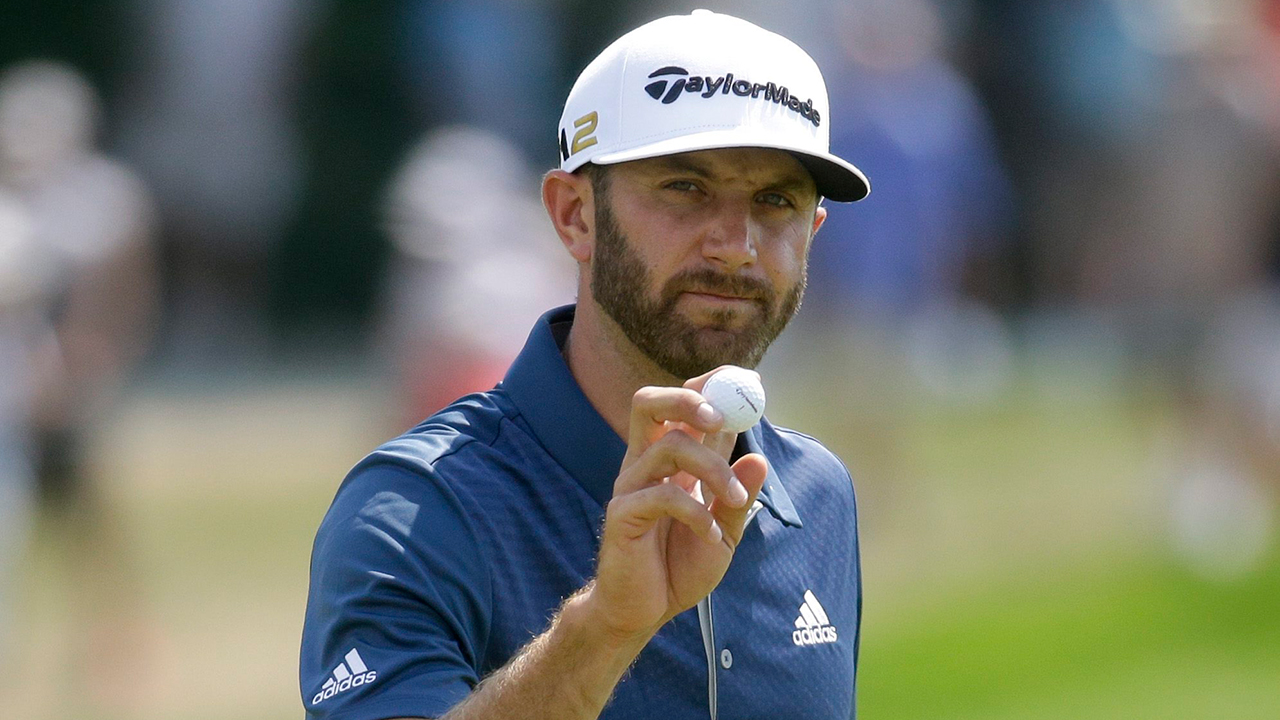
A scroll through the PGA Tour’s Twitter list of pros using the social media service during yesterday’s U.S. Open final round reveals a boiling over of rage and disbelief directed at the USGA from nearly all the big names in the sport, including the usually radio silent Tiger Woods. And while there are several avenues of furor to be traveled, there’s a main drag of absurdity that hasn’t yet been widely trafficked.
But first, the main points of ire, from the players’ perspective.
First: Players don’t seem to think Rule 18-2b was written with U.S. Open-fast Oakmont greens in mind. As Adam Hadwin tweeted, “If the usga wants to stimp greens at 15 on sloped greens, then they should expect ball to wobble without player influence.”
So there’s issue with the rule itself. Yes. Fine. Entirely justified.
This was nothing compared to the rage directed toward golf’s governing body regarding how DJ’s one-stroke penalty was assessed.
To recap: The lunacy began when Johnson invited a rules official to weigh in after his golf ball wobbled as he prepared to address a three-foot par putt at the fifth hole. The official walking with the group indicated the ball did not move due to the golfer’s agency, and thus he was free to replace it without penalty. When Johnson made it to the 12th tee, however, he was approached by another of the blue-blazer clan and told that the events on the fifth green would be reviewed after the round with the golfer.
For the viewers, the back-nine drama was compromised by the absurdity of the hovering rules situation — whether a penalty was to be assessed or not — and it superseded the drama of DJ notching his first major victory, which was a travesty. For Johnson, however, the final six holes of his his round were played in a fog.
A staunch defender of the golf’s governing goofs and the lords of integrity might say that not only was the ruling correct based on this passage from the USGA’s Decisions — a player’s ball lies on a flat portion of the putting green on a day with light winds. The player addresses the ball and the ball immediately moves. Under these circumstances, it is more likely than not that the act of addressing the ball caused the ball to move — but that Johnson ought to have assumed the worst after the 12th hole, expecting that he’d be assessed a penalty and playing accordingly, such a situation is patently absurd. And the players agreed.
What Johnson actually did, was the opposite.
“I felt like I wasn’t going to be penalized, so I just went about my business,” he said. “I just focused on the drive on 12 and from there on out, I knew it’s something we’d deal with when we got done. I’m glad it didn’t matter because that would have been bad. But, you know, it worked out.”
Lucky for DJ, but even luckier for the USGA, in everyone’s minds it seemed. What’s the operative assumption here? Johnson would have gained unfair advantage by testing the speed of the green with the one millimeter of roll? That he’s technically taken a stroke because it was “more likely than not” his agency caused the ball to roll.
All of this flies in the face of common sense. But even in a “Just doing my job, ma’am” situation, the insanity of an initial determination being overturned later is truly bonkers and it is the crux of the problem.
Imagine a parallel situation in any other sport. Something like this in the NFL (a league that certainly doesn’t corner the market on sanity): “We’re not sure if there was offensive pass interference on the second-quarter touchdown. We’re ruling a touchdown for now, but after the game, we’re going to talk to the wide receiver and show him the video. So, just so you guys know, you may or may not have scored in the second quarter. Now carry on for the rest of the game.”
Here’s the determination and the bitter pill to swallow. The USGA got it right, as per their own rules and standards. “As a committee, when we reviewed the tape, we said, given the timing of his actions, it was more likely than not that Dustin was the cause of the ball’s movement,” said Thomas Pagel, senior director of Rules for the USGA. “There’s doubt there, and we understand not everyone is going to agree with that. But the standard is not 100 percent. It’s more likely than not.”
So… Mark Newell, walking rules official with the Johnson-Westwood group got it wrong, which is the origin of the problem here: An initial determination, which substantially affects a tournament, is made and play continues under that assumption. Fine. Great. Good. This is what happens in sports.
However, Newell should have referred to the “more likely than not” standard, absurd as it is. We can argue about the rules as they are written and enforced an inherent issues there, yes, but the material problem at the 2016 U.S. Open was the fact that Newell made a ruling, everyone accepted it, and then seven holes later, that ruling was tossed out and replaced with a confused face emoji.
True, Newell is ultimately more of a consultant than an arbiter within the system as it is. But that situation and those limited power are problematic as well, as indication by, well, exactly what happened Sunday. Rage against the rules and the associated barriers to entry in a dwindling game. Rage against the USGA. Rage against Mike Davis. Rage against the sapping of Sunday drama and whatever else. However, I’ll say it again. The USGA got it right with respect to their rules and their standards. The walking rules official, Newell, got it wrong.
And to add to the absurdity: the officials who approached Johnson on the 12th tee couldn’t make a binding decision either! All they could do was offer a different perspective with that promise that things would be sorted after the round when DJ was afforded the opportunity to watch tape of the incident in question.
A singular, ludicrous situation in the world of sports.
A USGA rules official at a U.S. Open has to be invested with the power to make a binding decision, even if it’s a wrong one. Too many significant assumptions are made as the result of their consultation and a tournament can be too materially affected, as we say. Otherwise, s/he must offer the disclaimer that “I may/may not know what I’m talking about: proceed accordingly.”
Otherwise, players might as well just read their Rules of Golf and Decisions in the Rules of Golf and draw their own conclusions, knowing nothing is written in stone or engraved into the U.S. Open trophy until any post-round pow-wows are complete.


Club Junkie
Tour Edge Exotics mini driver review + TaylorMade Spider ZT Max first look – Club Junkie

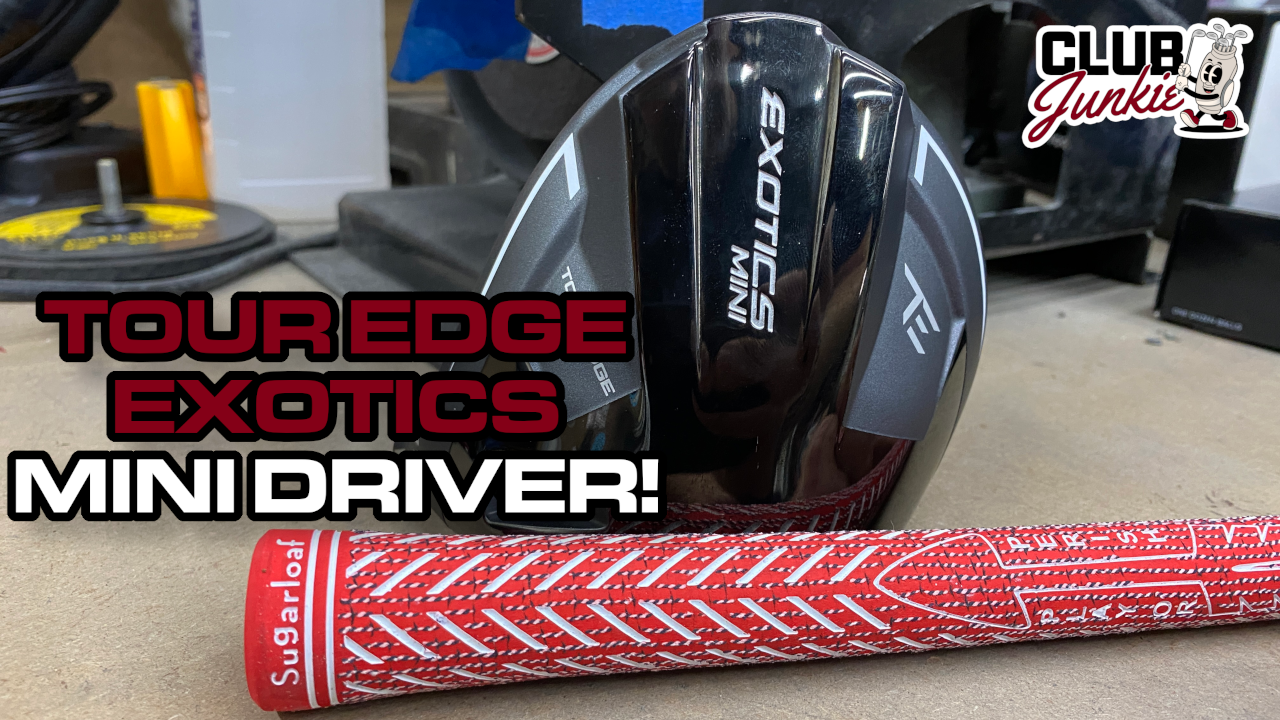
On this episode of Club Junkie, I put the new Tour Edge Exotics Mini Driver to the test and break down the performance, forgiveness, distance, and where it fits compared to a traditional driver or strong fairway wood. If you have been curious about adding a mini driver to the bag, this one is worth a look.
I also dive into the new TaylorMade Spider ZT Max putter that was recently spotted and discuss the growing zero torque putter trend. Plus, there is a closer look at the new Project X Titan Yellow shaft showing up on the PGA Tour and what makes it different from other profiles currently out there.
Opinion & Analysis
AVL: We’re talking about practice! My best tips for taking your game to the course

With the beginning of June on the horizon and courses rounding into peak condition for the season, it’s time to hone the finer skills that often get rusty over the winter. More sunlight also means more time to get out on the course and work on your game.
Whether it’s the practice green or the driving range, there’s always something to improve—whether you’re enjoying the fresh air or preparing for a weekend game or tournament. You can work on drills or freestyle around the green, and friendly competition is a great way to sharpen your skills.
While there are endless ways to get better at golf, I’m going to focus on practicing around the green. Let’s take a look at a few things to keep in mind as we head into the summer months.
Drills
From the driving range to the practice green, it’s important to incorporate drills into your routine. Years ago, I spent a weekend working on my short game with James Sieckmann. He recommended doing drill work for 5–10 minutes, then returning to your main practice.
This way, you create a balance between structured drills and real-world scenarios, so you’re not confined to “perfect” situations. For example, hitting the same three-foot putt over and over is good for repetition, but after a while, it becomes less interactive for your brain.
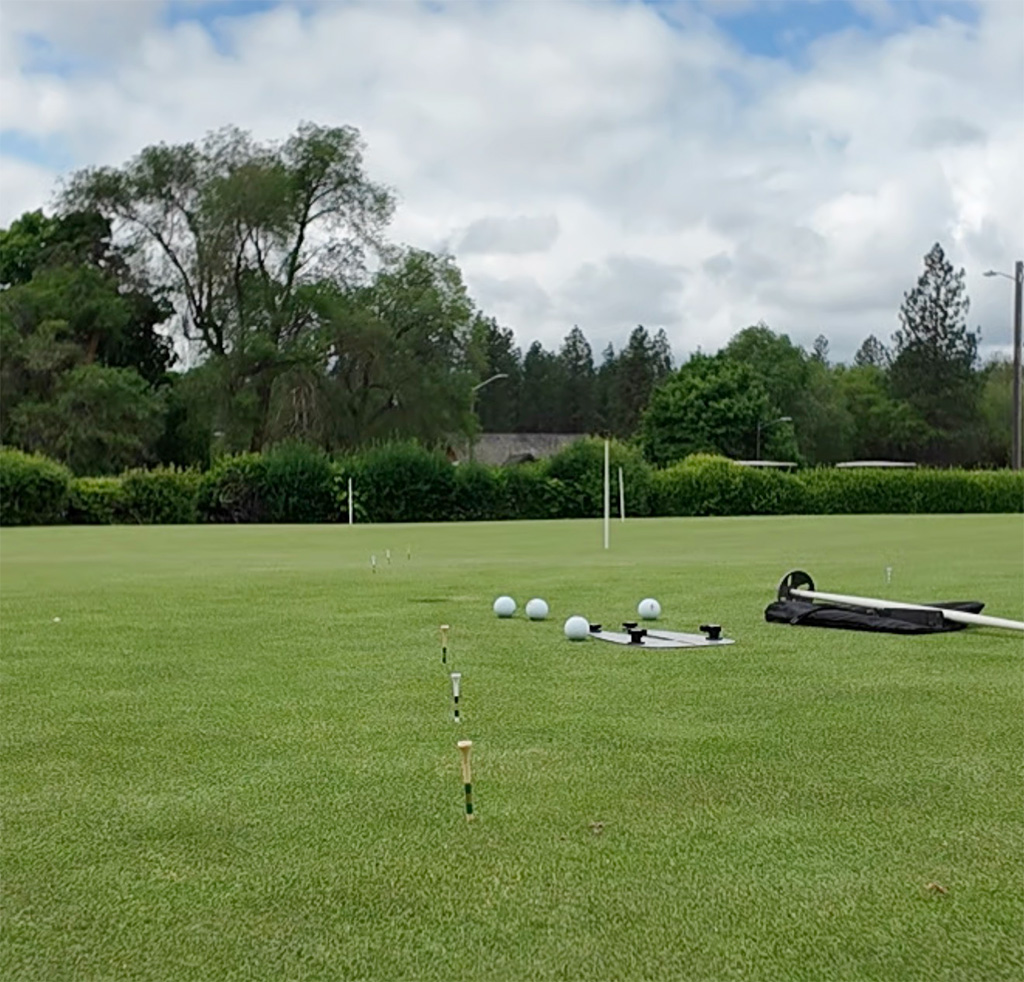
My approach is to use a putting trainer with a narrow gate for the ball to pass through, or simply place tees just outside the width of the ball. I’ll hit a series of four putts through the gate for three sets. Then, from a similar distance, I’ll hit four putts without the training aid and repeat that sequence three times.
Next, I’ll hit a number of 15–25 foot putts in a random fashion, then circle back to repeat the short putt drills with and without the training aid.
This breaks up the rhythm of hitting short putts with the training aid. When you hit the same short putts over and over, it’s easy to get into a groove—which is great for the drill, but not reflective of actual course play. While finding a rhythm is fundamental for drills, I like to introduce variation with longer putts to keep things realistic.
Game Mode
Once you’ve established a foundation with drills, it’s time to simulate on-course scenarios. This is where a few practice games come in handy.
One that I’ve been enjoying lately involves putting 10- to 15-footers with two balls. If I make the putt, great! If I miss, I pull the missed ball back a putter length. Suddenly, that little tap-in becomes a nerve-wracking three-footer—at least at first. As you get better at this game, those three- and five-footers become much more comfortable and routine.
It may sound cliché, but each shot is just what it is—it’s how we react that makes the difference. I like this game because it blends the pressure of on-course putting with the consequence of leaving yourself a much longer putt than usual.
Another game I like is one I recently learned from Brad Faxon. Place three tees in a line at four different locations around the hole: one at 3 feet, one at 6 feet, and one at 8 feet. The 3- and 6-foot putts count as par, and the 8-footer is for birdie.
This game keeps you focused on scoring and helps you get into a competitive mindset. You can even think about this putting game while you’re on the course. I just started playing it, and last week I couldn’t get better than two under par.
Competition
Competition during practice is when drills and games come to life, and you start to see results. For me, nothing beats a putting contest with a friend or two. In the right setting, these contests can become talking points for the whole season.
Match play, a game of 21, or simply seeing who can make the most one-putts (with a small prize on the line) are all great ways to simulate real on-course pressure. Recently, I played in a putting contest where one competitor made back-to-back 30- and 50-foot putts. As they say, expect your opponent to make every putt—and he nearly did. That’s impressive, and it’s something you see on the course, too: you have to stay committed to your game plan, no matter what.
When it comes to practice, it’s important to blend feedback from recent rounds with the fundamentals you want to reinforce. Drills, games, and competition—from the driving range to the putting green—form the backbone of skills you’ll rely on during actual rounds.
Finding the right balance is something we’re all working on, one practice session at a time. With the beginning of June on the horizon and courses rounding into peak condition for the season, it’s time to hone the finer skills that often get rusty over the winter. More sunlight also means more time to get out on the course and work on your game. Whether it’s the practice green or the driving range, there’s always something to improve—whether you’re enjoying the fresh air or preparing for a weekend game or tournament. You can work on drills or freestyle around the green, and friendly competition is a great way to sharpen your skills. While there are endless ways to get better at golf, I’m going to focus on practicing around the green. Let’s take a look at a few things to keep in mind as we head into the summer months.
Drills
From the driving range to the practice green, it’s important to incorporate drills into your routine. Years ago, I spent a weekend working on my short game with James Sieckmann. He recommended doing drill work for 5–10 minutes, then returning to your main practice. This way, you create a balance between structured drills and real-world scenarios, so you’re not confined to “perfect” situations. For example, hitting the same three-foot putt over and over is good for repetition, but after a while, it becomes less interactive for your brain.
My approach is to use a putting trainer with a narrow gate for the ball to pass through, or simply place tees just outside the width of the ball. I’ll hit a series of four putts through the gate for three sets. Then, from a similar distance, I’ll hit four putts without the training aid and repeat that sequence three times. Next, I’ll hit a number of 15–25 foot putts in a random fashion, then circle back to repeat the short putt drills with and without the training aid.
This breaks up the rhythm of hitting short putts with the training aid. When you hit the same short putts over and over, it’s easy to get into a groove—which is great for the drill, but not reflective of actual course play. While finding a rhythm is fundamental for drills, I like to introduce variation with longer putts to keep things realistic.
Game Mode
Once you’ve established a foundation with drills, it’s time to simulate on-course scenarios. This is where a few practice games come in handy. One that I’ve been enjoying lately involves putting 10- to 15-footers with two balls. If I make the putt, great! If I miss, I pull the missed ball back a putter length.
Suddenly, that little tap-in becomes a nerve-wracking three-footer—at least at first. As you get better at this game, those three- and five-footers become much more comfortable and routine. It may sound cliché, but each shot is just what it is—it’s how we react that makes the difference. I like this game because it blends the pressure of on-course putting with the consequence of leaving yourself a much longer putt than usual.
Another game I like is one I recently learned from Brad Faxon. Place three tees in a line at four different locations around the hole: one at 3 feet, one at 6 feet, and one at 8 feet. The 3- and 6-foot putts count as par, and the 8-footer is for birdie.
This game keeps you focused on scoring and helps you get into a competitive mindset. You can even think about this putting game while you’re on the course. I just started playing it, and last week I couldn’t get better than two under par.
Competition
Competition during practice is when drills and games come to life, and you start to see results. For me, nothing beats a putting contest with a friend or two. In the right setting, these contests can become talking points for the whole season. Match play, a game of 21, or simply seeing who can make the most one-putts (with a small prize on the line) are all great ways to simulate real on-course pressure. Recently, I played in a putting contest where one competitor made back-to-back 30- and 50-foot putts. As they say, expect your opponent to make every putt—and he nearly did. That’s impressive, and it’s something you see on the course, too: you have to stay committed to your game plan, no matter what.
When it comes to practice, it’s important to blend feedback from recent rounds with the fundamentals you want to reinforce. Drills, games, and competition—from the driving range to the putting green—form the backbone of skills you’ll rely on during actual rounds. Finding the right balance is something we’re all working on, one practice session at a time.


For Korean golfers, we always look forward to the last of the kkot-saem-chu-I for the true start of a new golf season. The term refers to a cold snap, but literally translates as “winter being jealous of the flowers beginning to bloom, thus lashing out one final time before surrendering to spring”.
A rather poetic mouthful packed into a short expression.
Koreans can be like that. Understated, yet oddly expressive at the same time. And nowhere is this more true on the golf course and in our golf bags. In fact, I suspect many Korean golfers look forward to new apparel and accessory drops more than they do actual equipment launches each year.
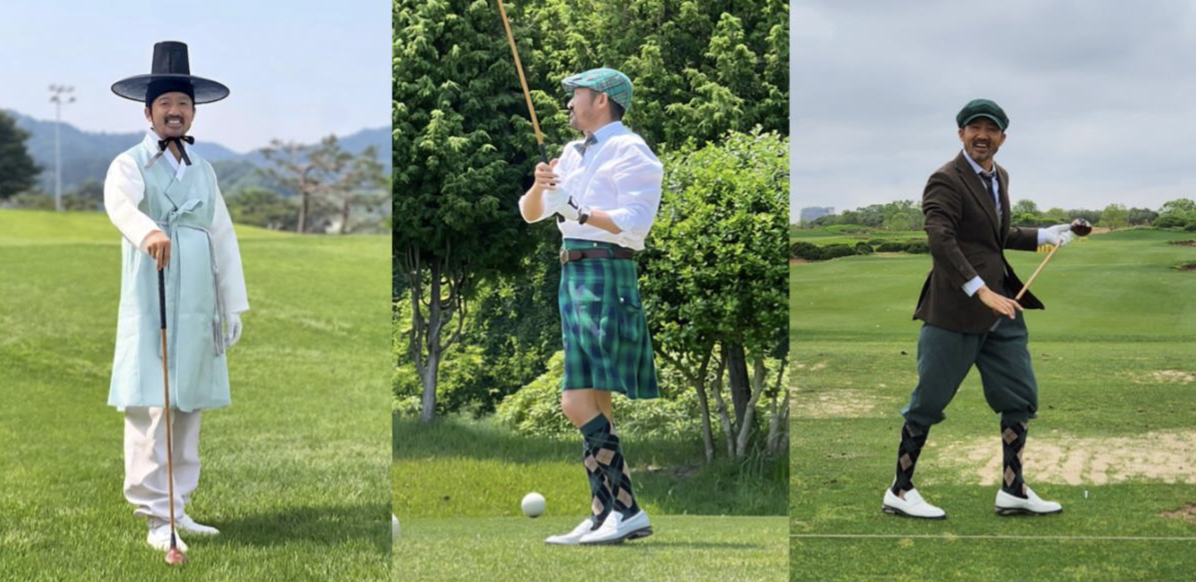
At this point, Korean golf fashion may exist on its own timeline. (courtesy of @seonbi_golfer)
There is ample evidence to support that suspicion. Korea is the world’s third-largest golf market behind the United States and Japan, yet its appetite for golf apparel exceeds that of both countries combined. Recent estimates suggest that Korea accounts for nearly 40 percent of the global golf apparel market, placing it among the world’s most influential golf fashion markets and punching well above its size.
Simply, we care deeply about how new golf clubs look and feel, but enjoy looking good while swinging them even more.
Golfers in the West may laugh and say that golf is played on a course, not a fashion runway. Perhaps. But what’s the harm in trying to look and feel good, if the added self-confidence can help actual performance? It certainly seems to have worked for Jason Day, who may have unlocked a new stats category: dormant strokes gained. Coincidence?

During the COVID-era, estimates placed the market near $9 billion, an astonishing figure for a single country.
As a proud member of Gen X, I’ve witnessed the highs and lows of golf fashion firsthand. The pleated trousers and wing-tipped shoes of Jack Nicklaus, the stylish plus-fours and knickers of Payne Stewart, the baggy black trousers and fitted mock-necks of Tiger Woods, and the thigh-hugging athletic tailoring of Rory McIlroy. Golf fashion, like the golf swing itself, has rarely stood still.
But nowhere have those trends shifted, evolved, and been scrutinized quite as relentlessly as in Korea. Here, golf fashion moves faster than fairway gossip, and consumers dissect brands with a level of discernment that can be both impressive and mildly terrifying. New brands are studied, judged, embraced, or dismissed with startling efficiency.
The result is a consumer base with one of the sharpest eyes for quality and authenticity anywhere in the world. It is difficult to quantify, but easy to recognize. Clean lines without trying too hard. Luxury mixed with utility. Trend awareness balanced by restraint and purpose.
It’s golf fashion shaped by one of the world’s most style-literate cities, something I like to call Seoul Sensibilities, referring to the taste level forged by a uniquely competitive environment.
And increasingly, global brands have noticed.

Many golf brands in Korea have their own flagship shops dedicated to apparel only
Titleist understood this years ago, when its apparel business in Korea took on a life of its own under new ownership and local direction. What had once been a straightforward extension of an iconic equipment giant became something sharper and more premium. By going all in on the serious Tour-player look (I couldn’t even fit into their XL sizes), Titleist struck the right chord with Korean consumers and helped its fledgling apparel business break into the mainstream. Titleist became a household name even for non-golfers who wore its caps, shirts, and windbreakers in daily life. In many ways, it proved that even heritage golf brands could carry real fashion credibility when viewed through a Korean lens.
Several years later, PXG took a page out of Titleist’s playbook and followed suit. Korean consumers helped transform the brand from one known largely for irons and loud commercials into something broader and more stylish. PXG apparel’s growth in Korea was explosive, where it found an early audience and turned the category into something more than mere logo merchandise. It is still hard to walk anywhere in Seoul without seeing its palindrome logo.
Malbon’s meteoric rise in the United States was genuine, but its ascent into a global golf lifestyle brand owes much to Korea, where it was elevated by a market already fluent in modern golf style. Korea did not simply embrace Malbon. It pressure-tested the concept, refined its appeal, and helped push it into the global spotlight.
As such, new brands may arrive from abroad, but more often than not, their sharpest evolution happens here. If a brand can earn credibility in Seoul, it’s deemed to have passed one of the toughest style audits in the game.
That is why the next meaningful chapter may not come from outside, but from a Korean brand moving in the opposite direction, carrying those Seoul Sensibilities outward as K-pop once did.

Play young Stay dope.
From Seoul, With Intent
Khalhon is a label that feels less like a trend-chasing newcomer and more like the product of a market that has already seen everything. Golfers here have long been surrounded by luxury logos, technical fabrics, and tour uniforms disguised as lifestyle wear and vice-versa. In other words, novelty alone rarely lasts here, and the Koreans seems to understand that instinctively.
Its style language leans into clean silhouettes, relaxed but tailored proportions, muted palettes, and premium materials that speak quietly but confidently. There is a modern city aesthetic running through it all, with strong layering pieces, thoughtful textures, and subtle branding that suggests sophistication rather than demanding attention.

“Built for the course. Designed beyond it.”
Most importantly, the garments seem designed to blur the line between golfwear and everyday style. Shirts, trousers, knitwear, and outer layers move comfortably between a game of screen golf, a lunch reservation, an airport gate, or an afternoon coffee in Gangnam with friends.
It raises the question of whether this is golfwear that happens to look good off the course, or everyday clothing that performs beautifully on the fairways.
Personally, I have long appreciated Nike Golf for its clean, athletic modernization of golf attire. It also has the useful side effect of making me look like a more serious golfer than I probably am. But off the course, there are times when being instantly identified as the golf guy in a crowd of non-golfers can feel a touch self-conscious.

“Built for the course. Designed beyond it.”
That is part of what drew me to Khalhon, which seemed to blend golf and everyday wear naturally. While some of the outfits may be slightly beyond my personal confidence level, the brand also offers tasteful options for older guys like me who still want to express a little personality without regretting the decision later.
These are not simply flashy outfits worn on the course and then banished to the closet until the next tee time. They work surprisingly well off the course too, and I suspect many of the pieces will still look right a couple of years from now, which would certainly be kinder to my wallet than most golf fashion trends tend to be.
And perhaps that broader lifestyle positioning also helps explain why someone like Sean Wotherspoon would find Khalhon creatively interesting in the first place.

“Built for the course. Designed beyond it.”
“Korea is not only one of the most fashion-forward golf markets in the world, but one of the most fashion-forward markets globally. Korea is ahead, and I love to watch and try to catch up.” – Sean Wotherspoon, Creative Director at Khalhon
Seoul and Beyond
If Khalhon’s rise says something about where Korean golf fashion is today, its relationship with Sean Wotherspoon says even more about where it is heading.
For readers less familiar with Sean Wotherspoon, his arrival at Khalhon is not some routine celebrity endorsement or influencer collaboration. In design and streetwear circles, Wotherspoon is regarded as one of the more influential creative voices of his generation, particularly when it comes to blending nostalgia, storytelling, and contemporary culture into products that people can connect with.
He first gained widespread attention through his now-famous Nike sneaker collaborations, where his vintage-inspired designs and instinct for color helped turn him into one of the defining artists of the late-2010s sneaker era. His work gradually expanded beyond footwear into apparel, automotive collaborations, collectibles, and broader lifestyle design.
Modern golf style now extends well beyond the fairways, where performance and functionality are largely expected by default. And while plenty of brands already make technically competent golfwear, Khalhon seems more focused on designing clothes people would genuinely want to wear even after the round ends.
And when guys at Wotherspoon’s level show genuine interest in working with a Korean golf brand as its new Creative Director, fashion circles tend to sit up and pay attention. There’s already a huge buzz among the fashion-conscious here about upcoming collabs with iconic sports stars and brands.

“My creative direction for Khalhon is disruptive, colorful, nostalgic, and modern. My goal is to blend these avenues seamlessly within each collection.” – Sean Wotherspoon
In chatting with Sean, what stood out most to me was how genuinely energized he sounded about the project itself. Despite having already worked across and countless other creative spaces, he described golf as a completely fresh category for him, saying that Khalhon “will be an amazing vehicle for my design work.”
At the same time, his enthusiasm seemed tied just as much to Korea itself. He spoke openly about admiring Korea’s fashion culture while repeatedly insisting he is still a terrible golfer.
There was something oddly refreshing about that humility. Rather than sounding like a celebrity parachuting into golf simply because the category suddenly became fashionable, Sean sounded genuinely curious about what Korea might do with the category next.
And perhaps that is what makes Khalhon feel interesting right now. The brand feels less like a trend-chaser and more like the natural result of a market now confident enough to export its own point of view.
For years, global brands came to Korea to sharpen their image against one of the most discerning audiences anywhere. Now, a Korean label appears ready to send those Seoul Sensibilities outward instead.
Which brings us back to kkot-saem-chu-i.
That final cold snap before spring always arrives with a reminder that seasons are changing, whether we notice it immediately or not. Golf fashion feels a little like that right now as well, as the old boundaries between sport, streetwear, luxury, and everyday style continue to soften.
And somewhere in Seoul, a Korean golf label already seems prepared for whatever season comes next. I just hope they have everything in my size.

Aaron Rai’s winning WITB: 2026 PGA Championship

Russell Henley’s winning WITB: 2026 Charles Schwab Challenge

Photos from the 2026 CJ Cup Byron Nelson

CJ Cup Byron Nelson Tour Report: Koepka and Kim’s newest putters finally get hot

Charles Schwab Challenge Tour Report: MacIntyre, Åberg and Spaun all switch putters, TaylorMade launches new Spider

Details on J.J. Spaun’s surprise putter switch

GolfWRX Launch Report: 2026 Titleist GTS drivers

Photos from the 2026 Charles Schwab Challenge

PGA Championship Tour Report: Fitzpatrick, Koepka among big-name putter switches for Aronimink

Photos from the ShopRite LPGA


Maria Torres WITB 2026 (June)
Driver: Ping G440 LST (9 degrees) Shaft: Accra TourZ Green 5-M4 3-wood: Ping G440 Max (15 degrees) Shaft: Accra TourZ Green 6-M4 5-wood: Ping G440...


Eric Cole WITB 2026 (June)
Driver: PXG Lightning Tour Max (9 degrees) Shaft: Project X Titan Yellow 70 TX 3-wood: TaylorMade Qi4D (15 degrees) Shaft:...


Si Woo Kim WITB 2026 (May)
Driver: Callaway Quantum Triple Diamond (8.5 degrees) Shaft: Fujikura Ventus Black 6 X Mini driver: Callaway Paradym Ai Smoke Mini...


Wyndham Clark’s winning WITB: 2026 CJ Cup Byron Nelson
Driver: TaylorMade Qi4D (10.5 degrees) Shaft: Project X Titan Yellow 60 TX 3-wood: TaylorMade Qi4D Tour (15 degrees) Shaft: Project...


g-train
Jul 6, 2016 at 1:44 pm
The USGA got it sooo wrong. Golf is supposed to be a game of integrity. By asking DJ if he caused the ball to move and him answering “No”, they have effectively called him a liar (technically that they disagree with him; and only their opinion counts). In making their ruling, they abandon such principles as “virtual certainty” which is used to handle rulings in situations where visual evidence isn’t available… which is the case with DJ… there is no visual evidence that shows him causing the ball to move. DJ says he didn’t cause the ball to move. Westwood says he didn’t cause the ball to move. The cameras didn’t show anything that indicates he caused the ball to move. Two things caused the ball to move… friction and gravity! less of some and more of the other. if all parties agree that DJ didn’t do anything to cause the ball to move, then you are virtually certain he did not cause the ball to move.
Larry
Jun 25, 2016 at 9:31 am
The officials/ruling presentation, was a distraction of a major concequence. It would get into anyone’s head for sure. Especially with a major at stake. Like others have stated, good thing that DJ was able to overcome it. I do know for sure, this has to be the best pressure training ever. It will only make DJ a better player, and will be a valuable experience, even though the ruling and how it was presented got into the game. Golf isn’t like football or hockey, where the officials decide to “stay out of the game and let em play”. They are compelled to keep the playing field absolutely even. That is golf. It is a shame when an official makes a mistake, and it always happens. But when it is for a world title or a major, the concequence can be disasterous. We are human. With that comes mistakes. Congrads to Justin. Great win, and a great display of your mental toughness.
BD57
Jun 23, 2016 at 1:57 pm
There were at least three instances of “ball moving” issues during the tournament, two on Sunday – and it’s not as if the tournament was played in high winds.
IMO, none of the players involved had anything to do with the ball moving and none of them should have been penalized. If a player had nudged the ball, or the ball’s motion was in response to some movement / motion of the player, it’d be pretty obvious. DJ’s especially wasn’t – he’d finished his practice strokes, was in the process of moving his putter behind the ball and it tumbled backward a smidge. What’s the theory – – – – the wind draft created by the outrageous speed of his putterhead caused the rotation? Garbage.
Want to know what’s going on? And then do something about it?
It’s the insane pursuit of green speed.
Oakmont opened for play over 100 years ago. They didn’t “triple cut” greens and then roll them to get ridiculous speeds.
Cut the grass down to nearly nothing, roll them to get them even closer to linoleum, set the pins on 3-4% slopes, get even a hint of breeze & see if any golf balls wander off on their own without any outside assistance. And that’s dealing with an Oakmont that was moist.
Here’s a thought.
If you want to double/triple cut the greens, roll them & get the stimp to 14-15, put the pins on 1 & 2 degree slopes;
OR
Acknowledge that the golf course was built at a time when such speeds weren’t even imagined, set the speeds at 12, play golf & let the winner shoot what he shoots.
Larry
Jun 25, 2016 at 9:31 am
That’s it. DJ is known for his great club head speed! Great theory! The officials/ruling presentation, was a distraction of a major concequence. It would get into anyone’s head for sure. Especially with a major at stake. Like others have stated, good thing that DJ was able to overcome it. I do know for sure, this has to be the best pressure training ever. It will only make DJ a better player, and will be a valuable experience, even though the ruling and how it was presented got into the game. Golf isn’t like football or hockey, where the officials decide to “stay out of the game and let em play”. They are compelled to keep the playing field absolutely even. That is golf. It is a shame when an official makes a mistake, and it always can happen. But when it is for a world title or a major, the concequence can be disasterous. We are human. With that comes mistakes. Congrads to Justin. Great win, and a great display of your mental toughness.
Justin
Jun 22, 2016 at 4:59 pm
If I hadn’t already seen your comments in other posts over the last few months, I’d think you were crazy. But because I’ve seen your comments before, I already KNOW you’re crazy!
“USGA got it right”…. going for the against the grain comment, huh? Good luck with that! I know you won’t need it though, because idiots don’t need luck. The only things idiots need is time to show how little they matter and we certainly have plenty of time for that.
If this was the response you were looking for I hope you are happy. Now stop being a little See You Next Tuesday and get a grip on life.
AllBOdoesisgolf
Jun 22, 2016 at 9:37 am
another politically correct run organization. They’ll never get another dime of my money for membership. Only donation they will receive from me is my entrance to the Open qualifying. Which I consider a donation because odds of me qualifying are slimmer than them slim cut mens pants.
pepperwhiteknight
Jun 22, 2016 at 6:55 am
The USGA pulled a stunt. The initial ruling was made on hole 5 with a rules official. They made a ruling after the round like they caught him doing something wrong. It doesn’t matter if he caused the ball the move or not, the ruling cannot be dragged out for 15 holes. I actually was upset/annoyed because they were dragging the drama out and showing it over and over and over and over. Referees trying to make themselves a factor in the game. That approach shot on 18 was awesome!
Tom Morris
Jun 21, 2016 at 4:30 pm
The USGA has become a political dumbnuts organization …. the rules of golf as written in 1744 are all we need:
1. You must Tee your Ball within a Club’s length of the Hole.
2. Your Tee must be upon the Ground.
3. You are not to change the Ball which you Strike off the Tee.
4. You are not to remove Stones, Bones or any Break Club, for the sake of playing your Ball, Except upon the fair Green and that only / within a Club’s length of your Ball.
5. If your Ball comes among watter, or any wattery filth, you are at liberty to take out your Ball & bringing it behind the hazard and Teeing it, you may play it with any Club and allow your Adversary a Stroke for so getting out your Ball.
6. If your Balls be found any where touching one another, You are to lift the first Ball, till you play the last.
7. At Holling, you are to play your Ball honestly for the Hole, and not to play upon your Adversary’s Ball, not lying in your way to the Hole.
8. If you should lose your Ball, by it’s being taken up, or any other way, you are to go back to the Spot, where you struck last, & drop another Ball, And allow your adversary a Stroke for the misfortune.
9. No man at Holling his Ball, is to be allowed, to mark his way to the Hole with his Club, or anything else.
10. If a Ball be stopp’d by any Person, Horse, Dog or anything else, The Ball so stop’d must be play’d where it lyes.
11. If you draw your Club in Order to Strike, & proceed so far in the Stroke as to be e Accounted a Stroke.
12. He whose Ball lyes farthest from the Hole is obliged to play first.
13. Neither Trench, Ditch or Dyke, made for the preservation of the Links, nor the Scholar’s Holes, or the Soldier’s Lines, Shall be accounted a Hazard; But the Ball is to be taken out teed /and play’d with any Iron Club.
cjhl79
Jun 21, 2016 at 3:37 pm
The most ridiculous the incredibly telling element of this debacle is the fact that this is all there really is to talk about after one of the most prestigious tournaments in the sport. And it was a very similar storyline after the Masters.
You know a sport is in serious trouble when the only thing being talked about after a major is an untimely ruling and the winning golfer’s wife’s short skirt.
Snoopy
Jun 21, 2016 at 1:47 pm
Just wanna throw my points in:
1) As stated by others, I’m in the camp that based on the actions and the timing, DJ couldn’t have caused the ball to move. In addition to wind and green speeds, I’ll throw in that the golf ball is an irregular shape, and so it tends to move in irregular ways.
2) The rule as written obviously needs a tune up. It’s a huge pet peeve of mine in sports that certain rules still come down to a judgement. It’s clear the ball moved. It’s either a penalty for everyone, or a penalty for no one.
3) For me, the ball didn’t really “move”. It changed its orientation, which obviously involves movement, but the putt before and after the move was negligibly affected. Play on.
4) This is my biggest thing here… the purpose of the rules of golf are to ensure that everyone is playing an equal and fair game. To me, this whole situation goes against the spirit and purpose of the rules. I’m always amazed that something can be so obviously wrong, and most people can agree on it, but then a certain decision is reached because “rules are rules”. By the rules and procedures, sure, the USGA did what they were supposed to. But that doesn’t make it right, and for me that’s not an excuse to do something totally absurd and backwards. It’s clear there is an issue with the rule, but instead of FIXING it for the future, they said “Sorry, GOTCHA!”.
5) No matter what they say, I’m sure the USGA is THRILLED that this whole situation happened. I’ve heard the letters USGA more times this weekend than I have in my life. I never cared about who or what the USGA was, but I guess I have to now. A case of, “Look at me! Referee!”
Dennis clark
Jun 21, 2016 at 11:07 am
We may need to consider a revision to the rule: unless the putter contacts the golf ball there’s no penalty if the ball moves. Or perhaps if the ball moves BACKWARD no penalty at all. Who wants a longer putt?
Shank
Jun 21, 2016 at 10:10 am
The cameras should only be used to watch the players play golf, not to make rulings! If they want to use video to make decisions then every player needs to have a camera watching every shot.
Rich
Jun 21, 2016 at 9:46 am
Writer, get your facts straight. The ruling made by the referee walking with the group was to play it as is. He did not replace the ball as he did not cause it to move. If he had caused it to move, he would have had to replace it. In effect, DJ could have been assessed a 2 stroke penalty because he did not replace the ball, even thought later they decided it was likely he moved it. Thank god they didn’t go down that road. And for the official on the course getting it wrong? Rubbish. He made the right decision and it should have been left at that. The USGA are a joke.
James G
Jun 21, 2016 at 9:18 am
Seems to me the current USGA powers have lost sight of the spirit of the game. They have become rules Pharisees where they look for violations of the rules and want to place penalties on players. Common sense application of the rules has been overcome by rules zealots who are intent on finding violations. The USGA screwed this up royally.
KJ
Jun 21, 2016 at 8:40 am
“Stuck up weany”? Why? Do you know him? Please fill us in. Not a “MAN”? He sure played like one.
KJ
Jun 21, 2016 at 8:19 am
I see most on this site get it. We have a few irrational DJ haters that appear biased but that’s okay. I’m indifferent. But I’ll provide a little insight. I’ve worked as a golf professional for years and hosted dozens of PGA Tour events. The PGA Tour is run very well and the rules officials are truly professional. The USGA rules guys are in full CYA mode. The excuse of the 7 holes needed to make a decision because of logistics is absolute nonsense. The have communication equipment and access to golf cars. Was there something going on that was more pressing than a ruling involving one of the leaders? Of course not. It would have been handled immediately by the PGA Tour officials. The USGA is truly an amateur organization compared to the PGA Tour. The USGA can tell themselves and the public they are comfortable that they made the correct ruling all day. That’s debatable. They cannot hide the fact that they have made a mockery of our national championship.
JTW
Jun 21, 2016 at 3:15 pm
Agreed, the USGA is a joke. They have no control over the direction of the game as far as equipment goes. They have no idea how to officiate a golf tournament apparently. They have no idea of the history of their own event as judged by the courses they have picked for their tournament. (Oakmount and Merion not withstanding) Now we get another links course next year in Erin Hills. When did the USGA
decide to be the Open Championship. Mike Davis is a failure of epic proportions in his position. These guys are supposed to be the guardians of golf and are so confused it takes them an hour and a half to take a golf cart somewhere so they can look at video. They should be thanking there lucky stars DJ didn’t have one of his normal melt downs and have this awful ruling actually effect the outcome of what used to be the Major Tournament all american golfers wanted to win the most. Would this crap happen at Augusta or the PGA championship. Hell no. Please people quit sending these idiots money for membership it is the only thing they care about.
Robert
Jun 20, 2016 at 11:29 pm
Hahah, man. Everyday you guys become more of a tool than you were yesterday. If there were no video evidence to review, I would understand that the “more likely than not” rule would go into effect and he would be penalized. With that being said, you have CLEAR EVIDENCE that he in no way touched his ball, he in no way grounded his club behind the ball not to mention, if you look closely, you can see somewhat of the balls reflection in his club and it’s CLEAR the ball rolled BACKWARDS. What the f$&@ is wrong with you guys?
colinroberts
Jun 20, 2016 at 10:27 pm
The rule itself needs to be scrapped. What purpose does it serve? the game is almost entirely self-regulated so therfore the players must be entrusted to abide by the rules, period, end of story. If a ball moves on the green for any reason. the rule should be that it gets placed back in position. Someone needs to tell me why the that would not work. This is not the NFL.
KJ
Jun 21, 2016 at 8:27 am
I agree 100%. I hope that’s the direction this will go.
Nocklaus
Jun 20, 2016 at 9:59 pm
A ruling made on the course must stand. What if it was matchplay…?
KJ
Jun 21, 2016 at 8:23 am
Great point.
krsgolf
Jun 20, 2016 at 8:56 pm
I wonder when changing this rule if the USGA conducted countless hours of studies softly setting putters alongside a ball on greens. If you conducted a test 10,000 times softly setting a putter down alongside a ball I would guess that the vast majority of the time it wouldn’t move unless you tapped the ground aggressively or touched the ball. Even greens with these speeds. Unless your results concluded that more than 50% of the time the ball moved from these motions how could you create a rule which says if in doubt it is likely the player caused the movement? I have never putted on greens rolling 14 or 15 but I have on 12’s and I can say that while I have seen balls move after setting them down and removing my marker, or oscillating because of the wind, a blade of loose grass or even the tiniest grain of sand, I have never in my golfing career seen a ball move because I or anyone else set a putter alongside it unless it was physically touched. The rule needs to be changed.
And I have a significant issue using television coverage to go back after the fact and overturn the ruling of an on course official. I believe that each and every one of these players, regardless of their personal transgressions, do everything possible to uphold the honesty and integrity of the game. The fact that video coverage can be used against those that are lucky or unlucky enough to be in a covered group should be an outrage to all PGA players. If you can’t use video playback to review every player in the field you shouldn’t use it at all. Use of it is not in the spirit of the game. Shame on the USGA this weekend.
KJ
Jun 21, 2016 at 8:24 am
Another great observation.
Tom
Jun 20, 2016 at 8:37 pm
Bad rule made worse by the green speed. At least unlike the British Open last year they did not have to stop play due to wind. Green speeds are simply ridiculous now they should never be so fast a ball can not be easily marked and replaced, so fast wind can cause suspension of play, etc.
I could not help thinking as I watched the US Open it’s not the same game the rest of us play and that had nothing to do with how far the drives went etc…
Andrew
Jun 20, 2016 at 8:24 pm
Truly great win for Dustin – so well deserved. With all the distractions going on he played like a true champ. His second into 18 was IMHO one of the best shots ever (especially after having to back away first time around!) A true testament to perseverance under the greatest pressures in championship golf. And I’m a European; I know……
emerson boozer
Jun 20, 2016 at 7:23 pm
Wait that was actually a technical foul. Golden State gets two free throws and the ball.
Sorry, Cleveland.
USGA, great way to ruin a great event with that cloud hanging over DJ. I’m not a fan but I am now and this is why people get fed up with golf.
Matto
Jun 20, 2016 at 5:36 pm
But who was the other player that got away with it earlier, his name slips my mind? They were fine with him not having moved his ball, and he actually grounded his club behind the ball!!
Conversely, imagine they DIDN’T tell DJ on the 12th and he finishes 18 tied. Or worse yet, 1 up? Throws his hands in the air in victory, only to be tapped on the shoulder during the crowd’s roar, “Er, excuse me DJ, hold that thought & come with us to watch a video.”
The immediate ruling, right or wrong, should ALWAYS stand.
Forsbrand
Jun 20, 2016 at 5:31 pm
Can we replay the final round perhaps 🙂
Justin
Jun 22, 2016 at 5:00 pm
Shane… is that you?? haha
KJ
Jun 20, 2016 at 3:43 pm
I think we can all agree that the USGA blew it. It wasn’t handled well and leaves the organization with a black eye. Furthermore, it hurts participation in the game by the confusion between players and officials as to what the rules are. So many are intimidated to even take up the game and then the USGA adds these nonsensical rules to it. This is terrible PR.
On top of that, the best players in the world chime in supporting their fellow-competitor. The USGA looked completely foolish and rightfully unsupported. They went out of their way to penalize DJ who, in my opinion, handled it fairly well. Correction. Extraordinarily well, as exemplified by his birdie on 18.
I don’t know or care why some people on this site have it in for DJ, but I don’t know how he could have handled it better. He and Westwood truly believe he didn’t cause the ball to move. The USGA did, in effect, call them both (for lack of a better word) liars.
The attacks on the USGA could very well snowball from here as it’ll be open season on them. Hopefully, the game will be stronger for it in the long run. Unfortunately, the USGA’s reputation has been dealt a severe blow from which it may never fully recover.
Sadly, it’s back to video games for our youth as they witness this fiasco.
CL
Jun 20, 2016 at 3:29 pm
The decision is one thing but the timing is by far the dumbest thing in this situation.
can someone explain to me why it took so long for the USGA to decide on a review? It took them 6 holes to figure out “hey lets watch the tapes and decide it might help” @15mins a hole that’s an hour and a half. What were they doing?!?
Christen_the_sloop
Jun 20, 2016 at 7:20 pm
Playing the rusty trombone.
Scooter
Jun 20, 2016 at 10:36 pm
Peter Kostis walks the course and diagnoses players swings in real time using a small portable monitor. The USGA’s excuse for taking so long was that it was crowded and it took awhile to get back to the tape room. The walking rules officials ruling doesn’t count? The USGA seems to be dorked-up on so many things … sigh.
KJ
Jun 20, 2016 at 2:58 pm
Oops. “no right to know”. Sorry.
Johny Thunder
Jun 20, 2016 at 2:30 pm
A better question for the USGA is this: if the “weight of evidence” caused them to penalize Dustin, how can they explain that EVERY SINGLE TV Commentator and EVERY SINGLE Tour Pro watching (as far as I’ve heard) does NOT believe Dustin caused the ball to move and has said as much. Assuming the USGA doesn’t have additional footage, it seems abundantly clear to everyone else in the world that nothing Dustin did could have caused the ball to move in the way, in the direction and at the time it moved.
Moreover, the idea that a ball rotating 1/4 turn on the green incurs the same penalty as chunking a ball into the middle of a water hazard seems inequitable.
Dustin composed himself extremely well both during and after the round in the face of this ludicrous action. The USGA and in general tournament officials need to improve their process so this never happens again. It almost ruined the entire back 9 of what’s supposed to be the more important U.S. major (though everyone knows it’s the Masters).
Iutodd
Jun 20, 2016 at 1:26 pm
Forget about everything else other than this:
The USGA called DJ and Westwood liars! And broke their own rule.
The rule states that it must be known or virtually certain that an outside agent caused the ball to move. DJ and Westwood were both virtually certain that the ball moved because of the wind/green speed/etc and not because of DJ touching or hitting the ball. The walking referee agreed because he had no instant replay. And, as, Dana stated above – rule 34-3 in very plain language gives the walking referee final authority on ruling matters.
Golf is a sport that teaches honor and honesty. It teaches us to accept our faults and penalties and ask for help when we need it. DJ knew what happened but still did the right thing by asking his playing partner and the walking referee for confirmation. Everyone agreed and that should have been that.
The fact that they went back and reviewed it and gave him a penalty calls into question DJ’s and Westwood’s integrity – which is disgusting. Both are longtime pros and winners. And now DJ is representing the USGA as the winner of their highest honor. And they called him a liar. And apparently the USGA can break their own rules if they have TV coverage – so it also calls into question the integrity of the entire rulebook!
DJ was very classy about the whole thing of course – the USGA owes DJ a public apology for impugning his integrity as a professional.
4pillars
Jun 20, 2016 at 1:55 pm
“The fact that they went back and reviewed it and gave him a penalty calls into question DJ’s and Westwood’s integrity – which is disgusting”
Didn’t DJ deny he had a drug problem?
Where is his integrity there
KJ
Jun 20, 2016 at 2:33 pm
That’s his personal life which we have know right to know. Nice try. Stick to the issue.
Donald Quiote
Jun 20, 2016 at 3:07 pm
His personal life is his personal life. Lots of people have made bad choices but in todays world everything is out there to the masses. The ruling against DJ comes across as a shot to all players. They now have been told that what they say doesn’t really matter. The USGA doesn’t care that so many players have spoken up saying that the greens were crazy and very easily could have caused that ball to move. The rule should read that the player must be able to prove that they did not cause the ball to move because that is how the USGA enforced it. This rule is vague and poorly written and the USGA decided to flex its muscle in a very poor manner. The whole situation was handled very poorly by the USGA. It is ridiculous to bring up DJ personal life in this matter though and compare that to his on course actions.
ooffa
Jun 20, 2016 at 1:25 pm
If it was Tiger they would have let him take a few practice putts with no penalty.
Andy B
Jun 20, 2016 at 1:07 pm
I think everyone posting here is looking at the wrong piece of this situation. The piece here that stinks to high hell is the fact that they let him play the last 6 holes with the uncertainty of being a stroke down. Why even approach him at 12 if you weren’t sure (which clearly they were sure they’d assess the stroke). The USGA is the governing body and should be making a ruling regardless of “well we wanted Dustin to see it”. Who cares if he sees it?! You’re going to rule how you’re going to rule. Call me a conspiracy theorist, but this LOOKED (may not have been) like an ugly ploy to get into Dustin’s head. The crime in all of this imo is informing him at 12 and letting him play through 6 holes with uncertainty. If you’re just addressing the rule itself I think you miss the truly criminal part of this whole thing. However, looking at just the rule I would say that Dustin never addressed the ball…..and other pros seem to agree.
Donald Quiote
Jun 20, 2016 at 3:00 pm
Completely agree. I can’t imagine how much that would rock me and we all know that DJ hasn’t had the best head game in the past. I personally don’t think he caused the ball to move but they should have just told DJ they decided it was a penalty and moved on. Did they think DJ was going to come into the clubhouse and watch the video and say oh yea I did actually touch the ball or cause it to move. He didn’t think he caused it to move. The outcry from all the other players on twitter really showed what they thought also. The biggest names in golf had DJ back saying it was ridiculous to try and pin that ball movement on DJ. Still the biggest problem is the USGA no having the cajones to just tell DJ they were assessing him a penalty.
Murph
Jun 20, 2016 at 1:06 pm
The real issue is that many people seem to ignore is that the USGA guy on TV had pretty much concluded that it was a penalty. At that point, he should have just made a decision and issued the penalty. I am in the camp that thinks its absurd that DJ caused that ball to move and I have yet to see any evidence that supports the theory that he did. The whole thing makes DJ out to be a cheater and a liar by claiming that he caused the ball to move and he says that he didn’t. I think the spirit of the rule is to prevent people from gaining an unfair advantage by “accidentally” testing green speeds but a fraction of a revolution is hardly testing anything. The USGA, on their biggest stage, looked like a bunch of stooges and they tried to make DJ the scapegoat.
Dunn2500
Jun 20, 2016 at 12:52 pm
It was bs call…….greens are stupid fast and ball moves all the time…the ball wouldnt even sTay on half the greens……grass is a living thing it is changing constantly, very well could have been on a little mound and being as fast as they were it just settled into a flatter area…….the way they handled it was unprofessional……they are lucky it wasnt a factor, if Johnson lost by a stroke because of that they would be in serious s$&% storm today…..I believe speed and grass were more of an issue than DJ…….one thing I hate about golf is all the little petty rules and uptight governing people who run it……..in a declining game not good
Dana Upshaw
Jun 20, 2016 at 12:48 pm
“A USGA rules official at a U.S. Open has to be invested with the power to make a binding decision, even if it’s a wrong one.”
They are under 34-2. Referee’s Decision – If a referee has been appointed by the Committee, his decision is final.
IMO, the USGA broke Rule 34-3 Committee’s Decision – In the absence of a referee, any dispute or doubtful point on the Rules must be referred to the Committee, whose decision is final.
Atlantagolf
Jun 20, 2016 at 3:54 pm
Totally agree Dana. They put a referee with each group and his decision should have been final! The guy (referee) must have had some qualifications to be put in that position (he obviously was not there to be eye candy).
Cr
Jun 20, 2016 at 7:13 pm
Exactly
Bert
Jun 20, 2016 at 8:17 pm
Perfect Dana
Chuck
Jun 20, 2016 at 12:40 pm
Oh, Ben you have got this all so perfectly wrong.
First, a point of agreement (which I hope you hate). I agree that green speeds have gotten excessive. And they are the central, original problem. Actually, they aren’t the original problem. I like fast greens. By “fast,” I mean the 9.5 to 10.5 of Oakmont in the past. But when greens get too fast, we see this thing happen. Balls blowing around in the wind. Like at The Old Course just a year ago. And Augusta about five years ago.
And the fault there is that golf balls haven’t been properly regulated. Ultrafast greens are a bad way to protect scoring against balls that go too far, especially off the tee. So let’s get that part squared away, ASAP. Roll back the golf balls, and support the USGA when Acushnet sues the USGA.
Next; your completely inappropriate comparison of golf to other sports. Golf doesn’t have referees; at least not in the sense that other sports have them. The official on Five green with DJ didn’t see what happened. He relied on what DJ told him. But tv showed what happened. And the USGA cannot ignore video evidence. This is qualitatively not like baseball or football and as far as I am concerned, anybody who gets into this argument with a line about how, “Can you imagine this happening in a basketball/football/baseball game?” has lost it from the outset.
I expect to be flamed for this; for simply agreeing with a ruling that the USGA made after consideration, after reviewing video evidence, after hearing from DJ, and after consideration. Yawn.
The absolute easiest thing for the USGA to do would have been to forget about it and let it go. The fact that they didn’t (and the fact that they have all spent more hours in training, testing and officiating than you or I will in our lifetimes) tells me how totally convinced they are, of the rightness of the ruling.
fred
Jun 20, 2016 at 1:14 pm
Dinosaurs like the USGA and Chuck are on their way out. Yay!!!
Chuck
Jun 20, 2016 at 1:26 pm
I want to say, that my comment was mostly aimed at the freds of the golfing world, and not the Ben Alberstadts.
Let’s give Ben Credit (along with Geoff Shackelford) for citing the relevant USGA Example from the Decisions on the new 18-2, and for correctly identifying the nature of the decision. I actually regret being so hard on Ben, as I expect there is more agreement between me and Ben, than between people like fred and Ben.
Get your own game, fred. You don’t have to get a handicap, enter a state Am, or play by anyone’s rules.
You don’t even have to play with conforming equipment! You should just buy some Bandit balls and let rip! Chicks dig the long ball.
Jimmy D
Jun 20, 2016 at 3:30 pm
Regarding the USGA’s Decisions, the example Ben refers to is from “situations where the weight of the evidence would indicate that the player caused the ball to move” does NOT apply since DJ did NOT address the ball (USGA’s defn of address = Grounding the club immediately behind or in front of ball), and was any part of those greens flat?
If you read the entire section of the USGA’s decisions on this matter you will find a more relevant example of “situations where the weight of the evidence would indicate that the player did NOT cause the movement are: A player’s ball lies on an upslope in a closely-mown area. He makes a practice swing, but does so some distance from the ball as he is concerned that the ball may move. He carefully takes his stance but does not ground his club. Prior to making his backswing for the stroke, the ball moves. As the ball did not move while the player made the practice swing or took his stance, it is more likely than not that other factors (i.e., the ball’s lie on an upslope) caused the ball to move. (New)”
Maybe the rules officials should have read the entire section…
Philip
Jun 20, 2016 at 2:56 pm
What video evidence are you referring to? Did you see him ground his putter behind or in front of the ball before his practice stroke beside the ball? From the video I saw he did not appear to touch the ball causing it to move backwards when he placed his club behind the ball. Since he moved his club sideways I would have expected the ball to spin, not just roll back if he actually touched it.
Ronald Montesano
Jun 20, 2016 at 5:17 pm
This is the element that my good colleague Ben’s thesis ignores: backward roll. There is no way that DJ could make the ball roll backward UNLESS he depressed the ground behind the ball, creating a void that would force the ball to move toward the void. Since he so clearly hovered the putter, he could not have been the agency (love that word) that caused the ball to move. Thanks for picking up on it, Philip.
Chuck
Jun 20, 2016 at 11:41 pm
Ron, which way did Shane Lowry’s ball roll; that is, when Shane called a penalty on himself, no rule official needed… ?
I don’t think Shane Lowry’s putter touched or tapped the ball. I think he addressed the ball and it moved. My impression was that Shane’s ball rolled a fraction backward, much like Johnson’s.
Perhaps you know better.
Justin
Jun 22, 2016 at 5:18 pm
“I think he addressed the ball” – you’ve answered your own question. DJ never addressed the ball because he never grounded his club behind it
larrybud
Jun 20, 2016 at 3:23 pm
The part you’re missing is that for the USGA not to make the call one way or another after reviewing it is nonsense. It took 7 holes to review? lol, ok, let’s even say that’s true (what’s that, like 2 hours?) Once the USGA reviews it, they MUST make the decision then and there for ALL players, not just DJ. Why should it take yet another 6 holes and the end of play to make a decision? What does it matter if they show DJ the video or not?
But you’re right, golf isn’t like the other sports. Today, people are laughing at golf after one of their biggest events.
Paul Lafleur
Jun 20, 2016 at 12:36 pm
I disagree with the claim that the USGA did get it right. There was zero direct evidence that DJ caused the ball to move. There was only circumstantial. What do we know? We know the ball did not move during the practice movements nor the groundings. Those are over-the ball is still. We also see nothing to suggest contact between the putter and the ball. We then see the ball rock back and down. This suggests movement from a high to low place. Grass is an uneven surface, even those cut as low as US open greens. The USGA is using assumptions here. The more reasonable assumption is that the ball was going to find that area of rest no matter what. It just happened to do so with the putter behind the ball. None of this comes close to more likely than not.
Croonie15
Jun 20, 2016 at 12:34 pm
Absolutely ludicrous. In a situation like that it is down to the players and the walking rules official to determine the situation. This is why they are there in the first place. In over 20 years of playing, US Amateurs, European Challenge tour, Mini Tours etc. I have never seen or incurred myself a practice stroke on the inside part of the ball, grounding, no grounding, cause a golf ball to move from its static position. The USGA had nothing better to do in this situation. Ironically enough none of them were present and the original ruling should have stayed. It’s embarrassing and having played in several USGA Championships I’m absolutely disgusted with how the situation was handled.
Logical
Jun 20, 2016 at 12:30 pm
I don’t agree with the ruling itself, regardless of the vague wording of “more likely than not”. I’m a degreed mechanical engineer. I’ve watched the video multiple times, and no matter how many times I watch, the ball DOES NOT move in direct response to him soling the club next to the ball, nor does it move in response to the club sitting in the air behind the ball. On greens of 14, if he caused it to move, it would have moved instantly with whatever motion they claim were causing it to move. It actually moves between his two actions, independent of anything he’s doing. It is “more likely than not” the incredibly dry and fast green speeds were more likely the culprit causing the ball to move as some grass or dirt shifted underneath. Anyone that has played golf with regular green speeds has had trouble getting the ball to stay still when replacing it on a side hill to putt. Now amp them up to 13/14 and try to get it to stay…it has to be really hard. More likely than not, the USGA messed it up again, alienating more folks from the game.
Dale Doback
Jun 20, 2016 at 12:49 pm
Agreed. If it cannot be 100% determined that DJ moved the ball than they should take the players word if they caused it to move or not. I understand that is not how the rule is written and that’s the problem. If there is doubt it should be left to the player. The bigger problem I have is that a ruling was made and then overturned after the round. They must be able to have rules that allow rulings on the spot so everyone knows their standings. A ruling was made right or wrong on the 5th green, Westwood agreed with it as did the official thinking that more likely than not DJ did not cause the ball to move. Then you get a committee that has a different feeling of “more likely than not” and decides to try and effect the outcome of the tournament. Rules need to be changed.
Jimmy D
Jun 20, 2016 at 12:28 pm
With all due respect, your conclusion is Incorrect. Rule 18-2.b was REMOVED in 2016, and the purpose was to prevent an automatic penalty if the ball moves after it was addressed (club grounded behind the ball). Under the old rule 18-2.b, if you addressed the ball and it subsequently moved you were deemed to have caused the movement even if it looked like a gust of wind or a spike mark collapsing actually caused it (i.e., Wattel would have been penalized regardless of what actually caused the ball to move). I am assuming that the decisions you reference apply to this old rule; regardless, we are not talking about a flat portion of the green, and DJ did NOT yet address the ball, so the decision does not apply (you can actually see the reflection of the ball as he hovered his club behind it).
With the removal of rule 18-2.b the penalty is not automatic and they are supposed to determine whether the player actually caused the ball to move. Most observers seem to concur that nothing in the video shows that DJ’s actions caused the ball to move, and he should not have received a penalty. (Now the drop from the TIO is another matter completely!)
pgadt
Jun 20, 2016 at 12:45 pm
USGA got it wrong. Why rewrite the rule if the same criteria apply? How can you prove a negative……DJ did not cause it to move? The rules are riddled with these situations that require some eggheads’ “interpretation” of what HE thinks the rule is. “Weight of evidence?” The only evidence they had was: the ball moved. If they wanted to penalize DJ, they should have done it immediately, informed him and let the tournament continue. Why “let him review” the tape with us after the round, when it’s your decision, not his. The USGA is run by a bunch of amateurs.
FredTheBishop
Jun 24, 2016 at 12:23 pm
No, actually most of them are lawyers. Now you understand why a phrase like “weight of evidence” might appear in the Rules (actually the Decisions)?