
Opinion & Analysis
Should everyone play single-length irons?

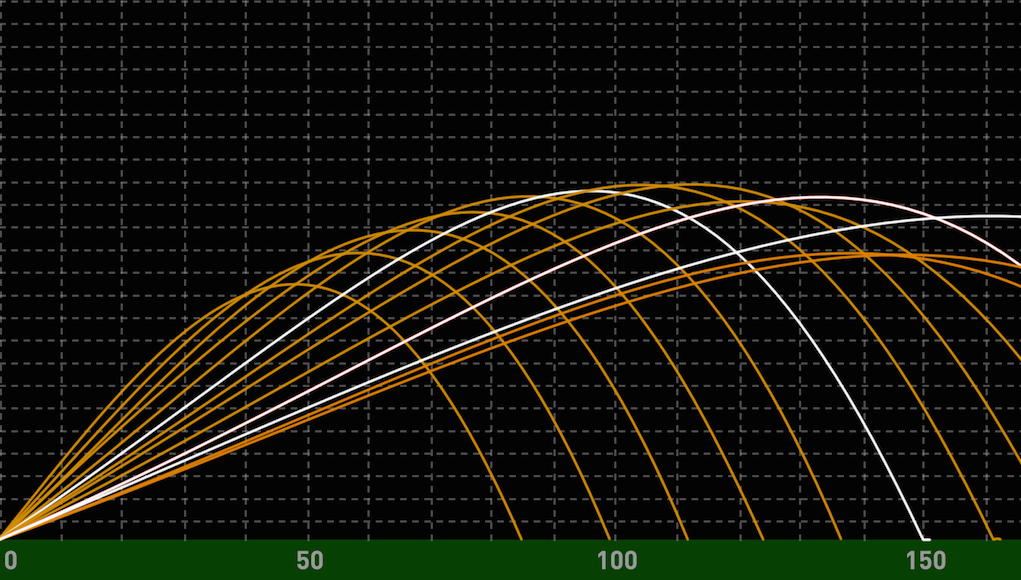
Recently, there’s been a lot of interest in a set of irons where each club is the same length. When a talented young player on the PGA Tour uses clubs this distinctive and different, it is going to generate some headlines. It has also sparked some interesting questions about matching clubs in a set in the golf equipment world. I have some experience in alternative ways to match a set of clubs. In fact, my first project at PING was to build an inertia-matched set of irons. I hope this article provides some useful information about matching an iron set.
The idea of a set of single-length irons sounds appealing: If every club has the same swing feel and can be swung on the same plane, it would seem easier to groove one swing for the majority of shots. However, current sets aren’t just different lengths — they’re also different weights, have different lie angles and generally optimized for length progression. They’re also optimized to achieve good distance gaps between clubs. So to begin this discussion, we need to pinpoint what makes up the feel of clubs.
There are many ways to describe the feeling of weight, especially in an object intended to be swung at high speed. For those wishing to explore this topic in detail, I recommend a book called “The Physics of Golf” by Theodore Jorgensen. It was one of the books I really valued during my first couple of years at PING. Jorgensen describes three ways to measure the feel of weight of a club. To understand, it helps to imagine the golf club as being made of a collection of little 1-gram weights, or masses, all stuck together, as shown in Figure 1. In the diagram, the black circles represent the grip, the grey circles the shaft and the blue circles the head (if it’s not abundantly clear, I’m not employed for my artistic abilities). Hopefully you get the general idea.
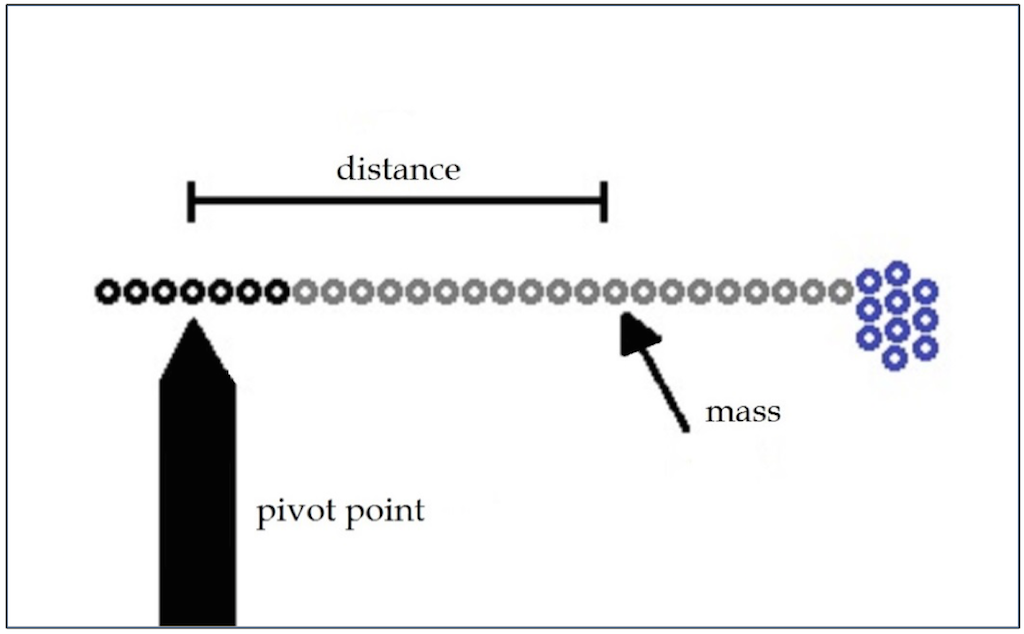
Figure 1: Diagram showing how a club can be viewed as a collection of 1-gram masses where the feel properties of the club are described by each mass and its distance from the pivot point.
Jorgensen’s 3 measures of feel are:
- Mass. You can feel this by picking up the club at the shaft and holding it. It is simply the sum of all the little 1-gram masses in the figure. Adding more mass, whether to the grip, shaft or head, will add to total club mass and make it feel heavier overall.
- The first moment (swing weight). You can feel this by holding the club at the grip and then pointing the head straight out in front of you. You can feel the “weight” of the club pushing down on your bottom hand, trying to rotate. This value is calculated by taking each little 1-gram mass and multiplying by the distance from the pivot point. It’s measured in mass-distance or inch-ounces on a standard swing weight scale. So if you add 1 gram to the head, you’ll feel the effect much more than if you added 1 gram to the shaft. Adding 1 gram to the butt of the grip can even make the club feel lighter by this measure. On an actual swing weight scale, the pivot point is 14 inches from the butt end of the club, for reasons no one is exactly sure about, other than it has worked for the last 20 to 30 years. If you were trying to match a set to a true “first moment,” you’d use a pivot point more like 5 inches from the end of the grip (between the hands).
- The second moment (club MOI). You can feel this better by waggling the club around. It is the moment of inertia (MOI) of the club around the golfer’s hands, and is often called angular mass in other engineering fields. This value is calculated by taking each little 1-gram mass and multiplying by the distance from the pivot point squared. It is really a measure of how spread out the mass is, and is often described as a resistance to twisting. This value is much more sensitive to even a small amount of mass added to the farthest location from the pivot point. You are used to hearing about the MOI of the club head around the center of the face — a measure of the “forgiveness” of the head. In this case, we’re talking about MOI of the whole club around the hands. Same physics principle, but different axis of rotation.
So why do we care about all this? Because there are two somewhat competing priorities: distance and accuracy. In theory, we would match clubs so that it’s easier for golfers to swing all of them accurately and consistently, but golfers also want more distance. Jorgensen starts his chapter on club matching this way: “I thought perfectly matched clubs should all swing the same and therefore… increase the precision of his game. I found, however, that most golfers were interested in clubs that would give them greater distance on the course…”
Our design intent is to find the optimal balance of distance and accuracy through a set of 14 clubs for any given golfer. One of the main levers to alter distance in particular is the length of the club. If a driver is 45 inches and the shortest wedge is 35 inches, that 10-inch differential plays a big role in achieving good distance gaps while maintaining stopping power with each club. For example, a 4-iron at 7-iron length makes it difficult to generate the same height or distance you’d produce with a standard 4-iron. Moreover, as we change length, it’s difficult to match all three feel measurements to get the clubs to truly feel the same. Table 1 shows some typical values of mass, swing weight and MOI for a few clubs in the G family. You can see that swing weight stays somewhat constant, but the mass increases from driver to PW, while the MOI decreases. This is a function of the design trade-offs made for each club in the set.

Table 1: Typical values of club mass, swing weight and MOI (around a pivot point 5 inches from the grip end) for selected G clubs in a set.
So, all that said, is there a benefit to having at least the majority of clubs in a set at the same length? It’s a tough question to answer, because the results can only really be built up over time using a single-length set on the course. The trade-off seems to be better consistency when switching from iron to iron in this set, but the driver and fairway woods will feel very different from the irons, and it might be a struggle to achieve good distance gaps in the set.
The fact that at least one player has had good results on the PGA Tour shows that a single-length set can be effective, but that does not mean that it would work for everyone. The most famous current exponent of the single-length iron set also plays extremely upright lie angles, is a dedicated disciple of the Golfing Machine instruction system, and has been working diligently at this for years. His single-length iron set is matched for mass, swing weight and MOI, and allows him to use the same swing plane for all of his irons. However, the metal woods are still longer, lighter and have higher MOI. It’s probably unrealistic to expect that just chopping down your shaft lengths will by itself make a big difference. You can see from Table 1 that to make a standard 5-iron at 7-iron length, we also need to add 20 grams to the mass of the club to make it match.
I suggest the best candidates for a single-length set of irons are higher swing-speed players (who don’t have trouble generating distance) who want to take the time to experiment with their game and determine objectively whether the pros outweigh the cons. I don’t recommend that anyone buy such a set on a whim. It takes a lot of effort to adapt a set designed for progressive lengths into a functional single-length set. If you are interested, at least go and talk to a master club-builder for advice.
In the future I could see this approach working for people just taking up the game. In that case, I foresee a set featuring just a few clubs, all the same length. Out of curiosity, I’m tinkering with some single-length irons and hybrids myself right now. As my scientific training taught me, I’ll remain skeptical until I can verify some measurable improvement in my results.


Club Junkie
Tour Edge Exotics mini driver review + TaylorMade Spider ZT Max first look – Club Junkie

On this episode of Club Junkie, I put the new Tour Edge Exotics Mini Driver to the test and break down the performance, forgiveness, distance, and where it fits compared to a traditional driver or strong fairway wood. If you have been curious about adding a mini driver to the bag, this one is worth a look.
I also dive into the new TaylorMade Spider ZT Max putter that was recently spotted and discuss the growing zero torque putter trend. Plus, there is a closer look at the new Project X Titan Yellow shaft showing up on the PGA Tour and what makes it different from other profiles currently out there.
Opinion & Analysis
AVL: We’re talking about practice! My best tips for taking your game to the course


With the beginning of June on the horizon and courses rounding into peak condition for the season, it’s time to hone the finer skills that often get rusty over the winter. More sunlight also means more time to get out on the course and work on your game.
Whether it’s the practice green or the driving range, there’s always something to improve—whether you’re enjoying the fresh air or preparing for a weekend game or tournament. You can work on drills or freestyle around the green, and friendly competition is a great way to sharpen your skills.
While there are endless ways to get better at golf, I’m going to focus on practicing around the green. Let’s take a look at a few things to keep in mind as we head into the summer months.
Drills
From the driving range to the practice green, it’s important to incorporate drills into your routine. Years ago, I spent a weekend working on my short game with James Sieckmann. He recommended doing drill work for 5–10 minutes, then returning to your main practice.
This way, you create a balance between structured drills and real-world scenarios, so you’re not confined to “perfect” situations. For example, hitting the same three-foot putt over and over is good for repetition, but after a while, it becomes less interactive for your brain.
My approach is to use a putting trainer with a narrow gate for the ball to pass through, or simply place tees just outside the width of the ball. I’ll hit a series of four putts through the gate for three sets. Then, from a similar distance, I’ll hit four putts without the training aid and repeat that sequence three times.
Next, I’ll hit a number of 15–25 foot putts in a random fashion, then circle back to repeat the short putt drills with and without the training aid.
This breaks up the rhythm of hitting short putts with the training aid. When you hit the same short putts over and over, it’s easy to get into a groove—which is great for the drill, but not reflective of actual course play. While finding a rhythm is fundamental for drills, I like to introduce variation with longer putts to keep things realistic.
Game Mode
Once you’ve established a foundation with drills, it’s time to simulate on-course scenarios. This is where a few practice games come in handy.
One that I’ve been enjoying lately involves putting 10- to 15-footers with two balls. If I make the putt, great! If I miss, I pull the missed ball back a putter length. Suddenly, that little tap-in becomes a nerve-wracking three-footer—at least at first. As you get better at this game, those three- and five-footers become much more comfortable and routine.
It may sound cliché, but each shot is just what it is—it’s how we react that makes the difference. I like this game because it blends the pressure of on-course putting with the consequence of leaving yourself a much longer putt than usual.
Another game I like is one I recently learned from Brad Faxon. Place three tees in a line at four different locations around the hole: one at 3 feet, one at 6 feet, and one at 8 feet. The 3- and 6-foot putts count as par, and the 8-footer is for birdie.
This game keeps you focused on scoring and helps you get into a competitive mindset. You can even think about this putting game while you’re on the course. I just started playing it, and last week I couldn’t get better than two under par.
Competition
Competition during practice is when drills and games come to life, and you start to see results. For me, nothing beats a putting contest with a friend or two. In the right setting, these contests can become talking points for the whole season.
Match play, a game of 21, or simply seeing who can make the most one-putts (with a small prize on the line) are all great ways to simulate real on-course pressure. Recently, I played in a putting contest where one competitor made back-to-back 30- and 50-foot putts. As they say, expect your opponent to make every putt—and he nearly did. That’s impressive, and it’s something you see on the course, too: you have to stay committed to your game plan, no matter what.
When it comes to practice, it’s important to blend feedback from recent rounds with the fundamentals you want to reinforce. Drills, games, and competition—from the driving range to the putting green—form the backbone of skills you’ll rely on during actual rounds.
Finding the right balance is something we’re all working on, one practice session at a time. With the beginning of June on the horizon and courses rounding into peak condition for the season, it’s time to hone the finer skills that often get rusty over the winter. More sunlight also means more time to get out on the course and work on your game. Whether it’s the practice green or the driving range, there’s always something to improve—whether you’re enjoying the fresh air or preparing for a weekend game or tournament. You can work on drills or freestyle around the green, and friendly competition is a great way to sharpen your skills. While there are endless ways to get better at golf, I’m going to focus on practicing around the green. Let’s take a look at a few things to keep in mind as we head into the summer months.
Drills
From the driving range to the practice green, it’s important to incorporate drills into your routine. Years ago, I spent a weekend working on my short game with James Sieckmann. He recommended doing drill work for 5–10 minutes, then returning to your main practice. This way, you create a balance between structured drills and real-world scenarios, so you’re not confined to “perfect” situations. For example, hitting the same three-foot putt over and over is good for repetition, but after a while, it becomes less interactive for your brain.
My approach is to use a putting trainer with a narrow gate for the ball to pass through, or simply place tees just outside the width of the ball. I’ll hit a series of four putts through the gate for three sets. Then, from a similar distance, I’ll hit four putts without the training aid and repeat that sequence three times. Next, I’ll hit a number of 15–25 foot putts in a random fashion, then circle back to repeat the short putt drills with and without the training aid.
This breaks up the rhythm of hitting short putts with the training aid. When you hit the same short putts over and over, it’s easy to get into a groove—which is great for the drill, but not reflective of actual course play. While finding a rhythm is fundamental for drills, I like to introduce variation with longer putts to keep things realistic.
Game Mode
Once you’ve established a foundation with drills, it’s time to simulate on-course scenarios. This is where a few practice games come in handy. One that I’ve been enjoying lately involves putting 10- to 15-footers with two balls. If I make the putt, great! If I miss, I pull the missed ball back a putter length.
Suddenly, that little tap-in becomes a nerve-wracking three-footer—at least at first. As you get better at this game, those three- and five-footers become much more comfortable and routine. It may sound cliché, but each shot is just what it is—it’s how we react that makes the difference. I like this game because it blends the pressure of on-course putting with the consequence of leaving yourself a much longer putt than usual.
Another game I like is one I recently learned from Brad Faxon. Place three tees in a line at four different locations around the hole: one at 3 feet, one at 6 feet, and one at 8 feet. The 3- and 6-foot putts count as par, and the 8-footer is for birdie.
This game keeps you focused on scoring and helps you get into a competitive mindset. You can even think about this putting game while you’re on the course. I just started playing it, and last week I couldn’t get better than two under par.
Competition
Competition during practice is when drills and games come to life, and you start to see results. For me, nothing beats a putting contest with a friend or two. In the right setting, these contests can become talking points for the whole season. Match play, a game of 21, or simply seeing who can make the most one-putts (with a small prize on the line) are all great ways to simulate real on-course pressure. Recently, I played in a putting contest where one competitor made back-to-back 30- and 50-foot putts. As they say, expect your opponent to make every putt—and he nearly did. That’s impressive, and it’s something you see on the course, too: you have to stay committed to your game plan, no matter what.
When it comes to practice, it’s important to blend feedback from recent rounds with the fundamentals you want to reinforce. Drills, games, and competition—from the driving range to the putting green—form the backbone of skills you’ll rely on during actual rounds. Finding the right balance is something we’re all working on, one practice session at a time.


For Korean golfers, we always look forward to the last of the kkot-saem-chu-I for the true start of a new golf season. The term refers to a cold snap, but literally translates as “winter being jealous of the flowers beginning to bloom, thus lashing out one final time before surrendering to spring”.
A rather poetic mouthful packed into a short expression.
Koreans can be like that. Understated, yet oddly expressive at the same time. And nowhere is this more true on the golf course and in our golf bags. In fact, I suspect many Korean golfers look forward to new apparel and accessory drops more than they do actual equipment launches each year.

At this point, Korean golf fashion may exist on its own timeline. (courtesy of @seonbi_golfer)
There is ample evidence to support that suspicion. Korea is the world’s third-largest golf market behind the United States and Japan, yet its appetite for golf apparel exceeds that of both countries combined. Recent estimates suggest that Korea accounts for nearly 40 percent of the global golf apparel market, placing it among the world’s most influential golf fashion markets and punching well above its size.
Simply, we care deeply about how new golf clubs look and feel, but enjoy looking good while swinging them even more.
Golfers in the West may laugh and say that golf is played on a course, not a fashion runway. Perhaps. But what’s the harm in trying to look and feel good, if the added self-confidence can help actual performance? It certainly seems to have worked for Jason Day, who may have unlocked a new stats category: dormant strokes gained. Coincidence?

During the COVID-era, estimates placed the market near $9 billion, an astonishing figure for a single country.
As a proud member of Gen X, I’ve witnessed the highs and lows of golf fashion firsthand. The pleated trousers and wing-tipped shoes of Jack Nicklaus, the stylish plus-fours and knickers of Payne Stewart, the baggy black trousers and fitted mock-necks of Tiger Woods, and the thigh-hugging athletic tailoring of Rory McIlroy. Golf fashion, like the golf swing itself, has rarely stood still.
But nowhere have those trends shifted, evolved, and been scrutinized quite as relentlessly as in Korea. Here, golf fashion moves faster than fairway gossip, and consumers dissect brands with a level of discernment that can be both impressive and mildly terrifying. New brands are studied, judged, embraced, or dismissed with startling efficiency.
The result is a consumer base with one of the sharpest eyes for quality and authenticity anywhere in the world. It is difficult to quantify, but easy to recognize. Clean lines without trying too hard. Luxury mixed with utility. Trend awareness balanced by restraint and purpose.
It’s golf fashion shaped by one of the world’s most style-literate cities, something I like to call Seoul Sensibilities, referring to the taste level forged by a uniquely competitive environment.
And increasingly, global brands have noticed.

Many golf brands in Korea have their own flagship shops dedicated to apparel only
Titleist understood this years ago, when its apparel business in Korea took on a life of its own under new ownership and local direction. What had once been a straightforward extension of an iconic equipment giant became something sharper and more premium. By going all in on the serious Tour-player look (I couldn’t even fit into their XL sizes), Titleist struck the right chord with Korean consumers and helped its fledgling apparel business break into the mainstream. Titleist became a household name even for non-golfers who wore its caps, shirts, and windbreakers in daily life. In many ways, it proved that even heritage golf brands could carry real fashion credibility when viewed through a Korean lens.
Several years later, PXG took a page out of Titleist’s playbook and followed suit. Korean consumers helped transform the brand from one known largely for irons and loud commercials into something broader and more stylish. PXG apparel’s growth in Korea was explosive, where it found an early audience and turned the category into something more than mere logo merchandise. It is still hard to walk anywhere in Seoul without seeing its palindrome logo.
Malbon’s meteoric rise in the United States was genuine, but its ascent into a global golf lifestyle brand owes much to Korea, where it was elevated by a market already fluent in modern golf style. Korea did not simply embrace Malbon. It pressure-tested the concept, refined its appeal, and helped push it into the global spotlight.
As such, new brands may arrive from abroad, but more often than not, their sharpest evolution happens here. If a brand can earn credibility in Seoul, it’s deemed to have passed one of the toughest style audits in the game.
That is why the next meaningful chapter may not come from outside, but from a Korean brand moving in the opposite direction, carrying those Seoul Sensibilities outward as K-pop once did.

Play young Stay dope.
From Seoul, With Intent
Khalhon is a label that feels less like a trend-chasing newcomer and more like the product of a market that has already seen everything. Golfers here have long been surrounded by luxury logos, technical fabrics, and tour uniforms disguised as lifestyle wear and vice-versa. In other words, novelty alone rarely lasts here, and the Koreans seems to understand that instinctively.
Its style language leans into clean silhouettes, relaxed but tailored proportions, muted palettes, and premium materials that speak quietly but confidently. There is a modern city aesthetic running through it all, with strong layering pieces, thoughtful textures, and subtle branding that suggests sophistication rather than demanding attention.

“Built for the course. Designed beyond it.”
Most importantly, the garments seem designed to blur the line between golfwear and everyday style. Shirts, trousers, knitwear, and outer layers move comfortably between a game of screen golf, a lunch reservation, an airport gate, or an afternoon coffee in Gangnam with friends.
It raises the question of whether this is golfwear that happens to look good off the course, or everyday clothing that performs beautifully on the fairways.
Personally, I have long appreciated Nike Golf for its clean, athletic modernization of golf attire. It also has the useful side effect of making me look like a more serious golfer than I probably am. But off the course, there are times when being instantly identified as the golf guy in a crowd of non-golfers can feel a touch self-conscious.

“Built for the course. Designed beyond it.”
That is part of what drew me to Khalhon, which seemed to blend golf and everyday wear naturally. While some of the outfits may be slightly beyond my personal confidence level, the brand also offers tasteful options for older guys like me who still want to express a little personality without regretting the decision later.
These are not simply flashy outfits worn on the course and then banished to the closet until the next tee time. They work surprisingly well off the course too, and I suspect many of the pieces will still look right a couple of years from now, which would certainly be kinder to my wallet than most golf fashion trends tend to be.
And perhaps that broader lifestyle positioning also helps explain why someone like Sean Wotherspoon would find Khalhon creatively interesting in the first place.

“Built for the course. Designed beyond it.”
“Korea is not only one of the most fashion-forward golf markets in the world, but one of the most fashion-forward markets globally. Korea is ahead, and I love to watch and try to catch up.” – Sean Wotherspoon, Creative Director at Khalhon
Seoul and Beyond
If Khalhon’s rise says something about where Korean golf fashion is today, its relationship with Sean Wotherspoon says even more about where it is heading.
For readers less familiar with Sean Wotherspoon, his arrival at Khalhon is not some routine celebrity endorsement or influencer collaboration. In design and streetwear circles, Wotherspoon is regarded as one of the more influential creative voices of his generation, particularly when it comes to blending nostalgia, storytelling, and contemporary culture into products that people can connect with.
He first gained widespread attention through his now-famous Nike sneaker collaborations, where his vintage-inspired designs and instinct for color helped turn him into one of the defining artists of the late-2010s sneaker era. His work gradually expanded beyond footwear into apparel, automotive collaborations, collectibles, and broader lifestyle design.
Modern golf style now extends well beyond the fairways, where performance and functionality are largely expected by default. And while plenty of brands already make technically competent golfwear, Khalhon seems more focused on designing clothes people would genuinely want to wear even after the round ends.
And when guys at Wotherspoon’s level show genuine interest in working with a Korean golf brand as its new Creative Director, fashion circles tend to sit up and pay attention. There’s already a huge buzz among the fashion-conscious here about upcoming collabs with iconic sports stars and brands.

“My creative direction for Khalhon is disruptive, colorful, nostalgic, and modern. My goal is to blend these avenues seamlessly within each collection.” – Sean Wotherspoon
In chatting with Sean, what stood out most to me was how genuinely energized he sounded about the project itself. Despite having already worked across and countless other creative spaces, he described golf as a completely fresh category for him, saying that Khalhon “will be an amazing vehicle for my design work.”
At the same time, his enthusiasm seemed tied just as much to Korea itself. He spoke openly about admiring Korea’s fashion culture while repeatedly insisting he is still a terrible golfer.
There was something oddly refreshing about that humility. Rather than sounding like a celebrity parachuting into golf simply because the category suddenly became fashionable, Sean sounded genuinely curious about what Korea might do with the category next.
And perhaps that is what makes Khalhon feel interesting right now. The brand feels less like a trend-chaser and more like the natural result of a market now confident enough to export its own point of view.
For years, global brands came to Korea to sharpen their image against one of the most discerning audiences anywhere. Now, a Korean label appears ready to send those Seoul Sensibilities outward instead.
Which brings us back to kkot-saem-chu-i.
That final cold snap before spring always arrives with a reminder that seasons are changing, whether we notice it immediately or not. Golf fashion feels a little like that right now as well, as the old boundaries between sport, streetwear, luxury, and everyday style continue to soften.
And somewhere in Seoul, a Korean golf label already seems prepared for whatever season comes next. I just hope they have everything in my size.

Aaron Rai’s winning WITB: 2026 PGA Championship

Russell Henley’s winning WITB: 2026 Charles Schwab Challenge

Photos from the 2026 CJ Cup Byron Nelson

CJ Cup Byron Nelson Tour Report: Koepka and Kim’s newest putters finally get hot

Charles Schwab Challenge Tour Report: MacIntyre, Åberg and Spaun all switch putters, TaylorMade launches new Spider

Details on J.J. Spaun’s surprise putter switch

GolfWRX Launch Report: 2026 Titleist GTS drivers

Photos from the 2026 Charles Schwab Challenge

PGA Championship Tour Report: Fitzpatrick, Koepka among big-name putter switches for Aronimink

Photos from the ShopRite LPGA


Maria Torres WITB 2026 (June)
Driver: Ping G440 LST (9 degrees) Shaft: Accra TourZ Green 5-M4 3-wood: Ping G440 Max (15 degrees) Shaft: Accra TourZ Green 6-M4 5-wood: Ping G440...


Eric Cole WITB 2026 (June)
Driver: PXG Lightning Tour Max (9 degrees) Shaft: Project X Titan Yellow 70 TX 3-wood: TaylorMade Qi4D (15 degrees) Shaft:...


Si Woo Kim WITB 2026 (May)
Driver: Callaway Quantum Triple Diamond (8.5 degrees) Shaft: Fujikura Ventus Black 6 X Mini driver: Callaway Paradym Ai Smoke Mini...


Wyndham Clark’s winning WITB: 2026 CJ Cup Byron Nelson
Driver: TaylorMade Qi4D (10.5 degrees) Shaft: Project X Titan Yellow 60 TX 3-wood: TaylorMade Qi4D Tour (15 degrees) Shaft: Project...


Gary Stacey
Dec 28, 2018 at 6:13 pm
I am a senior golfer and play one length irons (5I thru pw) which make distance and repeating distance easier. They were assembled by West Georgia Golf, using golf iron heads which vary in weight, but are all assembled to a 7 iron length. I had heavy grips installed. Each club has lead weights installed at the grip end of the shaft, to provide good feel. I like the added distance and long flights. The shafts are FST 90 gm steel.
I am assembling a practice pitching wedge with small head cast from soft 304 stainless which will also be the same length and same counterweight. This will help my accuracy.
This is a good solution for seniors with less distance.
Pingback: Is Every Golfer a Candidate for Single Length Irons? | FORE Golf Custom Clubs
Bruce Gerhold
May 27, 2016 at 11:40 am
I built and play a set of 2 length irons with matched MOI. Love them and will not change back to standard. Some info below.
First:, excellent explanation and illustration of CLUB MOI. I am a PhD Mechanical Engineer so I recognize that MOI matching provides a true match. Considering the three matching methods, I will add the comment that total weight does little ir anything. The “swingweight matching” has simply been a sales tool because it is easy to measure and illustrate. However, keep in mind the most important feature of a golf club is ball striking – that is a process of motion which is described by the subject Dynamics – the science of predicting motion of an object knowing the applied force and the object weight and weight distribution. This is not simply a “theory”, this is what landed people on the moon, guides space probes for billions of miles, as well as describes object motion on earth. We need not examine the equations: but note that the “swingweight” concept (mass times distance) does NOT appear in the equations of motion and therefore, has nothing to do with club motion or club matching. The club MOI is the key object parameter for circular motion – like the golf swing. If you want matched clubs, use club MOI – see Wishon Golf.
Second, a few comments about building a set of 2 length irons from standard available club heads, shafts and grips. Dr. Wood is correct: one must adjust the weight of commercial heads to build a 1 or 2 length set of clubs. I found that this is easily accomplished making a 2 length set instead of single length set because it decreases added weight. My set features short irons 9,8,7,6 all 36 inches long, all shafts trimmed like an 8 iron. I matched head weight by adding tungsten powder + shafting epoxy to the heads that need weight. I used Hireko Golf Prophet CB iron heads because of good feel and the recess on the back of the iron is a convenient place to add weight. You will add 7 grams to the 7 iron head and 14 grams to the 6 iron head. For the 9 iron, I left the weight alone and simply made the club a1/4 inch shorter ( calculation using calculus; verified by measuring club MOI). For the long irons 5 and lower numbers you do the same weighting procedure to increase the head weight to equal a 5 iron head and you make the clubs 37 inches long – again a calculus prediction that was verified by measuring the finished product. Long iron shafts are the same brand as short iron and are all cut like a 5 iron.
With 2 length irons, you have one swing but play the long irons about 1 ball ahead in your stance. Very simple, very repeatable, all distance gaps between clubs are 10 to 15 yards just like multiple length irons. This too is predicted by Dynamics, but is a subject for another discussion.
One or two length irons will be very helpful for beginners and intermediate skill players. If your are a 5 handicap, you already mastered the complexities of multiple lengths and standard construction so you may try and experiment, but you may not change.
Jim
Jul 17, 2016 at 2:30 am
Bruce, I’m having a hard time understanding your logic behind the 2-length set that you made. You said that you took your short irons (6-9) and weighted all the heads to equal that of the 9-iron head, but then used an 8-iron shaft (which would mean you soft-stepped them) and made them to 36″ which is a standard 9-iron length, but made the 9 iron -1/4″ shorter (even though it weighed the same as the other heads?). And then with your long irons you weighted all the heads to that of the 5-iron, then used a 5-iron shaft (so not soft-stepped like the short irons) and made them to 37″ which is 1″ shorter than a standard 5-iron. So the final set will result in shafts in the 3-5 irons which play true to flex and are 1″ shorter than standard length, while the 6-9 iron will play to a slightly softer flex and be standard length? Why the two different lengths and flexes? Isn’t the whole point of doing something like that to make everything feel as close to the same as possible?
Dave
May 25, 2016 at 10:31 pm
Yo Smizzle do you have a life . You are not the only one with an opinion
baudi
May 25, 2016 at 5:08 pm
If the prodigy of Bryson Dechambeau will set out positively, my guess is it will only be a matter of time that some big oems will offer a SL-set.
Not as radical as his irons and probably not offered as 1 set of SL-irons but more likely in 3 (or even 2) departments to cover long, mid and short distances.
leo vincent
May 25, 2016 at 3:48 pm
so much talk about single length clubs just wait until De Chambeau wins on tour and it will really explode.Many people have replaved the 3 and 4 irons with hybrids which go higher anyway negating some of the problem of low trajectory with those clubs also using a shaft with a lower kick pt in the lower lofted clubs while keeping all other things the same will further mitigate this factor.The wedges should be left out of the discussion.An easy way to try the single length method is get five 7 iron heads preferably forged because you are going to be doing some bending but only for loft by using 7 iron heads the weights and lies will already be constant.Assuming the heads are all 32 degrees of loft bend one head 8 degrees strong to make the 5 iron one 4 degrees strong to make the 6, one 4 degrees weak to be the 8 and one 8 degrees weak for the 9 install 5 7 iron length shafts and you have your set.The main drawback is by changing the lofts by bending the bounce of each club is changed but this a way to see if single length irons are a viable option.In a standard set of clubs the 5 iron is only 1 inch longer than the 7 and the 9 iron 1 inch shorter than the 7 so the change is not as drastic as many think.
Blake
May 25, 2016 at 12:14 pm
Everyone just needs to practice and quit trying to BUY a cure all. nothing replaces practice
Brent
May 25, 2016 at 11:57 am
I am 47 years old. I am 22 months into my golf career. Yes, I STARTED playing golf at age 45 in July 2014.
Starting out, I took 3 months of lessons using my first set of clubs (Adams a12os). My ‘game’ was a mixed bag as you can imagine being such a novice. The different set ups, ball positions, swing planes, lengths, and weight just confused the hell outta me and I had no consistency. So, I basically played with a 7 iron, a 3 wood, and a putter. Let’s just say I was double or triple bogy golfer. Sure, I would get a par now & then …. largely based on luck.
Because the different set ups, ball positions, lengths, etc confused me so much, I looked into single length play (specifically, David Lake’s One Iron Golf). I read every single word on his website and the downloadable PDF. It all made sense to me & was ‘logical’. So, when my Adams clubs were stolen, I quickly purchased a set of One Irons from David Lake.
The One Iron set I ordered had 5 iron through PW, a 5 wood, and a 7 wood. I have since added the 3 wood. I do not hit a driver off the tee …. I use the 3 wood. The irons are all the same length, head weight, lie angle, bounce, shaft flex, MOI, grips …. the ONLY variable is the loft (which is in progressive 4 degree increments). The woods are all the same length, head weight, lie angle, bounce, shaft flex, MOI, grips …. the ONLY variable is the loft (which is in progressive 4 degree increments). The head volume on the woods do vary, but the head weight is identical.
Thus, I have 2 setups/swings to groove …. 1) my iron swing, and 2) my wood swing. It has been a God send for me. I hit clean shots with FAR FAR more consistent & solid ball striking. My golf buddies who have 30 or 35 years of experience compared to my 2 years, are pretty damn impressed at where my game is (relative to theirs) in such a short time. Now, believe me, most on this forum would whip my ass out on the course …. I am not claiming to be a “good golfer”. What I can say is that my scores have dropped significantly (shot a 49, 50, 51, 48 my last 4 times out). Consistent bogey golf (45/90) is my goal …. I think I’ll get there by this time next year.
As other posters have stated, I think Single Length/Lie/Weight/Flex/MOI concept makes a lot of sense for NEW golfers, not golfers with years of experience who have crafted their game over time with standard clubs.
One last note: Do not think of “Single Length Irons” as a conventional set all cut to the same length. Obviously, that would not work. It isn’t “Single Length” only …. in reality it is “Single Length/Lie/Weight/Flex/MOI” clubs.
Pt
May 25, 2016 at 12:55 pm
That’s great! But allow me to let you in on a secret.
In golf, it doesn’t matter what the equipment is – as long as it helps you hit it fairly well in the direction you want, at the distances you can control.
But the crux of the game is…….. you have to know how to putt. You have to know how to get it in the hole on the green. Your reported score means nothing, unless you tell us how many putts you had while getting those scores. Then you really know how your score broke down. Of course, it helps to be able to get the ball closer to the hole with your shots from the fairway….. as well as getting into play off the tee.
And your SW and LW (if you have it), are a different length than the irons, right?
cgasucks
May 25, 2016 at 12:56 pm
You shouldn’t have 2 different swings (one for irons and one for woods). The swing is the same for all clubs. Ball position and stance differs as the club gets longer.
Regis
May 25, 2016 at 5:27 pm
There are more than a few legends of the game (Nicklaus to some extent) that believe that there is one swing for normal shots and that all shots should be played from the same position vis a vis your left heel with the only variable being the width of your stance. Yet others believe moving the ball position progressively back as each club gets shorter. I personally believe that there are different swings for driver and fairways than for irons and you can hear all sorts of absolutes as far as how to play a fairway wood off the deck. When you get to the top ball strikers, they may focus on which groove on the clubface they want to be the point of contact. I wouldn’t over think it.
Howard Garson
May 25, 2016 at 11:13 am
The end of the article says it all. If you are interested in trying single length irons, see a professional club fitter. Getting the right length and weight shaft is critical, as is getting the proper distance gapping. That is why a major OEM will never succeed in making a set for retail. There are too many variables for the correct fit. Tom Wishon has dealt with the height issue of the 5 iron by also making a 5 hybrid for those that have a problem hitting the same length 5 iron high enough. Single length is not for everyone, just like there is no length 6 iron that is for everyone, or one shaft flex or one shaft weight. Whether you want to try single length irons or traditional variable length irons, seeing a professional clubfitter is the only way to play to the best of your ability.
Rachel
May 25, 2016 at 11:08 am
I’m absolutely shocked that a Ping employee would find negatives about single length irons (which they don’t produce).
*eye roll*
M
May 25, 2016 at 12:48 pm
If a customer wanted to custom order single length irons through PING they could. The CTP weights or the addition of tungsten through the WRX dept would allow for the added weight necessary for the single length.
Jim
Jul 17, 2016 at 2:32 am
Yeah, but you’d have to make all the heads the same weight as the PW because you can’t make that head any lighter than it is. And I don’t think a SL set where they’re all made to PW length would work very well.
Scott
May 25, 2016 at 9:54 am
What I do not agree with in the article is that high swing speeds are required to provided enough distance separation on single length clubs. That is true on traditional length clubs also. My wife hits her 5, 6 and 7 irons all about the same length, the same with the 8 and 9, and the majority of her wedges.
I have noticed that the majority of golfers (good and bad players) have much better posture on their long irons vs. their wedges. They are way too hunched over on their short clubs, which results in every poor shot imaginable. Since most bad golfers don’t hit enough greens with any club, giving them one posture to work with, I believe, would help with their consistency dramatically.
ButchT
May 25, 2016 at 9:38 am
Thank you for sharing your expertise and opinions!
Scudder Graybeal
May 25, 2016 at 9:37 am
Remember Tommy Armour EQL clubs? Big mistake.
300 Yard Pro
Jun 5, 2016 at 7:23 pm
Big mistake? The only mistake is they were ahead of their time and did not catch on. Remember persimmon woods were still being used then. Metal drivers had not even been heard of yet.
Scudder Graybeal
May 25, 2016 at 9:35 am
Most of your readers are too young to remember the Tommy Armour EQL model of irons way back when. Every club was the length of a six iron. That set bombed big time and was off the market quickly.
Now some young guy comes along (DeChambeau) with a home made set like that and all of a sudden the industry is talking about it again. Then there were titanium irons. They bombed. Remember Featherlite golf clubs, Mac Golf, etc. They were all the next big thing.
Shallowface
May 25, 2016 at 4:31 pm
I have no idea how well they sold,but they were available from 1989 through 1994. I have all of those Armour catalogs.
Tour Pro
Jun 19, 2016 at 5:16 am
EQLs were 5 iron length, no custom fitting or shaft options, bad distance gaps. Thats why they were a failure like your posting.
Jimmy D
May 25, 2016 at 8:28 am
Misleading title and weak article… The Physics of Golf actually supports the concept of single length irons, and Tom Wishon (Sterling Irons) and David Lake (1-Iron Golf) +others already sell irons designed and manufactured as single length; it would be absurd and exceptionally difficult for an individual to modify an existing set (as Edel did for Bryson). All of the SL clubs have identical specifications except for loft, which means they all have the same balance, total weight, swingweight, MOI, feel, etc. Since all of the clubs have identical shafts and lie angles, the setup, alignment, and swing plane can be the same for all of the irons (which by design should be the same as your favorite club). Since loft is the primary determinant of distance, those with slower swing speeds can still achieve consistent distance gaps by using 5 degree changes in loft (vs the 3/4 that traditional manufacturers use). BTW, Tom Wishon uses higher COR faces in the lower lofts to help with distance gap concerns.
Ryan Christensen
May 25, 2016 at 2:38 am
I will build everyone in favor of equal length sets a set of their choosing, so long as we go play for money when the clubs are complete. SL clubs are dumb for everyone outside of a small percentage of a small percentage of golfers. They will kill what little chance you have at enjoying the game and make everyone around you miserable due to your constant ramblings about swing plane. Physics doesn’t change due to what you believe would happen if Big OEM would just produce what you obviously know to be best. Thank you Dr. Wood for at least trying to slow the rampant effects of the Internet a bit. It was a solid effort, perhaps a bit more about the effect changing length has on max height, and how due to maths, the result is a change in distance. Might of helped. I doubt it, but who knows.
Smith
May 25, 2016 at 7:27 am
You completely forget that a vast majority of golfers and the vast majority of consumers are casual golfers. This is what is wrong with Golf. Everyone only thinks about the few percentage that actually play in sanctioned events, tournaments, and so forth and completely ignore the majority of golfers that pay the bills.
A vast majority of golfers who just show up Saturday with a set of clubs that has never been, and will never will be fitted are the folks who would truly enjoy the game from a single length set of clubs. The problem is NO ONE wants to tap into that potential because they are so ingrained on getting fitted. Single Length irons are the best for learning the game, because it is ONE swing. ONE swing between all your irons. The one problem a vast majority of golfers have issue with is the swing, so give them one swing, and let them enjoy the game.
Ryan Christensen
May 25, 2016 at 1:56 pm
There is only one swing! You swing every club, driver to putter the same. This is the simple fact that weekend golfers cannot seem to grasp. SL clubs would be a disaster for a causal golfer who already struggles to find a consitant ball flight. The picture at the top of the article is a perfect example, that’s an nFlight readout that shows trajectories throughout the set. Length progression is what allows all of the max heights to be in the same neighborhood. A SL set would be really high in the short irons and excessivly low in the long. For a casual golfer, this means that distance control is out the window and most of their clubs go the same yardage. Not to mention, they would need a more in depth fitting for SL irons! The point of them is to find the iron you hit best and build the rest of the set around that. This would also require actual club builders who can control a lot of variables and manufacturing that can control head weights, shaft weights and grip weights to the gram. Which they cannot. Some come close but then the price would be so high, no one could afford them. What your forgetting is that there are people who have dedicated their lives to this game and have already thought of these things.
Smith
May 25, 2016 at 4:45 pm
incorrect. Every separate lie angle, and every separate ball position represents a different swing plane. Single length clubs means one swing plane across all irons. There is absolutely no evidence to support your claim.
Tell me, is it easier to swing the 7 iron over and over or swing each individual club in a different setup with a different ball position for each club?
And yet the correct build for them is to find the one that they do the best with and base everything else on that one.
Ryan Christensen
May 25, 2016 at 11:22 pm
Whatever dude. Put them in play then, best of luck to you.
300 Yard Pro
Jun 5, 2016 at 7:32 pm
You clearly have never played a set.
Blake
May 25, 2016 at 5:38 pm
You think casual golfers are paying the bills for courses??? lol thats cute
tlmck
May 25, 2016 at 12:41 am
Because if all you people switch to single length irons, we cannot fill your bag with all those useless 3 degree loft difference clubs and line our pockets. Seriously, most high handicappers and occasional golfers could do very well with single length irons and single length woods. Say a 5 degree loft gap between clubs. Driver,4w,7w and 5,7,9,SW, and putter. And instead of making clubs lighter and longer, make them shorter, heavier, and more flexible. I am not a golf club maker although I have built several component sets for myself and others. I am also a retired manufacturing engineer so I know about weight and motion, etc… Using my keen eye for detail, I also have observed what other golfers have done in my 35 years of playing. Telling some to use the 3 wood that they hit 220 off the tee instead of the driver they hit 190 is sometimes a futile task.
Jake from State Farm
May 25, 2016 at 7:40 am
Part I agree with, and part I disagree with. One of the problems with golf in the older days was the heavier club issue. Clubs had to get lighter and as a result they got easier to swing, but you can go too light. So far a lot of research backs shaft weights around 100-110g as being ideal for 90%+ of golfers out there. So if I was to build a set to sell I would keep the weight in that range for shafts.
I do agree with the lofts, and that is probably one reason OEMs use to say why single length clubs won’t work. With single length clubs you have to have at least 4* gaps which is what the gaps used to be 30 years ago. The loft jacking causes the gaps to shrink in the long irons. OEMs bank on the distance through loft jacking so to reverse course and go to 4* gaps at start at a 24 or 25* 4 iron which is the lowest loft that is comfortable to hit, would cause several clubs in the bag to not hit as far.
However; It can still be done. You market a single length iron set around easy of play, not distance, and people will bite. OEMs seem to forget the motto “you build it, they will come”. There are currently 3 quality brands that build Single Length irons. One, does it like a mass marketing should be, a standard length of a 7 iron with standard lie of a 7 iron, and upon request you can have that adjusted. The other two push more for a quality fitting to get a set, which is a turnoff to the masses.
The ideal Single length setup would be a standard 7 iron length 37″ with the standard lie of a 7 iron 61.5*, use shafts around 110g and keep the swing weight around D2. Build the set with 4* loft gaps starting with 24* with the 4 iron. You’ll get lofts of 24, 28, 32, 36, 40, and 44. Now you cut the need for a GW by allowing a PW to be 48* and use a 4 or 5 degree gap for the remaining wedges. No yardage gaps, length and lie fit the standard profile of clubs today, which means the 90% of golfers who never get fitted can still play them without any issues.
tlmck
May 30, 2016 at 11:41 pm
Along with the heavier weight, I would also advocate something I call the “gravity swing”. Basically you take the club back at a slow to moderate pace with a slight pause at the top, then you let the weight of the club take over the downswing with the hands and arms just along for the ride. In short, you let the weight of the club do all the work.
I adopted this method umpteen years ago and have never looked back. Of course, it is sort of my natural motion so it may not work for all. Whenever I try to swing with lighter weight shafts, I simply pull every thing left. For reference, I use a 70 gram driver shaft, 78 in the 3 wood, 85 gram in the hybrid, and 128 grams in all the irons. All are also tipped halfway between R and S flex to match my speed and spin requirements. I also swing these clubs a few miles faster than their lighter weight counterparts.
Bogey Bill
May 25, 2016 at 11:03 am
Bravo, timck! You’re exactly right. I had to take a limited set on vacation several years ago–something about the car being full of Her stuff. Played better than usual. With the concurrence of my doctor (who wrote me orders to play golf!), I’ve been playing with D,H,5,7,9,PW, SW, P ever since, carrying them in a Wellzher Sunday bag (his orders included walking and carrying). An 8-degree gap is as close as 95% of all golfers really need and the hybrid takes care of controlled tee balls, long shots from the rough, and many chips. I looked at single length, but they’d be really tough to build–I build component clubs, too.
Fitting clubs starts with matching a shaft to your swing and then determining lie and length (for each club, not just the 6I). Grip size is also important; more people need a bigger grip than they realize.
Johny Thunder
May 24, 2016 at 11:26 pm
Bryson’s been playing this way for a long time – and there’s certainly no reason a newcomer to the game might not want to try this approach. With a properly designed set – weights, flex, lofts, etc – there’s no reason it couldn’t work reasonably well. For those who already play, yes, it would be an adjustment of significance, and probably wouldn’t work for the majority who try it. (Unless they’re completely determined to stick with it).
The title is silly; has anyone, anywhere, ever suggested “everyone” should play single length? I’ve not seen that. I’ve seen a few suggest that no one should – which is equally ridiculous. It’s another option in an extremely vast array of equipment and approach options.
Phil Mickelson has 42 tour wins; should every right-handed player play lefty?
Joe
May 24, 2016 at 9:57 pm
I don’t understand why many think that single length clubs will be hard to adjust to. You are swinging the same length, same MOI, same weight iron for every shot……..what is to adjust to?
Just about everyone can consistently hit their 7 or 8 iron. Now, with SL it is the same every time. No, reason you can’t hit draws or fades, or get consistent distances.
LL Cool Single Length
May 24, 2016 at 7:36 pm
If only them ladies would love all your short single length haha get it, lmaoooooooooooooooo
Joshuaplaysgolf
May 24, 2016 at 6:54 pm
All the absolutes and disagreements over this is very confusing to me. It’s an interesting philosophy that if you are interested in, you should try it. It’s great that they are putting out detailed information on the pros and cons, as it isn’t an easy switch to make and should be done thoughtfully. But if you think its absurd and is a bunch of hype, don’t try it. and leave it at that. How are you going to hate on someone trying to find something that works for them? Isn’t that what all of us are doing? I feel like a lot of people take a very defensive position on this that is more a fear of the different than anything else.
Golf is about what works for YOU and what feels right for YOU, not trying to be squeezed into someone else’s box. If your biggest argument (and again, why are we arguing??) is Bryson, let the kid be pro for more than 3 hours before making your final conclusion on his ceiling.
Shallowface
May 25, 2016 at 4:44 pm
The point about Bryson is that if this method is truly revolutionary, we should be seeing revolutionary results NOW. A win here or there (and even that has yet to happen) isn’t enough to suggest we’ve all been going about it the wrong way all this time. AND believe me when I tell you no one is more interested in unconventional approaches than I am, because so very few of us ever have any real success with the conventional.
Shallowface
May 24, 2016 at 6:48 pm
To date, Bryson has had no wins on tour, some decent finishes, and some missed cuts. Same as any number of other players. Wouldn’t surprise me a bit if a year from now he is using conventional equipment.
300 Yard Pro
Jun 5, 2016 at 7:41 pm
Bryson won the NCAA Champ and US Amateur in the same year. The only two other people in golf history to do that were two losers named Jack and Tiger. I bet those two losers are garbage men now.
What do you mean he has no wins?
So Bryson has some missed cuts. The cuts that he has made are a T4 and T7. That’s still better than what most rookies on the PGA Tour do.
joejoe
Sep 18, 2016 at 3:51 pm
and he just won the web.com finals to get his tour card
George
May 24, 2016 at 5:13 pm
I guess it is easier for OEMs to market against the single length than to actually make one. This is just a bunch of mumbo jumbo to market against the norm. They probably have the next two years worth of irons already designed just dont want to jump on this train. Wait 2 years and you will see about every OEM with a single length set. Also it is easier for them to sell off the rack than custom build for every golfer. Not Golfsmith custom a true custom fit. So I see why they are all dogging on the single length set. Dont want non off the rack items for easy sales. Nothing worng with that just harder for them to be true custom
Brad
May 24, 2016 at 5:00 pm
Mr. Wishon has built Sterling irons. Strange of you, Mr Paul Wood, to have written and published this article on venerated golfwrx, yet not mention the only set available today that takes all the issues into account that you seem to feel are insurmountable. A single-length set built by one of the premium clubmakers in the US. A man responsable for so many firsts in the industry. Please, forgive me if you are yet to be aquainted with Mr. Tom Wishon. please – do so. He is extremely kind and has many articles published on ask.com.
I should note that a google search on “single length irons” reveals the Sterling irons as the third hit in my browser. YMMV. Web browsers can be fickle. http://wishongolf.com/designs/sets/sterling-irons-single-length-set/
Brad
May 24, 2016 at 5:01 pm
oops. web browsers are indeed fickle. seems I double posted. many apologies….
Paul Wood
May 24, 2016 at 7:52 pm
Brad, I am aware of Tom Wishon and I have a lot of respect for all that he has done in the industry. Not mentioning his single length set was not meant as any kind of slight. It’s hard to figure out how to say as much as possible in a short article. This topic could fill a whole book chapter easily. I’ve generally tried to avoid talking about anyone else’s clubs in a positive or negative light. By sharing the link here in the comments you’re helping golfers who are interested check it out, so that’s a good thing.
Stretch
May 26, 2016 at 8:57 pm
I have a lot of experience with using non standard length irons and woods. The key to single length irons is to adapt the lofts to the speed of the player. Some would use the old 3 and 4 degree gaps, some 5 and 6 degree lofts, perhaps others more large gaps. If Ping can crack the code they would rule the market place.
Brad
May 24, 2016 at 4:55 pm
Mr. Wishon has built Sterling irons. Strange of you, Mr Paul Wood, to have written and published this article on venerated golfwrx, yet not mention the only set available today that takes all the issues into account that you seem to feel are insurmountable. A single-length set built by one of the premium clubmakers in the US. A man responsable for so many firsts in the industry. Please, forgive me if you are yet to be aquainted with Mr. Tom Wishon. please – do so. He is extremely kind and has many articles published on ask.com.
I should note that a google search on “single length irons” reveals the sterling irons as the third hit in my browser. YMMV. Too far down to look I guess. http://wishongolf.com/designs/sets/sterling-irons-single-length-set/
John boy
May 24, 2016 at 3:35 pm
First and foremost, you CANNOT use a single length set from a Driver to a wedge, LOL, so you are way off on that. This article should have stuck with irons only and nothing else. There are no issues gap wise with a proper single length set of irons. Tons of research to back this up, so you are way off point.
Second, you only recommend this for high swing players? Really? Who is paying you to write this. That is total garbage. The whole Single Length debate is always been centered around how much more beneficial it is to someone first starting out, because they only have to learn ONE swing with their irons. So suggesting that the average guy stays away is completely against all research on Single Length irons.
Clearly this article is heavily biased and manipulated to make single length look horrible. 1. because you are trying in driver, wood, hybrid, and wedges into the single length. 2. you don’t back up or support any of your 3 measurements for a single length set. All you do is show the differences in a normal set. In a single length iron set all the SW are the same, the MOI is the same, the Lie is the same. Everything is exactly the same, so telling people you have to match MOIs and SWs is all BS. True single length irons are literally the same from top to bottom and the only difference is loft. There is no balancing act. One you determine the best of your 3 parts, your set, that is the setup for every iron. No variation what so ever.
I think you tried converting a traditional set into a single length set and it didn’t work out. That is the only way the numbers don’t match up, and is the WRONG way to build a single length iron set.
Whackenputter
May 25, 2016 at 10:51 am
John Boy,
I wish you would have written the article instead of the author. You obviously know the more about the subject and how to present an unbiased evaluation than him.
The MOST IMPORTANT point, in my opinion, in the whole SL discussion, and playing golf in general, is MUSCLE MEMORY. With single length IRONS (which is the only question to ask) one trains ones muscles for one single movement, NOT NINE (or seven, or whatever).
The conventional golf swing is so complicated that major tour professionals cannot even maintain it from week to week. This is demonstrated by the players bouncing all over the ranking from one week to the next.
I am convinced that by learning ONE SWING for all (or most of) the irons, a golfer will be more consistent.
Regarding hitting for distance, that is not as important as accuracy, IMO. It seems to me that for everyone not in the top 30 golfers in the world, putting the ball right where you want it, rather than somewhere 300 yards away, will be more helpful in lowering their scores.
It also seems to me that I should not rely solely on face angle to determine my distance. I have noticed that I can hit harder or softer to control the distance. If I am only using one memorized swing, varying the speed of the swing is much simpler than remembering how my muscles felt the last ten times I used an eight iron as opposed to a seven or nine iron.
I am convinced that matched single length irons allow the body to learn one swing well and apply that every time one uses irons, instead of trying to guess what you think you might remember about how you last swung a particular iron.
Brian
May 25, 2016 at 2:08 pm
I’m not pro/anti SL irons. I’m sure they would be great for some and awful for others. The part I don’t get, however, is how Pro- SL iron lovers claim that you only have to learn “one iron swing” instead of multiple iron swings? Unless, there is some golf course that I am unaware of that is completely flat, then the angle is going to change from swing to swing regardless of the SL club due to the lie. Ball above your feet or below your feet instantly changes the theory of “only one set up”.
John Boy
May 26, 2016 at 9:53 am
The “one swing” is a simple concept. Regardless of the lie the ball rests on, you still position the ball in the same place in your stance.
For example, lets look at how you would address the ball from a 4-9 traditional set. The 4 iron you stand more upright because of the lie and length. You place the ball more forward in your stance. As you go down to the 5, 6, 7, 8, and 9 you start to do 2 things. 1st, you stand closer to the ball and more flat. 2nd, you adjust the ball position further back in your stance. This means from a flat lie perspective you have 6 different combinations to swing the club correctly on plane to make an effective strike. Now when you factor that into a downhill lie it doubles to 12 different combinations because you also have to adjust for the downhill lie for each club. And for each additional possible setup you add another 6 different setup potions for the ball. That means using the traditional flat, uphill, downhill, higher left foot, and higher right foot, you have a total of 30 different swing combinations you have to learn and use between all your irons.
Now with Single length irons it is different. There is only 1 combination for all the irons. Example, where you place the ball with the 4 iron and how you address the ball is the same for the 5, 6, 7, 8, and 9 iron. Now when you go to a downhill lie you double that, meaning 2 combinations. Obviously using the same math above for a typical lie settings you’ll run across: Flat, downhill, uphill, higher left foot, higher right foot, you will have a total of 1 swing combination for each lie. Meaning a total of 5 swing combinations.
So now it is simple math. Is it easier to learn and use 30 different swing combinations using a traditional setup, or is it easier to learn and use 5 swing combinations with single length clubs?
Brian
May 28, 2016 at 11:03 am
This was my point. I don’t I agree with the 5 swing combinations, but I definitely agree that it isn’t “one swing” like the SL concept advocates want to believe. Lie and the shot required dictates set up.
I tend to believe, a ball 1″, 2″ 3″, and 4″ below your feet, would require 4 different swings, since the angle has changed four times with a club of the same length.
Like I stated, non pro or against, whatever works for the golfer. I’m just stated that there isn’t one set up and one swing in the Sl iron concept.
Brian
May 28, 2016 at 11:05 am
* stating
Whackenputter
May 25, 2016 at 11:05 am
Please ignore my first paragraph above. I over reacted.
Dan Drake
May 24, 2016 at 2:43 pm
I’m ready to get started on this myself. I have a set of TMAG MC’s from 2011 that had the weight port in the back. I want to used these as the heads for a single (or perhaps double, long +med & short+wedges) length set. Coincidentally, these are the same irons that Dechambeau used to make his first real set of single length clubs, so I know it can be done. Thank you Mr. Wood. Your reputation precedes you and I look forward to your contributions to this great site!
Petet
May 25, 2016 at 1:08 pm
Scudder,
It is amazing to me that the industry is a-buzz since DeChambeau appeared on the scene with his custom made SL clubs. You would think he invented the things (he didn’t btw–the concept has been around for longer than he has been on this earth). If you are interested, there is a huge body of knowledge that is out on the web regarding SL clubs. However, your expertise only seems to go so far as trotting out your passing knowledge of a few failed golf club experiments. Do you know why they failed? Or is that all you need to know, that they failed?
Once you know why things fail, you can adjust for those issues. Where would we be without Edison’s years of abject failures with the light bulb? Yet light bulbs are ubiquitous now, aren’t they? Bet you even have one or two in your home.
Current SL iron sets have been pretty well designed to allow for many of these issues (Wishon’s Sterlings, and Value Golf’s Pinkhawks). Each one takes a slightly different approach, but they both have good working products. I am a clubmaker with over 20 years of experience and have been toying with this idea for quite awhile. However, I didn’t attempt to try and build a set because components didn’t exist that would allow one to create a set that would to do this. Customizing a current set required too much welding/grinding to make it worthwhile. Now there are off the shelf sets and also component sets available.
I personally play a set of Pinhawks, 5-PW. I have an additional 54 degree gap/sand, and a 58 sand/lob. The 5-PW and 54 are all same length/swingweight, MOI. The 58 is a little shorter at an inch over standard, which is what I have played my standard clubs at all these years. My driver and three wood are 43.5 and 42.5. My hybrids are all same length at 40 inches. I have very reasonable 10-15 yard gaps between every club. I have no problem playing competitively and carry a 9 handicap. You simply make the same swing with each iron and the 5 degree loft increments take care of the distance. I will note that as someone else stated above, you still have to have a repeatable swing to play good golf, regardless of whether or not you use SL or standard golf clubs. SL simply takes a few more of the variables out of your game in the are of iron shots.
BTW–to those out there that still talk about muscle memory: the whole issue of muscle memory is bogus. Read an article or two on brain science. Muscles don’t store memory. Period. Brains create neuronal patterns that govern muscle movement. Words have real meaning, and punctuation matters! Educate yourself. Remember the old saying: it is better to be thought a fool than to open your mouth (or write an editorial) and remove all doubt.
Muscle memory
May 24, 2016 at 2:13 pm
Hard to fight off decade(s) of muscle memory.. Bryson has had this swing for 11+ years, right
300 Yard Pro
Jun 5, 2016 at 7:54 pm
Bryson did not start the single length irons and one plane swing till 2011. You math very bad.
Philip
May 24, 2016 at 1:44 pm
Personally I like clubs that change length to loft – gives one a lot more creative options when in tricky situations – for example, taking a shorter club and hooding the club face and playing it back in your stance; or taking a longer club and choking up on it and making a smooth swing for a lower flight; or even taking a longer club when the ball is below your feet and taking less of a swing …
Jay
May 24, 2016 at 6:43 pm
OMG!!…and you can hit draws and fades and flop shots and running pitches…thanks for the tutorial on all the shots you can hit on a golf course. As if length is somehow inhibiting you from choking down or flighting the ball. What in the world are you even talking about??? It’s like someone mentioned how nice the weather is and you told us how much more you like polyester jackets rather than denim. It’s completely irrelevant.
Personally I like potatoes because it gives you more options. You can mash them, and fry them, and bake them……….
Shanks
May 24, 2016 at 8:16 pm
hahaha
Charlie
May 24, 2016 at 1:21 pm
Never a positive response from this guy…
Brian
May 24, 2016 at 1:37 pm
Or a clever one…
Shanks
May 24, 2016 at 1:14 pm
I think single length irons are the best way to go for golf, the distance claims made by club companies today are getting outrageous. I hit a Wishon single length 7 iron against my ’16 Apex Pros and a Hogan Radial 7 iron. The distances were within a yard of each other. But to have the same swing, same set up every time you go to hit a ball. That’s the way to go, especially for amateur golfers. Less to worry about and an easier way into the game for many. I bet many of the detractors on here have never hit a SLI (single length iron) and would venture that once fitted for a set they would have better ball striking and flight over the set that they currently use.
Paul thanks for the technical article, unfortunately too many people refuse to see change as a good thing and I don’t see this SLI becoming mainstream although it would probably be the best thing out there for growing the game of golf.
Hawk
May 24, 2016 at 3:44 pm
There is no reason why this can’t be mainstream. It would be very easy to base a SL set off the current industry standard 7 iron length and the industry standard 7 iron lie. Based on that, you can easily create a mass market single length set that a vast majority of golfers could fit into.
Considering the argument of “getting fit” yet so many still play standard length anyways, the argument for needing to be fit, is mute.
I think OEMs are afraid to produce a set because it would change the golf equipment landscape if it actually caught on and took off.
Shanks
May 24, 2016 at 4:41 pm
I couldn’t agree more. The industry has resorted to jacking lofts to “promise” more yardage out of every new set. While single length wouldn’t cure this it would help change the way a lot of people think about approaching the game from an equipment perspective.
Matty
May 24, 2016 at 1:14 pm
IMO, it’s probably best to have 37 or 37.25 inches on the 4-9 irons and about 35.25 or 35.5 inches on the wedges instead of the Dechambeau method of having 37.5 inches on all irons and wedges.
Chris
May 24, 2016 at 12:36 pm
Great article. I have been studying and tinkering with this as well. I like the fact that you are considering a more practical swing weight measurement, from a point between the hands, rather than 14″ fulcrum as all SW scales measure. Good stuff!
Mark
May 24, 2016 at 12:04 pm
1 rookie and the whole world is wrong. Ask Tommy Armour how the EQL went….time to kill this techno drivel for good.
Brian
May 24, 2016 at 1:42 pm
The EQL’s were different head weights and MOI. That would be like comparing the Motorola Razr to the Iphone6, the tech is completely different. Not saying SL irons would/would not work, just saying that the modern ones should never be associated with a past failed attempt that does not contain the same technical specs.
Richard Seepaul
May 24, 2016 at 11:27 am
I pray that Bryson DeChambeau sticks to his guns re:
1) Single Length Iron set.
2) Same Club MOI in iron set. (Wood set and Wedge Set)
Hopefully this will not be perverted by “club sponsorship”
In addition I hope he retains his tour card and wins on the PGA tour.
He would then become very hard to ignore.
:):):)
Richard Seepaul
May 24, 2016 at 10:58 am
I agree that having single length irons that all require the same physical effort to swing will very likely result in improved consistency in tempo, ball striking and distance for a golfer.
I would love to have a set like this.
The article does acknowledge the difference between “ClubHead MOI” and Club MOI which is a good thing because the MOI term is frequently used in the “press” w/o indication of which MOI is being referenced.
I would be really interested in knowing how one goes about making a set of clubs that are BOTH “Club MOI” and “Club Swing weight” matched while being same length; assuming that this really means the set of irons are all the same length, swing weight AND all have the same Club MOI in kg per cm squared w/o differing shaft bend profiles between clubs in the set. That would be quite a feat.
I would guess that every component used to build the club: Grip, shaft and head would need to be easily controlled for weight all w/o impacting shaft flex / bend profile between clubs.
PXG Iron heads look like they have enough small weight inserts that may permit post head manufacture influence on the iron “head weight” and “iron head MOI”.
This would NEVER fit the off the shelf club retail, sell to the sheeple, model and would thus need to be rendered insignificant or blasphemy via “expert testimony to the contrary” or blogology.
Paul Wood
May 24, 2016 at 2:10 pm
Richard, if we were to build a set from the ground up, then it is somewhat easy to match Club MOI, Club Swing Weight and Club Mass with a single length iron set. We would design each head at the same mass. We could actually use the same shaft and grip on each club. What is a lot more challenging is trying to take an existing set and modify them to be single length. The question of whether people would swing each club in such a set the same is an interesting one to me.
Richard Seepaul
May 25, 2016 at 3:23 pm
Fair enough, you need to control every aspect of every component used in the build.
If you can’t then there are compromises to be made by both sides; customer and service provider.
EagleM.
May 24, 2016 at 10:47 am
I strongly believe an average player will benefit more from a single length iron vs a high swing speed player. A club builder or an engineer may consider many things you just listed such as MOI, Swingweight, Projecting, Spin, Swing Plane, Angle of Attack, etc. But, for an average player there really is the one major concern I believe. That is the club contact. Speaking from my own experience, hitting the ball consistently to get it up in the air was the single most challenge when I first started this game. Nothing else mattered more for than to fly the ball in the air rather than rolling it on the ground. 🙂 Distance or anything else was a secondary. But, having to adjust different iron lengths, ball positions, different swing paths, etc just complicated the matters a lot as a beginner. We just had to accept that fact a golf is hard to learn, and many indeed gave up during the process. But, was there a real/tangible benefit in mastering all those different lengths and added complications that comes from those, I must ask.
Come to think of it. I can see one economic reason why the club builders/manufactures may prefer non-single length irons. Beside all MOI, angle of attach, etc, etc, the single iron set will use more of the raw materials. One may say, it involves more research to produce non-single length irons, but at this point when non-single length irons are so well established and when the single length is the new thing. I think there is research cost on single length. And, for the manufacturing stand point, also the single length is slightly more costlier to produce because they use more steel. So from what I am thinking is that… I think many club builders see that there will be benefit from single length irons for some golf populations, but hesitant to jump onto the wagon because they are not sure if there really is enough demand to justify the added expenses.
Alex
May 24, 2016 at 10:45 am
Hi Paul,
I’d love to see PING take a shot at making a customer order only single length set, particularly with the upcoming iBlade release (maybe the SL concept would work better with the i’s, so you’d have more control over trajectory in the long irons). It would be a more conservative way to gauge interest in the concept, though I suppose the R&D costs could be prohibitive.
With your advanced usage of CTP’s at PING, an outsider such as myself sees the possibility of weight matching, as well as the other factors you mentioned, very possible to do single length sets. I think many of us are just waiting for a major OEM such as yourself to go ahead with it. Being a PING man myself, I want it to be you guys!
Paul Wood
May 24, 2016 at 2:15 pm
Alex, we’re looking into it. In theory we can process such an order through our WRX department (the name similarity is purely coincidental). It’s challenging for the club builders, so we’re trying to build some guidelines on what we can do and can’t do and what’s reasonable for the customer to expect out of the set. Our wide range of CTP weights does help a lot in this case. In my experimental set, the only club that required serious grinding to bring the weight down was the pitching wedge.
golfraven
May 25, 2016 at 12:51 am
That to me would be good reason to play Ping long term and not changing to other brands – currently playing Ping irons.
mr b
May 24, 2016 at 10:28 am
man, the single length iron talk is quickly being beaten to death. I am rather over the slew of articles about this, topic not only on Wrx but every golf publication, seeing as only a fraction of a fraction of the golfing population would marginally benefit from this financially and time consuming experiment.
Whackenputter
May 25, 2016 at 11:26 am
Respectfully, do you have any research to validate your position or is it based on your (I will grant honestly experienced) opinion?
Might it be possible that many who only occasionally play golf, or many of those who have tried and given up, would benefit from a much simpler and achievable learning curve?
Perhaps only a tiny percentage of devoted golf amateurs and touring professionals would benefit from single length clubs. But I assure you, that, as a novice golfer, I really want to get a set of single length left handed irons to learn with.
Having been a high performing amateur athlete in two unrelated sports, I know that the secret to high performance is training ones body to do simple things so well it becomes unconscious. Instead of learning eight different ways to swing my irons, each only a half inch different from one another, I would rather learn one way to swing all of them.
I think it makes more sense for me to learn one good swing very well and conform my clubs to my swing than to take someone else’s opinion of how long eight clubs should be and try to memorize eight different swings to conform to that strangers opinion.
300 Yard Pro
Jun 5, 2016 at 8:23 pm
You’re not enough over it to comment on it. So you DO have some interest in the subject.
dennis clark
May 24, 2016 at 10:26 am
Spot on. Good explanantion Paul.