
Can this performance center change golf culture in Los Angeles?
-


BK’s Breakdowns: Russell Henley’s winning WITB from the 2026 Charles Schwab Challenge
-


Titleist GTS driver fitting: 10 handicap vs. +4 handicap
-


Spaun’s surprise putter switch + the best wedge stamping on tour? | Inside the Ropes: Charles Schwab Challenge
-

Tour Edge Exotics mini driver review + TaylorMade Spider ZT Max first look – Club Junkie

I have been playing golf for almost 20 years, and have had the good fortune of living in good golf places like Seattle, Palm Desert and Orange County. Each offer facilities where golfers of all income and ability levels can enjoy and improve at the game throughout the year. Being an avid golfer in the greater Los Angeles area is far from marvelous, however, and has been a totally different experience all together.
The main obstacle to Los Angeles golf is that there are only two ways to play. The first option is the best; you’re lucky enough to call Riviera, Bel Air, Los Angeles Country Club or Wilshire your golfing home. For most golfers, however, option two is the only choice: playing one of the very few (and very crowded) municipal courses in town. Much like the U.S. economy, Los Angeles golf has no middle class.
There’s no question that there’s great golf to be had in Los Angeles. Rancho Park Municipal is legendary, and designed by William Johnson and William Bell, famous for their work at Bel Air and the Stanford Golf Course. Good luck getting a tee time, though. The course is visited by more golfers every year than any other municipal track in the country. Golfers can also find gems if they’re willing to drive 30 miles or more away from the city. Rustic Canyon in Moorpark, California, for example, is one of best the hidden masterpieces in all of the U.S. The links-style Gil Hanse, Geoff Shackelford and Jim Wagner course was voted Golf Magazine’s No. 1 Best Value in the U.S. in 2010. At $43 during weekly prime hours and $66 on the weekends, it’s almost like stealing. But Rustic Canyons are few and far between in Los Angeles county.
Let me be clear: I don’t think using public or even private money to develop more courses is necessarily the answer for Los Angeles golf. The city has extremely limited space, and land is very expensive. Better utilizing the space Los Angeles DOES have is the key. That will take people who care about growing golf, and are willing to innovate the system. The good news is I found a few of them, and I think they can change Los Angeles golf for the better.
Urban Golf Performance
I’ve been a GolfWRX Member since the site was founded in 2005, so it’s no coincidence that I discovered Urban Golf Performance in my search for a new custom club fitter. UGP was recently voted the Best Place to Get Custom Fit in Los Angeles by Golf Digest, and a Top-100 fitter in the U.S. But being a GolfWRXer, I looked deep into the UGP’s Yelp page before I decided to give them a call. Most of the reviews seemed to contain the same phrases: “Everyone at UGP was either amazing, helpful, patient, knowledgeable or passionate,” and five-star ratings were plentiful. That prompted me to reach out to UGP Founder, Mackenzie “Mac” Todd, for this story.
I walked into Urban Golf Performance on a cool crisp morning. It’s in West Los Angeles, in an unassuming, cement-colored building wedged between local sandwich shops and furniture outlets. Once you walk thru the door, though, the experience is full golf bliss. To put it simply, it’s an elegant space with all things technology built into it. I was greeted by a friendly staff member, who took my clubs, parked my car and got me a beverage. Country-club treatment, but you don’t get the vibe that you’re at a country club. Case in point, Michael Jackson’s Off The Wall was blaring from the house speakers when I arrived.
UGP’s space is set up in a very specific way, complementing the approach the company takes to help golfers improve their scores. The first thing I noticed was the fitness/rehabilitation area. In some cases, the UGP team won’t put a club in a golfer’s hands until they have been throughly evaluated from a health standpoint. That’s rare in this industry, given the turn-and-burn mentality that often dominates the golf instruction. It’s risky, too. Most golfers want to be hitting shots as soon as they arrive for their lesson or fitting, and to risk disappointing a consumer by challenging their expectations takes a lot of conviction.
Past the main greeting area and fitness lab is a set of French doors, which lead golfers into UGP’s golf laboratory. It’s literally wall to wall with indoor hitting bays, each of them equipped with a Trackman and a SwingCatalyst mat. There are tables of golf clubs components that will make most GolfWRX members drool, too: PXG, Ping, Mizuno, Edel, Miura, Titleist… on and on.
After taking the tour, I sat down with UGP head swing coach Ben Smock, as well as Kris Brennan who specializes in bio-mechanics. I wasn’t conducting the interview, though; they were. Why did I love golf? How did I start? Who coached me? What sports did I play as a kid? Did I have any injuries? What was my handicap? What were my golf goals? It was like golf emotional therapy, and I could feel that the plan wasn’t to fix anything that day. They were learning who I was as a student, first and foremost, and I was, too.

Finally, we made our way to the hitting bay, but before I touched a club Brennan put me through a full physical-capability screening. He tested my flexibility and rotary movement using specific movements as identifiers for the good, the bad and the ugly. In another assessment, Smock and Brennan pinpointed the things in my swing that I did well. They explained how my body moved from the ground up, and how my physical limitations “could” cause issues. They stayed away from discussions of swing theories or specific fixes, however.
“It’s easier to make someone worse than it is to make them better, so you have to be discerning, must have perspective, must have integrity and you need to know your stuff,” Smock said.
What I liked about Ben’s approach during the evaluation was that he wanted to build my swing around the functional, athletic movements I already had, because according to him, “You always want to hang on to the good stuff that you can’t teach.” It made sense. How could I not develop faster with a foundation that allowed me to move naturally?

I hit balls for 45 minutes with all my different clubs to gather launch monitor data, and then was taken to the fitness area to spend some time with Director of Physical Therapy Noolee Kim, which was by far the most humbling experience. The simple exercises Dr. Kim had me doing required every fiber of my being to accomplish. I’ve had a tight right shoulder for years, but I’ve never had any of feedback from a swing coach that identified this as a key area to work on or discuss. I always heard, “the club is too far inside” or “you’re across the line … you’re stuck and you pop out of your posture.” All true, but no one ever told me why. Why does my body move that way, and what am I physically doing to compensate for it? Good info to have, I think.
It’s not that I’m expecting my coaches to be doctors, but it does say something about the amount of thought that went into UGP. If Ben Smock was my regular instructor, he would have access to someone onsite who knew my physical limitations. The best example I can think of is for someone trying to lose weight; training at UGP is like having your nutritionist, trainer, cook and physical therapist all in one place at the same time. Sounds like fantasy land, right? For a lot of golfers, the cost and availability of such experts make the experience impossible. UGP is trying to change that.
At the end of my day, I sat down for the part of the experience that led me to UGP. Master club builder Matt Mora told me his philosophy on fitting and building custom clubs, and how it has evolved during his time at UGP. It felt different than I expected, though. Equipment was starting to feel like a piece of my golfing puzzle, rather than the object of obsession I’ve tended to make it in the past. And Mora explained why all the different clubs I’ve used haven’t done much to lower my handicap.

“I now understand why traditional instruction and fitting don’t improve handicaps by themselves,” Mora said. “In a traditional fitting session, the player is fit for clubs, swing flaws included. I’ve spoken with other fitters about improving the flaws, but majority feel it is not their place.”
There are two main obstacles Mora said he faces consistently with players; the first is preferred performance. What that means is, on average, most weekend players just want to hit a draw and will get whatever club allows that. This leads to the second dilemma Mora faces, which is re-educating players to seek what clubs they need to actually get better. It matters what clubs golfers like, but only to a certain point. This is where the focused teaching of UGP comes in, developing the whole player.
You might be surprised to hear that three notable equipment companies do not have a presence at UGP: TaylorMade, Callaway and Nike. It isn’t because they’re not up to performance standards, though. Mora called the products from all the leading equipment companies “exceptional,” but he chooses his components based not only on quality, but also release frequencies. From a builder standpoint, it’s hard to fine-tune a set for a player if their driver head changes every six months. It may work for PGA Tour players, but for the average player changing clubs can have the same damaging effect of changing swing philosophies every six months.
It’s also true that equipment sometimes has to change with the player, according to Mora. While instruction has improved with modern technology, it does not always address club specifications as the possible cause of swing flaws. Golfers can have a great practice session and feel really good about their game, but then find themselves struggling the next round. Sometimes it’s physical or mechanical, but poor-fitting clubs can also be the catalyst of reverting golfers into their bad habits. In a sense, clubs are living, breathing thing that can be adjusted, much like a golfer’s swing.
“For every development in swing dynamic, there should be a change within the club specifications to reinforce the changes,” Mora said. “My primary goal is to educate the player about how their clubs affect their swing, either positively or negatively. I then attempt to cater the club specifications to where the swing should be in order to ensure efficiency and consistency. I see the club as a template that should reflect proper swing dynamic in correlation with the player’s physical ability.”
Plans for growth

UGP’s plans to grow the are simple; do it organically. Short, specific expansion is refining the company’s second location in Inglewood near Los Angeles International Airport, where UGP will be the Swing Catalyst Research Center for the U.S. Over the next two-to-three years, the company plans to add locations in the San Fernando Valley, Orange County and establish a few more locations in Los Angeles.
The biggest roadblock? Like all premium products in the golf industry, it’s price. An assessment at UGP costs $195, and a single coaching session costs $165. There’s a discount for 10 sessions ($1,450), and the rate improves as golfers buy 20 sessions ($2,500) or 50 sessions ($5,500). Golfers will react to those price points differently, of course, but it’s clear that golfers aren’t just paying for a better game. UGP sees a broader path for its clients than lowering their scores and hitting better shots.
Founder MacKenzie “Mac” Todd told me a story about one UGP golfer in particular. His professional career was flourishing, but like most people he struggled to seriously improve his game. And with his busy schedule, he didn’t believe UGP could help him. He was gifted UGP sessions for his birthday, and decided to give it a shot. He would spend an hour at UGP, and then go back to living his life. After working with Todd and his team, the man is passionate about golf again. More importantly, his awareness of who he is as a golfer has transcended his game. Now he’s balancing his busy schedule better, despite spending more time on his golf game. He’s enjoying golf more, he says, and enjoying life more, too.
In my experience, it’s the golfers who are most resistant to change who tend to be the most vocal about how impossible golf is, and how it isn’t any fun. A case could be made that places like UGP should have been built sooner, before the game’s much detailed decline. The technology wasn’t really there yet, however. That being said, UGP really isn’t about its machines.
UGP and its staff are challenging what many golfers and many in the golf industry want to believe. There’s no new club, exercise or swing tip that’s going to immediately change a golfer’s game. It takes commitment, and an investment of time and money. In a nutshell the conviction to know what you are doing is the right path regardless of the obstacles: financial or social.
What kind of person has the money and time to engage in something like this? Truthfully, probably the same group of Los Angeles golfer who belong to the elite country clubs most of us yearn to play. But this Los Angeles case study still could be perfect. People are always moving in and out of the city, and for that reason they’re often compelled to try new things. If UGP is right, its practices could spread across the golf world and make an important difference. If UGP is wrong, we will know quickly; LA has a big mouth. But so far the proof is in the pudding. There are a lot of 5-star Yelp reviews, membership is growing by the week and the UGP staff is having as much fun as ever watching its vision becomes a reality.


Club Junkie
Tour Edge Exotics mini driver review + TaylorMade Spider ZT Max first look – Club Junkie

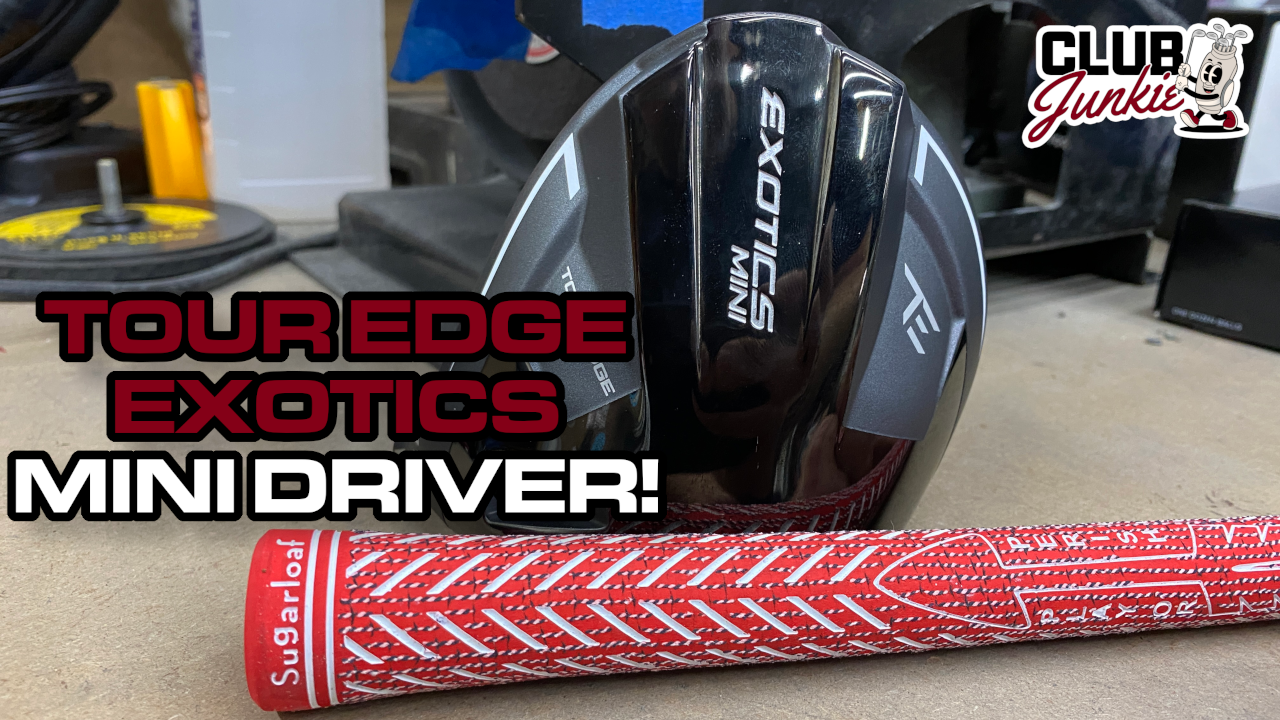
On this episode of Club Junkie, I put the new Tour Edge Exotics Mini Driver to the test and break down the performance, forgiveness, distance, and where it fits compared to a traditional driver or strong fairway wood. If you have been curious about adding a mini driver to the bag, this one is worth a look.
I also dive into the new TaylorMade Spider ZT Max putter that was recently spotted and discuss the growing zero torque putter trend. Plus, there is a closer look at the new Project X Titan Yellow shaft showing up on the PGA Tour and what makes it different from other profiles currently out there.
Opinion & Analysis
AVL: We’re talking about practice! My best tips for taking your game to the course

With the beginning of June on the horizon and courses rounding into peak condition for the season, it’s time to hone the finer skills that often get rusty over the winter. More sunlight also means more time to get out on the course and work on your game.
Whether it’s the practice green or the driving range, there’s always something to improve—whether you’re enjoying the fresh air or preparing for a weekend game or tournament. You can work on drills or freestyle around the green, and friendly competition is a great way to sharpen your skills.
While there are endless ways to get better at golf, I’m going to focus on practicing around the green. Let’s take a look at a few things to keep in mind as we head into the summer months.
Drills
From the driving range to the practice green, it’s important to incorporate drills into your routine. Years ago, I spent a weekend working on my short game with James Sieckmann. He recommended doing drill work for 5–10 minutes, then returning to your main practice.
This way, you create a balance between structured drills and real-world scenarios, so you’re not confined to “perfect” situations. For example, hitting the same three-foot putt over and over is good for repetition, but after a while, it becomes less interactive for your brain.
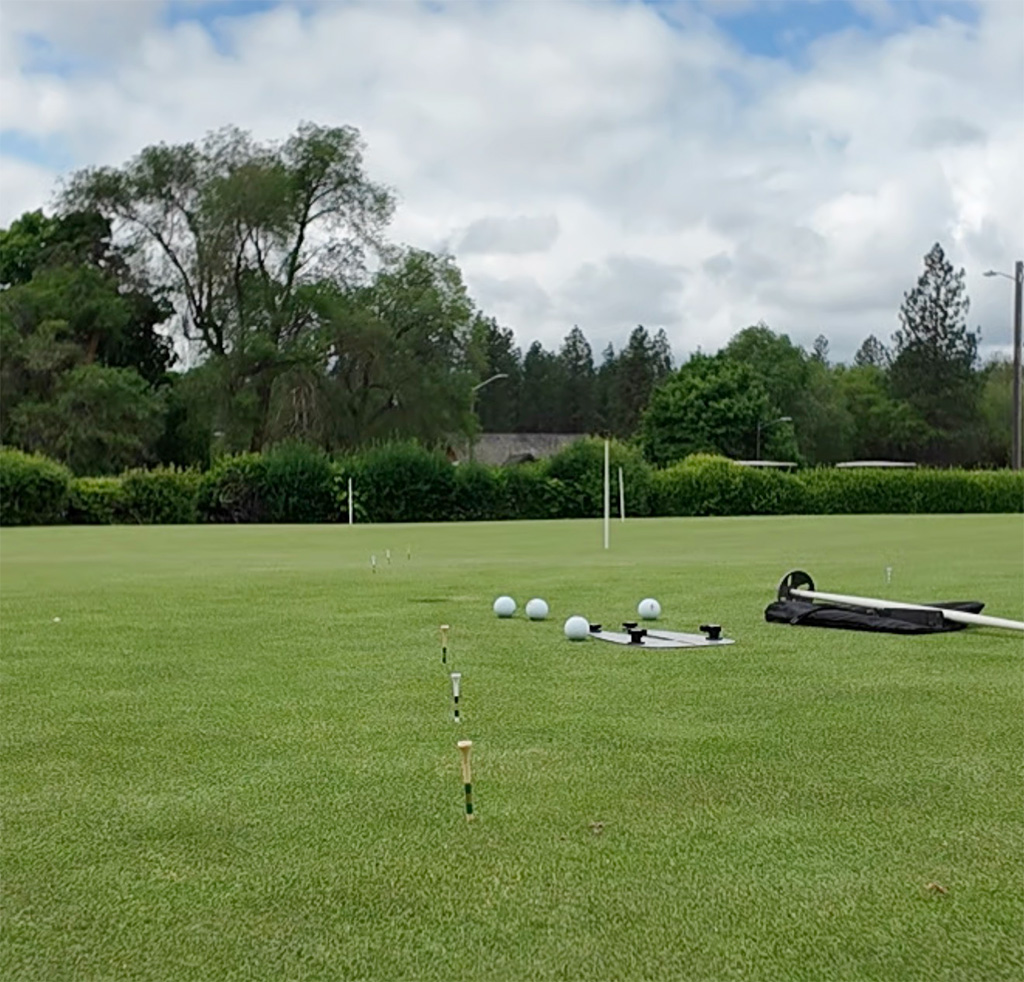
My approach is to use a putting trainer with a narrow gate for the ball to pass through, or simply place tees just outside the width of the ball. I’ll hit a series of four putts through the gate for three sets. Then, from a similar distance, I’ll hit four putts without the training aid and repeat that sequence three times.
Next, I’ll hit a number of 15–25 foot putts in a random fashion, then circle back to repeat the short putt drills with and without the training aid.
This breaks up the rhythm of hitting short putts with the training aid. When you hit the same short putts over and over, it’s easy to get into a groove—which is great for the drill, but not reflective of actual course play. While finding a rhythm is fundamental for drills, I like to introduce variation with longer putts to keep things realistic.
Game Mode
Once you’ve established a foundation with drills, it’s time to simulate on-course scenarios. This is where a few practice games come in handy.
One that I’ve been enjoying lately involves putting 10- to 15-footers with two balls. If I make the putt, great! If I miss, I pull the missed ball back a putter length. Suddenly, that little tap-in becomes a nerve-wracking three-footer—at least at first. As you get better at this game, those three- and five-footers become much more comfortable and routine.
It may sound cliché, but each shot is just what it is—it’s how we react that makes the difference. I like this game because it blends the pressure of on-course putting with the consequence of leaving yourself a much longer putt than usual.
Another game I like is one I recently learned from Brad Faxon. Place three tees in a line at four different locations around the hole: one at 3 feet, one at 6 feet, and one at 8 feet. The 3- and 6-foot putts count as par, and the 8-footer is for birdie.
This game keeps you focused on scoring and helps you get into a competitive mindset. You can even think about this putting game while you’re on the course. I just started playing it, and last week I couldn’t get better than two under par.
Competition
Competition during practice is when drills and games come to life, and you start to see results. For me, nothing beats a putting contest with a friend or two. In the right setting, these contests can become talking points for the whole season.
Match play, a game of 21, or simply seeing who can make the most one-putts (with a small prize on the line) are all great ways to simulate real on-course pressure. Recently, I played in a putting contest where one competitor made back-to-back 30- and 50-foot putts. As they say, expect your opponent to make every putt—and he nearly did. That’s impressive, and it’s something you see on the course, too: you have to stay committed to your game plan, no matter what.
When it comes to practice, it’s important to blend feedback from recent rounds with the fundamentals you want to reinforce. Drills, games, and competition—from the driving range to the putting green—form the backbone of skills you’ll rely on during actual rounds.
Finding the right balance is something we’re all working on, one practice session at a time. With the beginning of June on the horizon and courses rounding into peak condition for the season, it’s time to hone the finer skills that often get rusty over the winter. More sunlight also means more time to get out on the course and work on your game. Whether it’s the practice green or the driving range, there’s always something to improve—whether you’re enjoying the fresh air or preparing for a weekend game or tournament. You can work on drills or freestyle around the green, and friendly competition is a great way to sharpen your skills. While there are endless ways to get better at golf, I’m going to focus on practicing around the green. Let’s take a look at a few things to keep in mind as we head into the summer months.
Drills
From the driving range to the practice green, it’s important to incorporate drills into your routine. Years ago, I spent a weekend working on my short game with James Sieckmann. He recommended doing drill work for 5–10 minutes, then returning to your main practice. This way, you create a balance between structured drills and real-world scenarios, so you’re not confined to “perfect” situations. For example, hitting the same three-foot putt over and over is good for repetition, but after a while, it becomes less interactive for your brain.
My approach is to use a putting trainer with a narrow gate for the ball to pass through, or simply place tees just outside the width of the ball. I’ll hit a series of four putts through the gate for three sets. Then, from a similar distance, I’ll hit four putts without the training aid and repeat that sequence three times. Next, I’ll hit a number of 15–25 foot putts in a random fashion, then circle back to repeat the short putt drills with and without the training aid.
This breaks up the rhythm of hitting short putts with the training aid. When you hit the same short putts over and over, it’s easy to get into a groove—which is great for the drill, but not reflective of actual course play. While finding a rhythm is fundamental for drills, I like to introduce variation with longer putts to keep things realistic.
Game Mode
Once you’ve established a foundation with drills, it’s time to simulate on-course scenarios. This is where a few practice games come in handy. One that I’ve been enjoying lately involves putting 10- to 15-footers with two balls. If I make the putt, great! If I miss, I pull the missed ball back a putter length.
Suddenly, that little tap-in becomes a nerve-wracking three-footer—at least at first. As you get better at this game, those three- and five-footers become much more comfortable and routine. It may sound cliché, but each shot is just what it is—it’s how we react that makes the difference. I like this game because it blends the pressure of on-course putting with the consequence of leaving yourself a much longer putt than usual.
Another game I like is one I recently learned from Brad Faxon. Place three tees in a line at four different locations around the hole: one at 3 feet, one at 6 feet, and one at 8 feet. The 3- and 6-foot putts count as par, and the 8-footer is for birdie.
This game keeps you focused on scoring and helps you get into a competitive mindset. You can even think about this putting game while you’re on the course. I just started playing it, and last week I couldn’t get better than two under par.
Competition
Competition during practice is when drills and games come to life, and you start to see results. For me, nothing beats a putting contest with a friend or two. In the right setting, these contests can become talking points for the whole season. Match play, a game of 21, or simply seeing who can make the most one-putts (with a small prize on the line) are all great ways to simulate real on-course pressure. Recently, I played in a putting contest where one competitor made back-to-back 30- and 50-foot putts. As they say, expect your opponent to make every putt—and he nearly did. That’s impressive, and it’s something you see on the course, too: you have to stay committed to your game plan, no matter what.
When it comes to practice, it’s important to blend feedback from recent rounds with the fundamentals you want to reinforce. Drills, games, and competition—from the driving range to the putting green—form the backbone of skills you’ll rely on during actual rounds. Finding the right balance is something we’re all working on, one practice session at a time.


For Korean golfers, we always look forward to the last of the kkot-saem-chu-I for the true start of a new golf season. The term refers to a cold snap, but literally translates as “winter being jealous of the flowers beginning to bloom, thus lashing out one final time before surrendering to spring”.
A rather poetic mouthful packed into a short expression.
Koreans can be like that. Understated, yet oddly expressive at the same time. And nowhere is this more true on the golf course and in our golf bags. In fact, I suspect many Korean golfers look forward to new apparel and accessory drops more than they do actual equipment launches each year.
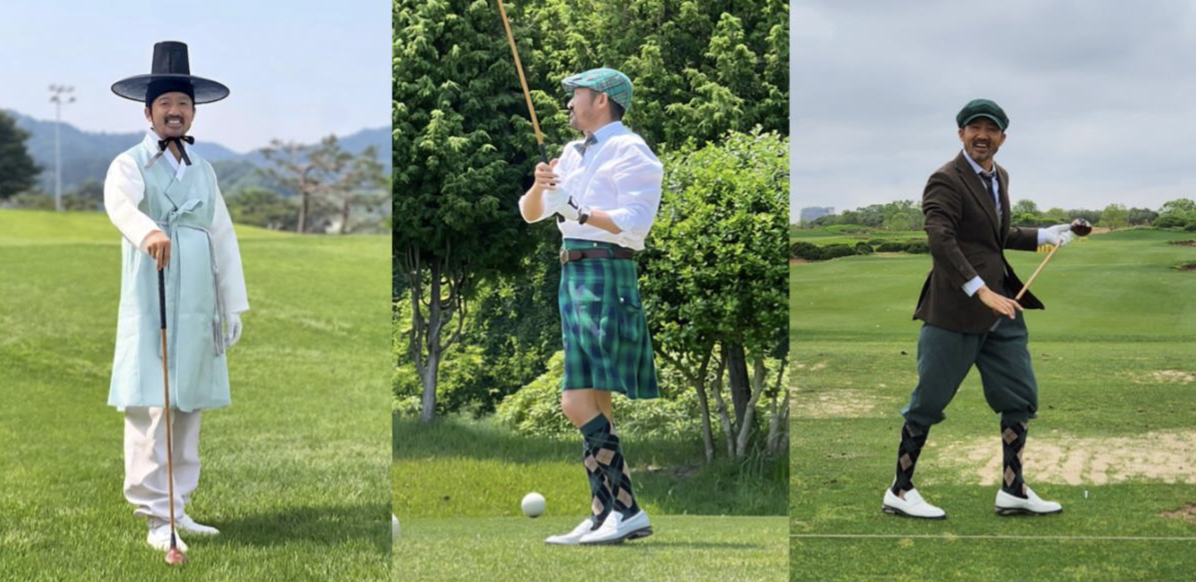
At this point, Korean golf fashion may exist on its own timeline. (courtesy of @seonbi_golfer)
There is ample evidence to support that suspicion. Korea is the world’s third-largest golf market behind the United States and Japan, yet its appetite for golf apparel exceeds that of both countries combined. Recent estimates suggest that Korea accounts for nearly 40 percent of the global golf apparel market, placing it among the world’s most influential golf fashion markets and punching well above its size.
Simply, we care deeply about how new golf clubs look and feel, but enjoy looking good while swinging them even more.
Golfers in the West may laugh and say that golf is played on a course, not a fashion runway. Perhaps. But what’s the harm in trying to look and feel good, if the added self-confidence can help actual performance? It certainly seems to have worked for Jason Day, who may have unlocked a new stats category: dormant strokes gained. Coincidence?

During the COVID-era, estimates placed the market near $9 billion, an astonishing figure for a single country.
As a proud member of Gen X, I’ve witnessed the highs and lows of golf fashion firsthand. The pleated trousers and wing-tipped shoes of Jack Nicklaus, the stylish plus-fours and knickers of Payne Stewart, the baggy black trousers and fitted mock-necks of Tiger Woods, and the thigh-hugging athletic tailoring of Rory McIlroy. Golf fashion, like the golf swing itself, has rarely stood still.
But nowhere have those trends shifted, evolved, and been scrutinized quite as relentlessly as in Korea. Here, golf fashion moves faster than fairway gossip, and consumers dissect brands with a level of discernment that can be both impressive and mildly terrifying. New brands are studied, judged, embraced, or dismissed with startling efficiency.
The result is a consumer base with one of the sharpest eyes for quality and authenticity anywhere in the world. It is difficult to quantify, but easy to recognize. Clean lines without trying too hard. Luxury mixed with utility. Trend awareness balanced by restraint and purpose.
It’s golf fashion shaped by one of the world’s most style-literate cities, something I like to call Seoul Sensibilities, referring to the taste level forged by a uniquely competitive environment.
And increasingly, global brands have noticed.

Many golf brands in Korea have their own flagship shops dedicated to apparel only
Titleist understood this years ago, when its apparel business in Korea took on a life of its own under new ownership and local direction. What had once been a straightforward extension of an iconic equipment giant became something sharper and more premium. By going all in on the serious Tour-player look (I couldn’t even fit into their XL sizes), Titleist struck the right chord with Korean consumers and helped its fledgling apparel business break into the mainstream. Titleist became a household name even for non-golfers who wore its caps, shirts, and windbreakers in daily life. In many ways, it proved that even heritage golf brands could carry real fashion credibility when viewed through a Korean lens.
Several years later, PXG took a page out of Titleist’s playbook and followed suit. Korean consumers helped transform the brand from one known largely for irons and loud commercials into something broader and more stylish. PXG apparel’s growth in Korea was explosive, where it found an early audience and turned the category into something more than mere logo merchandise. It is still hard to walk anywhere in Seoul without seeing its palindrome logo.
Malbon’s meteoric rise in the United States was genuine, but its ascent into a global golf lifestyle brand owes much to Korea, where it was elevated by a market already fluent in modern golf style. Korea did not simply embrace Malbon. It pressure-tested the concept, refined its appeal, and helped push it into the global spotlight.
As such, new brands may arrive from abroad, but more often than not, their sharpest evolution happens here. If a brand can earn credibility in Seoul, it’s deemed to have passed one of the toughest style audits in the game.
That is why the next meaningful chapter may not come from outside, but from a Korean brand moving in the opposite direction, carrying those Seoul Sensibilities outward as K-pop once did.

Play young Stay dope.
From Seoul, With Intent
Khalhon is a label that feels less like a trend-chasing newcomer and more like the product of a market that has already seen everything. Golfers here have long been surrounded by luxury logos, technical fabrics, and tour uniforms disguised as lifestyle wear and vice-versa. In other words, novelty alone rarely lasts here, and the Koreans seems to understand that instinctively.
Its style language leans into clean silhouettes, relaxed but tailored proportions, muted palettes, and premium materials that speak quietly but confidently. There is a modern city aesthetic running through it all, with strong layering pieces, thoughtful textures, and subtle branding that suggests sophistication rather than demanding attention.

“Built for the course. Designed beyond it.”
Most importantly, the garments seem designed to blur the line between golfwear and everyday style. Shirts, trousers, knitwear, and outer layers move comfortably between a game of screen golf, a lunch reservation, an airport gate, or an afternoon coffee in Gangnam with friends.
It raises the question of whether this is golfwear that happens to look good off the course, or everyday clothing that performs beautifully on the fairways.
Personally, I have long appreciated Nike Golf for its clean, athletic modernization of golf attire. It also has the useful side effect of making me look like a more serious golfer than I probably am. But off the course, there are times when being instantly identified as the golf guy in a crowd of non-golfers can feel a touch self-conscious.

“Built for the course. Designed beyond it.”
That is part of what drew me to Khalhon, which seemed to blend golf and everyday wear naturally. While some of the outfits may be slightly beyond my personal confidence level, the brand also offers tasteful options for older guys like me who still want to express a little personality without regretting the decision later.
These are not simply flashy outfits worn on the course and then banished to the closet until the next tee time. They work surprisingly well off the course too, and I suspect many of the pieces will still look right a couple of years from now, which would certainly be kinder to my wallet than most golf fashion trends tend to be.
And perhaps that broader lifestyle positioning also helps explain why someone like Sean Wotherspoon would find Khalhon creatively interesting in the first place.

“Built for the course. Designed beyond it.”
“Korea is not only one of the most fashion-forward golf markets in the world, but one of the most fashion-forward markets globally. Korea is ahead, and I love to watch and try to catch up.” – Sean Wotherspoon, Creative Director at Khalhon
Seoul and Beyond
If Khalhon’s rise says something about where Korean golf fashion is today, its relationship with Sean Wotherspoon says even more about where it is heading.
For readers less familiar with Sean Wotherspoon, his arrival at Khalhon is not some routine celebrity endorsement or influencer collaboration. In design and streetwear circles, Wotherspoon is regarded as one of the more influential creative voices of his generation, particularly when it comes to blending nostalgia, storytelling, and contemporary culture into products that people can connect with.
He first gained widespread attention through his now-famous Nike sneaker collaborations, where his vintage-inspired designs and instinct for color helped turn him into one of the defining artists of the late-2010s sneaker era. His work gradually expanded beyond footwear into apparel, automotive collaborations, collectibles, and broader lifestyle design.
Modern golf style now extends well beyond the fairways, where performance and functionality are largely expected by default. And while plenty of brands already make technically competent golfwear, Khalhon seems more focused on designing clothes people would genuinely want to wear even after the round ends.
And when guys at Wotherspoon’s level show genuine interest in working with a Korean golf brand as its new Creative Director, fashion circles tend to sit up and pay attention. There’s already a huge buzz among the fashion-conscious here about upcoming collabs with iconic sports stars and brands.

“My creative direction for Khalhon is disruptive, colorful, nostalgic, and modern. My goal is to blend these avenues seamlessly within each collection.” – Sean Wotherspoon
In chatting with Sean, what stood out most to me was how genuinely energized he sounded about the project itself. Despite having already worked across and countless other creative spaces, he described golf as a completely fresh category for him, saying that Khalhon “will be an amazing vehicle for my design work.”
At the same time, his enthusiasm seemed tied just as much to Korea itself. He spoke openly about admiring Korea’s fashion culture while repeatedly insisting he is still a terrible golfer.
There was something oddly refreshing about that humility. Rather than sounding like a celebrity parachuting into golf simply because the category suddenly became fashionable, Sean sounded genuinely curious about what Korea might do with the category next.
And perhaps that is what makes Khalhon feel interesting right now. The brand feels less like a trend-chaser and more like the natural result of a market now confident enough to export its own point of view.
For years, global brands came to Korea to sharpen their image against one of the most discerning audiences anywhere. Now, a Korean label appears ready to send those Seoul Sensibilities outward instead.
Which brings us back to kkot-saem-chu-i.
That final cold snap before spring always arrives with a reminder that seasons are changing, whether we notice it immediately or not. Golf fashion feels a little like that right now as well, as the old boundaries between sport, streetwear, luxury, and everyday style continue to soften.
And somewhere in Seoul, a Korean golf label already seems prepared for whatever season comes next. I just hope they have everything in my size.


pat gau
Nov 3, 2019 at 7:11 am
Hi i am learning a lot whit you guys thank’s a lot
Scott D
Jun 19, 2016 at 3:53 pm
A huge Thank You and shout out to Mackenzie for taking an hour of his time to provide information and insight into UGP. He answered all of my questions and even invited me to visit to help me gain an understanding of the level of detail and information provided to each player and how they have maximized their space within their main location. I have talked to several other owners of various facilities around the country and none have been as forthcoming and open as Mackenzie. For those of you near UGP looking to improve your game the right way, you will have access to cutting edge technology and even better people. Great stuff and thanks again, Mackenzie!
Steve
Jun 19, 2016 at 11:07 am
Amazing looking facility that combines fitness, instruction, and fitting. Where do you plan to open in OC and where, if you don’t mind me asking.
Mac Todd
Jun 15, 2016 at 9:11 pm
Thanks everyone for all the replies and feedback, if anyone has any questions please feel free to email me directly at [email protected] or just post directly to this message board
Mac Todd
Founder
Urban Golf Performance
Brett
Jun 14, 2016 at 1:40 pm
I’ve had the pleasure of doing business with Mac and the group at UGP since the week they opened their doors. These are real golf guys, super passionate, smart, humble, stud players, forward thinking and caring. It was just a few years ago Mac and Ben had a vision and I’m incredibly happy that they’ve been able to execute that vision with exceptional precision. There are only a couple areas of golf that are growing, indoor golf Is one of them. The industry has unfortunately suffered because golf takes too long to play and it’s intimidating to newbies. Beyond that, very few instructors are able to effectively teach with the old fashioned, outdated methodology. Top notch facilities like this, run by good people, is just what the doctor ordered. If you question whether or not the principles they (UGP) operate under can change the golf landscape, simple, pay attention…you’ll learn something. Keep up the great work, guys.
Mac Todd
Jun 15, 2016 at 8:47 am
Thanks Brett, can’t tell you how much we appreciate the support!
Juan Carlos Zerpa
Jun 14, 2016 at 1:38 pm
UN comentario en español.
Soy de Venezuela…y estuve de paseo en LA hace un mes. Aproveché la oportunidad y me acerqué a UGP. Fue mi primera experiencia haciendo un fitting. Y la verdad, la atención es el valor agregado de esta gente. CUalquier pregunta, cualquier comentario fue comentado y contestado. Y tuvieron toda la paciencia del mundo para trabajar con un cuarentón con un 20 hcp. Sólo por curiosidad fui a una sesión de fitting en una cadena…nada que ver. COmo decimos en Venezuela…aquello fue un “mateo” en comparación al nivel de atención a los detalles que obtuve en UGP.
A la fecha, no he podido utilizar mis nuevos palos de golf. Pero tengo la certeza de que no desperdicié mi tiempo y mi dinero. Espero poder confirmarlo más adelante.
Gracias al equipo de UGP.
Mac Todd
Jun 15, 2016 at 8:50 am
Juan Carlos-
Muchas gracias por tu recomendacion y apoyo de UGP. Estamos a tus ordenes!
MAC
b
Jun 14, 2016 at 2:30 am
This place sounds like an amazing experience. I’m going to make it a priority to get an appointment when I’m home on leave in the winter! The drive up from Thousand oaks should be well worth it.
Mac Todd
Jun 14, 2016 at 12:37 pm
We look forward to having you, mention the article and get 10% off!
TinkerR
Jun 13, 2016 at 10:43 am
I’ve been to UGP a 3 times. Great facility. Really nicely done. Seem like good guys. I’m someone who belongs to one of the aforementioned “elite” clubs in LA. I stopped going to UGP because i felt the prices were too steep. I know a number of guys who feel the same way. If it was a bit more reasonable I would be a regular customer.
Mac Todd
Jun 13, 2016 at 1:37 pm
Hey TinkerR!
Thanks for commenting and taking the time to read our story, and also for the support you’ve already shown coming into UGP! We definitely would love to have you back in!
Our sessions range anywhere from $145-$110 depending on the volume of sessions you purchase. You can use them across the fitting, fitness and coaching segments of our business. Each UGP golf bay cost us about $85,000 and training a new coach to get up to UGP standards and use the technology seamlessly costs us around $20K minimum depending on experience. We don’t see a profit on a new hire for at least 6-9 months. It’s always an investment on everyone’s part. We spend countless hours behind the scenes improving the collaboration between departments and continuing education to ensure our coaches are always fresh and on the cutting edge. We have a business infrastructure behind the scenes, along with a solid front line support system that manages appointments and serves as a “concierge” to members at no additional cost. We valet cars, and go above and beyond to ensure that our students are progressing and enjoying the experience. I promise you in spite of our awesome growth, we truly grind as hard as possible to ensure its a “valuable” experience, and that we are priced accordingly.
The average “elite” golf instructor utilizing Trackman (we also have $10K balance plates, high speed cameras, and a plethora of other training equipment) in Los Angeles is $150. The average private fitness training session at a comparable facility like Equinox charges also around $150. The average fitting experience at a place like Cool Clubs can go well over $300, we charge $195. If you have a package you can pay as little as $110 for a premium service at your fingertips whenever you want it 6am-9pm weekdays and 6am-5pm weekends.
We’ve put a lot of thought and consideration into our pricing model and value proposition, and trust me I’ve nearly tried every service out there nationwide that is similar to what we have built here in LA. You’ll be hard pressed to find this value and experience elsewhere.
All I can say is that we will strive and grind as hard as we can to consistently provide value, innovate the standard practices we see in the industry today, and educate a new generation of golf instructors, trainers, and club fitters/builders that believe and share the holistic approach to golf development.
I really do appreciate all your support and the fact that you took the time to read the story and comment! (Email me at [email protected] and I’d be happy to extend a complimentary session for your loyalty)
Stan Parless
Jun 12, 2016 at 11:51 pm
“In a nutshell the conviction to know what you are doing is the right path regardless of the obstacles: financial or social”
Try telling that to the missus.
Place sounds awesome and I’m sure they mean well but “change golf culture in Los Angeles”? By what? Catering to the well off country club golfer? Calling themselves “urban” while based out of West LA? Maybe when some golfers who work in a Pico Rivera warehouse can afford it I’ll buy into that statement.
Mac Todd
Jun 13, 2016 at 1:51 pm
Hey Stan-
Thanks for taking the time to read our story and comment.
Check out this video we did in support of the Heroes Golf Course at the Veterans Affairs facility here in West Los Angeles (http://m.youtube.com/watch?v=NJ6zX6skYlg). We raised nearly $10K to support their initiatives, and hosted a function that brought more awareness to the conditions our veterans face right in the middle of the wealthy backyard of West LA. This is one of the over 50+ causes locally and regionally we have shifted our focus to as we continue to grow and gain support. Our intentions and purpose are pure, and I can guarantee you we will continue to expand upon this mentality as we grow.
Appreciate you taking the time to read our story!
Mac Todd
Jun 11, 2016 at 9:45 pm
No plans to sell, but who knows that’s the American Dream right?
We’re really just a really good group of people that work really hard to make an impact on the game we love and our community. Purely grass roots concept from our collective experiences.
Appreciate your comments!
Bob Gotsen
Jun 11, 2016 at 6:42 pm
Incredible stuff. I’ve been playing golf for 32 years, and I am beyond messed up physically. I have had tons of coaches, but nobody tells me my actually problems. What UGP is doing sounds like a reboot for the healthcare system, as well as golf.
Mac Todd
Jun 12, 2016 at 11:09 am
Thanks for taking the time to read our story Bob, we’ll keep pushing the envelope!
John Goldberg
Jun 11, 2016 at 4:26 pm
Place looks amazing. When are you guys coming to Phoenix?
Mac Todd
Jun 11, 2016 at 5:50 pm
Definitely part of the plan. Thanks John!
Albatross Hunter
Jun 11, 2016 at 4:24 pm
Where was this place when I was growing up! It looks and sounds like these guys are sturring the pot, in a incredible way! Bring one to Wisconsin, we need you this winter.
Mac Todd
Jun 11, 2016 at 5:51 pm
Thanks!
Tru
Jun 11, 2016 at 4:08 pm
The antithesis to “Play Golf America!” by making golf unaffordable
Mac Todd
Jun 12, 2016 at 11:07 am
That’s too bad that’s all you can comment about this article. A baseless statement about how we are the antithesis to “Play Golf America”.
Philanthropy is a major part of our focus, and the fact that our wealthy customer base is passionate about golf, health, community, and education makes us a perfect vessel for working with non-profits in and out of the golf sector to make actual change and improvement in our community. Watch what we do, and learn how there still are good people out there with pure intentions to make this world a better place.
Appreciate you taking the time to read our story!
Clu
Jun 12, 2016 at 2:32 pm
The fact that you have to come back on here and scramble a defense statement says it all about yuor insecurity and lack of understanding of your own customer base, a lack of disrespect for who’s paying your bills and how much you know you’re overcharging the innocent people who come into your shop seeking advice for proper equipment. You’re clueless.
Lol
Jun 12, 2016 at 2:48 pm
Clu, did you actually read the article? His comments as a whole?
It sounds like Mac is proud of what he is doing and his comments reflect that. Not understanding your point at all. How can you fault someone for trying to make things better?
Mac Todd
Jun 12, 2016 at 4:06 pm
That’s pretty harsh Clu. The reality is that I’m only on here trying to foster more discussion about the article, answer questions, and clarify our intentions.
I’m here to learn and grow. What are you here for?
How does your statement do anything but promote disrespect for the innovative possibilities of small business? This story should be an inspiration for others that they are the catalyst for the change we need to see in golf and in society. There is a better way to do things, and we need to be the ones that push for answers.
Also your statement that I have a “lack of disrespect for who’s paying your bills…”doesn’t make any sense, but I get what are you trying to say. Read our customer reviews, talk to our wide range of partners, and you’ll find out that what you’re saying couldn’t be further from the truth. We’ve changed lives, helped thousands not just improve their golf games, but their health, relationships, and much more. This is just the beginning. Our club fitting and building departments are relentless when it comes to precision and craftsmanship, something lost in all the marketing the golf industry does these days. I’ll leave you with a quote that helps me keep perspective as we manage the awesome growth we are experiencing, and the myriad of issues and opinions that arise in parallel.
“What goes on around you…compares little with what goes on inside you.” – Ralph Waldo Emerson
I do appreciate you taking the time to read our story and comment!
PEtiger
Jun 13, 2016 at 11:44 am
Clu,
Luckily we live in a free market society. If it turns out these guys are off base and can’t get anyone to walk through the door at $195/pop then they will either be forced to lower the price or close the doors for good. Until then, I don’t think it is instructive for you to berate them just because you cannot afford what they are offering. These guys look like they have made some serious technology investments and deserve to make a return on their time and capital. I assume you expect the same out of your work. Until then, there is always the $10 bucket at the local muni that serves as a competing substitute to their product.
Jack
Jul 5, 2016 at 7:03 am
I don’t think it’s priced high at all. Look at the people they have. They are very highly qualified professionals. There is an abundance of high tech equipment that is very pricey. Lessons are not cheap. You can also mix these sessions in with other coaching sessions as well. That said, this really doesn’t solve the issue that golf in LA is a terrible predicament as the courses are too crowded and you have to drive far to get some breathing room and decent courses.
Jerry Watkins
Jun 11, 2016 at 3:51 pm
Great stuff! Three of my buddies are regulars @ UGP…this article solidifies why they’ve all have been beating me on the course lately. UGP you’ll be seeing me soon!
Mac Todd
Jun 11, 2016 at 5:52 pm
Thanks Jerry look forward to it!
Lululemon
Jun 11, 2016 at 3:47 pm
This place looks amazing!!!
Mac Todd
Jun 11, 2016 at 5:52 pm
???????? thanks!
Kate
Jun 11, 2016 at 2:44 pm
Congrats you guys. I know it’s a labor of love. Happy to see the hard work paying off.
Mac Todd
Jun 12, 2016 at 11:01 am
Thanks Kate, appreciate the love!
Brian Gallagher
Jun 11, 2016 at 2:37 pm
Awesome article! Great to see UGP getting recognition for our pursuit to help golfers of all ages and abilities improve their game!
Kyle Van Haselen
Jun 11, 2016 at 2:16 pm
I am humbled everyday by my team and clients. We continue to grow and develop together, which is what it’s all about. If the mindset is to grow on your own terms and not be willing to learn with others you will become static and never grow. For some that’s okay to them (Ooffa) but for us we focus on growth. KEEP THE GAME GREAT!
Jedi
Jun 11, 2016 at 2:07 pm
Wow!!!! This place looks DOPE!!! Great article. Ive heard great things about UGP and now you sold me. Im makin the trek from OC!!
Mac Todd
Jun 11, 2016 at 2:14 pm
We will be opening down there later this year. Lots of good things to come! Thanks for the support!
ThreeSticks
Jun 11, 2016 at 1:55 pm
Regardless of any negative comments, its refreshing to see someone put their money where their mouth is. Good on ya UGP. Golf needs a reboot for sure and you all are really trying.
Mac Todd
Jun 11, 2016 at 2:14 pm
Thanks! Just the motivation we need to keep pushing!
ooffa
Jun 11, 2016 at 1:39 pm
“Can this performance center change golf culture in Los Angeles?”
Answer: No.
Next article please.
Mac Todd
Jun 11, 2016 at 1:44 pm
Dude you’re on every article on golfWRX talking jive for no reason, and not even with substance. Say something productive and don’t muddle the conversation with ignorance.
Jamie
Jun 11, 2016 at 4:16 pm
Amen brother
Ben
Jun 11, 2016 at 4:56 pm
I disagree with oofa’s bluntness, but I think that the title of the article wasn’t delivered on. It’s a great review of a place that I would absolutely love to visit (seriously…I was excited reading about it). However, the opening of the article was about how you either belong to an elite CC in LA or you fight for time on a public course…”there is no middle class.” That’s what I perceive to be the golf culture referenced in the title…and really, the article does nothing to answer the question posed in the title. On top of that, the author goes on to say that UGP’s clients are likely members of elite CC’s in LA.
So…how could UGP change golf culture in LA?
Mac Todd
Jun 11, 2016 at 9:40 pm
Ben-
That’s a good question, and something we were concerned about as we get our name out there.
The UGP Vision Statement is to to constantly redefine and develop the standards in which people learn and connect with the game of golf.
We are starting with a discerning market that can help fuel our growth, but our goals are big. We’ve been in 50+ charity golf tournaments since we started UGP, supporting many causes that make big impacts on the golf world and the community as a whole. We are working with Tiger Woods Foundation in Anaheim, and the First Tee of Los Angeles to help junior golf where it needs it most.
We give junior golfers big discounts on products and services, and under many circumstances we’ve sponsored local kids in their development even when we had mounting bills getting this bootstrapped business off the ground. Our intentions and purpose are pure.
This is just a start, we came at this with no big investment team and a big dream. In 3 years we’ve put together 20+ employees and 3 locations. Stay tuned, we’re not stopping there.
Appreciate the feedback and support!