
Opinion & Analysis
Custom Fitting: What I learned from Tom Wishon


Sometimes in life, you don’t know that you don’t know. I had been drinking the custom-fitting Kool-Aid my entire golfing life without even knowing what custom fitting actually was!
In October 2013, I had the opportunity to visit Tom Wishon at his facility in Durango, Colo., and was fit for a full set of custom-built clubs. The fitting process took about 12 hours, which we broke down into three 4-hour sessions over three days. What I learned about club fitting and how it can result in the maximum level of game improvement is sure to be controversial, but it’s what I believe should constitute a real custom fitting process, not what golfers have come to call being “custom fit.”
————————————
It’s common these days to hear golfers say, “Yeah I was custom fit for my clubs.” More times than not, they couldn’t be further from the truth. How can golfers say that they were custom fit and not have actually been custom fit? It comes down to the fact that most golfers don’t know what a true custom fitting should be.
I know some of you may be thinking:
“Wait a second, I WAS custom fit for my clubs. I went to my [local pro shop, big box store or demo day] and they measured me. They had me hit some balls on a launch monitor with different clubs. I then took the sales person’s recommendation and ordered my clubs from [insert club company]. The company built my clubs and shipped them to my home. And now you are telling me that I was not custom fit for my clubs?”
That is correct; I am telling you that you were not truly “custom fit” for your clubs. I am also telling you that your clubs were not truly “custom built” at all. You may have been measured and observed and the store ordered them with whatever requested specifications they came up with, but that is far from what custom fitting could be and should be. That is, again, if the goal is for the golfer to achieve maximum potential game improvement.
The Wishon Experience
My past fitting sessions can be described in different levels that are much like the different options at a car wash. You can purchase the “express wash,” which basically sprays the dirt off the car. Afterward, the car looks better than it would had you left the dirt on it.
Let’s say we want our car to look a little better, however, so we purchase the “works” wash. This gets the car washed, too, and the inside is vacuumed with the tires and undercarriage being cleaned as well. The car is also dried off and maybe the car wash even added a little tire shine.
The “works” wash definitely made a difference and was a big improvement from the “express wash,” but let’s say we want to enter our ride in a car show. We need it to look showroom clean. So what do we do? We purchase a “full detail,” which means the entire car wash (which now includes waxing, cleaning and polishing) is done by hand until the car looks as good as it possibly could. Now our baby is ready for the show!
Now, let’s apply this analogy to club fitting.
Level One (Express Wash)
In the level 1 fitting, rarely does the session last longer than 20-to-30 minutes and rarely does it involve hitting clubs other than the driver in a simulator. The person doing the analysis generally does not have in-depth training in fitting analysis or in translating shot results into proper fitting recommendations. I’d say most retail fitters would fall into this category.
Many times, such fittings result in the sales person selecting some club off-the-rack equipment they have based on their analysis. Sometimes it may result in a special order from the golf company. It’s only one (small) step beyond golfers picking a club off the rack and heading to the cash register.
Level Two (The Works Wash)
The golfer is working with someone who has more knowledge than a big-box-store or pro-shop employee, but the fitting still falls short in certain areas. Think of this as being examined by a third-year medical school student instead of a physician who has completed his internship, residency and fellowship.
The level-two fitter could be someone who could turn into a level-three fitter with a year or so of hard work. He or she tries to make the fitting sessions more complete by offering recommendations for a club’s loft, length, lie angle and shaft, as well as set makeup. It’s more than likely that a level-two fitter would involve custom ordering the clubs from an OEM and hoping the specs they requested are correct on each club.
Level Three (Full Detail)
This is a full fitting in which every club in a golfer’s bag are custom built for his or her needs. The clubs are fit and built one at a time and such a fitting cannot possibly be done in less than 90 minutes. Often times it takes multiple sessions over more than one day.
It is not uncommon for such a level-three fitting to require more than 2-to-3 hours while being one on one with the clubfitter. It can be done indoors or outdoors with a proper launch monitor operated by someone who knows how to translate the outputs into correct fitting decisions and feedback to the golfer.
The level three fitting can only be done by a clubfitter with a strong knowledge and experience level in club performance and fitting technology. The fitter would be very focused on analyzing everything about a golfer’s previous/current set specifications along with the golfer’s size, strength, athletic ability and their swing characteristics of clubhead speed, transition force, downswing tempo, wrist cock release, swing path, hands-to-clubhead position at impact and angle of attack, as well as obtaining feedback from the golfer on shot shape and feel elements.
Wishon gives the full detail.
He teaches, from his research, that there are five primary game improvement factors that can be affected by proper fitting: Thorough proper fitting, it is possible to offer changes to the golfer in:
- Distance
- Accuracy
- Trajectory
- Consistency
- Various elements of club or shaft feel
These five game-improvement elements are the key to methodically and thoroughly maximizing the potential improvement for any golfer. Addressing this, there are 13 fitting elements that are directly related to achieving a possible change in each of the five game improvement factors. They are: club length, swing weight, loft angle, lie angle, shaft weight, shaft flex, shaft bend point, shaft torque, grip style, grip size/weight, total weight, club head design and set make up.
For a true custom-fit set of golf clubs to be able to achieve maximum game improvement for a golfer, each one of these key fitting specifications must be determined for each club in the bag. Custom fittings and custom-built clubs are about game improvement, not to be confused with “game-improvement equipment.” The end result of a custom fitting is to custom build the golfer a set of clubs that will give the player the greatest chance to improve their game to the best of their given ability.
I want you to think about the last time you were fit for a set of clubs. Chances are you walked in, were greeted by an employee and you explained to them that you wanted to get fit for a set of clubs. The employee probably asked you what you had in mind and started the fitting process to get your measurements.
At any point did they ask you what you were looking to improve? Did they ask to see your current clubs to make measurements to see what specs you currently are playing with? Did they observe and comment on how your swing characteristics relate to the performance of your clubs?
Chances are that they didn’t. My guess would be that maybe you mentioned you wanted more distance and possibly more accuracy, but were the topics of trajectory, consistency and feel brought up? Maybe. Maybe not.
Now, you may also be thinking “Yea, ok, but I just saw [insert tour player name here] win last week using OEM equipment. Are you telling me that they didn’t get fit for their clubs by the same system they used on me?”
That’s exactly correct! Tour players who are on staff with OEM’s are generally fit by a team of professional clubfitters in much the same way a pit crew would build and fine tune a race car for NASCAR drivers. Their clubs are hand selected, built piece by piece and along the way they are hand ground and swing weighted to perfection.
For most professional golfers, every one of the 13 club-fitting parameters are met to the fullest extreme, with many iterations involved in a back-and-forth, trial-and-error testing period that includes feedback from the player throughout the process. In no way shape or form are most golfers getting the same treatment with OEM clubs as the tour players are getting.
Now that we have a good idea of what a true a custom club fitting is and what should be performed during the fitting, let’s take a look at my fitting with Tom Wishon and you can compare your last fitting to his fitting process, with the goal being maximum improvement in each of the five game improvement areas. As mentioned earlier, this fitting lasted three days and was extremely detailed.
Day 1

Tom met me with a greeting and a handshake and walked me inside to a “conversation.” He asked, “What are you looking to get out of a new set of clubs? What are your strengths and weaknesses with your current clubs? What are your priorities for game improvement?”
He didn’t mention the five game-improvement elements to me. He allowed me to do the talking and that lead him to what he felt would best improve my game.
When it was all said and done I mentioned to him that I wanted a set of clubs that I had 100 percent confidence in when I pulled them out of the bag.
“I don’t want to worry about anything but the shot at hand,” I said.
After the interview process, I hit enough balls to warm up and we headed to the first tee to play nine holes. The nine-hole round was to give Tom an idea of my playing tendencies, shot shape, strategy and misses. After nine holes, he had a pretty good idea of what kind of player I was and an understanding of my strengths and weaknesses. Once we finished playing, we headed back to the fitting center where he inspected ALL of my equipment. He measured length, loft, lie, face angle, grip size, total weight, swing weight and shaft frequency. This process helps the fitter know if the errant shots were due to operator error or were the equipment’s fault.
Day 2

In the next step of the process, we spent most of our time in front of a launch monitor. Test clubs were created through Tom’s proprietary shaft-to-head connector system so I could hit various combinations of club heads and shafts with different assembly specs.
Throughout this hitting session Tom would observe both the shot shape and outputs from the launch monitor, and he asked me various questions about my perceptions of the feel, ball flight and the weight of the clubs. How did I like the look of the clubs at address? What were my thoughts on the feeling of the overall weight? The weight in the head? The bending feel of the shaft and the ball flight shape?
If I didn’t like the way something felt he would probe deeper with differently worded questions. This session would last for several hours with a break in the middle to give me a chance to rest. When the fitting session was over, it was back to the course for more real-world testing to gain more insight on how the clubs played and performed on the course.
Day 3

On the last day of the fitting process, we finalized any tweaks to the clubs that needed to be made. All 13 club fitting parameters were listed and explained in detail. Tom then discussed the five game-improvement factors and gave me his recommendations for a set make up that he felt would best improve my game and allow me to shoot my best scores. Once every thing had been finalized, Tom then went to work to be sure each clubhead was checked for its required loft, lie and face angle and that each club was assembled to the correct length, shaft specification, total weight, swing weight and grip size.
The next time you hear “Yeah I was custom fit for these clubs” remember…
- Professional custom fitting is not answering five, six or even 20 questions on a website.
- Professional custom fitting is not a cart filled with different golf clubs sitting in a pro shop or on the practice range.
- Professional custom fitting is not attending a demo day at your local driving range and hitting clubs until you find something you like.
- Professional custom fitting is not something that can be accomplished from start to finish in 30 minutes or less, regardless if you are hitting balls on a launch monitor.
- Professional custom fitting is not done by altering a limited number of specifications of an existing set of golf clubs.
- Professional custom fitting is not buying a driver with an adjustable hosel that can only alter two of the thirteen key club fitting specifications within a very limited range of options.
Professional custom fitting IS working one on one with a trained custom clubmaker to analyze all of your individual swing characteristics to accurately determine each one of the 13 key club fitting specifications on ALL 14 golf clubs in the bag.
Professional custom fitting for maximum possible game improvement IS having all 14 of your golf clubs custom fit and custom built from scratch –the same manner in which a tailor makes a custom suit — with every one of the key fitting specifications fit to your size, strength, athletic ability and swing characteristics.
Profession custom fitting is NOT the domain of the sales person or club professional in a retail golf store or pro shop. It is the domain of the serious, professional clubmaker who lives, eats and breathes all of the technical information available. That allows him or her to accurately match each golfer’s swing to the best fit set of golf clubs so the golfer can play his or her best.


Club Junkie
Tour Edge Exotics mini driver review + TaylorMade Spider ZT Max first look – Club Junkie

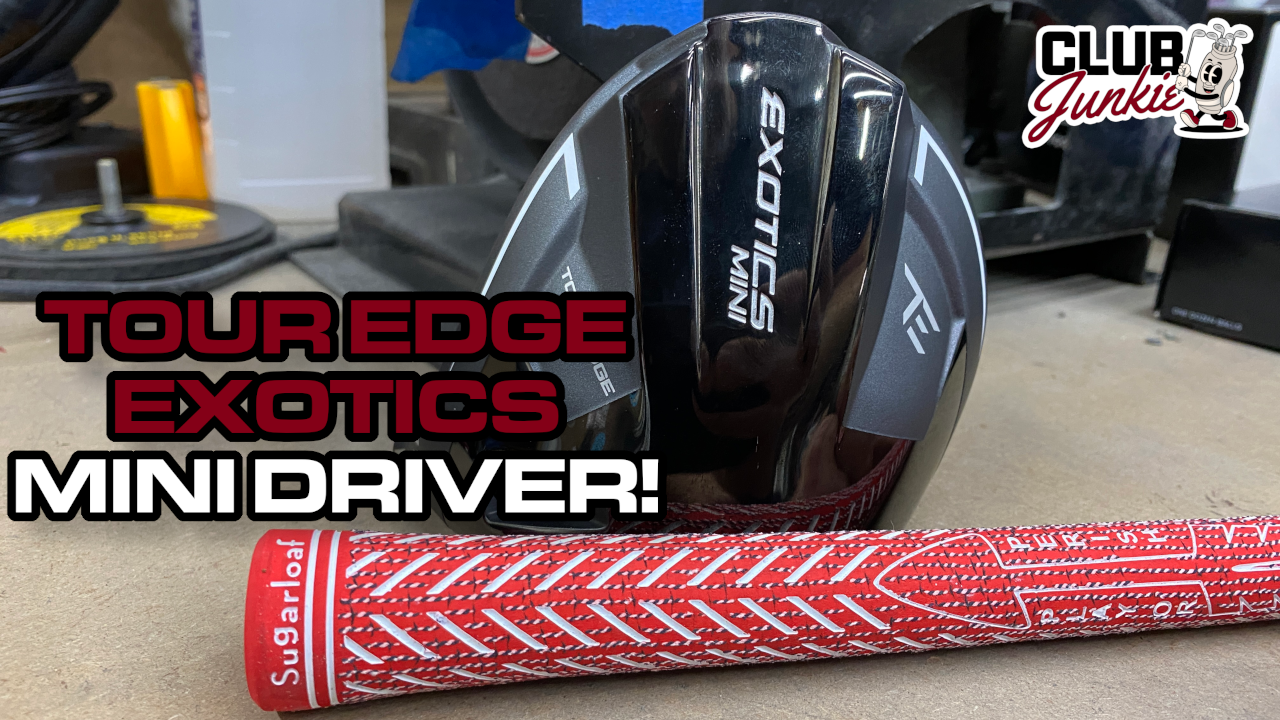
On this episode of Club Junkie, I put the new Tour Edge Exotics Mini Driver to the test and break down the performance, forgiveness, distance, and where it fits compared to a traditional driver or strong fairway wood. If you have been curious about adding a mini driver to the bag, this one is worth a look.
I also dive into the new TaylorMade Spider ZT Max putter that was recently spotted and discuss the growing zero torque putter trend. Plus, there is a closer look at the new Project X Titan Yellow shaft showing up on the PGA Tour and what makes it different from other profiles currently out there.
Opinion & Analysis
AVL: We’re talking about practice! My best tips for taking your game to the course

With the beginning of June on the horizon and courses rounding into peak condition for the season, it’s time to hone the finer skills that often get rusty over the winter. More sunlight also means more time to get out on the course and work on your game.
Whether it’s the practice green or the driving range, there’s always something to improve—whether you’re enjoying the fresh air or preparing for a weekend game or tournament. You can work on drills or freestyle around the green, and friendly competition is a great way to sharpen your skills.
While there are endless ways to get better at golf, I’m going to focus on practicing around the green. Let’s take a look at a few things to keep in mind as we head into the summer months.
Drills
From the driving range to the practice green, it’s important to incorporate drills into your routine. Years ago, I spent a weekend working on my short game with James Sieckmann. He recommended doing drill work for 5–10 minutes, then returning to your main practice.
This way, you create a balance between structured drills and real-world scenarios, so you’re not confined to “perfect” situations. For example, hitting the same three-foot putt over and over is good for repetition, but after a while, it becomes less interactive for your brain.
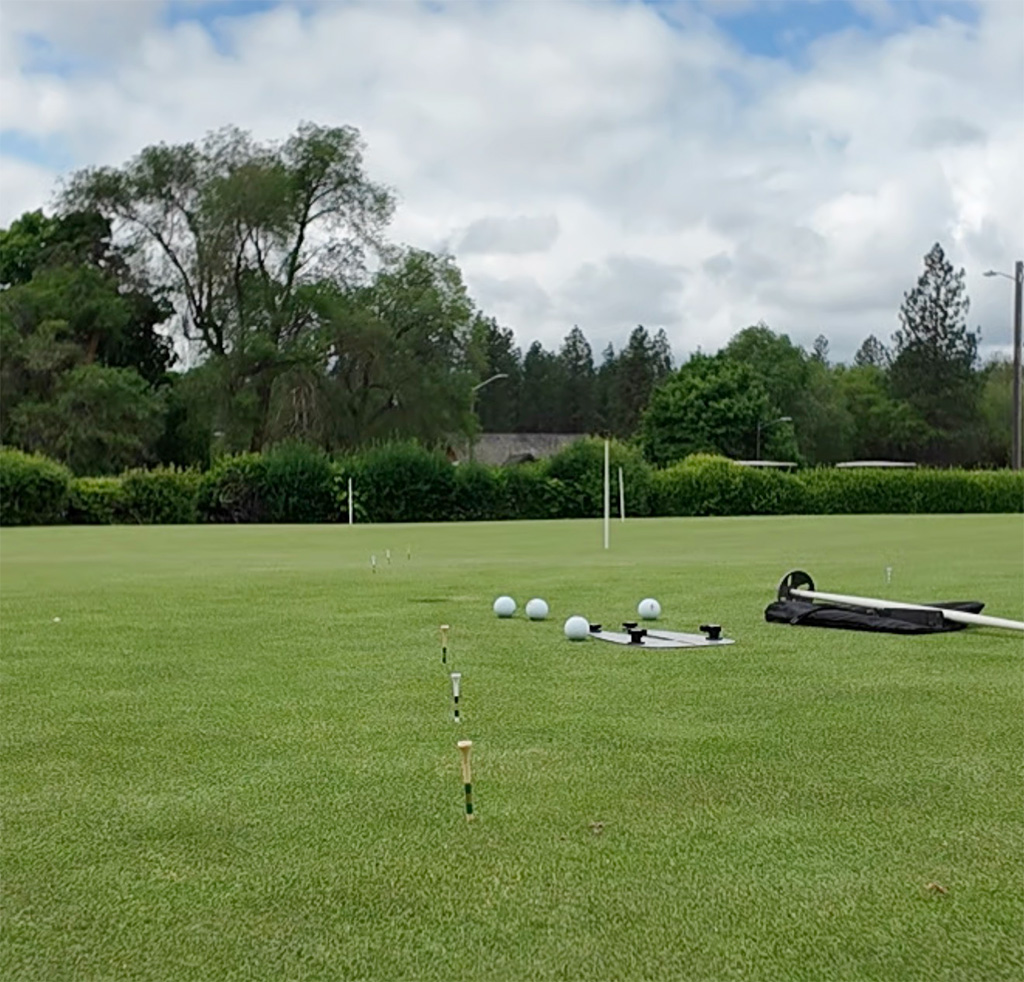
My approach is to use a putting trainer with a narrow gate for the ball to pass through, or simply place tees just outside the width of the ball. I’ll hit a series of four putts through the gate for three sets. Then, from a similar distance, I’ll hit four putts without the training aid and repeat that sequence three times.
Next, I’ll hit a number of 15–25 foot putts in a random fashion, then circle back to repeat the short putt drills with and without the training aid.
This breaks up the rhythm of hitting short putts with the training aid. When you hit the same short putts over and over, it’s easy to get into a groove—which is great for the drill, but not reflective of actual course play. While finding a rhythm is fundamental for drills, I like to introduce variation with longer putts to keep things realistic.
Game Mode
Once you’ve established a foundation with drills, it’s time to simulate on-course scenarios. This is where a few practice games come in handy.
One that I’ve been enjoying lately involves putting 10- to 15-footers with two balls. If I make the putt, great! If I miss, I pull the missed ball back a putter length. Suddenly, that little tap-in becomes a nerve-wracking three-footer—at least at first. As you get better at this game, those three- and five-footers become much more comfortable and routine.
It may sound cliché, but each shot is just what it is—it’s how we react that makes the difference. I like this game because it blends the pressure of on-course putting with the consequence of leaving yourself a much longer putt than usual.
Another game I like is one I recently learned from Brad Faxon. Place three tees in a line at four different locations around the hole: one at 3 feet, one at 6 feet, and one at 8 feet. The 3- and 6-foot putts count as par, and the 8-footer is for birdie.
This game keeps you focused on scoring and helps you get into a competitive mindset. You can even think about this putting game while you’re on the course. I just started playing it, and last week I couldn’t get better than two under par.
Competition
Competition during practice is when drills and games come to life, and you start to see results. For me, nothing beats a putting contest with a friend or two. In the right setting, these contests can become talking points for the whole season.
Match play, a game of 21, or simply seeing who can make the most one-putts (with a small prize on the line) are all great ways to simulate real on-course pressure. Recently, I played in a putting contest where one competitor made back-to-back 30- and 50-foot putts. As they say, expect your opponent to make every putt—and he nearly did. That’s impressive, and it’s something you see on the course, too: you have to stay committed to your game plan, no matter what.
When it comes to practice, it’s important to blend feedback from recent rounds with the fundamentals you want to reinforce. Drills, games, and competition—from the driving range to the putting green—form the backbone of skills you’ll rely on during actual rounds.
Finding the right balance is something we’re all working on, one practice session at a time. With the beginning of June on the horizon and courses rounding into peak condition for the season, it’s time to hone the finer skills that often get rusty over the winter. More sunlight also means more time to get out on the course and work on your game. Whether it’s the practice green or the driving range, there’s always something to improve—whether you’re enjoying the fresh air or preparing for a weekend game or tournament. You can work on drills or freestyle around the green, and friendly competition is a great way to sharpen your skills. While there are endless ways to get better at golf, I’m going to focus on practicing around the green. Let’s take a look at a few things to keep in mind as we head into the summer months.
Drills
From the driving range to the practice green, it’s important to incorporate drills into your routine. Years ago, I spent a weekend working on my short game with James Sieckmann. He recommended doing drill work for 5–10 minutes, then returning to your main practice. This way, you create a balance between structured drills and real-world scenarios, so you’re not confined to “perfect” situations. For example, hitting the same three-foot putt over and over is good for repetition, but after a while, it becomes less interactive for your brain.
My approach is to use a putting trainer with a narrow gate for the ball to pass through, or simply place tees just outside the width of the ball. I’ll hit a series of four putts through the gate for three sets. Then, from a similar distance, I’ll hit four putts without the training aid and repeat that sequence three times. Next, I’ll hit a number of 15–25 foot putts in a random fashion, then circle back to repeat the short putt drills with and without the training aid.
This breaks up the rhythm of hitting short putts with the training aid. When you hit the same short putts over and over, it’s easy to get into a groove—which is great for the drill, but not reflective of actual course play. While finding a rhythm is fundamental for drills, I like to introduce variation with longer putts to keep things realistic.
Game Mode
Once you’ve established a foundation with drills, it’s time to simulate on-course scenarios. This is where a few practice games come in handy. One that I’ve been enjoying lately involves putting 10- to 15-footers with two balls. If I make the putt, great! If I miss, I pull the missed ball back a putter length.
Suddenly, that little tap-in becomes a nerve-wracking three-footer—at least at first. As you get better at this game, those three- and five-footers become much more comfortable and routine. It may sound cliché, but each shot is just what it is—it’s how we react that makes the difference. I like this game because it blends the pressure of on-course putting with the consequence of leaving yourself a much longer putt than usual.
Another game I like is one I recently learned from Brad Faxon. Place three tees in a line at four different locations around the hole: one at 3 feet, one at 6 feet, and one at 8 feet. The 3- and 6-foot putts count as par, and the 8-footer is for birdie.
This game keeps you focused on scoring and helps you get into a competitive mindset. You can even think about this putting game while you’re on the course. I just started playing it, and last week I couldn’t get better than two under par.
Competition
Competition during practice is when drills and games come to life, and you start to see results. For me, nothing beats a putting contest with a friend or two. In the right setting, these contests can become talking points for the whole season. Match play, a game of 21, or simply seeing who can make the most one-putts (with a small prize on the line) are all great ways to simulate real on-course pressure. Recently, I played in a putting contest where one competitor made back-to-back 30- and 50-foot putts. As they say, expect your opponent to make every putt—and he nearly did. That’s impressive, and it’s something you see on the course, too: you have to stay committed to your game plan, no matter what.
When it comes to practice, it’s important to blend feedback from recent rounds with the fundamentals you want to reinforce. Drills, games, and competition—from the driving range to the putting green—form the backbone of skills you’ll rely on during actual rounds. Finding the right balance is something we’re all working on, one practice session at a time.


For Korean golfers, we always look forward to the last of the kkot-saem-chu-I for the true start of a new golf season. The term refers to a cold snap, but literally translates as “winter being jealous of the flowers beginning to bloom, thus lashing out one final time before surrendering to spring”.
A rather poetic mouthful packed into a short expression.
Koreans can be like that. Understated, yet oddly expressive at the same time. And nowhere is this more true on the golf course and in our golf bags. In fact, I suspect many Korean golfers look forward to new apparel and accessory drops more than they do actual equipment launches each year.

At this point, Korean golf fashion may exist on its own timeline. (courtesy of @seonbi_golfer)
There is ample evidence to support that suspicion. Korea is the world’s third-largest golf market behind the United States and Japan, yet its appetite for golf apparel exceeds that of both countries combined. Recent estimates suggest that Korea accounts for nearly 40 percent of the global golf apparel market, placing it among the world’s most influential golf fashion markets and punching well above its size.
Simply, we care deeply about how new golf clubs look and feel, but enjoy looking good while swinging them even more.
Golfers in the West may laugh and say that golf is played on a course, not a fashion runway. Perhaps. But what’s the harm in trying to look and feel good, if the added self-confidence can help actual performance? It certainly seems to have worked for Jason Day, who may have unlocked a new stats category: dormant strokes gained. Coincidence?

During the COVID-era, estimates placed the market near $9 billion, an astonishing figure for a single country.
As a proud member of Gen X, I’ve witnessed the highs and lows of golf fashion firsthand. The pleated trousers and wing-tipped shoes of Jack Nicklaus, the stylish plus-fours and knickers of Payne Stewart, the baggy black trousers and fitted mock-necks of Tiger Woods, and the thigh-hugging athletic tailoring of Rory McIlroy. Golf fashion, like the golf swing itself, has rarely stood still.
But nowhere have those trends shifted, evolved, and been scrutinized quite as relentlessly as in Korea. Here, golf fashion moves faster than fairway gossip, and consumers dissect brands with a level of discernment that can be both impressive and mildly terrifying. New brands are studied, judged, embraced, or dismissed with startling efficiency.
The result is a consumer base with one of the sharpest eyes for quality and authenticity anywhere in the world. It is difficult to quantify, but easy to recognize. Clean lines without trying too hard. Luxury mixed with utility. Trend awareness balanced by restraint and purpose.
It’s golf fashion shaped by one of the world’s most style-literate cities, something I like to call Seoul Sensibilities, referring to the taste level forged by a uniquely competitive environment.
And increasingly, global brands have noticed.

Many golf brands in Korea have their own flagship shops dedicated to apparel only
Titleist understood this years ago, when its apparel business in Korea took on a life of its own under new ownership and local direction. What had once been a straightforward extension of an iconic equipment giant became something sharper and more premium. By going all in on the serious Tour-player look (I couldn’t even fit into their XL sizes), Titleist struck the right chord with Korean consumers and helped its fledgling apparel business break into the mainstream. Titleist became a household name even for non-golfers who wore its caps, shirts, and windbreakers in daily life. In many ways, it proved that even heritage golf brands could carry real fashion credibility when viewed through a Korean lens.
Several years later, PXG took a page out of Titleist’s playbook and followed suit. Korean consumers helped transform the brand from one known largely for irons and loud commercials into something broader and more stylish. PXG apparel’s growth in Korea was explosive, where it found an early audience and turned the category into something more than mere logo merchandise. It is still hard to walk anywhere in Seoul without seeing its palindrome logo.
Malbon’s meteoric rise in the United States was genuine, but its ascent into a global golf lifestyle brand owes much to Korea, where it was elevated by a market already fluent in modern golf style. Korea did not simply embrace Malbon. It pressure-tested the concept, refined its appeal, and helped push it into the global spotlight.
As such, new brands may arrive from abroad, but more often than not, their sharpest evolution happens here. If a brand can earn credibility in Seoul, it’s deemed to have passed one of the toughest style audits in the game.
That is why the next meaningful chapter may not come from outside, but from a Korean brand moving in the opposite direction, carrying those Seoul Sensibilities outward as K-pop once did.

Play young Stay dope.
From Seoul, With Intent
Khalhon is a label that feels less like a trend-chasing newcomer and more like the product of a market that has already seen everything. Golfers here have long been surrounded by luxury logos, technical fabrics, and tour uniforms disguised as lifestyle wear and vice-versa. In other words, novelty alone rarely lasts here, and the Koreans seems to understand that instinctively.
Its style language leans into clean silhouettes, relaxed but tailored proportions, muted palettes, and premium materials that speak quietly but confidently. There is a modern city aesthetic running through it all, with strong layering pieces, thoughtful textures, and subtle branding that suggests sophistication rather than demanding attention.

“Built for the course. Designed beyond it.”
Most importantly, the garments seem designed to blur the line between golfwear and everyday style. Shirts, trousers, knitwear, and outer layers move comfortably between a game of screen golf, a lunch reservation, an airport gate, or an afternoon coffee in Gangnam with friends.
It raises the question of whether this is golfwear that happens to look good off the course, or everyday clothing that performs beautifully on the fairways.
Personally, I have long appreciated Nike Golf for its clean, athletic modernization of golf attire. It also has the useful side effect of making me look like a more serious golfer than I probably am. But off the course, there are times when being instantly identified as the golf guy in a crowd of non-golfers can feel a touch self-conscious.

“Built for the course. Designed beyond it.”
That is part of what drew me to Khalhon, which seemed to blend golf and everyday wear naturally. While some of the outfits may be slightly beyond my personal confidence level, the brand also offers tasteful options for older guys like me who still want to express a little personality without regretting the decision later.
These are not simply flashy outfits worn on the course and then banished to the closet until the next tee time. They work surprisingly well off the course too, and I suspect many of the pieces will still look right a couple of years from now, which would certainly be kinder to my wallet than most golf fashion trends tend to be.
And perhaps that broader lifestyle positioning also helps explain why someone like Sean Wotherspoon would find Khalhon creatively interesting in the first place.

“Built for the course. Designed beyond it.”
“Korea is not only one of the most fashion-forward golf markets in the world, but one of the most fashion-forward markets globally. Korea is ahead, and I love to watch and try to catch up.” – Sean Wotherspoon, Creative Director at Khalhon
Seoul and Beyond
If Khalhon’s rise says something about where Korean golf fashion is today, its relationship with Sean Wotherspoon says even more about where it is heading.
For readers less familiar with Sean Wotherspoon, his arrival at Khalhon is not some routine celebrity endorsement or influencer collaboration. In design and streetwear circles, Wotherspoon is regarded as one of the more influential creative voices of his generation, particularly when it comes to blending nostalgia, storytelling, and contemporary culture into products that people can connect with.
He first gained widespread attention through his now-famous Nike sneaker collaborations, where his vintage-inspired designs and instinct for color helped turn him into one of the defining artists of the late-2010s sneaker era. His work gradually expanded beyond footwear into apparel, automotive collaborations, collectibles, and broader lifestyle design.
Modern golf style now extends well beyond the fairways, where performance and functionality are largely expected by default. And while plenty of brands already make technically competent golfwear, Khalhon seems more focused on designing clothes people would genuinely want to wear even after the round ends.
And when guys at Wotherspoon’s level show genuine interest in working with a Korean golf brand as its new Creative Director, fashion circles tend to sit up and pay attention. There’s already a huge buzz among the fashion-conscious here about upcoming collabs with iconic sports stars and brands.

“My creative direction for Khalhon is disruptive, colorful, nostalgic, and modern. My goal is to blend these avenues seamlessly within each collection.” – Sean Wotherspoon
In chatting with Sean, what stood out most to me was how genuinely energized he sounded about the project itself. Despite having already worked across and countless other creative spaces, he described golf as a completely fresh category for him, saying that Khalhon “will be an amazing vehicle for my design work.”
At the same time, his enthusiasm seemed tied just as much to Korea itself. He spoke openly about admiring Korea’s fashion culture while repeatedly insisting he is still a terrible golfer.
There was something oddly refreshing about that humility. Rather than sounding like a celebrity parachuting into golf simply because the category suddenly became fashionable, Sean sounded genuinely curious about what Korea might do with the category next.
And perhaps that is what makes Khalhon feel interesting right now. The brand feels less like a trend-chaser and more like the natural result of a market now confident enough to export its own point of view.
For years, global brands came to Korea to sharpen their image against one of the most discerning audiences anywhere. Now, a Korean label appears ready to send those Seoul Sensibilities outward instead.
Which brings us back to kkot-saem-chu-i.
That final cold snap before spring always arrives with a reminder that seasons are changing, whether we notice it immediately or not. Golf fashion feels a little like that right now as well, as the old boundaries between sport, streetwear, luxury, and everyday style continue to soften.
And somewhere in Seoul, a Korean golf label already seems prepared for whatever season comes next. I just hope they have everything in my size.

Aaron Rai’s winning WITB: 2026 PGA Championship

Russell Henley’s winning WITB: 2026 Charles Schwab Challenge

Photos from the 2026 CJ Cup Byron Nelson

CJ Cup Byron Nelson Tour Report: Koepka and Kim’s newest putters finally get hot

Charles Schwab Challenge Tour Report: MacIntyre, Åberg and Spaun all switch putters, TaylorMade launches new Spider

Details on J.J. Spaun’s surprise putter switch

GolfWRX Launch Report: 2026 Titleist GTS drivers

Photos from the 2026 Charles Schwab Challenge

PGA Championship Tour Report: Fitzpatrick, Koepka among big-name putter switches for Aronimink

Photos from the ShopRite LPGA


Maria Torres WITB 2026 (June)
Driver: Ping G440 LST (9 degrees) Shaft: Accra TourZ Green 5-M4 3-wood: Ping G440 Max (15 degrees) Shaft: Accra TourZ Green 6-M4 5-wood: Ping G440...


Eric Cole WITB 2026 (June)
Driver: PXG Lightning Tour Max (9 degrees) Shaft: Project X Titan Yellow 70 TX 3-wood: TaylorMade Qi4D (15 degrees) Shaft:...


Si Woo Kim WITB 2026 (May)
Driver: Callaway Quantum Triple Diamond (8.5 degrees) Shaft: Fujikura Ventus Black 6 X Mini driver: Callaway Paradym Ai Smoke Mini...


Wyndham Clark’s winning WITB: 2026 CJ Cup Byron Nelson
Driver: TaylorMade Qi4D (10.5 degrees) Shaft: Project X Titan Yellow 60 TX 3-wood: TaylorMade Qi4D Tour (15 degrees) Shaft: Project...


BlueDevilGolfer
Jul 19, 2014 at 10:43 pm
Deck – this is a good opinion article, that I happen to agree with 100%. Unlike you, I’ve never been fit by Tom Wishon personally! Pretty impressive. However, I have been truly custom fit by Hot Stix in Scottsdale, AZ (took about 5 hours, and yielded club recos for all 14 clubs in my bag).
It was at their Legend Trail location in Scottsdale, so I could hit from the Nike Oven like hitting bay (covered garage type area with ability to hit balls outside the bay out into the outdoor driving range). I really prefer seeing the ball fly outside, so I can adequately help the fitter with comments like “yeah, that’s my typical miss right there!” Also gives me confidence. Probably why Tom watched you play 9 holes first.
Over the next 2 years or so, I bought an entire new set of 14 clubs. Really wasn’t in a financial position to just drop the money on all 14 new clubs at once! I didn’t end up with any Wishon clubs (although I know several top 100 in USA Golf Digest club fitters who swear by his stuff). I ended up with a PING Driver, Tour Exotics 4 Wood, and Titleist 910H hybrids… all with amazing Accra DyMatch RT shafts. Accra is amazing, and for a super-premium shaft, is relatively (I stress relatively) affordable. Titleist AP1 irons with Nippon 950GH lightweight steel iron shafts. Cleveland CG15 Wedges with Nippon WV105 wedge shafts. Scotty Cameron Monterey 1.5 putter. All with the right specs for me.
Besides the fitting (which was fun and useful)… Having a Tom Wishon, Hot Stix, Cool Clubs, Club Champion, or any of the top 100 independent Clubfitters actually BUILD your clubs too, is really important in my opinion. Having perfect theoretical specs on a piece of paper or in a computer are not very helpful if some yahoo builds your clubs to DIFFERENT specs! Why bother getting fitted by a Level 3 fitter as Deck says… if you’re going to let an amateur build the clubs that you’ll be hitting on Saturday with your buddies?
I’m no Bill Gates on the income front… But I do think that if you are serious about playing your personal best (whatever score that is)… spending limited golf budget on a real custom fitting is a much better use of that money than the endless pursuit of buying new $300-$400 drivers every 1-2 years, or beating balls hoping the lightbulb will miraculously go off and you’ll hit the ball well all of a sudden. I’d spend the mone on the fitting first, and a series of lessons second.
Just one guy’s opinion here (everyone is entitled to theirs)… But I appreciate Deck’s article… as true custom club fitting has helped my game as well! I shot a 76, 77, and two 78s… which was the first time in about 4 years Id been below 80 again. Like Deck, I shoot 90 or above WAY less often. Almost never happens now. 70s make me happy. 80-84 is normal. 85-89 sends me back to the range the next week! Thanks again Deck!
Jon
Jul 17, 2014 at 12:16 am
Mr Dave Decker,
Thank you for sharing your experiences and respectfully replying to the responses to the article. It would be nice if the people that comment would show respect and courtesy in turn. I believe placing this article in the opinion section is brilliant. In this day and age; proper practice, play, coaching, properly fit equipment and developing mental skills are key to performing your best in sports whether you are new to a sport or an elite athlete. Revealing that there are different levels of fitting clubs is important so people can choose based on their personal values and beliefs.
HMD
Jul 16, 2014 at 4:01 pm
Great article! Its really interesting to read about the differences in fittings and how in depth it can/should be.
Tom Wishon
Jul 16, 2014 at 3:12 pm
In clarification and in the hope that the negative commenters may come back to read this, I find it necessary to say that Kadin’s and Deck’s visit and request for me to personally fit them was way beyond what a normal fitting request would be for any clubfitter.
Kadin and Deck wanted to come out to be fit but to interview me, pick my brain (what’s left of it!!) and ask tons of questions about golf clubs and clubfitting. So the reason this took three days was not because that’s how long my fitting would take, but because the time was spent doing actual fitting procedures, then sitting down to talk for some hours about this or that and answer their questions.
Then we got back to the fitting procedures for a little while, which then stopped to go into another session of discussion and Q&A and so on. Perhaps that should have been explained more clearly in the article so that some here would not get the impression that a good fitting has to take three days.
In addition, I was also fitting two golfers simultaneously. That also doubles the normal time required even without the frequent stops to answer questions and do the interview with them.
Bottom line, if I am fitting one golfer who is here only for the fitting with no other pre arranged requirements for Q&A or interview stuff or general technical discussions, our fitting analysis would normally be 90 mins to 2 hrs on Day one, and then an hour on Day two to finalize all things in the fitting.
In addition, for those commenters who want concrete emprical data that full specs professional fitting results in X percent of golfers improving by Y number of strokes or Z number of yards or percentage of better shots, that data in such a form does not exist because no one has been in a position nor able to accumulate such empirical data.
Neither could you call any OEM company and ask them to tell you what percentage of golfers play better and by how much with this or that model they have sold. No company has such data because they literally have no way to keep track of stuff like that. No OEM has a list of actual names and contact information of golfers who buy their clubs, nor do their retailers.
But in the case of the clubmaker/clubfitters, any golfer who is curious or interested most definitely can and should ask the clubmaker to give them the names/contact info of golfers they have fit so the curious golfer can call those who have been fit by the clubmaker to ask for feedback. And the good clubmakers will provide that because they want other golfers to hear from the golfers they have fit.
Try that in a retail golf store to ask the store if they can give you the names and contact info of whoever bought this OEM model or that OEM model in which you are interested.
Just wanted to clarify these things for those who were unable to see the difference in what Kadin and Deck asked me to do when they were here versus what a fitting only session would consist of.
TOM
MHendon
Jul 22, 2014 at 1:03 am
I imagine going through this extensive a fitting, plus having each club built to those exact specs would be very expensive. I suspect for someone like myself it wouldn’t even make a half shot difference. guess I’ll keep fitting myself.
Frank
Jul 25, 2014 at 1:36 am
Did you read any comments before you posted? What you wrote has been answered numerous times in the comment section. Try that next time. Work on that reading comprehension.
LB
Jul 16, 2014 at 7:29 am
Nice write up. This sounds like an incredible experience.
It must be said, the golfwrx forums are awesome but the comments section is starting to read like youtube/instagram caveman comments. Must just bring out that type of crowd. Shame since the original content has gotten so much better in the past year.
Tom Stickney
Jul 15, 2014 at 12:50 pm
Tom is a legend in our industry for sure!
Joel
Jul 15, 2014 at 12:37 pm
I would kill for an opportunity like this, it’s to bad that Mr. Wishon doesn’t do this type of fitting really anymore. I actually enjoy that the author didn’t toss up a bunch of numbers comparing X-OEM to Wishon clubs. Had he done that it would have felt like more of an advertisement. Just for arguments sake, it really doesn’t matter what brand of club your being fit for…if Mr. Wishon knows the clubs he could probably fit a chimp for a full 14 club bag. The man flat out know’s his stuff.
G
Jul 15, 2014 at 11:40 am
I’m pleasantly surprised to read the reaction to this article…
I’m sick and tired of hearing the “custom fit” argument. Nothing’s ever good enough. Wonder why we have a retention issue with new golfers? Because you’ve got to go drop HUGE coin to be worth a damn.
Dave
Jul 15, 2014 at 1:05 pm
The fitting was 200 dollars. Which was taken off the price of the clubs.
ca1879
Jul 15, 2014 at 3:13 pm
$200 for 12 hours of personal attention, and it was built in to the price of the clubs? Please explain how that makes any sense in a business trying to turn a profit. I can’t get 12 hours of the neighbor kid’s time for $200, and his skill level maxes out at cutting the grass. Are the margins on custom clubs that large, or is Tom time-travelling here from his home in the 1960’s?
Dave
Jul 15, 2014 at 7:07 pm
Tom taking three days to do this was because we talked a lot during the session time about anything and everything since I was there to do the research for an article. Same thing could be done in a pure fitting analysis in 2-3 hrs. It took about 3-4 hours a day because there were two of us and a lot of the time myself and the other person that went hammered Tom with questions about his experience with design, people he met in his life from golf and Payne Stewart. I was and still am a huge fan of his.
TheCityGame
Jul 16, 2014 at 12:10 pm
It’s probably $200 if you buy a $3000-$5000 set of clubs (that’s the price range someone mentioned below. I don’t actually know the price). If you did the entire fitting, got your measurements, and then decided to get clubs made elsewhere, it’s probably WAY more.
Maybe Dave can speak to that. I’m just guessing.
Dave
Jul 16, 2014 at 7:29 pm
I can speak to that. The 200 is a pretty normal rate and it’s not if you spend 3000-5000 on clubs. I will say the bag I ended up with was what I would have spent if I bought a set of apex pro irons, 714 ap2’s or ping s55 series. Except I bought 4 wood, 3 and 4 hybrid and 5-pw iron. I used the above clubs for reference because those are the type of clubs I would play.
Clambake
Jul 15, 2014 at 11:37 am
OK, so a multiple day fitting session is likely better than a less thorough fitting one might experience at a typical retail establishment. But the fundamental question the author leaves unanswered is “What improvements in your game did you gain?” You stated your fitting was last October, so you’ve had many months with the new clubs. How much lower are you shooting?
A related question would be how much one could improvement their game with an equivalent amount of time and effort with a good teaching pro? I would expect several days of undivided attention and work with a good pro would yield far better improvement than the time spent doing such an intensive fitting.
Duncan Castles
Jul 15, 2014 at 11:07 am
I went through a similar fitting process in South Africa, minus the nine-hole initial session. It was with a TWGT recommended fitter and the full set of Wishon clubs (including forged irons) that came out of it cost less than off-the-rack new Titleists or Mizunos would have, fitting fee included.
My handicap was 19 at the time. The first two rounds I played with the clubs I took three shots off my best score at each course. In the 20 months since my handicap has come down to 5. Clearly that’s not all down to being custom fit, but I’m sure I would not have got to the same number without the confidence of playing with clubs built to my swing.
One last point, the whole fitting process was aided by a few direct conversations with Tom Wishon, who was incredibly generous, honest and informative in discussing his designs and offering advice.
Steve Barry
Jul 15, 2014 at 10:36 am
Hey K – thanks for spending your time and your money going through all this.
To the rest of you guys bashing this post…why? This isn’t bragging, this is just him relaying his experience to us. If you don’t like or can’t afford to do something like it, instead of hating just appreciate he took a TON OF TIME to not only do this on his dime, but take the time to write the article as well. The amount of hate thrown around this site at times is nauseating.
TheCityGame
Jul 15, 2014 at 11:21 am
1. Because he talks right off the bat about “maximum level game improvement” with no evidence whatsover.
2. Because he doesn’t just review his trip, but slams something that a lot of people have done, enjoyed, paid money for and found worthwhile (not me. I think the WHOLE fitting thing is silly, but others.)
3. Because the whole thing smacks of privilege, above and beyond the normal level of privilege golfers enjoy.
4. Because it sounds suspiciously like an ad couched in a “review”.
5. Because it’s woefully short on useful information about what the professional fitting provides compared to a regular fitting or no fitting at all. He tells us the difference in the process, but nothing about how this actually differs RESULTS-WISE from what he’d get in a box store, or buying off the rack.
Dave
Jul 15, 2014 at 1:14 pm
Again I will be more than happy to address you questions and concerns when I get some time tonight after work. The article was submitted in march. I live in NY so shortly after the fitting my season was done. I will be more than happy to update you since the new season began this year.
Thank you for reading the article.
Dave
Jul 15, 2014 at 8:29 pm
I am sorry you seem so upset in your comments about my article
Let’s see if I can help clarify your concerns
I was playing 2013 x forged, standard loft, length and lie going into the fitting for irons shafted with 120g C tapers in S flex.
Driver I was using a 9.5 SLDR shafted with a Speeder 6.2 non TS model set to 10.
3 wood I was using a 14.5 3 deep with a Fuji fuel 60 gram shaft as well as a stock stage 2 15′ 3 wood.
19′ hybrid was a stage 2 standard model.
I was a 9.4 handicap last year. I could shoot anywhere from a low of 79 (I believe) to a high of…..I think it was in the 90 range. I try to forget those rounds.
I was fitted into this based on how I swing a golf club.
949 4 wood 65g R tipped 1 inch 16 loft 58 lie 42 length D2
775 3 hybrid 65g S tipped .5 inch 20 loft 58 lie 39 length D2
775 4 hybrid 65g S tipped .5 inch 23.5 loft 59 lie 38.5 length D2
575 CB irons shafted with SL-S tipped .5 inch
5 iron 26 loft 1 up 38 length D1.5
6 iron 30 loft 1 up 37 5/8 length D2
7 iron 34 loft 1 up 37 1/4 length D2.5
8 iron 38 loft 1 up 36 7/8 length D3
9 iron 42 loft 1 up 36.5 length D3.5
PW 46 loft 1 up 36 1/8 length D4
So far this year I have Many more rounds in the 70’s than I did all of last year. Haven’t sniffed the 90’s at all and it’s been 3 months of season where I live. I am playing off an 8 right now. Also I have not had a lesson since my time in Durango.
Do I need one? Yes I do. Who couldn’t benefit from lessons?!!! I probably need a package. Ha!
I am sorry you feel I “slammed” other fitting processes. Was not my intention. I have been through big box ones for drivers and irons through the taylormade performance lab. Big box store I did not have a great experience. I know I hit a driver max 250. When I was there I was hitting a driver 290-300 according to their monitor. No thanks. Are all like that? Absolutely not. I know of one in St. Louis who has many fine employees who work there and someone that works there is a very close friend who wouldn’t lie or “jack up” the monitor. But the experience I went through was not the best at one when I was just learning about anything golf related.
As far as the privilege comment well I am far from it. This was an idea kicked around with another member. I can assure you I am not privileged in any ways. A fitting like this was lucky to be done with Tom. He doesn’t really do that anymore. He focuses More on Design and his business now. I wouldn’t call it privileged. I would say lucky. It was a shot in the dark idea. Tom just happened to be on board with it. Fittings like this can be done in 2-3 hours as mentioned above when I responded to another comment. There are many great CCM listed on Tom’s website that go through a screening process done by Tom who would ensure that the 13 elements are followed. They will not just sell you Wishon products but many different club designs.
The ad encouched in a review: can you help me understand how it comes off as an ad? I will answer as best as I can, I am just trying to understand how it came off that way to you
Results wise I am hitting the center of the face much better this year. I now know why c tapers did not work for me. I have a smooth swing with the club. Not agressive at all. I needed shafts in the 100 gram range not the 120 c tapers I was playing. My SS with 6 iron shot up from 84 to 89 with a change in shaft weight. Same with driver, fairway woods and hybrids. I know now what weight , tip stiffness and kick point of shafts suit my swing.
I am writing this from my phone trying to get my children to settle down before bed time. If I missed anything or can answer any more questions for anyone please do not hesitate to ask.
Thanks again for reading the article. Oh. You don’t have to call me Dave Decker. My screen name is deck on the site. Hope to hear from you in the forums as well.
Ed K
Jul 16, 2014 at 8:10 am
Dave, Did you have a change or adjustment to your putter? In your day 3 image it looks like your putter is being adjusted and to many a putter fitting in itself can be vital but I didn’t notice anything in your comment addressing it, if you would please provide that information as well.
Thank you. Great right up and information appreciate it.
Ed K
Jul 16, 2014 at 8:14 am
*write up (where is my brain?)
Dave
Jul 16, 2014 at 7:32 pm
My putter was just putting it back to normal 4′ and 71. I used to use a really exaggerated forward press and the putter was adjusted to that. To be honest the putter in the picture was not even one I use. I just knew I had access to all the tools Tom had and wanted to set it back to the standard.
HBL
Jul 16, 2014 at 10:30 am
Dave – Nice article and response. I will say, however, that not all Wishon fitters are competent. That’s not a slam on Tom Wishon or his products, rather a note regarding “Wishon fitters”.
TheCityGame
Jul 16, 2014 at 12:07 pm
Thanks. I found that much more interesting than just a glowing review devoid of context.
Dave
Jul 16, 2014 at 8:26 pm
Sorry you felt it lacked context. I didn’t feel that way, but you cannot please everyone.
ca1879
Jul 15, 2014 at 9:38 am
The authors point that we don’t really get custom fitted is fair, but the conclusion that we should get custom fitted is not well supported. The current marketing hype is that we average players need custom fitting even more than the pros. That is ridiculous, and obviously so. We don’t spray the ball around and miss chips and putts because our equipment isn’t a good match, it’s because our combination of talent, practice time, and frequency of play isn’t a good match for this difficult game. And the biggest factor is the first. If every player on the planet got fitted, we’d still have the same distribution of scoring, because you can’t fit talent. Sure, get basic advice and pay attention the technical advances, but don’t get hung up on the marginal stuff. Remember, just because you can measure a difference, that doesn’t mean it makes a difference.
ca1879
Jul 15, 2014 at 9:45 am
… and as a short follow up, I’ll point out that none of the pros at our club go through this process. They get some individual clubs tuned for gaps and do spend time on the monitor for their driver, but apart from that they spend their time learning to hit the club they have.
Dave
Jul 15, 2014 at 10:24 pm
I would like to ask comment on this if I could
None of the pros go through the process of being fit? Well I would agree with that. They have been playing for years and prob figured out on their own what works for them. Which is expected. They play enough or have played enough over years to do that. The average golfer isn’t like your pros. That’s what I am. An average golfer who wants to get better, understand my swing and what works best with it.
As far as your last comment I highly doubt they spend time learning to hit the club they have. Doesn’t make any sense to me.
Mats "PUMP 2" Bergsten
Jul 15, 2014 at 9:13 am
Great article! It puts light to the profession of being a good and knowlegeable club maker. Is it expensive? Of course it is, what do you pay for your plastic surgery? Is Tom Wishon comparable to a Plastic surgeon specialist? Yes, Yes and Yes! He’s been doing this more or less the whole of his professional career (+20 years). He knows as much about his profession as a club maker as a Plastic surgeon, knows about his, without comparing details. Do you really need to get a proper custom fit, to be able to swing and play golf? The answer is, No! You can get whatever you fancy of-the-rack and go out and hit it! If you play golf out of social values rather than the goal of trying to reach the top of your limits, compete against others charing your values of reaching their top of the ladder. Go out and play and socialize with your friends. Do you need plastic surgery, no, 99% of all people getting it, is doing it for themselves…for whatever reason it might be. Is $3000-5000 a lot of money for 14 pcs of tools completely fitted with 100% of focus on you, in order for you to be given the best opportunity to perform? Some people say Yes, others say No. Compare it to the price tag of a bicycle fitted from scratch, to someone who enjoys cycling and like to join competing bicycling events every now and then? A comparison might be unfair, but if you are willing to go all the way in whatever sport or interest you have, you’re also willing to sacrifice something else in order to give you the best chances of reaching your goal. In golf Pro’s do it, cause they know the difference it makes in the Order of Merit, down the lane…taking all into account, incl. the equipment. Some hobby golfers, semi pro’s or “highly devoted to the game” players are forever thankful for the fact that they are given the chance equal to what the pro’s get, but they have to pay the price for it, whilst the rest of the of-the-rack buyers pay for the pro’s, getting equipment that looks pretty much the same, but without being diald in other than through regular commersials and adds…. 🙂 Once you’ve done a proper fitting with a knowledgeable guy like Tom Wishon or any of his colleagues, you won’t be able to go back to of-the-rack or “Stage 1” fitting. Thanks for reading! 🙂
TheCityGame
Jul 15, 2014 at 9:02 am
What an obnoxious post.
This whole thing sounds like, “YOOOUUUU didn’t get custom fit for clubs. *I* got custom fit for clubs.”
3 days, one-on-one with Tom Wishon himself. . .give me a guy who hits the range for those days. He’ll play better, and he’ll still have thousands of dollars in his pocket.
How about Dave Decker reports back with what his custom fitting has done for his handicap. Also, how the clubs differ from what he would get off the rack. Maybe get us some numbers on a flightscope.
Dave
Jul 15, 2014 at 10:25 pm
I did report back. Again thank you for your comment.
EazyPeezy
Jul 16, 2014 at 3:03 pm
Wow!! Are you this pleasant in person or just when sitting at your computer? This article was posted in the ‘Opinion’ section of this forum. At no point in the article did I get the impression that the writer was plugging the Wishon brand-only speaking of his experience and his opinion. I would say that he has been more than gracious in responding to your questions even though they have had a clearly condescending and belittling tone. I for one appreciate Deck taking the time to write the article and share his experience and opinion. If it’s not for you it’s not for you.
Proguymow
Jul 15, 2014 at 6:46 am
THE GUY WHO WROTE THIS ARTICLE IS ONE BIG TIME “KOOL-AID” DRINKER
Pablo
Feb 7, 2015 at 10:45 am
What do you consider “Kool-Aid” then? Why insult a delicious, sugary drink with your ridiculous notions of what this article represents?
Robert
Jul 15, 2014 at 3:37 am
I would also like to know price and what you ended up with, but first and foremost, how it differed from the standard set. Another thing that you would buy with a “professional custom fitting” like this is the experience and the confidence that it brings, “knowing” that your set of clubs is the “right” one for YOU. Perhaps that is all that matters, since other comments suggest average players do not need the “full detail” fitting…
Pingback: Custom Fitting: What I learned from Tom Wishon | Spacetimeandi.com
Steve
Jul 15, 2014 at 1:19 am
1) I’d also love to know the price of something like this
2) what clubs did you end up with?!
Dave
Jul 15, 2014 at 1:10 pm
I will be more than happy to respond to all the questions asked when I am not working tonight. I have numbers and all that for you guys who want them later. Thank you for reading the article.
Dave Decker
Jul 15, 2014 at 11:14 pm
Added some answers to your comments in a reply.
Longleft
Jul 14, 2014 at 9:16 pm
Where do I sign up for this type of fitting experience? I met with one of Tom Wishon’s recommended fitters hoping to get this same experience (I’ve read his book(s) and totally buy in to his process and rationale), only to be fit by an OEM cart with a few head and shaft options. I left the fitting less than impressed and didn’t buy anything.
I have to believe there is a market for this level of service from club fitters, but my experience tells me that everyone wants to push recognized brand product to those of us ready, willing and able to get fit. The same “fitters” then want to sell us new clubs next year when the latest and greatest comes out. These same fitters don’t push the TWGT product because they claim it doesn’t hold it’s resale value. Since when does anybody care what a properly fit club is worth when he/she is done with it? I would only care if the club was going to get booted in mid season for not playing nice with its owner.
Rob
Jul 14, 2014 at 9:13 pm
Sounds expensive.
Tilt
Jul 14, 2014 at 9:03 pm
A normal person can play with sets off the rack very well. But if your like me 6.4 and relative short arms then longer clubs, lighter shaft and different lie is a must. What makes me score well? Chip, putt and wedge not pured 5-irons.. A normal 20hcp golfer might benefit from right length, swing weight, flex and lie rest is tour only.. Its like buying a 2.000 dollars set of tires to my grandmothers Fiesta…
jcorbran
Jul 14, 2014 at 8:24 pm
and we all have 4 days and how much money to get fit like that?
Jason Geraci
Jul 14, 2014 at 8:23 pm
I like this article. Most American golfers don’t see the value in a fitting process like Mr. Wishon’s. They feel like they aren’t “good enough” to gain a noticeable benefit from this extensive fitting process.
Brian
Jul 14, 2014 at 9:32 pm
I don’t think that is limited just to American golfers
Jason Geraci
Jul 15, 2014 at 1:04 am
I meant that culturally, American’s tend to know the price of everything, but can’t tell you the value of anything
TheCityGame
Jul 15, 2014 at 8:56 am
What nationalities do you think this doesn’t apply to?
KNUCK
Jul 16, 2014 at 1:05 pm
I know from bad experience that you could spend a week getting fitted but if some knucklehead in the factory doesn’t build the set according to the specs, you’ve wasted your time and money – moral – check your set after you get it made to assure that the set is corretly built according to the specs